
The worst residency mistake is not choosing a “bad” program. It’s choosing between two good ones with no real process and then second-guessing yourself for years.
Here’s the fix: a structured, one-week decision sprint to break a true two-program tie.
You’re not going to “feel it in your gut” if your brain is overloaded. You need a schedule, guardrails, and a hard stop.
Overview: Your 7-Day Tie-Break Plan
At this point you’ve:
- Completed interviews
- Narrowed it down to two programs
- Can’t stop mentally ping-ponging between them
So this week you will:
- Stop collecting random opinions
- Run a structured, day-by-day comparison
- Pressure-test each program against your actual future life
- Make the decision and then stop re-litigating it
Here’s the week in one glance.
| Day | Focus |
|---|---|
| 1 | Clarify your non-negotiables and constraints |
| 2 | Deep data review: structure, outcomes, workload |
| 3 | People and culture reality check |
| 4 | City, life outside the hospital, and support |
| 5 | Scenario stress-test and gut check |
| 6 | Decision day with a structured scoring system |
| 7 | Future-proofing and closing the door on regret |
And to make it visual:
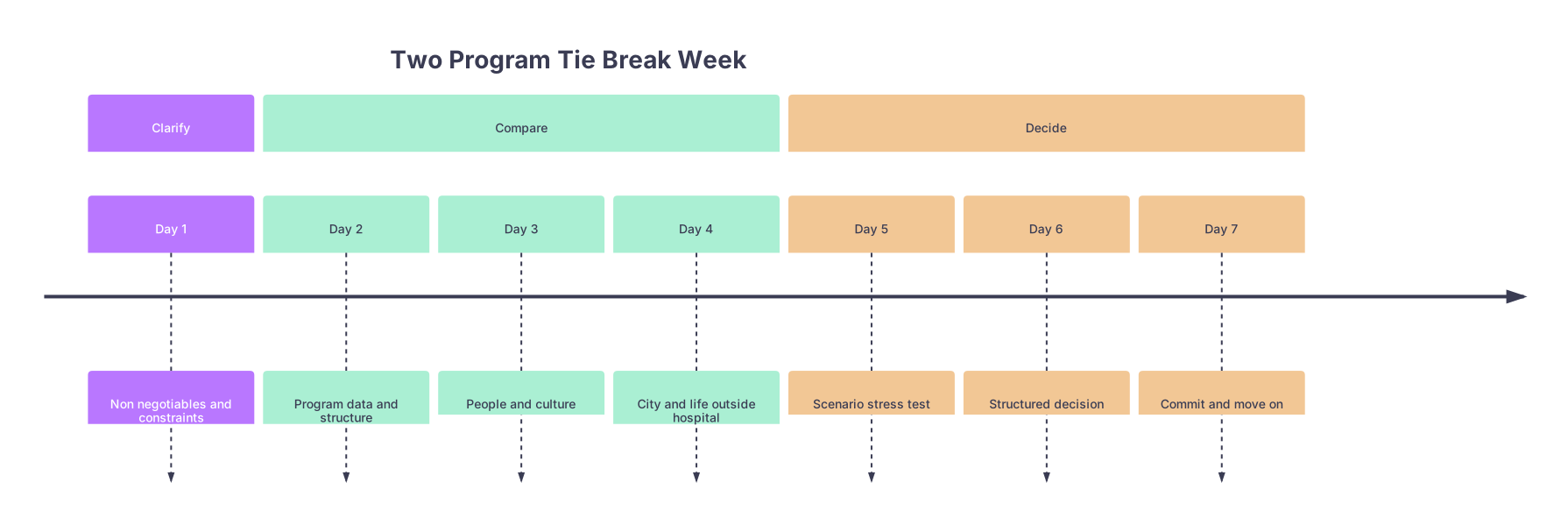
| Period | Event |
|---|---|
| Clarify - Day 1 | Non negotiables and constraints |
| Compare - Day 2 | Program data and structure |
| Compare - Day 3 | People and culture |
| Compare - Day 4 | City and life outside hospital |
| Decide - Day 5 | Scenario stress test |
| Decide - Day 6 | Structured decision |
| Decide - Day 7 | Commit and move on |
Let’s go day by day.
Day 1 – Lock Down Your Non‑Negotiables
If you skip this, the rest of the week is noise.
Today’s goal: Define what actually matters to you for the next 3–7 years. Not what sounds impressive. What will keep you from burning out or resenting your own rank list.
At this point you should:
Draw three columns on paper:
- Column A: Non-negotiables (dealbreakers)
- Column B: Strong preferences
- Column C: Nice-to-haves
Fill Column A first. These must be specific and concrete. Think:
- Max acceptable commute (e.g., “≤ 30 min door-to-door”)
- Required proximity to partner/kids/family
- Minimum case volume or certain fellowship exposure
- Required visa support / H1B possibility
- Required moonlighting allowed after PGY-2
Cap Column A at 5 items. If everything is “non-negotiable,” nothing is. Brutal honesty here.
Then list Column B (5–8 items):
- Academic vs community flavor
- Research time or protected didactics quality
- Patient population diversity
- Reputation in your target fellowship
- Call frequency pattern you can live with
Column C – brain dump the rest. Gym on site, certain weather, parking situation, aesthetics of the resident lounge. They matter, but they’re not running the show.
By the end of Day 1, you should have one page that defines the lens for the rest of the week. You’ll keep coming back to this.
Day 2 – Hard Data: Structure, Workload, Outcomes
Today is not about vibes. It’s about numbers and concrete structure.
At this point you should pull:
- Program websites
- FREIDA / ACGME info
- Any interview-day handouts
- Your notes from the interview season
Step 1: Build a simple comparison grid
Use something like this (modify for your specialty):
| Category | Program A | Program B |
|---|---|---|
| Total residents/yr | ||
| Call type/format | ||
| 24h call frequency | ||
| Average weekly hours | ||
| ICU months (PGY1–3) | ||
| Continuity clinic per week |
Then add:
- Board pass rate last 5 years
- Fellowship match list (if relevant)
- Procedural volumes (for procedural fields)
- Trauma level / case acuity (if relevant)
You want it all on one sheet so the differences hit you in the face.
Step 2: Reality-check workload and training quality
This is where people lie to themselves.
Ask:
- Which program clearly has heavier call? How do you actually handle chronic sleep loss?
- Which has better supervision early vs autonomy later? Which matches your learning style?
- Who is graduating feeling confident vs scrambling for extra moonlighting to get volume?
If you’ve got conflicting stories (“residents say 60–70 hrs, faculty says 80+”), annotate that. Don’t ignore it.
Step 3: Track outcomes
For competitive fellowships or academic careers, outcomes matter more than people admit.
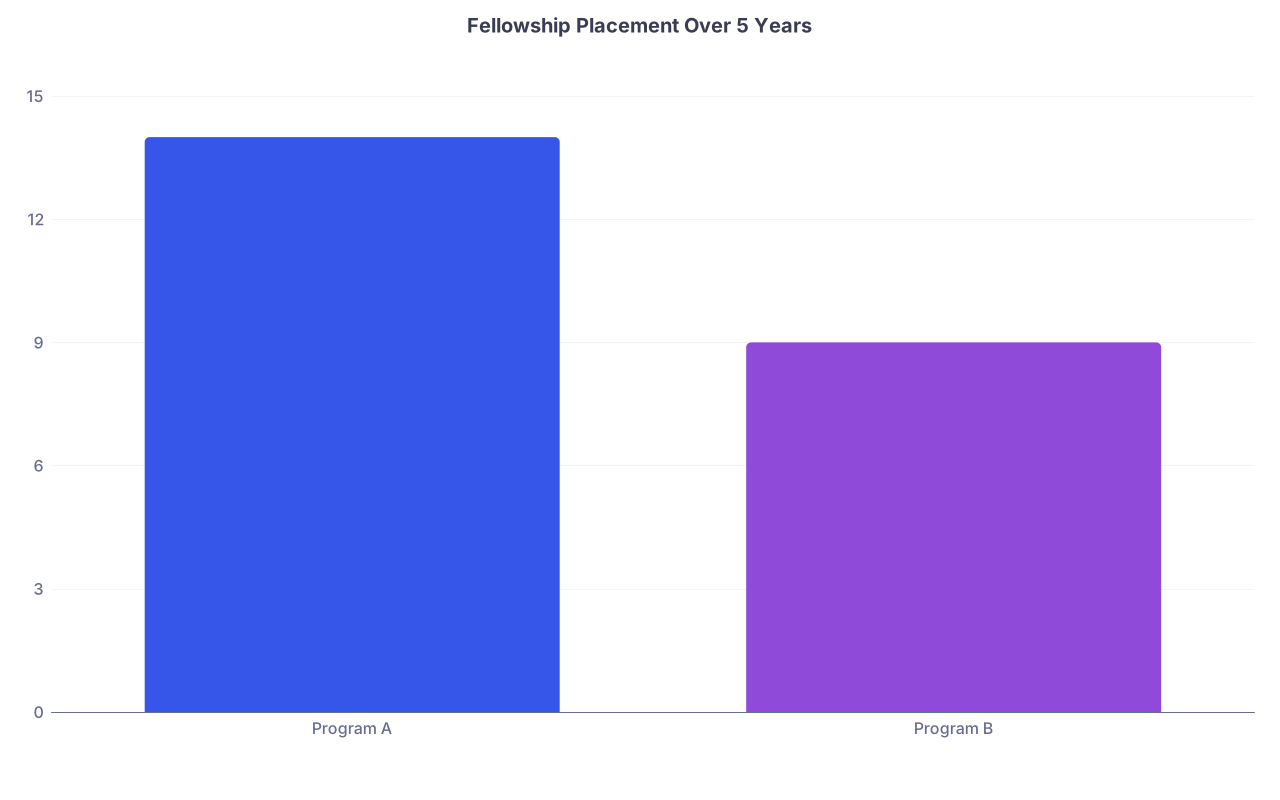
| Category | Value |
|---|---|
| Program A | 14 |
| Program B | 9 |
If Program A regularly sends people to the kind of programs you drool over and Program B doesn’t, that’s not a minor detail.
End of Day 2 deliverable: a one-page grid with key differences highlighted and a few “?” where you need clarification.
Day 3 – People, Culture, and Who You’ll Become
Today is about: Who are you going to be after 3–7 years in this environment?
This is the part people romanticize. You need to be specific.
Step 1: Review your notes and memories
At this point you should write, for each program:
- 3 adjectives for the residents you met
- 3 adjectives for the faculty vibe
- One sentence: “If I train here, I’ll probably become the kind of attending who ______.”
For example:
- Program A: Residents – sharp, intense, competitive. Faculty – demanding, hands-on, old-school.
- Program B: Residents – collaborative, relaxed, funny. Faculty – supportive, approachable, slightly disorganized.
Neither is inherently better. But one fits your wiring better.
Step 2: Short, targeted follow-ups
If you’re missing data, send two short emails max:
- One to a resident at each place (ideally your favorite from interview day)
- One specific question you can’t answer from your notes or website
Examples:
- “How does the program leadership handle a resident in trouble – remediation vs punishment?”
- “Realistically, how often are you leaving before 7 pm on inpatient months?”
Do not send a giant list. One or two real questions get real answers.
Step 3: Watch for red and green flags
Red flags you should not talk yourself out of:
- Residents openly warning you off certain rotations as “unsafe”
- Everyone jokes about how malignant it is “but we survive”
- Program director turnover or multiple APDs leaving recently
- Any whiff of retaliation toward residents who raise concerns
Green flags that matter more than you think:
- Chiefs and PD clearly know each resident’s career goals
- Graduates actually come back to visit
- Residents hang out voluntarily off-duty (and not just trauma-bonding over misery)
End of Day 3: For each program, write a brutally honest paragraph: “If I match here, my day-to-day emotional tone is likely to be ______.”
Day 4 – City, Cost of Living, and Life Outside the Hospital
You’re not a robot. Where you live matters, even if you’re in the hospital a lot.
At this point you should:
Step 1: Map your actual life radius
Pick a realistic “life radius”: where you’ll live, sleep, eat, occasionally exist as a human.
For each program:
- Look up typical rent within a reasonable commute (not just best-case).
- Check parking, public transit, and 24/7 grocery options. You’ll care on post-call days.
- If you have a partner/kids, look at their commute and support options too.
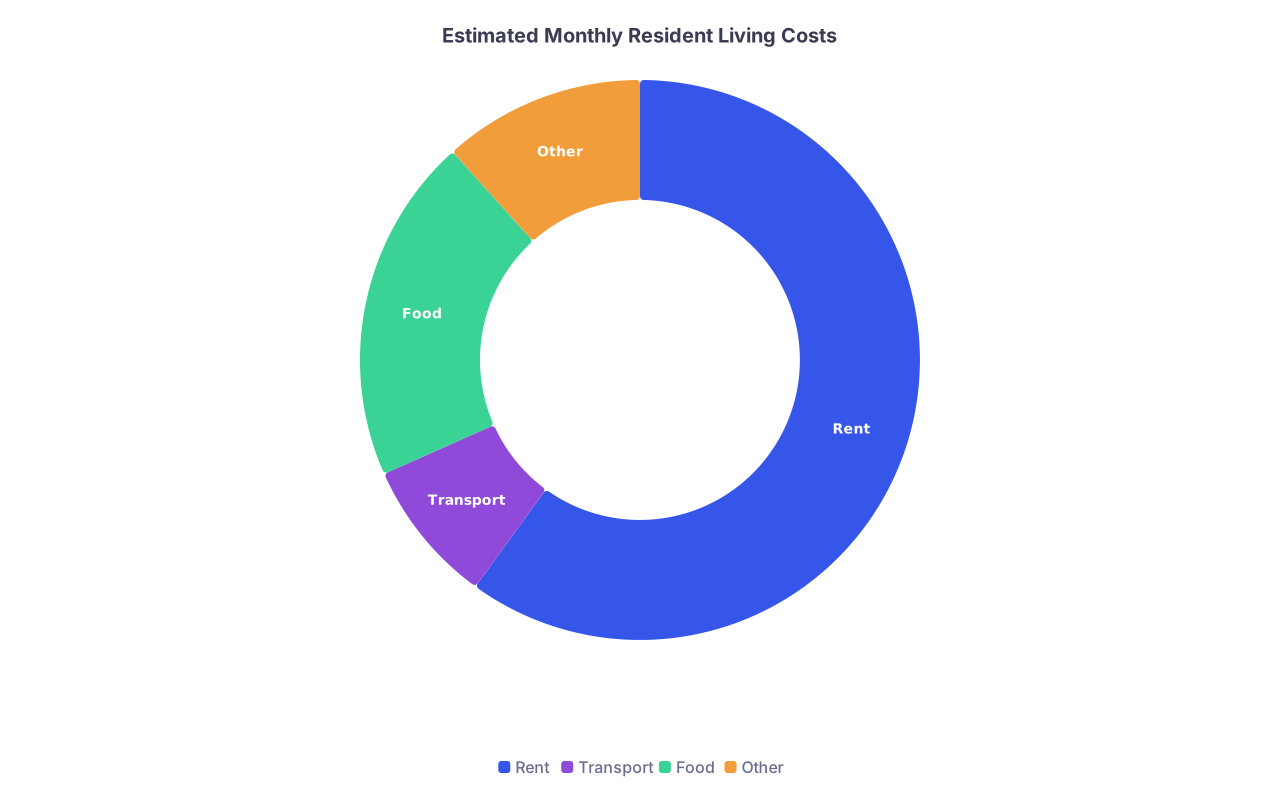
| Category | Value |
|---|---|
| Rent | 1800 |
| Transport | 250 |
| Food | 600 |
| Other | 350 |
Rough numbers are fine. You’re comparing orders of magnitude, not building a budget spreadsheet.
Step 2: Reality-check support systems
Ask yourself:
- Which city has someone you can call at 11 pm when your car dies?
- Which place has childcare options that actually match call schedules?
- If you get sick, which location gives you real help, not theoretical “community”?
If you’re single and mobile, maybe this matters less. If you have kids or a medically complex partner, it might outrank prestige entirely. I’ve seen that happen more than once.
Step 3: Environmental fit
Multiple residents burned out not from hours, but from hating where they lived.
Ask:
- Do you need green space? Warm weather? Public transit?
- Does seasonal depression wreck you? Then that “amazing” Northeast program might not be so amazing in January of PGY-2.
End of Day 4: Write for each program: “On my rare days off, I can see myself actually enjoying ______ here.”
Day 5 – Scenario Stress Test and Future Self Check
Today you run each program through real-life scenarios. This is where ties usually break.
Step 1: Three critical scenarios
For each program, mentally run through these three:
Worst realistic call month
- You’re on nights, understaffed, 80hr weeks.
- What support exists? How do seniors/attendings behave in crisis?
- Where do you decompress on post-call days?
Unexpected life event
- Parent gets sick, partner loses job, you get mild but chronic illness.
- Which program & city give you better flexibility and support?
- Which leadership would you actually trust to negotiate with?
End of residency
- It’s your final year. You’re about to apply for your dream job/fellowship.
- Which program’s name, training, and network opens more doors in your specific path?
- Who’s picking up the phone to call on your behalf?
Write out 3–4 bullet points per scenario per program. Do not keep it in your head.
Step 2: Talk to one trusted person
One. Not a committee.
Pick someone who:
- Knows you well
- Is not overly invested in one “prestige” outcome
- Will tell you when you’re lying to yourself
Walk them through your grid, your paragraphs from Days 3–4, and these scenarios. Then ask:
“Given what you know about me, which one do you think I’ll actually be happier and more successful in?”
Listen to their immediate reaction. The first second often reveals more than the five-minute explanation.
Step 3: Gut check with structure
Now, without overthinking, answer these two questions for each program, 1–10 scale:
- “How excited am I to open an email saying I matched here?”
- “How relieved would I be not to match here?”
Capture the numbers. They’ll come back tomorrow.
Day 6 – Make the Decision (With Numbers and a Tiebreaker)
Today is decision day. No more data collection. No more “just one more call.”
At this point you should:
Step 1: Build a simple weighted score
Use your Day 1 priorities. For each program, score 1–5 on:
- Fit with non-negotiables
- Training quality / outcomes
- Culture/people
- City/life outside work
- Long-term career alignment
Then, if something in Column A (non-negotiables) is not met, that program gets an automatic red mark. You’re allowed to break your rules, but you have to look yourself in the eye while you do it.
| Factor | Weight | Program A | Program B |
|---|---|---|---|
| Non-negotiables met (Y/N) | — | Y | Y |
| Training quality | 3 | 5 | 4 |
| Culture fit | 3 | 3 | 5 |
| City/life outside work | 2 | 2 | 4 |
| Career alignment | 3 | 4 | 3 |
Multiply score × weight, add them up. This is not math for its own sake; it forces you to be consistent.
Step 2: Overlay your emotional scores
Bring back Day 5:
- Excitement score (1–10)
- Relief-not-to-match score (1–10)
Now you have:
- Rational weighted score
- Emotional excitement
- Emotional avoidance
If all three point to the same program, you’re done. That’s your #1.
If they conflict, pay attention to why. Example:
- Program A: Higher training score, lower culture/life score, high anxiety
- Program B: Slightly weaker training score, way better life and culture, higher excitement
I have seen people choose Program A in this situation and regret it within 6 months. I have never seen someone regret choosing the slightly “less shiny” program where they actually liked their life.
Step 3: Force a commitment
You need a hard close.
Do this exercise:
- Write at the top of a page: “My tentative rank decision is: #1 ______, #2 ______.”
- Set a 24-hour rule: you can sleep on it once.
- Tomorrow (Day 7) you’re allowed to only say “yes, I keep this” or “no, I swap them.” No reopening research.
Put the paper somewhere visible. Your brain will process in the background.
Day 7 – Future-Proof and Close the Door
Last day. No more new data. Today is about commitment and future you.
At this point you should:
Step 1: Meet your future self
Do a quick visualization that’s not fluffy, just concrete.
- It’s the middle of PGY-2, post-call, you’re exhausted.
- Which program are you at in that mental picture?
- Are you more relieved or more regretful?
Then jump ahead:
- Five years from now, you’re talking to a med student thinking about these two programs.
- Which one are you quietly grateful you chose?
Step 2: Confirm or swap – once
Look at yesterday’s tentative rank order.
Ask yourself:
- “Am I mainly doubting because I fear missing out on prestige?”
- “Or am I ignoring real red flags about training, support, or life?”
If your gut is screaming to swap them, and the reasons line up with your Day 1 priorities, swap them. Once.
That’s it. That’s your final order.
Step 3: Write a short rationale and then stop
On that same page, write 4–5 bullet points:
- Why Program #1 is ranked higher
- What you’re consciously giving up by not ranking the other first
- One sentence to your future self: “I chose this because ______.”
This is not sentimental. It’s armor against future doubt.
Because six months into intern year, when you’re post-call and miserable, your brain will try to rewrite history. You’ll start thinking, “I should’ve gone to the other one.” This page will remind you: you made a structured, thoughtful choice based on the data you had and the person you were.
One-Week Tie-Break: The Process in Miniature
To keep it straight:
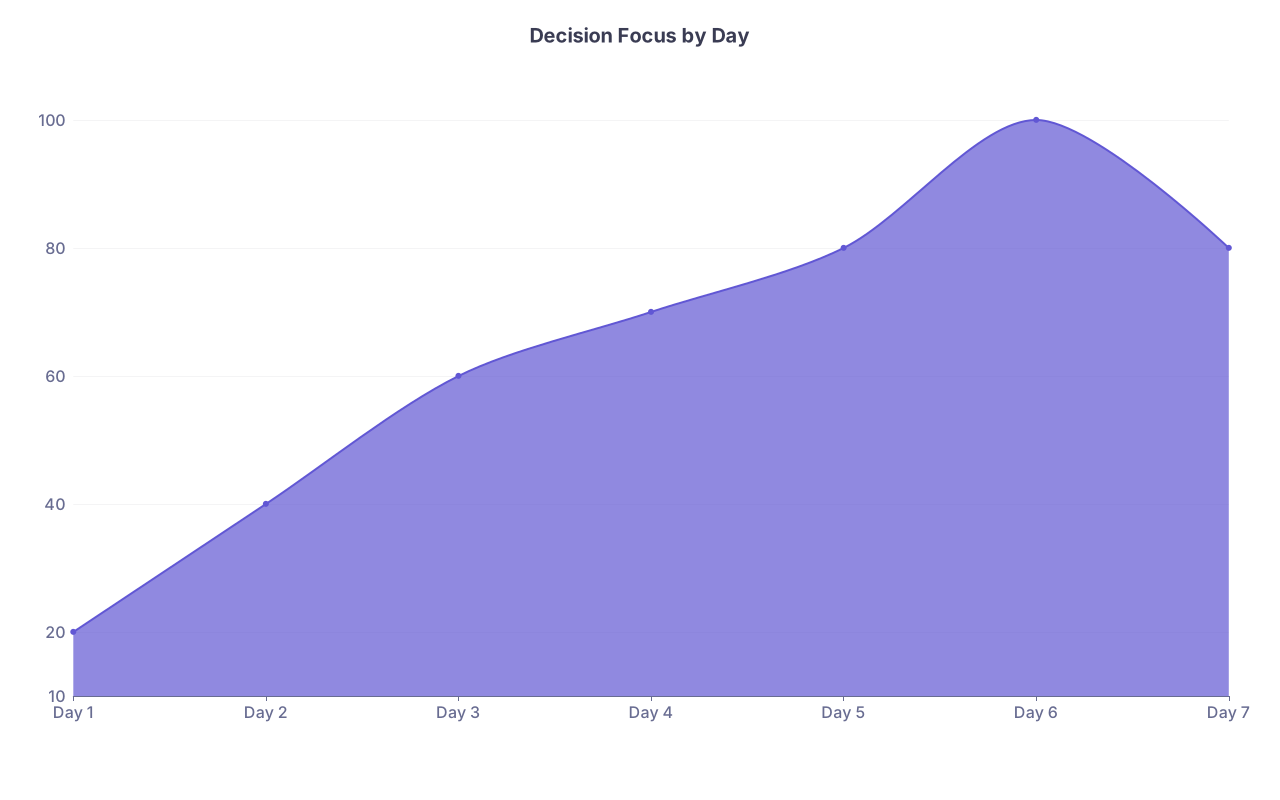
| Category | Value |
|---|---|
| Day 1 | 20 |
| Day 2 | 40 |
| Day 3 | 60 |
| Day 4 | 70 |
| Day 5 | 80 |
| Day 6 | 100 |
| Day 7 | 80 |
And the overall flow:
| Period | Event |
|---|---|
| Clarify - Day 1 | Non negotiables and constraints |
| Compare - Day 2 | Program data and structure |
| Compare - Day 3 | People and culture |
| Compare - Day 4 | City and life outside hospital |
| Decide - Day 5 | Scenario stress test |
| Decide - Day 6 | Structured decision |
| Decide - Day 7 | Commit and move on |
Final Thoughts: What Actually Matters
Strip it down, here are the three points that decide this:
- A structured, time-limited process beats endless waffling. Seven days, specific tasks, then you’re done.
- The best program is the one that fits your priorities and life for several years, not just your ego on Match Day.
- Once you decide, protect the decision. You made it with clear eyes and a defined process. That’s all any future attending version of you can reasonably ask for.