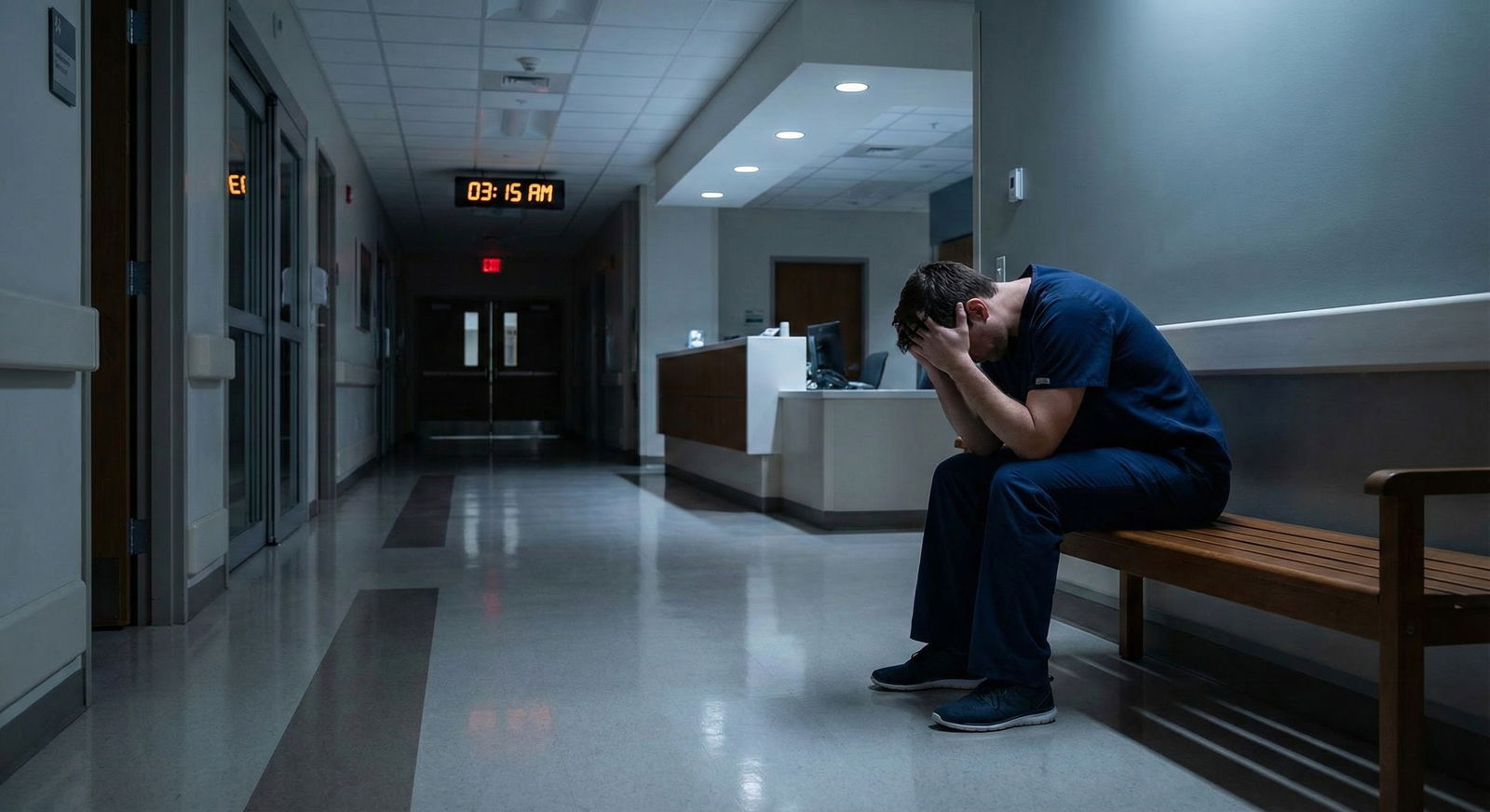
It is late October. You just got an interview invite from a program you really like on paper. Great reputation. Good fellowship placements. Then you open the schedule PDF they attached and see it:
“Q4 in-house call, home call on jeopardy, 24+4, night float, back‑up home pager.”
You realize you have no idea what your life will actually look like at this program. You know call is “bad,” but you cannot quite decode how bad, or what kind of bad.
Let me break this down specifically.
Most applicants obsess over prestige, location, and fellowship match lists. The smart ones stare hard at one thing: how, where, and when you take call. Because that, more than almost anything else, shapes your day‑to‑day life for 3–7 years.
We are going to dissect in‑house call and home call the way a chief resident would explain it on a whiteboard to an intern who just got crushed by their first weekend on service.
1. The Core Definitions (Stripped of Marketing Spin)
Programs love euphemisms. “Night team.” “Resident of record.” “Home coverage.” Ignore the branding. There are two fundamental beasts:
- In‑house call
- Home call
Everything else (night float, short call, long call, jeopardy) is a variation or workaround.
What is in‑house call?
You are physically in the hospital for the entire call shift.
Generically:
- Arrive: already at work from the day, or start evenings
- Duration: often 24 hours (with up to 4 hours of wrap‑up allowed), or 12‑hour nights
- Location: you must stay in the hospital building or immediately adjacent call rooms
- Work: admissions, cross‑coverage, consults, codes, emergencies
- Sleep: “protected” in the schedule, but completely dependent on how busy things are
Common patterns:
- Q3 or Q4 24‑hour call: every 3rd or 4th night
- 12‑hour night shifts: 7p–7a, often in a night‑float system
- ICU or OB: heavy in‑house call presence due to acuity
The main point: your body is in the building. You are committed. The pager owns you.
What is home call?
You are “on call” but not required to stay in the hospital. You carry a pager or phone and must be available to come in within a specified time window (commonly 20–30 minutes) if necessary.
Generically:
- During call period: you can be at home, at the gym, at dinner, etc., within distance limits
- Work: answering calls, giving orders, triaging, sometimes going in for admissions or urgent issues
- Sleep: depends on pages and whether you get called in
- Pay/credit: often counted as a call shift, but hours counted the minute you step into the hospital
Home call is seductive on paper. “You get to sleep at home.” Reality: it ranges from “basically a free evening” to “you are effectively in-house but unpaid for half of it.”
2. How In‑House vs Home Call Actually Feels on Your Body and Brain
Forget definitions. Let us talk lived experience. This is what applicants miss.
In‑house call: pain is predictable
A heavy 24‑hour in‑house call block feels like this:
- The day before: you hydrate, pack snacks, warn friends you will not respond to texts
- The shift: busy, constant interruptions, but you know you are “locked in” until tomorrow
- Post‑call: you leave late morning, you are a zombie, you sleep, you order food, you do not function
- The day after: you mostly feel human again, depending on workload
The key pattern: you have very intense, clearly defined periods of “I do not have a life,” followed by real off days where you are genuinely free (if the program honors post‑call days and you are not being abused).
Pros of in‑house from a lifestyle perspective:
- Contained suffering. Your bad nights are scheduled and obvious.
- Fewer interruptions on non‑call days. You are off, you are off.
- Bonding with your call team. Yes, that actually matters to how much it sucks.
Cons:
- Physically brutal. Especially Q3 or frequent 24‑hour calls.
- Dangerous post‑call driving and “post‑call clinic” if programs are sloppy.
- Harder on families with young kids; you are simply not there for long stretches.
Home call: pain is variable (and often insidious)
Bad home call looks like this:
You finish your day around 5 or 6. You go home, and you are “on.” Your phone is live. Nurses, techs, triage lines, outside EDs, SNFs. Calls every 20 minutes from 9 p.m. to 2 a.m. You drift in and out of deep, low‑quality sleep. At 3 a.m. you get called to come in for an admission or an unstable patient. You drive in half‑awake, work 2–3 hours, then drive home, then try to catch another hour before coming back for your regular day. And you do this several times a week.
Good home call looks like this:
Two or three pages in the evening that you can address by phone. Maybe once a week you go in for something quick. You mostly sleep through the night. You start the next day slightly more tired than normal, but functional.
Pros:
- When it is truly light, it gives you real evenings at home.
- Often easier to be present with family if the call volume is low.
- You may be able to fit in workouts, errands, or brief social plans—within the pager radius.
Cons:
- Sleep fragmentation. Chronic, low‑grade exhaustion from repeated pages.
- Psychological tether. You are never fully “off” even when not in the building.
- Abuse risk. Programs sometimes load too many services under “home call” and undercount actual work.
Bottom line: in‑house call is acutely miserable but cleaner. Home call can be quietly worse over time if the volume is high and poorly structured.
3. How Different Specialties Use In‑House vs Home Call
You cannot compare OB call in a county hospital to radiology home call in a suburban center. Context is everything.
| Specialty | Common Primary Call Type | Typical Frequency | Notes |
|---|---|---|---|
| Internal Medicine | In-house + night float | Q4–Q7 or blocks | ICU heavier in-house |
| General Surgery | In-house + home backup | Q3–Q6 | Trauma = more in-house |
| OB/GYN | Mostly in-house | Q3–Q6 | High overnight volume |
| Radiology | In-house nights + home | Varies widely | Interventional = heavy home |
| Anesthesiology | In-house + home call | Q4–Q7 | OR vs OB vs ICU dependent |
Internal Medicine
Most categorical IM programs have moved away from old‑school Q3 30‑hour calls to some mix of:
- In‑house “long call” admitting shifts
- Night float blocks (resident in-house 5–7 nights in a row)
- Occasional true 24‑hour calls (ICU in community settings)
- Some home call for off‑site or subspecialty services (e.g., heme/onc, transplant consults)
Lifestyle hinge points:
- How much truly overnight in‑house time you have
- How humane the night float system is (one or two months per year vs four)
- Whether “home call” subspecialty months are actually light or stealth misery
General Surgery
Surgery is usually heavier:
- Many services still run Q3–Q4 24‑hour in‑house call, especially trauma/acute care
- Night float is increasingly common but not universal
- Home call often used for:
- Transplant
- Vascular
- Specialty services (e.g., surgical oncology backup)
- Smaller community sites where you are the only person covering
Lifestyle hinge points:
- Trauma center vs community hospital (Level I trauma = more in‑house, more brutal)
- How many nights per month? Anything consistently above 7–8 heavy calls is rough.
- Whether chiefs dump scut to juniors overnight or actually protect education.
OB/GYN
OB call is its own universe.
You have:
- Mandatory in‑house labor and delivery call (babies do not respect business hours)
- Sometimes home call for GYN or subspecialty services
OB call tends to be physically demanding, with:
- High nighttime OR volume (sections, emergent cases)
- Constant monitoring of multiple complex patients
- Minimal real sleep if the unit is busy
Programs with night float L&D can be slightly more humane, but nights will always be intense.
Radiology & Anesthesiology
People choose these specialties partly for more controlled lifestyles, but they can still get hit:
Radiology:
- In‑house night float often for diagnostic work (“nighthawk” style)
- Interventional radiology: notorious for rough home call at some centers. You might get called in multiple times a night for bleeds, lines, embolizations.
Anesthesia:
- In‑house call: OB, trauma, transplant
- Home call: smaller sites, post‑op issues, emergent cases
- Volume wildly variable based on hospital case mix
Lesson: “Cognitive” specialties are not all cushy, and “procedural” ones are not uniformly brutal. You have to know the specific call structure for that program and that hospital.
4. Reading Between the Lines: How Call Shapes Your Real Life
Now the part that actually matters when you rank programs: lifestyle patterns.
Sleep, circadian rhythm, and long‑term fatigue
You are not a hero. Repeated circadian disruption will trash you.
In‑house 24s:
- Acute sleep loss
- Typically followed by post‑call days that let you reset somewhat
- If done too often (Q3/Q4 for extended periods), you live in a fog
Night float:
- More stable rhythm (you are basically nocturnal for a block)
- Hard on relationships and social life—your “weekend” may be Tuesday morning
- If they stack night blocks back‑to‑back, burnout climbs
Home call:
- The killer is cumulative partial sleep deprivation.
- You may never get an 8‑hour block because of scattered pages.
- Your body never fully shifts schedule, so it never fully recovers.
I have watched residents with “light” but chronic home call look more wrecked at 18 months than surgery residents with structured Q4 call and true post‑call days. Unstructured fatigue is worse than organized suffering.
Relationships, kids, and actual living
If you care about partners, kids, or maintaining a non‑medicine identity, the pattern of your off‑time is as important as the quantity.
In‑house heavy call:
- You disappear for whole days at a time but then may have real stretches of freedom.
- Easier to schedule “we will have all of Sunday and Monday” than “I might get paged 12 times.”
- Your partner needs to accept some fully solo nights.
Home call:
- You may physically be home for dinner and bedtime but be half‑present, jumping up for phone calls.
- It can breed more resentment because “you are here but not really here.”
- For kids, you are more “around” but less predictably engaged.
There is no universally better option. Some people do better with clean lines and in‑house call. Others prefer being around even if distracted. The problem is you rarely see the true pattern until you are there.
5. Hard Questions to Ask on the Interview Trail
Most applicants ask useless call questions: “Do you have night float?” or “How often are you on call?” Programs can spin those. You need sharper questions.
Here is a more targeted set. Use these (or variants) when talking to current residents, not program leadership.
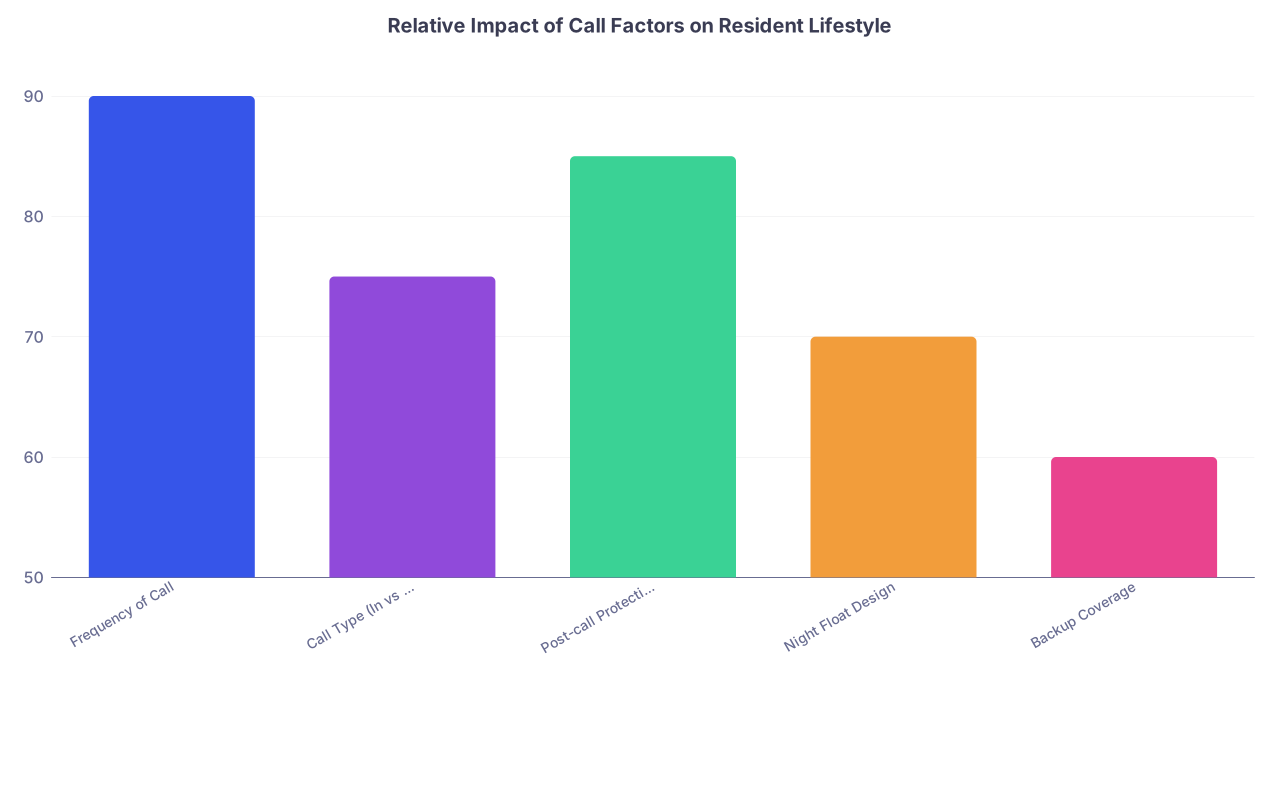
| Category | Value |
|---|---|
| Frequency of Call | 90 |
| Call Type (In vs Home) | 75 |
| Post-call Protection | 85 |
| Night Float Design | 70 |
| Backup Coverage | 60 |
For in‑house call
Ask:
- On a typical 24‑hour call, how many hours of actual sleep do you get on average?
- Are post‑call days ever cancelled or converted to “post‑call clinic” regularly?
- What is the maximum number of call shifts you had in a single month this year?
- Are there services where you dread call more than others? Why?
Red flags:
- “Sleep? None, really” said with a laugh but no hint of change coming.
- Post‑call days commonly being repurposed for administrative or clinic work.
- Interns routinely staying past the official 28‑hour cap because “the work just has to get done.”
For home call
Ask:
- How many times per night are you typically paged on home call?
- In the last month you were on home call, how many nights did you have to physically come in?
- Do you ever come in multiple times in a single night?
- Are you expected to work a full regular day after a rough home call night with multiple call‑ins?
Red flags:
- Residents roll their eyes or immediately joke “home call is a lie.”
- No cap or relief mechanism if you get slammed overnight.
- People frequently napping in call rooms the next day “between cases” because home call destroyed their sleep.
For night float systems
Ask:
- How many weeks of night float per year, and can they be split or are they stacked?
- What is the census and admission cap on night float?
- Are there dedicated admitting teams, or are you covering cross‑cover and admissions simultaneously?
Red flags:
- More than 10–12 weeks of night float per year without flexibility.
- Night float cross‑covering huge patient lists with heavy admissions on top.
Do not ask, “Is call manageable?” They will say yes. Ask for numbers and specific experiences.
6. Strategic Tradeoffs When Ranking Programs
You are not going to find a residency without call. If someone promises that, they are lying or running an outpatient‑only scam.
The real decision is what kind of pain you are willing to accept for what kind of training.
Strong training + heavy but structured in‑house call
This is the classic big‑academic, busy‑hospital model.
Pros:
- You will see a lot. You will not be underprepared for independent practice.
- Clear schedule patterns. You know when life will suck and when it will not.
Cons:
- Your 20s (and early 30s) are going to be physically rough.
- Travel, weddings, family events need careful scheduling.
This is often worth it in surgical, OB, and some IM programs if the culture is supportive and education is strong.
Mixed call with ugly home call burden
This is the sneaky one.
Program sells:
“Look, we do a lot of home call so you can be at home with your family.”
Reality at some places:
- You are technically “home” but functionally working or semi‑awake all night.
- Documentation burden piled on during the day with no adjustment after rough nights.
- No real recognition that home call is still call.
I would rank a program with transparent Q4 24s and real post‑call days above a program with “light” home call that residents quietly admit is crippling.
Lighter call + weaker clinical exposure
You will see this more in smaller community or low‑volume programs.
Pros:
- You might genuinely have more free time and sleep.
- Life outside medicine is more possible.
Cons:
- You may feel underexposed when you hit fellowship or independent practice.
- Board pass rates, fellowship match, and procedure numbers may be weaker.
There is a middle ground, but you have to decide how much you are willing to trade clinical intensity for lifestyle. Some specialties (like general surgery) punish undertraining. Others (like outpatient‑heavy fields) are more forgiving.
7. Putting It Together: A Simple Mental Framework
Let me give you a quick way to evaluate a program’s call and lifestyle in your head.
Three axes:
- Intensity of call (how much work per call night)
- Predictability of call (can you forecast your functional days)
- Recovery from call (true post‑call and culture of respecting it)

| Step | Description |
|---|---|
| Step 1 | Evaluate Program |
| Step 2 | Intensity of Call |
| Step 3 | Check Recovery After Call |
| Step 4 | Check Predictability |
| Step 5 | Possibly Acceptable |
| Step 6 | High Burnout Risk |
| Step 7 | Manageable |
| Step 8 | Chronic Stress Risk |
| Step 9 | High Intensity? |
| Step 10 | Strong Recovery? |
| Step 11 | Predictable Schedule? |
Where in‑house vs home call fits in:
In‑house call tends to be:
- High intensity
- High predictability
- Recovery highly variable by program
Home call tends to be:
- Intensity highly variable
- Predictability often low
- Recovery usually undervalued
Your best scenario:
- Moderate to high intensity when in‑house, but:
- Predictable schedules
- Protected post‑call
- Reasonable number of total nights per month
- Home call used sparingly and genuinely light
Your worst scenario:
- Chronic medium‑high intensity home call with:
- Frequent pages
- No real post‑call considerations
- Culture of “this is just how it is, deal with it”
That second situation breaks people.
FAQs
1. Is home call always better than in‑house call for lifestyle?
No. That assumption is naive. Light, well‑structured home call can be excellent. Heavy, chaotic home call is worse than a clean Q4 in‑house system with real post‑call days. You judge by actual page volume, call‑ins, and how the next day is handled, not by the label.
2. How many call nights per month is “too many”?
Context dependent, but as a rough guide:
7 intense in‑house calls per month, month after month, is rough in any specialty.
10 nights of meaningful home call with frequent call‑ins starts to accumulate serious fatigue.
It is not just count. Consecutive nights, lack of recovery, and home expectations matter just as much.
3. Should heavy call be a dealbreaker even for a top program?
Not automatically. If:
- The call is heavy but resident‑run and educationally rich,
- Post‑call is protected and culture is supportive,
- And you can tolerate 3–5 hard years for strong training,
it can be worth it. I would be more wary of top‑name programs that dismiss resident fatigue or normalize unsafe hours than of mid‑tier programs with honest, structured heavy call.
4. How do I get honest information about call during interviews?
Talk to multiple residents at different levels. Ask for numbers and specific anecdotes, not opinions. For example: “On your last call month, how many nights did you actually sleep 6+ hours?” or “How often did your post‑call day get repurposed?” Watch their faces. The first eye‑roll or long pause tells you more than any slide deck.
5. What if I am very sensitive to poor sleep—should I avoid certain specialties entirely?
If you know your sleep tolerance is low, be realistic. Fields with relentless, unpredictable overnight emergencies (trauma surgery, OB in busy centers, some ICU tracks) will be harder. You do not have to avoid them absolutely, but you should preferentially rank programs with:
- Strong night float structures,
- Limited home call,
- A clear culture of respecting post‑call recovery.
If that combination does not exist for a given field at multiple programs you like, it is fair to reconsider your specialty.
Key points to walk away with:
- “In‑house vs home call” is not about labels. It is about intensity, predictability, and recovery.
- A brutally honest, structured in‑house call system can be healthier than a chaotic, under‑acknowledged home call setup.
- When ranking programs, press for specifics: pages per night, call‑ins, post‑call protection, and how often the rules actually hold.