It’s late December. You’ve got 15 interviews done, 6 more scheduled, and now you’re staring at your spreadsheet trying to build a rank list that doesn’t ruin your life.
You’ve compared boards pass rates, case logs, fellowship matches, call schedules. You’ve read every “Top Residency Programs” list that Google can spit out. You’ve even looked at Instagram.
What you have not seen, because nobody ever puts this on a website, is the quiet machinery that really separates programs:
Their alumni network.
Not the glossy “Our alumni go on to…” paragraph in the brochure. I mean the phone calls, the emails, the “Hey, this kid’s good—take a look at their application” conversations that happen in closed offices and late-night text threads.
Let me walk you through what alumni networks actually do for their own residents—what you’ll never see on a tour—and how to tell which programs have the real thing versus the ones just name-dropping.
The First Truth: Alumni Networks Are a Hidden Currency
You will not see “alumni network strength” as a filter on FREIDA. But in real residency life, it’s as real as your call schedule.
Here’s what’s really going on:
At a strong program, alumni are everywhere—faculty at big-name hospitals, PDs at solid community programs, fellowship directors at competitive institutions, and senior partners in high-yield private practices. They still feel like they “owe” something to their training program. So when your PD or chief emails them your CV, they answer.
At a weak program, “alumni network” means three people from the last decade who wandered into decent fellowships mostly on their own. They’re not organized, they’re not connected back to the program, and frankly, nobody’s proactively going to bat for you.
The brutal reality: two residents with similar CVs apply to the same fellowship. One’s from a place with an active, loyal alumni network. The other isn’t. They are not playing the same game.
How Alumni Actually Move the Needle (Not the Fantasy Version)
Let me be direct: “networking” is not magic fairy dust. But alumni can tilt the table in your favor at several very specific moments.
1. The Quiet “Pull” for Fellowship and Jobs
This is the biggest one, and it’s never advertised honestly.
You apply to GI, Cards, Sports, Heme/Onc—whatever. Programs are flooded. Everyone has decent scores, some research, a couple posters. You’re one name in a spreadsheet of 300–600.
Here’s what happens behind the scenes:
An alumni fellowship director at Big Name University texts your PD:
“Hey, I saw you have two applicants this year. Anyone I should look at closer?”Or your PD emails their former co-fellow at Another Big Name Program:
“We’ve got one really strong candidate for you—attaching their CV, would appreciate a serious look.”
Now you’re no longer “Applicant #147.” You’re “the resident from X program that Y trusts.”
That doesn’t guarantee a spot. But it guarantees your file gets read differently. When you’re on the edge of the “interview or ignore” line, that’s huge.
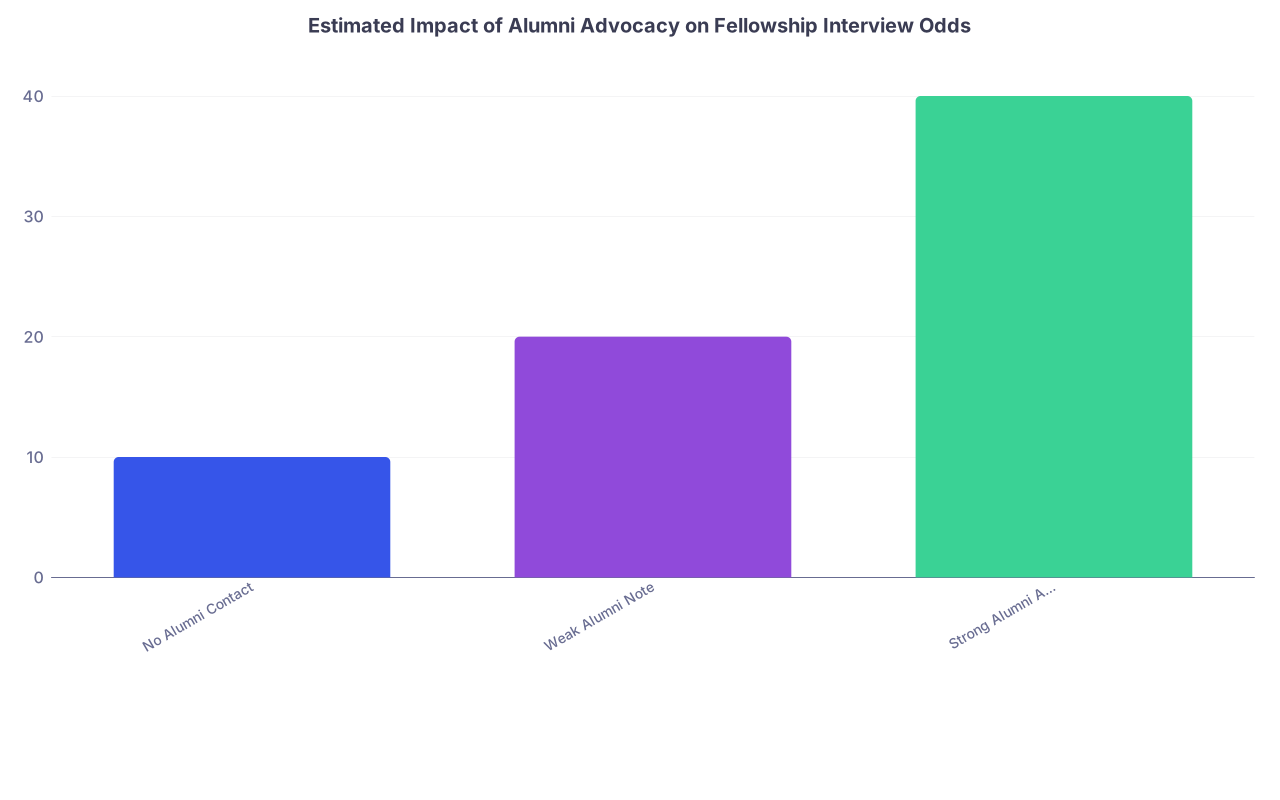
| Category | Value |
|---|---|
| No Alumni Contact | 10 |
| Weak Alumni Note | 20 |
| Strong Alumni Advocacy | 40 |
Those numbers aren’t from a paper. They’re from watching this play out year after year in program meetings.
The key difference: strong alumni networks don’t just send a “nice kid” email. They pick up the phone, or they explicitly tag you as “top third of our class.” That matters.
2. Steering You Away From Bad Jobs and Toxic Fellowships
Here’s something applicants never think about while ranking: a good alumni network doesn’t just open doors—it slams bad ones shut before you walk through them.
You’re a PGY-3 looking at hospitalist jobs. One looks fantastic on paper. Salary is high, location is good, “protected admin time,” “teaching opportunities.”
Your faculty quietly forwards your email to an alum working there.
The reply comes back:
“Do NOT let your resident sign there. Unrealistic RVUs, 18–22 encounters per day, 1 doc on overnight for 4 hospitals. I’m leaving as soon as my bonus clawback expires.”
Your PD sits you down and says, “I know that offer looks good. You do not want to work there.”
If your program doesn’t have alumni in the wild that they can query like this, you become the guinea pig. You find out the truth six months into your first job when you’re drowning in notes.
Same for fellowships. Alumni will tell your PD and your chiefs which programs are malignant, which are coasting on reputation, and which are secretly excellent but under-marketed. That intel trickles down to you—if the network exists.
3. The Shadow Backchannel on Your Reputation
Nobody tells med students this, but after a certain point, your reputation becomes portable.
Alumni talk.
An example I watched unfold:
A PGY-3 from Program A applies to a community job where an alum from Program A is now the department lead. Before HR even sets up the interview, the lead emails their old PD:
“Remember X? Thinking about hiring them. What’s the real story?”
If you were a hard worker, reliable, decent human being? That PD says, “Gold. Hire them.” You’re basically in.
If you were lazy, constantly late, malignant toward juniors? That PD doesn’t tank you outright (most won’t), but they say something like, “Competent clinically, but needed a fair bit of feedback about professionalism.”
Translation to the alum: proceed with caution.
At programs with a dense alumni web, this happens a lot. Your true performance doesn’t stay within your hospital’s four walls as much as you think.
Match Time: What Alumni Do For Their Own During Applications
Here’s the part that actually matters to you now: when you’re choosing where to rank, you’re choosing how much of this machine will be running in the background for you later.
But alumni already affect you during the residency match too, you just don’t see it.
4. How Alumni Shape Who Even Gets Interviews
At some institutions, especially ones with long histories, alumni literally change which applications get eyeballs.
Picture an IM program at a major academic center. ERAS floods them with 4,000+ applications. They filter on Step, MSPE language, school, red flags. That cuts it down. But they still have hundreds that could be interviewed.
Now alumni influence kicks in.
An alum who’s now an associate PD at another program emails:
“We have a really strong M4 here, wants to move to your region. Any chance you can take a look?”A faculty member who trained there says:
“By the way, this M4 from my old med school—phenomenal. I’d bump them up.”
I’ve sat in those meetings. A quiet comment like, “This one has a strong rec from so-and-so, who knows our program well,” can bump a borderline application into the interview pile.
You won’t see that on your status page. You’ll just think, “Nice, I got an interview.”
5. The Alumni “Vouch” During Rank Meetings
After interview season, programs sit down and build their rank order list. Lots of voices in the room: PD, APDs, chiefs, a couple influential faculty.
Guess who else occasionally gets name-dropped?
Alumni who know you, your school, or your mentor.
I’ve watched it:
- Someone says: “Applicant 62—average interview, decent CV, I could go either way.”
- Another faculty member chimes in: “My co-fellow who’s now at their med school said this student is one of their top people. Very independent, strong on the wards. I’d rank them above the other mid-tier folks.”
You just jumped 10–20 spots on the list because an alum opened their mouth at the right time.
Compare that to a program where nobody knows where you’re from, nobody trusts your LOR writers, and nobody has alumni insight. Then you live and die off one 20-minute Zoom and the buzzwords in your letters.
The Subtle Stuff: Culture, Confidence, and “Belonging”
Not every alumni effect is transactional. Some are more psychological, but just as real.
6. Normalizing Ambition
At programs with a strong alumni track record, nobody blinks when a PGY-2 says, “I want to go to MD Anderson for Heme/Onc” or “I want an Ortho sports fellowship at HSS.”
Because last year someone did that. And three years before that too.
You absorb that without realizing. You set your bar based on what you see other residents doing and what alumni have actually achieved.
At weaker programs, an identical PGY-2 announces that same goal and you can feel the mental eye-roll. “Good luck with that.” Not always said out loud, but it’s in the air.
That shapes what you even try for. Not because you aren’t good enough, but because your environment quietly tells you those places are “out of reach.”
Strong alumni networks fight that by sheer precedent. “Oh, you want to do peds cards? Talk to Dr. X, she’s at CHOP now.” Suddenly, CHOP is no longer mythical. It’s where “people from here” go.
7. Giving You a Safety Net
Every resident hits a wall. Bad rotation, rough evaluation, personal crisis, failed board exam, whatever.
At programs with a deep alumni bench, people don’t panic when you stumble. They’ve seen this movie.
They’ve watched someone fail Step 3 and still match a fellowship, because an alum director took them anyway after a trusted PD conversation. They’ve watched a resident take a leave of absence and still end up with a great outpatient job because alumni kept an eye out.
There’s this quiet institutional memory baked into the alumni network: “We can still get you where you want to go, even with this hiccup.”
At places without that, one bad step and everyone is suddenly in “damage control, good luck” mode. Big difference.
How to Tell If a Program’s Alumni Network Is Real or Just Marketing
Now the part you actually care about: how do you, as an applicant, figure this out without access to the back office?
You’re not going to get a slide titled “Here Are the Calls We Make for Our Residents.” So you have to read between the lines.
8. Read Their Fellowship and Job Lists Correctly
Not the glossy single slide with logos. Those are curated and cherry-picked. I mean: how granular, how consistent, and how current are they?
A real network looks like this:
- Every year, multiple residents go to decent or strong fellowships across a range of places, not just one random “Cleveland Clinic!” outlier every 7 years.
- People match where prior residents have already gone. There’s a pattern. Two to the same GI program in 4 years. Three to the same Cards program over a decade.
A fake “network” looks like this:
- Name-dropping big institutions with no pattern: Mayo one year, MD Anderson once, some Ivy once, nothing for five years in between.
- Only the absolute superstar resident with 15 pubs gets a great spot; everyone else disappears into “various practice settings.”
| Signal Type | Red Flag Example | Green Flag Example |
|---|---|---|
| Fellowship list | Sporadic big names, long gaps | Regular placements yearly |
| Patterns | One-off matches everywhere | Repeat programs over time |
| Jobs | Vague "various practice settings" | Specific institutions or groups |
| Transparency | No detailed list | Updated website or handout |
If they won’t show you a list of where their last 5–7 graduating classes ended up, that’s not an accident.
9. Listen to How Residents Talk About Alumni… and How Often
On interview day, ask:
“Do alumni stay in touch with the program?”
“Do alumni help with fellowships and job searches?”
“Where did the last couple chiefs end up?”
Listen to the tone and the specifics, not the words.
Weak network answers sound like:
- “Yeah, people are all over, lots of different places.”
- “We have good opportunities, people do fine.”
- “I’m not totally sure where most of the grads went, to be honest.”
Strong network answers sound like:
- “Oh yeah, we have several alumni who are PDs now; the chiefs last year went to X and Y for fellowship.”
- “We have a WhatsApp/Slack group with a ton of alumni, they’ll answer questions about jobs in their region.”
- “For people applying to subspecialty, our PD usually emails a few fellowship directors they know.”
You’re not just listening for content. You’re listening for fluency. If they live in a robust alumni ecosystem, the examples come out instantly and naturally.
How Alumni Networks Quietly Influence Program Culture
This is the subtle layer most applicants totally overlook.
10. Alumni Shape What the Program Actually Values
Programs are not static. They evolve based on who graduates and what they go on to do.
If a place consistently sends residents into academia, eventually the alumni base is full of physician-scientists, division chiefs, chairs. They feed back: “You need more research infrastructure. You need to train people to read papers critically. Your residents should be presenting at national conferences.”
So the program invests in that.
If a place consistently sends residents into community practice, partner-track jobs, rural medicine, that alumni feedback looks very different: “They need efficiency, outpatient bread and butter, billing competence, bedside pragmatism.”
You want your personal goals to at least rhyme with the alumni trajectory. If you’re dreaming of NIH grants and the alumni are all hospitalists at community sites, the program will not magically morph into an academic launchpad for just you.
11. Alumni Can Protect or Undermine You From Afar
One thing people don’t realize: alumni sometimes influence how your program leadership treats you.
If alumni report back that the program’s residents are overworked, underprepared, or unprofessional, that filters back. Some PDs get defensive, others adjust training, a few start scrutinizing residents harder.
On the flip side, a stream of positive alumni reports (“Our grads are always the best prepared in their fellowship”) gives PDs cover to fight for resources, push for more autonomy, and sell you harder to the next level.
That’s how alumni networks create a feedback loop: they shape how the outside world perceives your training, which shapes how your program treats you, which shapes how you show up as the next generation of alumni.
During Interviews: What To Ask To Expose the Network
You do not need to sound like a Wall Street analyst. But you should ask sharper questions than, “Do your alumni do well?”
Here’s how to actually drill in without being annoying.
12. Concrete Questions for Residents
Ask residents individually, not in big groups where everyone parrots the same script.
Try things like:
- “If you decided tomorrow you wanted to move to [X city/region], would there be alumni there you could contact about jobs?”
- “For your seniors applying to fellowship this year, did any alumni help them?”
- “Do people usually find jobs through cold applications, or do they go through people your faculty and alumni know?”
Then pay attention to specifics:
“Yeah, we have a couple grads in Seattle; one of them just helped a recent grad land a job there last year.”
That’s a real network.
Versus:
“I’m sure there are people out there; I haven’t really looked into it.”
That’s air.
13. Direct Questions for PDs and Faculty
You’re allowed to be more blunt with PDs. They respect targeted questions.
Ask:
- “Can you walk me through how you and your alumni support residents applying to competitive fellowships?”
- “Are there particular programs where your grads have a strong track record or ongoing relationships?”
- “Do alumni ever reach out to you about hiring your current seniors?”
You’re listening for process, not promises.
Red flag: lots of vague “we fully support…” but no mechanics.
Green flag: very specific things like, “For people serious about [field], we usually connect them with X, Y, and Z alumni who are now at A, B, and C programs; they’ll look over your personal statement and sometimes flag your application to their PD.”
Let’s Be Honest: When Alumni Networks Matter Less
I’m not going to pretend alumni are everything. They’re not.
There are cases where they matter less:
- Hyper-competitive rockstar: If you’re publishing in NEJM as a resident, leading QI projects, and everyone loves you, you’ll do fine almost anywhere. Alumni will help, but you’re already above the bar.
- Extremely non-competitive goals: If your dream job is a small community hospital in your hometown that hires locally and values “good citizen” over pedigree, you don’t need a massive alumni web. You need solid training and decent references.
- Niche paths: Certain unique careers (industry early, policy, startup work) depend more on individual mentors than broad alumni webs.
But for the vast majority of residents sitting somewhere in the big, competent middle—smart, hardworking, not unicorns—alumni networks absolutely can be the difference between:
“Got a good fellowship and a solid job in the city I wanted.”
versus
“Ended up wherever I could get hired and then tried to claw my way back.”
A Simple Mental Model While Ranking
When you’re building that rank list, don’t just ask, “Where will I survive residency?” or “Where is the best city?”
Ask this:
“If I land here, what invisible army will exist 5–10 years from now, whispering my name in rooms I’ll never be in?”
That army is your alumni network. Some programs have one. Some pretend they do. Some don’t, and they know it.
You want to be at a place where, when your name comes across a desk in another state, someone says, “Oh, they trained there? We know those people. Let’s take a look.”
That’s the kind of support you cannot build from scratch once residency is over. You inherit it when you match.

| Step | Description |
|---|---|
| Step 1 | You as Resident |
| Step 2 | Program Faculty |
| Step 3 | Program Alumni |
| Step 4 | Fellowship Directors |
| Step 5 | Job Opportunities |
| Step 6 | Interviews and Offers |

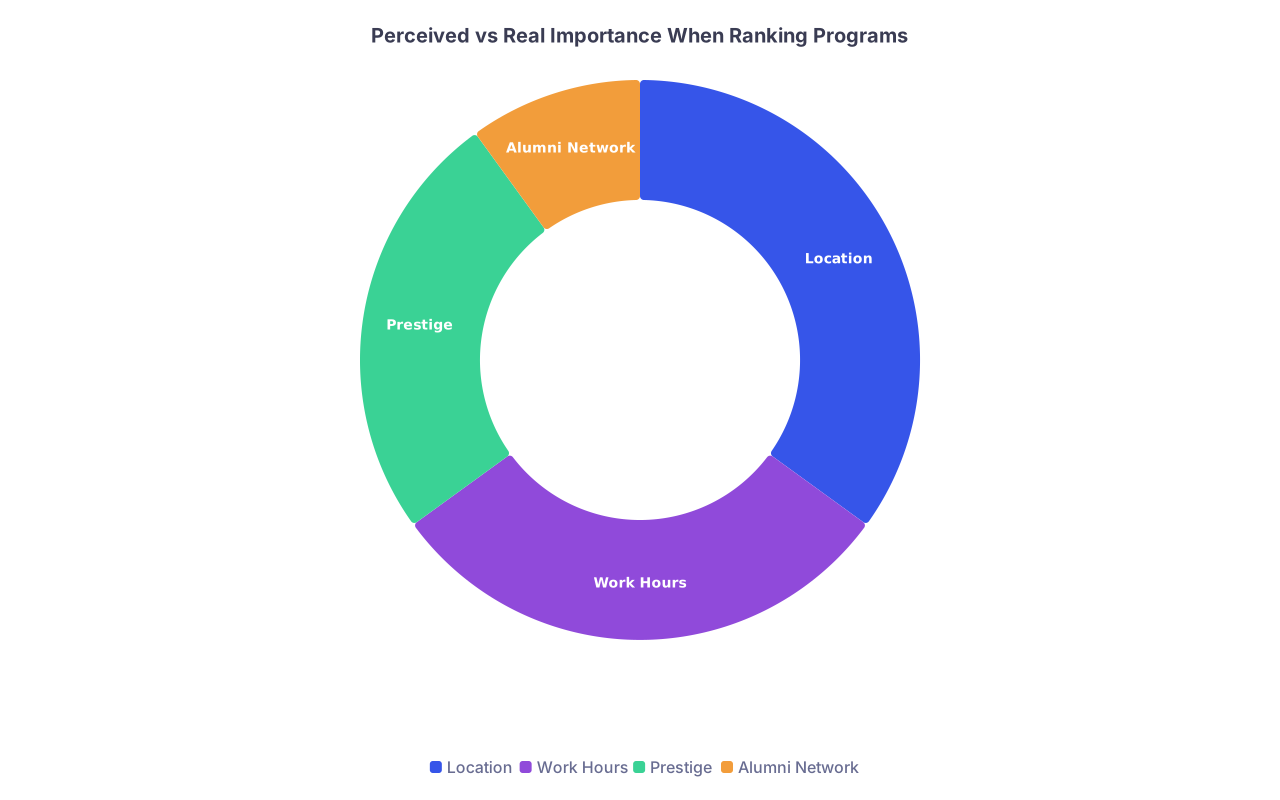
| Category | Value |
|---|---|
| Location | 35 |
| Work Hours | 30 |
| Prestige | 25 |
| Alumni Network | 10 |