

Introduction: Turning Your Gap Year Into a Strategic Advantage
A gap year before residency can feel like a pause—but it can just as easily be a powerful accelerator for your career. In an era where medicine is evolving at a rapid pace, residency programs increasingly look for applicants who demonstrate maturity, initiative, and a commitment to lifelong learning.
Online Learning—through structured courses and recognized certifications—offers an efficient, flexible way to strengthen your medical knowledge, address weak areas, and stand out in the residency match process. Whether you are an international medical graduate (IMG) waiting for exams, a U.S. graduate reapplying to the Match, or someone intentionally taking time off, a well-planned online curriculum can transform your gap year from “time off” into “residency preparation.”
This guide will walk you through:
- Why online courses and certifications are especially valuable during a gap year
- High-yield course categories aligned with residency preparation
- Trusted platforms and specific course examples
- How to choose programs that are actually worth your time and money
- Practical strategies to showcase your online learning on your CV and in interviews
Why Online Learning Is Ideal During a Gap Year Before Residency
1. Flexibility That Fits Real Life
During a gap year, your schedule might be unpredictable—research, observerships, part-time work, family responsibilities, or exam prep may all compete for your time. Online Learning excels in this context:
- Self-paced modules allow you to progress during low-stress weeks and pause during busy rotations or exam periods.
- Asynchronous lectures mean you’re not tied to a fixed classroom schedule.
- Global accessibility lets you continue learning whether you’re at home, on an observership abroad, or visiting family.
This flexibility allows you to design a realistic weekly learning plan (e.g., “6–8 hours/week of online coursework”) and stick to it, strengthening your narrative of consistent growth during your gap year.
2. Exposure to Diverse and Specialized Topics
Traditional curricula can be rigid; Online Learning lets you fill the gaps and explore emerging fields. During your gap year you can:
- Deepen your knowledge in your intended specialty (e.g., advanced ECG interpretation for IM, dermoscopy for dermatology, pediatric emergencies for pediatrics).
- Explore cross-cutting areas that appeal to program directors: quality improvement, patient safety, medical education, or healthcare leadership.
- Learn about growing domains like telemedicine, AI in healthcare, and digital health tools that many programs now value.
This self-directed learning shows residency programs that you can identify your own learning needs and take action—exactly the mindset they want in future residents.
3. Strengthening Your CV and Residency Application
Well-chosen online courses and certifications can:
- Fill chronological gaps on your CV with meaningful, structured activity.
- Demonstrate continued engagement in Medical Education while you’re not in formal training.
- Provide talking points for interviews: interesting projects, final assignments, or group work you completed.
For example, a gap-year applicant might list:
- “Coursera – ‘Fundamentals of Clinical Trials’ (HarvardX), completed capstone protocol design project”
- “American Heart Association – Advanced Cardiac Life Support (ACLS) and Basic Life Support (BLS) recertified, 2025”
Each of these lines signals current knowledge, discipline, and readiness for clinical responsibilities.
4. Networking and Professional Connections
Many high-quality Online Learning platforms include:
- Discussion forums
- Peer-graded assignments
- Live office hours or webinars
- Instructor Q&A sections
These can lead to:
- Contacts with faculty who may later offer letters of recommendation (especially in longer or advanced courses).
- Collaboration with peers across the world, broadening your understanding of healthcare systems and practice styles.
- Entry into alumni or professional networks tied to specific institutions or programs.
While this networking is more subtle than in-person rotations, consistent engagement can still open doors—especially in research- or informatics-related courses.
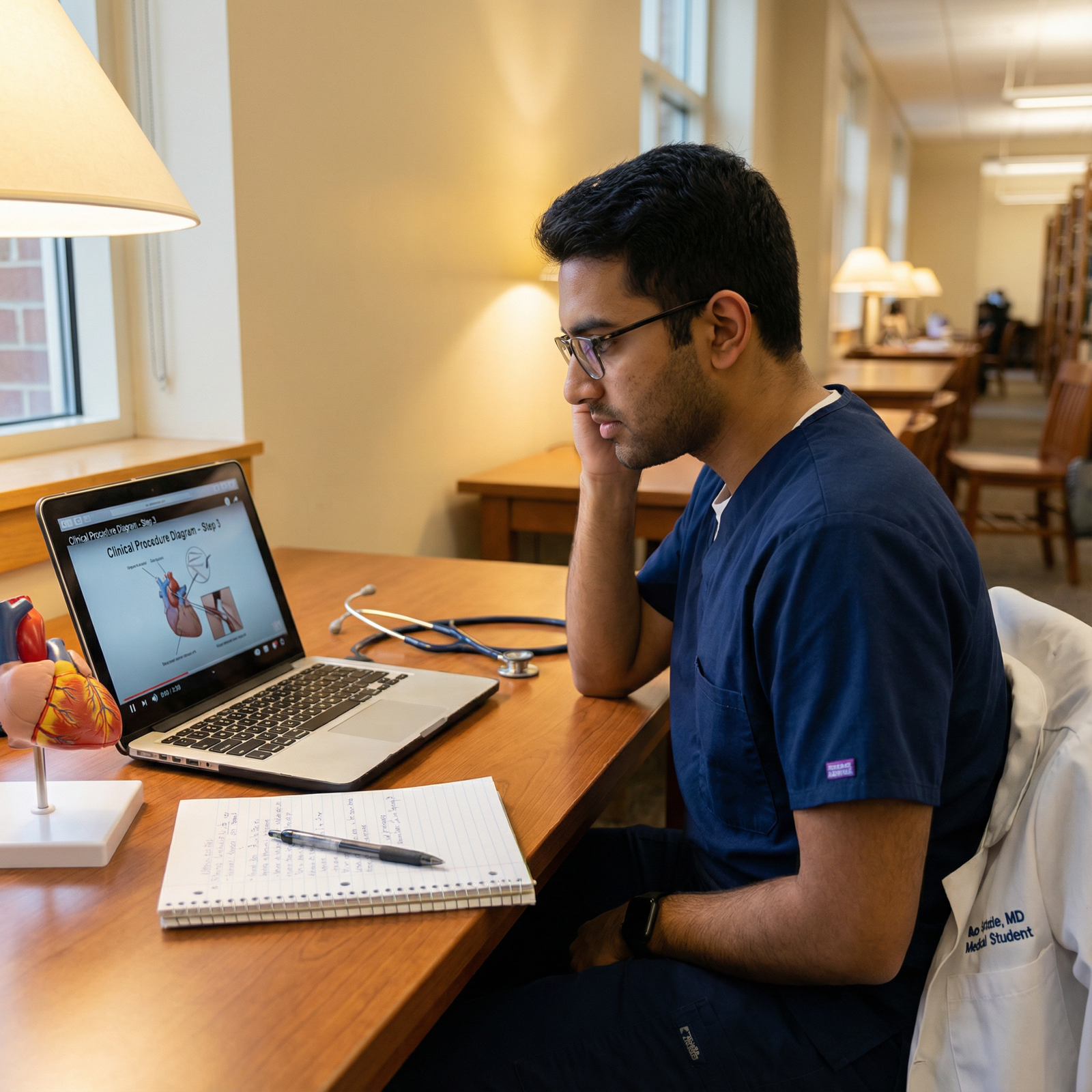
High-Yield Types of Online Courses and Certifications for Gap-Year Medical Graduates
Not all courses are equally valuable for residency preparation. The most impactful ones tend to fall into a few key categories.
1. Clinical Skills and Core Certifications
Residency directors need residents who are clinically safe and up to date. Use your gap year to reinforce core skills and mandatory certifications.
Essential Life Support and Emergency Skills
- BLS (Basic Life Support) – Often a minimum requirement for any clinical role.
- ACLS (Advanced Cardiac Life Support) – Critical for Internal Medicine, Emergency Medicine, Anesthesiology, and many others.
- PALS (Pediatric Advanced Life Support) – Highly relevant if you’re targeting Pediatrics, EM, or Family Medicine.
These certifications are usually offered through the American Heart Association (AHA) or similar national organizations. While the hands-on portion may be in-person, many now offer online modules for the didactic part, ideal for a gap year.
Procedure-Related and Bedside Skills
While full procedural competence requires hands-on practice, online modules can build strong foundations:
- Suturing & Wound Management Courses (Udemy, Skills-based platforms, or hospital CME sites)
- Basics of ECG Interpretation (Coursera, edX, Medmastery)
- Radiology for Non-Radiologists – Understanding common imaging findings relevant to your target specialty.
- Point-of-Care Ultrasound (POCUS) Foundations – Many EM, IM, and critical care programs now expect at least basic familiarity.
These courses strengthen your confidence and allow you to engage more effectively once you are back in the clinical environment.
2. Medical Technology, Informatics, and Telemedicine
Residency programs increasingly value physicians who understand healthcare technology.
Health Informatics and Data Literacy
- Introduction to Health Informatics (Coursera, edX) – Covers electronic health records, clinical decision support, interoperability, and healthcare data workflows.
- Clinical Data Science / Healthcare Analytics – Teaches you how data is used in decision-making, quality metrics, and system improvement.
- Fundamentals of Artificial Intelligence in Healthcare – Explains how AI tools are developed, validated, and regulated.
Completing such courses prepares you to participate in quality improvement projects, data-driven research, or informatics initiatives during residency.
Telemedicine and Digital Health
Telemedicine usage exploded during the COVID-19 era and remains part of routine care:
- Telehealth Basics / Telemedicine Certification (offered by various CME providers and professional societies)
- Courses covering:
- Virtual visit etiquette
- Remote physical exam strategies
- Digital documentation and billing
- Patient confidentiality and data protection in virtual care
Listing a Telemedicine Training Certificate on your CV shows that you are ready for modern hybrid care models and can adapt quickly to program-specific platforms.
3. Public Health, Epidemiology, and Global Health
Understanding population health and health systems is a substantial advantage, particularly if you plan to work in academic centers, primary care, or underserved communities.
Recommended Focus Areas
- Epidemiology and Biostatistics – Essential for interpreting research, understanding evidence-based medicine, and engaging in scholarly projects.
- Example: “Introduction to Epidemiology” or “Biostatistics for Public Health” (Coursera, edX)
- Global Health and Health Policy – Explores social determinants of health, health disparities, and health systems.
- Example: “Global Health: An Interdisciplinary Overview” (edX)
- Infectious Disease and Outbreak Management – Especially relevant post-pandemic; prepares you to understand public health responses.
These courses also help articulate more sophisticated answers during interviews about healthcare systems, diversity, equity, and your long-term career goals.
4. Mental Health, Wellness, and Communication
Residency is emotionally demanding—for both physicians and patients. Gap-year Online Learning is a smart time to deepen your skills in this area.
Patient-Focused Mental Health Courses
- Mental Health First Aid (National Council for Mental Wellbeing) – Offers a structured certification in recognizing and responding to mental health crises.
- Trauma-Informed Care – Helps you understand how trauma affects behavior, adherence, and patient interactions across all specialties.
- Introductory Psychiatry or Behavioral Medicine Courses – Strengthens your competence in common scenarios (depression, anxiety, substance use, delirium).
Physician Wellness and Burnout Prevention
Look for courses that address:
- Physician burnout and resilience strategies
- Mindfulness in clinical practice
- Work–life integration for residents and early-career physicians
This knowledge is not only personally valuable; it also helps you discuss wellness and resilience thoughtfully in essays and interviews.
5. Research Methods and Evidence-Based Medicine
Residency programs value applicants who can engage with or contribute to research and quality improvement.
Core Content to Target
- Evidence-Based Medicine (EBM) – How to form clinical questions (PICO), appraise literature, and apply findings at the bedside.
- Biostatistics – Understanding confidence intervals, p-values, regression, survival analysis, and common study designs.
- Clinical Trial Design and Research Methods – Ideal if you’re applying to academic or research-heavy specialties.
Specific examples:
- “Evidence-Based Global Health Delivery” (edX)
- “Design and Interpretation of Clinical Trials” (Coursera / HarvardX)
- “Introduction to Biostatistics” (edX)
Completing such courses shows that you’re prepared for scholarly work and can hit the ground running on a research project during residency.
6. Professional Skills, Leadership, and Medical Education
Residency is not only about clinical knowledge—it’s also an intense exercise in communication, organization, and leadership.
Valuable topics include:
- Clinical communication and difficult conversations
- Leadership in healthcare teams
- Time management and productivity for clinicians
- Basics of Medical Education (if you’re interested in teaching roles as a resident)
Platforms like LinkedIn Learning and some university-based CME programs specialize in these skills, which translate directly into daily residency performance.
Where to Find High-Quality Online Medical Courses and Certifications
Not all platforms are equal. During your gap year, prioritize reputable sources with recognized partners or accreditation.
Major MOOC Platforms (University-Affiliated)
Coursera
- Partners with institutions like Yale, Stanford, and University of Michigan.
- Offers medical, public health, data science, and leadership courses.
- Many courses offer verified certificates for a fee, with financial aid options.
edX
- Collaborates with Harvard, MIT, and leading universities worldwide.
- Offers MicroMasters and Professional Certificate programs in public health, informatics, and more.
These platforms are excellent for academically solid content that can be credibly listed in your CV.
Medical- and CME-Focused Platforms
- UpToDate, NEJM Knowledge+, and other subscription-based tools
- Great for clinical refreshers and board-style questions.
- Professional society CME platforms (e.g., American College of Physicians, American Academy of Pediatrics, ACEP)
- Often specialty-specific and highly relevant to residency preparation.
- Medmastery, Osmosis, OnlineMedEd
- Designed specifically for medical learners; strong for visual and case-based learning.
General Skill Platforms (Selective Use)
- LinkedIn Learning – Communication, leadership, project management, basic data analytics.
- Udemy, Skillshare – Procedural videos, data analysis, coding, or presentation skills. Vet course ratings and instructor backgrounds carefully.
Free Foundational Resources
- Khan Academy – Anatomy, physiology, basic pathology—good for quick refreshers.
- OpenWHO – WHO’s platform with free courses on outbreak response and public health topics.
Whenever possible, prioritize courses that:
- Are affiliated with universities, hospitals, or recognized organizations
- Provide clear learning objectives and structured assessments
- Offer a certificate of completion or CME credits
How to Choose the Right Online Courses for Your Gap Year
1. Align Courses With Your Residency Goals and Narrative
Before enrolling, ask:
- What specialty am I targeting?
- What weaknesses do I need to address (e.g., EBM, ECGs, research methods)?
- What story do I want to tell in my personal statement and interviews about how I used my gap year?
Examples:
An IMG applying to Internal Medicine might choose:
- ACLS renewal
- ECG interpretation course
- Intro to Clinical Research / Biostatistics
- Telemedicine certification
A future pediatrician might prioritize:
- PALS
- Pediatric emergencies course
- Child development and mental health modules
- Vaccination and public health courses
2. Verify Accreditation and Credibility
Check:
- Is the course offered by a reputable university, hospital, or professional society?
- For certifications (ACLS/BLS, Mental Health First Aid, telemedicine), is there a national or international body backing it?
- Do residency programs in your target region recognize this certification type?
If in doubt, search forums, talk to mentors, or ask current residents what is valued at their programs.
3. Review the Syllabus, Workload, and Format
Examine:
- Weekly time commitment and total duration
- Types of assignments (quizzes, projects, case studies, proctored exams)
- Availability of subtitles/transcripts if English is not your first language
- Self-paced vs. cohort-based with deadlines
Choose a mix of short, high-yield courses (1–2 weeks) and deeper programs (4–8+ weeks) to keep your schedule manageable and motivating.
4. Look for Practical, Applied Components
High-value courses often include:
- Case discussions
- Simulated clinical scenarios
- Data analysis exercises
- Final projects (e.g., designing a QI project, drafting a research proposal)
These not only reinforce learning but also create concrete outputs that you can describe in your CV or personal statement.
5. Consider Cost–Benefit and Access to Financial Aid
Online courses range from free to several hundred dollars. To maximize value:
- Start with free audit options, then upgrade to a certificate if you find it worthwhile.
- Use financial aid programs offered by Coursera, edX, and others if cost is a barrier.
- Prioritize paid certifications that are mandatory or strongly preferred (ACLS, BLS, PALS) or closely aligned with your specialty goals.
Making Your Online Learning Count for Residency Preparation
Online courses alone don’t guarantee a match, but how you integrate and present them can make a real difference.
1. Document Courses Clearly in Your CV
Create a section such as “Online Courses and Certifications” or “Continuing Medical Education” and list:
- Course title
- Platform and institution (e.g., Coursera – University of Pennsylvania)
- Completion date
- Type of certificate (if any)
Example:
“Telemedicine: Providing Remote Care (American College of Physicians, Online CME), Completed October 2025”
2. Connect Courses to Concrete Skills and Outcomes
During interviews and in your personal statement, explain:
- Why you chose a specific course
- What skills you gained
- How you applied or plan to apply them in residency
For example:
“During my gap year, I completed a course in Quality Improvement in Healthcare. As part of the final project, I designed a simple QI initiative addressing delayed antibiotic administration in sepsis. This experience helped me understand PDSA cycles and how I can contribute to patient safety projects during residency.”
3. Combine Online Learning With Other Gap-Year Activities
Online Learning is most powerful when combined with:
- Observerships or externships
- Research projects
- Volunteer work or clinical support roles
- USMLE or other board exam preparation
This blend shows that you used your gap year intentionally and remained clinically and academically active.

FAQs: Online Courses, Certifications, and Gap Year Residency Preparation
1. Are online certifications actually recognized by residency programs?
Most residency programs do not have a formal list of “approved” online certifications, but many value well-known, reputable credentials—especially those from:
- National organizations (e.g., American Heart Association, Mental Health First Aid)
- Accredited universities and medical schools
- Recognized professional societies (ACP, AAP, ACEP, etc.)
Online certificates from random, non-medical platforms carry less weight unless they clearly relate to a needed skill (e.g., data analysis, basic coding for informatics). When in doubt, prioritize courses with institutional backing and clear relevance to residency training.
2. How many online courses should I complete during my gap year?
Quality beats quantity. A realistic and impactful target might be:
- 2–4 substantial courses (4+ weeks each) in key areas like EBM, public health, or specialty-specific topics
- Required clinical certifications (ACLS, BLS, PALS as applicable)
- A few short, targeted modules (e.g., telemedicine, leadership, communication)
Focus on what you can complete thoroughly and apply, rather than collecting dozens of superficial certificates.
3. Can online courses help if I had a gap or low scores in medical school?
They can’t erase past performance, but they can strengthen your narrative by showing:
- Recent, consistent academic engagement
- Commitment to improving specific weaknesses (e.g., taking extra EBM or pathophysiology courses)
- Proactive use of your gap year for Residency Preparation rather than inactivity
When explaining your gap or addressing weaker parts of your application, you can point to online courses and certifications as evidence that you have grown, updated your knowledge, and are better prepared now.
4. How should I balance online courses with work, research, or observerships?
Plan backward from your weekly commitments:
- List your fixed activities (work hours, observership schedule, exam prep).
- Assign a realistic weekly time block to Online Learning (e.g., 6–8 hours/week).
- Choose 1–2 courses at a time that fit this schedule.
Avoid overloading yourself. It is better to finish a few courses with strong engagement than to drop multiple halfway through. Use weekends or lighter weeks to catch up on lectures and assignments.
5. Do I need to mention every online course in my personal statement or interviews?
No. Highlight only those that:
- Are highly relevant to your chosen specialty
- Led to a tangible project, skill, or insight
- Helped you overcome a specific gap or defined your career interests
You can list more in your CV, but selectively feature the most meaningful experiences in your narrative.
By using Online Learning and targeted Certifications strategically during your gap year, you can reinforce your medical knowledge, modernize your skill set, and present yourself as a motivated, forward-thinking candidate. When combined with clinical exposure, exam preparation, and thoughtful reflection, these courses can meaningfully strengthen your Residency Preparation and help you enter training with confidence and momentum.


