Your first attending job will not make or break your career. The myth that it does is one of the most damaging fairy tales residents are sold.
You’re told the story early: “Choose carefully. Your first job sets your trajectory. Get it wrong and you’ll be stuck, burned out, or branded forever.” Programs repeat it. Recruiters profit from it. Senior docs sometimes weaponize it.
Here’s the truth: the data, the market, and actual career trajectories say the opposite. Your first job is more like your intern year: formative, imperfect, and very, very changeable.
Let’s dismantle this myth properly.
The Job Market Reality: You’re Far Less “Stuck” Than You Think
Start with numbers, not vibes.
Across most specialties, especially hospital-based and primary care, the physician job market is fluid and hungry. Not in five years. Right now. Even post‑COVID, with every doom headline about consolidation and corporate medicine, physicians still hold more leverage than they act like they do.
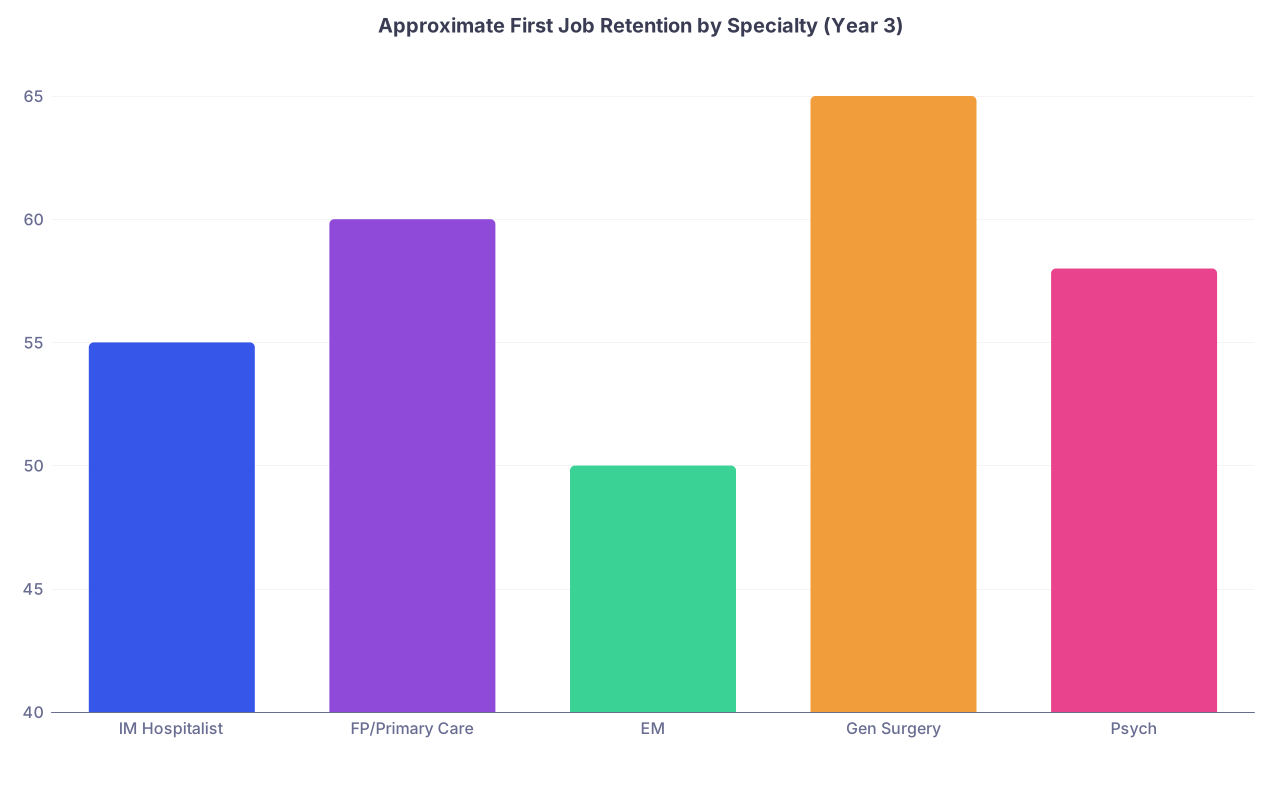
Multiple workforce surveys (AMA, MGMA, Merritt Hawkins–style recruiting data) keep showing the same thing: average first-job tenure for new attendings is short. Two to four years is common. Many never hit year three.
| Category | Value |
|---|---|
| IM Hospitalist | 55 |
| FP/Primary Care | 60 |
| EM | 50 |
| Gen Surgery | 65 |
| Psych | 58 |
Are those exact percentages the same in every dataset? No. But directionally, it holds: a huge chunk of new grads leave their first job within a few years. Not because they failed. Because the first job is a test drive.
And the system quietly expects that. Recruiters build it into their numbers. Large groups budget for constant turnover. They’re not shocked when you say “I’m moving on after 18–24 months.” You’re not breaking the game. You’re playing by its actual rules, not the mythic ones you heard in residency.
The only people still pretending your first job is a forever-marriage are trainees and a few older attendings who trained when you really did sign on for life with the local hospital.
That world is dead.
Myth vs Reality: What Your First Job Actually Does
Your first job does not “define” you. It does something far less dramatic and far more useful: it gives you data on yourself.
You don’t yet know:
- How many shifts per month you can work before you become a zombie
- How much admin/committee work you can tolerate before you want to quit medicine
- Whether you care more about schedule control, money, location, or culture
- What kind of leadership you work well under—and which you absolutely do not
Residents are convinced they already know these things. They don’t. I’ve watched PGY-3s swear, “I don’t care about money, I just want a supportive group,” then call me a year later from a “supportive” practice furious about their RVU-based take-home. I’ve seen the reverse too: “I’ll grind for three years, I just want max salary,” and then they get crushed by a 1.5 FTE workload with no backup and no say in anything.
The first job is where those illusions die.
What it actually shapes:
- Your tolerance thresholds
- Your professional preferences (academic vs community, big system vs independent, inpatient vs outpatient heavy)
- Your early reputation with colleagues and references
None of that is permanent branding. It’s baselines and calibration.
The Reputation Fear: “If I Leave Early, I’ll Be Marked”
This one is loud in residents’ heads: “If I leave my first job after a year, programs will assume I’m the problem.”
Sometimes, yes. If you jump jobs every 8–12 months for five years straight, people start connecting dots. But leaving one job early? Especially your first? That’s not a scarlet letter. It’s normal enough that recruiters have canned scripts for it.
They’ve heard the same pattern a thousand times:
“Clinical load was heavier than advertised.”
“Leadership changed 3 months after I signed.”
“The call schedule wasn’t sustainable.”
“Comp tied to RVUs that were not realistic.”
“Location ended up being a bad fit for family.”

The trick is not “never leave.” The trick is:
- Don’t burn the place down on your way out
- Be honest and consistent when you explain the move
- Actually improve your fit with the next job instead of repeating the same mistake
Physician recruiters and medical directors look at patterns, not a single decision. One early exit with a coherent story is not a big deal. Three short jumps with vague explanations? Different story.
And that’s the key: use that first job to learn enough about yourself that your second move looks intentional, not reactive.
The Data on Switching: Most People Do It, and They Do Fine
Let me spell out something that rarely gets said out loud in residency conferences: the majority of physicians do not stay in their first job long-term, and they do not all crash and burn because of it.
Several large recruiting firms have published data suggesting:
- 40–60% of new physicians leave their first job within 3–5 years
- Schedule, compensation structure, workload, and culture mismatch are the top reasons
- Most land in equal or better positions, not “punishment” jobs
This matches what I’ve seen reading CVs. A normal trajectory:
- 2 years as a hospitalist in a heavy-volume community hospital
- Then a jump to a slightly smaller system, better schedule, maybe a niche (nocturnist, procedure-heavy, etc.)
- Then either leadership, academic hybrid, or location-optimized move later
Or:
- 18 months in a toxic EM group with chaotic scheduling
- Then a switch to a democratic group or a hospital-employed model with less pay but more sanity
- Later, urgent care, telemedicine mix, or part-time academic shift
Your first attending position is often the noisiest, messiest part of your CV. And that’s fine. The rest of your career is long. Insanely long compared to residency.
Say you start attending life at 32 and retire at 65. That’s 33 years. One 18-month misaligned job is 4.5% of your career. You’re not “defined” by 4.5% of anything.
How First Jobs Actually Evolve: Roles, Not Labels, Define You
Programs love labels: “community doc,” “academic,” “private practice.” Those categories are getting blurry fast.
I’ve watched people start as:
A pure community hospitalist moving admission after admission
Then end up as: Quality lead, sepsis initiative director, associate CMO.A bread-and-butter outpatient FP in a small town
Then pivot into: 50% clinical / 50% addiction medicine and teaching with a local residency.An EM doc in a corporate ED group
Then shift into: telehealth leadership and part-time ED, eventually exiting clinical entirely for informatics.
None of those paths were preordained by the first job title. The defining factor wasn’t “I started as X.” It was: they built skills, credibility, and networks where they were, then leveraged them.
| First Job Label | Later Direction | Timeframe |
|---|---|---|
| Community Hospitalist | Quality/Leadership | 3–7 years |
| Academic IM | Industry/Pharma | 5–10 years |
| EM Corporate Group | Telehealth/Admin | 3–8 years |
| Outpatient FP | Lifestyle Concierge/Direct Care | 4–10 years |
| Psych CMHC | Private Group/Subspecialty | 3–6 years |
The myth assumes your first role locks you into a lane: “If you don’t start academic, you’re never going academic.” Or “Once you’re hospitalist, you’ll be hospitalist forever.”
Reality: people cross these lines constantly. Not all of them. But enough that you cannot call the lanes “fixed.”
What tends to matter more than initial label:
- Your publication / teaching record if you want academia
- Your reputation as reliable and sane with colleagues (yes, this still travels)
- Your willingness to take on projects, not just shifts
- Your ability to say no to garbage that doesn’t align with your direction
The first job is just where you start collecting those inputs.
The Real Risk: Not That You Choose “Wrong,” But That You Stay Too Long
Here’s the plot twist: I’m not worried about you picking the wrong first job. I’m worried about you convincing yourself you must tolerate a bad fit for far too long because of this definition myth.
I’ve watched smart new attendings do this:
- Sign a job that sounded decent on paper
- Realize by month 4 that the call schedule, politics, or culture is objectively toxic
- Tell themselves they “owe” the group 3 years because of some misguided loyalty or fear of looking flaky
- Burn out so hard that by year 3 they’re ready to quit medicine altogether instead of just changing environments
The myth that “leaving early will ruin your career” keeps people in bad situations that do far more damage to their long-term path than an early switch ever would.
Burnout, malpractice exposure from unsafe staffing, moral injury from admin decisions you hate—those will define your career if you let them marinate long enough. Not the act of changing jobs.

| Step | Description |
|---|---|
| Step 1 | Start First Job |
| Step 2 | Stay and Learn |
| Step 3 | Clarify Issues |
| Step 4 | Negotiate and Reassess |
| Step 5 | Plan Trusted Exit |
| Step 6 | Use Experience to Choose Better Next Role |
| Step 7 | Fit Reasonable? |
| Step 8 | Fixable in 6-12 months? |
Notice the decision tree does not have a node called “Stay forever to look stable.” That node exists in residency folklore. Not in reality.
How to Use Your First Job Strategically (Instead of Fearfully)
Since you’re stuck with a first job anyway, you may as well use it as a controlled experiment.
A strategic approach looks like this:
Choose something “good enough,” not mythical perfect.
Reasonable pay. Reasonable schedule. No obvious red-flag culture. Don’t obsess over whether it’s your dream gig. You’ll only know that in hindsight anyway.Keep a running “fit journal” for the first 6–12 months.
On call days, write down: hours, patient load, how you feel leaving work, which tasks drain you vs energize you. Patterns will emerge. Use them.Invest in relationships, not just RVUs.
The colleagues who think you’re solid will later be references, collaborators, or lifelines when you’re reassessing. That’s a portable asset from any job, good or bad.Say yes to a few strategic projects.
Not everything. But if QI, teaching, informatics, or leadership interest you, dip a toe early. Your next job cares that you have more dimension than “worked shifts.”Give it a fair trial period—but define that up front.
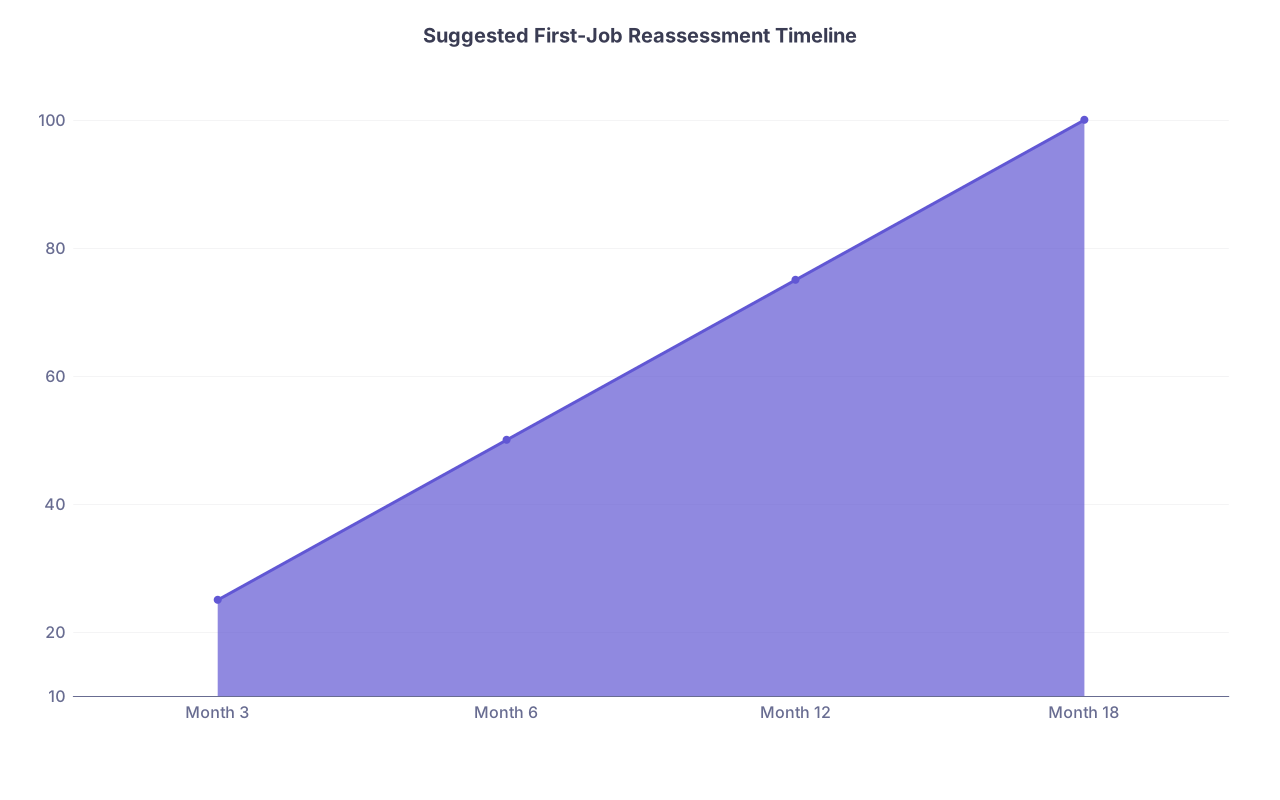
If you tell yourself: “I’ll reassess at 12–18 months with specific criteria,” you’re less likely to stay stuck out of inertia or guilt.
| Category | Value |
|---|---|
| Month 3 | 25 |
| Month 6 | 50 |
| Month 12 | 75 |
| Month 18 | 100 |
That “100” at 18 months is not perfection. It’s how fully you understand your own needs and the job’s realities. You’re choosing with eyes open after that, not from residency fantasy.
What Actually Can Hurt You Early On
Saying your first job won’t define your whole career doesn’t mean nothing in that period matters. Some things can haunt you:
- Getting a reputation for being unsafe or chronically unreliable
- Leaving in a storm of burned bridges and legal threats
- Actual malpractice events tied to egregious behavior, not just bad luck
- Documented professionalism issues—screaming at staff, substance issues, chart fraud
Those follow you, especially in small markets and subspecialty circles. That’s not “the job defining you.” That’s you defining you.
Do your work well. Be sane. Document properly. Treat staff like they matter. If you can’t fix the system, don’t torch it on your way out. Simple adult behavior. You know this.
The Bottom Line: Your First Job Is a Draft, Not the Final Version
Your first attending position is not your identity. It is:
- A paid practicum in understanding your own tolerances
- A time-limited experiment in one kind of practice model
- A launchpad for skills, relationships, and clarity
The myth that it “defines your career” pushes you toward fear-based decision-making: overvaluing stability, underweighting fit, and tolerating red flags long past their expiration date.
The reality is more liberating and more demanding: you will probably move. You will probably change your mind about what you want. And you will absolutely not be ruined by getting it imperfect the first time, as long as you learn and adjust instead of clinging to a bad narrative about what you’re “supposed” to do.

FAQ: First Attending Job Myths and Realities
1. If I leave my first job within a year, will that ruin my career?
No. One short stint, especially your first, is common and explainable. You just need a coherent, honest story: misaligned expectations, leadership change, unsafe staffing, or location/family fit issues—those are all normal reasons. Problems start when you have multiple short jobs with vague or contradictory explanations.
2. Does starting in community practice block me from going into academics later?
Not automatically. To move into academics you need teaching experience, some scholarly or QI work, and strong references—not a magic “academic from day one” stamp. I’ve seen plenty of people do a few years community and then transition to hybrid or full academic roles once they built those credentials.
3. Is it better to take a lower-paying job that seems supportive, or a higher-paying one that looks rough?
Stop pretending there’s a universal answer. If you’re drowning in loans and can tolerate heavy workload for a time, the higher-paying job might be an intentional short-term play. If you’re already fried from training, sacrificing your mental health for a salary bump is garbage math. Your first year will show you which trade-off you actually made.
4. How long should I “give” my first job before deciding to leave?
Barring outright toxicity or danger, 12–18 months is a reasonable trial. That lets you get past onboarding, learn systems, and see if early friction is just adjustment. If the core problems (schedule, culture, leadership, safety) are still unacceptable at that point—with no realistic prospect of change—staying longer isn’t loyalty, it’s self-sabotage.
5. Will switching jobs early hurt my ability to get a mortgage, visas, or certain benefits?
Lenders and immigration systems like stability, yes, but they care more about continuous income and documented employment than whether you stayed at one employer forever. If you keep working, avoid unexplained gaps, and maintain solid documentation, a single early switch rarely causes serious issues. Again, patterns matter more than one move.
Core truths to walk away with:
Your first attending job is a test environment, not a life sentence. The danger isn’t picking the “wrong” one—it’s staying in a bad fit out of fear. Use that first role to learn ruthlessly about what you actually need, then build the rest of your career on that data, not on myths you absorbed in residency.