

The worst career advice new attendings get is “you should stay at least 3–5 years in your first job no matter what.” That’s lazy, outdated, and sometimes outright harmful.
Here’s the real answer: most physicians should aim for 2–3 years in their first job, but you should be ready to leave sooner if clear red flags are present—and you shouldn’t stay longer just to “look stable” if the job is stunting your career or burning you out.
Let’s break that down into something you can actually use to make decisions.
The Short Answer: The 2–3 Year Benchmark (And When To Ignore It)
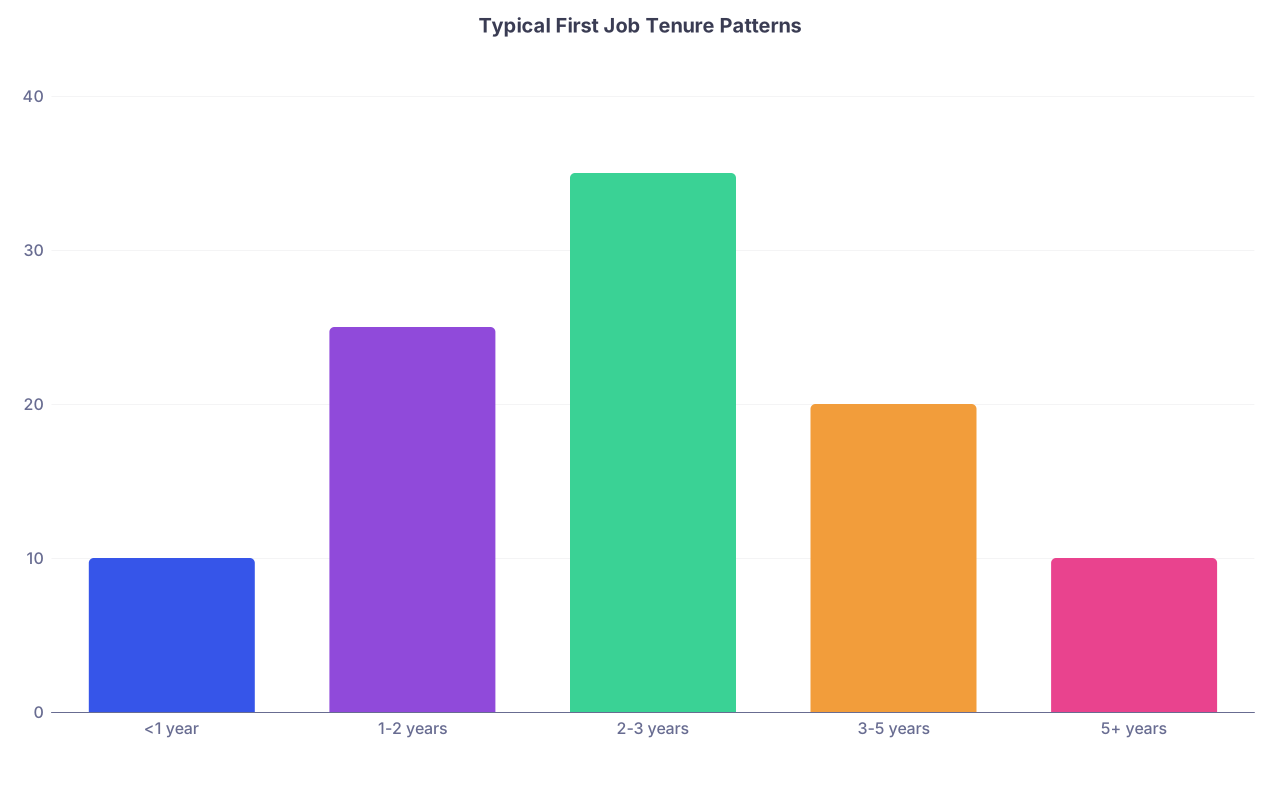
For a typical first attending job:
- Under 1 year: This raises eyebrows and demands an explanation.
- 1–2 years: Not ideal, but totally defensible with a good story.
- 2–3 years: The sweet spot for most specialties.
- 3–5 years: Looks very stable on paper.
- 5+ years: You’re clearly not a job hopper; frequent moves after this are easier to explain.
| Category | Value |
|---|---|
| <1 year | 10 |
| 1-2 years | 25 |
| 2-3 years | 35 |
| 3-5 years | 20 |
| 5+ years | 10 |
That 2–3 year target exists for a reason:
- You’ve had time to actually learn the job, the system, and the community.
- Your clinical judgment and efficiency as an attending solidify around this time.
- You get past the steepest learning curve so you can see the job for what it really is.
- Future employers see you as committed but not stuck.
But here’s the key: that 2–3 year number is a guideline, not a prison sentence.
You should seriously consider moving on earlier if:
- You’re in a toxic or unsafe environment.
- The job is wildly different from what was promised.
- You can’t practice safe, ethical medicine.
- Your mental or physical health is deteriorating.
And you should stop automatically staying longer just because someone told you “it’ll look bad” to leave. It only looks bad if your story doesn’t make sense.
The Real Question: What Should Happen In Your First 2–3 Years?
Instead of obsessing over a number, ask: what do I want to accomplish before I leave my first job?
Here’s what a solid first 2–3 years can (and usually should) give you:
Clinical Maturity as an Attending
You’ve moved from “new attending anxiety” to “I can handle the usual chaos.” You’ve:- Managed complications alone.
- Handled real-world consults and cross-cover without a safety net.
- Learned how your EMR, hospital, and team really function.
Data on What You Actually Want
Training gives you a distorted view of practice. First jobs give you:- Reality about call burden, patient volume, and documentation.
- Clarity on what drives you nuts (administration? volume? EMR?).
- Insight on what you like more than expected (teaching? procedures? outpatient?).
A Track Record You Can Sell
By 2–3 years, you can point to:- Stable productivity (e.g., RVUs, panel size, OR block utilization).
- Quality metrics, patient satisfaction scores, or leadership roles.
- Committee work, QI projects, teaching, or program development.
That’s what makes your next job search powerful—you’re not just “a new grad,” you’re a physician with real-world results.
When Leaving Early Actually Makes Sense (Even < 1 Year)
Sometimes the right move is to cut your losses. You are not obligated to sacrifice your sanity or license to protect your CV.
You should seriously consider leaving within the first year if:
Patient Safety or Ethics Are Compromised
- You’re being pushed to see an unsafe number of patients.
- You’re pressured to upcode, overprescribe, or cut corners.
- There’s no meaningful response when you raise safety concerns.
Example: A hospitalist group demanding 24+ patients per day with no midlevel or resident support, and retaliating when you say “this is unsafe.”
The Job Was Misrepresented What you were told vs. reality:
- Promised: 1:4 call → Reality: 1:2 plus extra “backup.”
- Promised: No weekend clinic → Reality: Required every other weekend.
- Promised: 60% outpatient, 40% procedures → Reality: 95% clinic.
One mild change? Annoying but not a crisis. Systemic bait-and-switch? Valid reason to walk.
Toxic Work Culture You’re seeing:
- Bullying, harassment, or discrimination.
- Leadership that punishes feedback or dissent.
- Backstabbing among partners, refusal to share call or workload.
Health and Burnout Crisis
- You’re crying in your car before every shift.
- You’re having physical symptoms: insomnia, chest pain, panic attacks.
- Your support system (partner, family, therapist) is sounding alarms.
If that’s you, you don’t need to martyr yourself to hit some magic length of stay. You do need a thought-out exit plan and a clean story for your next interview.
How Your Specialty Changes the “Right” Length
Some fields tolerate early moves better than others. Rough guide:
| Specialty Group | Typical First Job Tenure | How Bad Is Leaving <2 Years? |
|---|---|---|
| Primary Care (FM, IM clinic) | 2–4 years | Mild concern |
| Hospitalist | 1–3 years | Common, often fine |
| EM / Urgent Care | 1–3 years | Very common, low concern |
| Surgical Specialties | 3–5 years | More significant concern |
| Highly Competitive (Derm, Ortho, ENT) | 3–5+ years | Needs clear explanation |
Why it matters:
- High-investment jobs (building a surgical practice, niche procedural work) expect longer stays. You’re expensive to ramp up.
- Shift-based fields (EM, hospitalist, urgent care) see more movement. Nobody is shocked by a 1–2 year stint.
- Academic jobs often expect at least 3 years so you can start and finish projects, build a teaching record, maybe go up for early promotion.
What Future Employers Actually Care About
They don’t stare at the exact number of months. They look for patterns and a coherent narrative.
They’re asking:
- Are you going to leave us just as fast?
- Are you difficult to work with?
- Are you running from problems instead of addressing them?
- Or did you learn something, make a rational decision, and now you’re choosing more carefully?
So if you leave:
- One job after 11 months due to misrepresentation—but you clearly explain it? Usually fine.
- Two jobs in a row under 18 months with vague reasons? That’s a problem.
- First job 2.5 years, second 4 years? You’re solid.
Your job is to have a clean, non-emotional, patient-care-centered explanation ready. Not a rant.
Example script:
“I joined that group right out of fellowship. Once I started, the actual call burden and RVU expectations were significantly higher than what we discussed during recruitment, and there wasn’t room to adjust the model. I stayed long enough to be sure this wasn’t just new attending adjustment, then decided I needed a practice that aligned better with safe patient care and a sustainable schedule.”
Short, clear, focused on fit and safety—not drama.
How To Decide: Stay, Fix, or Leave?
Use a simple framework. Give yourself 3–6 months of honest evaluation unless things are truly unsafe.
Ask three questions:
Is this just the normal new attending adjustment curve?
- Feeling slow, inefficient, overwhelmed? That’s expected initially.
- Hating notes, prior auths, and bureaucratic nonsense? Welcome to medicine.
- Missing your co-residents and feeling lonely? Also normal.
Those aren’t job-specific problems. They’ll follow you.
What’s actually changeable here? List the core issues:
- Schedule? Sometimes negotiable.
- RVU threshold? Maybe.
- EMR? Probably not.
- Toxic partner? Very unlikely to change.
Then have one serious, documented conversation with leadership to see what’s truly flexible.
If nothing changed, would I be okay staying 2 more years? That’s the key test.
- If the honest answer is “I’d be miserable,” you should start planning an exit.
- If your answer is “It’s not perfect, but I can tolerate it while I build experience and look for something better,” then staying 2–3 years might be the right play.

| Step | Description |
|---|---|
| Step 1 | First Attending Job |
| Step 2 | Plan Exit ASAP |
| Step 3 | Discuss With Leadership |
| Step 4 | Reassess in 6-12 Months |
| Step 5 | Plan Exit Timeline |
| Step 6 | Stay While Planning Next Move |
| Step 7 | Unsafe or Unethical? |
| Step 8 | Fixable Issues? |
| Step 9 | Real Change? |
| Step 10 | Tolerable for 2-3 Years? |
Practical Timing: When To Start Looking
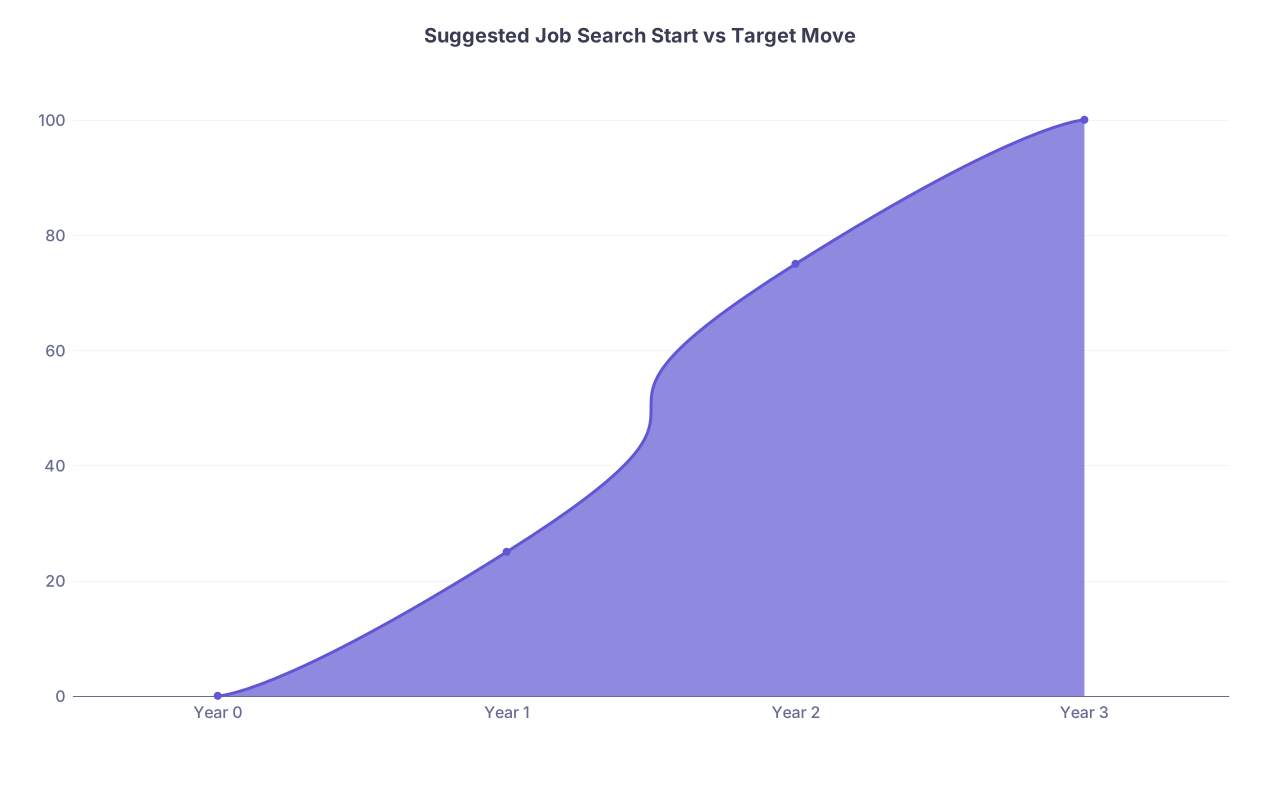
If you’re aiming for that 2–3 year window, here’s a rough timeline.
Let’s say you started your first job August 2024.
- By Month 6–9: You’ve adjusted enough to know what’s real. Start writing down what you like and hate.
- By Month 12–18: If you suspect this isn’t your forever spot, quietly start scoping other opportunities and networking.
- By Month 18–24: Actively enter the job market if you want to move by year 2–3.
- Year 2–3: Ideal time to actually switch for most people.
For academic roles or highly specialized practices, assume you may need more lead time (12–18 months of search) if you want something pretty specific.
| Category | Value |
|---|---|
| Year 0 | 0 |
| Year 1 | 25 |
| Year 2 | 75 |
| Year 3 | 100 |
(Think of that as your “readiness to move” ramping up if you know the job isn’t right.)
Red Flags That It’s Time To Go (Regardless of Duration)
Forget the calendar for a second. If you see these, the content of your job matters more than the length:
- You dread going to work every single day for months.
- You’re compromising how you believe medicine should be practiced.
- Leadership dismisses every concern as “you’re just new” or “everyone else is fine with it.”
- You’ve stopped growing—clinically, academically, or professionally.
- Your personal life is in shambles and the job is the main driver.
You don’t need permission from a number of years to fix your life.
FAQs
1. Will leaving my first physician job in under a year ruin my career?
No, it won’t ruin your career, but you need a clear, professional explanation and you should avoid making a habit of short stints. One <1-year job due to misrepresentation, family move, or obvious safety issues is survivable. Two or three rapid exits with vague reasons start to look like you’re the common denominator.
2. Is it better to stick out a bad first job for 3 years so my CV looks stable?
Not if “bad” means unsafe, unethical, or destroying your health. Staying in a genuinely toxic environment to protect an imaginary reputation is a bad trade. If the job is merely imperfect but tolerable, staying 2–3 years can be smart while you build skills and plan your next move intentionally.
3. How do I explain a short first job in interviews without trashing my employer?
Keep it tight and factual. Structure it like this:
- Brief context: “First job out of residency.”
- Objective mismatch: “The actual call and volume were significantly higher than described.”
- Attempt at resolution: “I discussed this with leadership but there wasn’t room to adjust the model.”
- Professional takeaway: “I learned I need X/Y/Z to practice sustainably, which is why I’m drawn to your position.”
No rants. No gossip. No names.
4. Do academic employers judge short first jobs more harshly than private groups?
Often yes. Academic departments invest in onboarding, mentorship, and sometimes research infrastructure, so they generally expect at least a few years of commitment. A <2-year academic stint will trigger more questions than a <2-year hospitalist or EM job. It’s still explainable—especially if driven by geography, family, or profound misalignment—but you’ll get more scrutiny.
5. I like the work but hate the schedule. Should I leave or try to negotiate?
Negotiate first, always. You’ve got more leverage as a known quantity than a brand-new hire somewhere else. Bring concrete proposals: different FTE, adjusted clinic blocks, modified call participation. If your group shows zero interest in any change—and you’ve asked reasonably—that’s data you use to justify planning an exit.
6. How long should I stay if I know this job isn’t forever but it’s not terrible?
If it’s reasonably safe and not killing your soul, 2–3 years is usually a good target. That’s enough time to:
- Build your attending confidence.
- Accumulate a solid reference base.
- Clarify what you truly want next.
You can start looking casually after year 1 and get serious in year 2 so you’re not jumping with desperation.
7. What’s one concrete thing I should do right now if I’m unsure whether to stay or go?
Open a blank document and make three columns: “Non-negotiables,” “Nice to haves,” and “Things I can live with.” Fill them out based on your current job. Then ask: if nothing changed here, would I willingly sign this exact same contract again today? If your honest answer is no, it’s time to start planning—not panicking, planning—your next move.


