

You’ve finished residency, maybe fellowship, and now a 20-page contract just hit your inbox. The recruiter says, “It’s a standard agreement, everyone signs this.” Your PD shrugs and says, “Looks fine to me.” And you’re sitting there thinking:
Is this actually fair? Or am I about to sign away three years of my life on a bad deal?
Here’s the answer you’re looking for: use a checklist. Go line by line. If a few of these boxes don’t check out, it’s not a good contract—no matter how “standard” they say it is.
Below is a simple, practical checklist you can use before you sign anything.
1. The 10-Second Gut Check
Before you get lost in legalese, sanity-check the big picture. Ask yourself three questions:
- Do I clearly understand how I’ll be paid in year 1 and year 2?
- Do I know what my typical weekly schedule and call burden will be?
- If I hate this job, how hard is it to leave and work somewhere else nearby?
If you can’t answer those in one or two sentences, the contract isn’t clear enough or isn’t fair enough. Clarity is non‑negotiable.
2. Compensation: Is the Money Actually Fair?
This is where new grads get burned most often. You need to know two things: “Is the number fair?” and “Can I realistically earn it?”
A. Compare to the market, not your feelings
Don’t guess. Use real data: MGMA, AMGA, state medical society reports, Doximity, colleagues a year or two ahead of you.
Rough structure you’ll usually see:
- Straight salary
- Salary plus RVU bonus
- Pure productivity (usually a bad idea as a first job)
- Hourly or shift-based (common in hospitalist/ED)
Here’s what you’re looking for:
- Base salary around at least median for your specialty and region
- RVU targets that are actually hittable based on clinic volume and support
- Clear, written bonus formula
If someone says, “Our top docs make $500k,” ask for the actual compensation formula in writing and what median physicians are making. Top 5% performers are not your benchmark in year 1.

| Category | Value |
|---|---|
| Offer | 260 |
| Market Median | 280 |
| 75th Percentile | 320 |
If your offer is significantly below median and they’re hand‑waving about future upside, that’s not “mentorship.” That’s underpayment.
B. Understand RVU or productivity terms
If RVUs are involved, your checklist is:
- What is my RVU target for bonus?
- What is the dollar per RVU?
- Is there ramp-up (lower target) in year 1?
- What happens if the hospital cuts clinic slots or doesn’t give me enough OR time?
Fair contracts usually:
- Have lower RVU expectations in year 1
- Pay RVUs above a reasonable threshold
- Don’t punish you for factors you don’t control (like limited OR time or no referral stream)
C. Hidden killers: unpaid work
Ask yourself:
- Are meetings, admin time, and call all baked into the salary, or is some of it unpaid?
- If it’s “salaried exempt,” how many hours are they quietly expecting? 45? 60? 80?
If the contract expects you to cover extra clinics, add call, supervise APPs, do committee work, and none of that is compensated or protected time, the “base salary” is fake. You’re just working more for the same money.
3. Schedule, Call, and Lifestyle: What Does Your Week Actually Look Like?
A contract that pays well but quietly owns your life is not fair. You want the schedule spelled out, not vague.
A. Clinic/OR/Shift expectations
Look for language like:
- “Physician will have 8 half-days of clinic per week”
- “Minimum of 15 shifts per month”
- “Average of 22 patient encounters per clinic day”
If it just says “full‑time effort” or “as mutually agreed,” that’s a red flag. That’s lawyer-speak for “we’ll decide later and you have no leverage.”
B. Call coverage
This is where people get crushed. Checklist for call:
- How often? (q3, q4, backup pool, etc.)
- Is call in-house or from home?
- Is it paid? If yes, how much and how documented?
- Is there a cap on how often they can increase your call?
| Call Pattern | Usually Reasonable for New Grad | Needs Scrutiny |
|---|---|---|
| q6–q8 home call | Yes | If unpaid |
| q3–q4 home call | Maybe | If frequent add-on call |
| In-house q4 | Specialty dependent | Check comp |
| Mandatory backup pool | Sometimes | If undefined frequency |
If call expectations are vague (“participate equitably in call”), you want specifics added before signing.
4. Benefits, CME, and Support: Are They Setting You Up to Succeed?
Base salary isn’t the whole picture. Benefits and support make the difference between a sustainable job and a slow bleed.
A. Basic benefits checklist
At minimum, a reasonable physician contract should include:
- Health, dental, vision insurance
- Retirement plan with some employer contribution
- Paid time off (vacation + sick) clearly defined in days or weeks
- CME allowance (money + days)
- License/DEA/board fees covered
- Malpractice coverage with appropriate tail (we’ll hit this separately)
If the benefits are “TBD” or “per employer policy” and you haven’t seen that policy, that’s not acceptable. Ask for it in writing.
B. Work support
This is more important than most residents realize. Ask:
- How many MAs/ RNs / APPs per physician?
- Who does prior auths?
- Is there protected admin time?
- Is there scribes or at least template support in the EHR?
A “great salary” with zero support means your RVU numbers will tank, your days will run late, and your burnout risk goes through the roof.
5. Malpractice and Tail Coverage: Can This Contract Haunt You Later?
This part is non‑negotiable. A “great job” with bad malpractice terms can cost you six figures later.
A. Claims-made vs occurrence
Most jobs use claims-made coverage. That means when you leave, you need “tail coverage” to protect you against future suits from the period you worked there.
Checklist:
- Who pays for tail if you leave voluntarily?
- Who pays for tail if they terminate you without cause?
- Who pays for tail if they terminate you with cause?
Fair setups for new grads:
- Employer pays tail in most reasonable departure scenarios, or
- Employer uses occurrence coverage (less common but simpler for you)
If they insist “physician always pays tail,” you need that baked into your compensation negotiation because tail can be $30k–$150k depending on specialty.
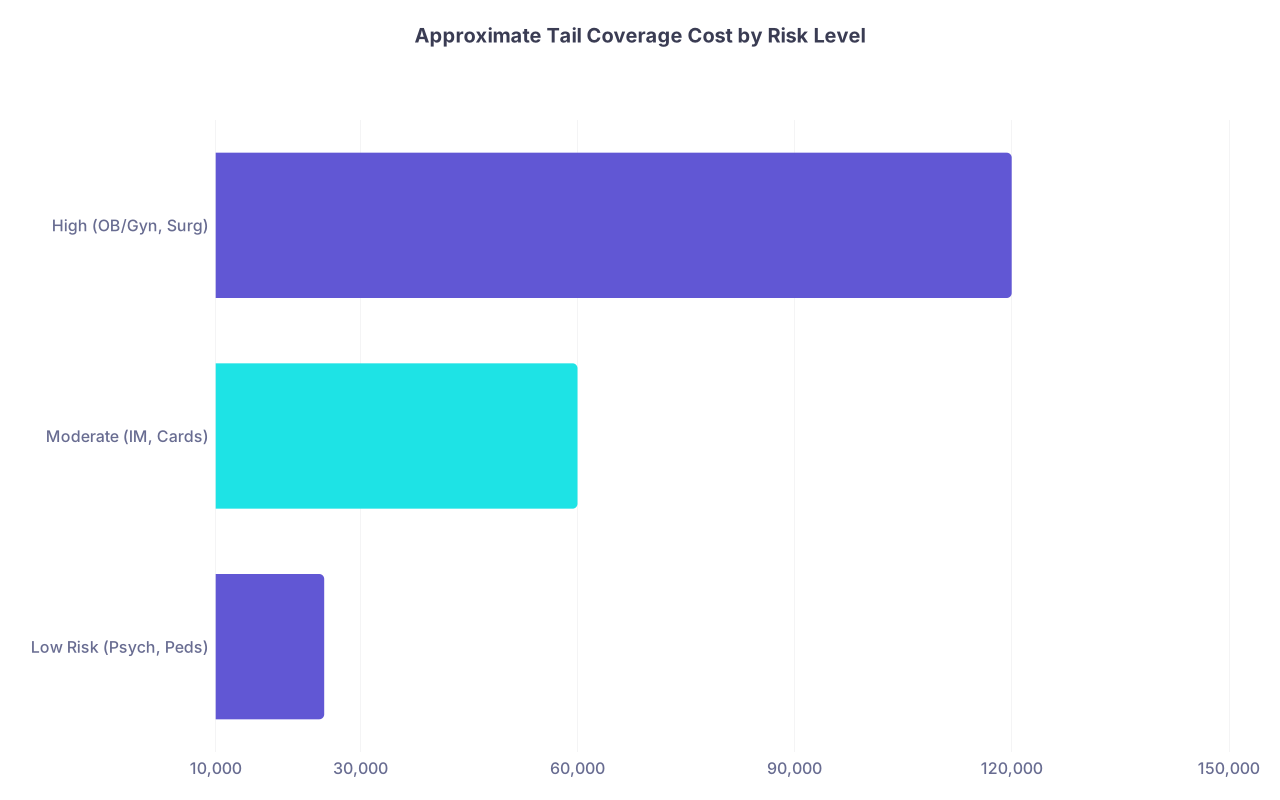
| Category | Value |
|---|---|
| Low Risk (Psych, Peds) | 25000 |
| Moderate (IM, Cards) | 60000 |
| High (OB/Gyn, Surg) | 120000 |
6. Non-Compete and Restrictive Covenants: Can You Actually Leave?
You absolutely cannot skip this section. This determines how trapped you are if the job turns toxic.
Key checklist items:
- Geographic radius (e.g., 10, 20, 50 miles)
- Duration (e.g., 1 year, 2 years)
- Scope (your specialty vs any clinical work vs any telemedicine)
- When it applies (only if you leave for cause, or always?)
A fair-ish non‑compete for a new grad, if allowed in your state, typically looks like:
- 5–15 miles in urban areas, maybe larger in rural
- 1–2 years duration
- Limited to your specific specialty and employer’s service lines
If you’re in a metro area and they’re asking for a 50‑mile non‑compete for 2–3 years? That’s excessive. You’d basically have to move cities if it doesn’t work out.
Also look for:
- Non-solicitation clauses (can you recruit former colleagues or see your old patients?)
- Moonlighting restrictions (can you work elsewhere per diem?)
7. Termination and “Out” Clauses: How Do You Get Out Of This Thing?
You want to know how hard it is to leave if you need to.
Two main pieces:
- “Without cause” termination clause
- “With cause” termination clause
A. Without cause
This is your escape hatch. It should say something like:
“Either party may terminate this Agreement without cause upon 60–90 days written notice.”
Red flags:
- No without-cause termination for you, but they have it for them
- Notice period longer than 120 days
- Financial penalties for using without-cause termination
B. With cause
You want the “with cause” reasons to be specific and reasonable:
- Loss of license
- Loss of hospital privileges
- Exclusion from Medicare/Medicaid
- Gross misconduct, etc.
If they can terminate you “for cause” for vague reasons (“behavior detrimental to practice reputation”), they can dodge paying bonuses, avoid tail, and blacklist you locally. Bad deal.

| Step | Description |
|---|---|
| Step 1 | Employed |
| Step 2 | Stay in Job |
| Step 3 | Give 60-90 day notice |
| Step 4 | Triggered by contract reasons |
| Step 5 | Check tail coverage terms |
| Step 6 | Plan next job and non compete |
| Step 7 | Want to Leave? |
| Step 8 | Type of Exit |
8. Bonuses, Sign‑On, and Loan Repayment: Strings Attached
Everyone loves a big sign-on bonus or loan repayment offer. The trap is in the fine print.
Checklist:
- How long is the commitment tied to that money? (2 years? 3 years? 5?)
- Is it structured as a forgivable loan or as earned income each year?
- What happens if you leave early? Do you owe the prorated amount or the full amount?
Better structures:
- Sign-on bonus forgiven over 2–3 years, prorated if you leave early
- Loan repayment paid directly to lender annually, based on staying employed that year
Worse structures:
- “Relocation bonus” structured as a loan you fully owe back if you leave before X years
- Clawbacks that include interest and legal fees
9. Academic, Administrative, and Outside Work: What Else Are You Allowed To Do?
If you care about teaching, research, or side work, don’t assume anything. Contracts can shut all of that down.
Things to check:
- Are academic responsibilities (teaching, research) defined and protected?
- Is there protected time for them, or are they in addition to full clinical load?
- Can you do outside telemedicine, consulting, expert witness work, or locums?
Some contracts say:
- “All professional activities, compensated or uncompensated, require prior written approval”
- Or, “All outside compensation belongs to Employer”
That’s not automatically unfair, but you should know exactly what you’re giving up.
10. Quick Fairness Checklist: Green vs Yellow vs Red
If you want a 2‑minute sanity pass, use this table.
| Area | Green (Fair) | Yellow (Caution) | Red (Problem) |
|---|---|---|---|
| Base Pay | ~Median+ for region | 10–20% below median | Way below with vague upside |
| RVUs | Clear, realistic targets | High but explainable | Vague or clearly unattainable |
| Non-compete | Narrow, 1–2 yrs | Wide radius or long duration | Huge radius or blocks whole region |
| Tail Coverage | Employer pays most/common scenarios | Shared cost | You always pay, no exceptions |
| Exit Clause | 60–90 day without cause for both sides | Very long notice (>120 days) | No without-cause for you |
If you’re hitting multiple reds, you either negotiate hard or walk.
11. Should You Get a Lawyer?
Short answer: yes, for most people, at least once.
You want someone who:
- Does physician contracts regularly (not your uncle who does divorces)
- Knows your state’s non-compete and employment laws
- Is comfortable telling you, “Do not sign this as written”
They’re not there to make it perfect. They’re there to:
- Spot landmines
- Tighten vague language
- Suggest practical changes that employers actually accept
The cost (often $500–$1500) is trivial next to a bad 3‑year commitment or a $60k tail bill.

12. A Simple Step-by-Step Review Process
Here’s how I’d tell a new grad to handle the first job offer:
- Get real market data for your specialty and region.
- Read the entire contract once without a pen; just absorb.
- Go back with this checklist section by section.
- Circle anything that:
- You don’t understand, or
- You’d be afraid to explain to a friend.
- Talk to a few trusted attendings or recent grads who’ve seen multiple contracts.
- Send it to a physician contract attorney for a 1–2 hour review.
- Decide: which 3–5 changes are must‑haves before you sign?
You don’t need to win every point. But you do need to fix the ones that can wreck your future: non‑compete, tail, exit clause, unreasonable comp structures.
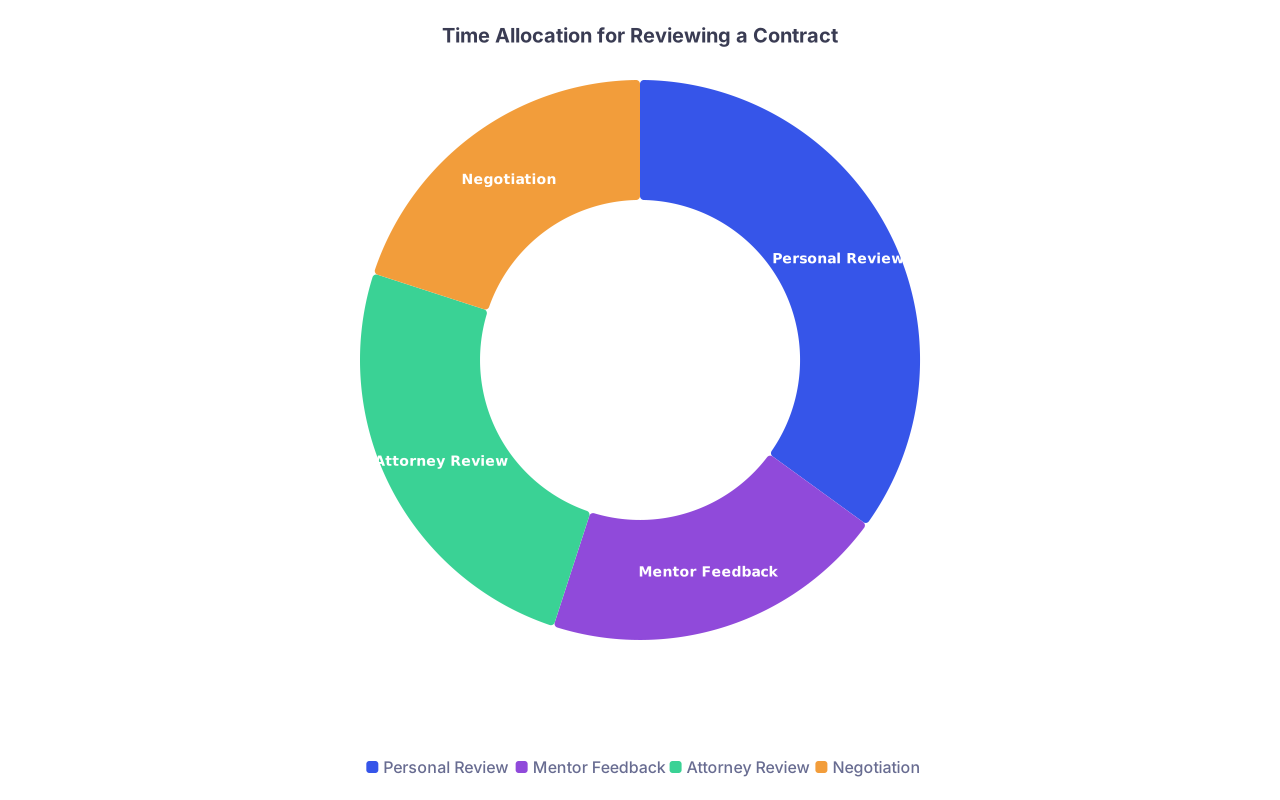
| Category | Value |
|---|---|
| Personal Review | 35 |
| Mentor Feedback | 20 |
| Attorney Review | 25 |
| Negotiation | 20 |
Key Takeaways
- A “fair” physician contract is clear, realistic, and gives you a clean exit path. If you can’t explain how you get paid, how you leave, and where you can work afterward, it’s not fair.
- Don’t ignore the non‑compete, tail coverage, and termination clauses. Those three lines can cost you more than your entire first‑year salary if they’re bad.
- Use experts. Market data, senior colleagues, and a real physician-contract attorney will save you from mistakes you don’t even know to look for yet.


