

What if you finally get a post-residency job offer… and then you open your mouth to negotiate and they yank it away?
Welcome to the soundtrack in a lot of our heads.
You’ve survived residency. You’ve handled codes at 3 a.m. You’ve been yelled at by families, attendings, sometimes both at once. But the idea of saying, “Could we discuss compensation?” to a recruiter? Somehow that feels like the thing that will actually end you.
Let’s walk through this like someone who has also catastrophized every step of the process.
The Fear: “If I Ask for More, They’ll Pull the Offer”
Here’s the nightmare script most of us have running:
You: “Hi, thank you so much for the offer. I was wondering if there’s any flexibility on the base salary—”
Them: “Wow. Entitled. Offer rescinded. Also we’ve notified every program director in the region that you’re difficult.”
Reality check: that is not how this works.
Could an offer ever be rescinded because you negotiated? Technically anything can happen. But in normal, non-toxic settings, this almost never happens for a few reasons:
- They’ve already invested time and money interviewing you.
- They need physicians. Badly. That’s why they’re hiring.
- Every adult job in the world expects some level of negotiation.
If a group seriously reacts to a polite, professional negotiation by punishing you? That’s a massive red flag about what it’ll be like to work there. Honestly, better to find that out before you sign.
Here’s what reasonable employers do when you negotiate:
- Sometimes they say yes.
- Sometimes they say, “We can’t move on salary, but we can do X, Y, Z.”
- Sometimes they say, “This is our best and final.”
That’s it. No dramatic scene. No blacklist.
What Actually Blows an Offer (vs. What Doesn’t)
You know what doesn’t blow an offer? Saying:
“Thank you so much for the offer. I’m really excited. I did have a few questions about compensation and schedule—would now be a good time to review those?”
That’s boring, normal, grown‑up behavior.
Things that can start to sour the vibe:
- Being rude or entitled (“With my CV, this is insulting.”)
- Ignoring norms in that market (asking for a Manhattan academic salary in rural community practice with zero justification)
- Dragging things out endlessly without clear communication
- Suddenly changing what you said you wanted (e.g., they built a position around 0.8 FTE and now you demand full-time plus call every other weekend… or the opposite)
But asking for more—once, clearly, respectfully—is absolutely standard.
If you want to reduce your anxiety, think of it this way: your job is to ask once or twice, calmly, with a rationale. Their job is to tell you what’s possible. You’re not forcing them. You’re just giving them the opportunity to say yes.
What’s Actually Negotiable Post-Residency?
You don’t have to fight on every line. Pick your battles. But you should at least know what’s on the menu.
| Item | Usually Negotiable? |
|---|---|
| Base Salary | Yes |
| Signing Bonus | Yes |
| Relocation Stipend | Yes |
| Schedule/Call | Sometimes |
| Noncompete | Sometimes |
| Vacation/CME Time | Sometimes |
If asking about salary makes your throat close up, you can start with less emotionally-charged items:
- Signing bonus
- Relocation assistance
- CME funds and days
- Start date
- Call schedule
- Protected time (admin, research, teaching)
Those can add tens of thousands of dollars of actual value without touching the base salary.
But here’s the harsh, slightly annoying truth: your first attending salary anchors your future salaries. “What were you making at your last job?” will come up. So yes, it’s uncomfortable, but fighting for a reasonable starting point is rational, not greedy.
How to Negotiate Without Sounding Like a Jerk
You’re terrified of “sounding difficult.” Fine. Then you script it.
Do not improv this if you’re already anxious. You will ramble, apologize ten times, and walk it all back mid-sentence. Script it, practice it out loud, two or three times.
Here’s a structure that works:
- Appreciate the offer.
- Express genuine interest.
- State the specific thing you want to discuss.
- Give a brief rationale.
- Ask an actual question.
Example:
“Thank you again for the offer—I’m really excited about the team and the patient population. I’ve been reviewing the contract, and I was hoping we could talk a bit about the base salary. Based on MGMA medians for this region and offers I’ve seen from comparable community groups, I was expecting something closer to $280k. Is there any flexibility to move in that direction?”
Notice what you’re not doing:
- You’re not saying, “This is too low.”
- You’re not saying, “I’ll walk if you don’t match X.”
- You’re not apologizing for asking.
You’re just laying out reality and asking if there’s room.
You can use similar language for other items:
“Is there any flexibility on the signing bonus?”
“Is the noncompete something that’s ever been modified for other physicians?”
“Would it be possible to add one additional week of vacation, even if it’s unpaid, in the first year?”
This is calm, adult problem-solving. Not drama.
The “What If They Say No?” Spiral
This is the part your brain is really afraid of. Not just “offer rescinded,” but the awkwardness of being told no.
Let’s say you ask for $280k. They come back: “We’re at $260k. That’s our ceiling.”
Cue stomach drop. Now what?
You’ve basically got three paths:
- Accept the offer as-is.
- Try to get value elsewhere (bonus, schedule, buyout terms).
- Walk away.
That’s it. There’s no secret 4th option where you get everything you want and never feel uncomfortable.
If you want to keep going without being annoying, you might say:
“I understand. In that case, would there be any room to adjust the signing bonus or CME funds to help bridge that gap in the first couple of years?”
Or:
“If the salary really can’t move, is there any flexibility on call distribution or clinic templates so I’m not at 110% RVU pace from day one?”
If they still say no to everything, you’ve learned something important: this is a rigid offer. Which is fine if the job is otherwise great and the salary is fair for the area. Not fine if you’re already on the fence.
This is where worst‑case thinking goes wild:
- “If I say no, I’ll never get another offer.”
- “My PD will be disappointed.”
- “Maybe I’m overestimating my value; I should just be grateful.”
No. You’re allowed to walk from a bad fit. You’re allowed to need more money because you have $250k+ in loans and childcare to pay for. That isn’t entitlement. That’s math.
Using Data So You Don’t Feel Like You’re Just Whining
You’ll feel less “greedy” and more “reasonable” if you anchor what you’re asking for in data instead of vibes.
Places to get data:
- MGMA or AMGA compensation data (through your program, faculty, or friends if you don’t have direct access)
- Specialty society surveys (e.g., ACEP, ACOG, etc.)
- Colleagues in your specialty who’ve just signed
- Recruiters (with a grain of salt)
Then you can say:
“From the MGMA 2023 data and what I’m hearing from other new hires in similar markets, most starting offers for general IM outpatient seem to cluster around $240–260k. Given that, I was hoping to be a bit closer to $250k. Is there flexibility there?”
You’re not saying, “I deserve more because I’m special.” You’re saying, “I’m just asking to be in the normal range for this work.”
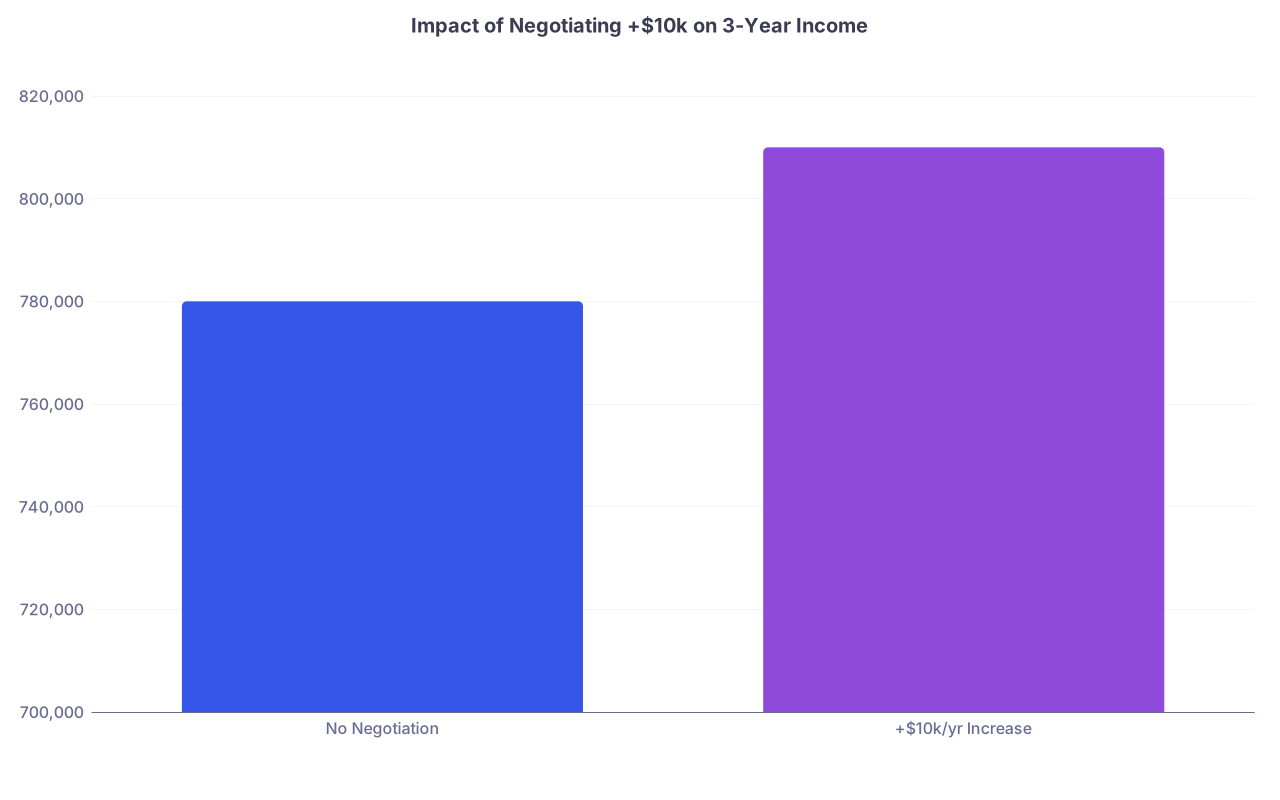
If you want to see how much even small negotiation shifts matter financially:
| Category | Value |
|---|---|
| No Negotiation | 780000 |
| +$10k/yr Increase | 810000 |
That’s a $30k difference over three years. For one mildly uncomfortable phone call.
The Scripts for Every Stage (So You Don’t Freeze)
Let’s just script the parts that make your heart race.
When you get the offer
“Thank you so much for this offer. I’m really excited about the possibility of joining the team. I’d like to review the contract in detail—could I get a copy emailed to me? When would you need a response by?”
You’ve just:
- Expressed enthusiasm
- Secured time to think
- Avoided committing on the spot
When you’re ready to negotiate
“I’ve reviewed the offer and I’m very interested. I did have a few questions about compensation and schedule. Is now a good time to go through those, or should we set up a separate call?”
This sets the frame: you’re not just randomly complaining, you’re systematically reviewing.
When you make the ask
Pick one or two of these and tailor:
“I was hoping we could discuss the base salary. Based on [data], I was expecting something a bit higher—closer to [X]. Is there any flexibility?”
“Is there any room to increase the signing bonus given relocation costs and my loan burden?”
“Would it be possible to modify the noncompete radius or duration? As written, it’s pretty restrictive for someone early in their career.”
“Is there flexibility to add one more week of paid time off? If not paid, would an extra unpaid week be possible?”
When they push back or say no
“I understand if there are constraints. I appreciate you looking into it. If salary is fixed, are there any other components that have some flexibility?”
You’ve kept the door open without picking a fight.
When you need time to decide
“Thank you for walking through that with me. Could I take a couple days to think everything over and discuss it with my family? I’ll get back to you by [date].”
No one reasonable is going to be offended by this.
The Ugly Reality: Some Jobs Aren’t Worth Salvaging
Let’s be honest, because your anxious brain already knows this: sometimes your fear isn’t irrational. Sometimes you get a bad offer from a bad employer.
If you see any of this after you ask for reasonable changes:
- “If you’re already asking for more, this might not be the right place for you.”
- “Our other candidates are thrilled with this package.”
- “If you’re worried about money, maybe you’re not focused on patient care.”
Run.
Not push harder. Run.
They are showing you exactly how they’ll respond when you ask for reasonable things later: better staffing, safer schedules, actual time off. If you’re treated like a problem before they own you on a contract, it will not get better after.
This is why negotiating is useful even if you “lose.” It reveals who they are.
Quick Visual: A Normal Offer → Negotiation → Final Decision Flow

| Step | Description |
|---|---|
| Step 1 | Receive Offer |
| Step 2 | Review Contract |
| Step 3 | Identify Concerns |
| Step 4 | Schedule Call |
| Step 5 | Present Requests |
| Step 6 | Revised Offer |
| Step 7 | Decide Accept or Decline |
| Step 8 | Sign or Walk |
| Step 9 | Employer Response |
Notice what’s missing: “Employer screams and rescinds offer because you asked a question.”
FAQ: Your 3 a.m. Panic Questions
1. What if this is my only offer? Am I allowed to negotiate at all?
Yes. You can still negotiate. Politely. Briefly. With data.
You don’t have to go nuclear. Even asking for a modest $5–10k shift, a slightly better signing bonus, or a more humane call schedule is legitimate.
But if it’s truly your only offer, you may decide it’s not worth walking away over relatively small differences. Just be honest with yourself: are you accepting because it’s workable, or because you’re paralyzed by fear that nothing else will ever come? Those are different.
2. Can I negotiate by email, or do I have to do it on the phone?
You can start by email if phone calls make you physically ill. For example:
“Thank you again for the offer. I’m very interested. I had a few questions about the base salary and signing bonus—would you prefer I send those in writing or schedule a quick call?”
Often they’ll suggest a call anyway, but at least you’ve mentally prepared. When in doubt, complex back-and-forth is cleaner by phone, but you’re not “unprofessional” for writing first.
3. How do I know what’s a “reasonable” ask vs. ridiculous?
Anchor yourself:
- Look at MGMA/AMGA or specialty society data.
- Talk to 2–3 co-residents going into similar jobs/markets.
- Adjust for region (Midwest rural ≠ West Coast academic).
If the offer is at the 10–25th percentile for your specialty and region, asking to come closer to the median is reasonable. Asking to double it is ridiculous.
As a rough feel: asking for 5–15% more on base, or a materially better bonus/relocation/CME package, is usually within the realm of normal.
4. Will they think I’m “difficult” and regret hiring me if I negotiate?
If they’re a functional, semi-modern employer? No. They’ll think: “Adult human who understands their value.”
If they seriously label you as “difficult” for one calm negotiation conversation, you’ve just discovered a workplace that punishes basic self-advocacy. That’s not a loss. That’s a bullet dodged.
5. How many times is it okay to go back and forth before I look annoying?
One round of negotiation is standard. Two is still fine if you’re actually moving toward a decision. Beyond that, it starts to feel like haggling for sport.
A good pattern:
- Round 1: You present your main requests.
- They respond with changes.
- Round 2: You clarify a few details or ask for one last small adjustment.
- Then you decide.
If you find yourself wanting a 4th or 5th revision, the issue probably isn’t the contract—it’s that you don’t actually want the job.
If you remember nothing else:
- Asking for more—once, clearly, respectfully—does not “blow” a normal offer.
- Use data and scripts so you’re not negotiating from panic and vibes.
- The way they respond to your negotiation tells you just as much as the numbers themselves.


