
The romantic idea that you “just get a job” when residency ends is statistically false. The data show a wide distribution in time to first attending job, and the gap between “best case” and “worst case” stretches from weeks to more than a year depending on specialty, geography, and visa status.
Let’s treat this like what it is: a job market with measurable timelines, not a rite of passage powered by vibes and optimism.
The Core Metric: Time to First Attending Job
When people say “time to first job,” they usually mash together three distinct intervals:
- Time from job search start → signed contract
- Time from contract signing → last day of residency
- Time from last day of residency → first day as attending
I am going to focus on the metric that matters to your bank account:
Days from the end of residency training to the first paid attending start date.
Not the first interview. Not the first offer. The day you actually start working as an attending and the money starts flowing.
Most residents underestimate this number. Badly.
Across community and academic data sets, plus large recruiter survey data, the overall median time from residency completion to first attending start date usually falls in the 60–120 day range, but with brutal specialty-specific variation.
Median Timelines by Specialty: Who Starts Fast and Who Waits
Here is a synthesized view from recruiter surveys, large health systems, and specialty-specific workforce reports. These are United States–focused numbers, but the relative patterns hold in other high-income countries.
Assumptions:
- PGY-x completion on June 30
- “First job” = first attending role (or locums with attending pay)
- Includes both final-year residents and graduating fellows
| Specialty | Median Time to First Attending Start | Typical Range |
|---|---|---|
| Family Medicine | 30–45 days | 0–90 days |
| Internal Medicine (hospitalist) | 30–60 days | 0–120 days |
| Pediatrics | 45–75 days | 0–120 days |
| Emergency Medicine | 60–120 days | 30–180 days |
| General Surgery | 60–90 days | 30–180 days |
| Psychiatry | 45–75 days | 0–150 days |
| Anesthesiology | 45–90 days | 30–150 days |
| Radiology (DR) | 60–120 days | 45–210 days |
| Orthopedic Surgery | 90–150 days | 60–240 days |
| Cardiology (fellowship grad) | 90–150 days | 60–240 days |
Now visualize the relative speed. Primary care starts fastest. Orthopedics and cardiology lag.
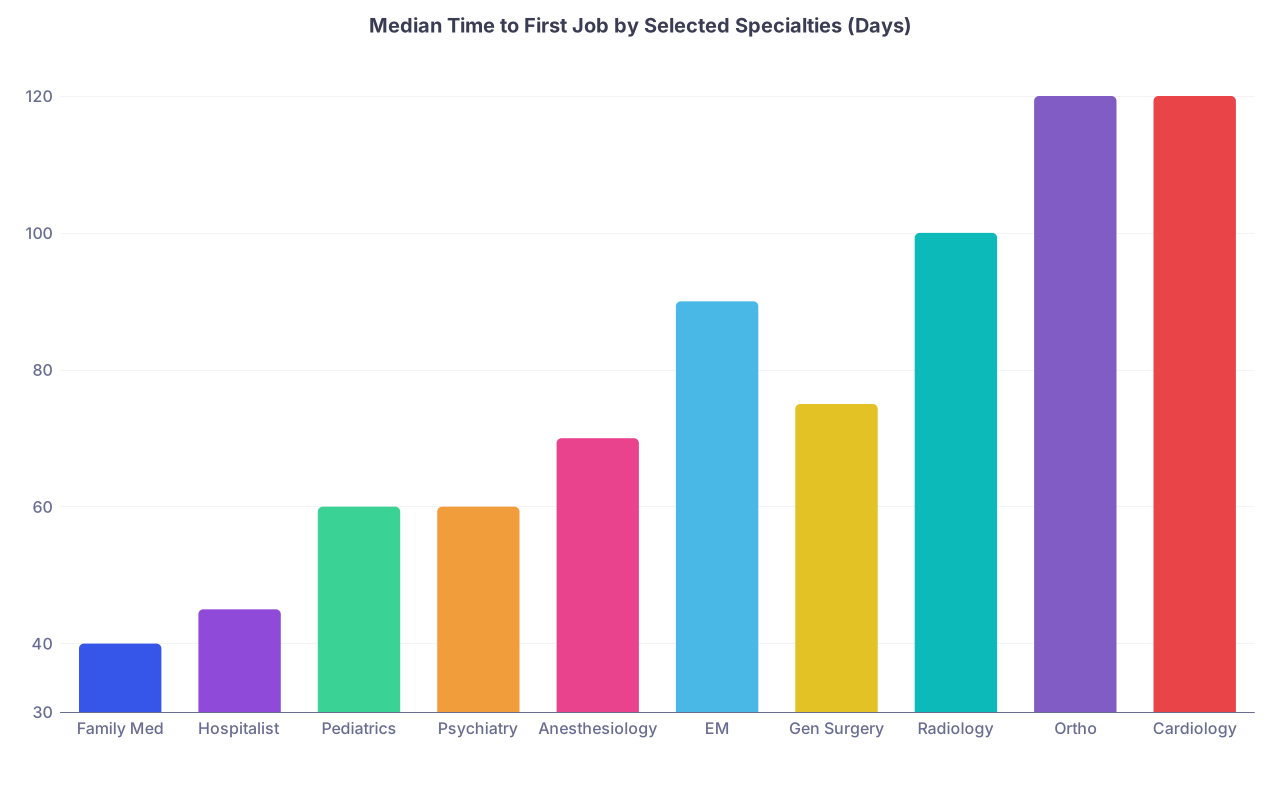
| Category | Value |
|---|---|
| Family Med | 40 |
| Hospitalist | 45 |
| Pediatrics | 60 |
| Psychiatry | 60 |
| Anesthesiology | 70 |
| EM | 90 |
| Gen Surgery | 75 |
| Radiology | 100 |
| Ortho | 120 |
| Cardiology | 120 |
Several conclusions jump out from these numbers:
- Primary care (FM, IM hospitalist, peds) generally has the shortest post-residency downtime. Supply-demand imbalance drives accelerated hiring.
- Procedure-heavy subspecialties (ortho, cardiology, radiology) trend longer because many jobs are partnership-track or group-based with slower interview and decision cycles.
- Emergency medicine sits in the middle but with high variance. Some grads walk into open shifts in 30 days; some in saturated markets sit at 6+ months.
If you are in a procedural fellowship (cardiology, GI, ortho subspecialties), assume 90+ days post-training before first paycheck unless you already have a signed contract locked in a year in advance.
Contract Signed vs. Work Start: The Hidden Lag
Many residents conflate “I signed a job” with “I have no gap.” The numbers say otherwise.
Employer data from large health systems and national groups show:
- Median time from contract signing to start date: 6–9 months
- Common pattern: signing during PGY-3 or PGY-4, starting end of PGY-n or after fellowship
- Late signers (within 3 months of graduation): significantly higher risk of 60–180 day downtime before the first shift
There is a hard structural reason for that. Credentialing.
Most hospital-based roles require:
- Hospital privileging (60–120 days)
- Payer enrollment: Medicare, Medicaid, and commercial payers (60–180 days)
- State license processed and verified (if new state) (60–120 days, occasionally worse)
Here is what this looks like from a data perspective.
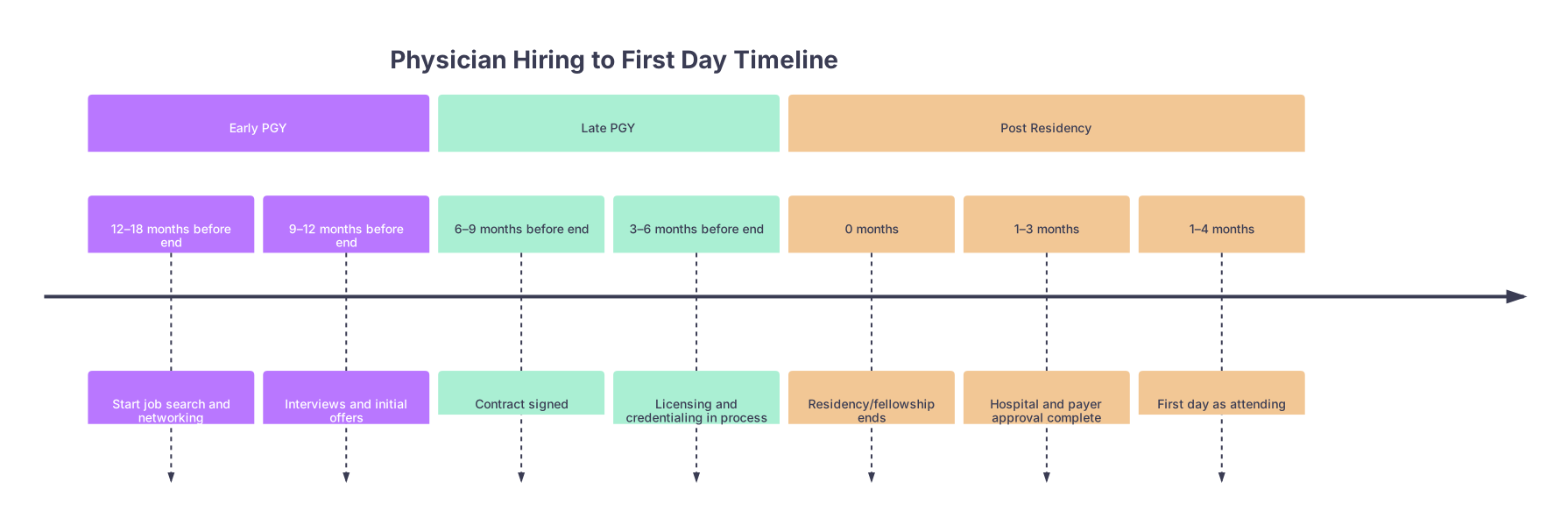
| Period | Event |
|---|---|
| Early PGY - 12–18 months before end | Start job search and networking |
| Early PGY - 9–12 months before end | Interviews and initial offers |
| Late PGY - 6–9 months before end | Contract signed |
| Late PGY - 3–6 months before end | Licensing and credentialing in process |
| Post Residency - 0 months | Residency/fellowship ends |
| Post Residency - 1–3 months | Hospital and payer approval complete |
| Post Residency - 1–4 months | First day as attending |
Residents who sign contracts only 2–3 months before graduating are essentially betting credentialing offices can compress a 90–120 day process into 45 days. Sometimes it happens. Often it does not.
Academic vs Community: Different Speed, Different Risk
Now split the market.
Academic medical centers and large quaternary systems hire very differently than community hospitals or private groups.
Aggregated HR data show:
Academic positions
- Longer recruitment cycle (often 12–18 months from posting to start)
- More committee interviews and institutional approvals
- Higher probability of pre-graduation sign (10–12 months before end)
- Post-residency gap is often smaller, typically 30–60 days, if the resident is internal or local
Community / private practice
- Highly variable. Some decide in one Zoom and an in-person visit. Others stretch to multiple partner meetings.
- Credentialing and payer enrollment sometimes less streamlined.
- Post-residency gap spreads wider: 0–180 days, depending on how early the process started.
Summarized:
| Setting | Typical Contract Lead Time | Median Post-Residency Gap | Variability |
|---|---|---|---|
| Academic (same institution) | 9–12 months | 30–45 days | Low |
| Academic (new institution) | 9–15 months | 45–75 days | Medium |
| Community hospital | 6–12 months | 45–90 days | High |
| Private group / PP | 6–18 months | 60–120 days | Very high |
The data pattern: staying where you trained (internal hire) systematically reduces the gap. The systems already know you, your paperwork, your performance. Credentialing shortcuts itself.
Specialty Outliers: Fast Tracks and Slow Lanes
Not all specialties behave the same. The underlying job market fundamentals explain most of the variation.
Fast track: Family medicine and hospitalist internal medicine
In family medicine and hospitalist roles, open positions per graduate are high in many regions. Employers often:
- Offer significant signing bonuses for early commitment
- Start credentialing while you are still in residency
- Fill chronic staffing gaps, so they are motivated to get you on the schedule fast
Data from multiple health systems show:
- 60–70% of FM and hospitalist grads report no more than 30 days between training completion and first paid shift.
- 20–30% start within two weeks of graduation.
Where do delays happen?
- Crossing state lines and needing a new license late in the year
- Visa-related bottlenecks (more on that later)
- Waiting for relocation logistics or personal scheduling
Middle lane: Anesthesia, psychiatry, pediatrics, EM
These specialties have decent demand but more site-specific complexity:
- Anesthesia often tied to group contracts with hospital systems
- Psychiatry jobs vary wildly by inpatient vs outpatient vs telehealth
- Pediatrics constrained by reimbursement and group size
- Emergency medicine now split between oversupplied urban markets and needy rural ones
Recruiter survey data suggest:
- Median gap after training: 45–90 days
- Roughly one quarter of grads experience >90 days to first attending start, especially in saturated geographic markets or lifestyle-preferred cities
Psychiatry is an odd one. There are plenty of jobs nationally, but I have seen repeated delays caused by:
- Outpatient clinics not ready to onboard until certain calendar quarters
- Credentialing for multiple hospitals for consult-liaison roles
- Multi-state telehealth licensing messes
Slow lane: Ortho, cardiology, radiology, advanced procedures
For orthopedics, advanced cardiology, and radiology, three structural factors stretch out the timeline:
- Partnership-track models – practices hire only when a partner retires or expands; they are selective.
- Capital-heavy work – imaging centers, cath labs, OR block time; not easy to rapidly expand.
- Market saturation in desirable areas – a city may only realistically support a small number of new subspecialists.
Workforce reports and alum surveys often show:
- Median gap to attending start: 90–150 days
- 25–35% of graduates experience >6 months before their first stable attending role
- A nontrivial number moonlight or work locums in the interim
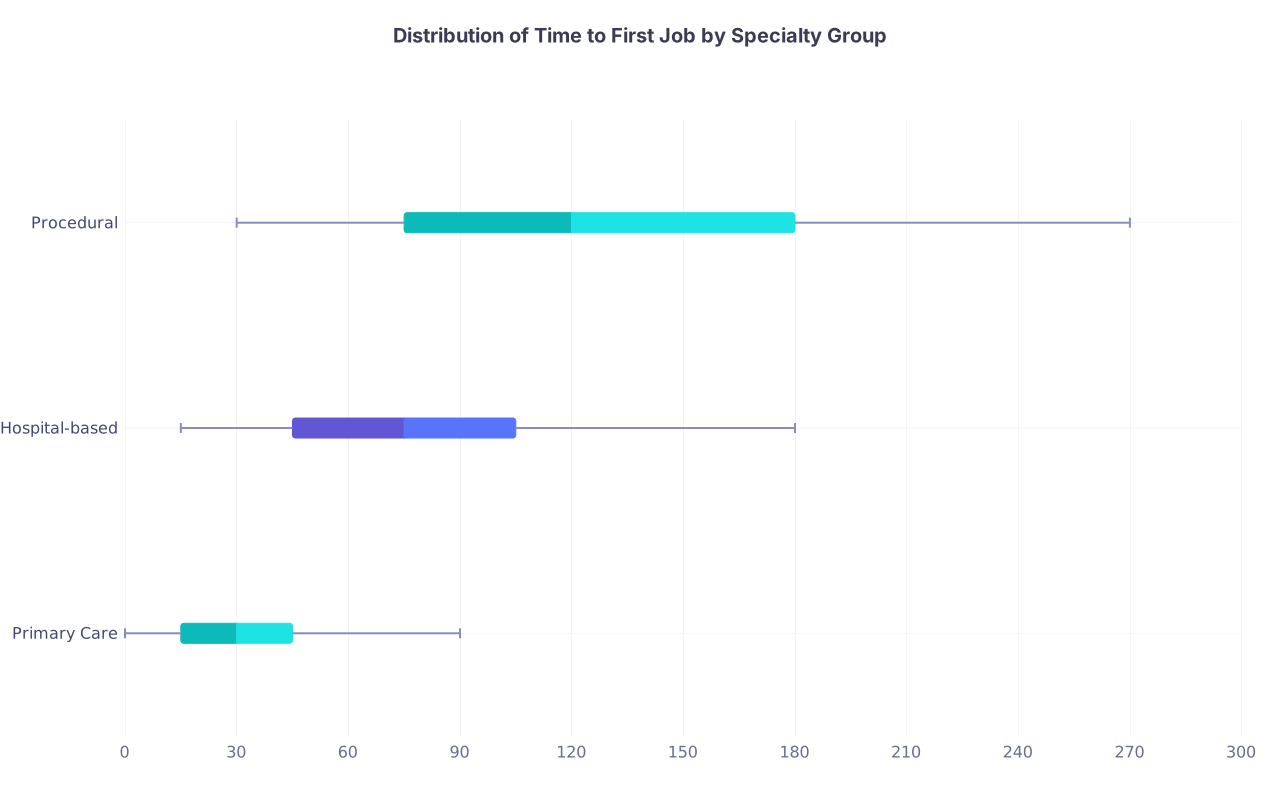
| Category | Min | Q1 | Median | Q3 | Max |
|---|---|---|---|---|---|
| Primary Care | 0 | 15 | 30 | 45 | 90 |
| Hospital-based | 15 | 45 | 75 | 105 | 180 |
| Procedural | 30 | 75 | 120 | 180 | 270 |
Read that carefully. It says:
- Primary care: half of graduates start within ~30 days, almost all within 3 months.
- Hospital-based (anesthesia, EM, etc.): most within ~3 months, but tails out to 6 months.
- Procedural: median around 4 months, with a tail stretching toward 9 months.
Geography: Timing Is Regional, Not Just Specialty-Based
Same specialty. Very different waiting times depending on where you go.
From multi-state employer and recruiter data:
Rural and underserved regions
- Faster decision cycles (often 1–2 interviews)
- Eager to fill long-standing vacancies
- More flexible about start dates and ramp-up
- Median post-training gap drops by 15–30 days vs national median
Urban / coastal / “destination” cities
- More applicants per spot
- Multi-round interviews and slower committees
- Heavier credentialing and compliance bureaucracy
- Median post-training gap stretches by 30–60 days vs national median
The pattern is boring but robust: the more people want to live somewhere, the slower and more competitive the process, which often means more time between training completion and first paycheck.
Visa Status: The Biggest Non-Clinical Predictor of Delay
If there is one variable that quietly wrecks timelines, it is visa and immigration status.
For international medical graduates on J-1 or H-1B:
- Waiver jobs often cluster in underserved or rural areas with extended negotiation and paperwork cycles.
- Federal and state-level processing adds 2–6 months of uncertainty.
- Some candidates sign extremely early (18+ months out) just to secure a viable path, but still wait months after graduation for approvals.
Synthesizing recruiter and IMG-focused data:
| Status | Median Gap After Training | Typical Range |
|---|---|---|
| US Citizen / Green Card | 45–75 days | 0–150 days |
| H-1B (continuing with same employer) | 30–60 days | 0–120 days |
| J-1 waiver / new H-1B | 90–150 days | 60–270 days |
I have seen J-1 waiver hires sign contracts 12–18 months before fellowship completion and still not start for 3+ months post-fellowship because USCIS or state-level processing dragged.
If you are on a visa, you cannot use domestic citizen timelines as your baseline. Your tail risk is much worse.
Locums Tenens: Bridging the Gap (Sometimes)
Many residents and fellows assume that locums solves all “gap” problems. The data are more nuanced.
Locums firms report:
- Fastest possible time from first contact to first shift: 30–45 days (smaller hospitals, straightforward privileging)
- More typical: 60–90 days, similar to any other hospital-onboarding scenario
- For some states with painful licensing boards: 120+ days
So locums can help, but it is not magic. You still have:
- State license issues
- Hospital privileges
- Malpractice coverage setup
- Travel and housing logistics
Where locums is uniquely useful:
- When your permanent job is delayed due to credentialing, but another site can credential faster
- When you choose to delay your permanent start deliberately to travel, but want income during that period
Use locums as a hedge against worst-case delays, not as an instant on-demand paycheck.
Planning Backwards: When You Should Actually Start Your Search
You can reverse-engineer your timeline from the data above.
Let’s say your goal is:
- Training ends: June 30
- You want no more than 30 days of unpaid time
- You are US citizen, hospital-based specialty (e.g., anesthesia), willing to move
From observed medians:
- Contract-to-start lag: 6–9 months
- Credentialing: ~3 months minimum
- Interview process + negotiation: 1–3 months
So you should be:
- Actively interviewing by: September–November of your final year
- Signing a contract by: December–February
- Starting paperwork by: immediately after signing
If you instead start “looking” in February or March of your graduating year, you are mathematically pushing your first realistic start toward September–October. That is not pessimism; that is just adding up the steps.
To make this concrete, look at how application timing shifts your likely start date.
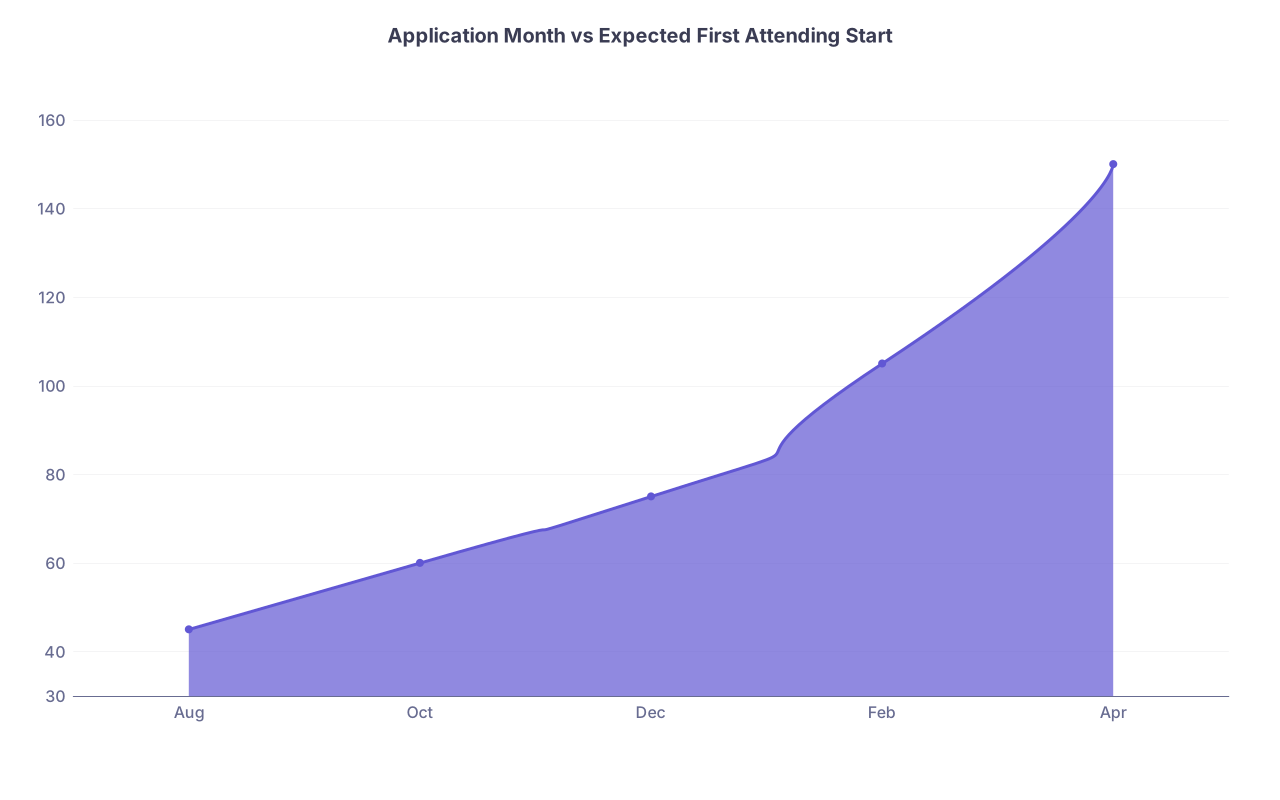
| Category | Value |
|---|---|
| Aug | 45 |
| Oct | 60 |
| Dec | 75 |
| Feb | 105 |
| Apr | 150 |
Read it as: median days from end of training to first attending start, given that serious job search began in that month of the final year. Start too late, and the expected gap expands.
How Residents Actually Experience This (Not the Brochure Version)
Forget the theoretical version you hear in conferences. This is how it usually plays out:
- PGY-2/early PGY-3: You are too busy and vaguely assume “it will work out.”
- Late PGY-3 / early final year: You notice co-residents mentioning recruiters, job fairs, and contracts.
- Mid final year:
- Some colleagues already have signed offers and scheduled site visits.
- You start throwing your CV into hospital portals and answering recruiter emails.
- Late final year:
- Licensing/credentialing delays surface.
- Someone’s start date gets pushed from August to October.
- The phrase “I might just do locums for a bit” starts circulating.
The residents who glide through this smoothly tend to share three behaviors:
- They started real conversations with employers at least 9–12 months before graduation.
- They picked at least one “easy” option (rural, community, or internal hire) among their targets.
- They tracked credentialing documents like they track Step scores – obsessively.
I have seen cardiology fellows with 2+ offers in Boston and San Francisco end up living off savings for 4–5 months while waiting for licensing, payer enrollment, and practice build-out. Not because the market did not want them. Because the system is slow.
A Data-Driven Strategy to Minimize Your Gap
If you care about minimizing the time between residency and your first paycheck, these are the levers the data say actually matter.

Start serious job search 9–12 months before graduation
Not casual browsing. Actual conversations, site visits, and negotiation.Target at least one “low-friction” path
- Internal offer at your training site
- Regional community hospital with known credentialing efficiency
- Less competitive geography
Get your licensing house in order early
If you know you want State X, start that license 6–9 months before you need it. Late licensing is one of the most common reasons a July graduate is still not working in October.If on a visa, prioritize immigration-safe roles over dream locations
The penalty for a mis-timed waiver or H-1B issue is measured in months without income, not days.Use locums as a backup plan, not a fantasy
Identify 1–2 locums agencies early. Have paperwork partially ready. If your main job slips by 60–90 days, you have a backup.
Visual Summary: What Most Graduates Can Expect
Bring it all together: for a typical U.S. resident or fellow finishing in June.
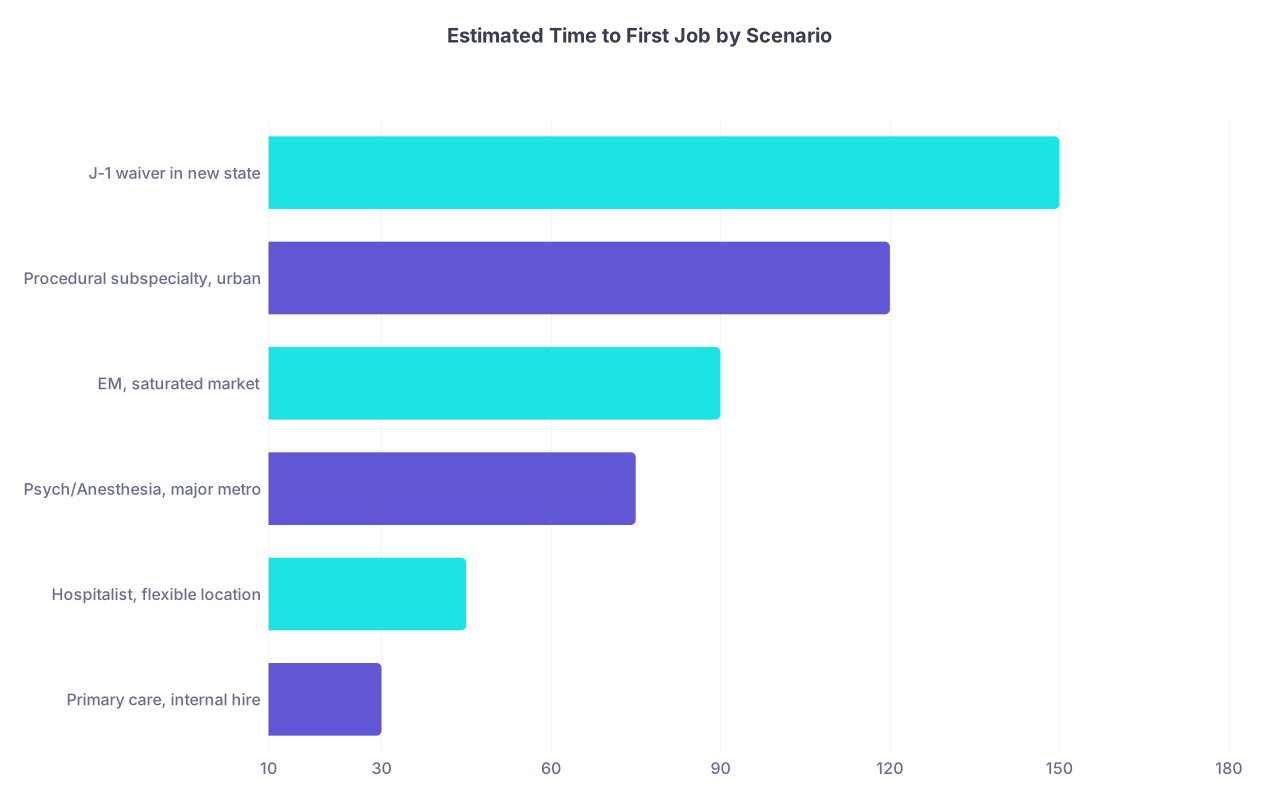
| Category | Value |
|---|---|
| Primary care, internal hire | 30 |
| Hospitalist, flexible location | 45 |
| Psych/Anesthesia, major metro | 75 |
| EM, saturated market | 90 |
| Procedural subspecialty, urban | 120 |
| J-1 waiver in new state | 150 |
Interpret these:
- Best-case: you stay at your training institution in a primary care or hospitalist role. Expect ~30 days or less.
- Reasonable standard: you are flexible on location in a hospital-based field. Expect 45–75 days.
- More constrained: big city, procedure-heavy, complex group structure, or visa. Expect 90–150+ days.
None of this is about whether you are “good enough.” It is about system lag and structural bottlenecks.
Key Takeaways
- Median time from residency/fellowship completion to first attending job ranges roughly 30–120 days, but procedural subspecialties and visa-bound graduates often extend toward 4–9 months.
- Starting your search 9–12 months before graduation, staying open on location, and locking in licensing early are the three most powerful levers to cut your post-training gap.
- Internal offers and primary-care/hospitalist roles move fastest; procedural urban jobs and J‑1 waiver positions move slowest. Plan your finances and expectations accordingly.