The last 90 days of residency will make or break your first attending job. Coasting here is a mistake.
You’re tired. You’re checked out. Everyone around you is saying “almost there!” and talking about vacations. But hiring committees, department chairs, and recruiters are quietly deciding who they trust enough to bring on as colleagues. In this final stretch, every week either sharpens your launch… or leaves you scrambling in September.
I’m going to walk you day-by-day through those 90 days so you finish residency with a signed contract you actually like, a clean reputation, and enough leverage to say no to bad offers.
Big Picture: Your 90-Day Job Countdown
First, zoom out. Ninety days is not much time. You can’t do everything, so you prioritize:
| Priority Level | Focus Area |
|---|---|
| Critical | Contracts & Offers |
| Critical | References & Reputation |
| High | Clinical competence & autonomy |
| High | Licensure & Credentialing |
| Optional | Extra moonlighting |
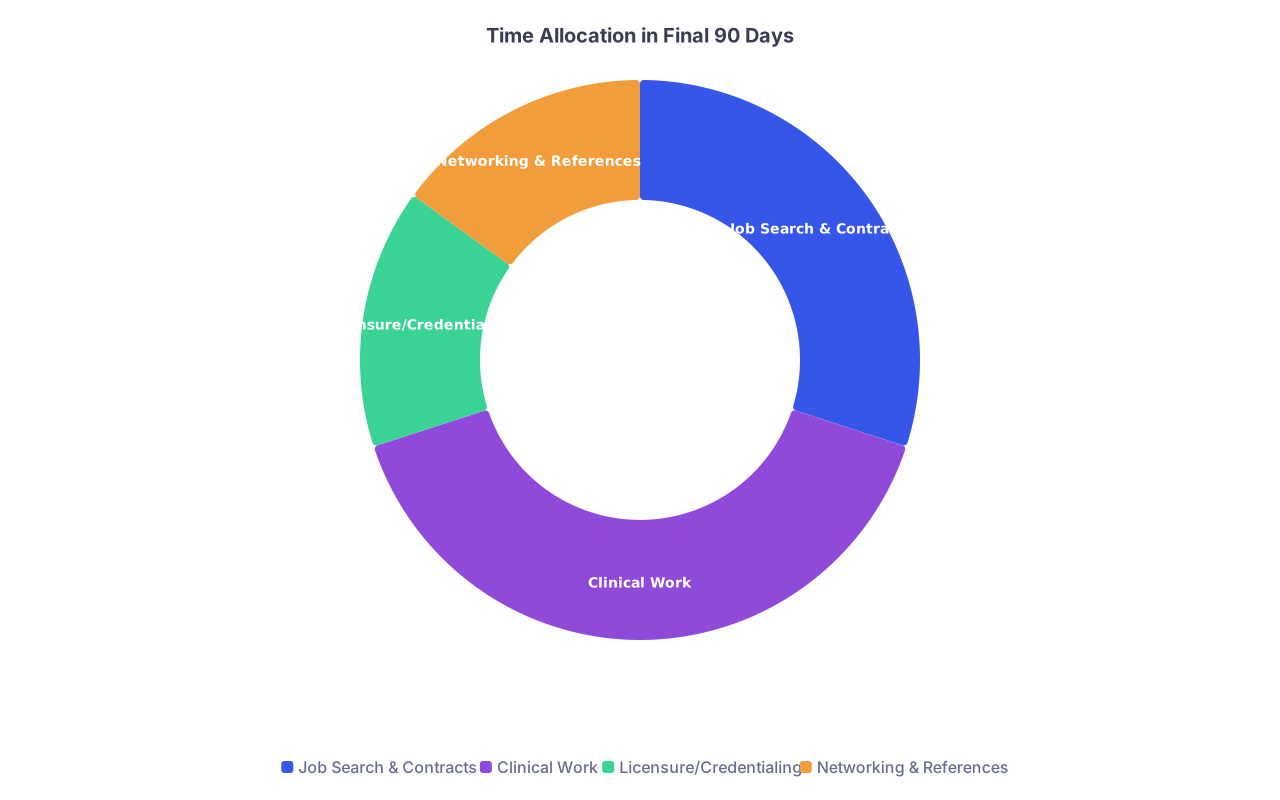
| Category | Value |
|---|---|
| Job Search & Contracts | 30 |
| Clinical Work | 40 |
| Licensure/Credentialing | 15 |
| Networking & References | 15 |
Here’s how we’ll slice it:
- Days 90–61: Position yourself and surface opportunities
- Days 60–31: Evaluate, negotiate, and lock in offers
- Days 30–0: Close loops, protect your reputation, and set up your start
Let’s go chronologically.
Days 90–61: Set the Stage and Signal You’re Ready
By Day 90: Get Your Situation on Paper
At this point you should sit down for one focused hour and answer four blunt questions:
- Where can I realistically work?
- States, cities, commuting radius
- Visa issues if applicable
- What type of job am I targeting?
- Academic vs community vs hybrid
- Employed vs private group vs locums
- What’s my minimum acceptable compensation?
- Not fantasy. Real numbers, based on MGMA or talking to recent grads
- What’s my “walk away” line?
- Call burden, RVU thresholds, non‑compete distance, night shifts, etc.
Write this down. Physically. I’ve watched people ignore this and end up with “surprise” deal breakers… after signing.
At the same time, pull together a quick profile:
- Current CV (updated, one clean PDF)
- Short professional bio (3–4 sentences you can paste into emails)
- A simple template email for reaching out to contacts
You’ll use these constantly over the next 90 days.
Days 90–80: Turn on the Job Radar
At this point you should start aggressively surfacing jobs instead of passively waiting.
This week, you:
Tell your PD and key faculty your real plans
- “I’d like to stay in this region, mainly outpatient, starting September”
- Ask directly: “Are there local groups or alumni you’d recommend I talk to?”
Email your last 2–3 fellowship grads or senior residents
- Subject line: “Quick question about first job”
- Ask where they landed, if they like it, and if their group is hiring
Register on 1–2 specialty-specific job boards, not just generic ones
- Example: NEJM CareerCenter, ACOG/ACP/ACEP/AAFP/etc boards
- Upload your CV but do not click “I’m open to anything everywhere” unless you mean it
Decide your stance on recruiters
- Some are useful. Some are vultures.
- Take calls, but remember: they work for the employer, not you.

| Step | Description |
|---|---|
| Step 1 | Day 90 - Define goals |
| Step 2 | Inform PD and mentors |
| Step 3 | Contact alumni and seniors |
| Step 4 | Search specialty job boards |
| Step 5 | Talk to recruiters selectively |
| Step 6 | Generate interview invites |
If you already have an offer in hand at Day 90, good. But you still follow this timeline—because one offer with no alternatives kills your leverage.
Days 80–70: Build References and Reputation Capital
At this point you should actively secure your future references while you’re still in front of them every day.
This 10-day window, you:
Identify 3–5 people who can vouch for you:
- Program Director (mandatory)
- One APD or core faculty
- One subspecialty or rotation lead who really likes your work
- Maybe a nurse manager or APP lead for character/professionalism
Ask them explicitly:
- “Would you feel comfortable serving as a strong reference for me for jobs this summer?”
- If someone hesitates, don’t force it. That’s not your reference.
Clean up your daily behavior:
- Show up on time. Finish notes. Don’t be the checked‑out senior.
- If you’ve had professionalism issues, this is your rehab period. Do not give them fresh ammunition 60 days before you need a phone recommendation.
Mini‑task for this week: send each reference an updated CV and 3 bullet points of what you’re proud of (“led our QI project on sepsis,” “trusted for overnight triage,” etc.). Makes their eventual phone calls 10x stronger.
Days 70–61: Line Up Interviews and Clarify Logistics
By now you should have leads. If you don’t, you tighten the net.
You should:
Schedule initial virtual interviews
- Aim for 3–6 first‑round conversations in the next 3 weeks
- Protect time in your schedule—talk to your chief if you need swaps
Clarify your availability to start
- Board exam dates
- Vacation plans right after graduation
- Moving/relocation windows
Start the boring-but-critical paperwork:
- Begin state medical license application if you haven’t (this can destroy job timelines)
- Ask each potential employer: “Will you sponsor the license and credentialing, or is that on me?”

If you’re already interviewing and someone mentions “we’d like to move quickly,” that’s code for: you’re in serious consideration. Keep them warm, but do not rush into signing without comparison.
Days 60–31: Evaluate, Compare, and Negotiate Offers
This month is where people get burned. They’re exhausted, an offer shows up, and they sign the first halfway decent thing. Then they discover the non‑compete clause or absurd call schedule in October.
We’re not doing that.
Days 60–50: Serious Interviews and Site Visits
At this point you should push any place you’re truly interested in to an on‑site visit.
During this 10-day block:
- Convert virtual interviews to in‑person where reasonable
- If you can’t travel, at least ask for:
- Meeting with potential direct colleagues (not just the recruiter)
- Meeting with an early‑career physician in that group
- A look at their call schedule template, not just verbal reassurances
On your visit days, you’re not a resident anymore. You’re a colleague being evaluated.
On-site checklist:
- Ask: “What happened to the last person in this role?”
- Ask: “What does a bad month look like here?” (volume, hours, support)
- Ask: “How are raises handled? Who decides?”
- Ask nurses/APPs quietly: “Do new docs tend to stay?”
Write notes immediately afterward. Trust me, after three visits the details blur.
Days 50–40: Analyze Offers Like an Adult, Not a Trainee
By this point you should start seeing actual numbers.
| Element | Offer A | Offer B |
|---|---|---|
| Base salary | ||
| Bonus/RVU structure | ||
| Call schedule | ||
| Non-compete terms | ||
| PTO/CME time |
Sit down one evening and put your offers side by side. No emotions. Just numbers and structure.
Must-review sections:
Base vs productivity
- How long is the guaranteed base? 1 year, 2 years?
- RVU targets realistic for a new grad or built for someone with a full panel?
Call & schedule
- Nights, weekends, holidays—how many?
- “Home call” can still ruin your life if it’s constant
Non‑compete
- Geographic radius (10 vs 50 miles is huge)
- Duration (1 year vs 2+ years)
- Applies to entire system or just single site?
Termination clause
- How much notice do you have to give?
- Do they have an easy out but you don’t?
If you’re not sure what’s “normal,” this is the week you:
- Talk to a physician contract lawyer in that state (worth every penny)
- Ask a recent grad you trust: “Do these numbers look standard for our specialty and region?”
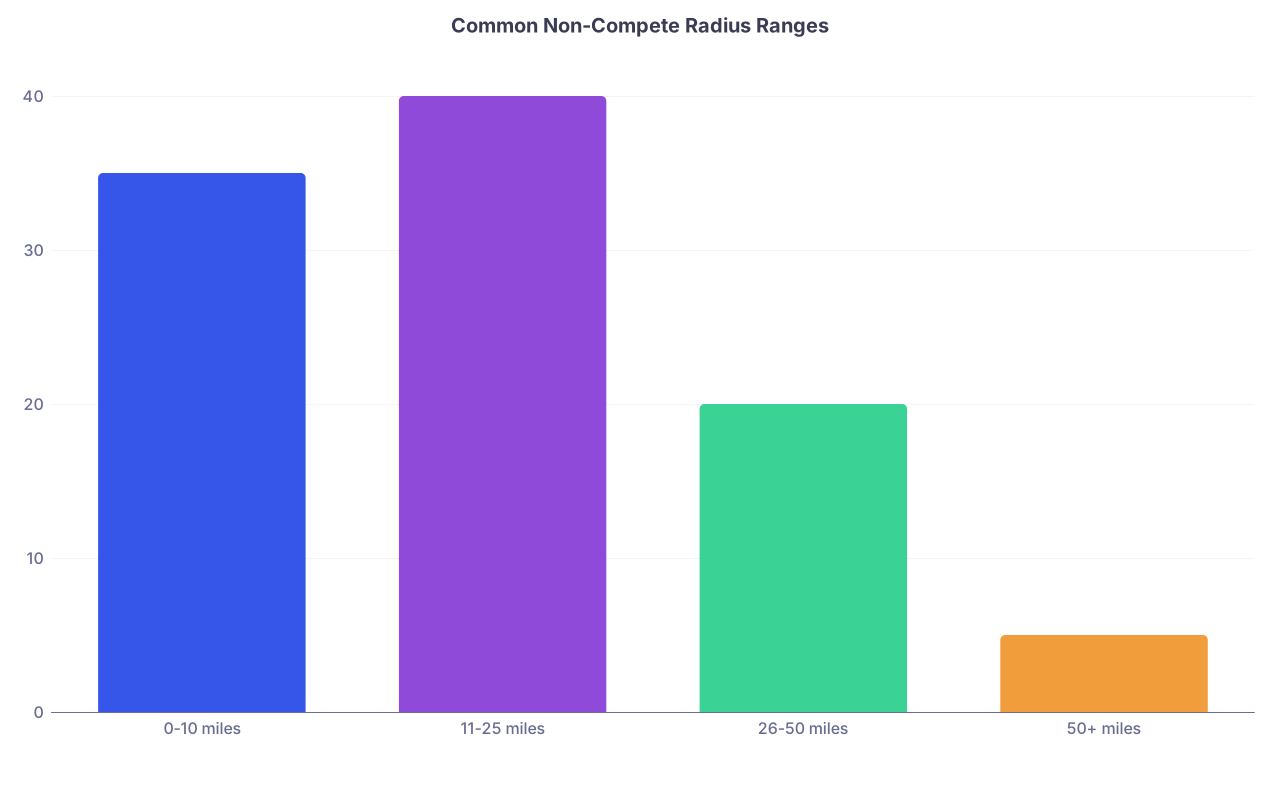
| Category | Value |
|---|---|
| 0-10 miles | 35 |
| 11-25 miles | 40 |
| 26-50 miles | 20 |
| 50+ miles | 5 |
Days 40–35: Negotiate Without Being a Jerk
At this point you should pick your top 1–3 options and enter real negotiation.
You’re not begging. You’re not demanding. You’re a professional clarifying terms.
This week, you:
Make one clean list of asks (3–5 items max), such as:
- Higher base salary or signing bonus
- Lower RVU target in year 1
- Reduced non‑compete radius or duration
- Protected clinic time or OR time for a subspecialty interest
- Extra CME funds or relocation support
Communicate like this:
- “I’m very interested in the position. If we can address a few items in the offer—particularly X and Y—I’d be ready to move forward.”
Don’t do:
- “My friend makes more in Boston so match that”
- Endless nickel‑and‑diming over $1k of CME
If an employer refuses to adjust even obviously unreasonable terms, that’s information. A rigid, inflexible contract now usually predicts a rigid, inflexible work environment later.
Days 35–31: Decide, Then Commit
You cannot keep everyone “maybe” forever. At this point you should be ready to choose.
You should:
- Rank your options honestly (including staying where you are, if on the table)
- Re‑read the contract you’re about to sign slowly, line by line
- Have the lawyer (if you used one) sign off on final revisions
- Ask explicitly about:
- Start date
- Onboarding schedule
- Credentialing timeline
- Who your direct supervisor will be
Once you are comfortable: sign. Then immediately notify any other sites that you’re respectfully withdrawing. Do not ghost. This is a small world.
Days 30–0: Close Residency Strong and Prepare Your Launch
At this point you likely have a signed contract or at least a firm verbal agreement and final contract in review. The last month is not for new applications; it’s for securing your reputation and smoothing the transition.
Days 30–21: Lock Down Licensure and Credentialing
This is the administrative grind that derails people.
During this block, you:
Confirm your state license application is complete
- Follow up on any missing documents
- Nag anyone you need forms from (medical school, residency office, etc.)
Start hospital credentialing for your future job
- Fill out the mountain of forms
- Respond to emails within 24–48 hours
Schedule your board exam if not already
- Align it with your vacation or light rotations if possible
- Tell your new employer your exam date—some build orientation around it

Ask your future employer point-blank: “What’s the latest realistic start date given licensing and credentialing?” Set expectations early so you’re not labeled “the new hire who delayed everything.”
Days 21–14: Protect Your Reputation on the Way Out
Residents get sloppy here. Word gets around.
At this point you should behave like you’re under a spotlight—because you are.
In this period:
Finish strong clinically
- See patients promptly, staff appropriately, complete your notes
- Be the senior people are sad to lose, not relieved to see gone
Avoid new drama
- No big schedule conflicts
- No unprofessional outbursts in front of staff
- No disappearing early because “I’m basically done”
Ask your PD for a final face‑to‑face
- Thank them
- Confirm they’re okay with being contacted by future employers
- Politely ask if there’s anything they’d like you to work on in these last weeks
You’re building the story they’ll tell when your new job calls: “Yes, they finished strong, took good care of patients, and were liked by staff.”
Days 14–7: Prepare Logistically and Mentally for Attending Life
Now it’s about the move—physical and psychological.
Use this week to:
Finalize relocation details
- Housing near your new job
- Childcare or school enrollment if relevant
- Moving company or DIY plan
Get your finances organized
- Set up a separate savings account for taxes if you’ll be 1099
- If W‑2, understand when your first paycheck will actually hit
- Make sure disability and malpractice coverage are clearly defined in writing
Review your future job’s structure
- First month’s schedule
- Call start date (day 1 vs after a ramp‑up period)
- Onboarding training—EMR, workflows, etc.
This is also the week you shift mindset from “trainee asking permission” to “attending taking responsibility.” You’ll still ask for help—but you own the decisions now.
Final 7 Days: Tie Off Loose Ends and Launch Clean
At this point you should be wrapping residency, not still scrambling for signatures.
In the last week, you:
Clear every outstanding chart, note, or inbox
- Do not leave piles of incomplete work for your co‑residents
Return all hospital property
- Badges, pagers, keys, parking passes
Update your professional presence
- LinkedIn or whatever you use, add your new position
- Email signature with new credentials and upcoming role
Send short thank‑you notes (email is fine) to:
- PD, APDs, key faculty
- Nurse managers or APPs who really helped you
- Any mentors who opened job doors for you
Then—before day 0—you do one more thing:
Take half a day with zero pager, zero email, and write down your goals for year one as an attending:
- Clinical growth goals (specific skills or procedures)
- Professional goals (teaching, QI, research, leadership)
- Personal boundaries (maximum number of nights/calls you’ll tolerate before you re‑evaluate the job)
You’ll revisit that list in 6–12 months and see if the job is what you thought you were signing up for.
A Quick Visual: 90-Day Residency-to-Job Timeline
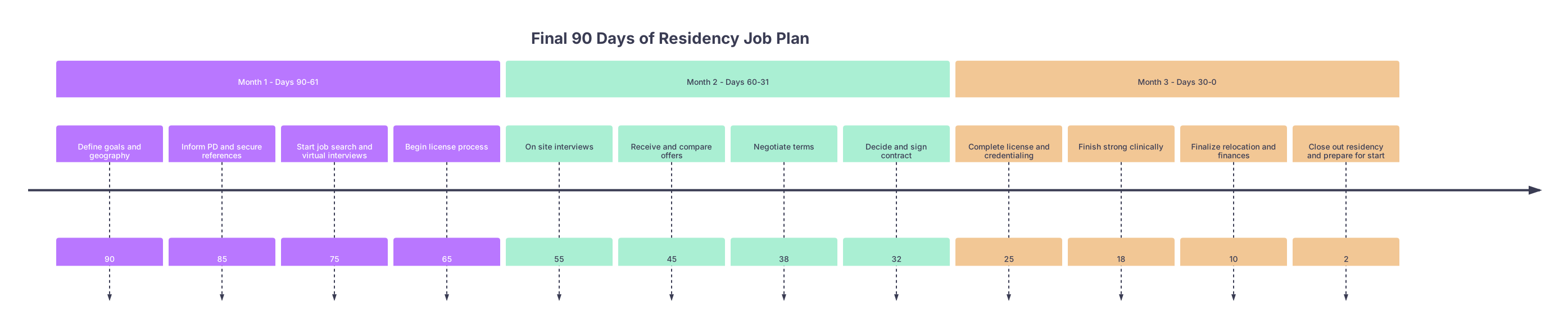
| Period | Event |
|---|---|
| Month 1 - Days 90-61 - Define goals and geography | 90 |
| Month 1 - Days 90-61 - Inform PD and secure references | 85 |
| Month 1 - Days 90-61 - Start job search and virtual interviews | 75 |
| Month 1 - Days 90-61 - Begin license process | 65 |
| Month 2 - Days 60-31 - On site interviews | 55 |
| Month 2 - Days 60-31 - Receive and compare offers | 45 |
| Month 2 - Days 60-31 - Negotiate terms | 38 |
| Month 2 - Days 60-31 - Decide and sign contract | 32 |
| Month 3 - Days 30-0 - Complete license and credentialing | 25 |
| Month 3 - Days 30-0 - Finish strong clinically | 18 |
| Month 3 - Days 30-0 - Finalize relocation and finances | 10 |
| Month 3 - Days 30-0 - Close out residency and prepare for start | 2 |
Today, not “soon,” block 45 minutes and do one concrete thing: open a blank document and write your non‑negotiables for your first job—location, schedule, compensation floor, and deal‑breaker clauses. That list will anchor every decision you make in these final 90 days.