The biggest mistake new attendings make after Match Day is acting like the hard part is over. It is not. The real leverage—and the real risk—lives in the weeks between “You matched” and “You signed.”
You are not a powerless trainee anymore. You are a revenue generator. Act like it.
Below is the stepwise, time-based guide from Match Week all the way to signing your first attending contract. Follow the timeline. Do not drift.
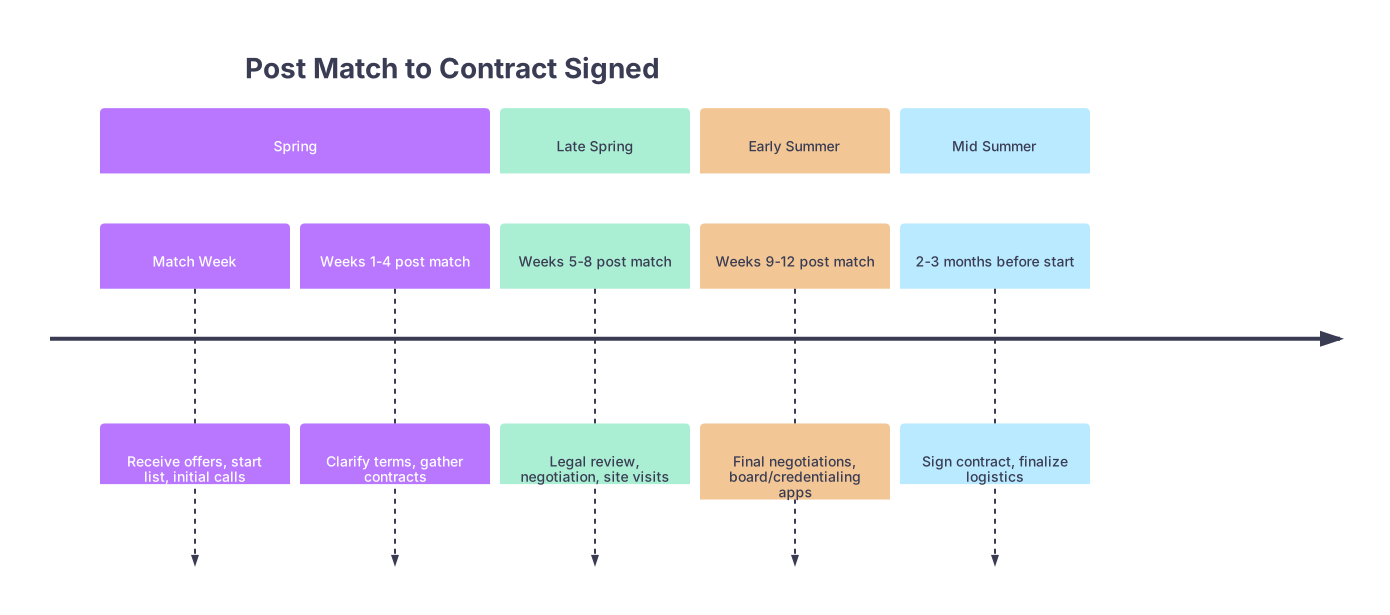
Overall Timeline Snapshot: Match to Signing
| Period | Event |
|---|---|
| Spring - Match Week | Receive offers, start list, initial calls |
| Spring - Weeks 1-4 post match | Clarify terms, gather contracts |
| Late Spring - Weeks 5-8 post match | Legal review, negotiation, site visits |
| Early Summer - Weeks 9-12 post match | Final negotiations, board/credentialing apps |
| Mid Summer - 2-3 months before start | Sign contract, finalize logistics |
You’ll see variation by specialty and employer type, but this is the skeleton. Now let’s walk it week by week.
Match Week: Shift Your Mindset and Capture the Landscape
At this point you should: stop thinking like an applicant and start thinking like a free agent.
During Match Week (or job offer week if you found your position outside the Match), your goal is to:
- Confirm who actually wants you
- Get high-level details on each option
- Start a structured comparison, not a gut-feel scramble
Days 0–3: Confirm Offers & Expectations
What you do:
Acknowledge every offer in writing.
A brief email is enough: “Thank you, I’m very interested and looking forward to reviewing details.”Ask for a high‑level summary if you don’t already have it.
Before you see a contract, you should know:- FTE status (1.0 FTE? 0.8?)
- Base salary range
- General schedule (clinic vs OR vs call)
- Geographic site(s)
- Start date expectation
Clarify timelines.
Ask each employer:- “When do you expect contracts to be out?”
- “When would you like a decision?”
- “What is your typical onboarding and credentialing timeline?”
Create your comparison sheet.
Not in your head. On paper or spreadsheet.
| Factor | Offer A | Offer B | Offer C |
|---|---|---|---|
| Location | |||
| Base Salary | |||
| Bonus Structure | |||
| Call Schedule | |||
| Start Date |
At this point you are not negotiating. You are gathering.
Weeks 1–2 Post-Match: Get Every Contract and Build Your Short List
At this point you should: stop relying on PD gossip and see the actual paper.
Step 1: Request Full Contract Drafts
If they delay, push (politely):
- “I’m excited about this opportunity and would like to have the contract reviewed soon. Can you send the draft agreement and any associated compensation exhibits?”
You want:
- Employment agreement
- Any compensation plans (RVU tables, bonus formula documents)
- Non-compete / restrictive covenant addendum
- Benefits summary (sometimes separate)
If they will not send a contract until you “verbally commit,” red flag. That’s not normal for serious employers.
Step 2: Narrow to 2–3 Serious Options
At this point, weed out clear “no”s:
- Toxic call schedule
- Location you know you won’t tolerate
- Unrealistic productivity expectations from day one
Keep 2–3 contenders. More than that and you’ll drown in details.
Step 3: Rough Financial and Lifestyle Comparison
You’re not a lawyer yet; you’re just doing a sanity scan.
Look for:
Base salary vs specialty norms
Compare to MGMA or specialty society data if you have it. If they’re 30% below market with vague promises of “growth,” be skeptical.Call burden
Nights per month, in-house vs home call, weekend frequency.Clinic volume expectations
“Full panel” within 6 months? 25–30 patients a day outpatient? Know what you’re signing up for.

| Category | Value |
|---|---|
| Clinical | 70 |
| Admin | 15 |
| Call | 10 |
| Research/Other | 5 |
Once you’ve done this, you’re ready to hand the real work to an attorney.
Weeks 3–4 Post-Match: Legal Review and Deep-Dive
At this point you should: have your top 1–2 contracts in a lawyer’s inbox.
Waiting to “see how it goes” is how people end up stuck in 3‑year non-competes with garbage RVU thresholds.
Step 1: Find a Physician Contract Attorney (Not Your Cousin the Divorce Lawyer)
Look specifically for:
- “Physician employment contracts” or “healthcare provider contracts”
- Experience with your state and region
- Familiarity with your specialty if possible (surgery vs psychiatry vs EM contracts are not the same world)
Plan on:
- 60–90 minute review call
- Written summary or redline of concerning points
- $500–$1,500 in fees for a straightforward review
Best money you’ll spend this year.
Step 2: Prepare Before the Attorney Call
You can save hours (and money) if you arrive prepared. For each contract, mark:
- Non-compete clause (radius + duration)
- Term length and termination clause
- Without cause notice period (30/60/90 days?)
- Compensation structure
- Base vs RVU vs collections
- Bonuses, sign-on, relocation
- Call expectations and how/if it’s paid
- Tail malpractice responsibility
- Who pays? Approximate cost?
Have your priority list ready:
- Top 3 things you care about most (e.g., non-compete radius, base salary, start date flexibility)
- Top 3 things you can live with as-is
Step 3: Attorney Review Outcomes
Your attorney will usually:
- Flag deal-breakers (non-compete that makes you unemployable locally, insane termination terms)
- Suggest specific language changes, not vague “this seems bad”
- Give you a negotiation strategy:
- What to push hard on
- What to mention once and drop if they balk
- How to sequence asks
Take notes. You’ll use them in the next phase.
Weeks 4–6 Post-Match: Structured Negotiation
At this point you should: stop acting grateful and start acting like a future partner in their revenue stream.
No, you’re not being “difficult” by asking questions. You’re being professional.
Step 1: Decide Your Negotiation Targets (Max 3–5)
Pick from:
- Base salary
- RVU or productivity thresholds
- Sign-on bonus and forgiveness schedule
- Non-compete radius/duration
- Tail coverage assignment
- Call frequency or call compensation
- Protected time (research, admin, teaching)
Then rank:
- Must win or walk
- Strong preference
- Nice to have
Trying to fix 17 clauses at once is how you get labeled “not a fit.”
Step 2: Schedule a Dedicated Contract Call
Do not negotiate by random email back-and-forth if you can avoid it. Ask for:
- 30–60 minutes with HR/Recruiting and, ideally, the department chair or practice leader
Before the call, script bullet points:
Start with enthusiasm and clarity:
“I’m very interested in this position and would like to make this work. I’ve reviewed the contract with counsel and have a few key items I’d like to discuss.”Then hit each item:
- What the contract says now
- What you’re asking for
- Brief rationale (not a monologue)
Example:
- “The current non-compete is 30 miles for 2 years. Given my family is rooted here, I’d like to request a reduction to 10 miles for 1 year, or alternatively carve-outs for academic or telehealth work.”
Step 3: Expect Pushback—and Know What’s Normal
Typical responses:
“This is our standard contract.”
Great. You’re asking for a deviation.“We’ve never changed that before.”
Sometimes true, sometimes lazy. Ask: “Is there any flexibility at all in this area?”“Compensation is set by a committee.”
Then ask about sign-on, relocation, or early review instead.
Normal concessions:
- Modest bump in base or sign-on
- Small adjustment in non-compete radius or duration
- Better clarity on call and RVU expectations
- Adding language about mentorship, review dates, or ramp-up support
Unusual but possible:
- Tail coverage shifts
- Major base salary changes (>10–15%) in big systems
Step 4: Get Revised Drafts and Re-Review
After negotiation, you should receive:
- A marked-up contract or a new “clean” version
- Written confirmation of changed terms
Do a quick re-check (with or without your attorney) to ensure:
- Every promised change is actually in the document
- No new “surprises” appeared (yes, this happens)
Weeks 6–8 Post-Match: Site Visits, Final Comparisons, and Verbal Commitment
At this point you should: be closing in on a decision, not still “seeing what else is out there.”
Step 1: Visit (or Revisit) Top Site(s) If You Haven’t
If you matched into a job far from your residency or never saw the outpatient clinic, go:
- Spend a day shadowing your future team
- Talk to:
- A peer-level physician who joined in the last 1–3 years
- An MA or nurse you’d work with directly
- Someone who left recently, if you can find them
Ask the questions HR will never answer honestly:
- “How many people have left in the last 3–5 years?”
- “What do new hires usually struggle with here?”
- “Is leadership responsive or performative?”

Step 2: Final Head-to-Head Comparison
At this stage, you should compare your top 1–2 offers in detail:
| Category | Offer 1 | Offer 2 |
|---|---|---|
| Base Salary | ||
| Bonus / RVU Plan | ||
| Non-compete | ||
| Tail Coverage | ||
| Call Schedule | ||
| Start Date | ||
| Partnership Path |
Factor in:
- Spouse/partner job prospects
- Schools / childcare if relevant
- Commute, housing cost, and actual neighborhood life (not brochure version)
This is where you zoom out: total life, not just compensation.
Step 3: Make a Verbal Commitment
Once you’re 95% there:
- Call or email your first choice:
- “I’m excited to accept this position pending final review and execution of the written contract. Please send the final version for signature.”
This lets them:
- Start credentialing and onboarding paperwork
- Inform other candidates (and sometimes pressure you to sign faster—be aware)
You’re not locked in until you sign, but do not play games with multiple “acceptances.” One commitment at a time.
Weeks 8–10 Post-Match: Credentialing Paperwork and Final Contract Review
At this point you should: be swimming in forms and resisting the urge to rush the signature.
Step 1: Credentialing and Licensing
Expect to complete:
- Hospital privileges applications
- State license (if new state or second license)
- DEA registration (or transfer address)
- Payer enrollment forms (Medicare, major insurers)
- Background checks, immunization records, etc.
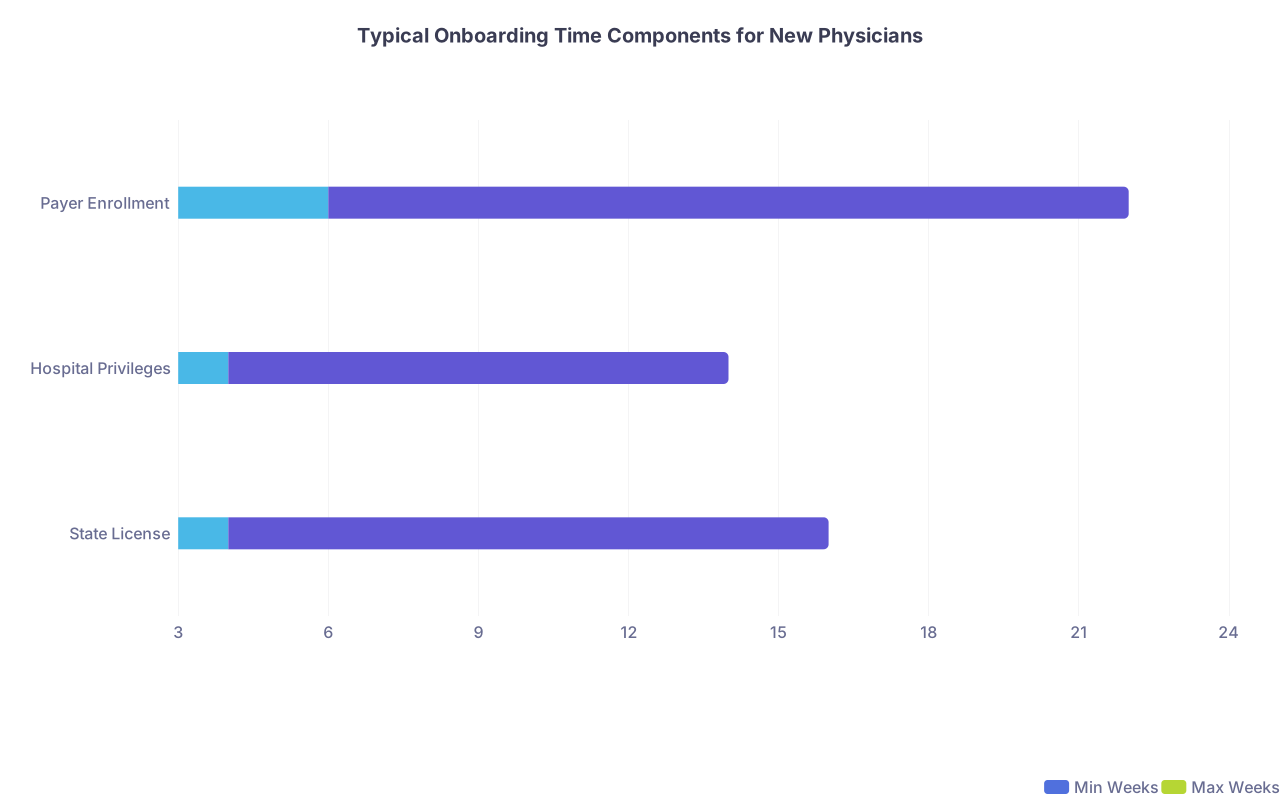
| Category | Min Weeks | Max Weeks |
|---|---|---|
| State License | 4 | 12 |
| Hospital Privileges | 4 | 10 |
| Payer Enrollment | 6 | 16 |
You’ll be told “we need the signed contract to start X or Y.” Sometimes true, sometimes just policy. Ask if they can start at least some pieces with a signed offer letter or conditional acceptance.
Step 2: Final Contract Read-Through
Before you sign, do one focused pass:
Name, dates, and position title
- Correct legal name and credentials
- Start date matches what you agreed
- Position and department accurate
Compensation
- Base salary number correct
- RVU thresholds and rates match your last draft
- Sign-on, relocation, and any forgiveness schedule clearly spelled out
Termination
- Without-cause notice period (e.g., 60 or 90 days)
- Any penalties for early departure?
Non-compete
- Radius and duration as agreed
- Defined clearly (from which location? all sites? primary office?)
Malpractice and tail
- Type (claims-made vs occurrence)
- Who pays tail, and under what conditions?
Have your attorney do a quick final look if there were substantial changes since last time.
2–3 Months Before Start Date: Signing the Contract
At this point you should: sign once, clearly, and keep copies like they’re gold. Because they are.
Step 1: Execute the Contract Properly
Follow whatever process they give you:
- Electronic signature system (DocuSign, Adobe Sign)
- Or physical signature:
- Sign in blue or black ink
- Date every signature line
- Initial every page if requested
Verify:
- You receive a fully executed copy (signed by both you and employer)
- You save:
- PDF on a secure personal drive (not just hospital email)
- Optional printed copy in home file
Step 2: Confirm Downstream Details
Now that it’s signed, pin down:
- Final call schedule expectations for year 1
- Clinic template (patients per half-day, types of visits)
- First-year performance review date
- Orientation schedule (EMR training, HR orientation, shadowing days)

If something major differs from what you thought (e.g., they suddenly add a second clinic site you never heard of), call it out now. Do not wait until after you move.
4–8 Weeks Before Start Date: Transition and Backup Planning
At this point you should: be locked into your job, but not naïve about escape routes.
Step 1: Know How You’d Leave If You Had To
I’m not telling you to plan your exit on day one. I am telling you to read:
- Termination without cause:
- How many days’ notice?
- Any restriction on giving notice in the first year?
- Non-compete:
- Where can you go if things are intolerable?
- Are there carve-outs (academic, telehealth, VA, locums)?
This is emotional armor. If the job is terrible, you’re not “trapped;” you already know the door—even if it’s narrow.
Step 2: Clean Up Your Online and Professional Presence
Now’s also the moment to:
- Update CV with “Incoming [Specialty] at [Institution]”
- Clean up any cringe on your public-facing social media (yes, programs and patients look)
- Register professional email if needed (Gmail with your name, separate from residency account)

Quick Specialty-Specific Pacing Notes
Not every field moves at the same speed. Roughly:
| Specialty Type | Common Start of Contract Talks |
|---|---|
| Primary Care / IM | 6–12 months before start |
| Hospitalist | 4–9 months before start |
| Surgical Subspecialty | 9–18 months before start |
| EM / Urgent Care | 3–9 months before start |
| Psychiatry | 6–12 months before start |
If you’re surgical and wait until Match Week to start all of this, you’re late. If you’re EM and already have 5 offers 18 months out, you might be overcommitting.
Final 3 Things to Remember
- The leverage is now. Once you sign, 90% of your negotiating power evaporates. Use the weeks after Match to clarify and negotiate.
- Get expert eyes. A good physician contract attorney will see traps you don’t even know exist. Don’t improvise this part.
- Think like a future attending, not a resident. Your job is not just to get hired. It’s to build a sustainable life and career you’re not desperate to escape in 18 months.