The biggest mistake residents make with contracts is calling an attorney three days before signing. That is not “being cautious.” That is damage control.
You need a timeline. Month by month, then week by week, of when to involve a contract attorney and what to have ready at each point. If you wait until the end, you lose leverage, options, and sometimes tens of thousands of dollars.
Let’s walk it chronologically—from late residency through your first day on the job.
12–18 Months Before Graduation: Lay the Groundwork (No Attorney Yet)
At this point you should focus on learning the basics, not paying hourly fees.
You are:
- Still solidly in residency or fellowship
- Unsure of exact geography or practice type
- Just starting to think about the job market
Here is what you should do now, without an attorney:
Educate yourself on contract basics
- Read 2–3 solid physician contract books or reputable blogs.
- Learn key terms: base compensation, RVUs, collections, tail coverage, non‑compete, partnership track, buy‑in.
- Ask senior residents or recent grads what surprised them about their first contract.
Start a simple “job file”
- Create a folder (cloud + physical) for:
- CV versions
- Interview notes
- Salary data
- Sample contracts you get your hands on (anonymized).
- Create a folder (cloud + physical) for:
Identify potential attorney candidates
- Ask recent grads: “Who did you use for your contract? Would you use them again?”
- Make a shortlist of 2–3 physician-specific contract attorneys. Not “my uncle who does real estate.”
- Check:
- State(s) where they commonly work
- Fee structure (flat review vs hourly)
- Typical turnaround time
At this stage you should not be paying anyone yet. You are building your bench so you can move fast later.
9–12 Months Before Graduation: Early Job Search, First Contact with Attorney
Now you are:
- Browsing postings
- Talking with recruiters
- Maybe doing some informal interviews
This is when you should have your first brief interaction with an attorney—often a free or low-cost consult.
What to do at this point
Clarify your priorities before contracts show up
- Rank these, honestly:
- Geographic location
- Compensation
- Schedule / call
- Research/academic vs private
- Future fellowship possibilities
- Visa issues (if applicable)
- This will inform what an attorney fights for later.
- Rank these, honestly:
Schedule a “pre‑contract strategy” call
- One 20–30 minute call is enough.
- Your agenda:
- “Here is my specialty, here are the states I’m looking at.”
- “What are the big pitfalls you see for [specialty] in [region]?”
- “What’s your preferred process and timeline once I receive an offer?”
- Your goals:
- Confirm this person actually understands physician contracts.
- Understand their typical turnaround time (you will need this).
Decide how you will pay and budget for it
- Flat fee vs hourly. Negotiate clarity now.
- Typical range (varies by market) for a full physician contract review:
- $500–$2,000 for flat review/explanation
- More if they negotiate directly or review multiple offers
- Set the money aside. This is not the place to be cheap.
At this point you should have an attorney chosen, but not yet engaged for a full review.
6–9 Months Before Graduation: Interviews and Verbal Offers
Now the job process gets real. You are:
- Actively interviewing
- Getting interest from multiple sites
- Hearing phrases like “we’ll send you a draft offer soon”
This is where timing starts to matter.
When NOT to involve the attorney yet
If a recruiter emails:
“We’d like to offer you $260k with bonus potential and 1:5 call. Does that sound in your ballpark?”
You do not send that email to your attorney yet.
You respond yourself, at a high level:
- “Based on what I’m seeing in the market, I’m generally targeting base in the [X–Y] range.”
- “I’m hoping for call no more frequent than 1:6.”
- “I would like to understand the non-compete radius and malpractice coverage structure.”
You are setting baseline expectations before the written offer appears.
When to bring in the attorney in this phase
Use your attorney strategically for:
A short call when you get your first real verbal offer
- Ask:
- “Here is what they are proposing in rough numbers. Is that aligned with what you see in this region?”
- “What questions should I ask before they send the contract?”
- Then go back to the employer with targeted questions:
- “Do you provide occurrence or claims‑made malpractice? If claims‑made, do you pay for tail?”
- “What is your standard non‑compete radius and duration?”
- “Is there a written partnership track? When is it provided?”
- Ask:
Screening for red flags before seeing paper
- If the verbal conversation suggests any of the following, flag it early with your attorney:
- Huge non‑compete radius (like 50 miles in a dense city).
- Zero mention of tail coverage in a claims‑made environment.
- “We do not give written productivity expectations.”
- “Partnership is discussed informally later.”
- If the verbal conversation suggests any of the following, flag it early with your attorney:
You are not paying for full contract review yet. You are using the attorney’s experience as a filter so you know when to slow down or walk away.
3–6 Months Before Graduation: First Written Offer – This Is the Critical Window
This is the earliest you should do a full contract review. And you should do it before you emotionally commit.
At this point you:
- Have at least one formal offer letter or draft contract.
- Maybe have competing interest from other employers.
- Are under mild pressure from recruiters to “sign so we can start credentialing.”
This is when to fully involve the contract attorney.
Step 1: As soon as you receive the draft
Within 24–48 hours of getting the contract in your inbox, you should:
Forward the contract to your chosen attorney
- Include:
- Your CV
- Any prior email outlining “agreed” terms
- Your priority list (what matters to you most)
- Your target start date and graduation date
- Include:
Set a clear review deadline
- Tell the attorney:
- “They are hoping for a response in 2 weeks. When can you get me a review by?”
- Tell the employer:
- “I’m having this reviewed and will get back to you in about 2 weeks.”
- Tell the attorney:
Give your attorney at least 7–10 days ideally. Three-day rush reviews are possible, but sloppy and more expensive.
Step 2: Attorney review and strategy call
When the attorney sends feedback, you should have:
- A marked‑up contract (or section summaries)
- A written summary of:
- Deal breakers
- Negotiable items
- Minor risks to accept
Your call with them should cover:
- Compensation structure
- Is base fair?
- Are RVU or collections targets realistic for a new grad in your specialty?
- Malpractice
- Occurrence vs claims‑made
- Who pays tail and typical tail cost in that market
- Restrictive covenants
- Non‑compete radius and duration
- Non‑solicitation of patients and staff
- Termination clauses
- Without‑cause notice period (60 vs 90 vs 180 days)
- Conditions for “for cause” termination
- Work expectations
- Clinic sessions, call schedule, weekends
- Administrative time
- APP supervision expectations
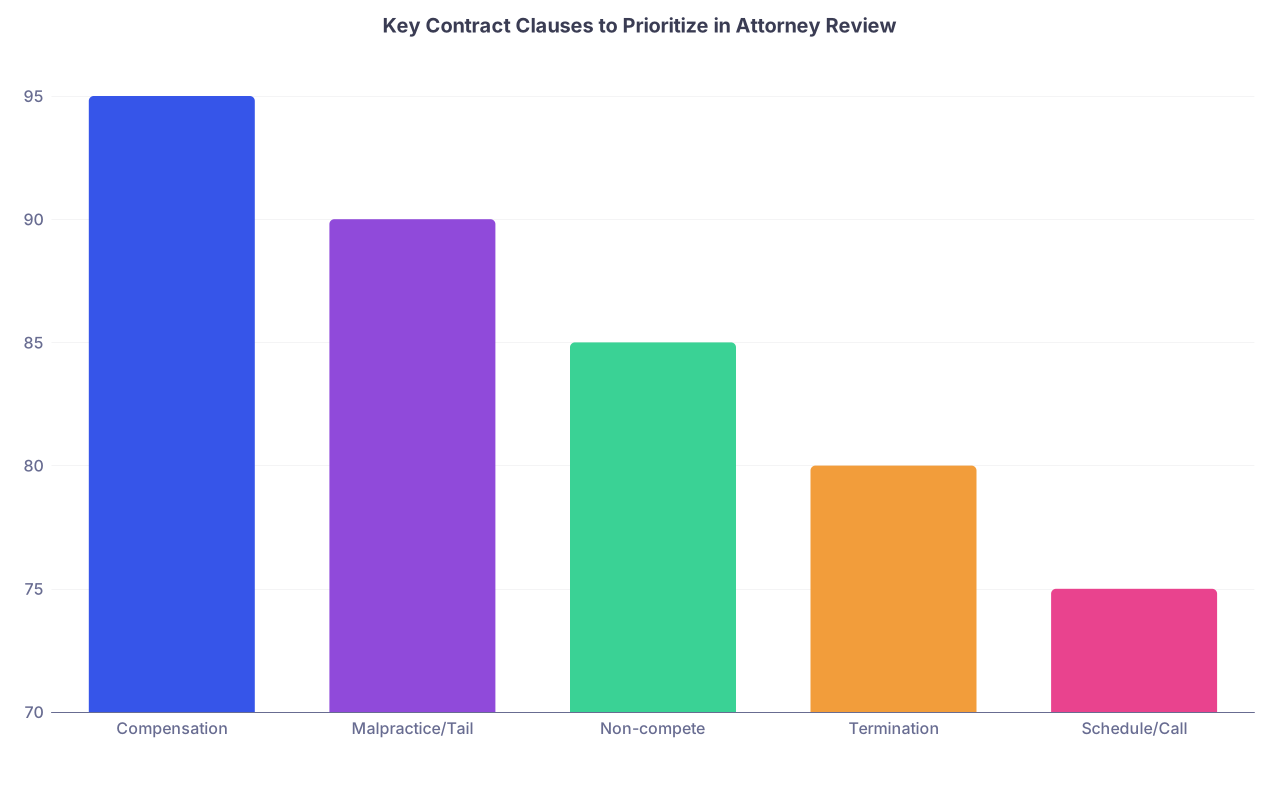
| Category | Value |
|---|---|
| Compensation | 95 |
| Malpractice/Tail | 90 |
| Non-compete | 85 |
| Termination | 80 |
| Schedule/Call | 75 |
(Percentages here are simply a way of saying how often I see these issues causing real pain for physicians later.)
Step 3: Decide who does the negotiating
You have three options, and this is where residents often choose poorly.
- You negotiate directly, guided by your attorney
- Most common.
- Cheaper.
- Good if the environment feels collegial and you are comfortable talking about money.
- Attorney negotiates directly with employer
- Good if:
- It is a large system or corporate group.
- You already sense gamesmanship.
- Risk: Can feel adversarial if done poorly.
- Good if:
- Hybrid
- Attorney helps you script emails/talking points.
- You handle the relationship.
At this point you should not be passively accepting boilerplate. This is the leverage window.
1–3 Months Before Graduation: Finalizing Terms and Back‑and‑Forth
If you started the process on time, by now you:
- Have had at least one round of edits.
- Are either:
- Close to signing
- Or walking away and reviewing a backup offer
Here is exactly when to loop your attorney back in.
When you receive a “revised” contract
As soon as the employer sends a new version, you should:
- Forward it straight to your attorney
- Subject line: “Version 2 – Highlighted changes?”
- Ask for a quick comparison
- “Did they actually fix what we asked?”
- “Did they sneak in any new unfavorable language?”
Attorneys see hidden changes every year:
- Non‑compete radius reduced from 20 to 15 miles… but now applying to more sites.
- Tail coverage language softened from “Employer will pay” to “Employer may pay at its discretion.”
You want your attorney doing line‑by‑line check on the final document.
When to stop negotiating
Attorneys are useful, but they cannot magically rewrite a corporate template. At some point you make a decision.
Use your attorney to answer:
- “Is this now within normal market range?”
- “Where does this contract still expose me to above‑average risk?”
- “If I walk away, what are realistic odds I will get something better in this region?”
At this point—ideally 6–12 weeks before start date—you should be ready to sign, with eyes fully open.
0–3 Months After Signing: Pre‑Start Cleanup
You have a signed contract. The attorney’s main work is done. But you are not finished.
This window is about making sure the execution matches the document.
When to reconnect briefly with your attorney
You should reach out again if:
Credentialing packet does not match the contract
- They ask you to agree to new terms in some hospital document.
- They ask you to sign new non‑competes tied to medical staff privileges.
Employer wants to “tweak” something before start
- “We need you to start call a month earlier than we said.”
- “We had a change in malpractice carrier; sign this addendum.”
Forward those documents. Ask:
- “Does this materially change the risk profile?”
- “Should I agree, or ask for compensation or other concession in return?”
This is usually quick and cheap attorney time, but worth it.
0–12 Months Into Your First Job: When Things Go Sideways
Nobody thinks they will need a contract attorney once they start. Then reality hits.
At this point you might be:
- Being asked to work more call than written.
- Seeing productivity benchmarks that make no sense.
- Hearing rumors of a sale, merger, or restructuring.
This is when you involve the same attorney again.
Common triggers to call your attorney
Call when you see any of these:
Material deviation from contract terms
- Clinic sessions increase by 20–30% over what is written.
- Call schedule far heavier than described.
- You are told, “The contract is just a guideline.”
Compensation disputes
- RVU credit calculations are opaque or keep changing.
- Bonuses are withheld or redefined after the fact.
- A “productivity threshold” suddenly appears mid‑year.
Employer sale or acquisition
- New entity sends you a “standard new contract” to sign.
- Non‑compete language changes with the new owner.
- You are being “rebadged” without clear terms.
Thinking about leaving
- You want to know your real obligations:
- Notice period
- Tail coverage cost
- Non‑compete restrictions
- You want to know your real obligations:
Your attorney’s role now is:
- Interpreting ambiguous clauses.
- Advising on how to document deviations.
- Mapping out a safe exit strategy if needed.
At this point, months into practice, do not send harsh emails or threaten legal action blindly. Let the attorney help you sequence your steps.
A Simple Visual Timeline: When to Involve the Attorney
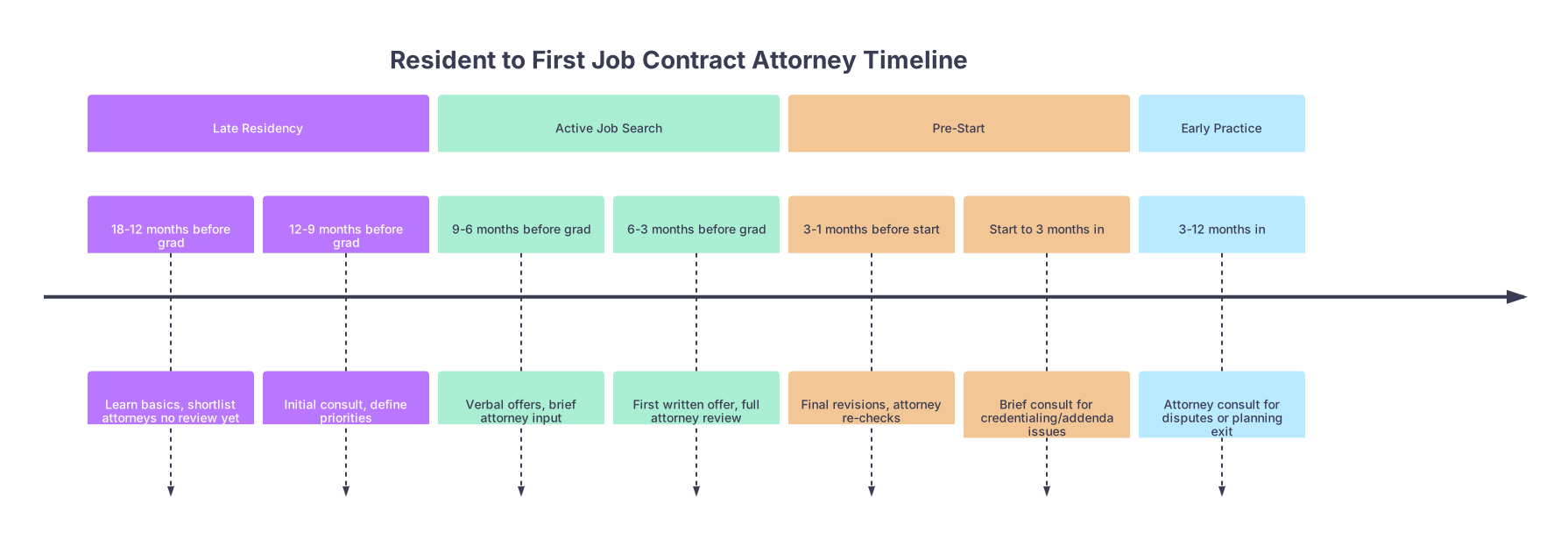
| Period | Event |
|---|---|
| Late Residency - 18-12 months before grad | Learn basics, shortlist attorneys no review yet |
| Late Residency - 12-9 months before grad | Initial consult, define priorities |
| Active Job Search - 9-6 months before grad | Verbal offers, brief attorney input |
| Active Job Search - 6-3 months before grad | First written offer, full attorney review |
| Pre-Start - 3-1 months before start | Final revisions, attorney re-checks |
| Pre-Start - Start to 3 months in | Brief consult for credentialing/addenda issues |
| Early Practice - 3-12 months in | Attorney consult for disputes or planning exit |
Comparing “Too Late” vs “On Time” Involvement
| Scenario | When Attorney Is Involved | Leverage Level | Typical Outcome Risk |
|---|---|---|---|
| Ideal timing | Before signing first draft | High | Lower long-term risk |
| Slightly late | After signing offer letter | Medium | Some terms locked in |
| Very late | Days before start date | Low | Minimal changes |
| Crisis-only | After major dispute | Very low | Damage control only |
You want to live in the first row as often as possible.
Two Common Bad Timelines (And How to Avoid Them)
Bad Timeline #1: “I signed already, can you check it?”
Sequence I see too often:
- January: Resident interviews, receives offer.
- February: Signs full contract “subject to attorney review later.”
- April: Sends contract to attorney.
- Attorney: “You already agreed to all of this. I can explain it, but we have little leverage to change it now.”
How to fix it:
- Never sign anything labeled “contract,” “agreement,” or “employment terms” before a full review.
- Offer letters can sometimes be signed earlier, but even those can lock in non‑compete basics.
Bad Timeline #2: “They pulled the offer when I pushed back.”
Occurs when:
- Resident calls attorney after making aggressive demands.
- Attorney sees originally fair contract that the resident has insulted by over-negotiating on trivial items.
- Employer decides the resident is “difficult” and walks.
How to fix it:
- Involve attorney before you send a long list of demands.
- Prioritize 3–5 key big-ticket items. Do not nitpick every comma.
Final Checklists by Phase
Before You Ever Get a Contract
At this point you should:
- Have:
- Shortlist of 2–3 physician contract attorneys.
- Baseline understanding of key terms.
- Know:
- Your top 3 priorities (location, compensation, call, etc.).
When You Receive Your First Draft Contract
At this point you should:
- Immediately:
- Send the contract + context to your chosen attorney.
- Set deadline expectations with both employer and attorney.
- Prepare:
- A written list of what matters most to you.
- Any comparable offers or salary data you have.
After Revisions and Before You Sign
At this point you should:
- Confirm with attorney:
- All agreed changes are actually in writing.
- Remaining risks are understood and acceptable.
- Decide:
- Whether this contract is good enough to stop the search.
- Your backup plan if you walk away.
The Core Takeaways
- Involve a contract attorney early with strategy, then deeply at first written offer, and briefly at each major change.
- The worst time to call an attorney is after you have already signed; the second worst is days before a requested deadline.
- Treat the timeline like any other high‑stakes procedure: right prep, right sequence, right team. That is how you turn “just sign here” into a deliberate career move.