The biggest mistake residents make is starting their job search six months too late.
You are not “a resident who will look for jobs later.” You are a nearly finished physician in a tight, political, opaque job market. If you wait until PGY-3 spring to get serious, you will be left with leftovers: bad call schedules, weak comp, miserable locations.
Here is the month‑by‑month reality from early PGY‑2 through graduation. At each point: what you should be doing, what must be done, and what is safe to ignore.
Big Picture: When Things Actually Happen
Before we drill down month by month, zoom out.
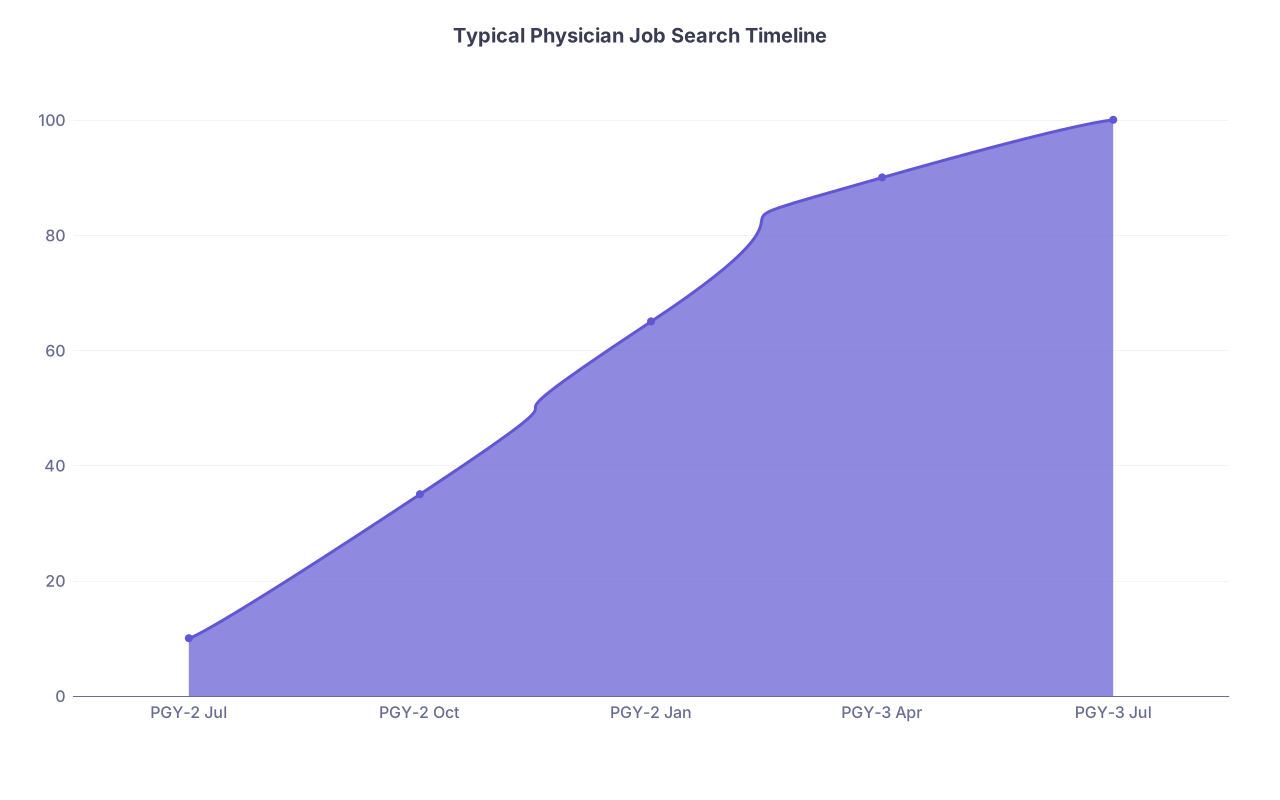
| Category | Value |
|---|---|
| PGY-2 Jul | 10 |
| PGY-2 Oct | 35 |
| PGY-2 Jan | 65 |
| PGY-3 Apr | 90 |
| PGY-3 Jul | 100 |
That “percent complete” curve is what I see in residents who match into solid first jobs. They are 50–60% done by the end of PGY‑2. Not just thinking. Done: CV built, recruiters engaged, target regions identified, basic references lined up.
Now the detailed timeline.
PGY‑2: Laying the Groundwork (12–18 Months Before Graduation)
July–August (PGY‑2 Start): Quiet Prep While Everyone Else Sleeps
At this point you should:
Pick your likely practice type (even if it changes later).
Choose a default lane:- Academic vs community
- Hospital‑employed vs private group vs locums
- Urban vs suburban vs rural
Do not overthink it. You can pivot. But you cannot market yourself as “anything, anywhere” and expect good offers.
Create a clean, residency‑ready CV.
One evening. No excuses.- 2–3 pages max
- Reverse chronological
- No fluff like “proficient in Microsoft Word”
- Key sections: Contact, Education, Training, Licensure/Certifications, Experience, Research/Publications, Presentations, Leadership/Service
Scrub your online presence.
Ten minutes:- Lock down social media
- Make a basic LinkedIn with professional headshot
- Make sure your name on Doximity/Healthgrades is not a disaster
Start a master job search document.
Google Doc or Notion page. One place for:- CV versions
- Desired locations
- Salary/call notes
- Program director quotes on your strengths (you will use this language later)
Checklist for August:
- First pass CV drafted
- LinkedIn profile created or updated
- Specialty choice confirmed (or narrowed to 1–2)
- Master doc started
September–October: Market Research, Not Applications
At this point you should study the market, not send out a single application yet.
Research your specialty’s job landscape.
Use:- Doximity, NEJM Career Center, PracticeLink, Health eCareers
- Specialty society job boards (e.g., ACEP, ACOG, ACR, AAFP) Look for:
- Where jobs are clustered
- Common call structures
- Typical compensation ranges (not fictional “up to” numbers)
Talk to 2–3 recent graduates.
Email or text alumni who graduated 1–3 years ahead of you:- Ask: “If you were redoing your job search, what would you start earlier?”
You’ll hear the same themes: licensing, visas, spousal jobs, and underestimating negotiation.
- Ask: “If you were redoing your job search, what would you start earlier?”
Clarify your non‑negotiables.
In your master doc, set hard lines:- Max number of nights/weekends
- Regions or states you will not consider
- Absolute comp floor (base + realistic bonus, not fantasy)
Soft‑signal to your program leadership.
Quick chat with PD or mentor:- Signal interest: “I’m probably looking at XYZ region / community vs academic.”
- Ask if there are known contacts or pipeline positions.
At the end of October you should have:
- List of 5–8 target regions
- List of 3–5 “okay if needed” backup regions
- Notes on comp/benefits patterns for your specialty
- Mentor aware of your rough plan
November–December: Credentials and Red Flags
Now you secure the boring but critical stuff.
Review your training record for problems.
Ask chief or coordinator for:- Procedure logs
- Any flagged evaluations / remediation notes
- Duty hour violations
You want to know what might come up when hospitals credential you.
Plan your licensing strategy.
Look at your target states. Some are slow (Texas, California, New Jersey, etc.).
Starting now means you are not panicking in PGY‑3 spring.Clean up your CV content.
- Update publications, posters, talks
- Remove pre‑med nonsense
- Make sure dates and locations are exact and consistent
Sketch your personal priorities.
Answer in writing:- “If I had two offers, one with more money, one with more lifestyle, which do I pick?”
- “What does a good first year out look like for me?”
End of December checklist:
- No surprises in your training record
- Target state licensing requirements reviewed
- Updated CV with accurate dates
- Written list of personal priorities
January–March of PGY‑2: Early Positioning and Soft Outreach
January: References and Letters (Yes, This Early)
At this point you should start lining up your validators.
Identify 3–4 core references.
Typical mix:- Program Director
- Associate PD or key attending in your subspecialty
- Maybe a research mentor or site chief
Tell them your rough timeline now.
Simple script:- “I will likely start seriously looking at jobs early PGY‑3. Would you be comfortable serving as a reference?”
- Ask what they think your top strengths are. Write their phrases down. Use them later in cover letters and interviews.
Draft a basic cover letter template.
One page, highly modifiable:- Who you are
- When you finish
- Why that region/practice model
- A few lines on what you bring (procedures, languages, leadership)
February: Recruiters, but on Your Terms
Now you can selectively open the gates.
Create a separate job search email.
Not your residency email. Your institution will kill that account when you graduate.Post controlled profiles on 1–2 job boards.
- Use generic location preferences if you are not ready to commit
- Avoid ticking “willing to relocate anywhere” unless truly desperate
Talk to 1–2 reputable recruiters.
Not all recruiters are equal. You want:- Those who work heavily in your specialty
- Those who can name specific groups, not just “lots of opportunities”
Make it clear:
- Your target regions
- Your timeline
- That you do not want your CV blasted blindly
Begin a simple tracking table.
| Site/Contact | Location | Practice Type | Stage |
|---|---|---|---|
| Hospital A | Midwest city | Hospital | Initial info |
| Group B | Southeast | Private | Considering |
| Recruiter X list | Multi-state | Mixed | Researching |
March: Reality Check and Narrowing
At this point you should get honest about competitiveness and preferences.
Compare what you want vs what exists.
If every ad in your dream city offers 1:3 call and mediocre pay, stop telling yourself you will find 1:8 call and top 5% compensation there. Adjust either:- Your expectations, or
- Your geography
Narrow to 3–5 serious target metros/regions.
You can keep backups, but decision fatigue is real. Focus.Identify 5–10 specific employers per region.
Hospitals, large groups, academic departments. Write them down even if they have no current postings. You may contact them cold later.
By end of PGY‑2 March:
- References soft‑confirmed
- Recruiter conversations started (or intentionally deferred)
- 3–5 primary regions chosen
- Employer target list started
PGY‑2 April–June: Light Touch, Finish Year Strong
At this point you should not over‑optimize your job search. You still need to be a solid resident.
Focus on building reputation with key attendings.
Especially those who know people in your target areas. Many jobs come from a phone call you never see.Keep your ear open for internal openings.
- Does your institution hire its own at graduation?
- Are there fellowship spots that function like de facto first jobs?
Do one small thing each month to maintain momentum:
April:- Update CV with any new presentations or awards
May: - Add at least 2 new employers or contacts to your list
June: - Brief check‑in email with one mentor about your job search plan
- Update CV with any new presentations or awards
You finish PGY‑2 with groundwork laid, references primed, and a clear map. That puts you far ahead of your peers.
PGY‑3 (Final Year): Execution Phase
Now the real movement. Assume a July graduation at the end of PGY‑3; adjust a few months if off‑cycle.
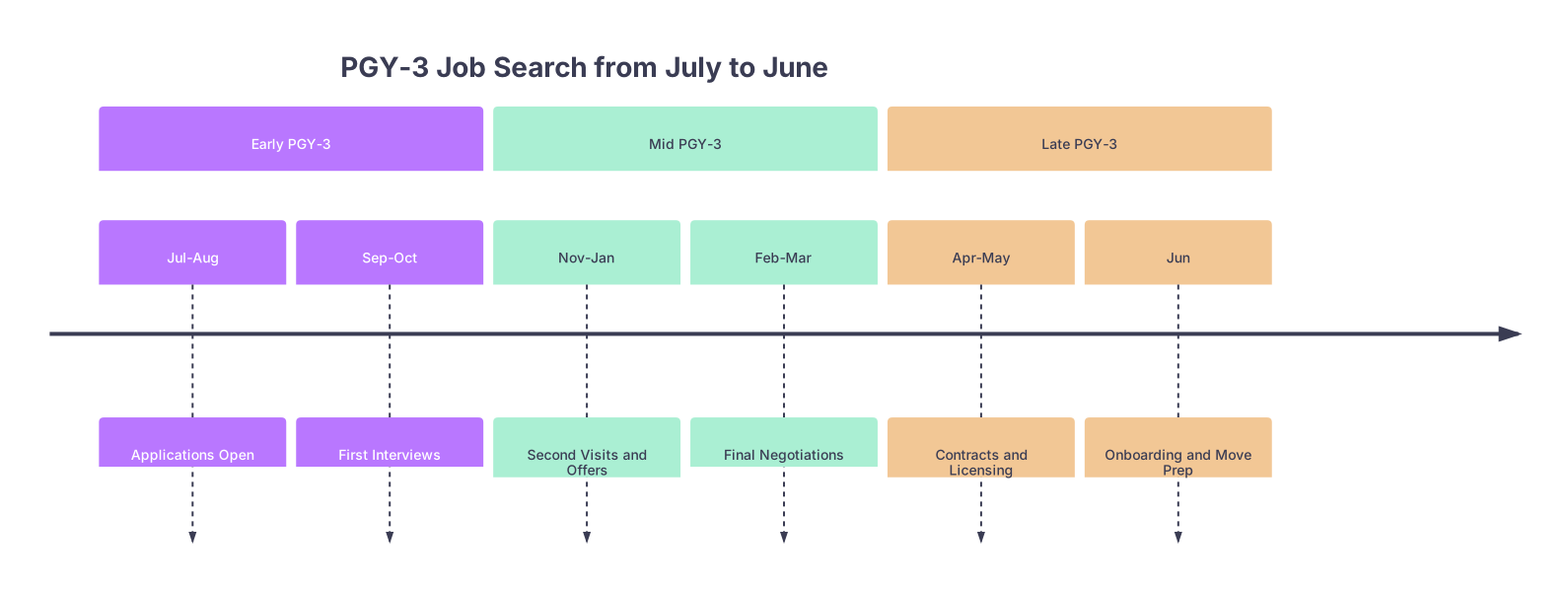
| Period | Event |
|---|---|
| Early PGY-3 - Jul-Aug | Applications Open |
| Early PGY-3 - Sep-Oct | First Interviews |
| Mid PGY-3 - Nov-Jan | Second Visits and Offers |
| Mid PGY-3 - Feb-Mar | Final Negotiations |
| Late PGY-3 - Apr-May | Contracts and Licensing |
| Late PGY-3 - Jun | Onboarding and Move Prep |
July (Start of PGY‑3): Turn on the Machine
At this point you should start actively applying.
Send focused applications.
- 5–15 initial applications to your best‑fit regions
- Tailored cover letters, not copy‑paste garbage
- Use both job postings and direct emails to department chairs / group leaders
Loop in mentors explicitly.
Tell them where you applied. Some will say, “Oh, I know someone there.” This is the hidden job market.Start state license applications for 1–2 likely states.
If they are slow states and you are serious about them, you are already a little late. Do it now.
August–September: Interviews Begin
At this point you should plan for travel and time off.
Protect interview days early.
Talk to chiefs and schedulers:- “I will likely need a few days over the next 3–4 months for job interviews. How should I request these to minimize impact?”
First‑round interviews (often virtual).
Expect:- 30–60 minute Zoom calls
- Questions about volume, comfort with procedures, long‑term plans
- Vague talk about compensation. That is normal at this stage.
Sharpen your answers.
Prepare clear responses to:- “Why this region?”
- “What do you want in your first job?”
- “Tell me about a difficult case and how you handled it.”
By end of September:
- 3–8 interviews completed or scheduled
- At least 1–2 leads you are moderately excited about
- Licensure paperwork underway in key state(s)
October–November: Site Visits and Early Offers
Now you actually see the places you might work.
On‑site interviews.
These should include:- Meetings with partners / faculty
- Tour of ORs, clinic, wards (actually look at the schedule board)
- Time with someone who recently joined
Collect hard data during visits.
Ask specific questions:- “What is your wRVU expectation first year and typical for the group?”
- “How is call distributed among partners vs new hires?”
- “Who covers weekends and holidays? How often?”
- “What happens if volume is lower than expected in year one?”
Start ranking offers and potentials.
In your master doc, create a simple scoring system:- Location (0–10)
- Schedule/call (0–10)
- Compensation/benefits (0–10)
- Culture/mentorship (0–10)
- Gut feeling (0–10)
Anything below 25 total should be carefully scrutinized.
Expect early offers from less competitive locations.
Rural or hard‑to‑recruit spots may push you to sign fast. Do not panic‑sign unless you truly want them. You are still early.
December–January: Real Offers, Real Decisions
This is the decision‑heavy phase.
At this point you should:
Have at least 2–3 serious offer‑level conversations.
If you have none by January, widen geography or practice type. Something is misaligned.Get everything in writing.
No “handshake deals.” You want:- Base salary
- Bonus structure (realistic examples)
- Call expectations
- Partnership track details (timing, buy‑in, criteria)
- Non‑compete specifics (radius, duration)
Use a physician contract attorney.
Not your cousin who “does law.” A real healthcare contracts lawyer. Worth every dollar. Have them:- Flag dangerous non‑competes
- Clarify productivity formulas
- Explain termination clauses
Start serious negotiation.
Reasonable asks:- Slightly higher base
- Relocation assistance
- Sign‑on bonus
- Protected time for admin/teaching (for academic jobs)
By end of January PGY‑3:
- At least one written offer in hand, preferably two
- Attorney review either done or scheduled
- Clear front‑runner identified
February–March: Locking It In
Now you move from “maybe” to signed.
Final negotiation and decision.
At this point you should:- Decide what matters most (comp vs location vs schedule)
- Stop endlessly comparing hypotheticals
- Give yourself a hard decision deadline
Sign the contract.
Typical timeline:- Initial offer → 1–2 weeks for review
- Negotiation → 1–3 weeks
- Final sign → before end of March is ideal
Immediately start the formal processes:
- Hospital credentialing
- Final state licensing steps
- DEA application (timed with licensure)
- Payer enrollment (Medicare, insurance panels, if employer handles it, push them to start)
Notify anyone you are turning down.
Do this professionally. Medicine is tiny. You will see these people again.
April–May: Logistics, Money, and Transition
At this point you should shift from “finding a job” to “building a life.”
Housing and relocation.
Once contract is signed and start date set:- Lock down housing or at least a short‑term rental
- Schedule movers or decide a DIY move
- Ask employer about relocation reimbursement rules (receipts, lump sum, tax status)
Malpractice and tail coverage.
Confirm:- Who pays malpractice
- Claims‑made vs occurrence
- Who covers tail if you leave
Plan your budget for first 6 months post‑residency.
Your income jumps. So do taxes, loan payments, and expectations. Decide now:- How fast you will attack debt
- What lifestyle inflation is acceptable vs stupid
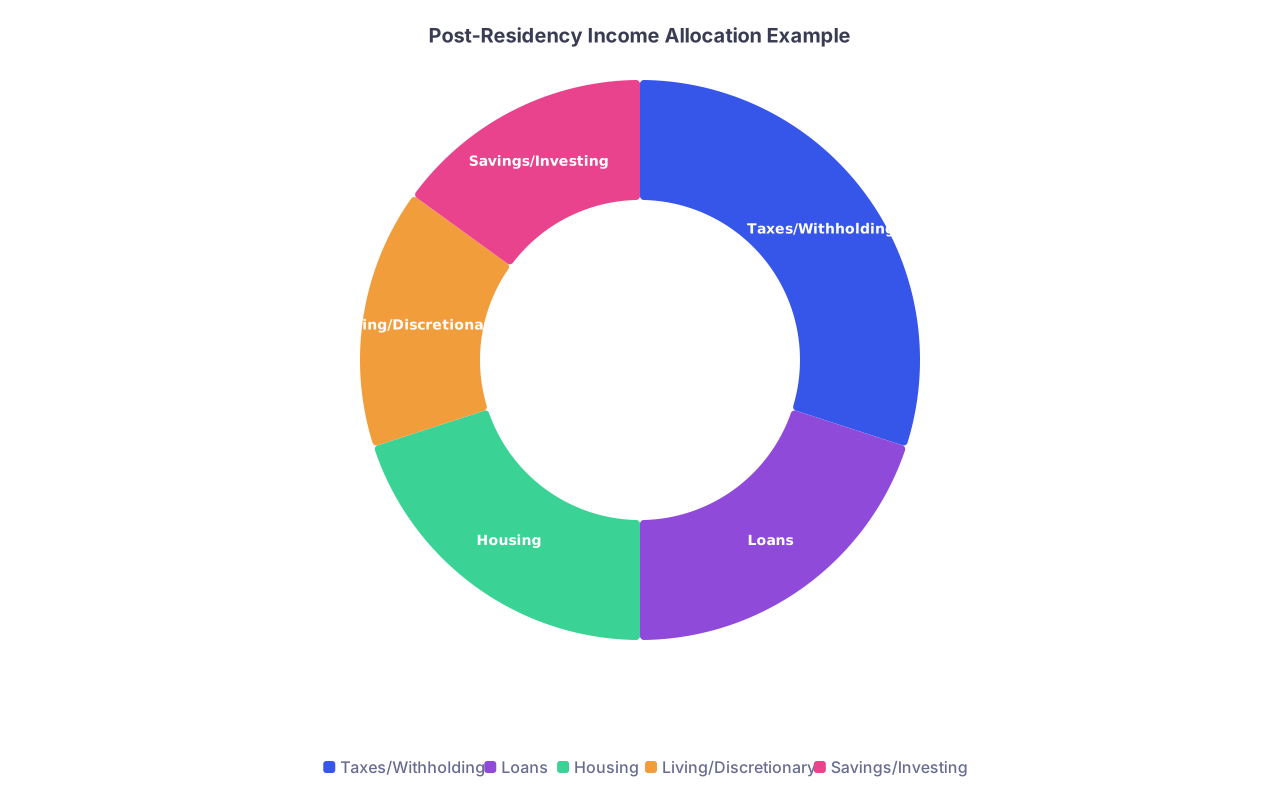
| Category | Value |
|---|---|
| Taxes/Withholding | 30 |
| Loans | 20 |
| Housing | 20 |
| Living/Discretionary | 15 |
| Savings/Investing | 15 |
- Coordinate end‑of‑residency timing with start date.
Guard yourself:- Avoid starting your new job the Monday after graduation
- Aim for 2–4 weeks buffer for move, licensing hiccups, and basic recovery
June (Graduation Month): Handover and Launch
At this point you should already know exactly where you are going, when you start, and roughly what your first month will look like.
Your focus now:
Finish residency clean.
- No outstanding evaluations
- Procedure logs complete
- Exit interview done
Confirm all job‑related admin:
- State license active
- DEA confirmed
- Hospital privileges approved or on track
- HR paperwork done (benefits elections, direct deposit, etc.)
Set expectations with your new group.
Before day one:- Ask for your first month schedule
- Clarify orientation period (are you thrown in day 1 or ramping up?)
- Ask who your go‑to person is for clinical questions in the first few weeks
Mentally reset.
You are not “just a resident” anymore. You are now the signing physician of record. Give yourself a few days of actual rest before the next chapter.
Final Thoughts: What Actually Matters
If you strip away all the noise, three things decide whether your job search goes well:
Start early enough.
Residents who begin intentional planning in early PGY‑2 and active applications by early PGY‑3 almost always land better fits than those who “wait to see what pops up.”Be specific, not vague.
Specific locations, specific call expectations, specific comp floors. Vague desires lead to vague, disappointing offers.Treat it like the high‑stakes project it is.
Track leads, get contracts reviewed, ask uncomfortable questions on site visits. This is not just “your first job.” It sets your trajectory for years. Act like it.