
The most dangerous month of residency is not your first. It is six months before you graduate, when you wrongly think you have “plenty of time” to find a job.
Six months out, the job market is already moving without you. Groups are finalizing budgets. Hospitalists are locking in schedules. Fellowship-trained subspecialists are grabbing the few decent positions in your region. If you wait until March of your PGY-3 (or PGY-6, PGY-7) to get serious, you will be left with scraps.
Here is the timeline: what to do, in order, starting six months before graduation. What cannot wait. And what will quietly sabotage you if you ignore it.
Six Months Before Graduation: Foundation Month
At six months before graduation, you are not “early.” You are on time. Programs recruiting for July starts are actively interviewing now.
Week 1–2: Get Your House in Order
At this point you should stop thinking vaguely about “a job somewhere” and define your non‑negotiables.
By the end of week 2, you should have:
Defined your job criteria (on paper, not in your head):
- Location tiers:
- Tier 1: Places you would actually be happy to live.
- Tier 2: Acceptable if compensation or schedule is excellent.
- Tier 3: Only if desperate.
- Practice type preferences:
- Academic vs community
- Hospital-employed vs private group vs multispecialty group vs locums
- Lifestyle constraints:
- Maximum acceptable nights/weekends
- Tolerance for call (home vs in-house, qX structure)
- Minimum FTE you will accept (0.8, 1.0, etc.)
- Location tiers:
Updated CV tailored to job market, not residency applications:
- Condense med school fluff; highlight:
- Procedures
- Patient volumes
- Leadership roles (chief, QI lead)
- Fellowship training, if applicable
- Include:
- Expected graduation date
- Board eligibility date
- License(s) you already hold or are applying for
- Condense med school fluff; highlight:
Preliminary list of target employers:
- At least:
- 5–10 academic centers
- 10–20 community groups/hospital-employed groups
- 2–3 locums agencies as a contingency
- At least:
You should spend 4–6 focused hours this week. Not scrolling job boards passively. Actually writing these down.
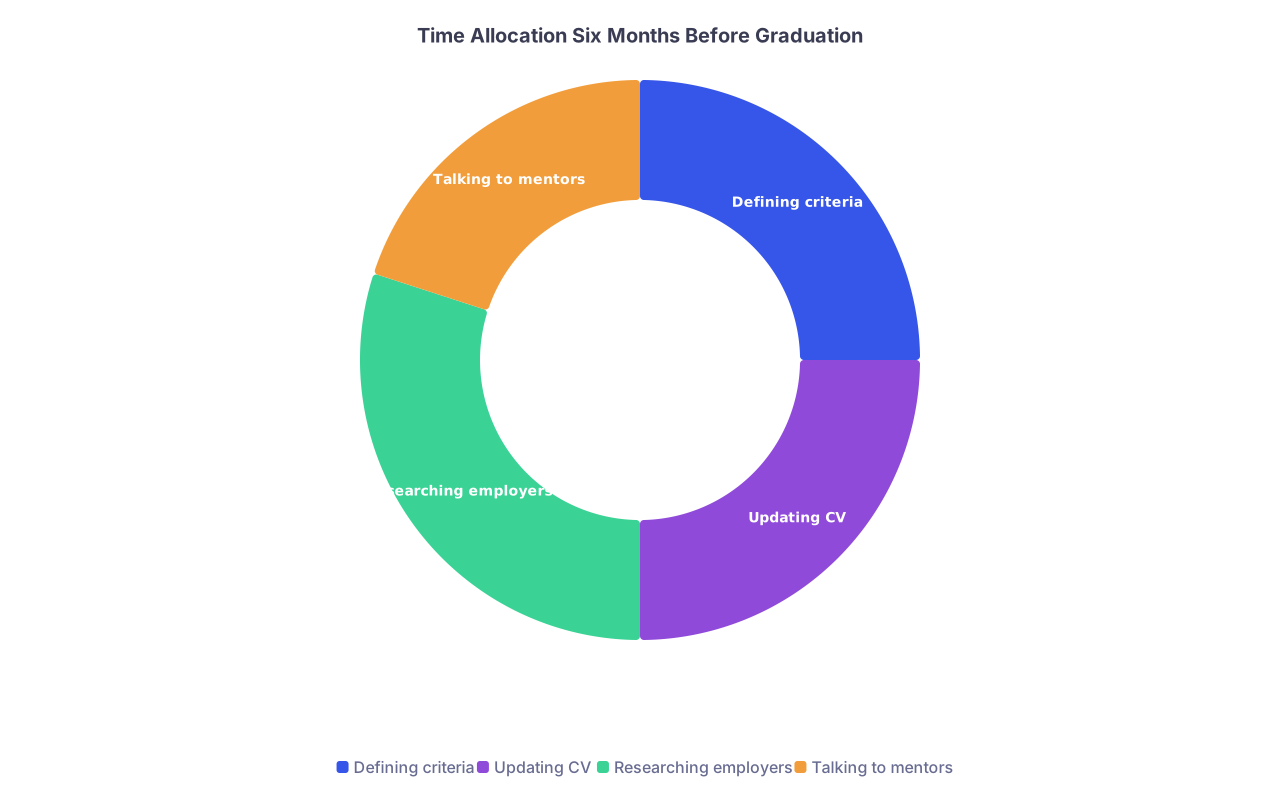
| Category | Value |
|---|---|
| Defining criteria | 25 |
| Updating CV | 25 |
| Researching employers | 30 |
| Talking to mentors | 20 |
Week 3–4: Start Quiet, Serious Outreach
This is where many residents delay. They “wait until after the holidays” or “after this ICU block.” That is how you miss the good jobs.
By the end of month 6, you should have:
- Emailed at least 10 real contacts, not just online portals:
- PDs and faculty at your institution
- Attendings who left recently and are now in practice
- Alumni in your desired city or specialty
- Submitted at least 5 formal job inquiries/applications:
- Directly on hospital/health system sites
- Through specialty society job boards (e.g., ACEP, SHM, ACOG, ACR)
- Through state medical society boards in your target regions
Use very short, direct emails. Something like:
“I am a PGY-3 IM resident at [Program], graduating June 30, 2027, seeking a hospitalist position in [Region] with primary interest in nocturnist roles and QI involvement. I am board eligible in August 2027 and already hold a [State] license. May I send you my CV and learn more about upcoming openings?”
You are signaling three things: your timeline, your status, your seriousness.
Five Months Before Graduation: Interview & Licensing Month
If you did the groundwork at six months, month 5 is busy. You are juggling interviews, licensing, and reference management. This is where people get behind.
Licensing: You Cannot Afford to Wait
At this point, you should have chosen at least one primary state where you will definitely be able to work, even if your dream job falls through.
By the start of month 5 you should:
- Start a full medical license application in your likely practice state.
- If using the Interstate Medical Licensure Compact, initiate that process immediately. It is paperwork-heavy but time-saving later.
- Keep a document with:
- Every address you have lived at since age 18
- All prior licenses, training, exam dates
- Contact info for PD, DIO, HR at your current program
Delays here are brutal. I have seen new attendings miss 2–3 months of salary because credentialing stalled on a late license application.

Interview Scheduling: Targets for Month 5
By the end of this month, you should have:
- Completed or scheduled at least 3–5 interviews with serious employers.
- Clarified:
- Start date flexibility (July 1 vs later)
- Need for visa sponsorship (if applicable)
- Whether they will wait for license / boards
When scheduling:
- Favor earlier interviews with B+ jobs.
- Save your A+ dream job slots until you have some practice, but do not push them more than 4–6 weeks out. The position may not wait.
References and PD Conversations
At five months, you must coordinate your story.
By week 2–3 of this month, you should:
- Meet with your PD:
- Confirm they will support you.
- Clarify any performance issues that might surface.
- Line up 3 references who:
- Have seen you clinically in the last year.
- Can answer specific questions about your judgment and reliability.
- Give them:
- Updated CV
- Your job search goals
- A short “talking points” list of your strengths
You want your references to be aligned, not improvising.
Four Months Before Graduation: Offer & Contract Month (Round 1)
This is the month where serious employers start to move from “we like you” to “here is a contract.” If nothing is moving by now, your search is behind.
By the Start of Month 4: Shortlist and Second Looks
At this point you should:
- Have a shortlist of 2–4 leading options.
- Be doing:
- Second interviews (virtual or in person)
- Informal calls with current physicians in the group
- Reality checks about schedule, census, call, and culture
Do not rely only on the recruiter. Talk to at least two line physicians actually doing the job.
Use pointed questions:
- “What is the real average census on days/nights?”
- “How many people have left in the last 2 years, and why?”
- “How strictly are RVU bonuses enforced / expected?”
- “Who actually controls the schedule?”
Contract Timelines: You Push Here
By mid-month, if a group likes you but has not produced a contract, you should:
- Ask directly: “When do you expect to extend a formal offer?”
- Give them a reasonable window: 2–3 weeks.
If they stall endlessly, that is itself data. A group that cannot make decisions now will not magically become efficient after you sign.
Three Months Before Graduation: Contract Review & Negotiation
Three months out is decision time. You need a contract in hand, preferably more than one. This is where you can meaningfully negotiate. Or blow it by waiting too long.
| Category | Must-Do by 3 Months | Can Wait Slightly |
|---|---|---|
| Signed offer/LOI | Yes | No |
| Full contract review | Yes | No |
| Tail coverage details | Yes | No |
| Moving logistics | No | Yes |
| House hunting | No | Yes |
Contract Review: Non‑Negotiable Tasks This Month
At this point you should:
Obtain full written contracts from all serious offers. Not “verbal promises.” Not one-page “intent” summaries.
Block 2–3 hours per contract to read every line. You are looking for:
- Term length and termination clauses
- Non-compete radius and duration
- Call requirements and definitions (what counts as call)
- Productivity metrics (RVUs, thresholds, penalties)
- Tail malpractice coverage responsibility
Get a real review, ideally from:
- An attorney who regularly reviews physician contracts in your state, or
- A senior attending who has negotiated multiple contracts and is not afraid to be blunt
Paying $500–$1500 for a review that saves you from a toxic non-compete or unpaid call burden is not optional. It is smart.
Negotiation: What You Must Address Now
Three months out is when your bargaining power peaks. They need you on the schedule. You are not desperate yet.
At this point you should at least raise:
- Compensation structure clarity, even if not total amount:
- Base vs RVU vs bonus
- How often they adjust comp
- Schedule expectations:
- Nights/weekends/holidays
- Protected time for administrative, QI, or teaching, if “promised”
- Malpractice and tail:
- Who pays for tail?
- What happens if you leave at 1 year vs 3 years?
You do not negotiate like a bully. You negotiate like a reasonable professional who intends to stay. That tone matters.
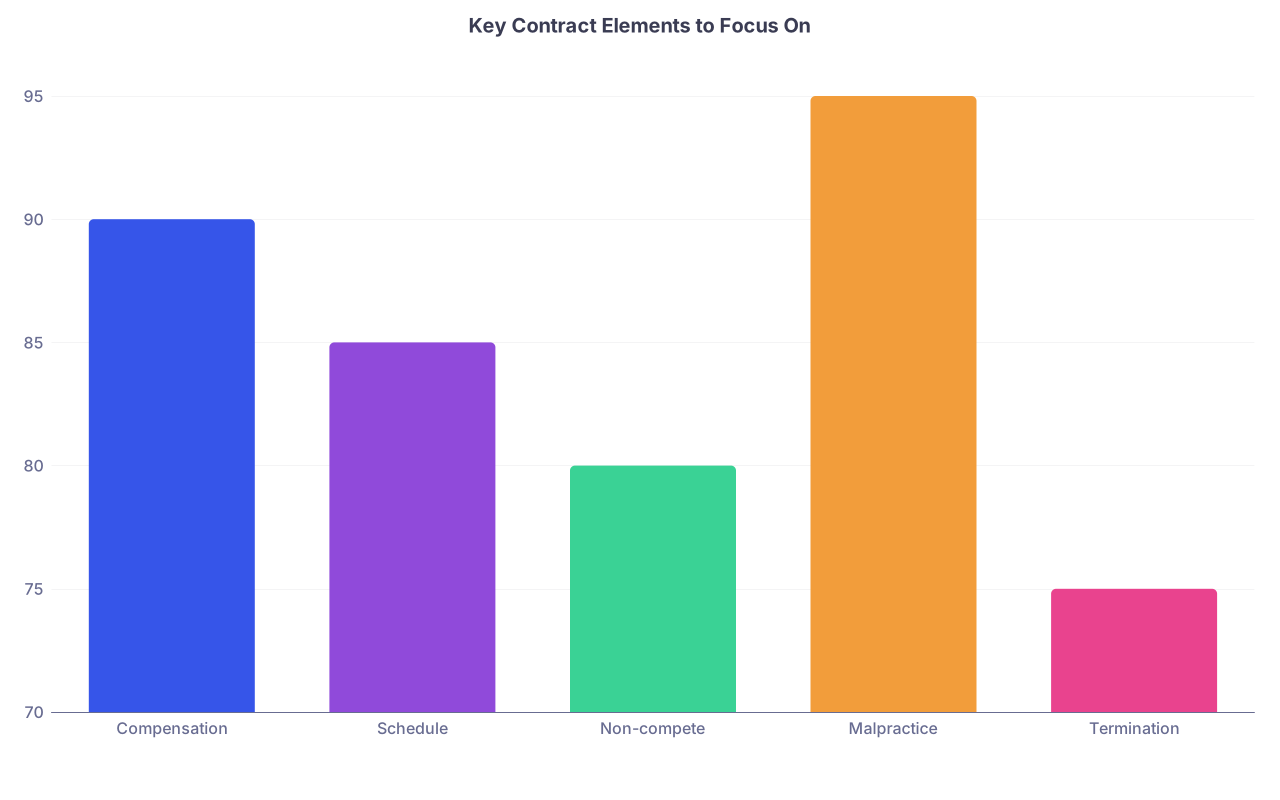
| Category | Value |
|---|---|
| Compensation | 90 |
| Schedule | 85 |
| Non-compete | 80 |
| Malpractice | 95 |
| Termination | 75 |
(The percentages here are “relative importance” from how often I see these issues explode later.)
Two Months Before Graduation: Commit, Credential, and Plan
By this point, you should be committed somewhere. If you are not, the options will shrink fast.
Week 1: Sign and Lock It In
At this point you should have:
- Chosen your top offer.
- Completed:
- Any final negotiation touches.
- Written confirmation of agreed changes (redlined contract or addendum).
- Signed the contract and obtained a fully countersigned copy.
If you are still juggling offers at this point, set a personal deadline. Indecision is itself a decision. Often a bad one.
Week 2–4: Credentialing & Onboarding
This is the quiet, bureaucratic grind that can cost you tens of thousands if delayed.
By the end of this month, you should have:
- Completed the employer’s:
- Credentialing packets
- HR paperwork
- Background checks
- Submitted all requested:
- Letters of good standing from training programs
- USMLE/COMLEX board verification documents
- DEA application (if you have your license in hand or will soon)
- Hospital privileges forms
You respond to credentialing emails within 24–48 hours. People who sit on these forms for a week end up with August or September start dates instead of July.
One Month Before Graduation: Backup Plans and Logistics
One month out, your focus splits: stabilizing your primary plan and building a parachute in case it fails.
Validate Start Date and Coverage
At this point you should:
- Confirm in writing:
- Start date
- Expected orientation dates
- Coverage in case your boards are delayed or license is slow
- Get direct contact info:
- Department administrator
- Scheduling coordinator
- Credentialing specialist
You want names, not just “the office.”
Build the Contingency Plan
Yes, even now. Because jobs fall through.
By the end of this month, you should:
- Have at least one locums agency fully onboarded with you:
- Credentialing done
- CV on file
- Preferences stated (region, inpatient vs outpatient)
- Know 1–2 facilities that could bring you on for short-term work if your main job is delayed.
Residents who skip this and then hit a surprise delay end up sitting unpaid for months, burning savings and spiraling.
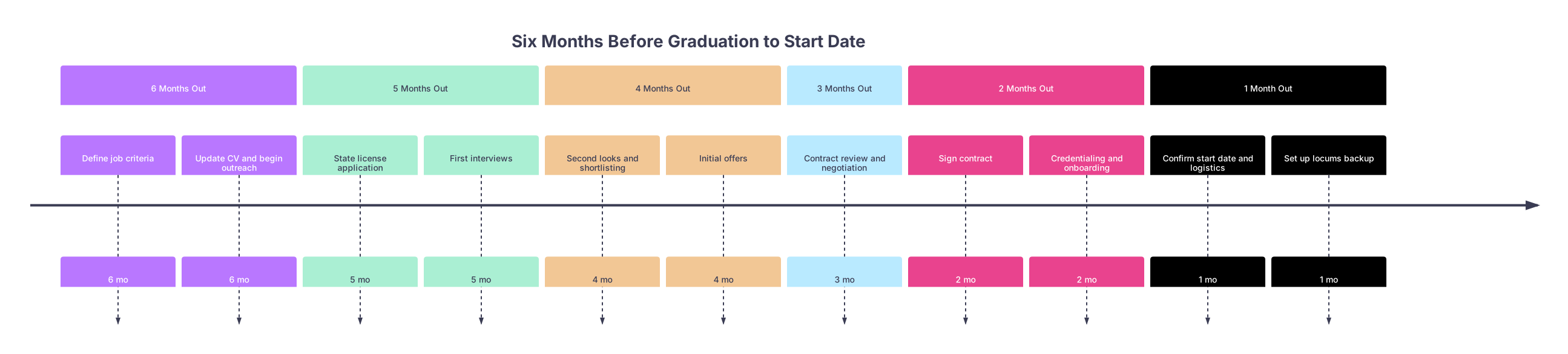
| Period | Event |
|---|---|
| 6 Months Out - Define job criteria | 6 mo |
| 6 Months Out - Update CV and begin outreach | 6 mo |
| 5 Months Out - State license application | 5 mo |
| 5 Months Out - First interviews | 5 mo |
| 4 Months Out - Second looks and shortlisting | 4 mo |
| 4 Months Out - Initial offers | 4 mo |
| 3 Months Out - Contract review and negotiation | 3 mo |
| 2 Months Out - Sign contract | 2 mo |
| 2 Months Out - Credentialing and onboarding | 2 mo |
| 1 Month Out - Confirm start date and logistics | 1 mo |
| 1 Month Out - Set up locums backup | 1 mo |
Final Two Weeks: Tighten Every Loose End
You are finishing residency, moving, maybe studying for boards. Chaos. This is exactly when critical details fall through the cracks.
At this point you should:
- Have:
- Written proof of license approval (or exact expected date)
- DEA application submitted or approved (depending on state timing)
- Hospital privileges either approved or very near approval
- Double-check:
- Malpractice coverage dates:
- When your residency coverage ends
- When your new job coverage begins
- Whether there is any gap. If yes, you address it before it becomes an accusation.
- Malpractice coverage dates:
You should also have clear plans for:
- Moving logistics relative to your first shift.
- Where you will live for the first 1–2 months (short-term housing if needed).
- How you will cover expenses if your start date slips by 2–4 weeks.
This is not “being pessimistic.” This is being an adult with a licensure board, employers, and real responsibilities.
Three Things You Cannot Delay
You have a lot swirling at the end of residency. Let me strip it down.
Licensing and credentialing must start early
If you wait “until the job is locked in,” you will be unemployed longer than you want. Start your primary state license at five months minimum.Contracts must be read, reviewed, and challenged by three months out
Blindly signing a first draft in May is how you end up trapped in a bad schedule, a brutal non-compete, or paying your own tail.You need a backup plan before you need it
A signed contract is not a paycheck. Locums onboarding and an alternative path should be in place by one month before graduation. If the primary job stumbles, you will already be moving.
Follow the timeline. Six months goes faster than you think.