
The advice “always waive your right to see LORs” is oversimplified—and sometimes wrong.
If you’re applying to residency, here’s the real answer: Almost everyone should waive their right to see letters of recommendation in ERAS, but you shouldn’t do it blindly. You need to understand what you’re signaling, when not to waive, and how to protect yourself from weak or damaging letters.
Let’s walk through this like a decision tree, not a superstition.
What Does “Waiving Your Right” Actually Mean?
On ERAS, when you add each letter writer, you’ll see a box:
“I waive my right to view this letter of recommendation.”
That’s tied to FERPA (the law about access to educational records). It means:
- If you waive: you legally give up the right to read the letter through the institution.
- If you don’t waive: you technically have a right to view it through the institution later (often via a formal records request), but not through ERAS or the program.
Key reality check:
- Programs and letter writers can see whether you waived or not.
- You cannot see the letter on ERAS either way.
- In practice, students almost never see their letters even if they don’t waive.
So the box isn’t “Can I read this on ERAS?”
It’s “Do I want this letter treated as confidential or not?”
Should You Waive? The Short Answer
Here’s the straight answer most applicants need:
- If you trust the letter writer and they’re a standard, professional recommender (attending, PD, chair, research mentor) → Yes, waive.
- If you don’t trust the writer, felt tension, or weren’t explicitly told they’d write you a strong letter → Don’t use them at all. Problem solved.
- Only in rare, specific situations is it reasonable to not waive. And even then, it usually means you’re choosing the wrong writer.
Most residency programs expect letters to be confidential. Not waiving is a subtle red flag.
Why Programs Care: How Waiving Signals “Honest” Letters
Program directors have been reading letters for decades. They know the game. They assume:
Waived = more honest, less filtered
Attending could be candid: “A solid resident for a community program but not ready for a top academic center.”
That kind of nuance is what PDs trust.Not waived = possibly edited, influenced, or softened
Even if you never saw it, they’ll worry the writer pulled punches because you might see it someday.
And they’re comparing you against people who did waive. If your letters look even slightly “managed,” you lose a bit of credibility.
Concrete Pros and Cons of Waiving Your Rights
Let’s break it down clearly.
| Choice | Main Pro | Main Con |
|---|---|---|
| Waive | Programs trust the letter more | You won't see what's written |
| Don't waive | Theoretical right to view later | Can signal mistrust and raise questions |
| Don't use | Avoid potentially weak/damaging LOR | Need to find another writer |
Pros of Waiving
Signals confidence and professionalism
You’re telling the program: “I trust my mentors to speak freely.” That’s what mature applicants do.Letters carry more weight
PDs know confidential letters tend to be more honest. That increases the credibility of any praise you get.You look like everyone else
The default in med ed is to waive. Being the odd one out invites scrutiny you don’t need.Letter writers feel freer to be candid
Many attendings are more detailed and specific when they know the letter is confidential. Less generic fluff, more actual evaluation.
Cons of Waiving
You might get a mediocre or harmful letter and never know
That’s the big fear. And yes, it happens. I’ve seen residents shocked when a PD quietly told them, “One of your letters hurt you.”You lose a tiny amount of control
You’re trusting someone else with a critical part of your application you’ll never see.
But here’s the thing: not waiving doesn’t really fix either of these. You still usually won’t see the letter in time to do anything, and programs will now be more suspicious.
When Not to Waive (Rare but Real Exceptions)
There are a few edge cases where not waiving might make sense, but they’re almost always a sign you should pick a different writer.
Reasonable exceptions:
Non-standard writer or non-ERAS purpose
For example:- A combined program or special scholarship where they expect some level of open discussion about letters.
- An external fellowship that openly uses non-confidential letters.
For standard ACGME residency programs via ERAS? You should almost always waive.
Institutional requirement for internal letters you’ll later review
Occasionally, a school wants letters to also go in a student’s file where you might have access later. Even then, for residency letters, most schools and advisors will still tell you: waive.
Here’s the truth:
If you’re considering not waiving because you’re nervous about what they’ll say about you, that’s not a “waive vs. don’t waive” issue. That’s a “this is the wrong letter writer” issue.
The Real Protection: How to Avoid Bad Letters in the First Place
Everyone obsessing over the checkbox is focused on the wrong step. Your real control point is before the writer ever uploads anything.
Use this sequence:

| Step | Description |
|---|---|
| Step 1 | Need Residency LOR |
| Step 2 | Identify Potential Writers |
| Step 3 | Ask if they can write a STRONG letter |
| Step 4 | Do NOT use this writer |
| Step 5 | Confirm they know your goals |
| Step 6 | Provide CV, PS, highlights |
| Step 7 | Add writer in ERAS |
| Step 8 | Waive rights in ERAS |
Step 1: Ask the right question
Do not ask: “Can you write me a letter?”
Ask: “Do you feel you can write me a strong letter of recommendation for [specialty] residency?”
If they hesitate or say something like:
- “I can write a letter, but I don’t know you that well.”
- “It may not be the strongest, but I can support your application.”
Translation: don’t use them.
A lukewarm letter is often worse than no letter.
Step 2: Give them something to write from
Don’t make them guess your strengths. Send:
- Your CV
- Your personal statement (even if draft)
- A short bullet list: 4–6 specific things you’d love them to comment on (clinical judgment, work ethic, patient rapport, ownership, etc.)
- A reminder of specific cases/situations you worked on together
You’re not scripting the letter. You’re jogging their memory and focusing them on what matters.
Step 3: Timing and follow-up
Ask at least 4–6 weeks before deadlines.
Then follow up politely before the deadline if ERAS still doesn’t show it as uploaded.
You can say:
“Just a quick check-in to see if you still anticipate being able to submit my letter by [date]. Let me know if you need anything else from me.”
No drama. No guilt. Just nudge.
How Programs Actually Interpret Non-Waived Letters
Let’s be blunt.
If a PD sees you didn’t waive your right on a letter, a few thoughts can go through their mind:
- “Why didn’t they trust their writer?”
- “Did the writer water down criticism because the applicant might see it?”
- “Is this letter more about politics than honest evaluation?”
Not every PD will toss your app because of this. But in a stack of hundreds, small negative signals add up.
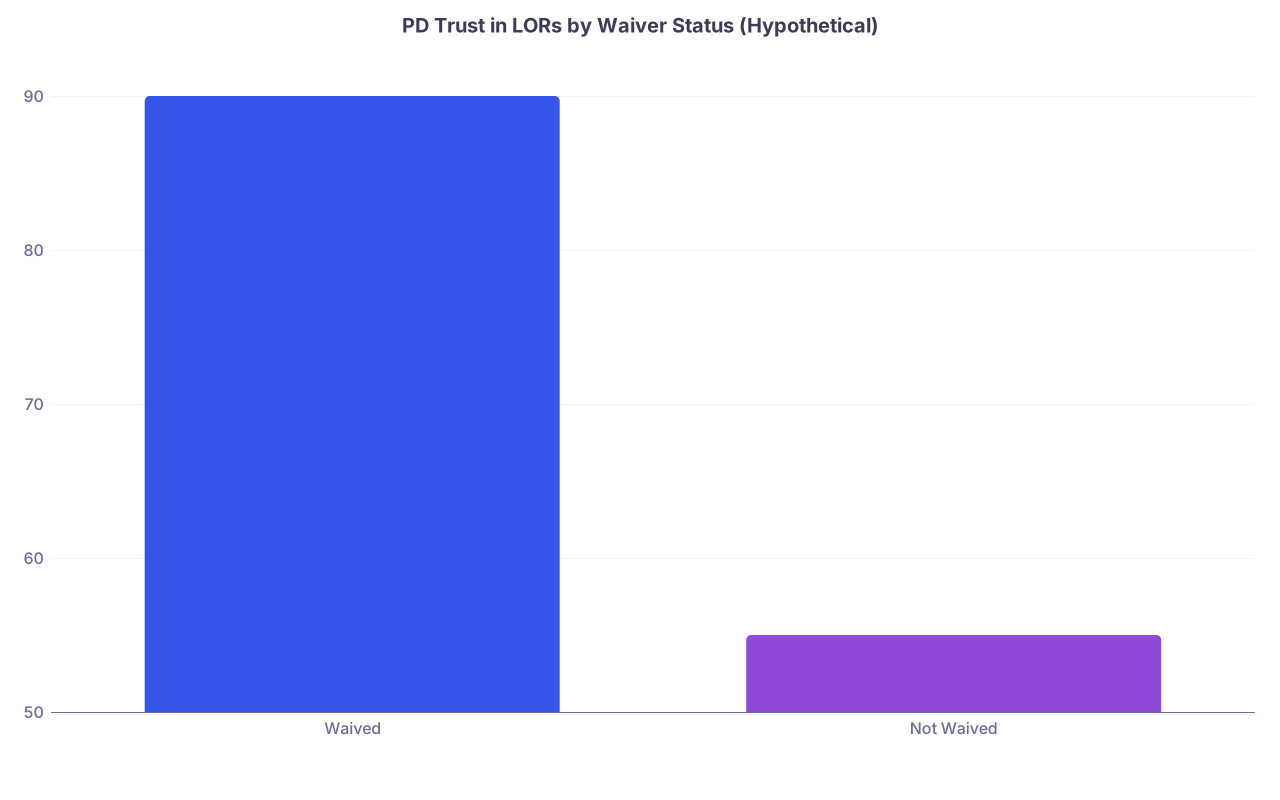
| Category | Value |
|---|---|
| Waived | 90 |
| Not Waived | 55 |
That bar chart isn’t from a study; it’s reality-based approximation. Program directors trust waived letters a lot more. You want to land in that category.
Special Situations: Home Program, Away Rotations, and Chairs
Different writers, slightly different strategies. The waiver logic stays the same.
Home program attendings
You rotated with them for weeks. They know you clinically. If:
- You showed up
- You worked hard
- You asked them directly for a “strong letter”
…then you waive. These are your bread-and-butter letters.
Away rotation attendings
These letters can be powerful or generic.
To protect yourself:
- Ask near the end of the rotation:
“Based on our time together, do you feel you could write me a strong letter for [specialty] residency?”
If they agree, you waive.
If their answer is lukewarm, thank them and move on. Don’t list them in ERAS.
Department chair/PD letters
Sometimes you barely know them personally. Often they’re writing a “summary” letter built from other evals.
Still, standard practice: you waive.
But: make sure someone actually knows you clinically (e.g., clerkship director, lead attending) has input on that letter or writes their own that complements it.
Quick Decision Framework: What You Should Do Today
If you need a clean, fast rule:
- Pick only writers who clearly committed to a “strong” letter.
- For every letter in ERAS, check “I waive my right to see this letter.”
- Stop trying to game the system by “maybe I’ll see it later if I don’t waive.”
- Use your energy to pick better writers, not to micromanage the waiver box.
That’s the adult, residency-level way to handle it.
Visual: When Waiving Is the Right Move

| Step | Description |
|---|---|
| Step 1 | Considering a Letter Writer |
| Step 2 | Do NOT use this writer |
| Step 3 | USE this writer and WAIVE rights |
| Step 4 | Ask advisor about waiver choice |
| Step 5 | Did they say STRONG letter? |
| Step 6 | Standard residency LOR via ERAS? |
Most of you will end up in that “Use this writer and waive rights” box. And that’s exactly where you should be.
FAQs: Letters of Recommendation Waiver – 7 Common Questions
1. Will not waiving my right automatically hurt my chances?
Not “automatic,” but it doesn’t help you. Many PDs notice when rights aren’t waived and see it as odd at best, suspicious at worst. In a competitive field, you don’t want to be the applicant who makes them pause and wonder why you didn’t trust your own letters.
2. Can I see my letter if I don’t waive my rights?
Usually not in any useful timeframe. ERAS won’t show it to you either way. Theoretically, under FERPA, you might access it through your institution after the match via a records request, but by then it’s too late to change anything. So practically speaking, not waiving almost never gives you real-time visibility.
3. What if my school or advisor tells me to always waive—should I ever push back?
In 99% of cases, they’re right. You should waive. The only reason to push back is if the letter is being used for some non-standard, non-ERAS purpose where a non-confidential letter is explicitly expected. For standard residency applications, waiving is the norm, and pushing back just makes you look distrustful or naive.
4. How do I avoid a bad letter if I never get to see it?
By screening writers before they write. Always ask: “Can you write me a strong letter for [specialty]?” If the answer isn’t a clear yes, don’t use them. Choose attendings who saw you frequently, supervised you directly, and gave you positive feedback in real time. That step protects you much more than keeping the right to view the letter.
5. Does waiving my rights change how strong the letter is?
Indirectly, yes. Writers tend to feel more comfortable being specific and honest when they know the letter is confidential. That usually leads to clearer praise and more detailed examples of your performance, which PDs value. The waiver doesn’t magically make a weak writer strong, but it lets good writers do their job properly.
6. I already submitted and didn’t waive for one letter. Should I be worried?
Don’t panic, but don’t repeat that choice. If the letter is from a trusted writer and the rest of your application is solid, you’re probably fine. Programs look at the whole picture. But going forward—any future letters (or future cycles, if needed)—you should waive unless there’s a very specific, advisor-approved reason not to.
7. What if a writer refuses unless I don’t waive my rights?
That’s a major red flag. I’d avoid that writer entirely. A professional attending or mentor understands the standard is confidential letters for residency and doesn’t bargain over your waiver status. If someone insists you keep the right to view it, they either don’t understand the process or they’re trying to protect themselves, not you. Pick someone else.
Open your ERAS LOR section right now and look at each writer. For every one you truly trust to write a strong letter, make sure the waiver box is checked—and if you can’t confidently check it, your problem isn’t the waiver; it’s the writer.