
A low Step score does not kill your match chances. Doing nothing about it does.
You have 90 days. That is enough time to turn a weak exam number into a coherent, convincing application narrative. But you cannot wing this. You need a structured, almost surgical plan.
I am going to walk you through a 3‑month protocol I have used with students who matched into solid programs with scores that would make most advisors raise an eyebrow.
This is not about generic “stay positive” fluff. This is about:
- What to do this week
- What to build by each 30‑day checkpoint
- What to say (and not say) in your application about your score
Let’s get to work.
Step 1: Face the Score and Define Your Realistic Range (Days 1–7)
First rule: stop arguing with the number. Start planning around it.
1. Categorize your score honestly
Use this rough framework (US MD/DO context; IMGs often need stronger applications):
| Score Range | Competitiveness Tier | Typical Target Programs |
|---|---|---|
| 250+ | Very Strong | Most specialties, many academic |
| 235–249 | Strong | Competitive community + some academic |
| 220–234 | Borderline | Many community, some less competitive |
| 210–219 | Weak | Mainly community, backup specialties |
| <210 | High Risk | Must be highly strategic, often backup specialty |
If you are in the “Weak” or “High Risk” group relative to your target specialty, you cannot pretend otherwise in your strategy, even if you were “a great test taker in undergrad.”
2. Decide on your primary specialty and backup now
Indecision is a silent killer. I have watched people waste their 90 days trying to “keep all options open” and ended up with an application that looked watered down to everyone.
By the end of Week 1, you need:
- One primary specialty you truly want (even if it is moderately competitive)
- One backup specialty you are actually willing to do
If your score is low and your dream is something like Derm, Ortho, or Plastic Surgery and you do not already have elite research and connections, you need to strongly consider:
- Reorienting to a less competitive specialty
- Or planning a deliberate “two-cycle strategy” (research year + reapplication), which is a different conversation than a 90‑day salvage plan
3. Get hard data on where you stand
Do this within the first week:
- Look up NRMP Charting Outcomes data for your specialty
- Compare:
- Your Step score
- Your anticipated number of programs applied to
- Any red flags (remediation, leaves, prior failures)
If your score is significantly below the matched median for your target specialty, your plan must compensate aggressively with:
- Volume (more applications)
- Signaling (away rotations, tailored letters, networking)
- Differentiating factors (research, leadership, niche interest)
Step 2: Build the 90‑Day Structure Before You Do Anything Else
You are not going to “find time” to fix your application. You will make time, in a structured way.
1. Break your 90 days into 3 sprints
Think in 30‑day blocks with different priorities.
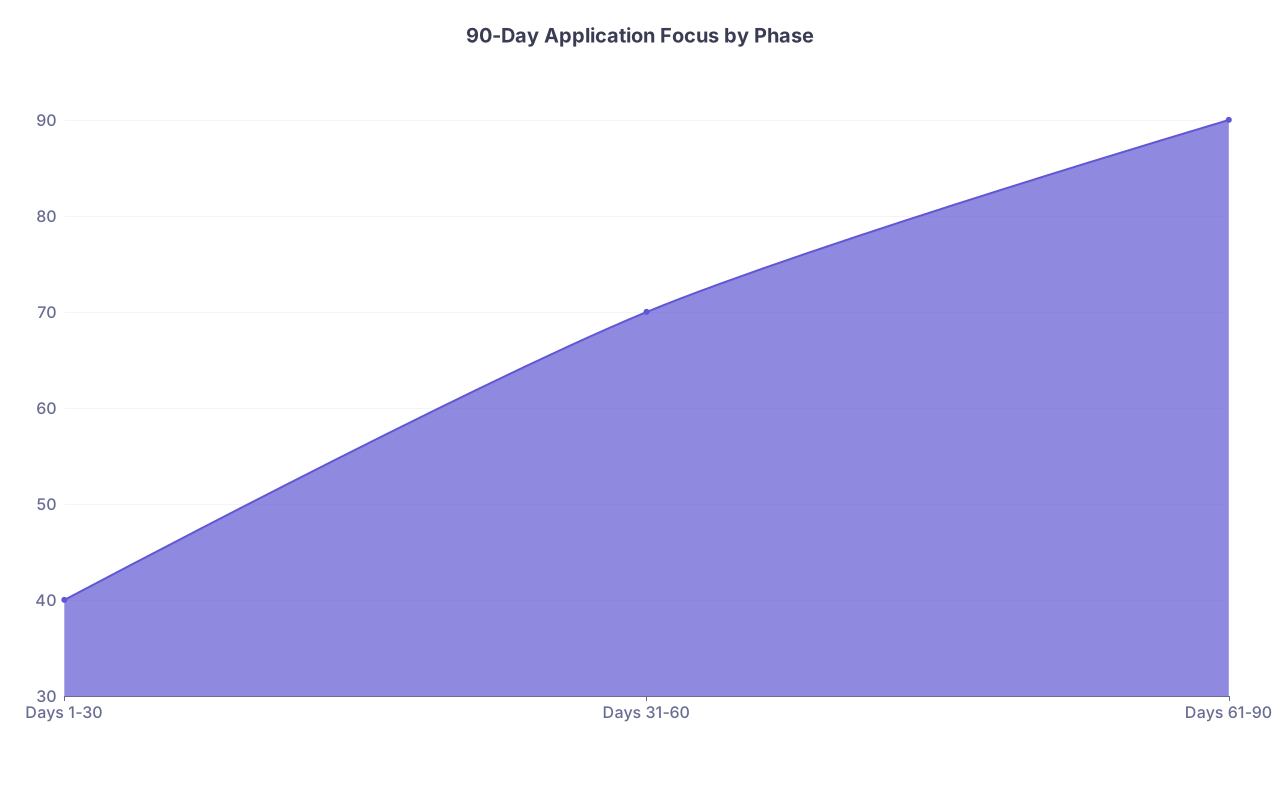
| Category | Value |
|---|---|
| Days 1-30 | 40 |
| Days 31-60 | 70 |
| Days 61-90 | 90 |
Here is the functional breakdown:
Days 1–30: Assessment + Foundation
- Clarify specialty and backup
- Identify gaps in CV, letters, and narrative
- Begin 1–2 focused projects that can be “mature” by Day 90
- Start drafting personal statement and ERAS experiences
Days 31–60: Execution + Visibility
- Intensify clinical engagement (home sub‑I, observership, or focused elective)
- Solidify letter writers
- Continue project(s) with tangible outputs (poster, abstract, quality improvement)
- Start outreach to programs, alumni, mentors
Days 61–90: Finalization + Positioning
- Polish all written materials
- Prepare Step-score explanation (if needed)
- Plan interview answers around your narrative
- Optimize school list and application logistics
2. Time-block your weeks
You are likely in rotations. You do not have “spare” time; you have scheduled time or nothing.
Use a simple weekly structure:
- 5–8 hours / week: Application writing (ERAS, PS, emails)
- 4–6 hours / week: Project work (research, QI, teaching, etc.)
- 1–2 hours / week: Networking / outreach
- 1–2 hours / week: Interview prep (as you get closer to submission)
Put these blocks in your calendar now. Not theoretical. Actual time slots.
Step 3: Rebuild Your Application Core (Days 1–30)
The score is a liability. Your job is to make everything else so aligned and strong that programs see the number but still click “Interview.”
1. Fix your narrative, not just your documents
Programs do not read your application as separate pieces. They extract one story. Right now, with a low score, the default story is:
“Probably average or below, maybe not disciplined. Risky.”
You need to overwrite that with something closer to:
“Resilient, clinically strong, mission‑driven, and actively improving.”
To do that, choose one or two themes that you will reinforce everywhere:
Some useful themes for low-score applicants:
- Clinical excellence and patient-centeredness
- Systems improvement / quality and safety focus
- Underserved care / health equity
- Long-standing interest in specific disease area (e.g., heart failure, geriatric care)
- Measurable growth after a setback
You will thread this through:
- Personal statement
- Top 4–5 ERAS Experience entries
- Letters of recommendation
- Interview answers
2. Start one or two high-yield projects immediately
You do not have time for a three-year RCT. You do have time for projects that can show visible progress in 90 days.
Good options:
Quality Improvement (QI) project on your current service
- Example: Reduce discharge medication errors on your ward over 8 weeks
- Outcome by Day 90: Data summary, poster-ready abstract, letter from supervising attending
Case report or small case series
- Identify interesting patients, start chart review now
- Outcome by Day 90: Submitted abstract, drafted or submitted manuscript
Education project
- Develop a short teaching module for juniors or nurses (e.g., “initial management of DKA”)
- Outcome by Day 90: Delivered sessions, feedback forms, letter documenting your role
Bad options for 90 days:
- “Starting” a giant basic science project that will go nowhere by application time
- Joining 5 different half-baked initiatives where your role is unclear
- Anything that does not translate into a concrete line on your CV or a letter
Pick one primary project and possibly one smaller side project. Commit.
3. Map your letters of recommendation strategically
Low score = your letters matter more than you think.
You want:
- 2 letters from people who know your clinical performance well
- 1 specialty-specific letter from your target field
- 1 flexible letter (research / leadership / longitudinal mentor)
By Day 30 you should:
- Identify exactly who you want letters from
- Tell them now that you will be requesting a letter
- Start performing like your career depends on their evaluation (because it does)
When you approach them (not on the last week of the rotation), say something like:
“I am very interested in applying to Internal Medicine this cycle. My Step 2 score is not as strong as I hoped, so I am working hard to ensure my clinical performance and letters can reflect my strengths accurately. If you feel you can write a strong, detailed letter commenting on my work on this rotation, I would be very grateful.”
You are not hiding your score. You are framing your response to it.
Step 4: Rewrite Your Application Story (Days 31–60)
By now, your projects are underway, your rotation performance is intentional, and you know your realistic specialty and backup target.
Now you turn all that into text that sells you.
1. Personal statement: your score is background, not the headline
If you had a single bad test, do not make your entire personal statement about your Step score.
Structure that works:
- Opening: A specific clinical moment or story that crystallizes why you belong in this specialty. Short, focused, not melodramatic.
- Middle:
- Concrete experiences that show commitment (rotations, projects, longitudinal interest)
- One or two achievements that demonstrate growth, persistence, or leadership
- Brief acknowledgement of score (if needed):
- 2–3 sentences max
- Own it, explain briefly, show trajectory
- Closing: What you are looking for in a program and what you offer in return.
A clean way to address the score (only if you must):
“My Step 2 CK score does not fully reflect the physician I am becoming. During that period I [very briefly explain genuine contributing factor if applicable, no drama], and my clinical evaluations and recent performance on in-house exams have been more consistent with my abilities. The experience forced me to refine my study strategies, seek regular feedback, and adopt a more disciplined approach that I now bring to my patient care and ongoing learning.”
Then move on. Do not apologize.
2. ERAS Experiences: rank and write them like they matter
You have 10+ experiences. Programs scan maybe your top 4–5 carefully.
Prioritize experiences that:
- Demonstrate impact (not just participation)
- Are recent (last 1–2 years)
- Connect to your specialty themes
For each key experience, your 1020-character description should:
- Start with a one-line summary of what the role was
- Then 2–4 bullet-style sentences (even in paragraph form) that show:
- Scope: How often, how many, what scale
- Responsibility: What you actually did, not what the group did
- Results: What changed because you were there
Before polishing anything, inventory your current experience types:
| Area | Strong Enough? | Action If Weak |
|---|---|---|
| Clinical evals | Yes/No | Focus on current sub-I, secure comments |
| Research/QI | Yes/No | Start 1 focused project |
| Leadership/Service | Yes/No | Highlight few key roles, drop fluff |
| Specialty Exposure | Yes/No | Add elective/observership/mentor |
If an area is weak, your next 30 days’ work should be pointed directly at that.
3. Decide where (and whether) to explicitly address the score
You have a few options:
- Personal statement only – usually enough if the score is low but not catastrophic and there are no failures
- Program‑specific essays / supplemental applications – good place to elaborate slightly if asked
- Dean’s letter / MSPE – sometimes your school will address patterns; coordinate with your advisor
- Interviews – prepare a 30‑second, confident explanation
If you completely ignore a very low score or a fail, you look evasive. If you obsess over it in every paragraph, you look insecure.
Aim for: “I know this is a concern. Here is how I responded. Here is evidence of who I actually am now.”
Step 5: Expand Your Reach and Relationships (Days 31–75)
With a weaker test score, the algorithm is not your friend. People are.
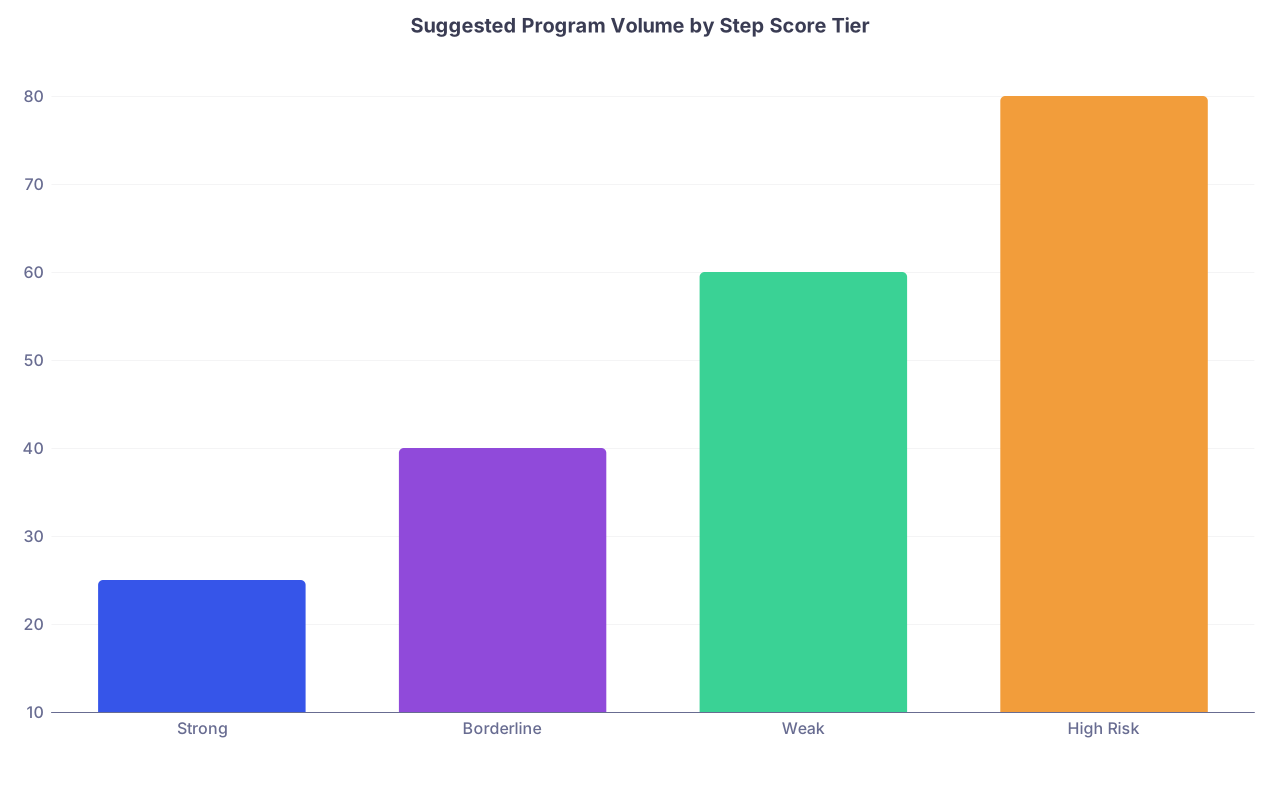
1. Build a rational, expanded program list
Your Step score dictates how aggressive you can be.
| Category | Value |
|---|---|
| Strong | 25 |
| Borderline | 40 |
| Weak | 60 |
| High Risk | 80 |
As a rough guideline (for IM/FM/other moderately competitive specialties):
- Strong (≥235): 20–30 programs
- Borderline (220–234): 35–50 programs
- Weak (210–219): 50–70 programs
- High Risk (<210): 70–100 programs (including a serious backup specialty)
For more competitive specialties (EM, anesthesia, radiology, etc.), lean to the high end of these ranges or more.
Critical: include a substantial number of community and mid-tier university programs, especially those that:
- Historically take applicants from your school
- Match people with similar Step scores
- Emphasize holistic review or underserved missions
2. Use away rotations and electives strategically
If you still have time before applications/interviews:
- Do a sub‑internship or elective in your chosen specialty at either:
- Your home institution
- A realistic target program (not just the biggest name)
- Show up early, leave late
- Own your patients (within reason)
- Ask for feedback weekly
- Make it obvious you are interested in that program specifically
Then, at the end:
“I really enjoyed working with the team here and can see myself training in a program like this. I will be applying in Internal Medicine this cycle. If you feel you can speak strongly to my performance, I would appreciate a letter of recommendation.”
You are converting face time into advocacy.
3. Network without being annoying
You are not going to “network” your way around a 190 Step. But well-handled outreach can nudge you over an interview threshold.
High-yield contacts:
- Alumni from your school at target programs
- Residents you meet on rotations or at virtual events
- Attendings you have worked closely with who know faculty elsewhere
Tight email template structure:
- Who you are (school, year, specialty interest)
- Your connection to them (mutual contact / same school / event)
- One or two specific questions (about the program, culture, or fit)
- One-sentence context about your application (e.g., “My Step 2 score is below the program average, but I have strong clinical evaluations and recent QI work in [area].”)
- Thank you, no pressure
Do not send your score report uninvited. They do not need that in their inbox.
Step 6: Prepare Your “Low Score Conversation” (Days 61–90)
You will be asked about it. Maybe explicitly, maybe indirectly.
If you freeze, ramble, or sound bitter, you are done.
1. Build a clean, 3-part answer
Format to memorize:
- Acknowledge briefly, without excuse
- State what you changed
- Point to evidence of improvement
Example:
“I was disappointed with my Step 2 CK score. I underestimated the volume I needed to review during a busy clinical block and did not adjust early enough. Since then, I have changed how I plan study time around rotations, used more question-based learning, and met regularly with faculty for feedback. You can see that reflected in my sub‑I evaluations and my performance on recent in‑service exams. The process was humbling, but it made me more structured and deliberate in my learning.”
Deliver it once. Then redirect:
“What matters most to me now is how I translate that structure into my patient care and growth as a resident.”
2. Align your interview answers with your new narrative
Common questions you must pre‑script:
- “Tell me about yourself.”
- “Why this specialty?”
- “Why our program?”
- “Tell me about a challenge or failure.”
In each answer, you want to reinforce:
- You are reflective, not defensive
- You have learned from setbacks and changed behavior
- You are reliable on the wards, good with patients, and teachable
Do at least 3–5 mock interviews with:
- A career advisor
- A resident or recent grad
- A brutally honest friend
Record at least one. Yes, watching yourself is painful. That is the point.
Step 7: Tighten Logistics and Details (Days 75–90)
At this stage, no major new projects. You are packaging and polishing.
1. Check every written component for consistency
You want your file to read like it came from one person with one clear story, not a collage.
Cross-check:
- Themes and interests in personal statement vs. experiences vs. MSPE
- Dates and roles across CV and ERAS entries
- Names of mentors and projects (spellings, titles)
- Any mention of your score or test performance – tone consistent
2. Confirm all letters are in and strong
Do not assume.
- Check ERAS (or your system) for letter receipt
- If a letter is missing by your agreed timeline, send a short, polite reminder
- If you sense a lukewarm letter (it happens), lean more heavily on your strongest ones for key programs
3. Sanity-check your program list with someone honest
Find someone who will not just “be supportive.” Ideally:
- A faculty advisor in your specialty
- A chief resident
- A recent grad who matched with similar stats
Ask them directly:
- “Is this list realistic for my score and profile?”
- “Where would you add community or safety programs?”
- “Given my low Step score, is my backup specialty plan reasonable?”
Update your list accordingly. Ego has no place here.
Step 8: If You Are Really Borderline – Contingency Planning
Some of you reading this are in the “high risk” zone: very low score, prior fail, IMG without strong US experience, or multiple red flags.
Here is the uncomfortable reality: even a perfect 90‑day plan will not guarantee a match. You need parallel planning.
Options to explore:
- Prelim year plan: Apply to prelim IM or surgery with intent to reapply to your desired specialty later, if plausible
- Dedicated research year: Especially for academic-leaning or competitive specialties, but only if you can secure a meaningful mentor and output
- Extra clinical year / transitional programs (for IMGs): To build US clinical experience and updated letters
You do not need to decide this on Day 1. But you should not pretend it is impossible, either. The same disciplined thinking you are using for this cycle will serve you in a two‑cycle strategy if it comes to that.
Visualizing the 90-Day Plan
Sometimes it helps to actually see the flow of this process.

| Step | Description |
|---|---|
| Step 1 | Day 1-7 - Reality Check |
| Step 2 | Decide Specialty and Backup |
| Step 3 | Day 1-30 - Start 1-2 Projects |
| Step 4 | Identify Letter Writers |
| Step 5 | Day 31-60 - Draft PS and ERAS |
| Step 6 | Increase Clinical Visibility |
| Step 7 | Network and Build Program List |
| Step 8 | Day 61-90 - Polish Application |
| Step 9 | Prepare Score Explanation |
| Step 10 | Submit and Prepare for Interviews |
And to keep yourself accountable, track your progress in broad categories:
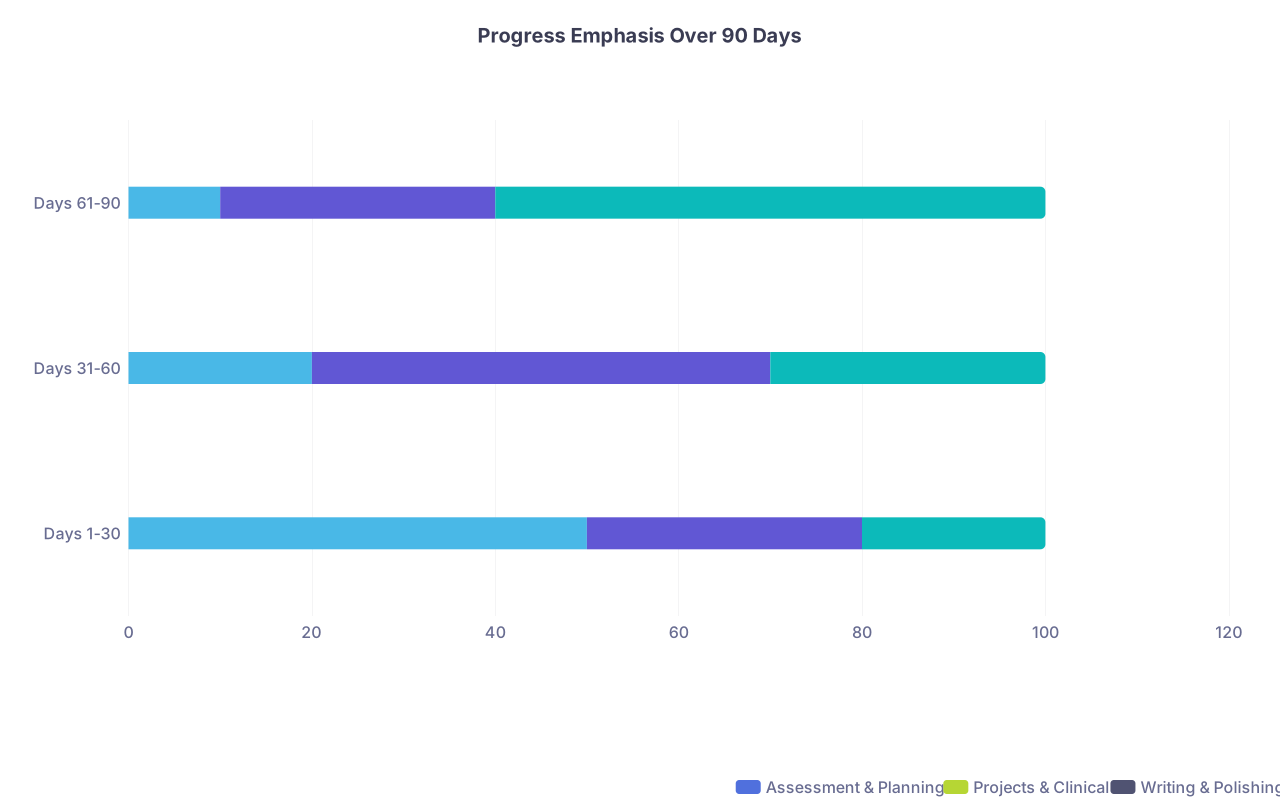
| Category | Assessment & Planning | Projects & Clinical | Writing & Polishing |
|---|---|---|---|
| Days 1-30 | 50 | 30 | 20 |
| Days 31-60 | 20 | 50 | 30 |
| Days 61-90 | 10 | 30 | 60 |
What To Stop Doing Immediately
Since you are on a clock, let me be blunt about the dead weight:
- Stop obsessively recalculating your match odds on forums
- Stop comparing yourself to the class genius who got a 260
- Stop starting new random “resume filler” activities that will never mature
- Stop telling yourself “programs will see past the score” without giving them a reason to
Every hour you spend doom‑scrolling could be a page of your personal statement, two emails to residents, or one step closer to finishing that QI project.
What Success Actually Looks Like After 90 Days
No, you will not magically become a 250 applicant.
Here is what a successful 90‑day rebuild looks like:
- A clear, realistic specialty and backup choice
- 1–2 concrete projects with visible progress or outputs
- At least 3 strong, specific letters that talk about your work ethic and clinical ability
- A personal statement and ERAS that tell one coherent story
- A program list that is wide enough and smartly constructed
- A confident, concise way to explain your Step score and show growth
You go into interview season not pretending your score never happened, but showing that it did not define the rest of your career trajectory.



The Bottom Line
Three key points:
- A low Step score is a real problem, but it is fixable if you treat it like one: assess honestly, choose your specialty and backup strategically, and commit to a 90‑day structure.
- You must turn yourself into a “high-signal” applicant everywhere else: strong letters, visible projects, coherent narrative, and a smartly expanded program list.
- Your explanation of the score has to be brief, accountable, and backed by evidence of growth—then you move on and show them the physician you are actually becoming.