
The obsession with Step scores is overblown—and program directors know it.
I’ve sat in rooms where applications are being shredded (figuratively) and saved, and I can tell you: once you’re past a rough screening threshold, Step is not what makes or breaks you. It determines who gets looked at. It does not determine who gets fought for.
You want to know what PDs actually argue about at 11 p.m. when they’re building a rank list? It’s not “Was she a 228 or a 241?” It’s everything else.
Let me pull back the curtain.
The Real Gate: “Can I Trust This Person at 2 a.m.?”
Before Step, before research, before anything else, the subconscious question a PD is asking is: “If I’m at home, asleep, and this resident is the only one in-house, how screwed am I?”
That’s the core. They translate that into other phrases:
- “Are they safe?”
- “Will they work?”
- “Are they normal?”
Nobody writes this in a handbook, but I’ve heard these exact sentences in rank meetings:
“I do not care that he has a 252. The letter says he disappears post-call. Hard no.”
“She’s a 215 but the chair says she’s the best student he’s seen in five years. I’ll take that over a 250 with a lukewarm letter.”
So with a lower Step score, your entire strategy is to scream, in every other part of your file: “I’m safe. I’m reliable. I’m teachable. And people who actually know me will vouch for that.”
That is what PDs secretly prioritize over Step scores.
1. Letters That Sound Like Phone Calls, Not Templates
Here’s the dirty truth: PDs barely read generic letters. They scan them. Three to five seconds. They’re hunting for specific phrases and tone.
A Step 230 with a killer letter will beat a Step 250 with a bland one more often than people admit.
What they actually look for:
Concrete, high-signal phrases
They perk up when they see things like:
- “One of the top students I have worked with in the last X years”
- “I would rank this student in the top 5–10% of students I’ve supervised”
- “We tried to recruit her heavily to stay here”
- “I would trust him to take care of my own family”
- “We have already discussed offering him a position if he does not match”
Those are fight-for-you phrases. I’ve watched a PD stop scrolling and literally say, “Oh, this one’s real,” when they hit that line.
On the flip side, code words that quietly kill you:
- “Hard working, pleasant, punctual” with nothing else → Translation: average, nothing special.
- “Improved over the rotation” → Translation: weak start, needed hand-holding.
- “Will make a fine resident” → The most deadly “compliment” in academic medicine. Means they have nothing nice or specific to say.
Specific stories > adjectives
Strong letters anchor their praise in a story.
Weak: “She has excellent communication skills.”
Strong: “I watched her sit with a family for 45 minutes after we delivered bad news. The mother later told me she only understood the plan after the student re-explained it.”
That kind of line overrides a mediocre Step score. Because it answers the 2 a.m. question: “Is this the person I want talking to families when things go sideways?”
What you should do with a low Step
You do not have the luxury of random letter writers.
You need:
- At least one letter from someone who knows you well enough to write concrete, comparative statements.
- Preferably a letter where the writer has a title that matters: Program Director, Clerkship Director, Department Chair, Fellowship Director.
And you cannot be passive. The way students quietly sabotage themselves is by “hoping” their letters are good instead of managing them.
You go to your potential writer and say, very plainly:
“Dr. X, I’m applying in [specialty]. My Step score is a bit lower than average for this field, but my clinical evaluations have been strong and I’ve really invested on your service. Would you feel comfortable writing me a strong letter that comments specifically on my clinical performance and reliability?”
If they hesitate or hedge, that’s a no. You cannot afford lukewarm.
2. Clerkship Patterns: The Hidden Transcript
PDs don’t just look at your grades; they look at where you shined and where you flopped.
A 214 Step with strong clinical performance can be more attractive than a 245 Step with questionable professionalism. I’ve seen this play out.
Here’s what they’re scanning for:
- Consistency in core rotations, especially medicine, surgery, and whatever field you’re applying to.
- Narrative comments that mention initiative, ownership, and judgment.
- Any pattern of “concerns” in professionalism, teamwork, or reliability.
The actual hierarchy in their minds looks closer to this than anyone admits:
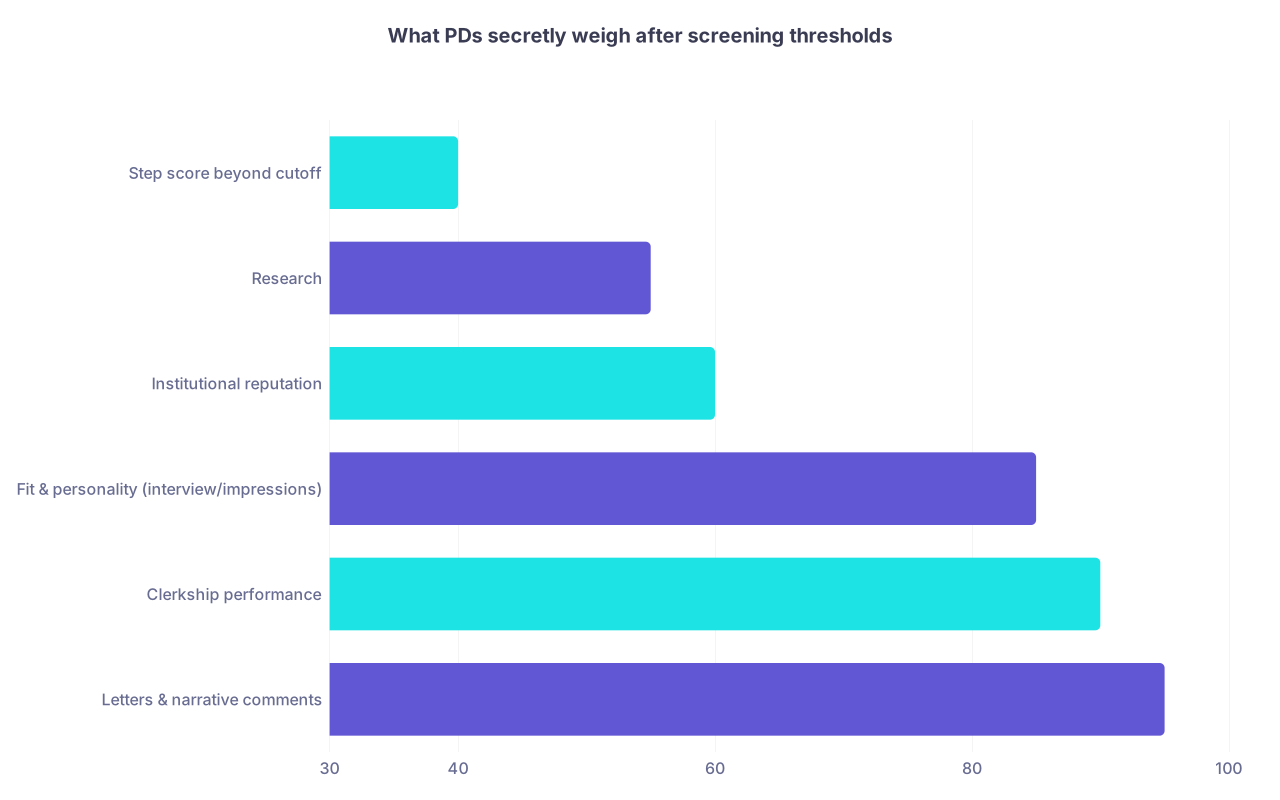
| Category | Value |
|---|---|
| Letters & narrative comments | 95 |
| Clerkship performance | 90 |
| Fit & personality (interview/impressions) | 85 |
| Institutional reputation | 60 |
| Research | 55 |
| Step score beyond cutoff | 40 |
The low-Step play here
If your Steps are low but your clinical performance is solid, you lean into that aggressively.
You highlight:
- Honors / high passes in core rotations.
- Any “outstanding,” “exceptional,” or “above level” language from evals.
- Specific comments from attendings that show trust: “functioned at the level of an intern,” “took ownership of patient care,” etc.
Use your MSPE (Dean’s letter) and personal statement to anchor a storyline: early test-taking struggles, strong clinical growth, clear upward trajectory. PDs love a trajectory.
What freaks them out is inconsistency.
If you’ve got a low Step and also mediocre or mixed clinical comments, you cannot just hope they don’t notice. You get ahead of it in your personal statement or an advisor letter and frame it:
- Early transition issues.
- Clear improvements once in clinical environment.
- Concrete changes you made and ongoing remediation / coaching you sought out.
They want to see: self-awareness, humility, and that the problem is already being worked on, not ignored.
3. Fit Signals: “Is This Our Kind of Person?”
Here’s the thing no one tells you: half the rank list discussion sounds like this:
“He feels like one of our residents.”
“She’d get eaten alive here.”
“I really liked him, but I don’t think he’d be happy in our culture.”
“Fit” is not some fluffy add-on. It’s a major deciding factor once everyone’s above the survival line.
And yes, with a low Step, fit can rescue you.
What PDs actually scan for in your file
They’re looking for alignment with what their residents are like.
Community-heavy, service-oriented program? They want people who:
- Have longitudinal community service.
- Have a track record of working with underserved populations.
- Talk about team-based care, not only “research impact.”
Hyper-academic, research-focused place? They look for:
- Sustained involvement in a project, not just one poster.
- Willingness to grind through data and revisions.
- Curiosity in your personal statement that sounds real, not pasted from a brochure.
And they absolutely look at:
- Where you did your rotations.
- Whether you did an away with them or somewhere similar.
- Whether your experiences match their patient population.
The “fit” math with low scores
Your Step 225 can beat someone’s 245 if:
- You’ve rotated at similar institutions.
- You’ve clearly worked with their type of patient population.
- Your letters are from people they know or respect.
- Your personal statement reads like someone who already lives in their world.
I’ve seen a PD say:
“He’s a 219 but he did three rotations at safety-net hospitals and all his comments are about social determinants and systems issues. That’s literally who we want.”
So if your score is low, you stop chasing “prestige programs” blindly and start chasing “fit programs” strategically. You pick places where your story makes sense.
4. Red Flags: They Care More About These Than Your 10-Point Deficit
Programs will tolerate a low Step. They will not tolerate risk they can’t control.
Between a 210 with no red flags and a 240 with serious concerns, most PDs breathe easier ranking the 210.
The under-discussed red flags they weigh heavily:
- Unexplained gap years without clear growth or purpose.
- Failures on core rotations or significant professionalism notes.
- Multiple exam failures or repeated shelves with no narrative of improvement.
- Vague or evasive explanations of major issues.
If you’ve got a low Step and any of these, you absolutely must control the story.
How PDs process this in real life
They start with the MSPE. They look for any “concerns” section. Then they cross-check with your personal statement and letters.
If the pieces don’t fit, you fall fast.
The best move when you have issues:
- Own them plainly, briefly, and specifically.
- Show concrete steps you took to fix the underlying problem.
- Show data or narrative of improvement since (better shelves, better evals, more responsibility).
What they hate: deflection, blaming others, or vague “it was a tough time” with no detail. They start thinking: “This is going to be a remediation headache for four years.”
Low Step but clean professionalism and a clear upward trend is infinitely safer to them than a high Step with fuzzy unresolved problems.
5. The Name on Your Letterhead Matters (More Than You Think)
This is one of those things no one likes to say out loud: where your letter comes from matters almost as much as what it says.
Program directors know each other. They know which schools inflate grades, which attendings write everyone “best ever” letters, and whose praise actually means something.
| Letter Source | Typical Impact on Low Step Applicant |
|---|---|
| PD/Chair in same specialty, known name | Strong positive |
| Clerkship director in core field | Positive |
| Well-known subspecialist at big center | Positive to moderate |
| Community attending, knows you deeply | Moderate but can be powerful |
| Random assistant professor, brief contact | Weak or neutral |
For a low Step candidate, a single heavy-hitter letter can completely change the conversation. I’ve seen PDs move someone 20–30 spots up a rank list because a trusted colleague essentially said: “Take this one. I vouch for them.”
That means:
- If you’re at a smaller or less-known school, you must lean into people who are known in their circles or who can at least be very specific and strong in their praise.
- Honor rotations at academic centers or aways are not just about the grade. They’re about getting a letter from someone whose name triggers recognition.
6. The Interview: Where Your Step Score Quietly Dies
Once you’re in the interview room, your exact Step number mostly fades. They already decided you were trainable enough.
Now they’re asking three questions:
- Will residents like working with you at 3 a.m.?
- Will you make my life easier or harder as PD?
- Are you going to leave, fail out, or implode?
Here’s the hidden thing: if your Step is low, you are carrying a label in some people’s heads—“maybe weaker academically.” You don’t erase that with test-talk. You erase it with presence.
What PDs and faculty pick up on:
- How you talk through a difficult case or mistake you’ve made.
- Whether you can admit weakness without crumbling.
- Whether you seem coachable or defensive.
I’ve heard someone say after an interview day:
“His scores were low, but he’s sharp. He thinks well on his feet. I’m not worried about him.”
That’s your goal. You want to override the number with a live demonstration that you’re not fragile, not lost, and absolutely not sloppy.
If they bring up your score directly (and some will, especially in competitive fields), you do not get defensive. You make it part of your growth story:
- Short, direct acknowledgment.
- One sentence of context if needed.
- Then pivot to evidence that you’ve already outgrown that version of yourself.
Something like:
“You’re right, my Step 1 was below the average for your program. I struggled with standardized tests early on. Since then, I changed how I study, especially focusing on retrieval practice and spaced repetition. My shelf scores and clinical evaluations improved a lot afterwards, and my Step 2 score reflects that change. More importantly, I’ve seen that in how I handle real patients.”
Calm. Controlled. Mature. That’s what PDs want.
7. Strategy: How to Build a “Low Step, Strong File” Application
Let me put this together into an actual game plan.
If your scores are low, your application needs to scream three things:
- I am safe and reliable.
- People who’ve supervised me trust me.
- I fit what you specifically need.
That means you:
- Pick programs where you plausibly fit—community-heavy if that’s your background, safety-net if that’s your interest, academic if you have real research or teaching chops.
- Target rotations and letter writers deliberately, not randomly.
- Make your personal statement and MSPE narrative coherent: a story of growth, not damage control.
And you stop chasing the Step ghost. You cannot fix that number now. But you can absolutely outcompete people with higher numbers by being the one candidate PDs feel safe betting on.
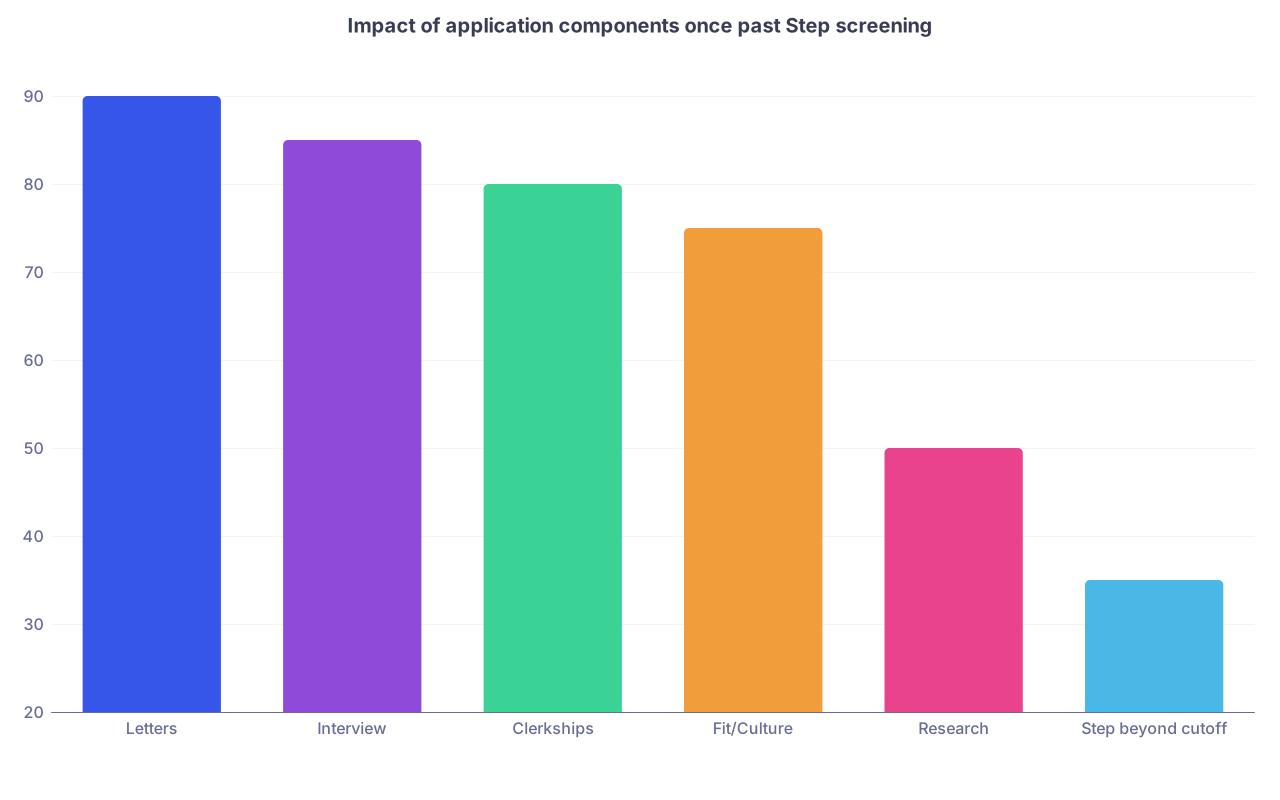
| Category | Value |
|---|---|
| Letters | 90 |
| Interview | 85 |
| Clerkships | 80 |
| Fit/Culture | 75 |
| Research | 50 |
| Step beyond cutoff | 35 |
A Quick Reality Check on Specialty Choice
I’ll say the quiet part out loud.
If your Step scores are significantly below the national mean and you’re dead-set on something like derm, plastics, ortho, neurosurgery with no home program and no major research—people in your dean’s office are not “holding you back.” They’re trying to keep you from detonating your career.
PDs in hyper-competitive specialties sometimes never even see low scores because filters catch you at the door.
So if your scores are low:
- Be very honest about competitiveness tiers.
- Or, if you insist on swinging for the fences, at least build a parallel plan in a less competitive but related field.
I’ve seen people rescue a career by pivoting to a different specialty where they thriving, and I’ve also seen people go unmatched twice because they were chasing a prestige fantasy.
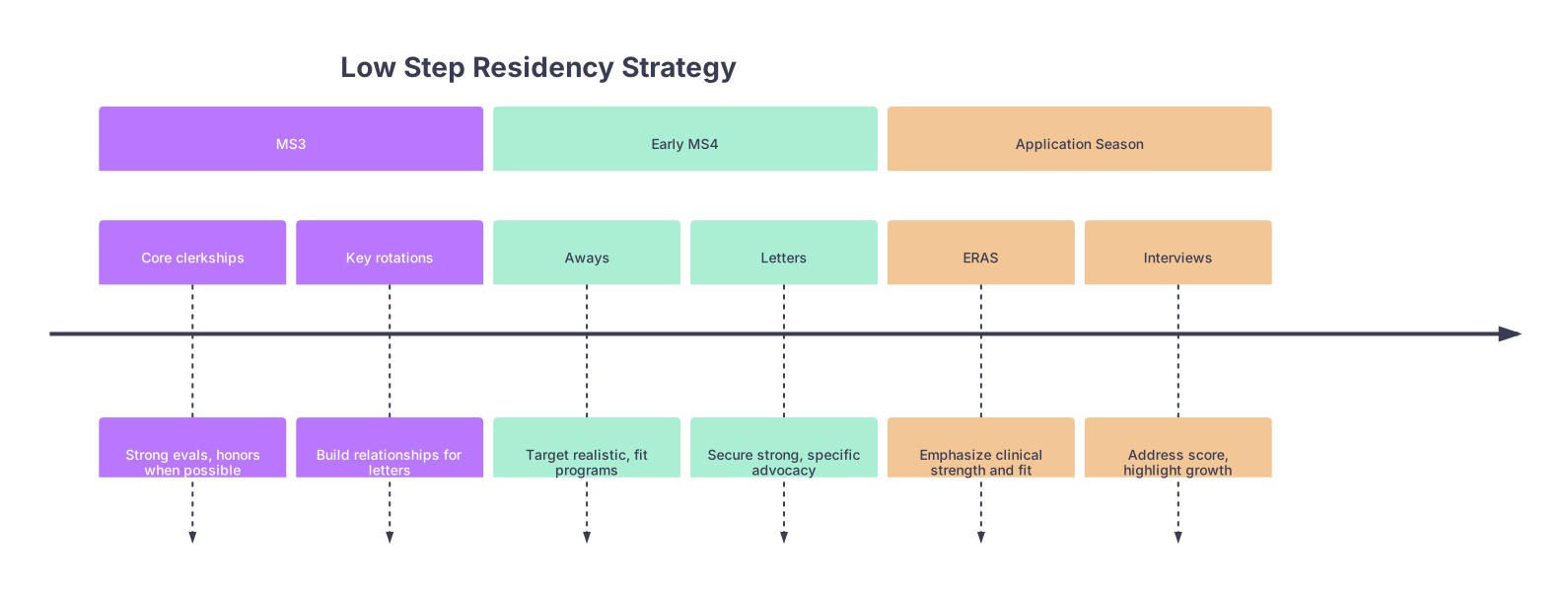
| Period | Event |
|---|---|
| MS3 - Core clerkships | Strong evals, honors when possible |
| MS3 - Key rotations | Build relationships for letters |
| Early MS4 - Aways | Target realistic, fit programs |
| Early MS4 - Letters | Secure strong, specific advocacy |
| Application Season - ERAS | Emphasize clinical strength and fit |
| Application Season - Interviews | Address score, highlight growth |