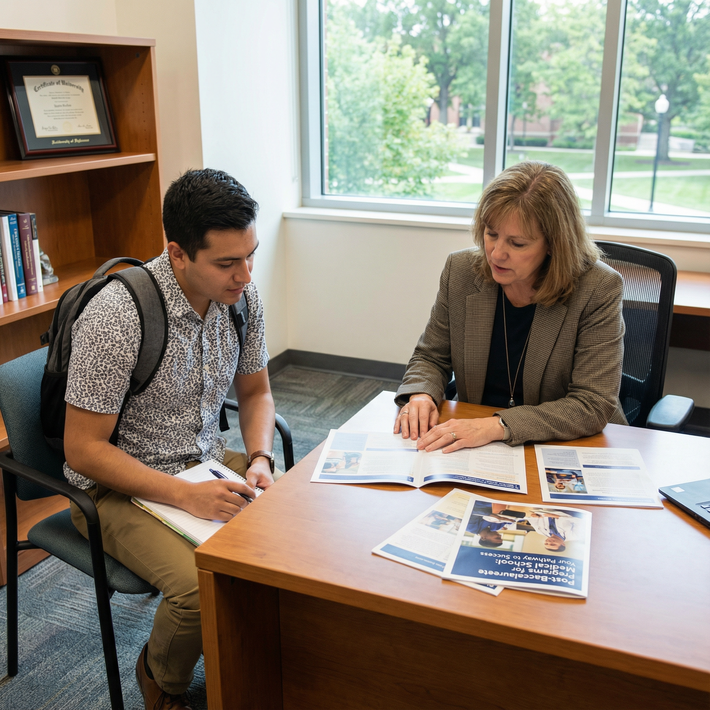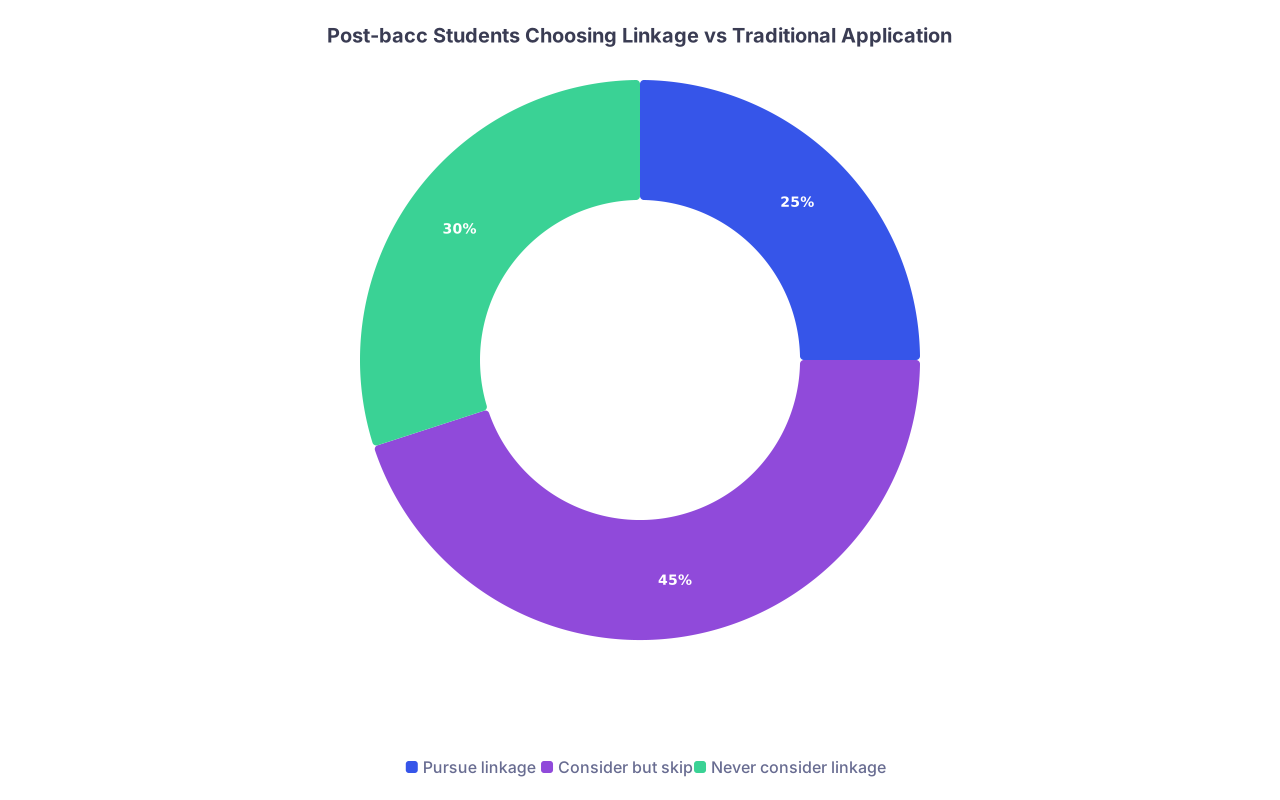
| Category | Value |
|---|---|
| Pursue linkage | 25 |
| Consider but skip | 45 |
| Never consider linkage | 30 |
The wrong question is “Is linkage prestigious?” The right question is “Can I handle a single-shot, high-pressure path to med school without a safety net?”
If that sentence makes your stomach clench a bit, you’re asking the right question.
Let’s walk through whether a linkage post-bacc is actually worth it for you—and the exact questions you need to grill programs (and yourself) with before you lock into a contract that can shape your entire trajectory.
(See also: How Many Post-Bacc Credits Are Enough to Show Real Academic Change? for more details.)
What a Linkage Post-Bacc Really Is (Not the Marketing Version)
Stripped of the glossy brochure language, a linkage program is this:
You complete a formal post-bacc at School A, and if you meet a set of conditions (GPA, MCAT, timeline, sometimes an interview), you can skip the glide year and matriculate directly into med school at School B.
The usual sales pitch is:
- Save a year
- Avoid a full application cycle
- “Pipeline” into a med school
That’s true—for the small fraction of students who actually hit the bar and still want that specific school.
Here’s what’s usually left off the info session slides:
- Linkage = one-school bet. You’re committing early to one med school, often with major limits on applying elsewhere that cycle.
- Requirements are often tighter than the average accepted student’s stats.
- You’re being asked to perform under maximal pressure, minimal margin for error.
If your instinctive reaction is “I like options, and I don’t love high-risk contracts,” then linkage may be a bad fit. If your reaction is “I want the straightest, fastest path and I know I can hit the bar,” then maybe it’s worth it.
So the real question: how do you decide?
The Core Tradeoff: Time vs Flexibility vs Pressure
You’re choosing between two broad paths:
- Finish post-bacc
- Take MCAT on your own timeline (often spring/summer)
- Apply to a wide range of schools
- Use glide year for research, work, or additional experiences
- Less pressure, lots of options, takes an extra year
Linkage route:
- Commit early to one school (or a very small number)
- Take MCAT on that school’s (aggressive) timeline
- Must hit specific GPA and MCAT cutoffs on schedule
- Often restricted from applying broadly that cycle
- Huge pressure, narrow options, save a year if it works
Here’s how those tradeoffs usually shake out in practice:
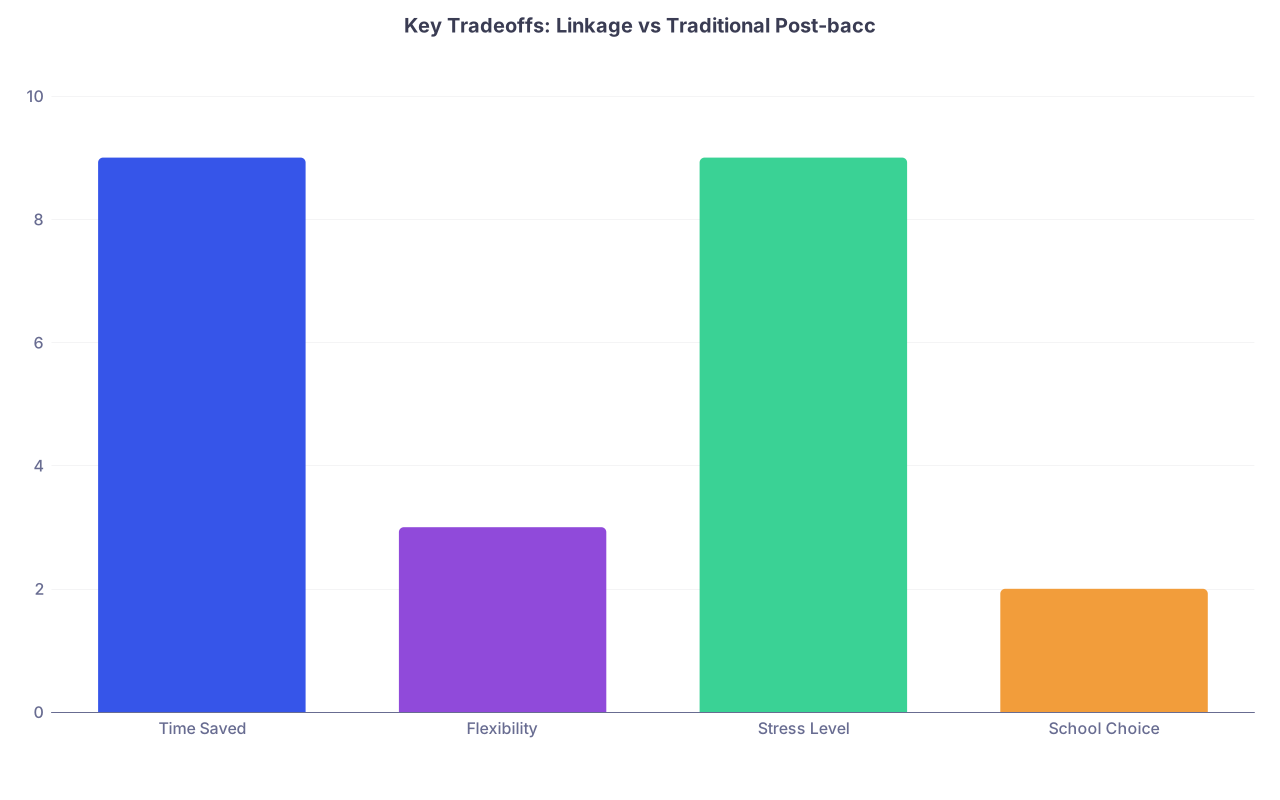
| Category | Value |
|---|---|
| Time Saved | 9 |
| Flexibility | 3 |
| Stress Level | 9 |
| School Choice | 2 |
(Scale 1–10; higher = more of that trait. Linkage: high time saved, very high stress, very low flexibility and school choice.)
If you’re already burned out from prior schooling, working full-time while studying, or anxious by nature, linkage pressure can crush you. I’ve seen strong students underperform on the MCAT purely because they felt “If I miss this number, I lose my only shot this year.”
Key Question Set #1: What Exactly Are the Linkage Requirements?
This is where programs quietly sort the fantasy from reality.
You should get clear, written answers to:
What GPA do I need—overall and science?
- Is it “3.5+ overall and science” or “3.7+ and no grade below B+ in the program”?
- Is it cumulative for all coursework ever, or just the post-bacc?
What MCAT do I need—exact score and section minimums?
- “510+” is not the same as “514+ with no section below 128.”
- Ask for the median MCAT of recent successful linkage students if they’ll tell you (many will, privately).
By when must I take the MCAT?
Typical linkage MCAT timing:- Late spring of your post-bacc year
- Sometimes even earlier
That means you’re studying for a do-or-die MCAT while taking heavy science coursework.
Are there “no retake” or “first-score-only” rules?
Some linkages only consider your first MCAT score. If you bomb it, you may:- Lose linkage eligibility, and
- Still have that weak score on record for future applications.
Are there any hidden “soft” requirements?
Things like:- Required shadowing hours
- Minimum clinical hours
- Mandatory committee letter endorsement
Ask bluntly: “Have students ever met the numerical requirements but still been denied linkage?”
You’re trying to find out: Are these requirements achievable for someone like me, in my current life situation, under time pressure? Not in theory. In reality.
Key Question Set #2: What Happens If I Miss the Bar?
This is where most students don’t press hard enough. You must ask:
If I don’t meet the GPA or MCAT requirement, what are my options?
- Can I still apply traditionally the next year with a strong committee letter?
- Do I lose committee support if I “fail” linkage?
Does attempting linkage hurt my relationship with the program?
Ask your advisor directly:- “If I go for linkage, miss, and then apply broadly the following year, will your letter still be strong/unaffected?”
Am I allowed to apply to other med schools at the same time?
Many linkage contracts say:- You may not apply to other med schools that cycle, or
- You may apply only after the linkage decision is finalized (often very late).
If I decline an offer, what are the consequences?
Sometimes:- If you’re accepted via linkage and say no, the home post-bacc may refuse to support you for the next cycle.
You need clarity on this before signing anything.
- If you’re accepted via linkage and say no, the home post-bacc may refuse to support you for the next cycle.
Here’s the uncomfortable truth: in a lot of cases, you’re effectively trading time saved for a more brittle path. If you crack under the pressure or barely miss a cutoff, you end up in the regular cycle anyway—but a year later, often more drained and with less control.
Key Question Set #3: Is This Specific School Actually a Good Fit for Me?
Linkage makes sense only if the destination school is somewhere you’d genuinely be happy. Not just “I’ll take anything.” That desperation mindset leads to regret.
Ask yourself:
Would I apply to this school eagerly even without linkage? If the answer is “probably not,” don’t linkage into it. You’re signing up for 4 years of your life, not an airline upgrade.
Do I understand the school’s vibe and mission?
Research:- Class size
- Location and cost of living
- Grading system (P/F vs tiered)
- Clinical training sites
If you hate rural medicine and the school is heavily rural-focused, that’s a mismatch.
Is this school strong in what I think I might want later?
You don’t need to know a specialty yet. But:- If you’re super research-driven, a school with weak NIH funding may frustrate you.
- If you’re drawn to primary care, pick a place that actually invests in that.
What do current students say—especially those who came via linkage?
Do not skip this. Ask the program to connect you with:- 1–2 students who successfully linkaged
- If possible, someone who attempted and didn’t meet criteria (sometimes harder to find, but worth trying)
You’re trying to avoid waking up in M2 thinking, “I rushed into the wrong school just to save a year.”
Key Question Set #4: Can I Realistically Handle the Timeline and Workload?
Here’s where you need to be brutally honest with yourself, not aspirational.
Use this rough mental model:

| Step | Description |
|---|---|
| Step 1 | Considering Linkage |
| Step 2 | Skip Linkage |
| Step 3 | Linkage May Be Reasonable |
| Step 4 | Can you hit GPA 3.6+ in heavy science? |
| Step 5 | Can you prep MCAT during coursework? |
| Step 6 | Okay with 1-school bet and limited apps? |
| Step 7 | Serious life stressors? |
Ask yourself:
What did my prior academic record actually look like?
If you were:- A 3.0–3.3 student in undergrad with some C’s in science
- Someone who historically needs more time to master material
Then building a flawless post-bacc GPA while cramming MCAT prep in is a big ask.
What else is on my plate right now?
- Full-time or even heavy part-time work
- Caregiving responsibilities
- Health issues (your own or family’s)
- Major life transitions
Linkage stacks maximum pressure on top. Not smart if your bandwidth’s already thin.
How do I actually perform under “high stakes, one-shot” pressure?
Think of:- SAT/ACT
- College finals
- Major presentations or check-offs
Did you sharpen up or collapse? Be honest.
Is there any reason waiting one more year would actually help me?
Glide year can be:- A chance to regain financial footing
- A time to deepen clinical exposure
- Space for focused MCAT prep without classes
Many nontrads underestimate how valuable that year can be for both your application and your sanity.
Key Question Set #5: What Are the Actual Outcomes for Linkage Students?
Programs love to highlight the linkage option. You care about linkage results.
Ask for numbers. Specifically:
- How many students are in each post-bacc cohort?
- How many are eligible for linkage each year?
- How many actually attempt linkage?
- How many successfully matriculate via linkage in:
- The last 3–5 years
- To which med schools?
If they only want to talk in vague percentages (“Some students successfully link each year”), push for ranges:
- “In the last 3 years, is it more like 3–4 students per year or 15–20?”
A rough pattern I’ve seen in many programs:
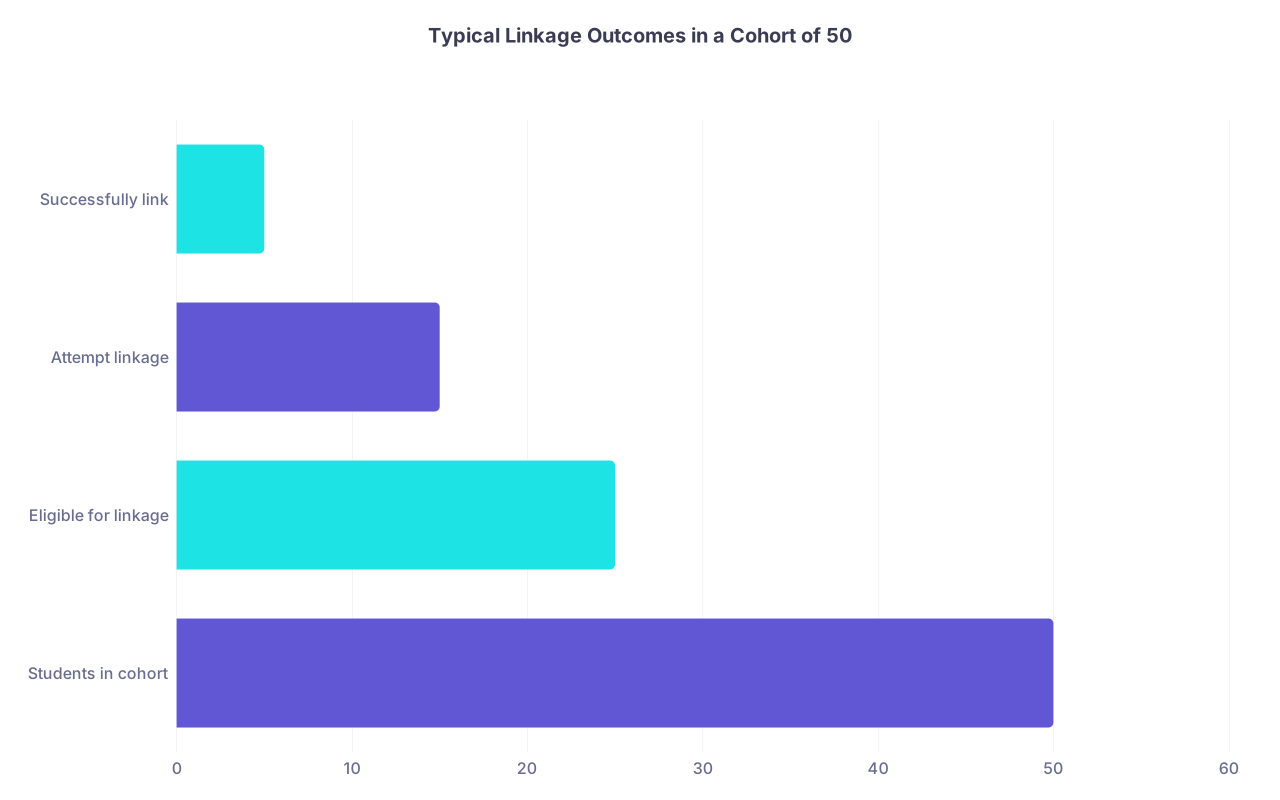
| Category | Value |
|---|---|
| Students in cohort | 50 |
| Eligible for linkage | 25 |
| Attempt linkage | 15 |
| Successfully link | 5 |
Not exact, but directionally accurate: lots of people start, a subset stay eligible, fewer actually attempt, and a very small group succeed.
You want to know whether:
- Linkage is a realistic path or just marketing glitter on the brochure.
When a Linkage Post-Bacc Is Worth the Pressure
I’ll be blunt: linkage isn’t for most people. But it can be smart when:
- You’re academically strong and have already proven you can crush high-stakes tests.
- You’re deeply aligned with a specific med school (mission, location, curriculum).
- You’re earlier in your career or have a compelling reason to save that year (age, family planning, visa issues, etc.).
- Your life outside school is relatively stable and low-chaos.
- The program’s linkage requirements and outcomes actually match what you can achieve.
In that scenario, linkage can be a clean, efficient path. You sign up for a brutal year, give it everything, and if you make the bar, you’re in and done.
When You Should Walk Away from Linkage (Even if It’s Offered)
Skip linkage—or at least proceed very cautiously—if:
- You have a history of academic inconsistency and need time to ramp up.
- You’re juggling heavy work/financial/family responsibilities.
- You’re not 100% sold on the one med school you’d be linking to.
- The program is weirdly vague about outcomes and requirements.
- The MCAT timeline they want would force a half-baked, rushed prep.
One of the most common regrets I hear:
“I wish I hadn’t tried to force linkage. If I’d just taken the extra year, I would’ve had stronger stats and more schools to choose from.”
Bottom Line: How to Decide—Today
Here’s what I’d do if I were you, this week:
Make a 3-column list:
- Column 1: Your academic history (GPA trends, test performance)
- Column 2: Your life constraints (time, money, family, health)
- Column 3: Your risk tolerance (how you handle uncertainty and high stakes)
Email or meet the post-bacc advisor and ask the hard questions from the sections above. Get specific numbers and policies.
After you have real data, answer this honestly:
“If linkage didn’t exist at this program, would I still want to do this post-bacc?”
If the answer is yes, you’re in a good place. Treat linkage as a bonus option, not the only reason you’re there.Decide your stance:
- “I’m going to aim for linkage but I’m okay if it doesn’t happen.”
- Or: “I’m choosing to skip linkage and play the longer, more flexible game.”
Then commit mentally to that track. Waffling mid-year is how you end up under-prepared for both linkage and the regular cycle.
FAQ (Exactly 7 Questions)
1. Does doing a linkage hurt my chances if I end up applying traditionally later?
Usually no—if your program still supports you fully with a strong committee letter. That’s why you must ask them directly what happens if you miss linkage. If they say your support will be “re-evaluated” or “might change,” that’s a red flag. In most solid programs, an unsuccessful linkage attempt just means you fall back to the traditional cycle the following year.
2. Is linkage easier or harder than getting into med school the normal way?
Harder. The bar is often higher (GPA and MCAT) and the timing is less forgiving. You’re essentially being asked to perform at a top-tier admitted-student level under more pressure and without the leverage of multiple schools. The “easy” part is avoiding secondary essays and interviews at 20+ places—not the actual admissions bar.
3. Should older nontraditional students always go for linkage to save time?
No. Being older raises the stakes, but it doesn’t magically give you more bandwidth. If your life is complex—kids, mortgage, full-time job—linkage pressure may actually increase your risk of underperforming. Sometimes the best move for a 30–40+ applicant is to slow down, build a rock-solid application, and protect health and sanity, even if that means an extra year.
4. Is a program without linkage automatically worse than one with linkage?
Not at all. Some excellent post-baccs don’t bother with linkage because their regular placement rate is already strong. A program with:
- Strong advising
- High acceptance rates to a range of med schools
- Good committee letters
…can be far better than a linkage-heavy program that only delivers a few linkage successes per year.
5. Can I “just try” for linkage and fall back if it doesn’t work?
Technically sometimes yes, practically risky. The mental shift from “linkage or bust” to “ok, I’ll just apply next year” is rough. You’ve burned energy, often rushed your MCAT, and you may be emotionally fried. If you’re going to “just try,” you need to treat linkage as a stretch goal while still preparing yourself as if you’ll do a full, traditional cycle later.
6. What if I’m not sure I can hit the MCAT target but everything else looks good?
Then you probably shouldn’t bank on linkage. MCAT is non-negotiable for most linkage deals. If the target is significantly above what your practice exams are showing—even after serious prep—betting your whole timeline on that number is gambling, not strategy. You’re usually better off delaying, strengthening, and applying broadly.
7. What’s one sign a program is overselling its linkage option?
Vague numbers and big promises. If they say things like “Many of our students successfully link” but can’t give you even a ballpark (“roughly 3–5 per year in a class of ~40”), be suspicious. A serious, transparent program will tell you: cohort size, how many were eligible, how many actually linked, and where they went.
Open a blank page and write this at the top: “If linkage disappeared tomorrow, what would my ideal path to med school look like?” Write the honest answer. Then decide if linkage aligns with that—or if it’s just a shiny shortcut you’re forcing into your story.