
You are a second‑year mechanical engineering major. It is 11:30 p.m., and your Solid Mechanics homework set is still open on one screen. On the other, you have a dozen browser tabs: AMCAS GPA calculator, a local free clinic website, an email draft to a PI about summer research, and the AAMC core competencies PDF you keep meaning to read.
You are wondering a very specific thing:
Can you actually build a competitive pre‑med profile from inside an engineering curriculum that already feels like drinking from a fire hose?
(See also: Advanced Study Skills for Pre‑Med Organic Chemistry and Biochemistry for effective study techniques.)
Let me break this down specifically.
1. How Medical Schools See Engineering Majors
Medical schools do not give “bonus points” just for being an engineering major. But they also do not treat you the same as a biology major with the same numbers.
What they actually do is this:
- Use engineering as a context for interpreting your academic record
- Expect you to meet the same core pre‑med competencies
- Look for evidence that you are not “hiding” behind your major to avoid essential clinical and humanistic exposure
The implicit “engineering curve”
At many MD schools, an engineering major with:
- 3.60 overall GPA
- 3.55 science GPA
- 514 MCAT
can be as competitive as a biology major with:
- 3.80 overall GPA
- 3.75 science GPA
- 514 MCAT
Why? Because committees understand:
- Grading in engineering tends to be harsher, more exam‑weighted, and curve‑based.
- Class averages of 65–75% on exams are normal in circuits, thermodynamics, or statics.
- You are usually carrying 16–18 credit hours of very dense technical coursework.
However, this is contextual leniency, not a free pass. A 3.1 GPA is still a serious handicap, even with a tough engineering major.
Common committee questions about engineering majors
When your file is reviewed, someone is implicitly asking:
- Did this student handle a rigorous quantitative load without crashing?
- Did they complete all medically relevant prerequisites (biology, chemistry, physics, biochemistry, psychology, sociology)?
- Did they maintain clinical exposure and service despite the heavy major?
- Do they demonstrate communication skills and empathy, not only technical prowess?
- Is there coherence between their engineering choices and interest in medicine (devices, systems, problem‑solving, global health, etc.)?
Your job is to anticipate those questions and structure your profile so the answers are easy to see.

2. Designing a Four‑Year Plan That Actually Works
The biggest pre‑med mistake engineering students make is treating “requirements” as a checklist instead of an integrated schedule. With engineering, that will sink you quickly.
You need a map and a phasing strategy.
Step 1: Anchor the immovable engineering courses
Engineering curricula are front‑loaded with prerequisites:
- Calculus I → Calculus II → Differential Equations
- Physics I → Physics II
- Intro to Programming → Data Structures (depending on major)
- Statics → Dynamics → Solid Mechanics (for ME/Civil)
- Circuits → Signals → Electronics (for EE)
These often have strict semester sequencing. Identify:
- Which courses are only offered in fall or spring
- Which courses unlock 3–4 later courses
- Which semester is your “heaviest” by default (for many, 3rd or 5th semester)
Lock those into a draft 8‑semester grid first. Do not touch them yet.
Step 2: Overlay pre‑med science prerequisites
For a typical U.S. MD/DO path, you need at minimum:
- 2 semesters General Chemistry with lab
- 2 semesters Organic Chemistry with lab
- 2 semesters General Biology with lab
- 2 semesters Physics with lab (often covered by engineering physics)
- 1 semester Biochemistry
- 1 semester Statistics (many schools strongly prefer this)
- 1 semester Psychology
- 1 semester Sociology or another social/behavioral science
For you, some will double‑count:
- Physics: your engineering physics sequence usually satisfies the pre‑med physics requirement.
- Math: calculus is already built in; some schools accept that toward math requirement, but you still want at least one stats course.
The hard ones are usually:
- General Biology (since engineering curricula often include little or no bio)
- Organic Chemistry + labs
- Biochemistry
Strategic moves:
- Slot Gen Chem I/II early (freshman year) if not required by your major.
- Take Gen Bio I alongside a lighter engineering semester or over summer.
- Schedule Organic Chemistry away from the single hardest engineering gateway semester if possible (easier said than done, but at least avoid orgo + thermodynamics + circuits + lab all at once).
- Take Biochemistry the semester before or after your MCAT prep, so it boosts content retention.
Step 3: Map MCAT timing realistically
You cannot treat MCAT as an afterthought. You need specific course coverage before test day:
- General Chem, Organic Chem, Physics, Biochemistry
- At least Intro Biology (ideally both Bio I and II)
- Psychology and Sociology
For most engineering majors, strong options are:
Option A – MCAT after junior year (traditional)
- MCAT in May–June after 6th semester
- Apply June of that year
- Start medical school 14 months later
- Pros: All major pre‑reqs covered, more clinical exposure.
- Cons: Heavier junior year; you are studying MCAT while taking 300‑level engineering.
Option B – Gap year, MCAT after graduation
- MCAT April–September of senior year or just after
- Apply during gap year
- Start medical school 1 year after graduation
- Pros: Much more breathing room, especially for demanding majors.
- Cons: Financial and timing considerations of a gap year.
Engineering students often benefit from a planned gap year; it allows you to:
- Take missing biology/biochem courses
- Boost clinical hours significantly
- Repair a semester with GPA damage
The key is to decide by late sophomore year, so you can plan courses and activities appropriately instead of improvising.
Step 4: Protect at least one “lighter” semester
You need at least one term with:
- ≤ 14–15 credits
- No more than 2 heavy STEM classes simultaneously
- Room for MCAT study or intensive clinical volunteering
If your curriculum map shows eight straight 17+ credit semesters with 3–4 technical courses, pause. That is where engineering pre‑meds burn out.
Solutions:
- Use summers for a couple of prerequisites (e.g., Bio I, Psych, Sociology) at your home institution or an approved university.
- Shift a general education requirement or humanities course to summer or winter term.
- If your program allows, consider an extra semester or a co‑op sequence that spreads out the load.
3. Academic Profile: GPAs, MCAT, and Subject Strategy
You are juggling two parallel academic narratives: “strong engineer” and “competent future physician.” They overlap, but not completely.
Target GPA ranges and damage control
For an engineering pre‑med aiming at MD schools:
- Overall GPA: 3.6+ is competitive, 3.7+ is strong
- Science GPA (BCPM): 3.5+ is competitive, 3.6+ is strong
For DO schools:
- Overall: 3.4+ is competitive, 3.5+ is strong
- Science: 3.3+ is competitive, 3.4+ is strong
A 3.3–3.5 with a rigorous engineering curriculum can still get MD attention if:
- There is a clear upward trend (e.g., 3.1/3.2 early → 3.7 last four semesters)
- Your MCAT is strong (515+ for MD; 508+ for DO, with some variability)
- Your narrative explains stumbles without making excuses (e.g., adjustment to engineering load, family responsibilities, then clear improvement)
Damage control strategies:
- Limit the number of W/D/F grades; repeated withdrawals in engineering major courses look problematic.
- Retake only if absolutely needed (e.g., C‑ or lower in a core pre‑med course).
- Use upper‑level science electives (e.g., physiology, cell biology) to demonstrate academic bounce‑back after earlier rough semesters.
MCAT leverage for engineers
Engineering often gives you:
- Strong quantitative skills → helps with CARS data analysis and science passages.
- Comfort with physics and chemistry → helps with CP (Chemical and Physical) section.
- Test‑taking endurance from demanding exam‑heavy courses.
Where you are likely weaker:
- Biological Systems content (if you have limited biology coursework)
- Psychological and sociological frameworks (P/S section)
- Rapid recall of memorization‑heavy facts (metabolism pathways, immunology)
Preparation specifics:
- Do not under‑estimate biology content. If you have only taken Bio I, strongly consider Bio II before MCAT or use a very structured content review plan with question banks and spaced repetition.
- For P/S, a dedicated review of terms (e.g., using Anki decks and full‑length practice tests) can close that gap efficiently.
- Your engineering discipline training helps with interpreting graphs and experimental setups. Lean into that by practicing passage‑based questions early.
In other words: your MCAT should look like “quantitatively strong but also biologically fluent,” not “brilliant physics score with obvious biology deficit.”
4. Clinical, Service, and Shadowing: Getting Out of the Engineering Bubble
This is where many engineering pre‑meds fall short. They end up with a beautiful technical resume and very thin patient‑facing experience.
Admissions committees do not care that your circuits lab met 8 hours per week if you have never talked to a sick person.
Baseline clinical and volunteer expectations
By application time, a healthy engineering pre‑med profile usually includes:
Clinical exposure (volunteering + possibly paid):
- 150–300+ hours total is a common competitive range.
- This can be spread over 1–3 years, but continuity matters more than raw hours.
Physician shadowing:
- 40–80 hours total across at least 2–3 specialties.
- Include at least some primary care, some hospital‑based, and ideally a field related to your interests (e.g., orthopedics for ME majors interested in biomechanics).
Non‑clinical service to underserved or vulnerable populations:
- 100+ hours sustained over time.
- Tutoring underserved students, community outreach, food banks, crisis hotlines, etc.
These are not rigid quotas, but patterns seen in competitive applications.
How to realistically get clinical experience with an engineering schedule
Concrete strategies:
One ongoing weekly commitment
- Example: 3‑hour shift at a hospital information desk or ED volunteer every Sunday morning.
- Over 2 years, that becomes 200+ hours with very little weekly disruption.
Semester‑based roles
- Scribe work 8–12 hours per week for one semester or gap year.
- EMT training during a lighter semester, then weekend shifts.
Clinical exposure during summers
- Combine a summer research position with 4–6 hours per week at a free clinic.
- If you are home for the summer, volunteer at a local hospital or hospice that does not require long training.
Prioritize roles where you interact with actual patients, not just filing papers in a back office.
Shadowing as an engineer
Shadowing is about observation and reflection, not clocking hours.
Tips specifically for engineers:
- Use your systems mindset: observe workflow, bottlenecks, and interprofessional communication in clinics and ORs.
- Ask (at the appropriate time) about how your physician hosts use EHRs, diagnostic equipment, imaging — this ties naturally to your engineering background.
- Keep a brief log: date, specialty, hours, and 1–2 key observations. This will help with your personal statement and work/activities descriptions.

5. Research and Projects: Turning Engineering Work into Pre‑Med Assets
Here is where you can stand out sharply from standard biology majors.
Engineering gives you:
- Design projects
- Capstone experiences
- Data analysis and modeling
- Potential lab or industry internships
The question is not “Do I have research?” but “Have I framed my technical work in a way that medical schools care about?”
What “counts” as research for pre‑meds
Activities that usually count:
- Wet lab or computational research in a biomedical engineering or related lab
- Signal processing for EEG/ECG data
- Device design with testing and analysis for a clinical need
- Machine learning applied to clinical datasets
- Quality improvement (QI) projects in a hospital system with data collection and analysis
Also valuable but more borderline:
- Purely mechanical/aerospace projects unrelated to health
- Software engineering internships in non‑health fields
- Traditional engineering capstones that never engage with human or biological systems
These can still help. You just have to extract the transferable skills clearly:
- Hypothesis formulation
- Data gathering and analysis
- Iterative design and troubleshooting
- Collaborating in teams
- Communicating complex ideas in presentations or reports
Strategically choosing engineering experiences
If you have some flexibility:
Pick a capstone project with a biomedical, human factors, or health systems component.
- Example: a low‑cost prosthetic device, fall‑detection system, ICU bed monitoring system, mHealth app integration.
Seek labs with dual relevance:
- A mechanical engineering lab studying biomechanics.
- An electrical engineering lab working on wearable sensors.
- A computer science lab collaborating with a hospital on predictive modeling.
If your campus has a BME department or med school, look for cross‑listed projects or REUs that bridge engineering and medicine.
For each project, be ready to answer:
- What was the clinical or human problem?
- What were your specific responsibilities?
- What did you learn about uncertainty, failure, and iteration?
- How did this experience shape your view of medicine, not just engineering?
6. Leadership, Communication, and Human Skills
An engineering transcript and MCAT score do not automatically convince anyone you can sit with a scared patient and explain a cancer diagnosis.
You have to demonstrate that you are more than a problem‑solving machine.
Building leadership credibility
You do not need 10 executive board titles. You need 1–3 roles with real responsibility.
Valuable examples:
Engineering societies:
- ASME/IEEE/SHPE/NSBE officer who organizes outreach, tutoring, or mentorship programs.
- Leads a design team that presents at regional competitions.
Service organizations:
- Clinic coordinator for a student‑run free clinic.
- Site leader for an alternative break focused on health access.
Teaching roles:
- Peer tutor for physics, calculus, or circuits.
- Undergraduate teaching assistant for an engineering or pre‑med course.
- Supplemental instruction leader.
Leadership is not about title inflation. It is about:
- Accountability for outcomes
- Working with difficult people and constraints
- Learning to delegate and communicate under pressure
Proving communication and empathy
Concrete ways to show human‑facing skills:
- Long‑term involvement in mentorship programs (engineering outreach to K‑12, Big Brothers Big Sisters, etc.)
- Humanities coursework: writing‑intensive classes, ethics, literature related to medicine or technology
- Presentation‑heavy activities: design team showcases, research posters, TED‑style campus talks
Admissions committees will look at:
- Your personal statement tone and clarity
- How you reflect on patients, not just problems
- Letters of recommendation that mention your interpersonal skills
So if all of your experiences and LORs are coming from engineering professors praising your coding speed, you have a gap to address.
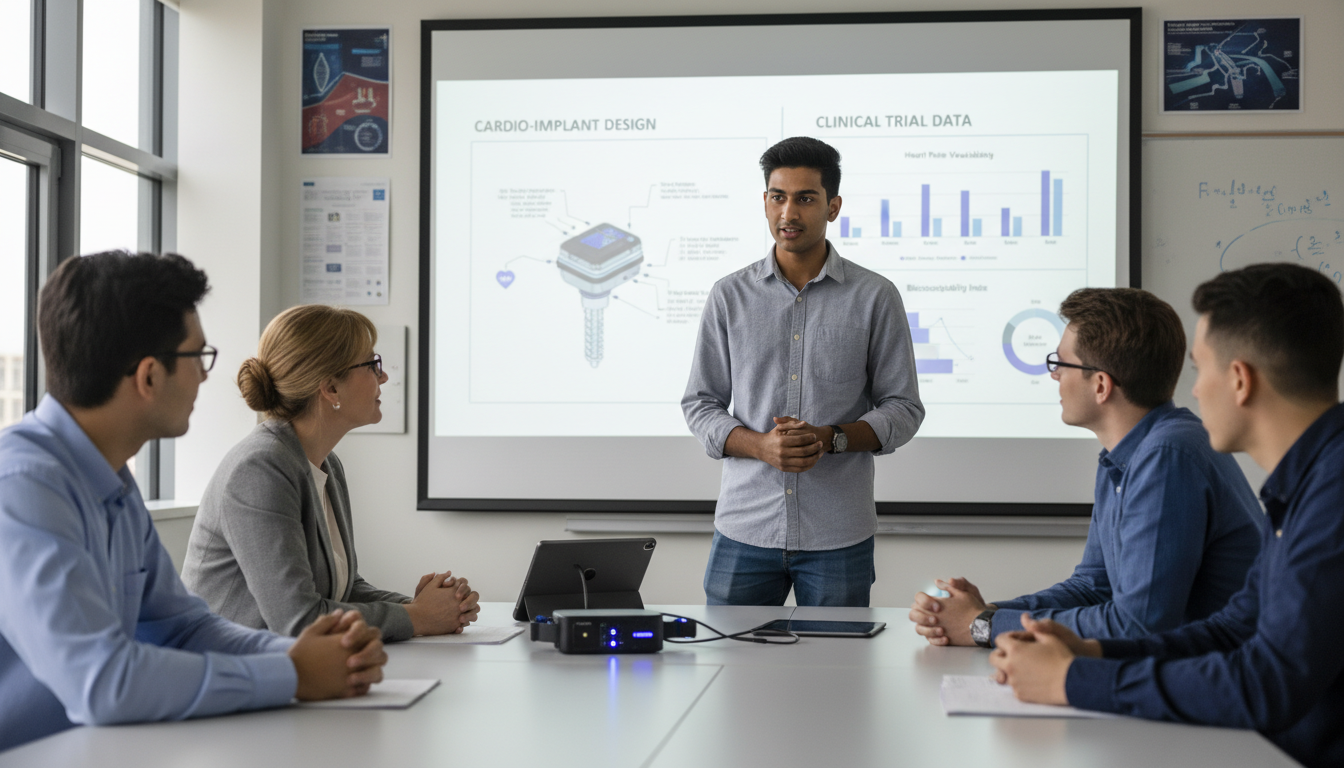
7. Telling a Coherent Story: Application and Interview Strategy
By the time you apply, you will not be “engineering major” + “some pre‑med stuff.” You need a cohesive identity.
Constructing your core narrative
A strong engineering pre‑med narrative usually links:
Why engineering first?
- Curiosity about how things work
- Love for math and problem‑solving
- Interest in building tools that help people
Where medicine entered the picture
- Clinical volunteering that humanized the problems behind the systems
- Research that pushed you from devices/data to patients
- Personal or family experience with illness that intersected with your technical interests
Why not just stay in engineering?
- You want to be at the point of care, making decisions with and for patients, not just designing tools for them.
- You value longitudinal relationships and the human narrative of illness.
- You want both the problem‑solving of engineering and the human impact of medicine.
Your personal statement and secondaries should not read as “I failed as an engineer, so I am trying medicine now.” They should read as “Engineering trained me in X, Y, Z ways; clinical experiences showed me I belong at the interface between technology and human care.”
Positioning engineering in your application materials
Specific tactics:
Personal statement
- One or two concise engineering anecdotes that illustrate skills (systems thinking, resilience, design under constraints).
- Pivot quickly to the patient side; most of the statement should center on human experiences, not problem sets.
Work & activities
- Highlight 1–2 engineering projects where you can explain impact, teamwork, and communication, not just technical details.
- Do not flood the list with 5 nearly identical design team roles — that looks like padding.
Secondaries
- When asked about problem‑solving, use an engineering example, but connect it to clinical reasoning.
- When asked about diversity of experiences, emphasize how engineering changed the way you look at health systems and inequities.
Interview readiness: the engineering‑to‑medicine bridge
In interviews, expect questions like:
- “Why did you choose engineering if you wanted to go to medical school?”
- “Why not stay in engineering and build medical devices instead?”
- “How will your engineering background influence the doctor you become?”
Prepare 30–60 second responses that:
- Acknowledge the rigor and value of engineering
- Articulate clearly what is uniquely fulfilling about clinical work
- Show that your choice for medicine is informed and deliberate, not reactive
Also be ready to discuss one specific technical project in accessible language. Your ability to translate complex work for a non‑expert is exactly what you will do with patients.
8. Year‑by‑Year Blueprint: A Concrete Example
To make this tangible, consider a hypothetical mechanical engineering pre‑med at a mid‑sized university, planning a gap year.
First Year
- Courses: Calculus I/II, Intro to Engineering, Physics I, Gen Chem I, a writing seminar
- Goals:
- Adjust to college rigor
- Explore interest in medicine quietly: attend pre‑health meetings, shadow 1 physician over winter break (8–12 hours)
- Start 2–3 hours/week of hospital volunteering second semester
Second Year
- Courses: Statics, Dynamics, Materials, Physics II, Gen Chem II, Gen Bio I (or in summer), Psych
- Activities:
- Continue weekly clinical volunteering
- Join 1 engineering society, attend regularly
- Shadow 1–2 other specialties during breaks
- Aim for 3.4–3.6+ GPA this year, learn from any first‑year mistakes
Third Year
- Courses: Thermodynamics, Fluid Mechanics, Design, Differential Equations, Gen Bio II (if not done), Organic Chem I or II, Sociology
- Activities:
- Take on a leadership role (committee chair, project lead) in either engineering or a service/clinic organization
- Start research in a biomechanics or device lab if possible
- Clinical hours now at 80–120+ cumulative
- Decision:
- Confirm gap year plan; schedule MCAT for late summer after 4th year or early gap year
Fourth Year
- Courses: Capstone design, electives, Biochemistry, any remaining prerequisites (e.g., stats)
- Activities:
- Continue research or complete capstone with clear health‑related tie if possible
- Keep clinical volunteering or paid clinical job at 3–6 hrs/week
- Begin focused MCAT prep 4–6 months before test date
Gap Year
- Full‑time or near full‑time substantive experience:
- Clinical job (scribe, medical assistant, EMT) or
- Research assistant in a clinical/engineering lab
- MCAT taken before or early in gap year
- Applications submitted in June, with a narrative that makes sense of the journey
You can adjust details, but the structure matters: early clinical exposure, sustained service, rising academic trend, and a deliberate transition from engineer‑in‑training to future physician.
Key Takeaways
- As an engineering major, you must meet the same pre‑med academic and experiential standards, but you can leverage your rigor, project work, and systems thinking as clear advantages.
- The critical moves are early, deliberate course planning; steady, long‑term clinical and service involvement; and framing your engineering background as a coherent part of your motivation for medicine rather than a detour.
- Your file should answer three questions clearly: Can you handle the science? Do you understand and value patient‑centered care? And can you translate your engineering mindset into the practical, human, and ethical realities of medical practice?