
The blunt answer: You usually do not need a special “probation letter” from your dean—and in many cases, you don’t want one—but you do need to know exactly what your dean’s letter and MSPE will already say, and whether programs will see your probation through official channels.
Let me walk you through this like I would with a worried M4 in my office.
1. What Programs Actually See About Your Probation
Before you even think about asking your dean for a custom letter, you have to understand what’s already going out automatically.
Three core documents matter here:
- MSPE (Dean’s Letter)
- Transcript
- MSPE “Noteworthy Characteristics” and “Academic History” sections
Most U.S. schools are now very explicit: if you were on probation—academic or professionalism—it’s often reported in one or more of these.
Typical ways probation shows up:
- A line in the academic history section:
“Student was placed on academic probation from [dates] due to failing [course/clerkship]. Returned to good standing on [date].” - A professionalism or conduct blurb:
“Student was placed on professionalism probation for [policy language]. Successfully remediated and no further concerns.” - A note in your transcript legend or comments.
So programs may already see it even if you never say a word in your personal statement or ERAS.
That’s why the core question isn’t “Do I need a letter from my dean about my probation?”
It’s: “Given what my school is already reporting, how should I handle explanation and damage control?”
2. When You Do Not Need a Separate Dean Letter
Let’s start with the most common scenario.
You generally do not need a separate letter from your dean if all of these are true:
- Your probation is already described briefly and factually in your MSPE or transcript
- It was a single issue, now fully resolved (e.g., one failed course or clerkship, one professionalism incident, one semester on leave, now back in good standing)
- Your school has a standard, neutral way of describing it (no dramatic editorializing, no “pattern of behavior” language)
- Your clinical evaluations and LORs are solid and don’t hint at ongoing concern
In that situation, adding another dean letter that says the same thing doesn’t add value. It just spotlights the concern again.
Program directors don’t sit there thinking, “Where is the extra dean letter about this?”
They think: “What happened? Is it resolved? Is this likely to repeat?”
Those questions can usually be answered better by:
- How the MSPE phrases it
- How your other letters talk about your reliability and performance
- Your own short, mature explanation in ERAS (if needed)
Extra dean letters tend to become necessary when something is unclear or potentially alarming without context.
3. When You Should Strongly Consider a Dean-Specific Letter
There are situations where a dean letter focused on your probation or disciplinary history is actually smart. It can neutralize ambiguity.
You should consider asking for a specific dean letter if any of the following apply:
Your MSPE language is vague or ominous.
Example: “Student was subject to institutional disciplinary action in third year.”
That line alone is a Rorschach test. PDs will assume the worst: cheating, harassment, serious professionalism breakdown.
A dean letter that clarifies:- What happened
- That it was not related to patient harm, discrimination, or dishonesty (if true)
- That it’s fully resolved and you’ve had no further issues
can significantly lower the “unknown risk” feeling.
The issue sounds worse than it is.
For instance, your school calls everything “probation,” including what other schools would call plain “academic warning.”
Or a minor and fully remediated documentation error ends up written like a federal offense.
A dean can explain your school’s policy:- “At our institution, any course failure automatically triggers the term ‘academic probation.’ This does not reflect an ongoing concern with the student’s professionalism, integrity, or patient care.”
You had multiple or prolonged probations.
One semester of academic probation is very different from:- Multiple academic probations across pre-clinical and clinical years
- Professionalism probation plus later academic concerns
- A suspension or required leave connected to the events
In those cases, programs want to hear from leadership:
“We saw the pattern, we addressed it, and here’s where the student stands now.”
You’re applying in a very competitive specialty or very selective programs.
Surgical subspecialties, derm, ortho, urology, ENT, plastics, rad onc—these programs scrutinize red flags harder.
If they’re going to screen you anyway, a dean letter laying out:- What happened
- Your subsequent performance
- Clear endorsement of your readiness for residency
can turn a near-automatic “no thanks” into at least a “maybe interview.”
You know some programs you’re targeting will ask.
Some institutions explicitly say: if you’ve had disciplinary action, they want a statement from your dean or student affairs.
If your target list includes those, it’s safer to have that letter in your back pocket.
Bottom line: A dean’s letter is mostly a clarification and reassurance tool, not a default requirement.
4. How To Decide: Quick Framework
Here’s a simple decision path you can use.

| Step | Description |
|---|---|
| Step 1 | Was I ever on probation or disciplined? |
| Step 2 | No dean letter needed |
| Step 3 | Is it clearly and neutrally described in MSPE? |
| Step 4 | Ask dean for clarification letter |
| Step 5 | Was it multiple/prolonged or very serious? |
| Step 6 | Applying to highly competitive specialties? |
| Step 7 | Probably no separate dean letter needed |
That’s about as complicated as it needs to be.
5. What a Good Dean Letter About Probation Should Actually Say
If you and your dean agree a letter is appropriate, don’t just leave it vague. Guide them on what programs actually want to know.
A strong dean letter about probation typically includes:
- A brief factual description of what happened
- Academic: failed course/clerkship, Step failure, attendance issues
- Professionalism: missed deadlines, unprofessional communication, boundary or behavior concern (in general terms)
- Clear statement of current standing
- “Now in good academic standing”
- “No ongoing professionalism concerns”
- Evidence you’ve improved
- Subsequent clerkship grades
- Feedback from faculty, rotation directors
- Explicit support for residency
- “We fully support this student’s application to residency”
- “We consider them ready for the responsibilities of postgraduate training”
What it should not be:
- A re-litigation of every detail
- A defensive essay about how unfair the process was
- Ambiguous lines like “We hope this will not reoccur” (yes, I’ve seen that—instant death)
If your dean is open to it, you can ask:
“Programs reading about my probation are going to wonder three things: what happened, is it fixed, and are you confident this won’t affect my residency performance. Could your letter hit those points directly?”
That’s not pushy. That’s just focused.
6. How You Should Talk About Your Probation in ERAS
Whether or not you get a dean-specific letter, you still have to play your part well.
The places this usually shows up:
- ERAS “Additional Information” or “Impactful Experiences” boxes
- Sometimes a brief note in your personal statement, if truly central to your story
- Interview answers when they ask about “any challenges or red flags”
The formula that works:
- One sentence: what happened, in plain language
- One–two sentences: what you did to fix it
- One–two sentences: what changed in your behavior, habits, or mindset
- Close with reassurance via facts (later grades, roles, feedback)
Example (academic probation):
“I was placed on academic probation during second year after failing the [course name] while managing a heavier-than-appropriate work schedule outside school. I met with academic support, cut back my work hours, and built a more structured study plan. Since then, I’ve passed all subsequent courses and clerkships on the first attempt and received positive feedback on my preparation and reliability.”
Notice what’s missing: excuses, long backstory, dramatic emotion.
If your dean’s letter exists, you don’t need to repeat all the detail. You just need to show insight and maturity.
7. Common Mistakes Students Make About Dean Letters and Probation
I’ve watched this play out with a lot of anxious M4s. Here’s what tends to go wrong:
Asking for a special letter when the red flag is minor and already clearly explained.
Result: You highlight a problem that programs might’ve skimmed past as “no big deal.”Avoiding the conversation with the dean entirely.
Then you’re surprised later by how harsh the MSPE sounds. Always ask to review the MSPE early and talk about wording.Trying to “fix” a bad situation with a 3-page dean letter.
Length doesn’t reassure PDs. Clarity and ownership do.Letting the dean write something vague and weak.
“Student was on professionalism probation, which has since concluded.”
That’s not reassurance. That’s a teaser trailer for a bad movie. It’s reasonable to say:
“Programs will likely want to know that I have your full support and that there are no ongoing concerns. Is there a way to state that more directly?”Not coordinating your story.
If your dean’s letter, your MSPE, and your own statement sound misaligned or inconsistent, that’s a problem. Keep the facts matched across sources.
8. How Program Directors Actually Read This Stuff
One PD once told me straight out:
“I don’t blacklist people for probation. I blacklist people when I can’t tell what happened or if they dodge it.”
Most PDs are asking:
- Was this one mistake or a pattern?
- Does it involve dishonesty, harassment, substance misuse, or serious boundary violations?
- Has anyone in authority actually gone on record saying, “We trust this person now”?
- Has the student performed well since?
A dean letter can help specifically on that third question.
If your record shows:
- A single academic stumble early
- Strong clinical performance later
- Good step scores (where applicable)
- Consistent professionalism comments
Then honestly, you may not need anything beyond the standard MSPE and your own one-paragraph explanation.
If your record shows:
- Multiple issues or a serious professionalism problem
Then a dean letter that explicitly states, “We endorse this student for residency without reservation,” can be the difference between automatic rejection and “okay, let’s at least interview them and ask.”
9. How To Talk to Your Dean About This (Without Sounding Desperate)
You’re not the first student to sit in that chair.
Here’s a script that works:
“I know my probation will be mentioned in my MSPE. I want to make sure programs see it in the right context and understand that I’ve addressed the problem. Based on your experience with PDs, would a separate letter from you clarifying what happened and your level of support help, or do you feel the MSPE as written is enough?”
This does three things:
- You acknowledge the reality (no pretending it didn’t happen)
- You respect their experience and judgment
- You open the door for them to say, “Yes, I’ll write one” or “No, here’s why we don’t need that”
If they say no and explain that your MSPE already covers it well—accept that. Don’t badger them into creating a document that might not help you.
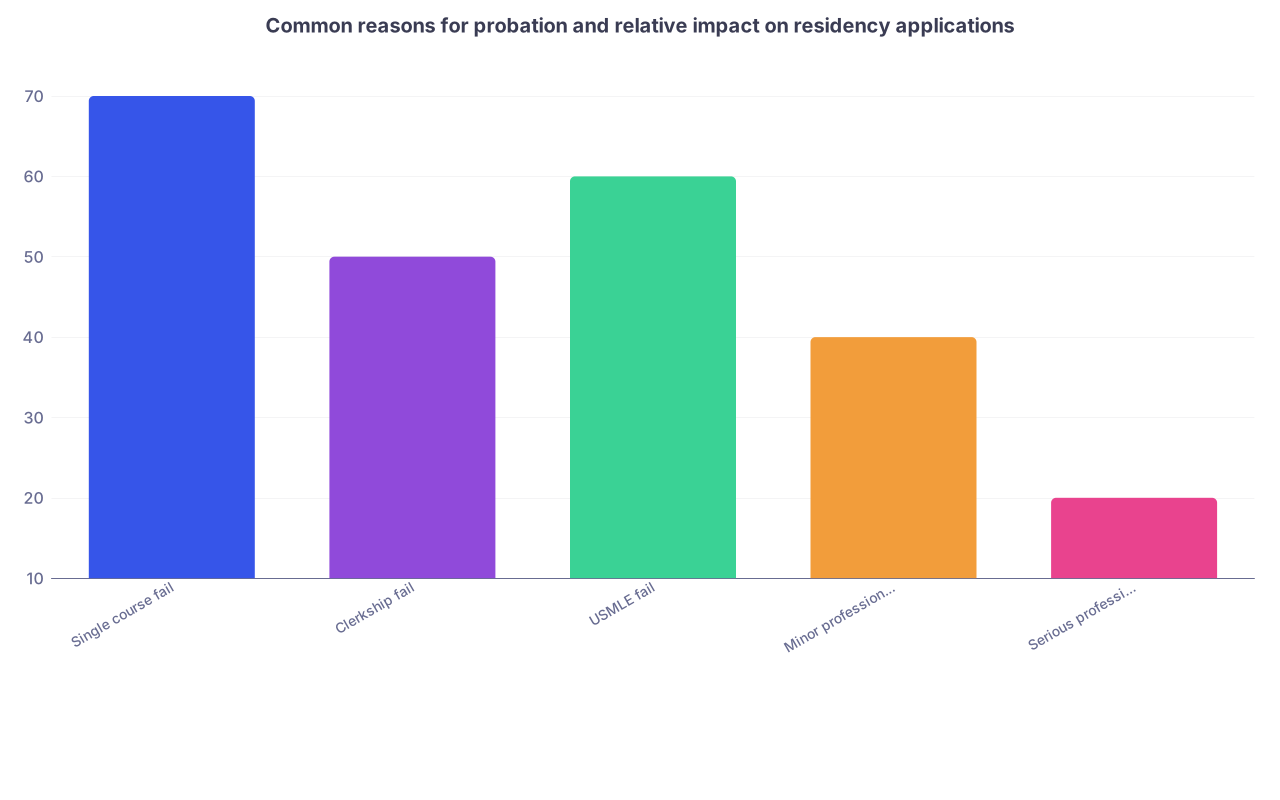
| Category | Value |
|---|---|
| Single course fail | 70 |
| Clerkship fail | 50 |
| USMLE fail | 60 |
| Minor professionalism | 40 |
| Serious professionalism | 20 |
(Interpretation: the higher the number, the easier it usually is to recover with strong performance and good framing. Serious professionalism issues are hardest to rehabilitate.)

10. Quick Checklist: Do You Need a Dean Letter About Probation?
Run through this:
- Was I on probation or disciplined?
- Do I know exactly how it’s worded in my MSPE/transcript?
- Does that wording sound neutral and factual—or ominous and vague?
- Was this a single, clearly resolved issue, or multiple / severe?
- Am I applying to hyper-competitive specialties or mostly categorical IM/FM/psych/peds?
- Has any advisor or PD mentor specifically suggested a dean letter?
If your answers look like:
- Single issue
- Clear MSPE wording
- Solid subsequent performance
- Applying to less cutthroat specialties
You probably don’t need a special dean letter.
If your answers lean toward:
- Multiple or serious issues
- Vague or scary MSPE language
- Competitive specialties
- Advisor says, “We should clarify this”
Then yes, talk to your dean about a specific clarification/support letter.

FAQ: Letters from Dean and Probation
| Scenario | Dean Letter Needed? |
|---|---|
| Single academic probation, clear MSPE | Usually no |
| Vague “disciplinary action” line in MSPE | Often yes |
| Serious professionalism violation | Strongly consider |
| Multiple probations over years | Strongly consider |
| Applying to ultra-competitive specialty | Sometimes helpful |
| No mention of probation anywhere official | Usually no |
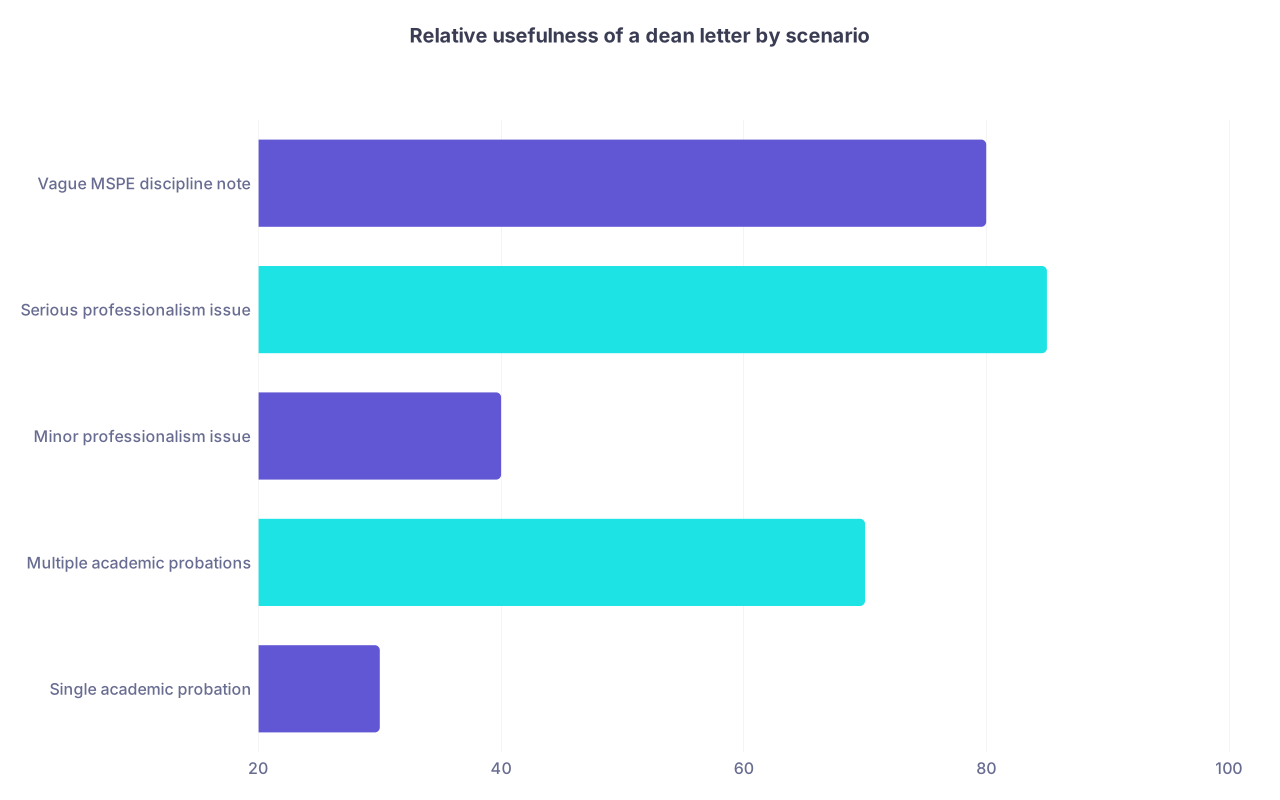
| Category | Value |
|---|---|
| Single academic probation | 30 |
| Multiple academic probations | 70 |
| Minor professionalism issue | 40 |
| Serious professionalism issue | 85 |
| Vague MSPE discipline note | 80 |
1. Will programs think I’m hiding something if I don’t get a dean letter?
No. Programs expect the MSPE and transcript to be the primary official sources. They don’t assume a missing dean letter equals concealment. They only get suspicious if there’s vague wording and no explanation anywhere—that’s when a dean letter can help.
2. Should I mention my probation in my personal statement?
Only if it’s central to your story of growth and you can do it in 2–3 focused sentences without derailing the rest of the statement. Otherwise, use the ERAS additional info section and let the MSPE + any dean letter carry the official explanation.
3. What if my dean refuses to write a specific probation letter?
Then your job shifts to:
- Making sure the MSPE wording is as clear and fair as possible
- Writing a concise, mature explanation in ERAS
- Leaning on strong clinical LORs that explicitly describe you as reliable, professional, and ready for residency
You can match just fine without a special dean letter if the rest of your application is strong and consistent.
4. Do community programs care less about probation than big academic centers?
Sometimes, but don’t assume. Some community PDs are actually more conservative about red flags because they have smaller teams. Either way, the same rules apply: clarity, ownership, and reassurance matter more than the logo on the program’s website.
5. My probation was for something personal/embarrassing. How much detail do we need?
You don’t need lurid detail. You need category-level clarity plus resolution. For example:
“Due to personal circumstances, I struggled with attendance and timely completion of assignments, which led to professionalism probation.”
Your dean’s letter and your own explanation should focus on: what behavior changed, how you improved, and that it hasn’t recurred.
6. Can a strong dean letter fully “erase” a serious professionalism red flag?
No. Nothing erases it. But a strong, explicit endorsement from someone who knows your full record can move you from “automatic reject” to “we’ll at least review and maybe interview.” For serious issues, that’s a big win. You’re not going for perfection; you’re going for a real chance.
Key takeaways:
You usually don’t need a special dean letter just because you had probation. You do need to know exactly what your MSPE already says and whether that creates confusion or concern. Use a dean letter strategically—only when it clarifies, reassures, and strengthens your overall story rather than just repeating the problem louder.