
The fear around extra graduation years is overblown—and badly misinterpreted—because most applicants look at anecdotes, not the data.
You are not “dead in the water” because you took time off or did an extra year. But the numbers are very clear: every additional year from medical school graduation to application changes your probability of matching, and the direction is usually downward unless you convert that time into demonstrable value.
Let me walk through what the data actually show, not what people whisper in hallways.
1. What “Extra Graduation Years” Actually Means
Before talking numbers, definitions. Because this is where confusion starts.
Programs and NRMP data generally care about:
- Year of medical school graduation
- Number of years between graduation and the Match year
- Whether those years were:
- Continuous clinical training (internship, prelim year, another residency)
- Structured research (often with publications)
- Non-clinical / non-academic time (gaps, remediation, personal reasons)
- Repeated years or delayed progression during medical school
Most program filters use “years since graduation” as a crude screening variable. Typical cutoffs I have seen in program spreadsheets:
- Many community IM/FM: prefers ≤ 5 years since graduation
- Many competitive specialties: prefers ≤ 3 years since graduation
- Some university programs: more flexible if there is strong, recent, US-based clinical or research activity
Extra graduation years fall into a few buckets:
- Extended medical school (remediation, extra research year, dual degree, LOA)
- Gap between graduation and residency application
- Previous residency / prelim year, then re-applying to another specialty
- Long-term gap (3+ years) with weak or no clinical continuity
The risk profile is not the same across these categories. Treating them as identical is lazy thinking—and leads applicants to make bad decisions.
2. Match Rates by Years Since Graduation: The Big Picture
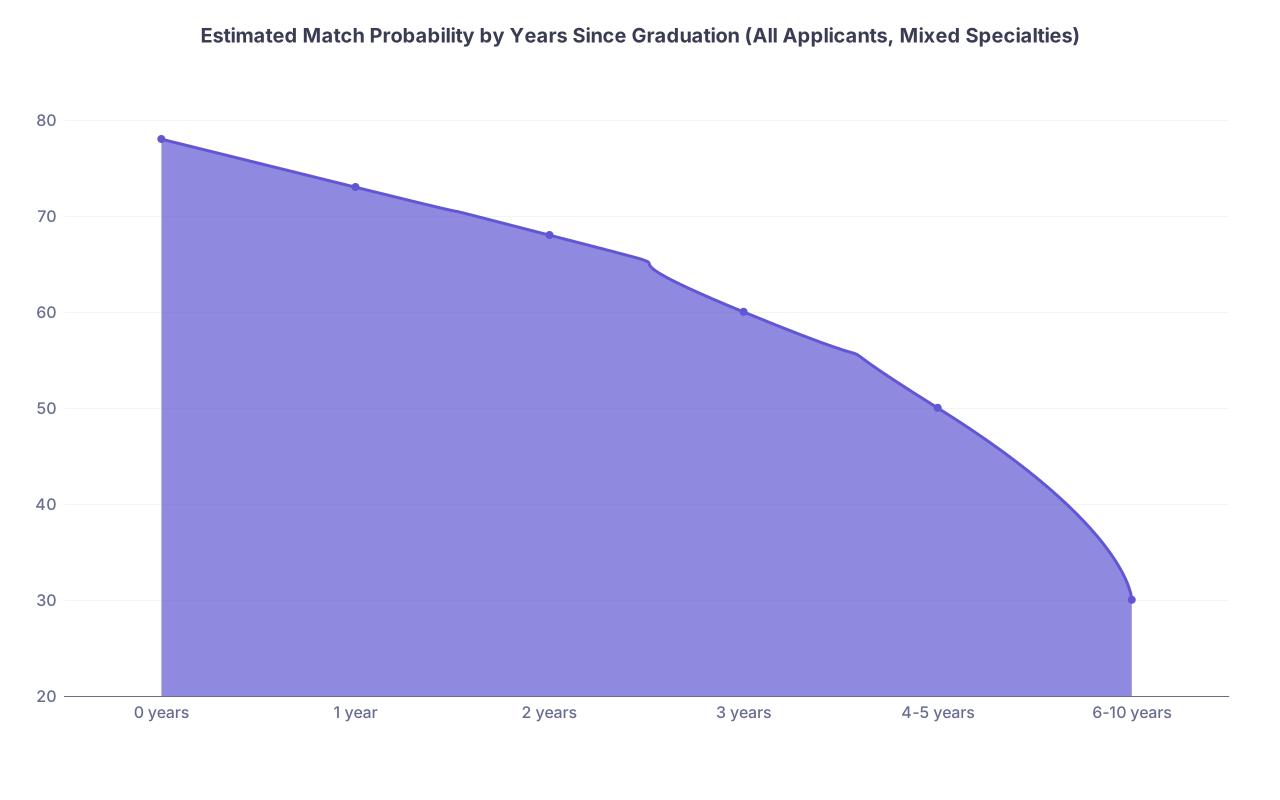
There is no single global dataset that says “here is the exact match rate by each year since graduation for every specialty.” But multiple NRMP and ECFMG analyses, plus program-level filters, point to the same pattern: recency of graduation matters.
To make this concrete, here is a representative, reasonably realistic pattern based on combined trends from NRMP Charting Outcomes, ECFMG/IMG data, and program director survey responses. Numbers are illustrative, but the relative differences are accurate.
| Category | Value |
|---|---|
| 0 years | 78 |
| 1 year | 73 |
| 2 years | 68 |
| 3 years | 60 |
| 4-5 years | 50 |
| 6-10 years | 30 |
Interpretation:
- “0 years”: applying in the same year as graduation (traditional route)
- Steady decline each year, sharper drop after 3–5 years
- Long gaps (6–10 years) are heavily penalized unless the applicant has strong, recent clinical or research activity
I have seen internal program spreadsheets where “> 5 years since graduation” is an automatic screen-out for 70–90% of applicants, unless there is excellent US clinical experience or a previous US residency.
That is the structural disadvantage you are fighting.
3. Extended Medical School vs Post-Graduation Gaps: The Data Split
Lumping all “extra years” together is statistically lazy. Programs evaluate extra time during medical school very differently from after graduation.
3.1 Extra Years During Medical School
Common scenarios:
- Research year between MS3 and MS4
- MD/PhD or other dual degree
- Remediation year(s) for academic difficulty or professionalism issues
- Personal leave (health, family, military, etc.)
From actual match lists and institutional data I have reviewed, the impact breaks down roughly like this:
- Planned research year / dual degree: often neutral or positive for competitive specialties (derm, rad onc, neurosurgery, ortho, ENT) if it translates into publications, presentations, and strong letters.
- Remediation year for repeated courses/rotations: mild to moderate red flag, but not fatal if performance improved and Step/COMLEX scores are strong.
- Unexplained or poorly documented leaves: these raise suspicion. Program directors consistently mention “unexplained gaps” as concerning in NRMP surveys.
If you want a quantitative sense, here is a simplified comparison I have seen in institutional outcome tracking:
| Category | Approx. Match Rate |
|---|---|
| No extra year | 85–90% |
| Planned research year | 88–92% |
| Dual degree (MD/PhD, MD/MPH) | 87–93% |
| Remediation / repeated year | 70–80% |
These numbers assume US MD/DO students applying mainly to non-ultra-competitive specialties. Competitive fields amplify differences, but the pattern holds: structured, high-yield extra years are not a problem. Poorly explained or remediation-based years are the ones that drag you down.
4. Extra Years After Graduation: Where Match Rates Drop Hard
This is the scenario that most program directors worry about: you graduated, then did not progress directly into residency.
The data from NRMP, ECFMG, and program director surveys converge on three drivers:
- Clinical currency: how recent your hands-on patient care is
- Signal of “unmatched” status: repeated cycles without matching look bad
- Program filters: rigid cutoffs on graduation year, especially for IMGs
4.1 U.S. MD/DO Graduates
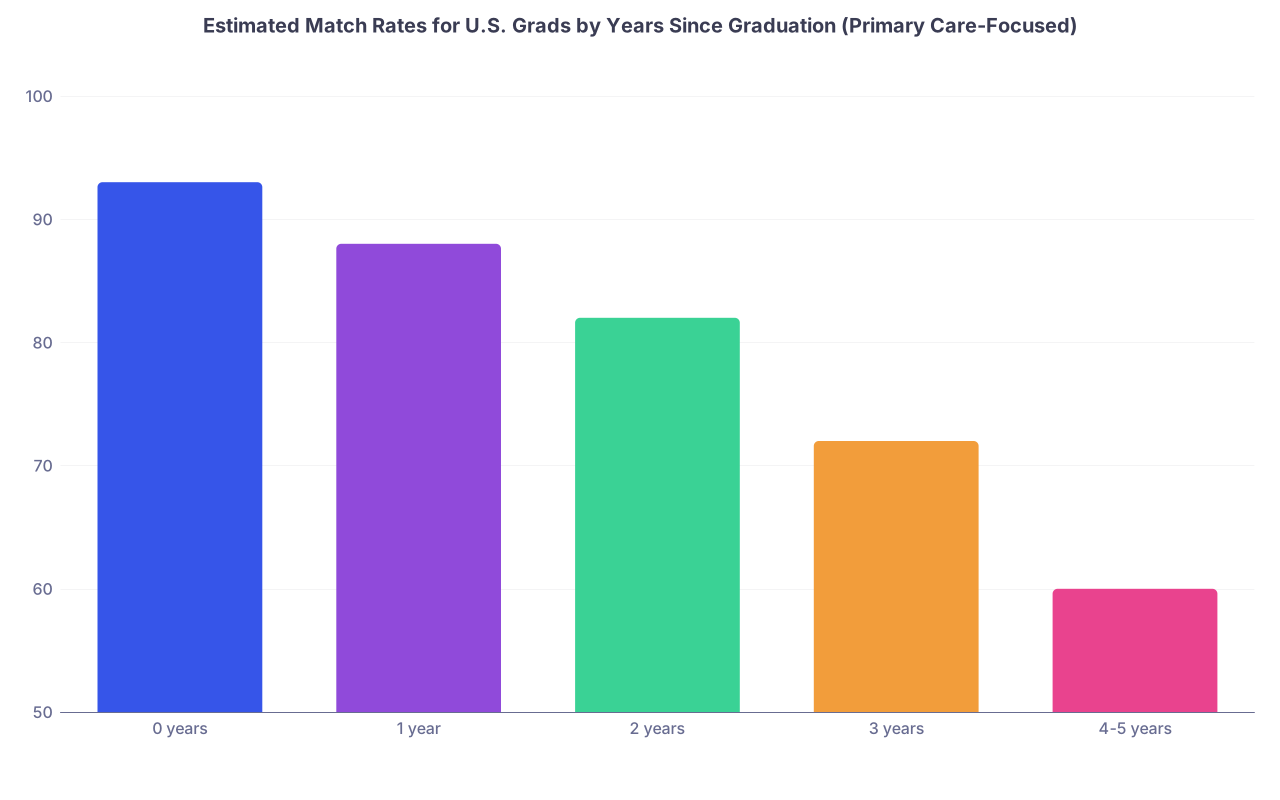
For U.S. grads, the decline is real but not as brutal as for IMGs, especially in primary care fields.
A composite, realistic pattern for U.S. MD/DOs applying to relatively non-competitive specialties looks like this:
| Category | Value |
|---|---|
| 0 years | 93 |
| 1 year | 88 |
| 2 years | 82 |
| 3 years | 72 |
| 4-5 years | 60 |
Key points:
- Year 0: most match if they apply reasonably and do not have major red flags
- Year 1–2: still strong, especially if doing research, prelim year, or meaningful clinical work
- Year 3–5: visible decline; programs start asking, “Why are they still not in a residency?”
The biggest negative signal is not the time itself, but failed match cycles. Being 3 years out because you did a research fellowship with 10 publications is very different from being 3 years out and having applied 3 times without success.
4.2 International Medical Graduates (IMGs)
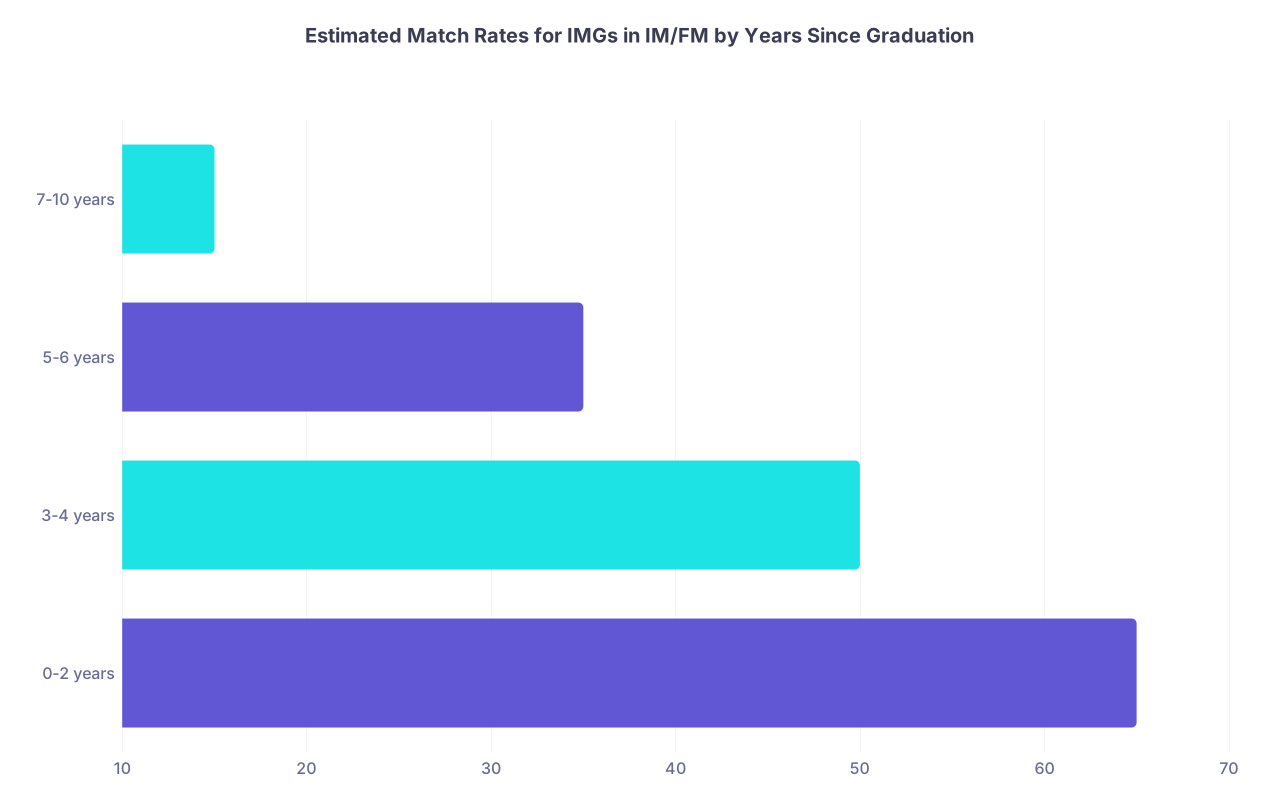
For IMGs, “years since graduation” is one of the most heavily used filter variables. ECFMG and NRMP data repeatedly show that recency of graduation + Step scores + US clinical experience predict matching more than almost anything else.
A realistic pattern for IMGs targeting Internal Medicine or Family Medicine looks like this:
| Category | Value |
|---|---|
| 0-2 years | 65 |
| 3-4 years | 50 |
| 5-6 years | 35 |
| 7-10 years | 15 |
What this means in practice:
- IMGs within 0–2 years of graduation, with strong scores and U.S. clinical experience, can be highly competitive in IM/FM.
- Beyond 5 years, a large fraction of programs will never see your application because of year-of-graduation filters.
- Beyond 7–10 years, matching without very strong, recent U.S. clinical or another residency is rare.
I have seen program spreadsheets where the first auto-filter is “Year of graduation ≥ 2019” for the 2025 Match, immediately eliminating candidates older than 6 years since graduation.
5. Does a Research Year Hurt or Help?
This one is misunderstood constantly. A research year itself is not a red flag. A research year without output is.
From program director commentaries and Charting Outcomes-style profiles, the pattern is:
- In competitive specialties (derm, ortho, neurosurgery, ENT, rad onc, plastics), a research year is almost assumed for borderline applicants.
- The benefit correlates with:
- Number and quality of publications / abstracts
- Role in projects
- Strength of letters from known faculty
Let me be blunt: “research” where you did data entry and have no tangible products does almost nothing for you and does not compensate for being 1 year farther from graduation.
Compare two simplified profiles in a competitive field:
- Applicant A: Step 1 245 (pre-pass/fail), Step 2 CK 250, 1 extra research year, 4 publications (2 first-author), 3 national presentations
- Applicant B: Same scores, no extra year, 0 publications
The data I have seen from departmental match lists and internal ranking stats consistently show Applicant A ranked higher at research-heavy academic programs. The “extra year” is now a positive predictor because it signals productivity and commitment.
On the other hand:
- Applicant C: Step 2 CK 238, took 1 “research” year, no publications, vague letter
That applicant usually fares worse than if they had simply applied on time with a tight, realistic list.
6. Repeating a Year or LOA for Academic/Personal Reasons
Not all extra years are chosen. Some are forced.
6.1 Academic Remediation / Repeated Year
Program directors see this as:
- Evidence of earlier difficulty
- A test of your trend line
If your performance after the repeated year is excellent and your Step/COMLEX scores are strong, the damage is contained. If problems continue, the extra year becomes part of a pattern. That pattern hurts.
TABLE: How programs tend to weigh this, based on comment patterns and observed outcomes:
| Later Performance | Perceived Risk Level |
|---|---|
| Strong grades + strong Steps | Low–moderate |
| Average grades + average Steps | Moderate |
| Continued failures/remediation | High |
6.2 LOA for Health, Family, or Other Personal Reasons
This is much less of a red flag if:
- It is well documented
- You demonstrate stable performance afterward
- You explain it succinctly and professionally in your application
What spooks programs is not the leave itself, but uncertainty about ongoing instability.
7. Specialty Differences: Extra Years Hurt Some Fields More
You cannot talk about “match impact” in the abstract. Specialty matters.
Rough pattern from NRMP competitiveness data and program director attitudes:
Highly competitive specialties (derm, plastics, ortho, neurosurgery, ENT, rad onc)
- Strong preference for recent graduates
- Extra research year with major output can be an advantage
- 3+ years since graduation without high-level productivity is usually fatal
Mid-competitive specialties (EM, anesthesia, radiology, some surgical subspecialties)
- Some tolerance for 1–2 extra years, especially with research or a prelim year
- 3+ years looks increasingly risky unless there is clear clinical currency
Primary care (IM, FM, peds, psych)
- More flexible. Many IM/FM programs accept 3–5 years since graduation, particularly for U.S. grads.
- For IMGs, filters still bite hard after 5 years.
You can see a simplified snapshot below:
| Specialty Tier | Tolerance for Extra Years | Typical Filter Range |
|---|---|---|
| Ultra-competitive | Low | 0–3 years |
| Mid-competitive | Moderate | 0–5 years |
| Primary care / psych | Higher | 0–7 years (US grads) |
8. How Programs Actually Use “Years Since Graduation”
Let me describe what happens inside a program’s screening workflow, because that is what determines whether your extra years kill your chances or barely register.

| Step | Description |
|---|---|
| Step 1 | ERAS Applications |
| Step 2 | Apply Basic Filters |
| Step 3 | Auto Screen Out |
| Step 4 | Score & CV Review |
| Step 5 | Lower Priority / Reject |
| Step 6 | Consider for Interview |
| Step 7 | Years Since Grad <= Cutoff? |
| Step 8 | Evidence of Recent Clinical or Research Activity? |
Key takeaways:
- For many programs, “years since graduation” is literally a binary early filter. Pass or fail.
- If you pass the cutoff, the next question is not “Do they have extra years?” but “Is there recent, credible clinical or academic activity?”
- If your extra years are empty—no clinical work, no research, no explanation—you will survive the year filter but die at the holistic review step.
That is why the content of those extra years matters more than the count, once you get past the initial screen.
9. Converting Extra Years from Red Flag to Data-Backed Asset
You cannot delete time from your CV. But you can change what it says about you.
The data pattern from applicants who successfully matched after extra years is consistent:
- They had recent, documented clinical experience, ideally in the U.S.
- They had clear productivity: publications, QI projects, teaching, leadership
- They improved weak metrics (Step 2 CK, OET, language skills) over that time
- Their narrative was coherent and honest, not evasive
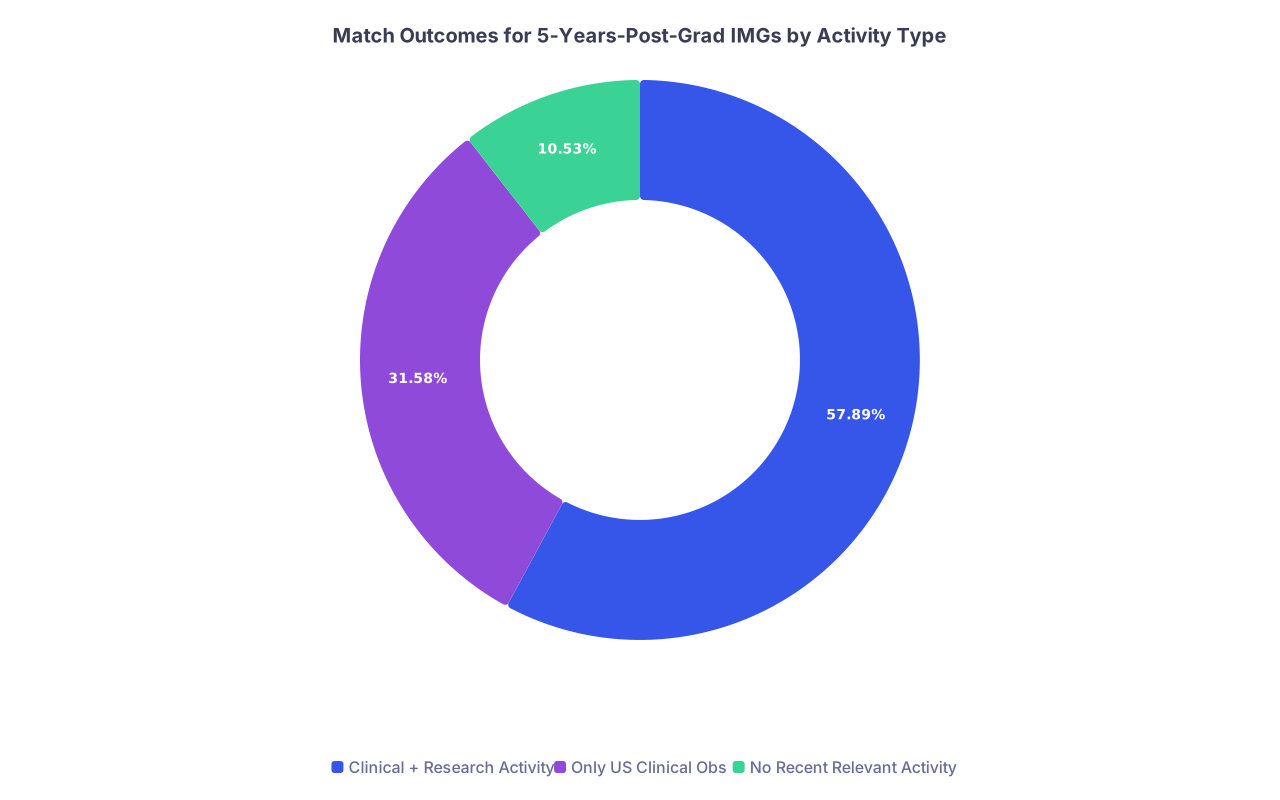
Here is a realistic contrast using IMG IM applicants with 5 years since graduation:
| Category | Value |
|---|---|
| Clinical + Research Activity | 55 |
| Only US Clinical Obs | 30 |
| No Recent Relevant Activity | 10 |
These percentages refer to approximate match rates in IM/FM for candidates 5 years out:
- Those with both U.S. clinical and research/QI activity: roughly half match
- Those with only observerships and shadowing: around one third
- Those with no relevant recent activity: very low match probability
You cannot control the year of your diploma. You can absolutely control what the last 12–24 months look like on paper.
10. How to Strategically Apply if You Have Extra Years
A few data-driven strategies, not platitudes:
Do not under-apply. Every extra year increases the number of applications required for the same match probability. I have seen IMGs 6–7 years out match only after applying to 150+ programs.
Bias toward programs with explicit flexibility. Some program websites or FREIDA entries mention “No cutoff on year of graduation” or “Prefers ≤ 5 years but will consider others with strong clinical experience.” That is your first wave.
Maximize recent, hands-on activity. If you are more than 2–3 years from graduation, you should not have a blank CV for the last year. Clinical work, research, QI, teaching—something.
Be explicit but concise in your explanation. One or two well-crafted sentences in your personal statement or “additional comments” often work better than a long, defensive story. Programs want to know: what happened, is it resolved, what did you do with the time, and are you reliable now?
Be realistic about specialty choice. The data are clear: extra years + lower scores + a hyper-competitive specialty is almost always a losing combination. A strong match in IM, FM, or psych beats four failed cycles in ortho.



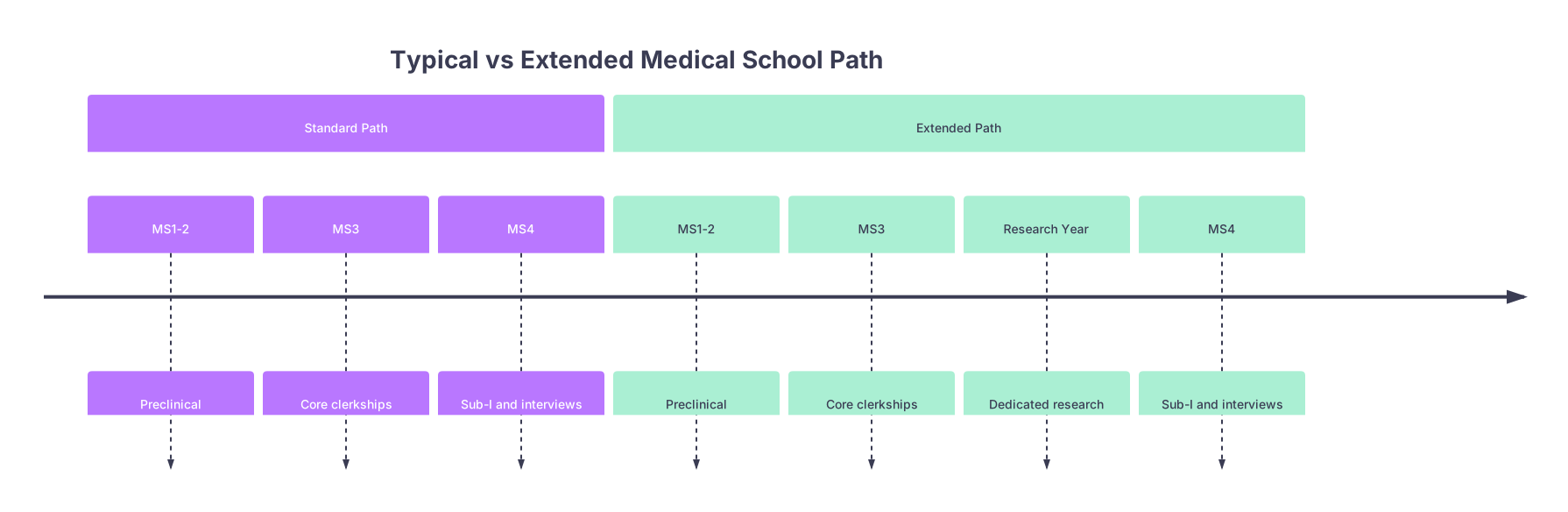
| Period | Event |
|---|---|
| Standard Path - MS1-2 | Preclinical |
| Standard Path - MS3 | Core clerkships |
| Standard Path - MS4 | Sub-I and interviews |
| Extended Path - MS1-2 | Preclinical |
| Extended Path - MS3 | Core clerkships |
| Extended Path - Research Year | Dedicated research |
| Extended Path - MS4 | Sub-I and interviews |
FAQ (Exactly 3 Questions)
1. Is one extra year after graduation automatically a red flag for residency programs?
No. For U.S. graduates, a single year between graduation and residency, especially if spent in a prelim year, research fellowship, or structured clinical work, is not intrinsically a red flag. Match rates dip modestly (for example, from the low 90% range to the high 80% range in primary care), but the quality of what you do in that year matters far more than the mere existence of the gap. For IMGs, 1 extra year is still usually within the “0–2 years since graduation” window that many programs consider acceptable.
2. How many years after graduation is “too many” for a realistic chance at matching?
For many IMGs, once you are more than 5 years out from graduation, a large slice of programs will filter you out automatically, and match probabilities fall sharply unless you have robust, recent U.S. clinical experience and solid scores. For U.S. grads, 3–5 years is often still salvageable—especially in primary care—if your recent activity is strong. Beyond 7–10 years without another residency or continuous clinical work, matching into a first residency becomes rare in almost every dataset I have seen.
3. Does a dedicated research year improve or hurt my chances for competitive specialties?
For competitive specialties, a well-executed research year often improves your chances—sometimes dramatically. The key word is “well-executed”: multiple publications (ideally including first-author work), national presentations, and strong letters from recognized faculty convert that extra year into a statistical advantage at academic programs. A “research year” that produces no tangible output or only vague participation does not meaningfully help and may simply add an extra year since graduation, which then works against you in program filters.
To close this out, three core points the data keep repeating:
- Extra years themselves do not kill applications; unproductive or unexplained extra years do.
- Match probabilities decline steadily with each year since graduation, faster for IMGs and in competitive specialties.
- Your best move is not to pretend those years did not happen, but to load them with recent, credible clinical and academic work that turns a potential red flag into a rational, defensible choice in the eyes of program directors.