
You’re on your third cup of coffee, staring at your personal statement draft.
You’ve written and rewritten the same paragraph about failing Step 1, about that leave of absence, about the semester your grades tanked. You’re trying to “show growth,” to “turn adversity into resilience.” Everyone told you program directors like that.
And somewhere in your gut, you’re wondering: “Am I actually helping myself here… or just handing them a reason to dump my app in the red flag pile?”
You should be wondering. Because I’ve watched otherwise solid candidates sabotage themselves with one bad paragraph about past failures. Not the failure itself—the words they chose to describe it.
This isn’t about hiding your history. It’s about not lighting it on fire with the wrong phrases.
Let’s walk through the personal statement phrases that highlight, not heal, past failures—and how to avoid turning your essay into an admissions self-own.
The Big Lie: “If I Own My Failure, They’ll Love Me”
There’s this myth floating around:
“If I just really emphasize how much I failed, how low I was, how badly I messed up… they’ll see my honesty and maturity and reward me.”
No. They’ll see risk.
You are not writing a redemption novel. You are applying for a job that involves 3 a.m. decisions, angry families, malpractice risk, and PDs who have been burned by “redemption stories” that didn’t hold up when the pressure hit.
Programs are not allergic to failure. They are allergic to:
- Uncontained failure (still bleeding into the present)
- Overdramatized failure (emotion > judgment)
- Failure framed with excuses, blame, or vagueness
And certain phrases scream all three.
Phrases That Drag Your Failure Into the Spotlight
Let me be blunt: some sentences make your application about your failure, even when you think you’re being nuanced.
Here are the worst repeat offenders.
1. “I Hit Rock Bottom”
You think this shows growth. Programs hear: “Significant instability.”
Variations I’ve seen:
- “I hit rock bottom after failing Step 1…”
- “This was the lowest point of my life…”
- “I was completely broken when I didn’t match…”
You’re trying to say: “I struggled and then got better.”
What they read: “When things go wrong, this person collapses.”
Better:
Describe the problem factually, not theatrically.
Instead of:
“I hit rock bottom after failing Step 1…”
Try:
“After I failed Step 1, I worked with my school to develop a structured remediation plan that focused on consistent practice questions and spaced repetition.”
Understated. Controlled. Stable. That’s the tone you want.
2. “I Was Devastated / Crushed / Destroyed”
You don’t get extra points for emotional adjectives.
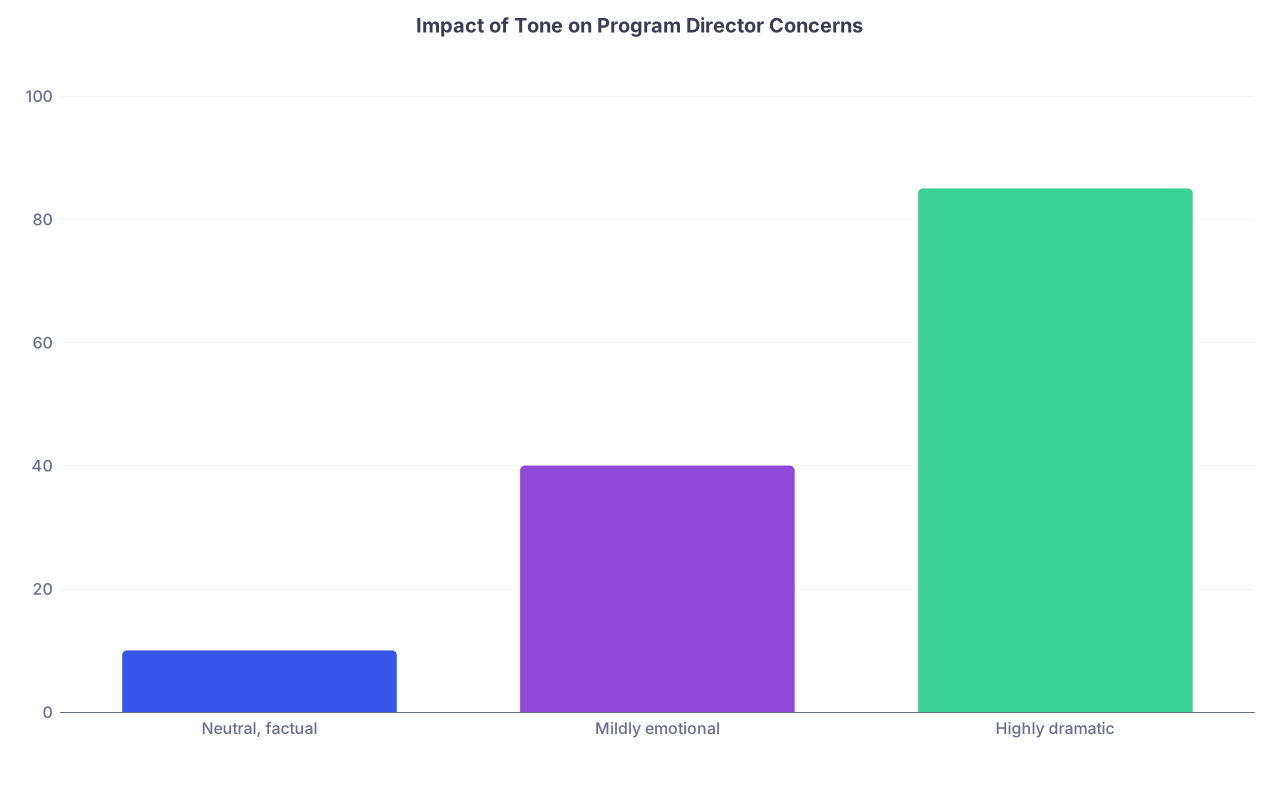
Overly dramatic phrasing is a red flag for program directors because residency is emotionally brutal. They need to trust you can function when (not if) bad things happen.
Phrases that backfire:
- “I was utterly devastated by my failure…”
- “I was emotionally destroyed by not matching…”
- “I spiraled after my clerkship failures…”
All of those shift attention from your ability to respond constructively to how badly you fell apart. That’s not what you want them focusing on.
Better strategy:
Use neutral, adult language. Talk about impact and response, not your emotional collapse.
Instead of:
“I was crushed when I failed out of my first year…”
Try:
“Failing my first year forced me to reassess how I was studying and managing stress. With structured support and new strategies, I successfully repeated and performed well in subsequent years.”
Notice: no extra drama. You sound like someone who got hit, adjusted, and moved on.
| Category | Value |
|---|---|
| Neutral, factual | 10 |
| Mildly emotional | 40 |
| Highly dramatic | 85 |
The Over-Confession Trap: Giving Them Ammo They Didn’t Ask For
Another massive mistake: turning your personal statement into a confessional booth.
You are not writing to a therapist. You are writing to your future boss.
3. “I Struggled With My Mental Health…”
Let me be clear: mental health issues are common, human, and nothing to be ashamed of.
But vague, open-ended statements about “mental health struggles” without specifics, containment, or evidence of stability scare PDs. Not because they do not care, but because they have to think about call schedules, patient safety, and reliability.
Red-flag phrasing:
- “I have always struggled with my mental health…”
- “I continue to battle ongoing mental health issues…”
- “My depression and anxiety frequently overwhelmed me during school…”
Those phrases suggest an ongoing, unstable pattern with no clear resolution.
A safer way—if you truly need to reference it (for a leave of absence, major gap, etc.)—is:
- Time-limited
- Treated
- Stable now
- Framed in terms of function, not drama
For example:
“During my second year, I experienced a period of depression related to family stress and academic pressure. I took a brief leave of absence, engaged in treatment, and returned to complete my coursework and clerkships without further interruption. Since then, I’ve continued regular follow-up and have maintained strong performance.”
You’ve acknowledged a real issue, showed it’s managed, and kept it tightly framed. Not open-ended.
4. “I’ve Always Had Trouble With…”
This phrase is like setting off a flare.
- “I’ve always had trouble with standardized tests…”
- “I’ve always had difficulty managing stress…”
- “I’ve always struggled with time management…”
Programs hear: “Chronic, baked-in weakness.” Not short-term obstacle. Not growth.
Even if you then say “but I’m working on it,” you’ve already branded yourself as someone with a long-term problem.
Instead, locate your difficulty in a contained time period, then show what changed.
Not:
“I’ve always had trouble with standardized tests, which led to my low Step 1 and Step 2.”
Try:
“My early approach to standardized exams was content-heavy and strategy-light, which contributed to a lower Step 1 score. After structured coaching, I adjusted my methods and improved my performance on Step 2 CK.”
Concrete problem. Concrete fix. Evidence of improvement.

Excuses Masquerading as Explanations
Nothing makes a PD’s eyes narrow faster than a personal statement that sounds like a defense brief.
You think you’re “contextualizing.” They hear excuses.
5. “Because Of…” Followed by Everyone But You
Pay attention to your sentence structure. When you repeatedly blame external factors, it’s obvious.
Common offenders:
- “Because of my unsupportive administration, my grades suffered…”
- “Due to an unfair evaluation, I received a lower clerkship grade…”
- “Because my school did not prepare us well, I struggled on Step 1…”
You might be 100% right. Life isn’t fair, and some evals are political disasters. PDs know that. But your personal statement is not the place to litigate it.
What they’re looking for:
- Ownership of what you changed
- Maturity in how you describe unfairness
- Focus on response, not blame
Instead of:
“Because my rotation director was biased against me, I received a poor evaluation that does not reflect my abilities.”
Try:
“An early clerkship evaluation highlighted concerns about my efficiency and communication on rounds. I sought feedback from additional attendings, adjusted how I presented patients, and my subsequent evaluations showed clear improvement.”
You do not need to write “biased,” “unfair,” or “political.” They can read between the lines. Let them.
6. “Despite The Unfair…”
As soon as you label something “unfair” in your statement, you sound defensive, whether you’re right or not.
Stop using:
- “Despite the unfair grading system…”
- “Despite being unfairly judged…”
- “Despite the biased environment…”
Swap it out with neutral language and evidence of response.
Neater version:
“Although that evaluation was disappointing, it pushed me to refine my efficiency and communication. Attendings on later rotations noted significant improvement in both areas.”
You’ve reframed the episode as a growth catalyst without giving off “I’m going to be a problem resident” energy.

| Step | Description |
|---|---|
| Step 1 | Past Failure |
| Step 2 | Brief, factual description |
| Step 3 | What you changed |
| Step 4 | Concrete outcomes afterward |
| Step 5 | 1 sentence reflection max |
Over-Focusing on the Failure: Making It Your Main Character
Here’s a quiet trap: you devote half your personal statement to your failure narrative. You think you’re “telling your story.” They see an application defined by damage control.
A few dead giveaways:
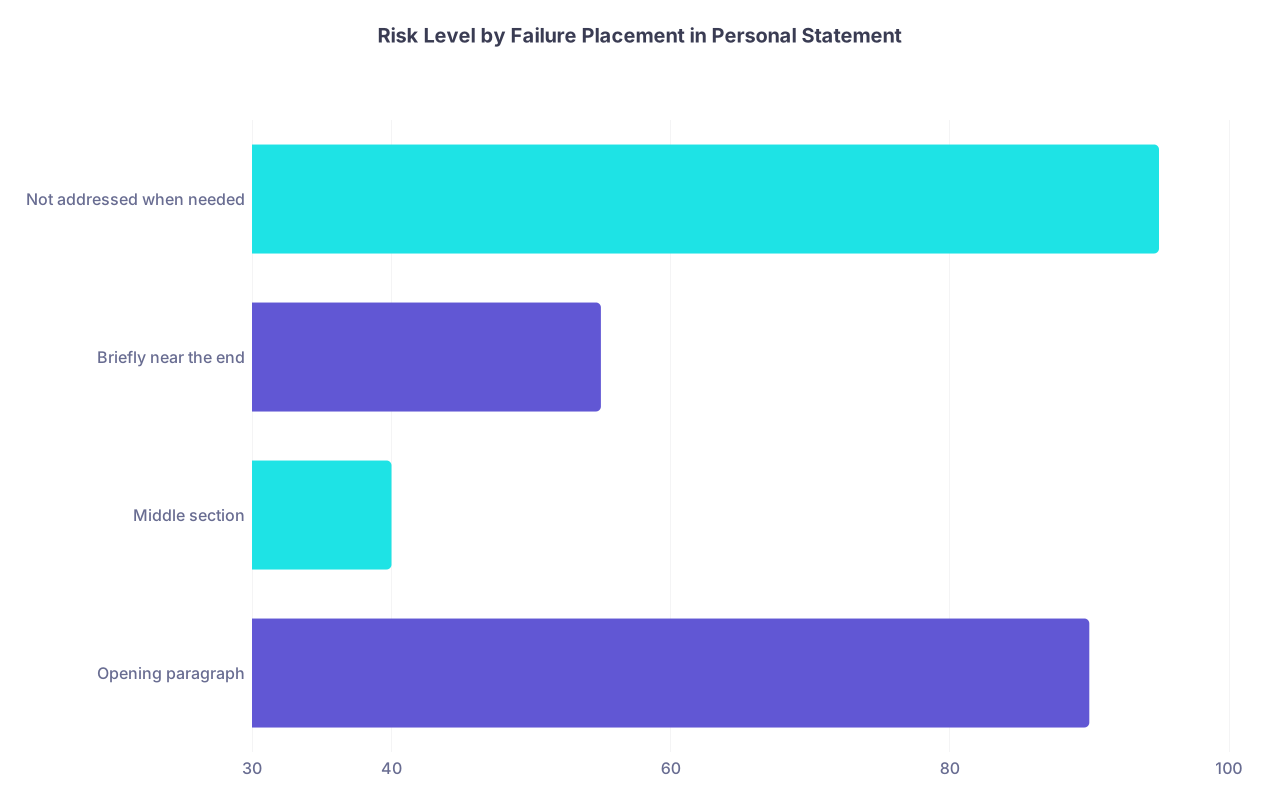
- The first paragraph opens with your failure.
- You describe the failure in detail but your recent strengths in vague terms.
- You circle back to the same failure twice “for emphasis.”
7. “This Failure Defines Who I Am Today”
No. Hard stop.
Phrases like:
- “This failure has come to define who I am as a person and future physician…”
- “Everything I do now is shaped by this failure…”
- “This moment changed everything about me…”
Too absolute. Too dramatic. And weirdly risky. If one failure “defines you,” what happens during intern year when something worse hits?
Try softer, specific language:
- “This experience significantly influenced how I approach learning and feedback.”
- “This challenge pushed me to build more sustainable habits and seek mentorship.”
You’re not a walking embodiment of Step 1 remediation. Give them more dimensions than that.
8. Starting With “I Failed…”
Opening lines like:
- “I failed Step 1.”
- “I did not match last year.”
- “I was dismissed from my medical school.”
You think this sounds bold and honest. It just drops a red flag right at the top and dares them to keep reading. Many will not.
Your failures can be addressed—often should be addressed—but they don’t have to be the opening hook of your entire application.
Stronger approach:
Open with who you are now (patient care, specific clinical moment, your interest in the specialty). Then, later, efficiently address the failure in the middle of the statement, framed as one chapter, not the book.
| Category | Value |
|---|---|
| Opening paragraph | 90 |
| Middle section | 40 |
| Briefly near the end | 55 |
| Not addressed when needed | 95 |
Vague, Suspicious, and Confusing: The “What Really Happened?” Problem
If your phrasing is vague, program directors will assume the worst. They do this all day.
9. “Personal Reasons” With Zero Detail
Some of you are writing things like:
- “I took a leave of absence for personal reasons.”
- “My academic difficulties were due to personal reasons.”
- “For personal reasons, I was not able to complete that rotation on time.”
That phrase—“personal reasons”—is a black box. Their brain fills it with every nightmare scenario they’ve ever seen: major professionalism issue, substance use, disciplinary action, legal trouble.
If your record shows a leave of absence, a gap year, or a sudden drop in performance, you cannot just throw “personal reasons” at it and walk away.
You do not need to reveal every detail of your life. But you do need to give enough context that they can categorize the issue as understandable and contained.
Examples of safe middle ground:
- “I took a leave of absence related to a family health crisis, then returned to complete my training without further interruption.”
- “My academic difficulties that semester were related to a period of poorly managed stress and inadequate study strategies, which I’ve since addressed.”
You’ve given them a box to put it in. That’s what they need.
10. “I Had Some Issues With…”
Another mushy nothing phrase:
- “I had some issues with professionalism during my third year…”
- “I had some issues with attendance…”
- “I had some issues with my dean’s office…”
That wording screams: “The real story is worse than I’m admitting.”
Instead, if you must discuss it (and sometimes you must, if it shows up in your MSPE or transcript), name the category clearly and calmly, and then focus on the specific actions you took to correct it.
For example:
“During my third year, I received feedback about late arrivals to rounds. I met with my clerkship director, adjusted my commute and sleep schedule, and have had no further concerns about punctuality noted on subsequent evaluations.”
Short. Factual. Shows closure.

When Mentioning the Failure Does More Harm Than Good
Not every past stumble needs a cameo in your personal statement. Another mistake: dragging in minor weaknesses that no one was asking about.
11. Unforced Confessions
You do not need to write:
- “My first OSCE score was below average…”
- “I got a low pass on one quiz in second year…”
- “I once froze during a pimping session and felt humiliated…”
If it’s not in your transcript, MSPE, or obvious from standardized scores, why are you giving them new reasons to doubt you?
Ask yourself a ruthless question:
“Is this issue already clearly visible elsewhere in my application?”
If no, think very, very hard before spotlighting it. You’re not more “authentic” for volunteering unnecessary damage.
Where candidates go wrong:
- Turning a single awkward moment into a full paragraph.
- Describing minor events with overwrought emotional language.
- Acting like everything that ever hurt them belongs in the statement.
The personal statement is not your entire trauma file. It’s a curated argument about why you’re ready for residency in this specialty.
| Situation | Address in PS? | How Much Detail? |
|---|---|---|
| Step 1/2 fail or major score jump | Usually yes | Brief, concrete, focused |
| Leave of absence on transcript | Yes | Cause + resolution |
| Single below-average clerkship grade | Maybe | Only if MSPE emphasizes |
| Minor early pre-clinical struggle | Usually no | Not needed |
| Prior unmatched cycle | Yes | Concise, outcome-focused |
How to Talk About Failure Without Waving a Red Flag
Let’s flip this. You can address real problems without torching yourself. But you have to be methodical.
Here’s the structure I’ve seen work best:
- Brief, neutral description of the issue
- One or two specific contributing factors that involved you
- Concrete steps you took to correct it
- Evidence that those steps worked
- One short sentence tying it to how you work now
What you avoid:
- Emotional excess
- Self-labeling (“I’m a failure,” “I’m broken,” “I was a mess”)
- Casting yourself as a victim of everyone else
Example—Step failure version:
“Early in medical school, I underestimated the strategy component of standardized exams and failed Step 1. I met with our learning specialist, shifted to a question-based approach, and built a consistent schedule that emphasized spaced repetition and regular NBME self-assessments. On my retake, I passed comfortably, and I later improved further on Step 2 CK. That experience made me much more deliberate about how I prepare for high-stakes situations.”
Calm. Contained. No “rock bottom,” no “devastated,” no blaming “unfair circumstances.”

| Step | Description |
|---|---|
| Step 1 | Bad: Emotional & vague |
| Step 2 | PD sees risk |
| Step 3 | Better: Factual & solution-focused |
| Step 4 | PD sees growth |

Quick Rewrites: Phrases to Kill, Phrases to Keep
Let me give you some direct translations. If you see these in your draft, fix them.
“I hit rock bottom…”
→ “I faced a significant setback when…”“I was destroyed/devastated/crushed…”
→ “I was disappointed but used the experience to…”“I’ve always struggled with…”
→ “Earlier in my training, I struggled with…”“Due to unfair circumstances…”
→ “In that setting, I received feedback that…”“For personal reasons…”
→ “Due to a family health issue / a period of poorly managed stress…”“This failure defines who I am…”
→ “This experience has influenced how I…”
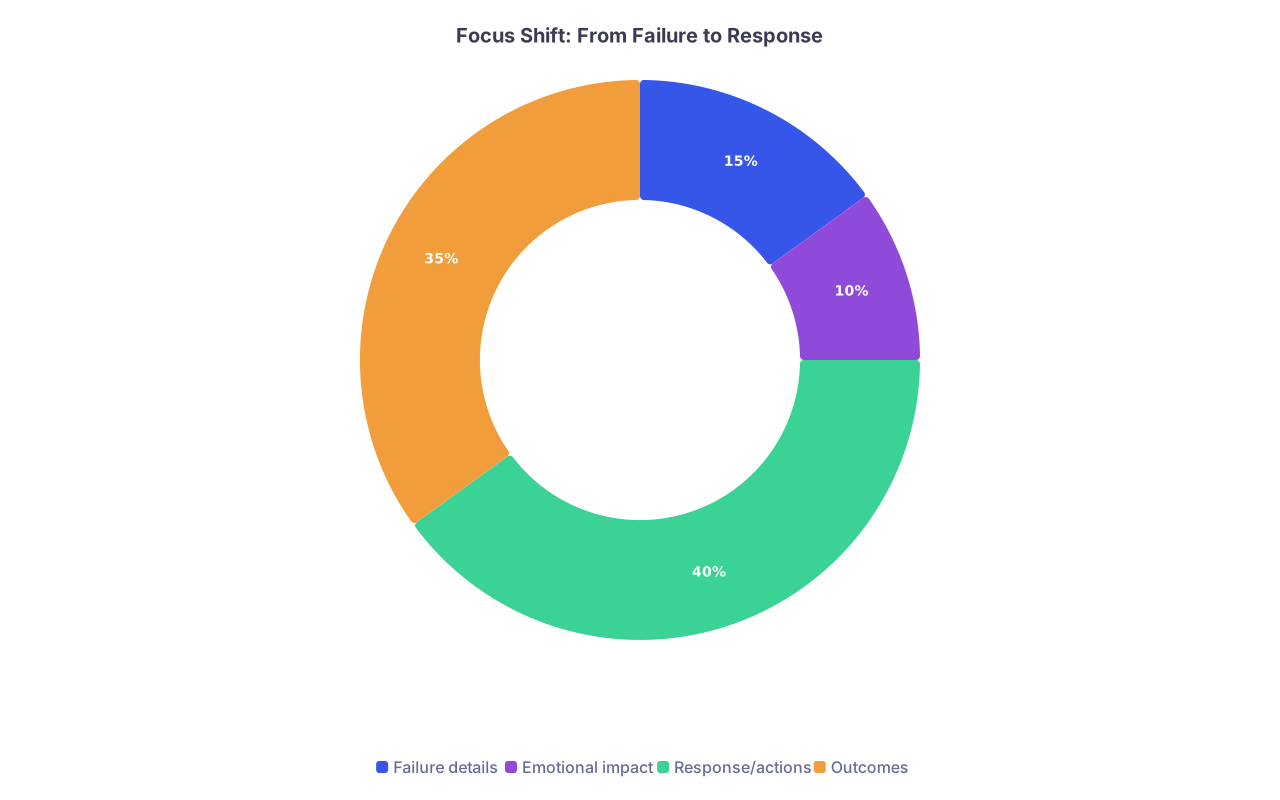
If your sentence centers your suffering, reframe it to center your response.
| Category | Value |
|---|---|
| Failure details | 15 |
| Emotional impact | 10 |
| Response/actions | 40 |
| Outcomes | 35 |
The Bottom Line
If you’ve made it this far, you probably do have something real in your past—failed exam, leave, previous no-match—that needs addressing. Good. You should handle it directly.
Just do not make these three mistakes:
Stop dramatizing your worst moment. Phrases like “rock bottom,” “devastated,” and “destroyed” highlight instability, not resilience. Use calm, factual language.
Stop hiding behind vagueness or blame. “Personal reasons,” “unfair circumstances,” and “issues with…” make PDs suspicious. Give enough specific, contained context and focus on what you changed.
Stop letting your failure steal the spotlight. Your personal statement is not a confessional. Address major issues briefly, show concrete improvement, and spend most of your words on who you are now and why you’re ready for their specialty.
Clean up those phrases, and your past failure becomes one data point—not the headline act of your entire application.