
The blunt truth: blindly reapplying to the exact same residency programs that already passed on you is how people fail to match twice.
You shouldn’t default to “yes” or “no.” You should treat every prior program like a fresh decision: does it make sense to reapply, and if so, how do you avoid looking like a repeat reject with no growth?
Let’s break this down like an attending who doesn’t have time for fluff.
The Core Answer: Should You Reapply to the Same Programs?
Here’s the short version:
- Reapplying to the same programs can absolutely work.
- Reapplying without meaningful change is a red flag.
- Some programs will seriously reconsider you; others almost never do.
- Your job is to differentiate where to reapply and how to re-present yourself.
If your strategy is “I’ll just send the same application to the same 60 programs and hope for better luck,” you’re setting yourself up for another disastrous season.
A smarter rule of thumb:
Reapply to:
- Programs where you had interviews and reasonably strong interactions.
- Programs where something significant has changed on your end or theirs.
- Programs that know you and have at least neutral-to-positive impressions.
Think twice or skip:
- Programs that ignored you two cycles in a row.
- Programs that interviewed you but clearly cooled off (bad vibes, weak interview, no positive follow-up).
- Hyper-competitive programs where you were a stretch and nothing major improved.
Step 1: Figure Out Why You Didn’t Match
Reapplying before diagnosing the problem is like ordering broad-spectrum antibiotics without a differential.
There are only a handful of common root causes:
| Primary Issue | Reapply to Same Programs? | Priority Action |
|---|---|---|
| Weak scores/grades | Selectively | Improve metrics |
| Poor interviewing | Yes, if improved | Practice + coaching |
| Limited applications | Yes, plus broaden list | Apply more broadly |
| Weak letters | Only if upgraded | Secure stronger LORs |
| Red flags/ professionalism | Very selective | Address + explain |
If you’re not sure what went wrong, that’s your first problem. You need data:
Ask your dean’s office / advisor for a blunt read.
The good ones will tell you plainly: “Your Step-2 214 killed you for anesthesia,” or “Your personal statement was generic and screamed backup candidate.”Email 3–5 programs where you interviewed and didn’t match.
Not all will respond. Some will. Ask for specific, constructive feedback. You’ll sometimes get gold like:- “You interviewed well but needed more US clinical experience.”
- “Your application came across heavily research-focused for our community program.”
- “We ranked you, but not high enough; it was a numbers game.”
That feedback directly informs whether reapplying to those specific programs makes sense.
Step 2: When Reapplying is a Good Idea
Reapplying to the same programs is smart when both of these are true:
- You can clearly show growth or change.
- There’s a rational reason the program might view you differently this cycle.
Good scenarios to reapply:
1. You Interviewed There and Things Went Fine (But Not Great)
If you had a normal interview day, decent vibes, no disasters, and you simply didn’t match, you’re not automatically blacklisted. Programs often have several strong applicants they’d happily take but can’t rank all high enough.
You should reapply if:
- You’ve improved your application (new rotations, better LORs, Step 2 score in now and strong).
- You can reference your previous interest without sounding desperate.
This is especially true for:
- Community programs
- Mid-tier academic programs
- Places where you have geographic/family ties
2. Your Application Objectively Got Better
Examples:
- You passed Step 2 after a prior fail or delay.
- You added strong US clinical experience (especially for IMGs).
- You got a new, glowing letter from a recognizable faculty name.
- Your CV now has a solid gap-year narrative: prelim year, research fellowship, or hospitalist/clinical role.
In that case, you want programs to compare “then vs now.” It shows persistence and arc of improvement.
3. You Did a Rotation / Sub-I There Since Last Cycle
If you rotated at a program after failing to match, and:
- Worked hard
- Got good feedback
- Secured a strong letter
You absolutely reapply there, and you highlight that experience clearly:
- In your personal statement
- In your program-specific communication
- Through your letter writers
Rotating turns you from “random paper app” into “someone the residents already know and like.” Very different category.
Step 3: When Reapplying is a Bad Idea
There are situations where reapplying to the same programs looks more like denial than strategy.
1. You Were Completely Ignored Twice
If you applied to Program X last year and:
- No interview
- No response
- No ties
- No update this year in your profile
And this is the second time that’s happened?
Stop applying there. They’ve effectively told you who they do and don’t run towards.
2. You Burned a Bridge
If:
- You no-showed or canceled an interview late.
- You had obvious professionalism issues on interview day.
- You sent unhinged emails to the coordinator at 2 am about your status.
Don’t reapply. They remember. And not fondly.
If there was a milder issue (awkward interview, you were clearly nervous, communications a bit off), it’s more nuanced. In those cases, you only reapply if you’ve:
- Worked with a coach or mentor on interviewing.
- Cleaned up your communication and presentation.
- Have something clear to show you’ve grown.
3. Hyper-Reach Programs Without Major Changes
If your profile last year for derm, ortho, ENT, plastics, or similarly brutal specialties was already on the low end (average Step scores, no serious research, weaker school), and nothing major has changed?
Reapplying to the same ultra-elite places just wastes time and money. Better to:
- Shift to more realistic programs and regions.
- Consider prelim/transitional + re-strategizing.
- Or, frankly, reassess specialty choice.
Step 4: How to Reapply Without Looking Like a Red Flag
Programs don’t hate reapplicants. They hate stagnant reapplicants.
You want to communicate: “I took last cycle seriously, improved, and I’m applying thoughtfully.”
Here’s how you make that clear.
Fix the Obvious Weak Points
If last cycle you:
- Didn’t have Step 2 → have it now, and it’s solid.
- Had no US clinical experience → now you do, with letters.
- Had generic letters → now you have 1–2 specific, strong ones.
- Had a vague gap → now you have a structured story (research year, teaching, clinical work).
If none of these changed, your odds at the same programs won’t magically improve.
Update Your Personal Statement Like You Mean It
Do not recycle last year’s statement with one paragraph tweaked.
For reapplicants, your personal statement should:
- Briefly acknowledge you’ve reapplied (1–2 sentences, not an essay about your pain).
- Explain, without drama, what you’ve done this year to grow clinically and personally.
- Reinforce why this specialty remains the clear fit for you.
Bad version:
“I didn’t match last year, but I remain passionate and hopeful.”
Better version:
“After my previous application cycle, I completed a clinical research fellowship in hospital medicine and expanded my experience managing complex inpatients. Working shoulder to shoulder with residents reinforced that internal medicine is where I belong, and I’m returning to this application cycle with stronger skills and clearer direction.”
Use Targeted Communication (Without Being Annoying)
For programs where it truly makes sense to reapply:
- Update your ERAS fully (don’t just tack on one line).
- Consider a short, respectful email after submission:
- Remind them briefly that you interviewed or applied last year.
- Highlight 2–3 specific updates.
- Reaffirm genuine interest in their program.
Don’t send mass-form emails to 80 programs. That’s noise. Send tight, individualized notes to maybe 5–15 high-priority places.
Step 5: Adjust Your Overall Program List
Reapplying to the same programs isn’t the main issue I see. The bigger systemic problem: people reapply with essentially the same program list, same specialty strategy, same geographic rigidity.
You should be doing all of this:
Increase the total number of programs (unless you were already at a huge number).
Add more:
- Community programs
- New regions
- Mid-range or “safety” tier programs
Be realistic about specialty competitiveness:
- If you’re reapplying to a very competitive field, strongly consider:
- Dual applying (e.g., anesthesia + IM, derm + prelim/transitional + IM backup).
- Or committing to a more realistic specialty where your profile is in range.
- If you’re reapplying to a very competitive field, strongly consider:
Here’s what that evolution often looks like:
| Cycle | Total Apps | Same Programs | New Programs | Specialty Plan |
|---|---|---|---|---|
| First | 45 | – | 45 | Single specialty only |
| Second | 70 | 25 | 45 | Primary + backup field |
Step 6: Watch Out for True “Red Flag” Patterns
Some issues don’t magically get forgiven on reapplication without a serious, documented fix.
True red flags that worry programs on repeat applications:
- Unexplained exam failures or multiple attempts with no upward trend.
- Major professionalism concerns (dismissal, probation, disruptive behavior).
- Big unexplained gaps in training with vague descriptions.
- A pattern of “I want every specialty” with wildly shifting narratives year to year.
If you carry one of these, your reapplication needs:
- A clear, honest, concise explanation.
- Evidence of remediation and support from faculty (letters, dean’s statement).
- A coherent, stable story this time.
Hand-waving these issues just makes programs think, “Same applicant, same problem, different year.”
Visual: A Smart Reapplicant Decision Flow

| Step | Description |
|---|---|
| Step 1 | Previous Match Failure |
| Step 2 | Did you interview at the program? |
| Step 3 | Get feedback if possible |
| Step 4 | Any major app improvements? |
| Step 5 | Reapply with clear updates |
| Step 6 | Skip or deprioritize |
| Step 7 | Selective reapply |
| Step 8 | Do not reapply |
| Step 9 | Broaden programs overall |
| Step 10 | Feedback neutral/positive? |
Example: How This Plays Out in Real Life
You’re an IMG who applied to internal medicine last year:
- Step 1: 227, Step 2: 236
- One US observership, 2 home-country rotations
- 60 applications, 5 interviews, no match
This year:
- You completed a 1-year US clinical research fellowship in cardiology with substantial patient contact.
- You earned 2 strong US LORs from academic IM attendings.
- You did 2 extra observerships at community IM programs.
Should you reapply to the same 60 programs? No.
Smarter move:
- Reapply to:
- The 5 that interviewed you (assuming no bad feedback).
- Another ~15–20 similar-level programs.
- Add:
- 30–40 more community and lower-tier academic IM programs in regions more friendly to IMGs.
- Update:
- Personal statement: mention your added US experience and what it taught you.
- CV: make the new fellowship and letters front and center.
- Optional: send very short, individualized emails to your prior interview sites.
That’s how people successfully match as reapplicants.
Helpful Visual: What Programs Care About on Reapplication
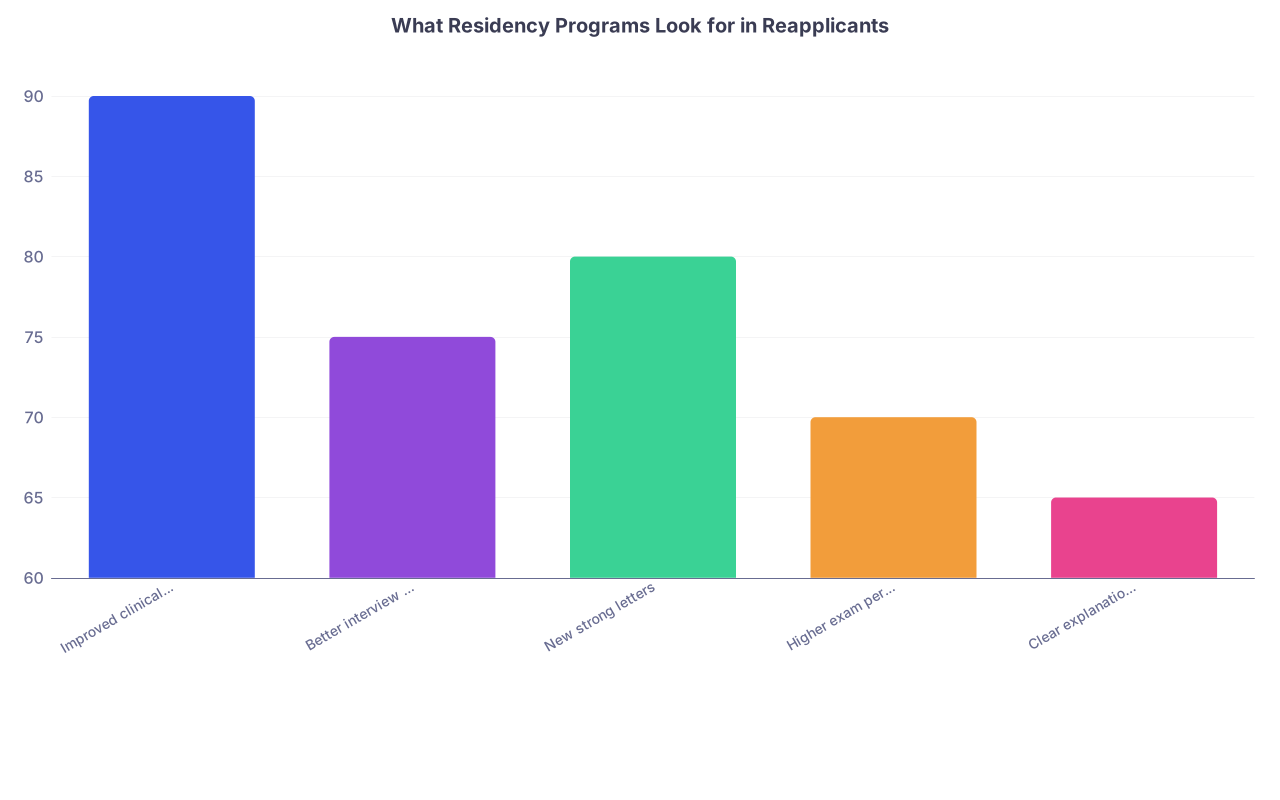
| Category | Value |
|---|---|
| Improved clinical experience | 90 |
| Better interview skills | 75 |
| New strong letters | 80 |
| Higher exam performance | 70 |
| Clear explanation of gaps | 65 |
(Not exact numbers of course, but that priority order is very real based on what PDs say.)
How to Talk About Being a Reapplicant in Interviews
You will get asked: “So, tell me about your previous application cycle.”
Don’t flinch. Don’t over-share. Don’t cry.
A good structure:
One sentence acknowledging it:
“I applied last year and didn’t match.”One to two sentences on what you learned:
“I realized my application lacked substantial US clinical exposure and that my career goals needed to be clearer.”Two to three sentences on what you did about it:
“This past year, I completed a clinical research fellowship in nephrology with heavy inpatient exposure, strengthened my communication skills working on a multidisciplinary team, and confirmed that internal medicine is the right long-term fit for me.”
Programs aren’t judging you for failing once. They’re judging what you did after.
Two More Tools: Timeline + Gap Strategy
If you’re thinking ahead about when and how to rebuild:
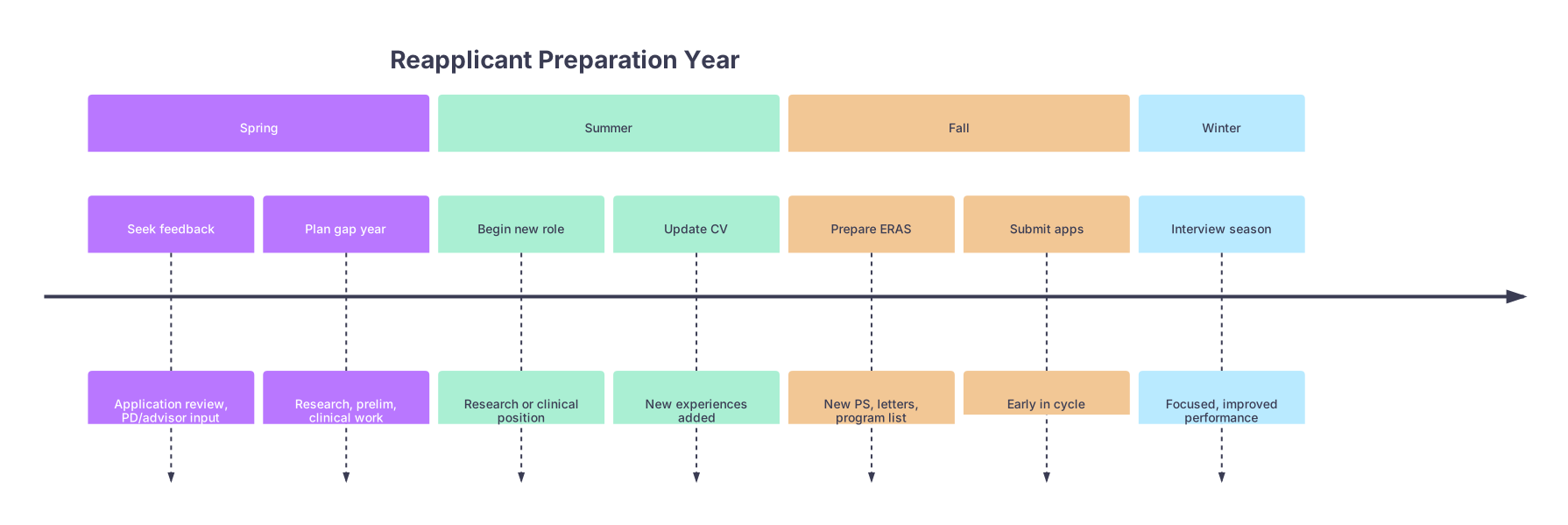
| Period | Event |
|---|---|
| Spring - Seek feedback | Application review, PD/advisor input |
| Spring - Plan gap year | Research, prelim, clinical work |
| Summer - Begin new role | Research or clinical position |
| Summer - Update CV | New experiences added |
| Fall - Prepare ERAS | New PS, letters, program list |
| Fall - Submit apps | Early in cycle |
| Winter - Interview season | Focused, improved performance |
And if you’re deciding what to do in the gap year, this is what tends to help the most from a PD perspective:
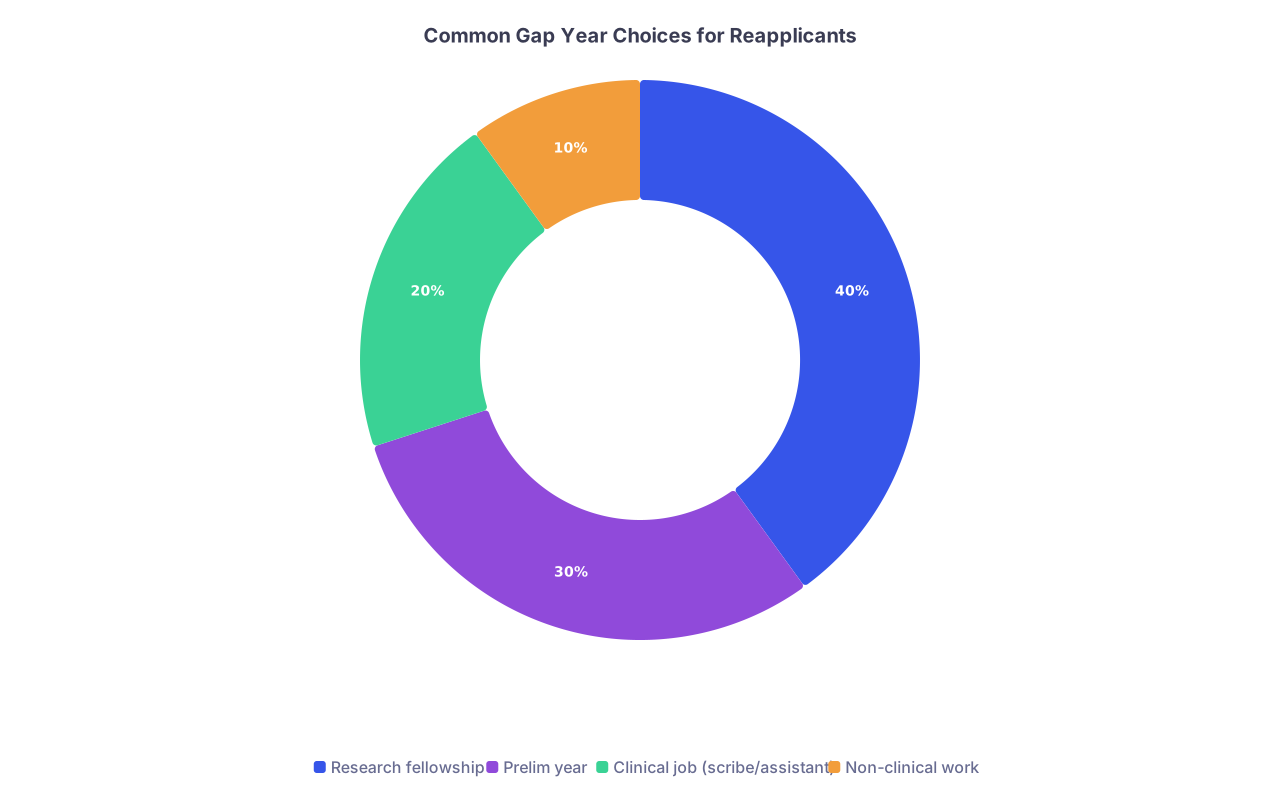
| Category | Value |
|---|---|
| Research fellowship | 40 |
| Prelim year | 30 |
| Clinical job (scribe/assistant) | 20 |
| Non-clinical work | 10 |
Research, prelim year, or genuine clinical jobs help your reapplication far more than generic non-clinical work with no relevance.
FAQ: Reapplying to the Same Residency Programs
1. Is being a reapplicant itself a red flag?
No. Being a reapplicant with the same weak application is the red flag. Programs see successful reapplicants every year, especially in IM, peds, FM, psych. They look for growth, not perfection.
2. Should I mention that I applied to the same program last year?
Yes, briefly and confidently, especially if you interviewed there. You can mention it in your personal statement (targeted version) or in a short email: “I interviewed with your program last cycle and remain very interested; since then I’ve [specific updates].”
3. If I didn’t get an interview at a program last year, can I still get one this year?
Yes, but only if something meaningful has changed: new scores, new US experience, better letters, or a significantly stronger overall profile. If your file is basically the same, they’ll probably screen you out again.
4. Do programs keep track of previous applications?
Yes. Many systems flag reapplicants automatically. Some programs honestly don’t remember details unless you rotated or interviewed there. But they can see previous files and often do for reapplicants.
5. How many of the same programs should I reapply to?
As a rough guideline, reapply to maybe 30–60% of your prior list, depending on how many interviewed you and how much you’ve improved. Always broaden your list with new programs and, if needed, a backup specialty.
6. What if my biggest problem was poor interviewing?
Then reapplying to the same programs can work, but only if you actually fix the interviewing. That means mock interviews with harsh feedback, recording yourself, maybe even professional coaching. If your interviews don’t change, your outcome won’t either.
7. Could reapplying to the same programs hurt me?
It can hurt if it highlights that nothing has changed and you’re ignoring reality. It can also waste precious application spots and money that should go to more realistic targets. Applied thoughtfully—with actual improvement shown—it helps more often than it hurts.
Bottom line:
- Don’t reflexively reapply to every program that already said no.
- Do reapply selectively where you’ve grown, have ties, or had decent prior interactions.
- Fix the core weaknesses, expand your list intelligently, and present yourself as a stronger, more focused version of last year’s applicant—not a copy-paste with new dates.