

Liking the city and hating the program vibe is not how you sabotage your career. Forcing yourself to fit a toxic place is.
Let me just say the quiet part out loud: I am terrified of making “the wrong” residency choice and ruining everything. One awkward interview day, one bad gut feeling, one rank list decision, and my whole future is supposedly hanging by a thread.
So when you walk out of an interview thinking, “Wow, I could totally live in this city,” and at the same time, “I think I’d actually cry if I matched here,” your brain goes straight to panic mode:
Did I just close the door on a great career because I hated the vibe?
What if my gut is wrong?
What if I’m being too picky and I’ll never match now?
Let’s unpack this before your brain fully eats itself.
The City vs. The Vibe: These Are Not Equal Priorities
Here’s the thing nobody says bluntly enough: your training environment matters more than the skyline outside your call room window.
You don’t train in “Boston.” You train in “X Internal Medicine Residency at Y Hospital in Boston.”
The zip code is background. The program culture is your entire life for 3–7 years.
I’ve watched people chase the city and completely ignore the vibe. It goes like this:
- “It’s a top 20 program in a major city, I’ll suck it up.”
- “Everyone seemed kind of intense and exhausted but the research is great.”
- “The residents didn’t really smile and one of them low-key warned me, but the name is huge.”
Fast forward a year: they’re quietly asking how hard it is to transfer programs. They’re looking up mental health resources. They’re saying things like, “I don’t recognize myself anymore.”
No, that’s not dramatic. I’ve seen it.
You hating the vibe on interview day? That’s not you being picky. That’s your nervous system doing early warning detection.
“I Loved the City but Hated the Vibe” – What That Actually Means
When I say “vibe,” I’m not talking about some soft, woo-woo concept. I mean concrete signals you picked up that your brain filed under “Danger?” even if you couldn’t fully articulate it.
Some examples I’ve watched play out:
- Residents all saying, “We’re like family!” but their body language screams “hostage.”
- Faculty casually joking about “weeding out the weak” and everyone just nodding.
- A chief resident who says, “Yeah, we care about wellness,” then immediately follows with, “but obviously we prioritize patient care, so don’t expect to take your scheduled days if things are busy.”
- Lunch with residents where they only complain and when you ask what they like about the program, there’s a long silence.
If that’s what you noticed, your discomfort isn’t random. It’s data.
Let me be blunt: loving a city does not compensate for a malignant program culture. It just doesn’t. The math doesn’t work in your favor.
Worst-Case Scenario Brain: Did I Just Tank My Career Prospects?
Here’s the spiral my brain loves:
“I loved the city but hated the vibe, so I ranked it lower, maybe even left it off.
What if that was my only shot at an academic career?
What if every other place rejects me and that one program that felt off would’ve opened every door?
What if I screwed myself out of a fellowship because I didn’t like their ‘energy’?”
Let’s bring that back to reality.
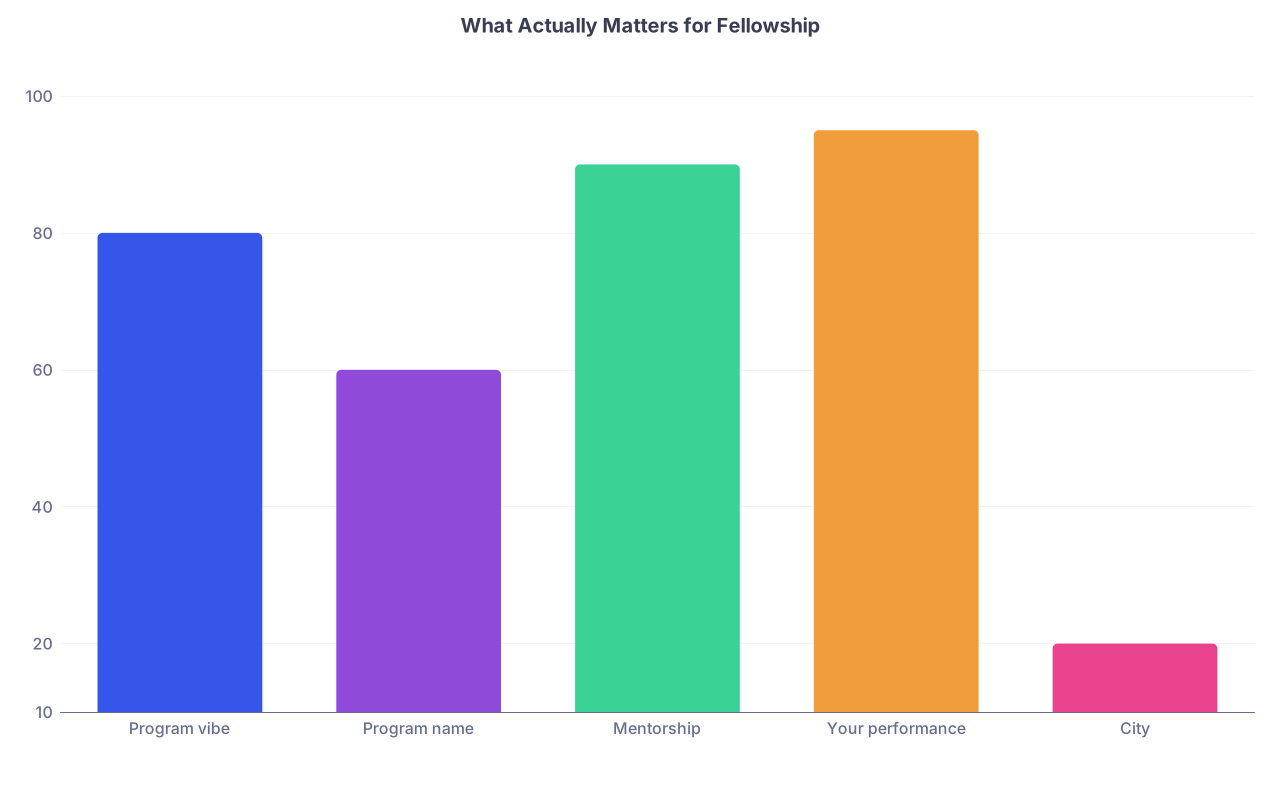
| Category | Value |
|---|---|
| Program vibe | 80 |
| Program name | 60 |
| Mentorship | 90 |
| Your performance | 95 |
| City | 20 |
That’s not real data, but it is real hierarchy.
The things that matter for your future:
- How well you function during residency
- The mentorship you get
- The support for your interests (research, teaching, community work, whatever)
- Your reputation with faculty
- How much you grow clinically and personally
All of that depends on:
Can you actually thrive in that environment for years without burning out or turning into the worst version of yourself?
If the vibe was so off that you left thinking “I’d be miserable here,” your performance there probably wouldn’t have been peak-you anyway. You’re not sabotaging your future by avoiding a bad fit; you’re protecting it.
But What If I Misread The Vibe?
Another anxiety classic: “What if I was wrong? What if they were just tired? What if I met the wrong residents? What if I overreacted?”
Could you misread a place? Sure. You’re judging a whole program on like 6 hours and 10–20 people. But also: this is literally the best version of the program they can muster. Everyone there knows they’re being watched.
If the “on their best behavior” version still worried you, that’s telling.
Also, I want you to remember something specific you saw or heard that bothered you. Not just “I felt weird.” What were the actual red flags?
Examples that are pretty reliable:
- Residents dodge questions about how often they violate duty hours.
- Faculty openly humble-brag about high attrition: “Not everyone makes it here.”
- No one can tell you who helps struggling residents or how remediation works.
- They mock other programs for being “too soft” or “too into wellness.”
That’s not you being sensitive. That’s them showing you who they are.
On the other hand, weak flags:
- One resident was kind of awkward and quiet.
- The schedule seemed busy but no one seemed broken.
- The city itself felt overwhelming but the people were warm and real.
Those are things I’d rethink, maybe reframe, not automatically drop down the rank list for.
If your concern was mostly environment (cost of living, traffic, weather) and not the training culture, then yeah, that might be worth a harder second look. But your original scenario was: loved the city, hated the vibe. That’s reversed. That’s your instincts trying to help.
How This Actually Affects Your Rank List
Let’s be practical, because Match anxiety feeds on vagueness.
You’re probably picturing your rank list like this:
- Dream program in perfect city
- Program with decent training but weird vibe in great city
- Safer program in less cool city
- etc.
Then your brain whispers: “If I move #2 way down because of the vibe, I’ll probably go unmatched and then what? SOAP chaos? No career?”
Reality check:
- You don’t sabotage your future by ranking places in the true order you’d prefer to train. That’s literally how the algorithm is designed.
- You do risk sabotaging your sanity (which bleeds into your future) by ranking a place higher just because your fear of not matching is louder than your instinct that this place feels wrong.
Here’s the cold truth I’ve heard from attendings who review residents:
They do not care that you trained in a “hot” city. They care how strong you are as a clinician, whether your letters show you’re solid and reliable, and whether you held up in residency. No one is like, “Wow, they trained in Chicago, automatic accept.”
I’ve literally heard: “I’d rather take a great resident from a mid-tier program than a miserable disaster from Big Name Program.”
So your rank list should answer one core question:
Where am I most likely to become the best, healthiest version of myself as a doctor?
Not:
Where do I like the brunch scene.
Will Skipping a Big-City Program Close Doors?
I can hear the fear: “But what if that big-city, big-name program was my only shot at a competitive fellowship / academic job / specific niche?”
Short version: that’s not how it works.
You know what opens doors?
- A PD who knows you and goes to bat for you
- Strong, specific letters from people who actually worked with you
- Evidence that you can complete projects you start (research, QI, education stuff)
- Not being so burned out that your interviewers can see the dead behind your eyes
You’re far more likely to get those things at a program where:
- You’re not constantly in survival mode
- You’re not scared of your seniors or attendings
- You feel safe asking questions
- You’re not dreading every day
A “meh” city with a genuinely supportive program will carry you much farther than a “dream” city where you start questioning your career choice by PGY-1 winter.
Red Flags vs. Just-Not-My-People
There’s another nuance though, and this is where my own brain gets tangled:
What’s an actual red flag vs. “these just aren’t my people”?
Actual red flags (career-threatening, burnout-risk type things):
- Residents strongly hint they’re not comfortable saying too much on interview day.
- Someone quietly says, “If you have a family or mental health concerns, I’d be careful here.”
- Faculty openly mock other specialties, or residents, or patients in a way that feels mean, not just dark humor.
- Residents seem chronically exhausted and checked out, not just tired.
“Not my people” stuff:
- They’re way more social than you and like going out a lot.
- You prefer a quieter culture and they’re super loud and bubbly.
- Their sense of humor is different from yours.
- The hospital aesthetics are ugly and depressing (okay, this sucks, but you can live with it if the people are solid).
The first category? Yes, absolutely something you can justify ranking lower even if the city is great.
The second category? That might be something to re-examine with a cooler head once the adrenaline of interview season wears off.
If your main thought was, “I felt unsafe emotionally/ethically/mentally,” trust that. If it was, “I didn’t instantly click with everyone,” that’s more flexible.
You Didn’t Sabotage Your Future. You Protected It.
Let me flip the narrative your anxiety is running:
You: “I ranked the big-city, bad-vibe program lower. I screwed myself.”
Alternative version that’s probably truer:
“I refused to gamble the next 3–7 years of my life on a place that already felt wrong on its best-behavior day. I chose to believe I deserve not to be miserable.”
That’s not self-sabotage.
That’s self-preservation.
The people who really sabotage their future aren’t the ones who listen to their gut. It’s the ones who ignore very loud, clear warning signs because:
- “The name is so shiny.”
- “The city is so cool.”
- “I’m scared I won’t match elsewhere.”
Residency is already hard when you’re in a good program. You don’t need to add “toxic environment” to the challenge list.

| Step | Description |
|---|---|
| Step 1 | Interview Day |
| Step 2 | Focus on program fit |
| Step 3 | Lower on rank list |
| Step 4 | Consider higher rank |
| Step 5 | Protect future self |
| Step 6 | Love city? |
| Step 7 | Hate vibe? |

What You Can Actually Do Right Now
Since vague reassurance doesn’t actually calm the spiral, here’s something concrete.
Grab your list of programs and do this:
Mark each one with two numbers from 1–10:
- City appeal
- Program vibe / fit
Then, next to each, write: “Could I survive here? Could I grow here?”
If a place has:
- City 9–10, Vibe 3–4 → serious caution.
- City 4, Vibe 8–9 → that’s way safer for your future.
And then be honest: if you matched at that “great city, bad vibe” place, how would you feel on Match Day? Relieved? Or would your stomach sink?
Your body usually knows before your brain admits it.
You’re not weak for prioritizing the vibe. You’re actually thinking long-term in a way that panicked applicants often don’t.
| Scenario | Long-Term Risk |
|---|---|
| Great city, bad vibe | High |
| Great city, neutral vibe | Medium |
| Meh city, great vibe | Low |
| Meh city, bad vibe | Very High |
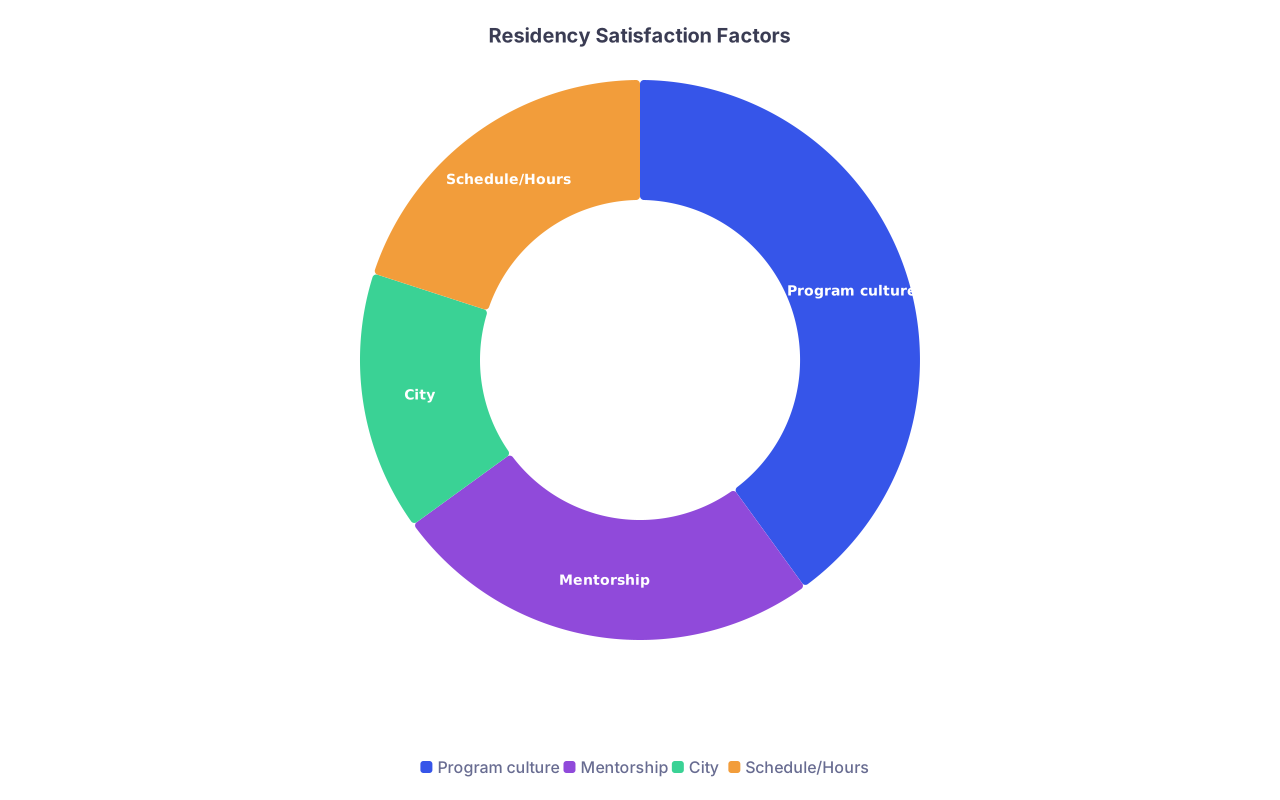
| Category | Value |
|---|---|
| Program culture | 40 |
| Mentorship | 25 |
| City | 15 |
| Schedule/Hours | 20 |
Notice what’s not at 40%.


