

It’s January 10th. You’re halfway through intern year. You just finished a 13‑day stretch, you’re staring at next month’s schedule, and a thought you’ve been shoving away keeps coming back:
“Is this just normal intern misery… or is my program actually bad enough that I should leave?”
You’re not early anymore. You’re not “just adjusting.” At this point in the year, patterns have settled in. Cultures are obvious. Red flags are either softening… or they’re calcifying.
This is exactly the window where you should systematically reassess your program and, if needed, start a structured process of exploring transfer. Not in a panic. Not in secret despair. Step‑by‑step.
Let’s walk it chronologically.
Big Picture Timeline: What Mid‑Intern Year Should Look Like
By mid‑intern year (roughly December–February), certain things should be true if you’re in a reasonably functional program:
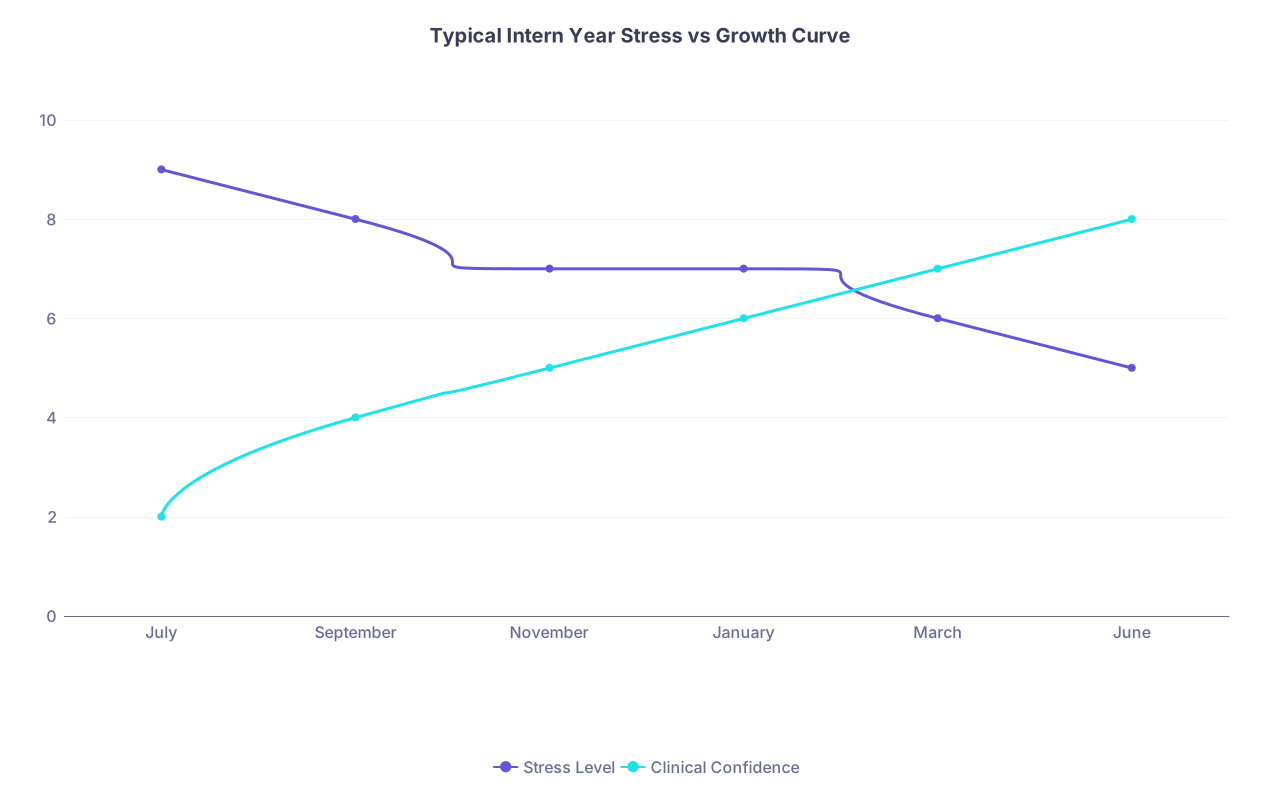
| Category | Stress Level | Clinical Confidence |
|---|---|---|
| July | 9 | 2 |
| September | 8 | 4 |
| November | 7 | 5 |
| January | 7 | 6 |
| March | 6 | 7 |
| June | 5 | 8 |
If your experience is the opposite—stress climbing, confidence flat or dropping—that’s not “just intern year.” That’s a signal.
By Month 6–7, generally:
You should:
- Feel some growth in autonomy
- Know who you can page when things go bad
- Have a sense of your program director as a real person, not a ghost
- Have seen at least a few sane, humane rotations
You should not:
- Be routinely terrified to ask for help
- Be retaliated against for raising basic safety concerns
- Be crying weekly in the stairwell because of overt bullying
Mid‑year is when you stop gaslighting yourself and start grading the program, not just yourself.
Month‑by‑Month: July to Now – What Should Have Happened?
Let’s rewind quickly and mark where red flags should have triggered your radar earlier—and how they look now at mid‑year.
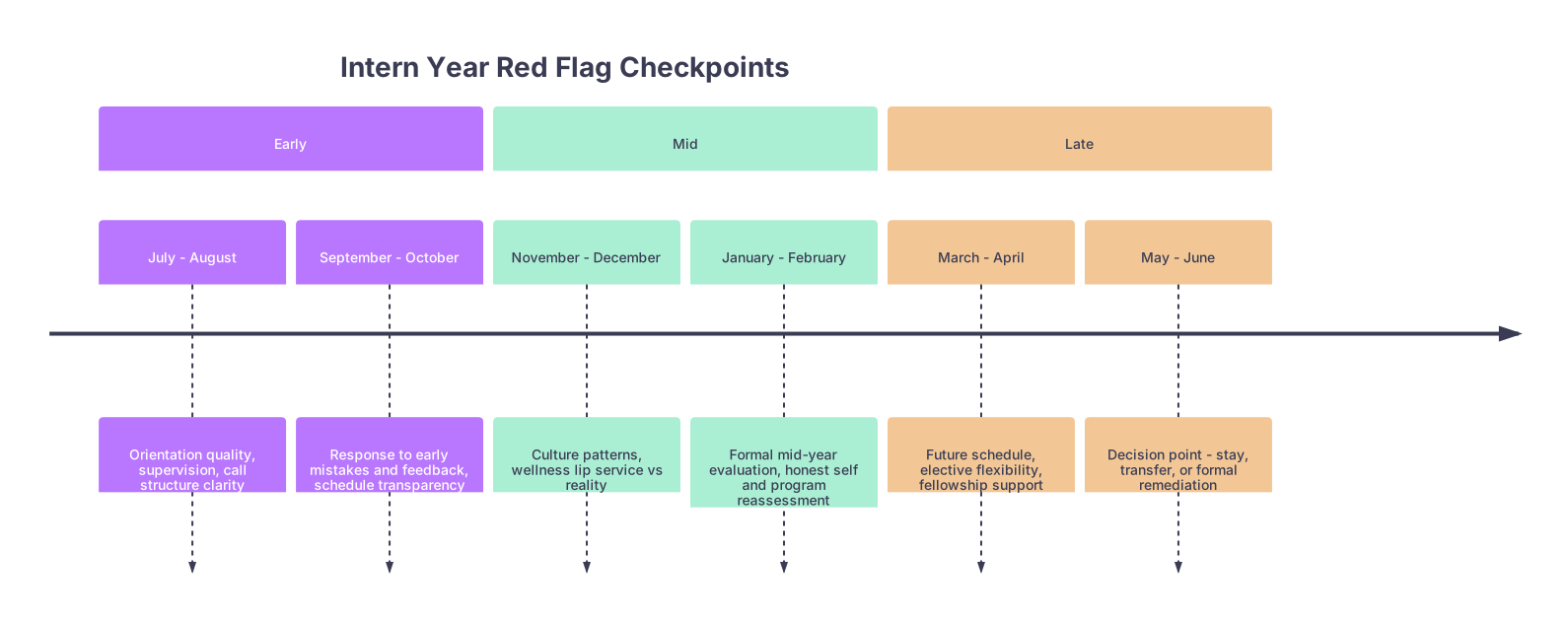
| Period | Event |
|---|---|
| Early - July - August | Orientation quality, supervision, call structure clarity |
| Early - September - October | Response to early mistakes and feedback, schedule transparency |
| Mid - November - December | Culture patterns, wellness lip service vs reality |
| Mid - January - February | Formal mid-year evaluation, honest self and program reassessment |
| Late - March - April | Future schedule, elective flexibility, fellowship support |
| Late - May - June | Decision point - stay, transfer, or formal remediation |
July–August (Months 1–2): Orientation and Safety
At that point, you were supposed to be clueless and protected.
Red flags then that still matter now:
- You were left alone on nights with no clear backup.
- Nurses said, “We don’t call nights, they yell at us.”
- Orientation was chaotic, key policies unclear (codes, blood consents, ICU escalation).
If those safety issues are still happening in January—after multiple complaints or “we’re working on it” promises—that’s not a blip. That’s cultural.
September–October (Months 3–4): Feedback and Response to Mistakes
By then, some intern mistakes should have happened. Because you’re human.
Healthy pattern:
- You screw up → Supervisor debriefs → Concrete feedback → Learning plan
- The tone is firm but protective. You feel embarrassed but not unsafe.
Unhealthy pattern:
- Mistake → Public shaming in sign‑out or conference
- PD hears about it only from gossip, not structured eval
- You’re labeled “struggling” but no real plan is offered
If by mid‑year you have a reputation but not a roadmap, that’s a huge red flag.
November–December (Months 5–6): Culture Becomes Obvious
Around the holidays, the mask usually slips.
You’ve now seen:
- How coverage is handled when someone is sick
- How the program deals with grief, bad outcomes, deaths
- How they speak about residents who left or matched competitive fellowships
If you’re mid‑January and you can honestly say:
- “I do not trust leadership.”
- “We’re bodies to cover a schedule, nothing more.”
- “No one here models the physician I want to become.”
…then yes, it’s time to seriously reassess.
Mid‑Intern Year Checklist: Is This a Bad Stretch or a Bad Program?
At this point you need a brutally honest audit. One evening. Pen, paper, closed door.
Break it into five buckets.
| Domain | Green Light | Yellow Light | Red Flag |
|---|---|---|---|
| Safety | Reliable backup | Inconsistent coverage | Chronic unsafe staffing |
| Education | Scheduled and protected | Frequently bumped | Essentially service only |
| Culture | Mostly respectful | Mixed, personality-dependent | Bullying, fear, retaliation |
| Support | PD/Chiefs accessible | Surface-level support | Avoidant or punitive |
| Future Fit | Still see path here | Unsure, mixed | Cannot see yourself staying |
1. Clinical Safety (Non‑Negotiable)
Questions for this week:
- Can I reliably reach a senior/attending at 2 a.m. when I’m out of my depth?
- Are codes, rapid responses, and ICU transfers chaotic or actually coordinated?
- Have I seen serious near‑misses repeatedly ignored or downplayed?
If safety is consistently bad, this moves from “maybe transfer” to “you should seriously consider leaving” territory. Not in a year. Soon.
2. Education vs. Exploitation
Do a 4‑week look‑back:
- How many actual teaching sessions did you get that weren’t hijacked for discharge planning?
- Are you getting progressive responsibility, or just more scut at the same level?
- Do attendings know you as a learner or just “the intern on blue team”?
An occasional bad month is normal. Four to six months straight of “you are a billing machine, nothing more” is not.
3. Culture and Professionalism
You should have enough data by now to see patterns:
- Are certain attendings or fellows consistently demeaning, racist, or sexist—and leadership shrugs?
- Do nurses and residents openly say, “Everybody leaves this program” or “This place burns people out”?
- Does anyone ever say, “How are you really doing?” and actually mean it?
Abuse isn’t a “feelings problem.” It’s a valid reason to leave. I’ve seen residents wait 2–3 years “because it’ll look bad” while their mental health disintegrated. Don’t be that cautionary tale.
4. Support When Things Go Wrong
By mid‑year you’ve almost certainly had:
- A bad outcome
- A patient/family complaint
- A personal crisis (illness, relationship, family issue)
How did the program respond?
Supportive:
- They helped with schedule changes, follow‑up debriefs, maybe counseling resources.
Toxic:
- They implied you were weak.
- They gossiped about your “drama.”
- They threatened professionalism write‑ups instead of offering help.
5. Future Fit and Career Trajectory
You don’t need your whole life figured out. But mid‑intern year you should at least be able to say:
- “If I stay, I can probably become X type of physician and be reasonably trained.”
Red flags:
- Zero mentorship in your area of interest
- Historically poor fellowship placement in your field (and no plan to fix it)
- Leadership dismissive of your goals: “People from here don’t do that”
When to Start Seriously Considering Transfer
There are three common mid‑year scenarios. Be honest about which one you’re in.
Scenario 1: “It’s Brutal, But I’m Growing” (Stay and Optimize)
You’re exhausted but:
- You see your skills improving
- Seniors/attendings have your back
- There’s at least one or two rotations that felt like, “Okay, this is why I’m here”
In this case, your mid‑year task is to protect yourself from burnout, not to transfer. You:
- Meet with your PD or advisor and negotiate better elective structure
- Identify 1–2 attendings who can be real mentors
- Plan specific rotations to look forward to in PGY‑2
No transfer. Just recalibration.
Scenario 2: “It’s Borderline. Some Good, Some Really Bad” (Explore Quietly)
This is the gray zone:
- Great ICU and clinic, terrible wards
- One amazing mentor, three malignant services
- PD seems okay, but chiefs are chaotic and unsupportive
If this is you:
- You do not need to decide this month.
- But you do need to start quietly gathering intel about transferring.
- And you must start documenting specific problematic incidents.
More on how to do that, chronologically, in a second.
Scenario 3: “I Feel Unsafe or Broken Here” (Act Now)
If:
- You’re having persistent suicidal thoughts or severe depression/anxiety directly linked to work
- You’ve seen repeated unsafe practices that put patients or residents at risk
- You’ve experienced harassment or discrimination that leadership has ignored or minimized
…then mid‑intern year is not “too early” to consider leaving. Staying in a toxic environment out of fear is how people end up washing out of medicine entirely.
Week‑by‑Week: A 6‑Week Plan to Reassess and Prepare
You don’t transfer because of one bad call night. You transfer because of consistent patterns. So here’s a 6‑week, structured game plan starting… now.
Week 1: Quiet Data Gathering
This week you:
- Start a private log (not on hospital devices)
- For each issue, jot: date, rotation, who was involved, what happened, impact on you/patients
- Note positive experiences too—so you’re balanced, not just venting
Also:
- Ask 1–2 trusted seniors, off hospital grounds:
“Be honest—do things get better here as a PGY‑2 or does it just stay like this?”
You’re not announcing anything. You’re just finally being systematic.
Week 2: Self‑Assessment and Reality Check
One evening, answer these in writing:
- What are 3 things I’ve actually learned and improved at here?
- What specific patterns at this program are harming my growth or safety?
- If nothing changed, how would I feel starting PGY‑2 here?
Then:
- Talk to someone outside your program—old med school mentor, trusted faculty from away rotation, therapist.
- Get an external read: “Am I overreacting, or is this as bad as it feels?”
If they immediately say, “This is not okay,” listen.
Week 3: Discreet Conversations with Insiders
Now you widen the circle slightly—but carefully.
People to consider:
- That one senior who everyone knows is honest but not reckless
- A recent graduate/fellow from your program (text, call, not on institutional email)
- A chief you actually trust (if such a unicorn exists there)
Questions to ask:
- “If you were me, would you stay here knowing what you know now?”
- “Do people ever transfer out? What were their situations like?”
- “Does leadership actually respond to concerns, or do things get swept under the rug?”
You’re looking for patterns. If three unrelated people say, “Yeah, this place is rough, but worth it,” that’s different from three people saying, “If you can get out, get out.”
Week 4: Initial External Recon (Without Committing)
This is when you tentatively look outward.
You:
- Review the ACGME list of programs in your specialty.
- Identify 5–10 that:
- Are in geographic regions you’d accept
- Have reputations for reasonable culture
- Actually graduate residents into jobs/fellowships you’d want
You might:
- Quietly email one med school mentor:
“Can I pick your brain about whether transferring programs is realistic in my situation?”
What you DO NOT do yet:
- Do not tell your PD you want to transfer.
- Do not send mass emails to other PDs.
- Do not blow things up without a plan.
Week 5: Decide Your Direction – Stay, Watch, or Prepare to Move
By now you should choose one of three paths for the next few months.
Stay and commit
- You decide: “This is hard but viable. I’m staying unless something drastic changes.”
- Action: Schedule a mid‑year meeting with PD to optimize your schedule, electives, and mentorship.
Stay but on probation in your own mind
- You give the program 3–4 more months with clear benchmarks:
- Less bullying on X service
- More consistent teaching on Y rotation
- Concrete support from leadership on Z issue
- If no improvement by late spring, you seriously plan to transfer.
- You give the program 3–4 more months with clear benchmarks:
Actively prepare to transfer
- You conclude: “This place is misaligned or dangerous enough that I need out.”
- You begin gathering documents, references, and exploring open positions.
Week 6: If You’re Leaning Toward Transfer, Start the Logistics
Reality check: mid‑year transfers are rare but not impossible. Most transfers happen:
- End of PGY‑1 into PGY‑2
- Occasionally PGY‑2 into PGY‑3
At this point, you:
Get your ducks in a row:
- CV updated
- USMLE/COMLEX scores, medical school transcript, dean’s letter handy
- Brief, factual explanation of why you’re considering transfer (“seeking program with stronger educational structure and mentorship in X area” – not a rant)
Identify possible recommenders:
- At least one attending who actually likes your work
- Ideally a former mentor from med school or away rotation
- Possibly a chief who can vouch for your reliability (only if trustworthy)
Do not start this conversation with your current PD until you have a clear sense of realistic options and support. Once you tell them, you cannot untell them.
How to Know It’s Truly Time to Leave
Let me be blunt. You should seriously consider transferring if, by mid‑intern year, you can say yes to more than half of these:
- I don’t feel safe asking for help on nights.
- I’ve seen serious patient safety issues ignored or normalized.
- I’m consistently demeaned, harassed, or discriminated against.
- Leadership minimizes or denies problems residents consistently raise.
- I cannot identify even one attending I’d want to emulate.
- My mental health has deteriorated significantly and directly due to this environment.
- When I picture starting PGY‑2 here, I feel dread, not challenge.
One or two of these? You might be in a tough but salvageable program.
Five or more? You’re in a structurally bad situation, not just a rough patch.
If You Decide to Stay: Mid‑Year Course Correction
Staying doesn’t mean surrendering. It means you shift into “optimize and protect” mode.
Over the next 3 months:
Proactively schedule a meeting with your PD:
- Bring concrete suggestions: “I’d benefit from earlier elective in X to align with my goals; can we adjust?”
- Ask clearly for a mentor: “Who in this department would be a good fit as a career mentor for Y path?”
Set non‑negotiable boundaries:
- Therapy or support group appointment you don’t skip
- Real days off where you do not open Epic
- Sleep and basic health priorities on golden weekends
Is this perfect? No. But for a lot of people in okay‑but‑not‑great programs, this is what gets them through with their sanity intact.
If You Decide to Transfer: Expect This Timeline
Rough, realistic expectations:
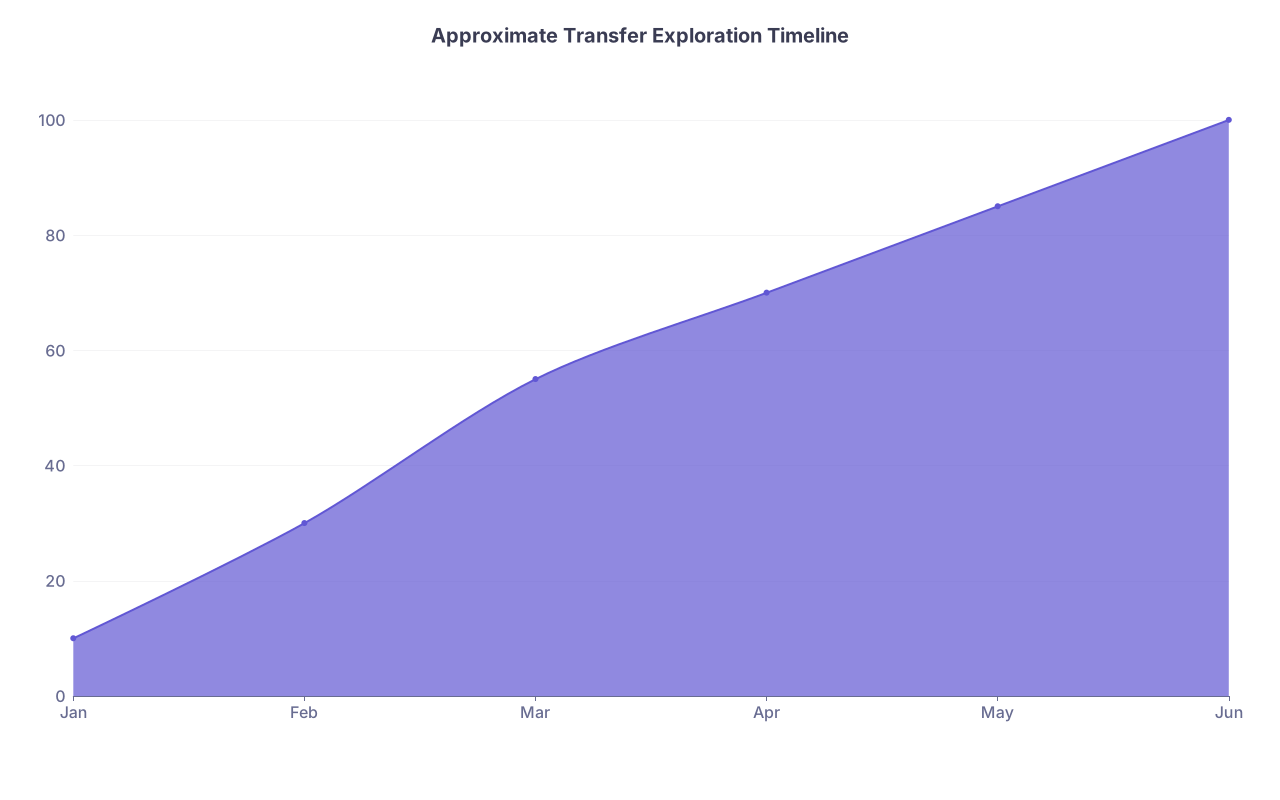
| Category | Value |
|---|---|
| Jan | 10 |
| Feb | 30 |
| Mar | 55 |
| Apr | 70 |
| May | 85 |
| Jun | 100 |
That “100” in June isn’t “100% success.” It’s “100% of the process done”—either you found a new spot or you made a conscious decision to stay.
FAQ (Exactly 3 Questions)
1. Will transferring ruin my career or make me look unstable?
No. Not if it’s done thoughtfully and for legitimate reasons. PDs know some programs are dysfunctional. A concise, professional explanation—focused on educational fit, support, and career alignment—doesn’t sink you. What does hurt is chaotic behavior, trash‑talking your current program, or bailing mid‑contract with no notice.
2. What if my program is bad but there are no open positions anywhere?
Then your job becomes maximizing what you can control: seeking outside mentors (alumni, prior attendings), using electives to escape toxic services, prioritizing board prep and skills that travel with you. You also keep a quiet eye out for unexpected openings—people leave for family reasons, performance, visa issues, etc. Keep your documents ready so you can move quickly if a spot opens.
3. How do I separate “intern year is hard” from “this program is toxic”?
Intern year hard: you’re tired, overwhelmed, sometimes anxious—but you feel yourself growing, and you can name people who support you. Toxic: you feel chronically unsafe, ashamed, or hopeless; you see abuse or dangerous care patterns; raising concerns is punished, not welcomed. If you wouldn’t recommend your program to your closest friend, that’s your answer.
Today’s next step: set a 30‑minute timer, sit down with a blank page, and write two lists—“Reasons to Stay” and “Reasons to Leave”—based only on what you’ve experienced in the last 3 months. No future hypotheticals. What those lists look like will tell you exactly how urgent this decision really is.


