

The first month of residency exposes a program’s soul. The brochure version dies the second you hit the wards at 5:45 a.m.
You are not “too new” to judge your program. In fact, the first 4 weeks are exactly when the ugliest hidden issues start to leak through the cracks—before you’ve normalized dysfunction as “just residency.”
Here’s your week‑by‑week guide to spotting real red flags in your PGY‑1 first month, and what to do at each point.
Week 0–1: Orientation and First Call – Watch What They Do, Not What They Say
At this point you’re wide‑eyed, badge still stiff, passwords barely working. Perfect time to catch the disconnect between sales pitch and reality.
Days 1–3: Orientation Days
You’re sitting in some windowless auditorium. PowerPoints. Food. Smiles. This is the mask phase.
At this point you should be asking yourself: Is there basic organizational competence?
Watch for these signs:
Chaotic orientation schedule
- You get multiple conflicting emails about where to be.
- Sessions are rescheduled last minute without clear communication.
- No one seems to know who’s in charge of residents.
- Everyone blames “GME” or “IT” or “HR.”
Bad sign: No clear contact tree
You should walk away from day 1 knowing:- Who your chiefs are and how to reach them.
- Who your program coordinator is and how to reach them.
- Who to call for EMR issues.
- What number to call when you’re in trouble at 3 a.m.
If you’re still guessing by the end of orientation day 3? That’s not you being slow. That’s the program being disorganized.
| Area | Green Sign | Red Flag |
|---|---|---|
| Schedule | Clear, sent in advance | Constantly changing, poorly communicated |
| Leadership Access | Chiefs present and approachable | Chiefs absent or clearly disengaged |
| Logistics | Badges, EMR, pagers ready by day 1–2 | Still missing basic access after day 3 |
| Expectations | Explicit work-hour and escalation rules | Vague, “you’ll figure it out” attitude |
Days 2–5: EMR Training / Shadowing
By now, you’ve probably “shadowed” an upper level or done some light notes.
At this point you should be asking: How do they treat people below them when they’re not performing?
Look for:
- How staff talk about residents
- Charge nurse mutters, “Nights are always a mess when it’s the interns on call.”
- Attending jokes in training, “Just don’t call me unless someone’s dead.”
- Senior rolls their eyes at questions from new interns.
One or two grumpy people? Normal. A pattern of contempt? Culture problem.
- How they talk about duty hours
- Healthy: “We are serious about work hours. If you’re over, tell us. We’d rather fix the system than break you.”
- Sick: “Everyone logs 80, but you’ll actually be here more. That’s just how it is.”
Any time “just don’t document it” is mentioned? That’s not a gray area. That’s a bright red flag.
Week 1: First Real Shifts – Systems Either Support You or They Don’t
You’re actually carrying patients now. Maybe light. Maybe not.
Days 5–7: First Weekend / First Nights
This is when the mask slips for real.
At this point you should be asking: Am I safe? Are my patients safe?
Watch these operational signs:
Coverage and backup
- When things get busy, do seniors/attendings actually show up?
- Or do you get, “You got this, just do your best,” while you’re drowning?
Escalation culture
- Healthy: Senior says explicitly, “Call me for X, Y, Z. If you’re unsure, just call. I will never be mad you called.”
- Toxic: “Figure it out before you page me,” or “Don’t wake the attending for that.”
Nurse–resident dynamics
- If multiple nurses warn you on day 2, “We don’t call nights because they never answer,” that’s not about you. That’s history.
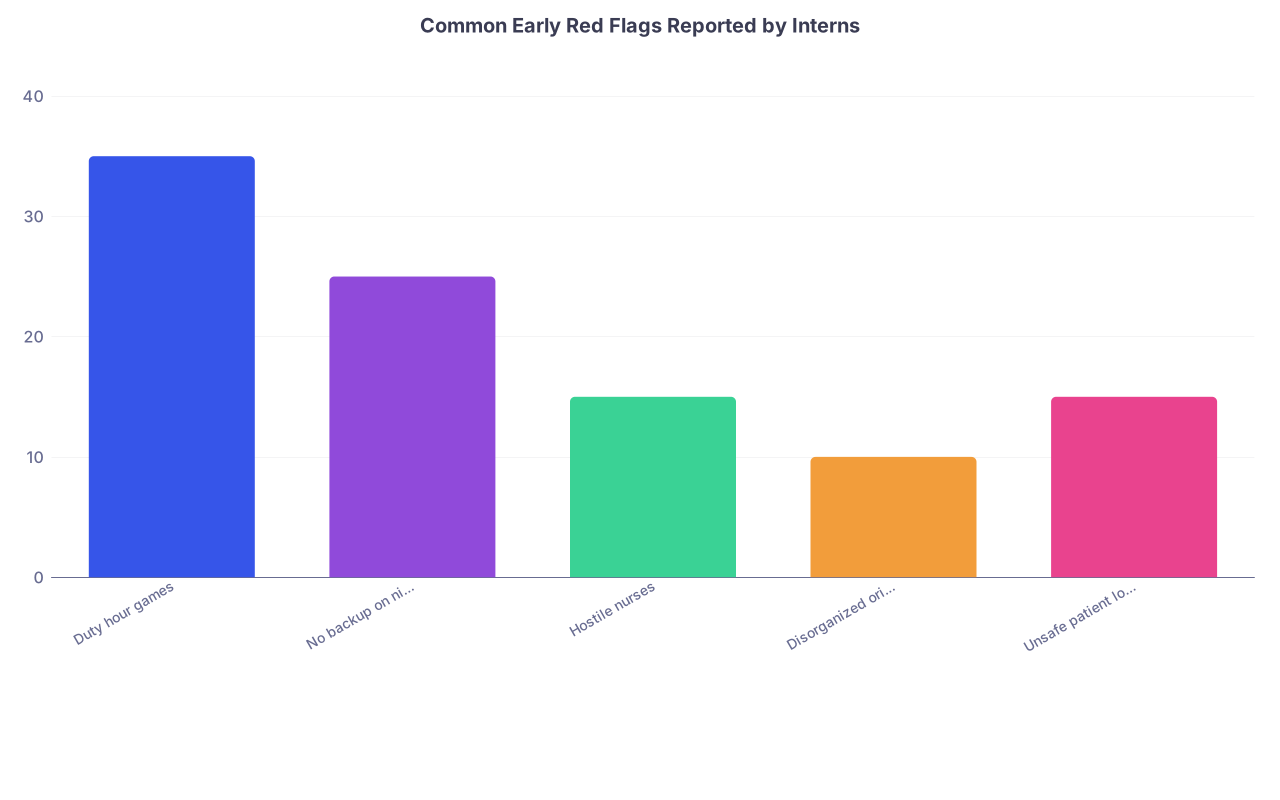
| Category | Value |
|---|---|
| Duty hour games | 35 |
| No backup on nights | 25 |
| Hostile nurses | 15 |
| Disorganized orientation | 10 |
| Unsafe patient load | 15 |
If by the end of week 1 you’ve already had:
- An unsafe patient situation where you could not get help
- Pressure to alter or hide your hours or notes
…you’re not “overreacting.” Those are structural problems.
Week 2: The “This Is Just How We Do It Here” Excuse Starts
By now, you know where the bathrooms are and how to find CT. You’re less disoriented and more observant.
Days 8–14: Settling into a Rhythm
At this point you should be asking: Is the chaos just new-job noise, or is it baked into the system?
Here’s where you separate normal residency pain from actual program dysfunction.
1. Workload vs. Support
You should be noticing a pattern in your daily structure:
- Normal hard:
- You’re busy, sometimes overwhelmed.
- But: seniors help pre-round, attendings round at a consistent time, discharges get some structure.
- Dysfunctional hard:
- Every day is a surprise.
- Admissions at 6:55 a.m. before sign-out. No pushback from leadership.
- You routinely skip meals and bathroom breaks, and when mentioned, you get a shrug.
Ask yourself:
- Do seniors ever proactively take work off your plate?
- Or is it always you begging for help?
If seniors consistently say, “Yeah this rotation is brutal, but it’ll make you strong,” instead of “Let’s adjust and make this sustainable,” they’ve normalized dysfunction.
2. Education vs. Pure Service
Look carefully at your week‑2 daytime.
At this point you should ask: Is there any protected teaching, or is that just a word in the brochure?
Signs of a service-only program:
- Noon conference is constantly canceled “because we’re too busy.”
- You are asked or expected to skip conference to “help the team.”
- Attendings do table rounds only—no bedside teaching, no questions, just dictation.
Contrast that with a functional program:
- People cover each other so at least most interns make conference.
- Chiefs actually show up to enforce it.
- If you miss teaching, someone notices and asks why.
Week 2–3: Call Schedule and Coverage – Where Exploitation Hides
This is where a lot of the hidden garbage lives: schedules, coverage, and informal expectations.
Call and Night Coverage
By now you’ve probably seen at least one full call or night cycle.
At this point you should be asking: Is this schedule merely tough, or is it unethical?
Key signs:
Chronic duty hour “creativity”
- You’re expected to log out by 28 hours, but everyone knows people stay 32–34.
- Chiefs say, “Just log out and finish your notes later from home.”
- You’re instructed to move hours around in the system to look compliant.
No post‑call protection
- Post‑call days turn into “just stay to help” until 4–5 p.m.
- Surgeries or clinics scheduled on your post‑call “day off.”
- Attending annoyed if you try to leave on time post call.
Unsafe cross coverage
- You’re cross-covering multiple units or services that no one could realistically manage:
- 60+ patients with no realistic backup
- Multiple ICUs plus floor
- When something goes wrong, blame falls entirely on the intern, never on the setup.
- You’re cross-covering multiple units or services that no one could realistically manage:

| Step | Description |
|---|---|
| Step 1 | Notice Red Flag |
| Step 2 | Document Incident |
| Step 3 | Talk to Senior or Chief |
| Step 4 | Contact Program Leadership |
| Step 5 | Consider GME or External Help |
| Step 6 | Monitor Pattern |
| Step 7 | Log Examples |
| Step 8 | Patient Safety Risk |
| Step 9 | Resolved? |
| Step 10 | Still Unsafe? |
If week after week you see the same unsafe coverage patterns and the answer is always “that’s just how it is,” that’s systemic.
Week 3: Culture Cracks – How They Treat the Weakest People
By week 3 you’ve seen people struggle: a co‑intern who’s slower, someone who made a mistake, a resident with a sick family member, etc.
At this point you should be asking: How does this program treat vulnerable people?
1. Response to Mistakes
You will see (or make) an error. That’s guaranteed.
Pay attention to the aftermath:
Healthy response:
- Debrief the case.
- Focus on system fixes and learning.
- Private feedback, clear action plan, support.
Toxic response:
- Public shaming on rounds.
- Attending or senior saying, “Maybe you’re not cut out for this.”
- Stories from seniors about people who were “destroyed” after one bad call.
The difference between “That was dangerous, we need to change” and “You’re dangerous, you’re the problem” tells you everything about program culture.
2. How They Handle Illness / Life Events
By now you’ve probably heard someone mention needing a day off or coverage.
Signs of a humane program:
- People get sick days without drama.
- Pregnancy, parenting, or illness is met with, “Let’s see how we can make this work.”
Signs of a red‑flag program:
- Residents brag, “No one’s been out sick in years.”
- Stories about a co‑resident being punished (formally or informally) for taking leave.
- Chiefs/PDs openly resent accommodations.
When multiple PGY‑3s tell you, “I wouldn’t do this again here if I knew,” believe them.
Week 3–4: The “Newness” Wears Off – Patterns Are Now Real
By the end of your first month, this is not just “first‑week chaos” anymore. Trends are visible.
At this point you should be asking: Are the red flags one‑offs, or are they the operating system?
Daily Rhythm Check
Look back over weeks 1–4 and ask:
Do I routinely:
- Miss meals?
- Work past duty hours?
- Get pushed to falsify hours or documentation?
- Feel scared to call for help?
Do I consistently:
- Learn something on rounds?
- Attend at least some scheduled teaching?
- See seniors and attendings model safe behavior?
You’re not judging on one terrible shift. You’re looking at the average.
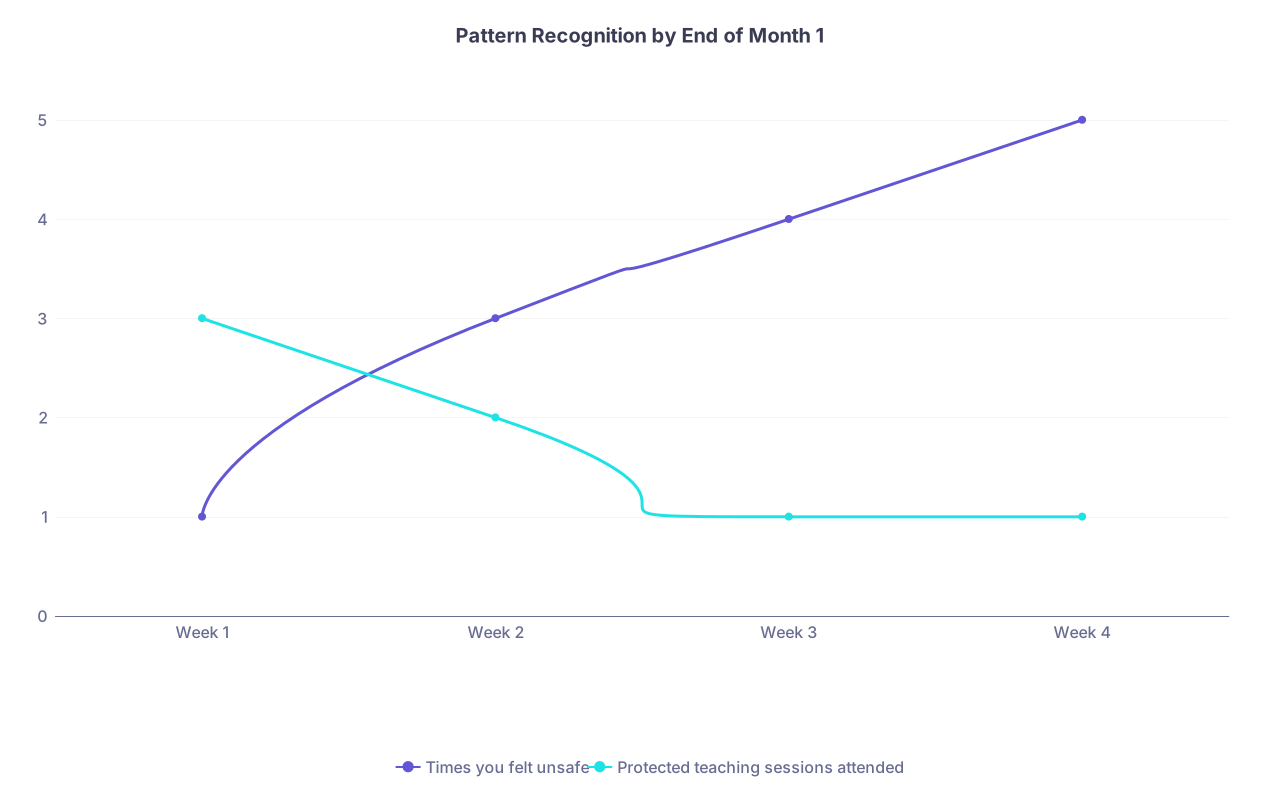
| Category | Times you felt unsafe | Protected teaching sessions attended |
|---|---|---|
| Week 1 | 1 | 3 |
| Week 2 | 3 | 2 |
| Week 3 | 4 | 1 |
| Week 4 | 5 | 1 |
If your “felt unsafe” line is climbing while your “protected teaching” line is dropping, you have your answer.
What To Do, Week by Week, When You See Problems
Spotting issues is one thing. Acting on them is different. You’re PGY‑1 and you feel replaceable. But you’re not powerless.
Week 1: Log, Don’t Judge Yet
At this point you should:
- Start a simple, private log (not on hospital systems):
- Date
- Rotation
- What happened
- Who was involved
- Why it felt off (hours, safety, disrespect, etc.)
Do not email this log to anyone yet. It’s for pattern recognition.
Week 2: Test the Local System
At this point you should:
- Bring 1–2 smaller concerns to:
- A trusted senior
- Or a chief resident
Watch their response:
- Good sign: “Yeah, that’s a problem. Let’s address it,” followed by action.
- Bad sign: “Don’t rock the boat,” “Everyone went through this,” or “Just get through intern year.”
If even the chiefs seem helpless or dismissive, that tells you leadership’s grip.
Week 3: Escalate When It’s About Safety
At this point you should:
- Escalate any of the following beyond just co‑residents:
- Repeated unsafe patient loads without backup.
- Pressure to falsify legal documents: duty hours, notes, procedures.
- Sexual harassment, discrimination, or bullying.
- Retaliation for raising patient safety concerns.
Route:
- First, program leadership (APD/PD) in a concrete, example‑based way.
- If dismissed → GME office or DIO (Designated Institutional Official).
- For true safety violations → your institution’s anonymous safety reporting system too.
Week 4: Decide Your Next 3‑Month Strategy
By the end of month 1, you need a plan, not just vague anxiety.
At this point you should:
Classify your program honestly
- Tough but supportive: You’re exhausted, but you see teaching, backup, and good intentions.
- Flawed but fixable: Some real issues, but leadership is responsive, residents push for change.
- Fundamentally toxic: Unsafe, exploitative, dismissive of concerns, no sign of change.
Match your actions to the classification
Tough but supportive:
- Focus on survival skills, time management, leaning on good seniors.
- Keep logging issues, but you do not need an escape plan… yet.
Flawed but fixable:
- Join or support resident committees.
- Bring specific, solution‑oriented feedback.
- Build alliances with like‑minded seniors and faculty.
Fundamentally toxic:
- Quietly gather documentation of patterns (not HIPAA‑protected info).
- Talk to trusted faculty outside the program if possible.
- Consider:
- Contacting GME early.
- Exploring the possibility of transferring programs in PGY‑2.
- Protecting your own mental health—therapy, PCP, support system.
You’re allowed to conclude “this place is not safe for me long‑term” before everyone else admits it.
The Future‑You Test
There’s one question I always tell interns to ask themselves at the end of month 1:
“If a med student I liked asked me whether to come here, and I had to answer honestly, what would I say?”
If your gut answer is “I’d warn them off,” that’s your data. You don’t owe this system blind loyalty.
Your PGY‑1 first month is not just hazing and confusion. It’s your clearest window into your program’s true character.
Use it.
Key Takeaways
- By the end of your first month, you can and should recognize patterns: unsafe coverage, duty‑hour games, lack of teaching, and contempt for residents are not “normal.”
- Track specific examples, test the response locally (seniors, chiefs, PD), and escalate especially when patient safety or legal/ethical violations are involved.
- Classify your program honestly—tough but supportive, flawed but fixable, or fundamentally toxic—and align your next‑steps strategy (stay, push for change, or quietly plan an exit) accordingly.


