
The biggest myth about resident burnout is that it is “too subjective” to measure. The data says otherwise.
Program directors love to hide behind vague wellness slogans and pizza nights. Residents trade horror stories on Reddit and in call rooms. Meanwhile, very few people are actually using hard, comparable metrics you can ask about on interview day or as a current resident trying to sanity-check your situation.
Let me be blunt: if you are not asking about burnout with numbers, you are flying blind.
This is the playbook for changing that.
1. The Core Problem: Burnout Is Real, Under‑measured, and Predictable
The prevalence numbers are not subtle. Multiple large surveys consistently show 40–60% of residents meet criteria for burnout in any given year. In some specialties, it is worse.
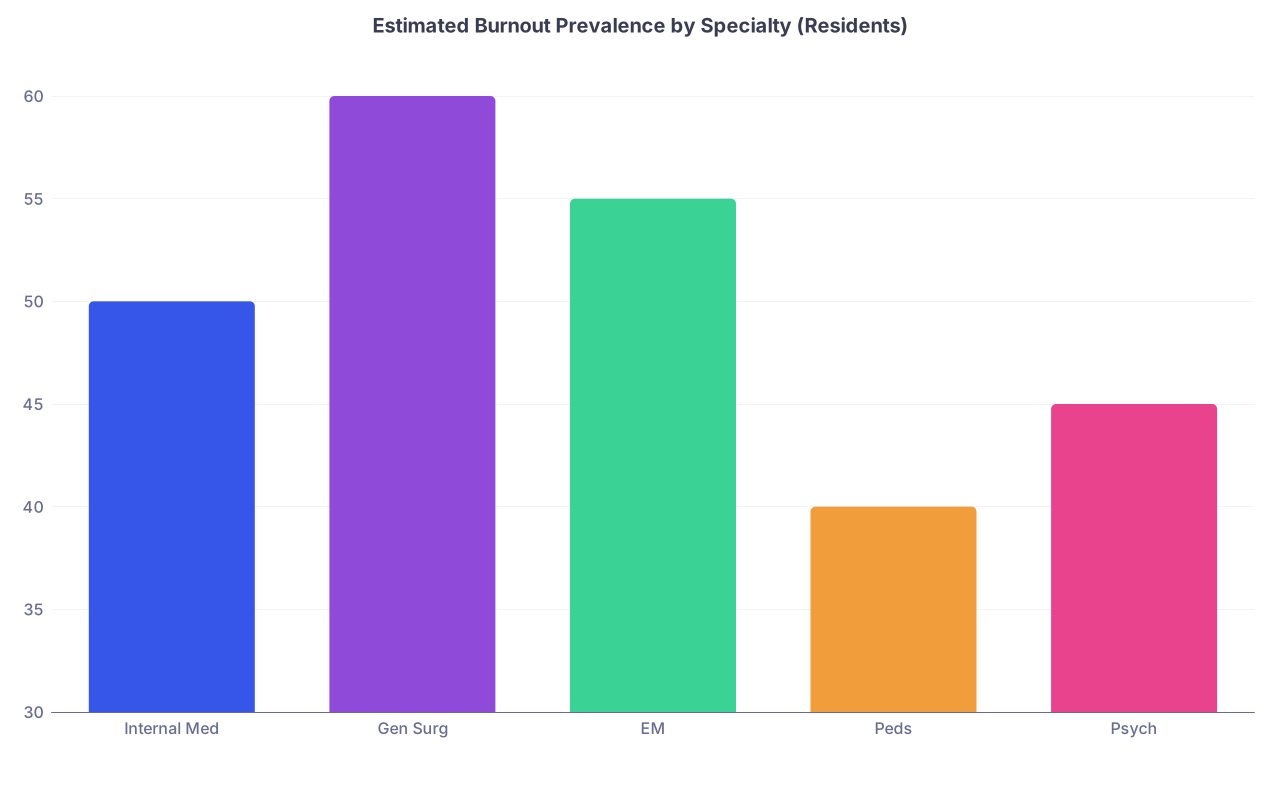
| Category | Value |
|---|---|
| Internal Med | 50 |
| Gen Surg | 60 |
| EM | 55 |
| Peds | 40 |
| Psych | 45 |
You do not need another philosophical essay on moral injury. You need levers you can quantify and questions you can actually ask a PD, chief, or current resident without sounding like you are doing a dissertation.
Here is the mental model that actually tracks with the data:
Burnout risk ≈ (Workload + Loss of control + Toxic culture) − (Support + Autonomy + Fairness)
You cannot put all of that into one neat survey item. But you can break it into measurable pieces:
- Hours worked and schedule volatility
- Non-educational scut load
- Sleep opportunity and call structure
- Psychological safety and mistreatment
- Concrete wellness resources actually used, not just advertised
Every one of those can be turned into a specific, survey-friendly metric.
Your job is to translate “Is this a malignant program?” into “What numeric questions can I ask that expose whether this place chews through people?”
2. What Burnout Surveys Actually Measure (And How You Can Borrow Them)
There are validated tools. Most programs will never show them to you. That does not mean you cannot reverse-engineer the concepts and ask in plain language.
The Maslach Burnout Inventory (MBI) is the classic. It looks primarily at:
- Emotional exhaustion
- Depersonalization (treating patients like objects)
- Reduced sense of personal accomplishment
You are not going to ask, “What is your mean emotional exhaustion subscale score?” in an interview. You can ask about proxies that correlate tightly with these domains.
For example:
- “On average, over the last month, how many days per week did you feel too drained after work to do anything non-work related?”
- “How often do residents feel they have to ‘cut corners’ on care because of time pressure?”
- “If you had to rate, on a 1–10 scale, how proud you feel of the care you provide here, what would you say? And has that changed since intern year?”
But let us get more concrete. Numbers. Frequencies. Proportions. That is what exposes red flags.
3. The High‑Yield Metrics You Can Actually Ask About
You do not need a 60‑item survey. You need a focused set of metrics that reveal structural risk for burnout. Below are the ones I have seen separate healthy programs from train wrecks, over and over.
3.1 Work Hours, Violations, and Reality vs. Policy
Everyone tells you, “We follow ACGME work hour rules.” The data says: sometimes.
What you want is not the party line. You want the distribution.
Ask these specific, numeric questions to residents:
- “In the last 3 months, how many weeks did you personally go over 80 hours?”
- “What is the typical weekly hour range on your busiest rotations? 70–75? 80+?”
- “How often do you log inaccurate hours because you are pressured to? Every week? A few times per year?”
The gap between logged hours and actual hours is a major red flag.
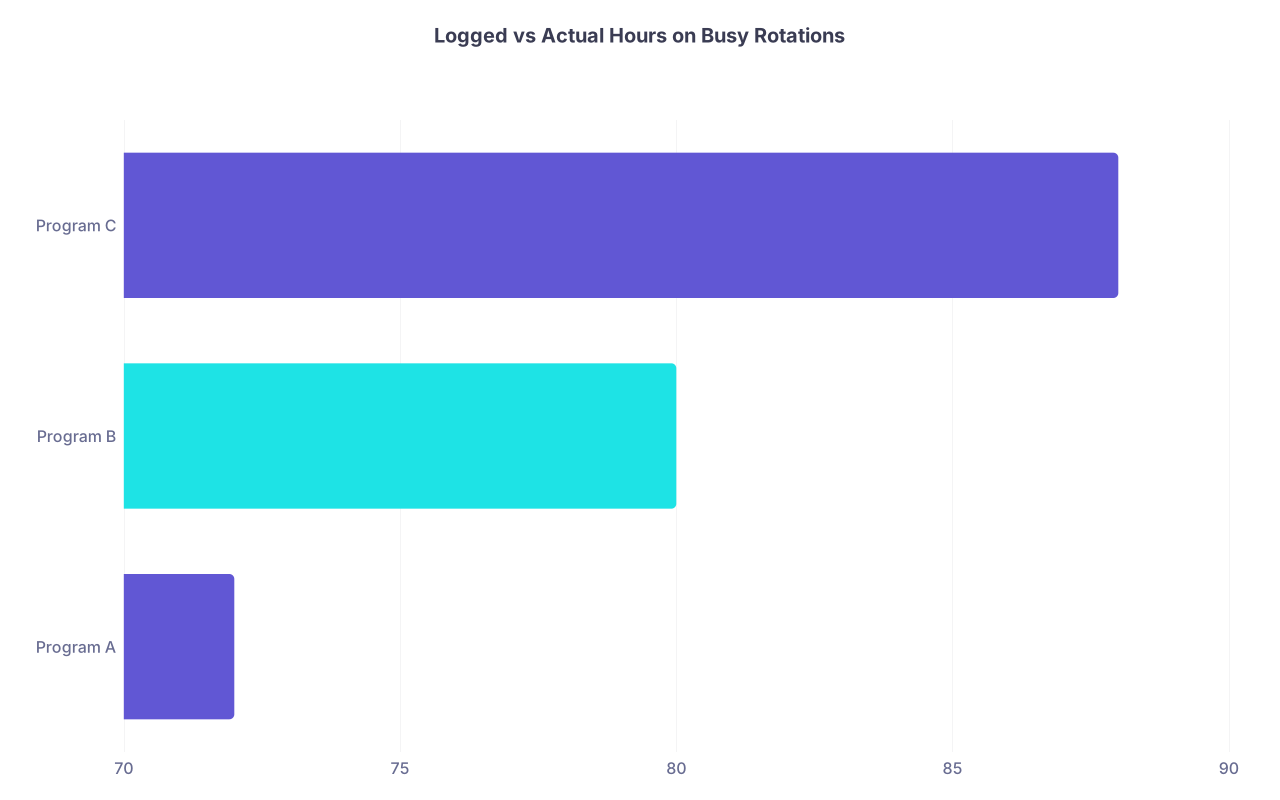
| Category | Value |
|---|---|
| Program A | 72 |
| Program B | 80 |
| Program C | 88 |
If a senior resident says, “We all log 78, but it is more like 90,” you have your answer. No need to ask about “burnout” directly.
Other high-yield metrics:
- Percentage of residents who have filed an official work-hour violation in the last year (“Roughly how many people actually report overages?”)
- Median time leaving post-call (“What time do you usually get out when you are post-call? 10 am? Noon? 3 pm?”)
Pattern to watch: When every answer starts with a nervous laugh followed by “Well, officially…” — that is not a data problem. That is a culture problem.
3.2 Schedule Predictability and “Gray” Time
Burnout does not come only from total hours. It comes from chaotic, unpredictable, and constantly shifting schedules.
Ask for numbers again:
- “How often do you get next month’s schedule less than 2 weeks before it starts?”
- “How many golden weekends (both days off) did you have in the last 3 months?”
- “In an average week, how many times does sign-out run 1+ hour past the scheduled end of the shift?”
You are trying to quantify:
- Schedule lead time
- Weekend protection
- Hidden overtime
Programs with sane culture can usually tell you: “We get schedules 4–6 weeks in advance; sign-out usually runs over maybe once a week.”
Programs that dodge with, “It depends” for everything? Riskier.
3.3 Scut Load, EMR Burden, and Non‑Educational Tasks
Another driver of burnout: doing work that is high volume and low meaning.
You cannot directly measure “meaning,” but you can ask residents to estimate proportions.
Ask:
- “On an average day on wards, what percentage of your time is direct patient care versus documentation and orders?”
- “How many hours per week do you spend finishing notes from home?”
- “Who usually does discharge summaries, prior auths, and paperwork? Residents? Or is there ancillary support?”
You can even convert their answers into rough time budgets.
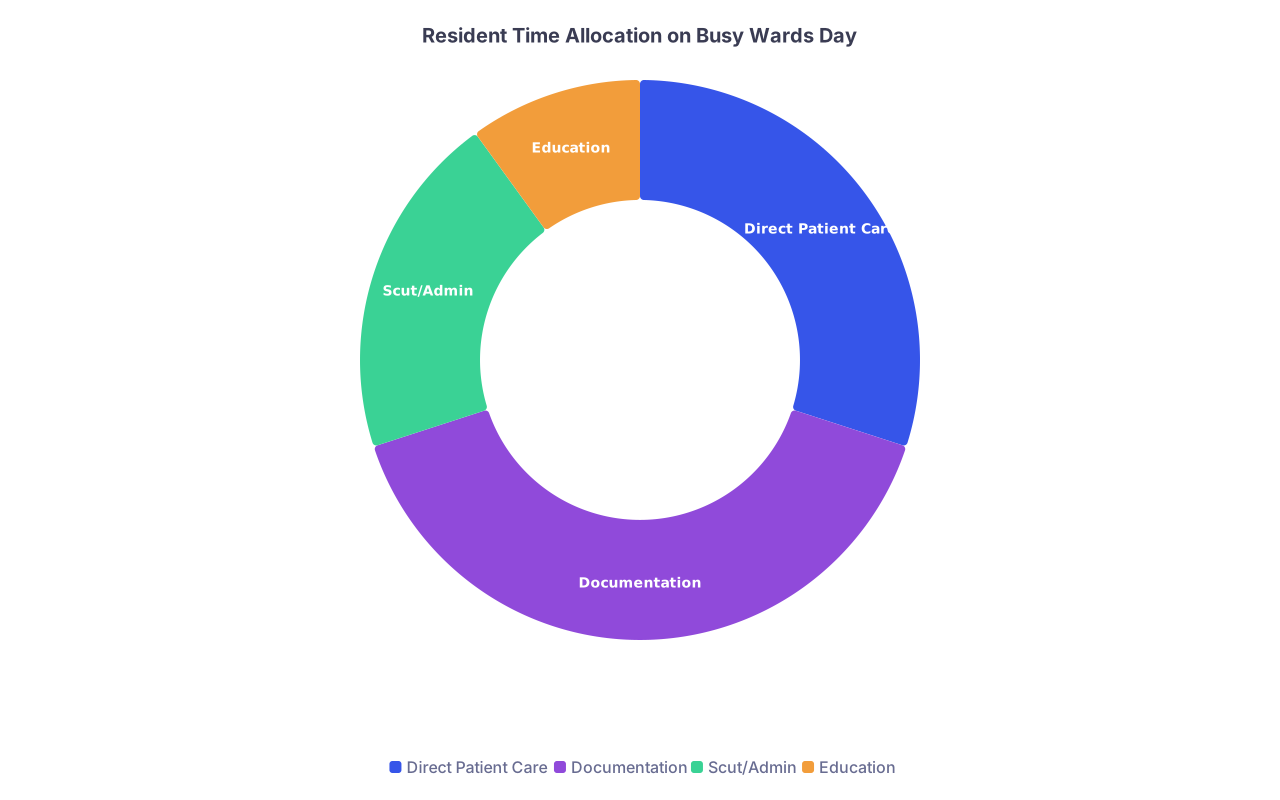
| Category | Value |
|---|---|
| Direct Patient Care | 30 |
| Documentation | 40 |
| Scut/Admin | 20 |
| Education | 10 |
If residents regularly say they are doing 2–3 hours of notes at home after a 12-hour day, you do not need a formal burnout scale to know how this story ends.
3.4 Sleep Opportunity and Call Structure
Sleep is not a soft metric. It predicts performance, depression risk, and, yes, burnout.
Ask granular, rotation-specific questions:
- “On your worst call rotation, on average, how many hours of sleep do you actually get while on call?”
- “What is the longest stretch you are in the hospital without a real chance to sleep?”
- “After a 28‑hour call, what is the rest of that day and the next day like? Are you actually off or pulled into stuff?”
Patterns that correlate with trouble:
- “We usually get 1–2 hours of broken sleep on 24s,” said with a shrug as if that is normal
- Post-call days routinely eaten by “just a quick meeting” or lectures that are not optional
Healthy programs know their worst rotations and will say things like, “That rotation was brutal, so we added a night float to protect sleep.”
3.5 Psychological Safety, Mistreatment, and Attrition
You cannot ask someone, “How psychologically safe do you feel?” and expect a clean number. Too abstract. You can ask about specific, countable events and behaviors.
Examples:
- “In the last year, how many residents have left the program early, switched programs, or taken extended leave?”
- “Have you personally witnessed attendings or seniors yelling, shaming, or publicly humiliating residents? How often?”
- “If you reported a concern about mistreatment, what percentage chance would you give that it is handled fairly and confidentially? 0–100%.”
That last one is not a validated statistic. It is a calibrated gut check. And it is surprisingly revealing.
| Metric Type | Healthy Range | Red Flag Signal |
|---|---|---|
| Work hour overages | < 10% of weeks > 80 hours | Frequent 80+ weeks, underreported |
| Schedule notice | ≥ 4 weeks in advance | < 2 weeks, frequent last-minute changes |
| Home charting | < 2 hours/week | 5+ hours/week regularly |
| Attrition rate | < 3% per year | Multiple residents leaving per year |
You will never get perfect numbers from a hallway conversation. You do not need to. You need rough magnitudes and trajectories.
4. How to Ask These Questions Without Raising Defenses
You are not running a hostile audit. You are doing reconnaissance. So wording and context matter.
Here is what the data shows about getting honest answers:
- You get cleaner data from residents than from leadership. PDs frame. Residents leak reality.
- You get more honest data in smaller groups or one-on-one than in large, faculty-adjacent sessions.
- You get the best data when you normalize the question, not when you sound accusatory.
Practical phrasing that works:
- “I know every program has tough rotations. For your worst one, about how many hours a week are you averaging?”
- “I have seen places where everyone quietly under-logs hours to avoid trouble. Does that happen here?”
- “Across your class, how many people have seriously considered leaving the program?”

| Step | Description |
|---|---|
| Step 1 | Identify Risk Domains |
| Step 2 | Convert to Numeric Questions |
| Step 3 | Ask Residents Privately |
| Step 4 | Compare Across Programs |
| Step 5 | Flag Red and Green Zones |
If someone answers instantly with, “We never have any issues with hours, mistreatment, or burnout, everything is great,” and nobody in the group blinks, you have two possibilities:
- You have stumbled into a unicorn program.
- Or the culture is so repressive that nobody will say the quiet part out loud.
You will usually be able to tell the difference from body language, eye contact, and how they talk about small annoyances.
5. Turning Answers into a Simple Burnout Risk Score
If you like structure, you can literally build yourself a quick burnout risk scorecard for each program you are evaluating. Not a scientific instrument. Just a way to compare relative risk.
Example framework (0–3 scale for each domain; higher = worse):
- Workload (hours, violations, home work)
- Schedule predictability (notice, weekend protection)
- Scut/EMR burden (time on notes, ancillary support)
- Sleep/call burden (true rest opportunities)
- Culture and safety (mistreatment, reporting confidence, attrition)
For each domain, anchor your scoring with explicit numeric ranges.
For instance, workload:
- 0 = Busy but within 65–75 hours on hardest rotations, minimal under-logging
- 1 = Occasional 80‑hour weeks, mostly accurate reporting
- 2 = Regular 80‑hour weeks, some pressure to under-report
- 3 = 80+ is routine, chronic under-reporting, residents joke about being “always here”
You do the same for the other domains, based on the ranges you are hearing.
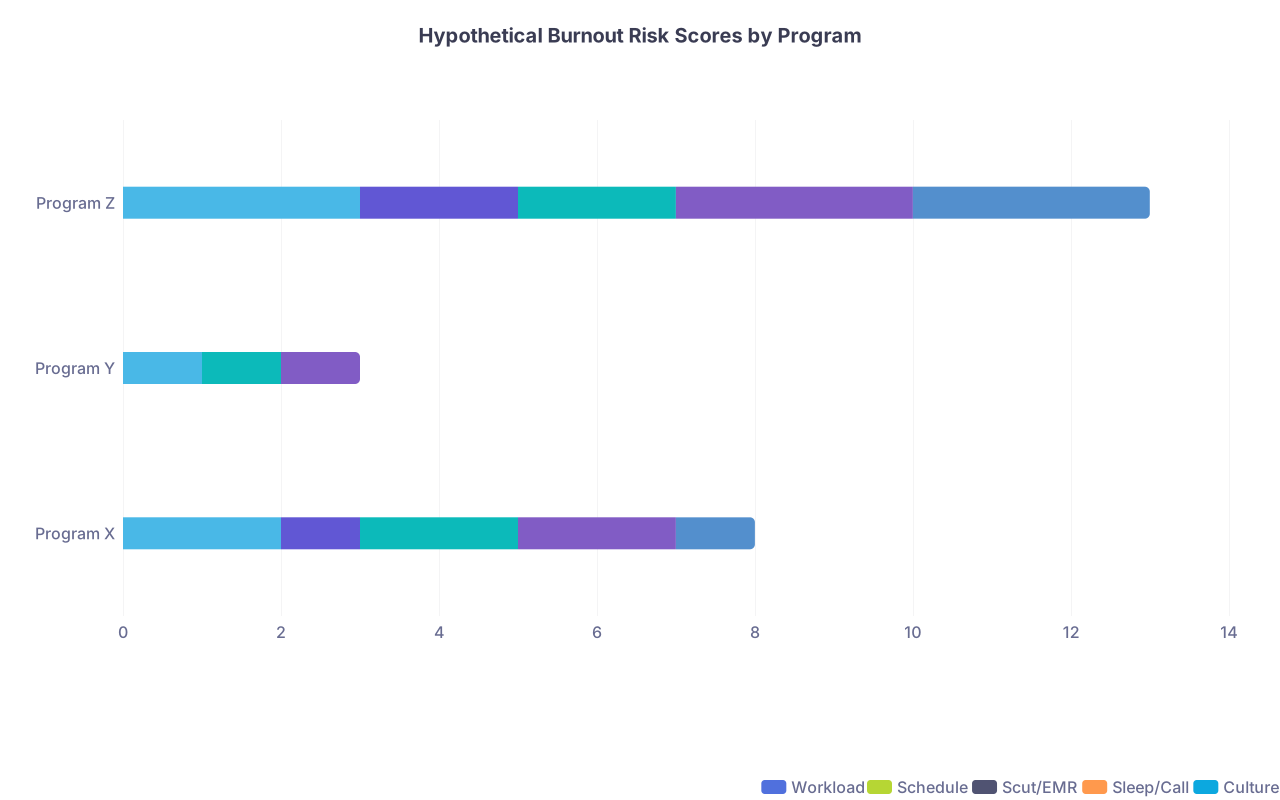
| Category | Workload | Schedule | Scut/EMR | Sleep/Call | Culture |
|---|---|---|---|---|---|
| Program X | 2 | 1 | 2 | 2 | 1 |
| Program Y | 1 | 0 | 1 | 1 | 0 |
| Program Z | 3 | 2 | 2 | 3 | 3 |
You are not trying to produce a journal-worthy index. You are forcing yourself to quantify impressions instead of being seduced by vague vibes and nice facilities.
When you stack the numbers across 5–10 programs, patterns jump out very quickly.
6. Red Flags That Show Up Repeatedly in the Data
After you look at enough programs and listen to enough residents, the same burnout predictors show up again and again. They are rarely listed on the website.
Here are the big ones that correlate with “don’t go there unless you have no alternative”:
High attrition with gaslighting explanations
“We lost 3 people in the last 2 years, but they just weren’t a good fit” is not reassuring. Especially in small programs.Chronic schedule chaos
Residents getting schedules <2 weeks before, frequent text messages changing shifts, “We just fix it on the fly.”Systematic under-reporting of hours
“We all log 78, because if you report higher, you just create trouble for yourself.” That sentence alone is enough to tank the culture score.Punitive response to errors
Residents whispering about people being humiliated, publicly called out, or having schedules worsened after reporting safety issues.Wellness theater with no structural change
Lots of yoga and wellness lectures, minimal staffing, no ancillary support, and constant coverage gaps. The data says: burnout does not drop because someone added a mindfulness app.
On the flip side, strong protective factors also repeat:
- Honest acknowledgment of problem rotations, plus a description of how they changed them using resident feedback
- Concrete numbers about addition of APPs, scribes, or ward pharmacists to reduce scut
- Clear, transparent, and used processes for schedule swaps, leave, and pregnancy accommodations
Programs that track their own burnout and wellness data and share at least summary trends with residents usually have nothing to hide. That is not a coincidence.
7. For Current Residents: How to Survey Your Own Program Without Getting Crushed
If you are already in a program and trying to get real data without painting a target on your back, you have to be strategic.
Practical moves I have seen work:
Use anonymous, resident‑run surveys
Tools like Qualtrics, Google Forms with careful settings, or institutional survey tools with aggregate reporting. Avoid anything traceable by name or IP if trust is low.Keep it short and numeric
10–15 items max, most on Likert scales or numeric ranges (hours, frequency per month, etc.). You want >70% response rate, not a 60‑item monster.Benchmarks and trend questions
Ask some questions in “this year vs last year” format: “Compared to last year, my workload is: much lighter / slightly lighter / same / slightly heavier / much heavier.” This lets you track movement even without external benchmarks.Present aggregated data, not anecdotes
When you finally bring it to leadership, do so as, “Here are the three biggest pain points, based on X% of residents reporting Y,” not as, “People are upset.” Data forces more serious engagement.

Common mistake: focusing surveys on vague satisfaction questions. “I am satisfied with my training environment” is soft. “I worked more than 80 hours in at least 3 of the last 4 weeks – yes/no” is hard.
You need more of the latter.
8. The Future: Burnout Metrics as a Program Quality KPI
The direction of travel is obvious. Over the next decade, resident burnout metrics will increasingly become a quality KPI, just like board pass rates and case numbers.
Some programs are already there:
- Annual, anonymous MBI‑based surveys
- Transparent reporting of high-level results to residents
- Programmatic changes tied to specific, measured pain points (e.g., “78% of residents reported >4 hours/week of home charting, so we implemented scribes on ICU nights”)
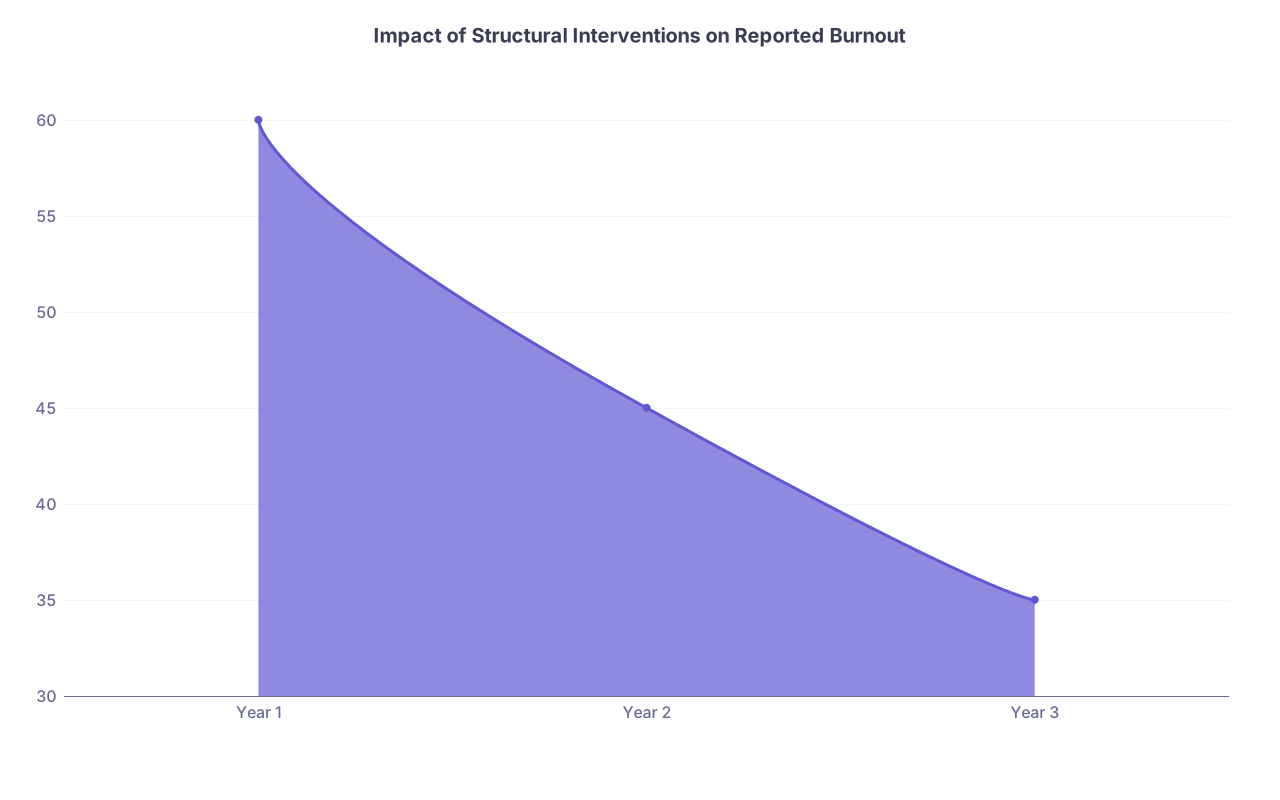
| Category | Value |
|---|---|
| Year 1 | 60 |
| Year 2 | 45 |
| Year 3 | 35 |
Others are clinging to the old model: squeeze residents, ignore the data, occasionally host a pizza wellness night, call it a day.
You cannot fix the entire system. But you can choose where to spend 3–7 of the most intense years of your life based on more than glossy brochures and “we are like family” speeches.
Use numbers. Ask uncomfortable, specific questions. Treat burnout as a measurable risk, not a moral failing.
Programs that respect you will respect the question.
FAQ (Exactly 4 Questions)
1. Is it acceptable to ask about burnout directly on interview day?
Yes, but with precision. Instead of, “Is there a lot of burnout here?”, ask, “What concrete steps has the program taken in the last 2–3 years in response to resident feedback about workload or wellness, and how do you know they helped?” Programs that have done real work will answer with specifics and numbers, not slogans.
2. What if residents give conflicting answers about hours or culture?
Expect some spread. Focus on patterns and medians. If three people from different PGY levels independently describe similar hour ranges and pain points, that is strong signal. If one person says “it’s terrible” and three say “it’s hard but fair,” you may be hearing more about fit and personal resilience than about core program structure.
3. Are anonymous online reviews (e.g., Reddit, forums) useful burnout data?
They are noisy but not useless. Think of them as qualitative outliers, not your primary dataset. Use them to generate hypotheses (“I’ve seen posts saying ICU is brutal here”), then test those hypotheses with numeric questions to current residents (“On ICU months, what are your typical weekly hours and sleep?”).
4. What is a realistic burnout rate in a “good” program?
You will not find a serious program with 0% burnout. Medicine is hard work. But when nearly every resident describes being exhausted, cynical, or regretting their choice, that is not normal. Healthy programs still have stressed residents, yet you will hear more about support, growth, and problem-solving than about feeling trapped. If >50% of your conversations with residents are essentially burnout stories, treat that data point seriously.