
The exit destinations of a residency class expose a program’s reputation more brutally than any brochure or website. Follow the numbers, not the marketing.
Most applicants obsess over board pass rates and fellowship match lists in isolation. That is incomplete. The real signal lives in patterns: where residents go, who takes them, how many do not land what they wanted, and which doors stay stubbornly closed. Once you start treating exit outcomes as a dataset instead of a glossy PDF, certain red flags jump out fast.
Below, I will walk through the specific data patterns in resident exit destinations that repeatedly correlate with weaker program reputation or internal dysfunction. This is not theoretical. This is what program directors whisper about when they say, “We know that program’s grads are… not strong.”
1. The Core Framework: How To Read Exit Destinations Like Data
Before getting into red flags, you need a structure. Think of each graduating class as a small dataset with 4 variables per resident:
Final destination type
– Academic faculty
– Community practice (employed or private)
– Fellowship (and what/where)
– Non‑clinical or “other” (industry, administration, unknown)Geography
– Local / same hospital system
– Same region
– Nationally distributed
– “Forced” rural / undesirable locationsCompetitiveness of the destination
– For fellowship: tier of institution, historical competitiveness of that subspecialty
– For jobs: job quality proxies (location desirability, scope, compensation if known, stability)Alignment with stated career goal
– Wanted fellowship but did not get one
– Wanted academic job but ended up in low‑resource community setting
– Switched out of clinical medicine entirely
When a program has a strong reputation, you typically see:
- Consistent fellowship placement into solid or top‑tier programs
- Graduates with academic interests actually landing academic positions
- National geographic spread (their name carries weight beyond local area)
- Minimal “mystery” outcomes (few “unknown,” “locum,” or “taking time off” entries)
Weak or troubled programs show the inverse pattern. And the patterns repeat enough that they are not random noise.
2. Red Flag #1: Fellowship Outcomes That Collapse Under Scrutiny
Almost every program now advertises a “100% fellowship placement” rate, especially in internal medicine, pediatrics, EM subspecialties, and certain surgical fields. The raw percentage alone is useless. You have to dissect where and what.
2.1. The “All Local, All Low‑Tier” Fellowship Pattern
If a program’s fellows always match into fellowships inside their own hospital system or its weaker affiliates, with almost zero external matches, the data are telling you something unflattering.
Here is the typical pattern over 5 years:
- 90–100% of fellows stay within the same institution or immediate network
- Almost no placements in nationally recognized divisions
- Competitive subspecialties (GI, cards, heme/onc, procedural surgical fellowships) are rare or non‑existent at big‑name programs
| Destination Type | Strong Program Pattern | Weak Program Pattern |
|---|---|---|
| Internal fellowships (same system) | 30–50% | 80–100% |
| External mid/high-tier fellowships | 40–60% | 0–10% |
| No fellowship / plan changed | 0–10% | 10–20% |
When internal fellowships are the only realistic option, it usually means external programs do not view the residency’s training or evaluations as competitive. Sometimes there is a cultural bias (“we do not encourage people to leave”), but in most cases, the external demand is simply weak.
2.2. Competitive Fields That Strangely Vanish
Look for multi‑year absence from highly competitive fellowships that residents say they want:
- In medicine: cardiology, GI, heme/onc, critical care at top‑tier centers
- In surgery: vascular, surg onc, plastics, pediatric surgery, MIS at strong programs
- In EM: critical care, peds EM, EMS at academic hubs
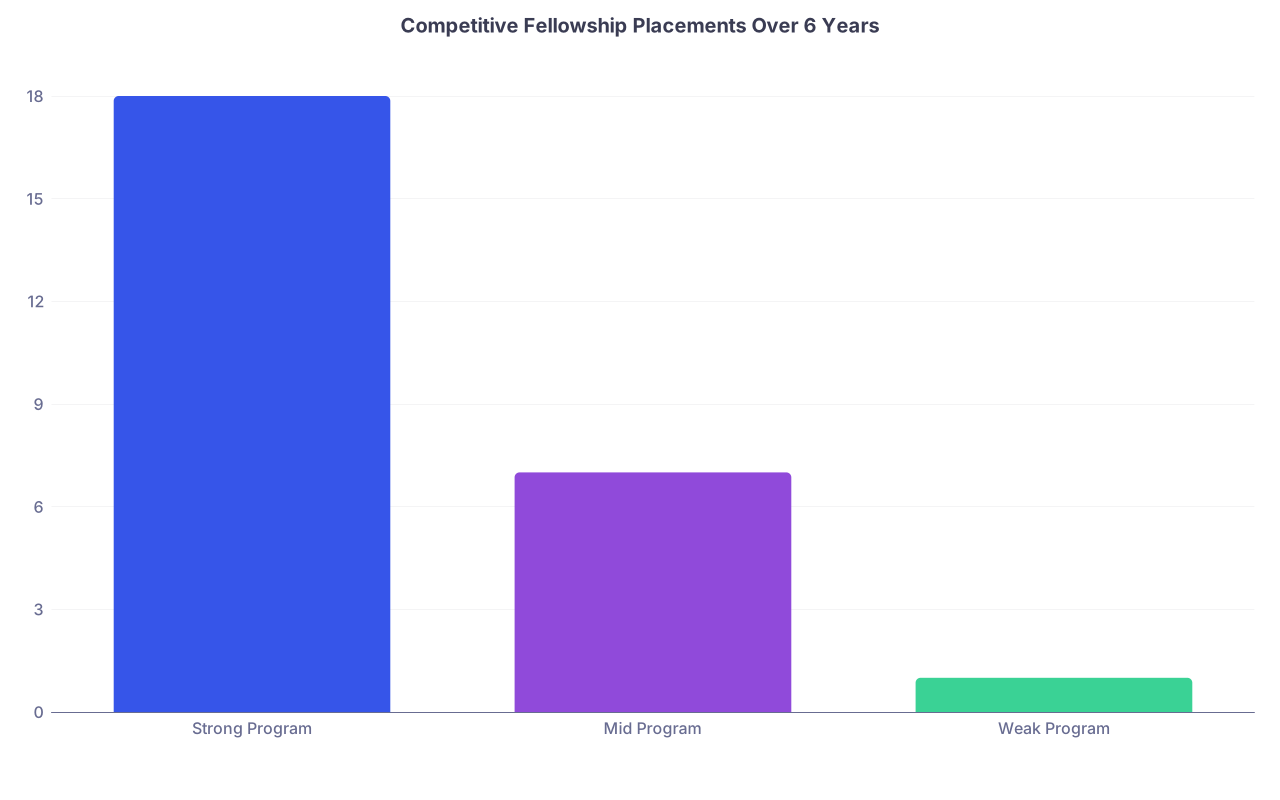
If over a 5–7 year period you see essentially zero graduates landing these fellowships at reputable programs — especially when you know residents applied — there is a reputation issue. Other programs do not trust the training, the letters, or the clinical rigor.
| Category | Value |
|---|---|
| Strong Program | 18 |
| Mid Program | 7 |
| Weak Program | 1 |
This type of chart is what PDs look at informally. A strong program might send 2–4 people per year into competitive fellowships; a weaker one might have 1 total across an entire graduating decade.
2.3. The “Everyone Suddenly Decided on Hospitalist” Story
You will hear this: “Most of our residents choose hospitalist jobs; they are not interested in fellowship.” Sometimes true. Often spin.
Data pattern to watch:
- PGY‑2: 50–60% of class says they are “strongly considering” fellowship
- Exit destinations: only 10–20% actually in fellowship; rest in generic hospitalist jobs with no specific regional ties or personal reasons
That gap is not explained purely by “changed minds.” Frequently, it is a mixture of poor support for fellowship applications, weak letters, and programs being unwilling to hard‑advocate for their residents. And other institutions know it.
3. Red Flag #2: Academic Careers That Fail To Materialize
A self‑described “academic” residency program whose graduates almost never secure academic jobs is sending you a loud signal.
3.1. The Academic Label vs Actual Output
Ask for or search:
- What proportion of graduates in the last 5–10 years hold faculty titles at any institution?
- In which departments and at what kind of places (university vs small community college affiliate)?
- How long did they stay? (Many “academic” jobs are 1–2 year stopgaps with no research or teaching infrastructure.)
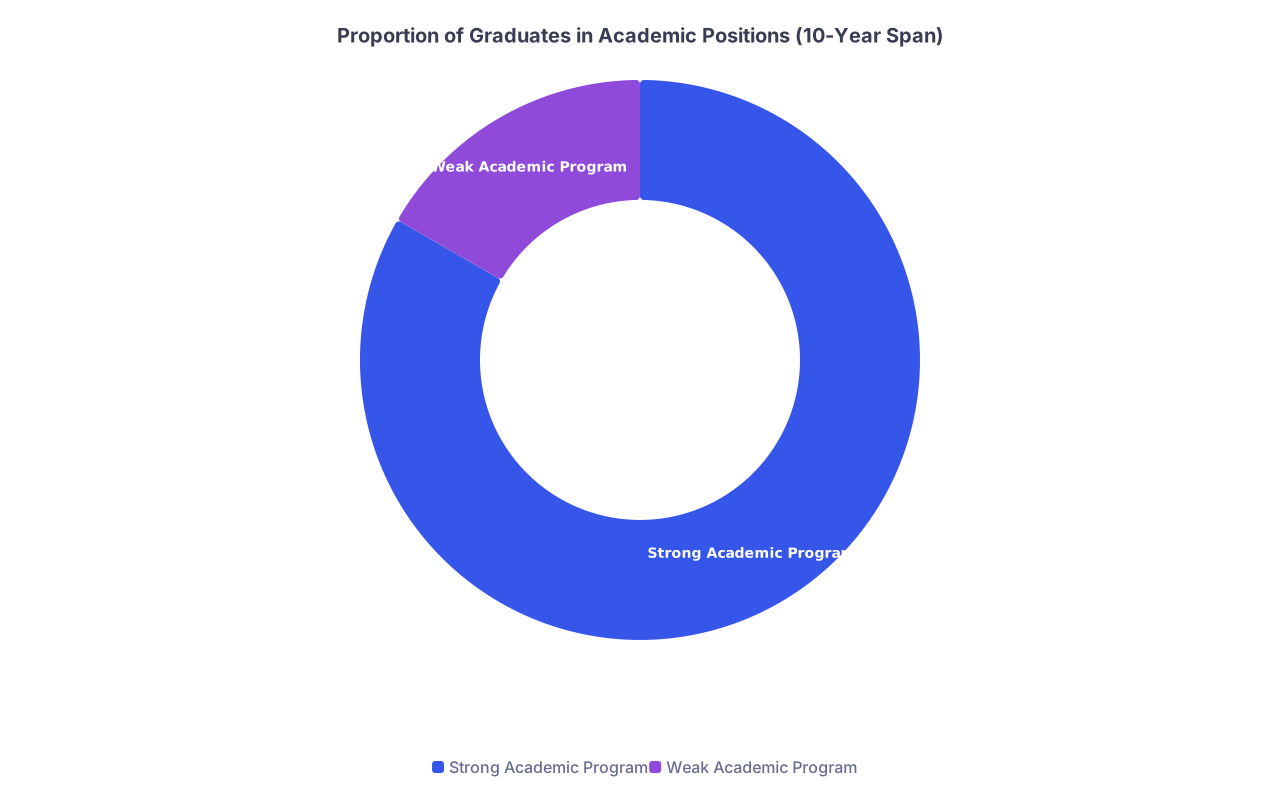
Strong academic programs typically produce at least 20–40% of graduates who, at some point, hold real faculty positions. Not all stay long term, but the initial placement matters.
Programs with shaky reputation often show:
- 0–10% true long‑term academic placement over many years
- Academic jobs almost exclusively at their own home institution, often in low‑autonomy roles
- Very few grads with protected research time, named grants, or national presentations
| Category | Value |
|---|---|
| Strong Academic Program | 35 |
| Weak Academic Program | 7 |
When a place calls itself “academic” but its alumni list is essentially community job after community job, the external market has already voted.
3.2. Geographic Narrowness of Academic Jobs
If academic‑minded residents rarely leave the institution’s immediate geographic region, that is another reputation flag. Strong reputations travel. Weak reputations are geographic prisoners.
Example pattern:
- 85–90% of academic placements: same city or same hospital system
- External academic offers at peer or better institutions: basically none
This tells you that local hiring is driven more by familiarity and convenience than by objective perceived quality.
4. Red Flag #3: Overconcentration in Low‑Choice Community Jobs
Community practice is not a downgrade. Bad options are. The distinction matters.
You are looking for two things:
- Proportion of graduates in stable, desirable community jobs aligned with personal goals
- Proportion seemingly forced into remote, low‑resource, or temporary roles because better options were not available
4.1. The Forced Rural / Remote Pattern
Repeated pattern of graduates going to:
- Remote areas they have no ties to
- Small hospitals that chronically struggle to fill roles
- Multi‑site “you will cover six hospitals” contracts
- Very short‑term or locums‑heavy arrangements straight out of training
Individually, these might be conscious lifestyle choices. In aggregate, over multiple classes, a large cluster suggests those residents did not have better options.
| Metric | Strong Program | Weak Program |
|---|---|---|
| Graduates in first-choice locations | 60–75% | 25–40% |
| Remote / undesirable regions | 10–20% | 35–50% |
| Locums / temp positions at exit | 0–5% | 10–20% |
I have watched residents sit in a conference room with multiple offers in Boston, Seattle, and Austin on the table. That is what strong‑reputation training buys you. At weaker programs, I have seen PGY‑3s scrambling in March, trying to cold‑email hospitalist directors in three states away because nothing local panned out.
4.2. Excessive Reliance on Single Employers
If 50–70% of grads land with the same large private group or corporate employer, ask why.
Sometimes that group has a tight pipeline with the residency, and it genuinely works well for everyone. Other times, it is because that one employer is the only entity willing to consistently hire them in volume. That is not a sign of broad‑based respect for the program.
5. Red Flag #4: Non‑Clinical and “Unknown” Destinations
Another underappreciated signal: how many graduates end up leaving clinical medicine quickly, or have no clearly documented destination at all.
5.1. Genuine Interest vs Escapism
Non‑clinical careers are legitimate — industry, consulting, informatics, policy, pharma — when they are coherent with the resident’s documented interests and trajectory (e.g., years of QI work, a prior MBA, informatics projects).
The red flag pattern is different:
- Multiple grads per year labeled “taking time off”, “exploring options”, “undecided”
- Abrupt pivots in PGY‑3 after struggling in core rotations or on exams
- 1–2 residents per class leaving medicine within 1–2 years post‑graduation, not for structured MBAs or fellowships, but burnout or disciplinary reasons
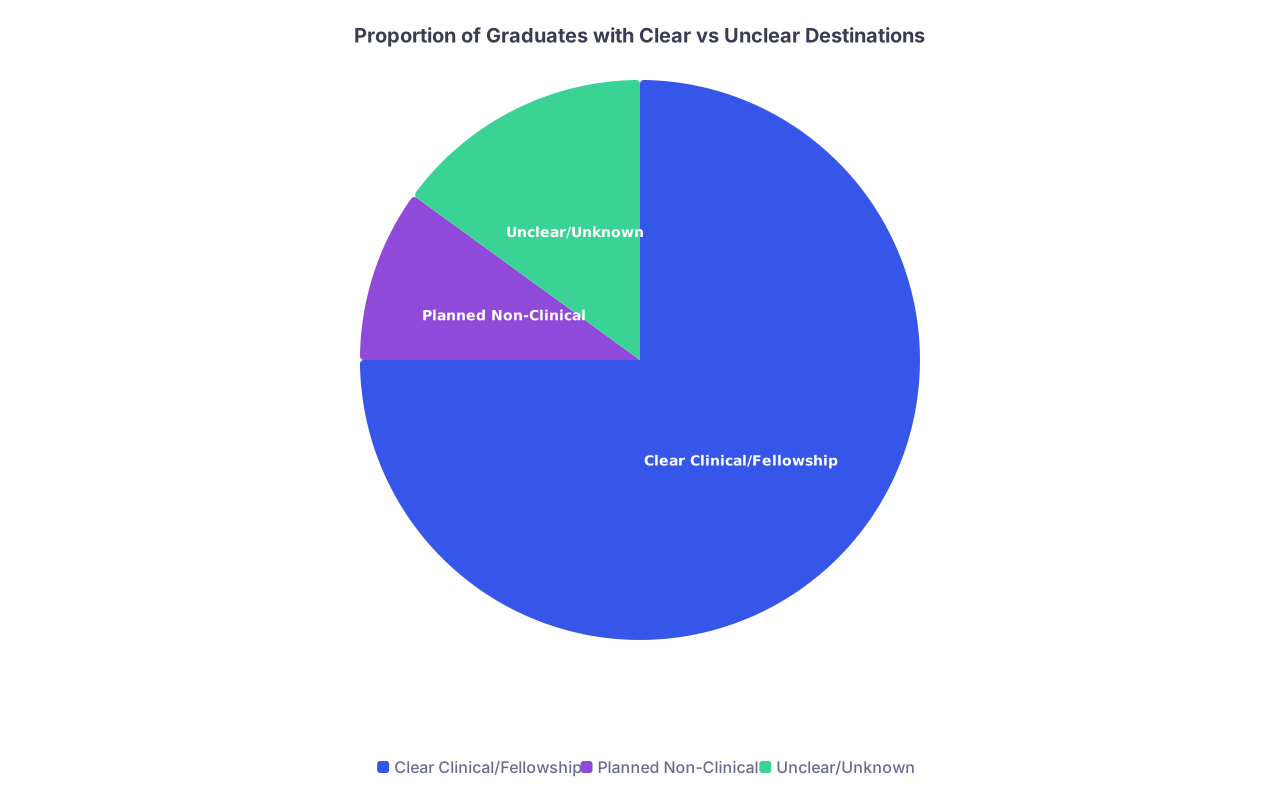
When >10% of a program’s graduates each year vanish into “unknown / other” categories, something is broken in training culture, mentorship, or clinical load.
| Category | Value |
|---|---|
| Clear Clinical/Fellowship | 75 |
| Planned Non-Clinical | 10 |
| Unclear/Unknown | 15 |
In stronger settings, that “unclear/unknown” piece is more like 2–5%, often because someone is delaying a fellowship start for personal reasons, not because they were pushed off a cliff.
5.2. Quick Post‑Residency Attrition
Look one step further: 3–5 years out.
If you find multiple alumni who:
- Left clinical practice entirely shortly after training
- Downsized drastically in scope (e.g., boarded but now doing pure urgent care despite prior academic plans)
- Cite “I felt unprepared” or “the program burned me out” when you talk to them
That attrition is an indirect but powerful indicator that the training environment was toxic, underresourced, or both. Strong programs rarely produce multiple early exits per class.
6. Red Flag #5: Geographic Containment and Reputation Silos
Where graduates land geographically is a clean proxy for how portable the program’s name is.
6.1. Hyperlocal Retention
Some retention to the home system is normal. Excessive retention is not.
Problem pattern:
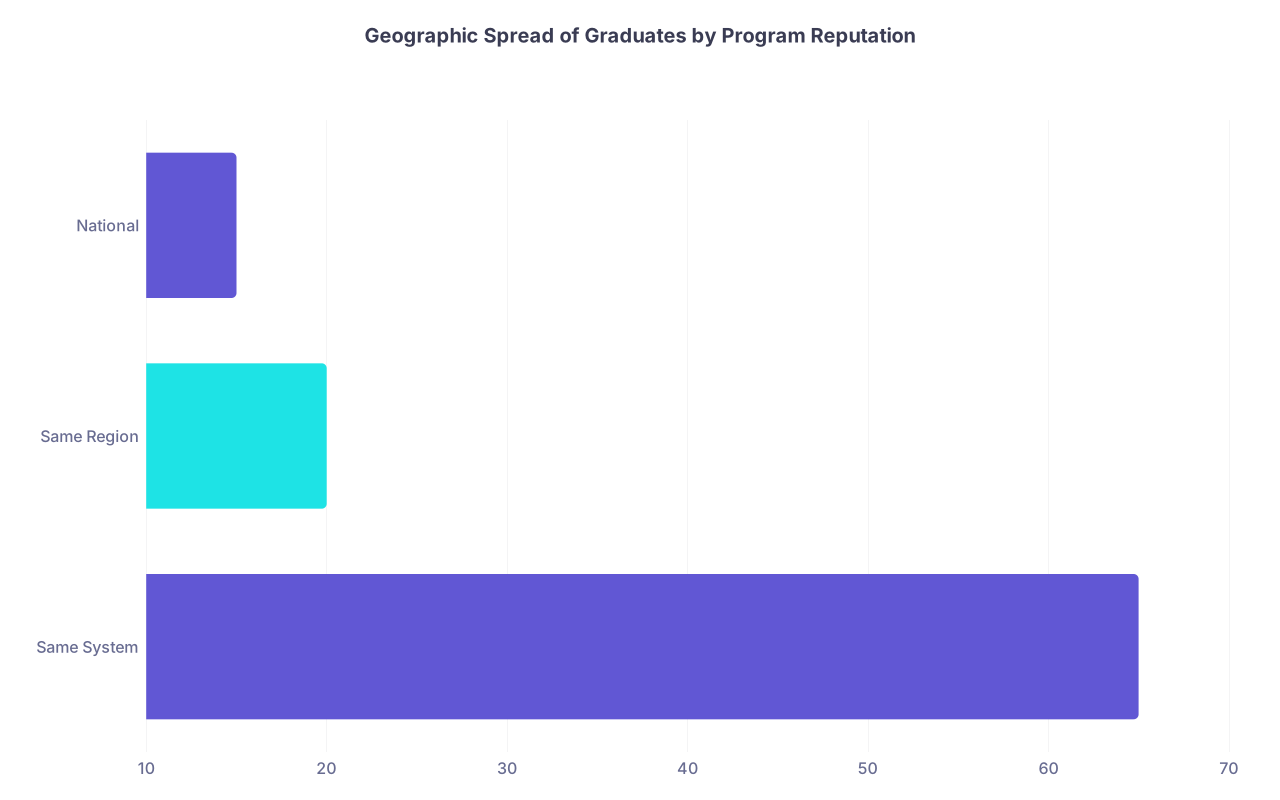
70–80% of each class stays within the same city or health system
- Almost no graduates spread to other states or coasts
- Minimal presence in competitive markets (Boston, Bay Area, NYC, Chicago, DC, etc.) unless the program is already located there
| Category | Value |
|---|---|
| Same System | 65 |
| Same Region | 20 |
| National | 15 |
That distribution above fits a weaker or mid‑tier local program. For a strong national program, you would expect something closer to:
- Same system: 20–30%
- Same region: 20–30%
- National spread: 40–60%
Programs with genuinely strong reputations do not need to keep people to prove their worth. Their trainees leave and succeed elsewhere, and the program becomes a known commodity across multiple regions.
6.2. Absence from Known Competitive Markets
Look specifically at presence in high‑demand urban markets. Not everyone wants those cities, but many do. If over a 10‑year period almost no one from a program ends up in those locations, you have to ask why:
- Are graduates not competitive for those jobs?
- Do employers there simply not know or trust the program?
- Or are residents actively discouraged from pursuing those markets?
Either way, for you as an applicant, it caps your future options.
7. Red Flag #6: Mismatch Between Stated Interests and Final Outcomes
This is where you have to do a little investigative work.
Watch what residents say in PGY‑1/2 (on match lists, resident bios, conference discussions), then compare that to where they actually end up. A persistent mismatch tells you the program is not good at converting ambition into outcomes.
7.1. The Failed Fellowship Cohort
Example pattern in internal medicine:
- Class of 14
- 7 residents state an interest in cardiology, GI, or heme/onc by PGY‑2
- Final year outcomes: 2 land low‑to‑mid tier fellowships; 5 in generic hospitalist roles with no clear reason for changing their minds
If this happens once, maybe the cohort changed. If this happens across 5+ years, the signal is obvious: the program does not have the mentorship, research backing, or external credibility to reliably support those ambitions.
7.2. The Research‑Talk, No‑Research‑Job Reality
Many programs brand themselves as “research‑heavy” or “scholarly.” The real data check:
- How many residents each year present at national conferences (ACP, ACG, ATS, ASCO, specialty societies)?
- How many publish peer‑reviewed papers as first or co‑authors?
- How many land research‑focused fellowships or K‑type awards later?
If the research pipeline produces almost no one who goes on to research‑heavy careers, and the exit list is 95% pure service jobs, that “research” label is mostly marketing.
8. How To Actually Collect And Analyze This Data As An Applicant
You are not going to get a SQL dump from the program. But you can approximate.
8.1. Build a Simple Exit Destination Dataset
Pick the last 5–7 graduating classes. For each resident you can track down:
- Name, PGY graduation year
- Current job (title, institution, geography) – LinkedIn, hospital websites, PubMed, Doximity
- Rough category: fellowship, academic, community, non‑clinical, unknown
Dump that into a basic spreadsheet or note system. You do not need perfection; approximate categories are enough.
Then, quantify:
- % in fellowship, and of those, % in competitive or well‑known programs
- % in academic jobs (real faculty, not just “hospitalist at teaching site” with no academic title)
- % in community jobs and whether they cluster in low‑choice locations
- % non‑clinical and % unknown / untraceable
Patterns emerge quickly once you have 40–80 datapoints.
8.2. Compare Across Programs
Doing this for even 3–4 programs you are ranking highly can be eye‑opening.
- Program A: 40% fellowship (half at big names), 25% academics, broad geographic spread
- Program B: 20% fellowship (all internal), 5% academics, 70% within same city, several unknowns
If Program B’s website still claims, “Our graduates go anywhere they want,” you know how much to trust the rest of their messaging.
9. Legitimate Exceptions And Special Cases
Not every odd pattern equals “bad program.” A few situations are different:
- Community‑oriented programs that explicitly train for local primary care / hospitalist roles and say so honestly. In those cases, the exit destination concentration is not a red flag; it is the goal.
- Newer programs with small cohorts and limited historical data. For them, variability is high and patterns are less stable. You judge more by trajectory than absolute numbers.
- Lifestyle‑driven markets (e.g., Hawaii, certain resort areas) where people genuinely stay local because leaving makes no economic or personal sense.
The problem is not the pattern itself. The problem is the gap between what the program claims its graduates do and what the data show.
10. The Bottom Line: Reputation Is Visible In Where People End Up
You can ignore the slogans and the “Top 10 in XYZ Magazine” rankings; those metrics are manipulated. Resident exit destinations are harder to fake at scale.
The data patterns that strongly suggest poor or limited reputation:
- Fellowship outcomes constrained to internal, lower‑tier programs, with competitive subspecialties notably absent at strong external institutions.
- Minimal genuine academic placements, especially outside the home system, despite “academic” branding and lots of research talk.
- Heavy clustering of graduates in low‑choice community jobs, remote or undesirable locations, or with a single employer that seems to hire whoever they can get.
- A sizeable fraction of graduates disappearing into unclear, non‑clinical, or “unknown” categories, often after burnout or poor preparation.
- Geographic containment: most graduates trapped in one city or system with almost no presence in competitive or distant markets.
- Chronic mismatch between residents’ stated aspirations (fellowship, research, academics) and their actual destinations.
If you train at a program with these patterns, your future set of doors shrinks. You might still succeed — motivated people often do — but you will be rowing against the current.
Two or three solid years of careful data collection, even as an outside observer, will show you which programs quietly generate strong, portable careers and which ones do not. Pay attention to where people end up. The reputation is right there in the exits.