
The residency rumor mill will hear about a PD leaving before the ACGME does. And if it’s a program you ranked highly, your stomach is probably already in free fall.
Let me be blunt: a mid‑season program director loss is a serious yellow flag. Not always a catastrophe. But absolutely not something you ignore or “hope works out.”
Here’s how to handle it like an adult making a multi‑year life decision, not a panicked MS4 refreshing Reddit.
1. First: Get Clear on What Actually Happened
Most people jump straight to “Should I change my rank list?” before they even know what’s real. That’s backwards.
You need facts. Or at least the closest you can get to them.
What you’re trying to figure out
There are a few very different scenarios that all look like “PD left mid‑season” from the outside:

Normal-ish transition
- Long‑time PD retiring.
- PD moving to another leadership job (DIO, GME dean, another institution).
- Announced with some runway, maybe residents had input on interim PD.
- Usually less scary, sometimes even fine.
Tension / institutional conflict
- PD “steps down to focus on clinical work” with zero warning.
- Residents clearly didn’t know it was coming.
- Vague language, no named permanent replacement, lots of “to be determined.”
- Can signal bigger political or financial fights at the hospital.
Serious trouble
- PD removed under a cloud: harassment investigation, resident mass exodus, ACGME citation storm.
- Residents suddenly very tight‑lipped or, on the flip side, openly scorched‑earth.
- Rapid leadership patchwork: interim PD, interim associate PD, chairs “acting” in roles.
- This is the one that can tank your training quality fast.
You will almost never get the full true story as an applicant. But you can get close enough to make a rational call.
How to actually get information
Stop doom‑scrolling and start asking specific people specific questions.
Step 1: Re‑read official communications
If this was your interview program, read:
- The email or letter they sent about the change.
- Any updated info on their website / FREIDA / program brochure.
You’re looking for:
- Is the reason for the change stated or completely sidestepped?
- Is there already a named interim or permanent PD?
- Is there a timeline for a permanent hire?
- Does the message feel canned and corporate, or specific and resident‑centered?
Vague + no timeline + no names = higher concern.
Step 2: Contact current residents directly
Do not send a mass “what’s going on??” message. That just gets ignored.
Pick:
- 1–2 residents you met on interview day or
- Someone from your med school who’s there or
- A resident you can find on social media / website with some obvious “education/advocacy” role
Then send something like:
Hi [Name],
Thanks again for talking with me during interview season – [Program] made a strong impression on me and I’ve been considering ranking it highly.I heard about the recent PD transition and wanted to understand how this is playing out on the ground. Not looking for gossip, just trying to make a responsible decision.
Would you be open to a quick 10–15 minute call sometime this week, or okay if I send 3–4 specific questions by email?
Totally understand if things are chaotic and you can’t share much.
Best,
[Your Name]
Phone/Zoom is better than email. Tone, hesitation, and what they don’t say matter.
Step 3: Ask targeted questions (not “so is your program ok?”)
On that call, you’re not interrogating them. You’re assessing stability.
Here are questions that actually reveal something:
- “When did you all first find out about the PD leaving?”
- “How much notice did residents get before the announcement?”
- “Who is functioning as the real day‑to‑day leader right now?”
- “Are there any concerns about accreditation or major changes to the schedule/clinics?”
- “How has communication from the department chair / GME office been?”
- “What are residents most worried about right now?”
- “If you were in my shoes, ranking this program this year, how would you think about it?”
Listen for:
- Long pauses.
- “I probably shouldn’t say too much but…”
- Repeated “we’ll see” and “they haven’t told us.”
- Or on the positive side: concrete, calm answers like “Dr. X is interim, she’s been APD for 10 years, nothing has changed in our clinics, we feel okay.”
Step 4: Check external signals
Do a quick, focused scan:
- ACGME public info: any recent change in status? (Withdrawal, intent to withdraw, probation).
- Program’s social media: tone shift? defensive? unusually quiet?
- Reddit / SDN: not your main data source, but if you see multiple detailed posts from different accounts, pay attention.
You’re building a picture. Not proving a case in court.
2. Understand What Losing a PD Actually Changes for You
Too many applicants think of PDs as the person who interviewed them and signs letters. Reality is harsher: the PD is the backbone of your training environment.
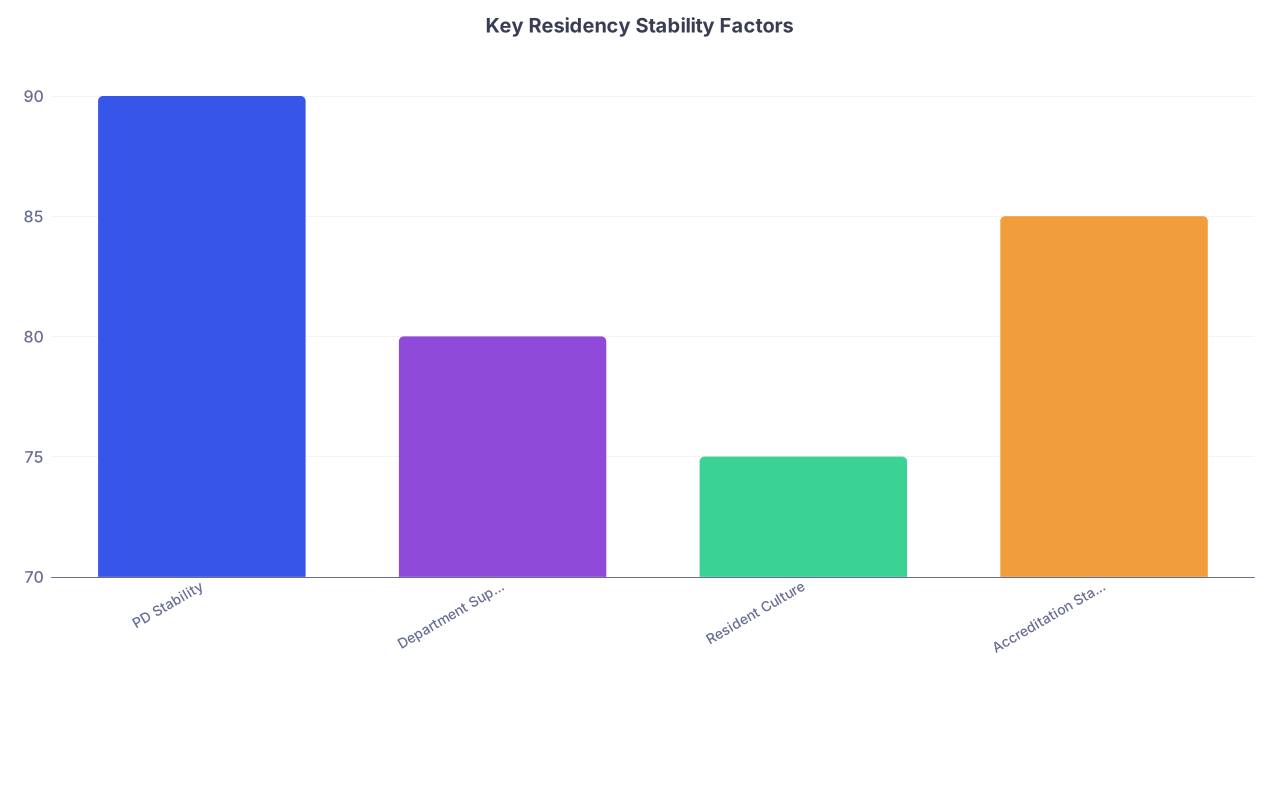
| Category | Value |
|---|---|
| PD Stability | 90 |
| Department Support | 80 |
| Resident Culture | 75 |
| Accreditation Status | 85 |
(In other words: PD stability is usually the single biggest indicator of how predictable your training will be.)
Here’s what a missing or unstable PD touches:
- Schedule and curriculum stability
Without a strong PD, rotations get shuffled, clinics over‑ or under‑staffed, didactics become afterthoughts. I’ve seen programs where:
- PGY‑2s were “floating” for months because nobody finalized block schedules.
- A new mandatory site was added last‑minute with brutal commute times.
- Conference time got quietly eaten away by “operational needs.”
All because there was no one with the authority and bandwidth to say “no.”
- Advocacy for residents
When you’re in a bind—parental leave, illness, remediation, abusive attending—you want a PD who will go to war for you.
Interim PDs often:
- Have divided loyalties (chair vs residents).
- Are “keeping the seat warm” and avoid rocking the boat.
- Lack institutional clout to push back on service demands.
So a bad combo: high service load + weak leadership = resident burnout with no safety net.
- Your future career
Letters, mentorship, fellowship. The PD is often the person who:
- Writes or coordinates your big fellowship letters.
- Calls friends in other institutions.
- Shields you if you had a rough patch in training.
A revolving door of PDs can leave you with no one who really knows you well enough to help.
- Accreditation and reputation
If the PD exit is connected to ACGME issues, curriculum non‑compliance, or resident complaints, you might be walking into:
- New duty hour restrictions that limit cases.
- Program requirements to reduce electives or research time.
- A stigma that fellowship directors whisper about for a few years.
Not all PD departures mean this. But when they do, the fallout is on you, not on the med school that matched you there.
3. How Close Are You to Rank List Lock? Adjust Your Strategy by Timing
Your options change based on where you are in the calendar.
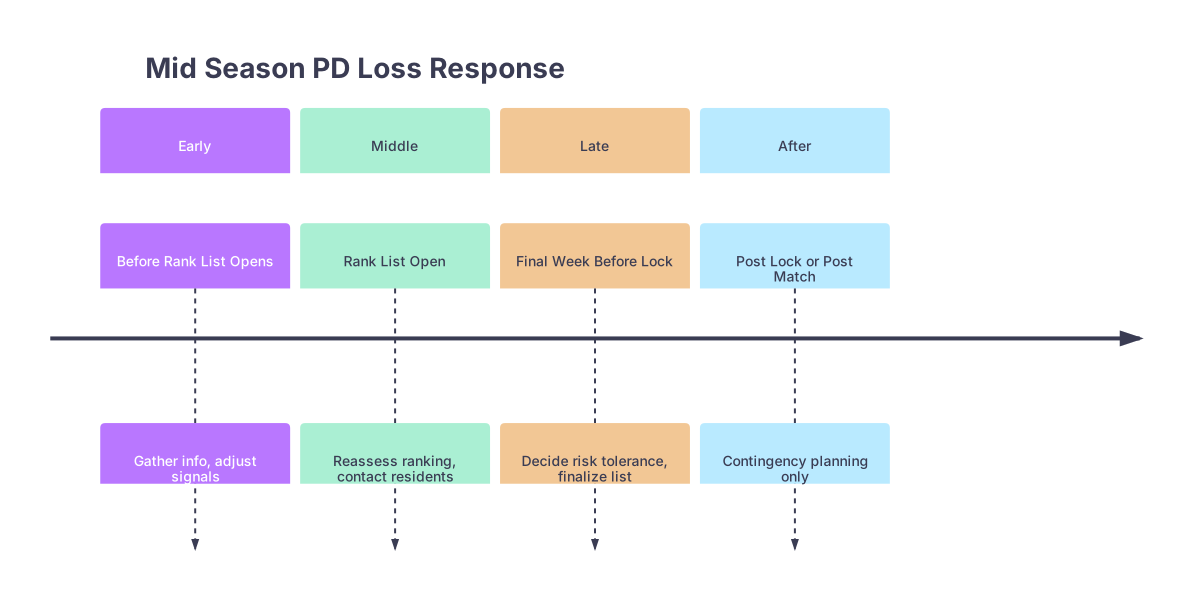
| Period | Event |
|---|---|
| Early - Before Rank List Opens | Gather info, adjust signals |
| Middle - Rank List Open | Reassess ranking, contact residents |
| Late - Final Week Before Lock | Decide risk tolerance, finalize list |
| After - Post Lock or Post Match | Contingency planning only |
Scenario A: You haven’t certified your list yet (best case)
You actually have leverage here.
Stepwise:
- Re‑rank based on new information
Ask yourself three concrete questions:
- “If this PD situation had been true on the day I interviewed, would I still have ranked them here?”
- “Am I willing to trade some stability for the specific benefits of this program (location, family, prestige, fellowship pipeline)?”
- “If this program imploded halfway through my residency, would I regret not ranking a slightly less shiny but more stable program higher?”
If you’re hesitating heavily on all three, that’s your answer: move them down.
- Don’t overreact by deleting them entirely… unless
I rarely tell applicants to pull a program completely unless:
- Multiple current residents explicitly say they wouldn’t choose it again in this moment, and
- There’s credible talk of accreditation trouble or mass faculty departures, and
- You have other reasonable options on your list.
Otherwise, you’re not being rational. You’re letting fear drive you.
- Spread your risk
If your top 3 were:
- The program with PD loss
- A similarly competitive but stable program
- A slightly less competitive but solid program
A very sane move is:
- Drop #1 to 2 or 3.
- Keep #2 and #3 where they are or move them up.
- Do not cluster all your highest ranks around unstable programs just because they’re “top tier.”
Scenario B: You already certified your list… but rank lock hasn’t happened yet
Easy: change it.
NRMP lets you modify and recertify as many times as you want before the deadline. Just make sure you see that green “Certified” status again.
Do not sit there and agonize without acting. If your gut says “this changes things,” adjust the list.
Scenario C: Rank list lock has passed
Now we’re in contingency‑planning mode, not prevention.
You cannot change your list, but you can:
- Get more data now so that you’re not blindsided if you match there.
- Mentally plan: What if I love it and it stabilizes? What if it’s a mess and I need to transfer?
- Know the rules: read your specialty’s and ACGME’s policies on program closure, transfers, and protections.
You’re not powerless post‑lock; you just have fewer choices.
4. How to Weigh This Program Against Others: A Hard-Nosed Framework
Let’s get past vibes and “I just liked it there.” You’re trying to compare risk‑adjusted value.
Here’s a simple frame I’ve used with residents and applicants:
| Factor | Stable Program A | PD-Loss Program B |
|---|---|---|
| Location fit (family, etc.) | 7/10 | 10/10 |
| Training quality (cases, didactics) | 8/10 | 8/10 |
| Leadership stability | 9/10 | 3/10 |
| Resident culture | 8/10 | 7/10 |
| Career outcomes | 8/10 | 9/10 |
Ask yourself:
- Is the main draw of this unstable program location or training?
- If it’s mostly location (partner’s job, family, cost of living), then you’re choosing life stability while accepting professional risk.
- If it’s training/opportunity (prestige, fellowship), remember: those benefits assume a functioning program with strong leadership. That’s what’s now in question.
- Do you have other options that are “good enough” on both fronts?
If your alternative is:
- A solid, mid‑tier, stable program in a decent city vs.
- A now‑chaotic “dream” program in your favorite city
I’d still often tell people to seriously lean towards stability—if their long‑term career goals are possible from both.
- What is your personal risk tolerance?
Some people:
- Have kids, a mortgage, a partner locked to a job. They cannot afford a program meltdown.
- Have visas tied to program continuity (this is huge; if you’re on a visa, PD/program instability is extra dangerous).
- Are gunning for ultra‑competitive fellowships where reputation might matter more.
Your life context matters more than the program’s shiny website.
5. Red Flags vs Acceptable Risk: How Bad Is This, Really?
Let’s separate “I’m anxious” from “this is structurally bad.”
Concerning but potentially manageable
- PD retired after long tenure, clear plan, respected APD stepping in.
- Residents generally calm, say “we’ll miss them, but training is the same.”
- Department chair has strong educational track record and is visible.
- ACGME status is clean, no whispers of probation.
This can be okay. Not ideal, but not a deal‑breaker by itself.
Medium to high concern
- Sudden departure with vague email: “Dr. X has decided to pursue other opportunities.”
- Residents heard about it at the same time you did—or later.
- Interim PD is brand new faculty or someone clearly over‑extended.
- Rumors of major hospital budget cuts, site closures, or pending mergers.
This is where you seriously lower them on your list unless they meet an overwhelming personal need (e.g., only place near your sick parent).
Serious red alert
You should think very hard about keeping them high on your list if you see:
- Multiple residents explicitly advising applicants to be cautious or avoid the program.
- Credible reports of:
- Major attending exodus.
- ACGME warning/probation related to leadership or resident support.
- Toxic culture complaints tied to the PD’s exit.
- Zero clarity on who will be PD next year.
- Department chair with a reputation for being anti‑education or hostile to residents.
This is where I’ve told people flat out: “Move them down, or off, unless you have literally no other realistic options.”
6. If You Do Match There: Survival and Exit Strategy
Sometimes despite everything, you’ll still rank the program highly and you may match there. Or you already did before this hit. Then what?

Here’s how to protect yourself.
Step 1: Be the most informed PGY‑1 there
On arrival:
- Identify who truly runs the program day‑to‑day. It might be an APD or chief resident more than the interim PD.
- Ask upper levels privately:
- “What’s actually changed since Dr. X left?”
- “Where are the landmines?”
- “Who has residents’ backs when things go sideways?”
You’re mapping the informal power structure.
Step 2: Document, document, document
If you start seeing:
- Duty hour violations as the norm.
- Broken promises on rotations, didactics, or off‑service experiences.
- Hostile responses to reasonable feedback.
Keep a private record. Not for drama. For protection.
- Save emails.
- Note dates, times, and specifics about incidents.
- When possible, communicate about serious issues in writing so there’s a trail.
If you ever need to transfer or involve GME/ACGME, contemporaneous notes are gold.
Step 3: Build relationships outside the PD silo
Don’t bet your entire future on a single PD or even a single department.
- Find at least two attendings who:
- Take education seriously.
- Give you specific feedback.
- Are known to write strong letters.
- Engage with your GME office early (not just when there’s a crisis).
- If your specialty is fellowship‑heavy, start networking externally by PGY‑2: conferences, virtual events, alumni.
If the program’s leadership keeps churning, you’ll still have people who know you and can vouch for you.
Step 4: Know how transfers and program closures actually work
Not fun to think about. Necessary.
- Read your GME handbook and specialty board policies:
- Minimum training years in one institution.
- Transfer rules.
- How credit for prior training is handled.
- If things go truly bad (ACGME‑level problems), there are often arrangements to absorb residents into other programs. It’s messy, but you are not left totally stranded.
You’re not committing to tolerate abuse or chaos for 3–7 years. You’re committing to reassess with real‑world data and act if needed.
7. How to Talk About This Without Sounding Like Gossip Police
One last practical piece: how you ask about this with programs and residents matters.
Things that work:
- “With the PD transition, how is the department supporting residents through the change?”
- “Who’s taking point on education and curriculum this year?”
- “Have there been any changes to rotations or clinics since the leadership change?”
Things that make you look bad:
- “So, what happened with Dr. X? I heard it was messy.”
- “Reddit says your program is falling apart—thoughts?”
- “Is your program going to lose accreditation?”
Your goal is to look like someone who evaluates risk thoughtfully, not like someone chasing drama.
Losing a PD mid‑season at a program you ranked highly should change how you think. Blind loyalty to a previous impression is not noble; it’s just naive.
Now you know the playbook:
- Get real information from real people.
- Re‑rank (if you still can) based on risk, not nostalgia.
- If you end up there, show up eyes open, build backups, and protect your future.
Residency is already hard when everything goes right. Leadership instability just raises the stakes. If you can make a smarter choice before Match Day, do it. If not, your job is to be strategic once you land.
You’ve just handled one of the nastier curveballs the residency process can throw at you. The next big test comes when you’re actually in the trenches as an intern deciding which battles to fight and which to let go. That requires a different set of survival tools—but that’s a conversation for another night.