
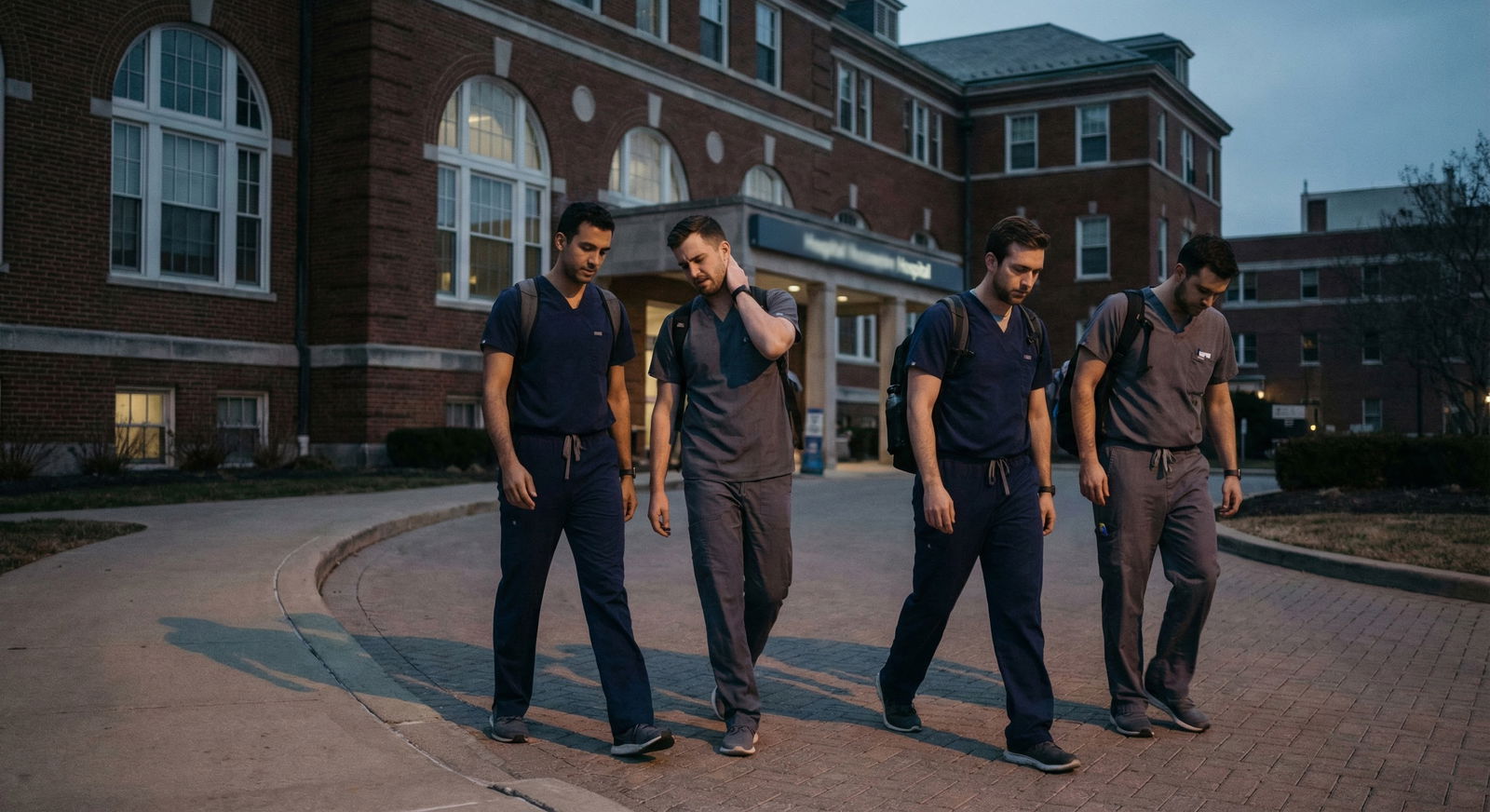
You’re not choosing a vacation spot. You’re choosing where you’ll be exhausted, under pressure, and vulnerable for years.
If you overvalue city location when ranking residency programs, you’re setting yourself up to miss the red flags that actually determine whether you’ll thrive or burn out. I’ve watched applicants rank a program highly because “it’s in Boston/NYC/LA” and then spend PGY‑2 quietly trying to lateral transfer out. Same story, over and over.
Let me be blunt:
A great city cannot fix a toxic program.
But a great program can often make a “meh” city very livable.
You’re about to make a several‑year decision. Let’s walk through the biggest mistakes people make when they let city location hijack their judgment—and how to avoid them.
The Core Mistake: Treating Residency Like a Lifestyle Move
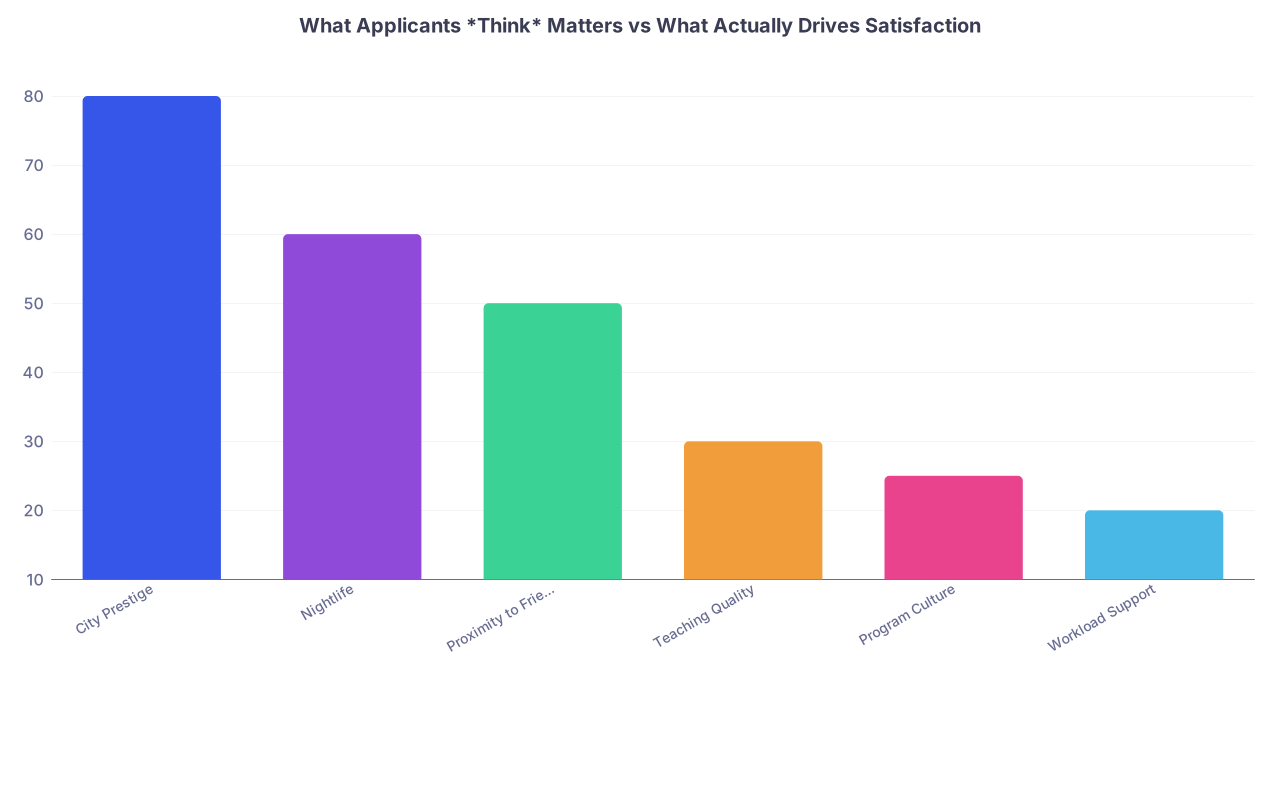
| Category | Value |
|---|---|
| City Prestige | 80 |
| Nightlife | 60 |
| Proximity to Friends | 50 |
| Teaching Quality | 30 |
| Program Culture | 25 |
| Workload Support | 20 |
Most applicants will tell you: “Training quality matters most.” Then they open their rank list and the top five are all big coastal cities—even if those programs clearly had red flags.
Why? Because they quietly treat residency like a hybrid between a job and a lifestyle upgrade. They picture:
- Brunch on weekends in a “fun” neighborhood
- Friends visiting because “everyone wants to come to this city”
- Museums, restaurants, hiking, concerts
Here’s the problem: your actual life in residency looks nothing like your weekend Instagram fantasies.
What your reality will look like
The real daily variables that matter:
- Whether you dread sign‑out
- Whether you trust your co-residents when you’re drowning
- Whether attendings back you up or throw you under the bus
- Whether you can safely admit “I don’t know”
- Whether your program leadership is responsive when something goes wrong
The city’s name doesn’t change any of that.
I’ve seen residents in dream cities—New York, San Francisco, Chicago—say the same quiet sentence:
“If this program were anywhere else, I’d leave without thinking twice.”
Don’t build your rank list like you’re choosing where to spend a gap year. You’re choosing where to be stressed, sleep‑deprived, and pushed to your limits. Design for that reality, not the rare golden weekend.
How City Hype Hides Program Red Flags

| Step | Description |
|---|---|
| Step 1 | Attractive City |
| Step 2 | High Applicant Excitement |
| Step 3 | Lower Critical Thinking |
| Step 4 | Ignore Resident Discontent |
| Step 5 | Downplay Workload Concerns |
| Step 6 | Overlook Weak Education |
| Step 7 | Rank Program Too High |
| Step 8 | Match and Regret |
When applicants are dazzled by the city, they mentally discount warning signs. I’ve watched it happen in real time on interview days:
- Resident: “We sometimes stay several hours after our shifts to finish notes.”
- Applicant (internally): “But it’s in Seattle, so it’ll be fine.”
No, it won’t.
Here are the most common red flags people ignore because they’re mentally locked onto the location.
1. Resident fatigue and flat affect
You ask residents, “How do you like the program?” and they say something like:
- “You can’t beat this city.”
- “Well, the restaurants are amazing.”
Notice what they’re not saying:
They’re not talking about teaching, support, or culture.
Watch their faces. Are they:
- Clearly exhausted and cynical?
- Making dark jokes about being “cheap labor”?
- Talking more about the city than the training?
If their main selling point is the city, that’s not a good sign. In healthy programs, residents brag about:
- Autonomy with back‑up
- Specific attendings who teach well
- How leadership handled a recent crisis
- The sense of community in their class
2. Hand‑waving around workload and coverage
A classic city‑blinded miss: shrugging off brutal workload cues because “at least I’ll be in [insert city].”
Watch for phrases like:
- “We’re busy, but it’s good training.” (said with a forced smile)
- “We don’t really have jeopardy; we just cover for each other.”
- “Wellness? We… go out in the city when we can.”
In reality, “no jeopardy system” in a high‑acuity, understaffed program means:
- Sick calls = your day just got wrecked
- Vacations = your co‑residents quietly resent you
- Chronic overwork normalized as “the culture here”
Location doesn’t fix chronic understaffing. It just gives you somewhere nicer to be tired.
3. Weak education disguised by “amazing clinical exposure”
Some high‑volume, name‑brand city programs brag about “insane pathology” and “non‑stop action” but are basically service mills.
Signs you’re missing because you’re blinded by location:
- Morning report is mostly canceled or poorly attended
- No protected time for didactics (or constantly violated)
- You never hear the word “feedback” from residents
- PGY‑3s shrug when asked about board prep or fellowship matches
You tell yourself, “But it’s in [City]—I’ll see everything!” Yes, you might. But “seeing everything” while no one teaches you or protects your learning time is a recipe for insecurity, not excellence.
The Illusion of City‑Based “Support Systems”

Another big trap: overestimating how much the city will supply your social and emotional support.
You’ll hear applicants say:
- “I have friends there already.”
- “My partner loves that city.”
- “It’ll be easy to have a life outside the hospital.”
Here’s the reality I’ve seen play out repeatedly.
Your non‑medical friends won’t fully get it
They love you, but they don’t live in your world. They:
- Don’t understand 28‑hour calls
- Can’t grasp why you’re mentally fried after “just a 12‑hour shift”
- Get frustrated when you cancel plans last minute due to cross‑coverage or an admission storm
When your program is toxic, even the best city feels small and suffocating. You stop using the city because you’re too drained to leave your apartment on days off.
Your partner’s happiness can’t compensate for your misery
This one is painful, but I’ve watched it happen.
Couples say, “We’ll prioritize where my partner can work remotely or easily find a job.” Fair. But don’t pretend that your daily suffering will be neutralized because your partner likes the coffee shops and yoga studios.
What actually happens in a bad program:
- You come home empty. No bandwidth left.
- Even when physically present, you’re mentally on the wards.
- Petty program politics become your main dinner conversation.
If you’re miserable at work, the nicest city just becomes a backdrop for your burnout. And your partner ends up carrying the emotional load for both of you.
When a “Less Sexy” City Quietly Wins
This is the story I’ve heard over and over from satisfied residents:
“I almost ranked the big coastal city higher. But the mid‑sized city program felt healthier. I’m so glad I listened to the vibe instead of the zip code.”
Let’s compare what you should be weighing.
| Factor Type | Examples You Overrate | Examples You Undervalue |
|---|---|---|
| City Lifestyle | Nightlife, restaurants, beaches | Reasonable commute, affordable housing |
| Social Factors | Existing friends in town | How close your co-residents actually feel |
| Prestige Signaling | Famous city name on your badge | Strong faculty mentorship |
| Daily Experience | “Cool neighborhoods” | Predictable schedules, fair coverage |
| Long-Term Outcomes | Dating scene, “cool life” | Fellowship support, job placement |
The boring truth: A slightly smaller or less flashy city with a well‑run, humane program will almost always beat a glamorous city with a chaotic, punitive one.
Things people undervalue—but wish they hadn’t:
- Affordable rent close to the hospital
- Reasonable call rooms and safe parking at night
- Short commute that gives you back 30–60 minutes a day
- Enough salary to not feel constantly squeezed by cost of living
These sound mundane. They’re not. They’re the difference between a life you can sustain for 3–7 years and a life that grinds you down.
Concrete Red Flags You’re Likely to Miss When Obsessed with Location
Let’s get specific. Here’s what your brain tends to minimize because “but it’s in [City]” is whispering in the background.
1. Defensive or vague answers from leadership
On interview day, you ask about:
- Recent changes in duty hours
- Resident retention or transfers
- How they handle struggling residents
Red flags:
- “We’re a busy program. Everyone gets through it.”
- “We don’t really have people leave.” (no numbers, no transparency)
- “We haven’t had many issues with burnout.” (in 2026? Really?)
If leadership can’t talk openly about challenges, they’re either out of touch or hiding problems. The city skyline doesn’t change that.
2. Residents dodging certain topics
You ask residents, “Do you feel supported when you’re overwhelmed?”
You get a long pause. Then: “Well… our city has a lot to offer when you’re off.”
That’s not an answer.
Other subtle tells:
- They drop their volume to talk about certain rotations
- They say, “We’re like a family” but then trash‑talk other residents by name
- They smile when recruiting you but their eyes look flat when you ask, “Would you choose this program again?”
Don’t romanticize the city so much that you ignore these tells. You’re not auditioning cities. You’re interviewing your future stress level.
3. Overemphasis on brand name and reputation
Another location‑adjacent trap: equating “big‑name city academic center” with “excellent day‑to‑day training.”
I’ve seen “famous” city programs where:
- Chief residents openly say, “We survive. We don’t ‘thrive.’”
- Teaching is an afterthought to research and throughput
- Residents are “proud but miserable”
Brand name + cool city doesn’t magically give you:
- Better bedside supervision
- Kinder senior residents
- Functional GME leadership
It gives you nice cocktail party small talk. That’s it.
A Better Ranking Strategy: City as a Tiebreaker, Not the Driver
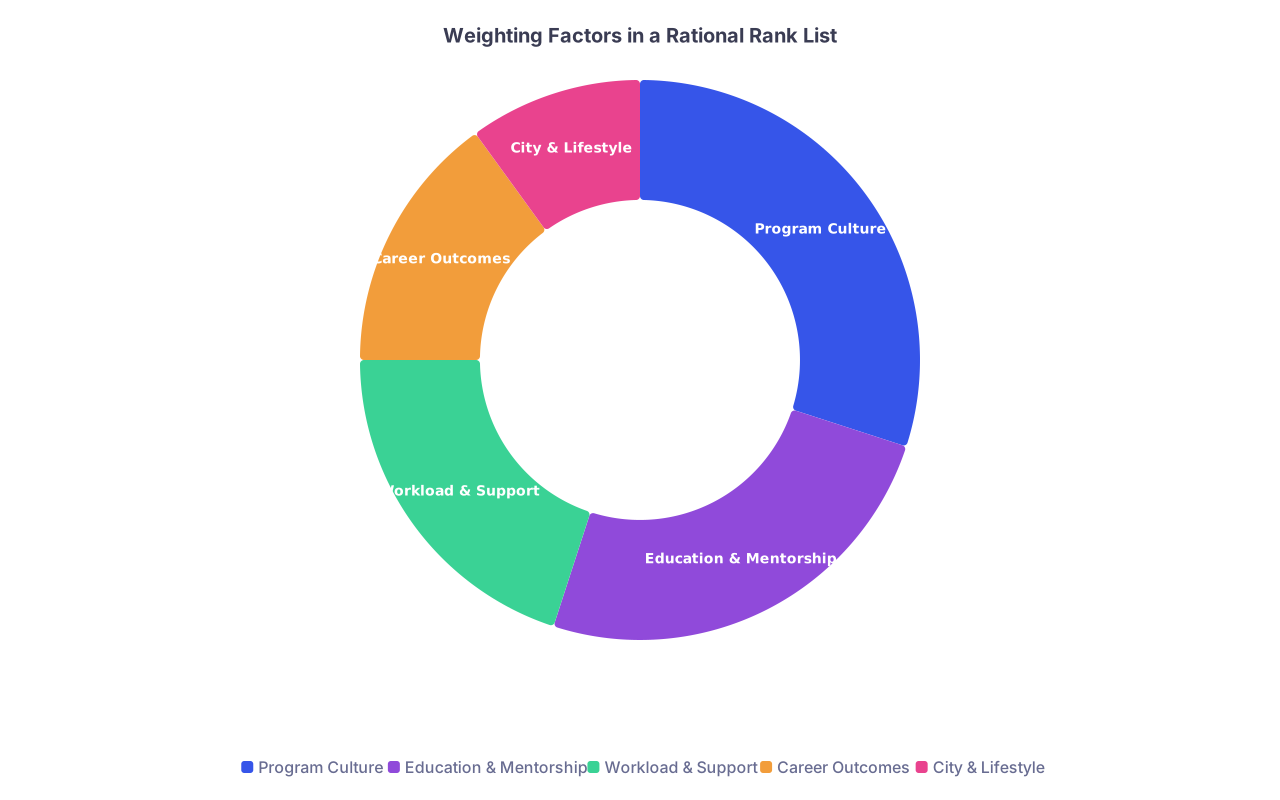
| Category | Value |
|---|---|
| Program Culture | 30 |
| Education & Mentorship | 25 |
| Workload & Support | 20 |
| Career Outcomes | 15 |
| City & Lifestyle | 10 |
Here’s the approach I wish more applicants took.
Step 1: Decide your non‑negotiables that have nothing to do with city
Examples:
- I will not tolerate a culture of humiliation or fear.
- I need a program with clear backup/jeopardy so sick calls don’t destroy everyone.
- I need at least some evidence of genuine attention to wellness (not just pizza nights).
- I want residents who would honestly choose the program again.
If a program fails these, the city is irrelevant. Cross it off or push it way down.
Step 2: Evaluate program health first, then location
For each program, before you even think about the city:
Ask:
- Did residents seem genuinely connected to each other?
- Did leadership answer hard questions directly?
- Was there any mention of recent improvements based on resident feedback?
- Did I meet at least one senior resident who seemed both competent and not dead inside?
Only after that do you ask: “And do I like the city enough?”
Step 3: Use city as a tiebreaker between similarly strong programs
If two programs are:
- Both healthy
- Both educating well
- Both supporting residents reasonably
Then sure, let location decide. But that’s a tiebreaker, not the foundation.
Between:
- Great program in decent city
- Mediocre or toxic program in amazing city
You should not be choosing the latter. Full stop.
How to Reality‑Check Your City Bias
You’re not going to magically stop caring about location. Nobody does. Your job is to keep it from blinding you. A few practical checks:
1. Rewrite your rank list with city names hidden
Literally cover or black out the city name. Just look at:
- Resident vibe
- Workload
- Education
- Leadership
- Non‑negotiables
Force yourself to “rank the program, not the place.” Then compare that list to your location‑aware list. Where are you making dumb tradeoffs?
2. Ask residents the question they rarely get
Instead of “Do you like the city?” ask:
“If this exact program—same hours, same culture, same leadership—were in a much smaller or less glamorous city, would you still want to be here?”
Watch their reaction. That answer tells you whether the program actually stands on its own.
3. Talk to someone who regrets prioritizing location
You almost certainly know someone—through school, online forums, alumni networks—who:
- Matched in a “dream city,”
- Then realized their program was a nightmare.
Ask them two things:
- “If you could re‑rank, what would you do differently?”
- “What did you ignore on interview day because of the city?”
Their answers will sting a bit. That’s good. Better to feel that sting now than halfway through PGY‑1.
The Future You vs The Present You
The present you is tired of studying, wants a life, and is sick of living in cheap student housing. So of course city location looks huge. You want:
- Culture
- Food
- Friends
- A sense that you “finally made it”
I get it.
But future you is:
- On day 21 of 28 consecutive days on wards
- On the third night in a row dealing with short staffing
- Walking to your car at 11:45 pm after “sign‑out ran long again”
- Wondering why your PD still hasn’t responded to concerns about that malignant attending
Future you does not care how many Michelin stars are within a 5‑mile radius. Future you cares about:
- Who’s picking up the phone when you call for help
- Whether your vacation actually stays on the schedule
- Whether the chief resident has your back
- Whether you feel like a human being at work
When you rank programs, do it for that person. The one who’ll actually live with your decision.


