
You spotted residency red flags on interview day. Ignoring them is how people end up miserable for 3–7 years.
You are not overreacting. You are not “being picky.” If something felt off, you need a clear, systematic way to decide what to do next. That is what I am going to give you.
Step 1: Decompress and Capture Everything While It Is Fresh
Do not trust your memory 3 weeks and 8 interviews from now. It will blur.
A. Do a same‑day brain dump
As soon as you get home or back to the hotel, before you scroll your phone or talk to anyone:
- Open a doc or notebook.
- Dump everything you remember from the day:
- Comments that bothered you
- Moments you felt uncomfortable
- Odd behavior from residents or faculty
- Schedule details that seemed off
- Vibes: “Residents looked exhausted,” “PD defensive,” “Felt transactional”
Do not try to organize yet. Just get it all out.
B. Sort what you saw into concrete buckets
You want to move from vague “bad feeling” to specific categories you can evaluate.
Use buckets like:
- Culture / professionalism
- Workload / hours / coverage
- Education quality
- Safety / supervision
- Program stability / finances
- Diversity / equity / inclusion
- Resident happiness / burnout
- Logistics (call room, EMR, night coverage, moonlighting)
Now rewrite your notes roughly under these headers.

| Step | Description |
|---|---|
| Step 1 | Interview Day Ends |
| Step 2 | Immediate Brain Dump |
| Step 3 | Sort Notes Into Buckets |
| Step 4 | Rate Red Flags |
| Step 5 | Decide - Clarify or Accept or Drop |
That is your decision pipeline. You are going to run each red flag through it.
Step 2: Separate Noise from True Red Flags
Not all “weird” things matter. Some are normal variation; some are deal‑breaking.
Here is a simple framework: Yellow, Orange, Red.
| Level | Description | Typical Examples |
|---|---|---|
| Yellow | Mild concern, maybe fixable | Slight disorganization, vague schedule details |
| Orange | Significant concern, needs data | Residents tired, vague duty hour answers |
| Red | Serious, often non-negotiable | Abuse, discrimination, unsafe patient care |
A. Yellow flags: annoying but often manageable
Examples:
- Tour was rushed, logistics a bit chaotic
- PD seemed distracted but not hostile
- One resident complained a lot, others seemed fine
- Vague answer about social events or wellness stuff
Ask:
“Would this meaningfully harm my training or quality of life?”
If the answer is no, it is a yellow flag. Note it, but do not panic.
B. Orange flags: you need more data
Examples I have seen over and over:
- Residents uniformly look drained and flat, even on Zoom
- Program leadership dodges questions about:
- Duty hour violations
- Attrition (“we had a few residents leave but it all worked out”)
- Fellowship matches
- You ask, “How’s feedback?” and get: “We get our milestones…” and then silence
- Surgical/ICU residents half‑joke: “You will live here”
These are not automatic deal‑breakers. But they demand follow‑up.
C. Red flags: stop and seriously reconsider
These are the ones people regret ignoring:
- Openly racist, sexist, or discriminatory comments
- Residents describe being yelled at, humiliated, or “thrown under the bus”
- Unsafe staffing: interns covering way too many patients, nonsensical cross‑cover
- Faculty joking about violating duty hours or falsifying logs
- PD badmouthing residents (specific names, personal attacks)
- Multiple residents warning you off with phrases like:
- “If you have other options, you should take them.”
- “We stick together, but administration does not have our back.”
If you saw something in this neighborhood, hold that thought. You may still rank them. But the burden of proof is now on the program, not on you.
Step 3: Reconstruct the Full Context (You Might Be Missing Pieces)
Red flags often show up as fragments: a weird statement here, an awkward silence there. You need to see the pattern.
A. Walk through the day chronologically
Go hour by hour:
- Pre‑interview presentation
- PD / chair session
- 1:1 or panel interviews
- Resident-only Q&A
- Tour / social event
- Any side conversations
At each phase ask:
- What was said or done that concerned me?
- Was this 1 person, a subset, or the entire group?
- Did different people contradict each other?
Patterns matter more than one-off comments.
B. Identify repeat themes
You are looking for clusters:
- Multiple residents mentioning “we are working on improving X”
- Several faculty emphasizing “service” but not “education”
- Everyone using the same vague line about work hours, like they have been coached
When 3–4 small flags all point to the same underlying problem (unsafe workload, weak teaching, toxic leadership), that is not minor anymore.
Step 4: Pressure-Test Your Own Bias and Fatigue
Here is the uncomfortable truth: your own stress, comparison to previous interviews, or specialty myths can distort your read.
A. Check for interview fatigue and comparison bias
Late season, I see this a lot: students compare every program to the single best day they had. That is not realistic.
Ask yourself:
- Was this my 7th interview in 10 days?
- Was I already in a bad mood (travel, illness, personal stuff)?
- Am I punishing this program for not being my “dream” institution?
If yes, you may be over ‑weighting small negatives. That does not erase genuine red flags, but it keeps you honest.
B. Strip away prestige
Residents will tell you quietly: name does not protect you from misery. I have seen wildly unhappy residents at “top 10” places and very satisfied ones at mid‑tier community programs.
So ask bluntly:
- If this were a no‑name program with the same culture, would I still be this interested?
- Am I tolerating toxicity because of fellowship match data or brand name?
If the only argument in favor is prestige, that is weak.
Step 5: Get Corroborating Data Without Torpedoing Yourself
You have concerns. Now you need more facts—without sending an email that reads: “I think your program is toxic, please respond.”
A. Use resident follow‑ups strategically
Most programs give you resident emails. Use them.
You are not going to say: “Is your program malignant?”
You are going to ask targeted, neutral questions that force honest details.
Examples:
Workload / coverage
- “Can you walk me through a typical week on your busiest rotation? How many patients are you usually carrying, and what are your hours like?”
- “On average, how often do you stay past your scheduled end time on wards or ICU?”
Culture / leadership
- “How does leadership respond when residents raise concerns? Can you think of a recent example where something actually changed?”
- “Have there been any major changes in leadership or structure in the last couple of years? How did that impact you?”
Safety / supervision
- “On nights when things are hectic, how easy is it to reach your seniors or attendings for help?”
- “Do you ever feel pressured to manage beyond your comfort level without backup?”
Wellness / burnout
- “How sustainable do you think the workload is over three years? Do most people seem to be coping well by PGY3, or are folks exhausted?”
You are looking for tone, hesitations, and specifics:
- Vague: “We are busy, but we manage” → not great.
- Concrete: “On MICU I am usually out by 7:30 unless codes blow up, we get protected post‑call” → more reassuring.
B. Talk to people who have nothing to lose
Gold mine sources:
- Recent graduates you find through:
- Program website alumni list
- LinkedIn searches + polite DMs (“I am an applicant; would you be open to a quick 10‑minute call?”)
- Residents from your home institution who rotated there or know someone who did
- Fellows at your medical school hospital who trained at that residency
Ask them:
- “If you had to decide again, would you pick that program?”
- “What were the 1–2 hardest parts about training there?”
- “Did anyone leave early or switch programs while you were there?”
- “How does it compare to other places you have worked in terms of culture and support?”
You will learn more from one honest alum than 10 official info sessions.
Step 6: Weigh Impact, Likelihood, and Your Own Risk Tolerance
Think like a risk manager. You are balancing:
- How bad would this issue be if it is real?
- How likely is it that it is real, based on what you saw and heard?
- How much risk are you personally willing to stomach?
A. Use a simple 3×3 matrix
Score each concerning theme:
Impact (1–3)
- 1 = Annoying but minor
- 2 = Significant quality‑of‑life or training impact
- 3 = Potentially dangerous or career‑limiting
Likelihood (1–3)
- 1 = Based on a single ambiguous event
- 2 = Multiple hints pointing the same way
- 3 = Confirmed by multiple residents / external sources
Multiply them. Anything 6 or above deserves serious re‑ranking or dropping.
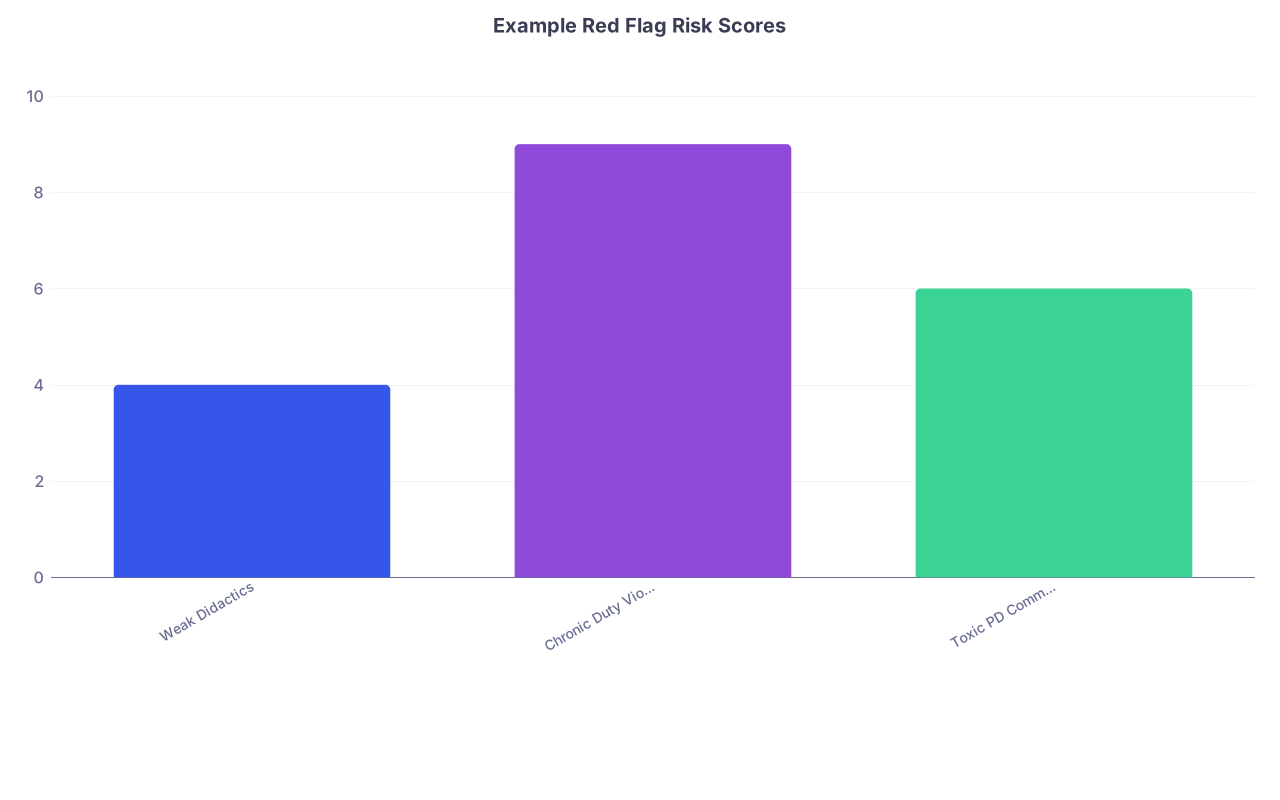
| Category | Value |
|---|---|
| Weak Didactics | 4 |
| Chronic Duty Violations | 9 |
| Toxic PD Comments | 6 |
Example:
- Weak didactics: Impact 2 × Likelihood 2 = 4 → Probably manageable if other factors are good
- Chronic duty violations: Impact 3 × Likelihood 3 = 9 → High‑risk
- PD openly mocking residents in front of you: Impact 2 (culture) × Likelihood 3 = 6 → Concerning
B. Factor in your own priorities
Some things will matter more to you:
- If you have a family or health issue:
- Uncontrolled hours and no coverage when sick may be deal‑breaking.
- If you want competitive fellowship:
- Disorganized education and poor support for research may matter more.
Rank your non‑negotiables before you finalize your list:
- Geographic region?
- Reasonable workload?
- Supportive culture?
- Strong fellowship match?
- Opportunities in a niche interest?
Now you can rationally say:
“This program fails on 2 of my top 3. Even if it is prestigious, that is not acceptable.”
Step 7: Decide How to Adjust Your Rank List
Now the real question: do you:
- Drop the program entirely?
- Move it down a tier?
- Keep it roughly where it was?
A. When I would drop a program completely
I am blunt about this. I would seriously consider removing a program if:
You saw or heard:
- Open discrimination
- Bullying, humiliation, or retaliation for speaking up
- Systematic patient safety problems
Or:
- Multiple independent sources (residents, alumni, outside people) all told you versions of the same ugly story, and leadership denied or minimized it.
And:
- You have any acceptable alternatives you could graduate from safely.
If ranking them is the only way you match into your chosen specialty at all, that is a different conversation. But if you have other realistic options, do not volunteer for three years of abuse.
B. When to move a program down, not off
Scenarios:
- Workload seems heavy but survivable, and residents are tired but not broken.
- Some leadership red flags (defensive PD, poor communication) but a strong resident culture that supports each other.
- Education somewhat weak, but workload and culture are good, and you are self‑directed.
In those cases:
- Move them below any program where:
- Residents seemed clearly happier
- Concerns were fewer or better addressed
- Your priorities were more aligned
But you may still keep them on the list. The match algorithm favors your preferences; rank honestly.
C. When to keep a “red flag” program higher than you expected
Yes, sometimes you keep the “spicy” program.
Reasons:
- Your other options have equally serious issues, just different ones.
- The red flag is real but limited (e.g., 1 bad rotation, 1 toxic attending everyone avoids).
- The upside—training quality, case volume, fellowship placement—is extremely high, and you are very resilient with a strong support system.
The key is conscious choice, not denial.
“I know call is brutal and leadership is mediocre, but residents are honest about it, have each other’s backs, and the training is phenomenal. I am willing to take that hit for the career I want.”
That is rational.
“I am sure it will be fine even though everyone warned me; the brand name will protect me.”
That is fantasy.
Step 8: If You Are Still Unsure, Ask the Program Directly (Carefully)
Sometimes you need to go straight to the source. This is delicate.
A. When it is reasonable to email leadership
You can reach out if:
- Your concern is about logistics or structure, not “your culture feels toxic.”
- You want clarification on:
- New rotations
- Changes in leadership
- Duty hour monitoring
- Educational structure
Examples of safe, professional questions:
- “You mentioned that you recently restructured your ICU rotations. Could you share more about how coverage and supervision are arranged now, especially for interns?”
- “I heard there were some changes in program leadership over the last year. How have those changes affected resident education and support?”
You will learn a lot from the quality and tone of the response:
- Clear, detailed, and transparent? Good sign.
- Vague, defensive, or delayed? Bad sign.
B. When not to email
Do not send:
- “Some residents said they work more than 80 hours. Is that true?”
- “I heard your PD is very harsh. Can you comment on that?”
- “People told me to avoid your program; what is your response?”
You gain nothing. You mark yourself as trouble.
If the red flag is that serious, your answer is already clear: rank them low or not at all.
Step 9: Protect Yourself From Match Season Panic
As lists are due, people lose their minds. They start rewriting history to justify risky choices.
Common traps:
“Every program has problems, so this one is probably fine.”
Yes, every program has flaws. But not every program is malignant.“I did not see anything that bad; maybe I am sensitive.”
Your gut picked up on something. You took time to analyze it. Respect that.“I just need the best possible fellowship outcome; I can endure anything for three years.”
I have watched residents break under that logic. Burnout, depression, leaving medicine altogether. Real costs.
So build one guardrail:
Run your draft rank list past 1–2 people who actually know residency realities.
- A trusted resident or fellow in your specialty
- An advisor who is not obsessed with prestige
- Someone who has seen struggling programs up close
Ask them:
- “Here is what I noticed at Program X and Y; here is where I ranked them. Does that weighting seem rational to you?”
If two experienced people say, “I would be very wary of that place,” listen.
Step 10: What If Every Program Had Red Flags?
This is common. The perfect program does not exist.
Here is how to sort a “they all have issues” situation:
List the top 3 problems you saw at each place.
Mark each as:
- Fixable / tolerable with coping strategies
- Structural and unlikely to change
Ask:
- Which problems are you personally best equipped to handle?
- Which would drain you or harm you the most?
Examples:
You can handle:
- So‑so didactics because you are a self‑directed learner
- Moderate call because you are young, single, and healthy
You cannot handle:
- A culture where residents are mocked when they ask for help
- Unreliable coverage when sick due to chronic understaffing
- A PD who attacks residents’ character instead of supporting them
Rank based on the nature of the flaws, not the count.
Three minor problems beat one existential one.
Step 11: Build a Simple “Red Flag to Action” Protocol
You do not need a complicated algorithm. You need something you can run in 15–20 minutes per program.
Use this:
- Brain dump notes.
- Categorize issues (culture, workload, education, safety, stability).
- Label each as Yellow / Orange / Red.
- For Orange/Red:
- Get 1–2 resident/alum perspectives.
- Score Impact 1–3 × Likelihood 1–3.
- If score ≥ 6:
- Decide: Down‑rank or drop based on your priorities and alternatives.
- Gut check with one experienced advisor.
That is it. Repeat for each program in serious contention.
Step 12: Mentally Prepare For the Program You Might Still Rank
Let us say you decide to keep a flagged program on your list. You are not powerless. You go in prepared.
Examples of proactive strategies:
- If workload is heavy but culture is decent:
- Set up strict personal systems early: sleep protection on golden weekends, scheduling visits home, therapy or counseling support in place from month one.
- If leadership seems weak but residents are strong:
- Invest in your resident network. They will be the ones who help you survive.
- Find 1–2 faculty allies with a reputation for being supportive.
- If education is disorganized:
- Build your own curriculum: question banks, online resources, podcasts.
- Map out what you must master each year and track yourself, not just rely on didactics.
You do not fix a broken program alone. But you can keep it from breaking you.
Your Next Action Today
Open your interview spreadsheet or notes right now. Pick the one program that gave you the worst feeling.
Run it through this exact process:
- Brain dump what felt off.
- Classify into Yellow / Orange / Red.
- Identify 1–2 residents or alumni to message with targeted questions.
- Decide whether that program should move down, stay, or be dropped from your working rank list.
Do that for one program today. Not all of them. Just one. Then repeat tomorrow.