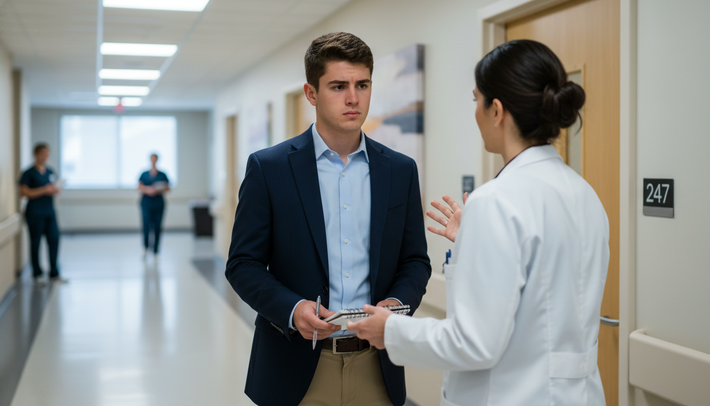
The biggest mistake premeds make when shadowing is thinking their job is the same in the ED and in clinic. It isn’t. Attendings are grading you on two completely different rubrics, and most of you have no idea what those rubrics are.
I’ve sat in those break rooms and watched your shadowing behavior get dissected over bad coffee. I’ve heard the, “That kid? No way I’m writing a letter,” more times than you’d believe. And it’s almost never about grades or MCAT scores. It’s about whether you understood the unwritten rules of that setting.
Let me walk you through what attendings actually expect from you in the emergency department versus clinic — what gets you mentally tagged as “future colleague” vs “please don’t send this person back.”
(See also: How Shadowing Actually Influences Committee Decisions on MD Admits for more details.)
The Fundamental Difference: Time, Control, and Chaos
Before you think about what to say or where to stand, understand this:
- Clinic is controlled.
- The ED is not.
In clinic, the attending owns their schedule, the pace, the room, and (mostly) the noise level. They can pause, explain, teach, debrief. Their cognitive load is high but predictable.
In the ED, they’re juggling 10–25 patients, a trauma about to roll in, an ICU bed shortage, three nurses asking questions, and a family demanding updates. Teaching you is optional. Patient care is not.
So your job is not “be a good shadow.”
Your job is “be easy to have in the room for this environment.”
And those environments demand different versions of you.
What Attendings Expect from Premeds in the ED
Let’s start with the place that exposes character faster than anywhere else: the emergency department.
I’ve watched ED attendings at places like county hospitals, Level 1 trauma centers, and community ERs debrief shadows after shifts. The theme is always the same: “Did this person make my night harder or easier?”
Rule #1 in the ED: You Are Quiet, Mobile Furniture — Until Invited Otherwise
In emergency medicine, your default setting is: silent, observing, out of the way.
Attendings expect you to:
Position yourself where you can see but never block access.
That means hugging the wall, never the doorway. If a nurse, tech, or physician even starts moving toward where you’re standing, you move first. No one should have to ask you.Read the room before opening your mouth.
You do not ask what potassium does while the attending is intubating. You do not ask about their career path while they are breaking bad news. You wait for a lull. If you’re not sure if it’s a good time, it’s not.Understand that they decide when this is a teaching environment vs a war zone.
I’ve seen students lose letters because they couldn’t sense that flip. The attending is fine one minute, joking, teaching, then the charge nurse says, “Trauma in 5,” and the switch flips. You need to flip with it.
What Impresses ED Attendings (That Students Don’t Realize)
Here are the behaviors that get mentioned positively when you’re not in the room:
- Situational awareness
The ED attending at a major urban Level 1 trauma center told me this bluntly:
“If a student can read my body language and just vanish to the corner when things get crazy, that’s someone I’d trust as a resident.”
You impress them when you:
- Notice the tone change when an ambulance phone rings and immediately stop asking questions.
- Step out of crowded rooms before someone has to say, “Too many people in here.”
- Offer to step away if another learner shows up (resident, PA student, etc.), especially when space is tight.
- Respect for the team hierarchy
In the ED, attendings watch how you treat everyone, not just them.
They take mental notes if you:
- Say thank you to nurses who let you stand in the room during procedures.
- Don’t hover over the computer or block the Pyxis machine.
- Move when the tech needs the room without being told twice.
One ED attending at a community hospital told me flat out:
“If a student thinks this is the ‘doctor show’ and ignores my nurses, that’s a no from me. I don’t want them in our residency.”
- Interest without neediness
They want you engaged but not clingy.
Behaviors that hit the right balance:
- Asking focused questions during natural breaks: “You mentioned sepsis earlier — what were the clues you saw that made you act so fast?”
- Writing things down. Not mindlessly, but selectively. It signals that you recognize when something is worth capturing.
- Staying off your phone. If you check it repeatedly, everyone assumes you’re bored. In the ED, bored shadows don’t come back.
- Emotional composure
The ED will test you. You might see CPR, trauma, agitation, psychiatric crises. Attendings do not expect perfection, but they do expect control.
They notice:
- Whether you go pale and have to leave the room every time something intense happens.
- If you look entertained rather than concerned during cases that are genuinely tragic.
- Whether you can maintain a professional expression when patients are ranting, swearing, or saying bizarre things.
One emergency physician at a busy academic center said:
“The ones who get remembered are the students who treat our drunk, psych, and homeless patients with the same seriousness as the VIP chest pain workup.”
What They Do Not Want in the ED
There are specific behaviors that make attendings silently decide “never again.”
Interrogating the patient.
Asking patients extra questions without being invited is a hard no. The ED is not your standardized patient exam.Trying to help with procedures without being explicitly asked.
Do not reach for anything. Do not “hold this” unless someone clearly instructs you to. The liability in the ED is different, and attendings are sensitive to that.Arguing with security, registration, or triage.
If someone tells you an area is off-limits, it is. ED attendings side with their staff, not with the premed.Needing to be entertained.
The pace is variable. There will be slow stretches at 3 a.m. Watching how you handle boredom is part of the assessment. If you complain, yawn loudly, or talk about how tired you are, that gets remembered.
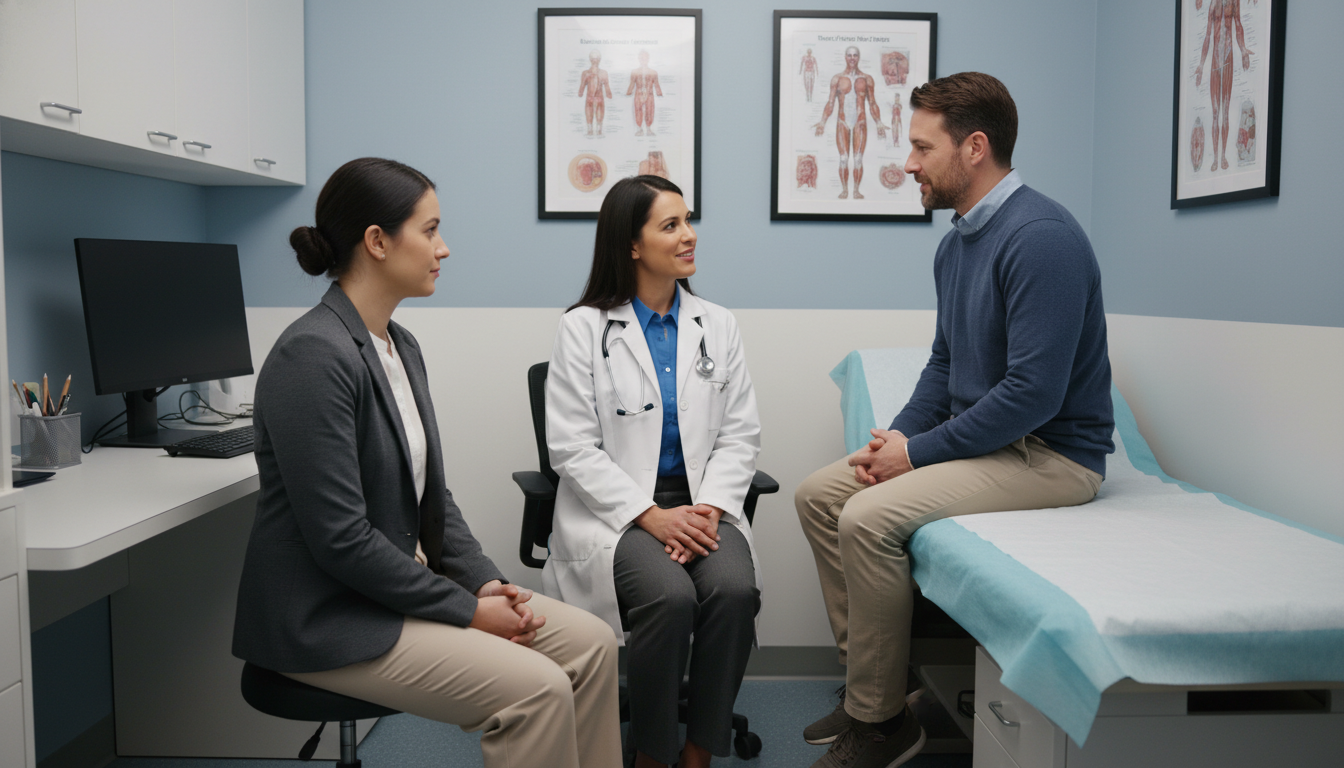
What Attendings Expect from Premeds in Clinic
Clinic looks calm compared to the ED, but here’s the twist: you’re under closer scrutiny.
In clinic, there’s time to watch your micro-behaviors, hear what you say to patients, and notice if you actually like people or you’re just collecting hours.
The core expectation in clinic: you’re not just a shadow; you’re a future primary point of contact for patients. The attending is asking themselves, “Would I trust this person alone in a room with my patients someday?”
Clinic Rule #1: The Patient’s Comfort Comes Before Your Curiosity
Attendings in clinic expect you to:
Read the patient’s body language when you’re introduced.
Some patients light up when they hear “student.” Others freeze. Attendings watch whether you soften your posture, step back, or offer, “I’m happy to step out if you’d prefer.”Protect privacy aggressively.
That means no glancing at the computer screen when lab results, imaging, or sensitive information are being reviewed unless the physician invites you to look. Many clinic attendings are burned out on privacy issues; they notice who respects boundaries.Understand when your presence isn’t appropriate.
Pelvic exams, sensitive GU/GYN visits, trauma histories, or patients already uncomfortable with medical settings — attendings expect you to accept being excused gracefully. If you look annoyed, you’ve just told them a lot about your priorities.
What Clinic Attendings Actually Appreciate
When I talk to outpatient attendings — IM, peds, FM, subspecialty clinics — here’s what they praise:
- Learners who listen more than they talk
Students who quietly observe the flow of a visit — watching how the attending phrases lifestyle questions, navigates noncompliance, or de-escalates anger — stand out. Clinics are communication-heavy. If you’re fixated only on diagnosis and meds, you’re missing 70% of the job.
One primary care attending at a large academic center told me:
“When a student later asks about how I framed a question or why I chose a specific wording, I know they get that this is about more than prescriptions.”
- Thoughtful, patient-centered questions
Ask questions that show you’re thinking from the patient’s angle:
- “I noticed you spent extra time explaining the side effects to that older patient — is that because of health literacy concerns or prior experiences?”
- “You asked about transportation when discussing follow-up — is that something you routinely screen for?”
Those land much better than flex questions like “Why that antibiotic instead of X?”
- Respect for time and flow
Clinic is about efficiency. Every attending has a mental timer on each visit.
You impress them when you:
- Don’t derail the debrief with a dozen questions when they’re clearly late.
- Ask, “Is now a good time for a question?” rather than launching in.
- Show up on time and stay to the end, even if the schedule runs over and everyone is tired.
I’ve seen attendings decide on letters based almost entirely on whether the student respected the clinic’s schedule reality.
- Genuine warmth with patients
There’s no faking this. Patients pick up on it. So do attendings.
Examples that stand out:
- You greet patients with a quiet, “Hi, I’m [Name], I’m a premed student shadowing today. Is it okay if I sit in during the visit?” and you mean it.
- You look at patients when they’re speaking instead of staring at the attending the entire time.
- You don’t smirk, roll your eyes, or look visibly irritated when patients repeat themselves, ramble, or have “difficult” personalities.
Primary care and outpatient specialists guard their patient relationships like gold. If you threaten that trust, you’re done.
ED vs Clinic: How Your Role Actually Changes
Same label — “shadow” — but very different job descriptions.
In the ED, your value is: low-friction observer in chaos
Attendings want you to:
- Blend into a high-acuity environment without adding risk or distraction.
- Show emotional steadiness in the face of suffering, mess, and urgency.
- Demonstrate quick adaptation: new cases, new teams, new stakes every 5 minutes.
If you do that well, an ED attending thinks, “This person might survive residency.”
In clinic, your value is: future physician who can build trust
Attendings want you to:
- Show you understand continuity, rapport, and the slow grind of chronic disease management.
- Demonstrate respect for time, privacy, and the quieter — but very real — emotional work of medicine.
- Reveal whether you enjoy talking with patients or just like the idea of “medicine” in the abstract.
If you excel there, a clinic attending thinks, “I’d trust this person with my patients.”

How to Ask Questions Without Annoying Attendings
This is where most premeds sabotage themselves.
Attendings in both ED and clinic expect you to ask questions — but timing, tone, and content make or break how you’re perceived.
In the ED
Best times:
- While walking between rooms if the attending isn’t urgently reading labs or placing orders.
- During slower stretches when everyone is sitting at computers and the energy is clearly lower.
- After a case has wrapped and the patient is stable or gone.
How to frame:
- Start with calibration: “Is now an okay time for a quick question about that last case?”
- Ask specific, not vague: “What made you decide to CT that patient rather than observe?” instead of “So how do you decide what to do?”
What to avoid:
- Asking anything that feels like second-guessing their judgment in front of others. If you’re genuinely confused about a choice that you think contradicts what you learned, ask privately and humbly.
- “What was that lab again?” questions that you could have written down or looked up later.
In Clinic
Best times:
- Between patients while walking to the next exam room.
- At natural charting breaks if the attending slows down long enough for conversation.
- At the end of the session when they ask, “Any questions about today?”
How to frame:
- Connect to patient care: “You handled that conflict about opioids really calmly — how did you learn that approach?”
- Show insight: “That patient seemed frustrated when discussing diet changes. Are there strategies you use when patients are burned out on lifestyle advice?”
What to avoid:
- Turning every debrief into an oral exam on pathophysiology. They’re not evaluating your knowledge; they’re evaluating your curiosity, maturity, and fit for the profession.
- Fishing for praise: “Do you think I’m doing okay?” Ask for feedback, not validation: “Is there anything I could be doing differently to be more helpful or less in the way?”
The Letter of Recommendation Reality
Here’s what no one tells you: many attendings decide within 1–2 shifts or clinic sessions whether you’re LOR material. After that, you’re just confirming or disproving their initial read.
Patterns that trigger a mental “yes” for letters:
- You show up early, ready, and dressed appropriately for the setting.
- You’ve clearly looked up the specialty or environment beforehand, so you’re not asking, “So what do ED doctors do exactly?”
- Staff like you. If nurses, MAs, or residents say, “That student was great,” the attending trusts that signal.
Patterns that kill letters quietly:
- You talk more than you listen.
- You seem bored when cases aren’t “cool” enough. (Especially deadly in clinic when you check out during diabetes and hypertension visits.)
- You clearly want ED/clinic on your CV but do not seem to care about the patients in front of you.
One academic ED attending told me something that should stick with you:
“I don’t write letters for the students who want to be ‘in the action.’
I write letters for the ones who want to be there for the patient who’s scared and alone in that action.”
Same in clinic: the attending will happily write for the student who paid attention to the lonely, 80-year-old with 10 meds and no family, not just the rare disease case.
Bringing It Together: How to Decide Where to Shadow — and How to Show Up
If you want raw acuity, unpredictability, and to see your own emotional response to trauma and urgency, shadow in the ED. But walk in knowing your role is:
- Controlled invisibility.
- Emotional steadiness.
- Respect for chaos you do not yet understand.
If you want to see the slow burn of real medicine — chronic disease, longitudinal relationships, communication as a tool — go to clinic. Your role becomes:
- Subtle participant in trust-building.
- Careful observer of language, not just labs.
- Guest in long-standing patient-physician relationships.
Try both. Not just for your application, but for yourself. Many students fall in love with medicine in the quiet 20-minute clinic visit, not the resuscitation bay. Others feel alive only when the EMS doors swing open.
Either way, attendings are not just watching what you see. They’re watching who you are when you think you’re “just shadowing.”
Years from now, you will not remember every shift or every clinic day. You will remember who you became when you realized people were quietly deciding whether you looked like someone they’d trust in a white coat.