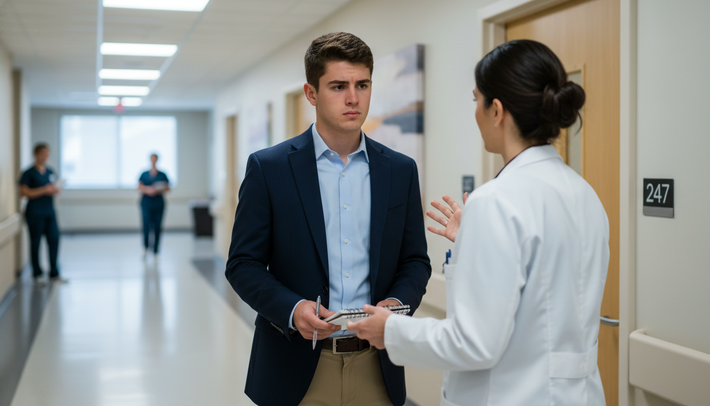
The vast majority of premeds who shadow are completely forgettable.
Not because they are bad people. Because they all behave exactly the same.
I’m going to tell you what attending physicians and residents actually say about premed shadowers when you are not in the room. The comments in the hallway. The side conversations in the workroom. The email they send the premed coordinator after you leave.
And what makes that rare student—the one who only shadowed for 10–20 hours—stick in their mind years later.
(See also: Red‑Flag Behaviors Attendings Clock Within 10 Minutes of Shadowing for more details.)
This is the stuff nobody writes in official “shadowing guidelines” because it sounds a little harsh. But it is exactly how you get remembered, and how you end up on the short list for a future letter of recommendation or research spot, even when all you technically did was “shadow.”
Let’s pull back the curtain.
What Most Premeds Get Completely Wrong About Shadowing
Here’s the first truth: faculty do not evaluate you on your “medical knowledge” during shadowing.
They evaluate three things, almost every time:
- Are you easy to have around?
- Are you genuinely curious?
- Are you safe with patients and staff?
That’s it. But the way you demonstrate those three things is not what most premeds think.
Most students show up treating shadowing like a networking audition. They’re so focused on “impressing” the doctor—smart questions, telling them their GPA, dropping the name of their MCAT prep company—that they completely miss what’s happening in the actual clinic.
If you remember nothing else, remember this:
When you’re shadowing, you are entering someone else’s high‑stakes workplace, not a classroom. The attendings remember the premeds who behave like they understand that.
Let me walk you through what that looks like from the attending side.
The Premed Attending Will Remember After 300 Forgettable Ones
Here’s how a typical attending describes students they’ve had shadow:
- “Nice kid. Quiet. Don’t remember much else.”
- “Polite, followed me around for a few days. Seemed fine.”
- “Wore sneakers and a hoodie. Never again.”
And then there are the rare comments you want associated with your name:
- “That was the student who showed up 10 minutes early and asked where they could put their stuff so it wouldn’t be in the way.”
- “She asked the patient for permission to stay and then actually stepped out when the patient looked uncomfortable without me having to say anything.”
- “He emailed me a short, actually thoughtful reflection afterward. I forwarded it to our clerkship director.”
Let’s unpack the traits behind those reactions.
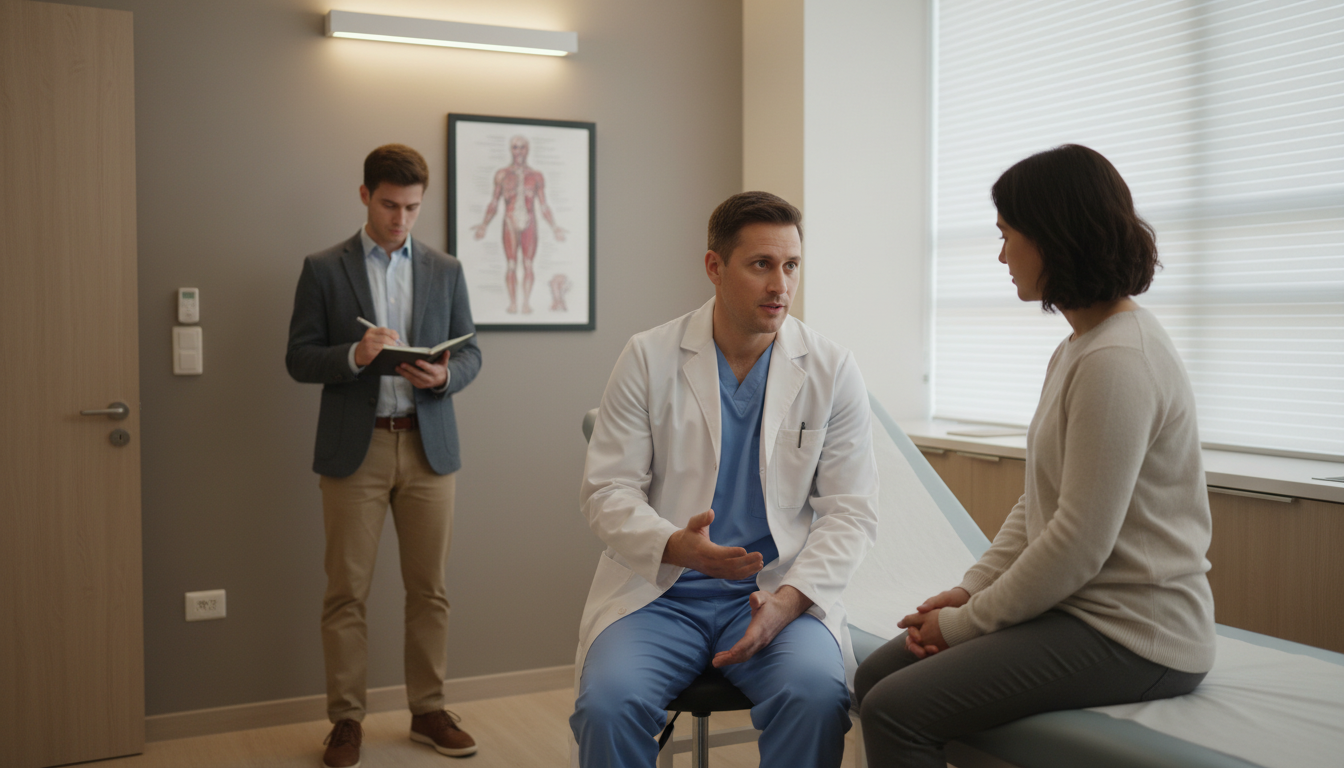
1. The Student Who “Gets the Room”
Doctors notice who understands the social dynamics of a patient encounter.
The memorable premed:
- Pauses at the exam room door. Lets the physician introduce them or ask the patient for permission.
- Makes light eye contact with the patient, gives a small nod or “Good morning,” then goes quiet and observes.
- Watches the patient’s body language. If the patient looks distressed or says “I’d rather just talk to the doctor,” they step out without protest or awkwardness.
- Never touches equipment, charts, or the computer unless explicitly invited.
What the attending is thinking: “This student is safe. I don’t have to worry about them interfering with my patient relationship.”
The forgettable (or problematic) premed:
- Walks right into rooms without waiting.
- Stands between the physician and patient or near the computer, blocking access.
- Jumps into introductions with “Hi, I’m [First Name], I’m shadowing because I want to go to medical school.”
- Stays in the room during intimate exams even when the patient’s body language clearly says no.
You want attendings to feel relaxed with you in the room. That relaxation is what allows them to consider mentoring you beyond shadowing.
2. The Premed Who Prepares Like It’s a Real Job
Most premeds treat shadowing as casual. Attending physicians do not.
Here is what gets remembered:
- You confirmed the time and location 48–72 hours beforehand with a short, professional email.
- You arrived 10–15 minutes early and checked in properly (front desk, security, badge office if needed) without having to be handheld.
- Your attire was clearly thought through: clean, neutral, closed‑toe shoes, no perfume/cologne, no giant backpack thumping into people in tight hallways.
- You brought a small notepad, one pen, and nothing else in your hands. Phone on silent, completely out of sight.
- When the attending gets pulled into a code, emergency, or family meeting, you do not look irritated that “shadowing time” got cut.
To the attending and staff, this says: “If I hired this person, they’d treat the job like it matters.”
One trauma surgeon told me flatly:
“The only premeds I remember are the ones who treated it like I was doing them a favor, not the other way around.”
That mindset leaks out in everything you do.
The Questions That Make You Stand Out (And the Ones That Quietly Damage You)
Attendings judge you heavily on your questions. Not just whether you ask any—but what they’re about and when you ask them.
The Questions That Signal Maturity
Memorable questions sound like these:
- “In that last encounter, I noticed you spent extra time talking about home safety. What were you listening for that made you think that was important?”
- “I saw you changed the plan after you stepped out to call the radiologist. What did they say that altered your decision?”
- “When a patient pushes for antibiotics and you know they’re not indicated, how do you balance preserving trust with doing the right thing?”
Notice the pattern. These questions are:
- About clinical reasoning or communication, not trivia.
- Tied to specific events from that day, proving you were actually paying attention.
- Usually asked in the hallway, between patients, or at the end of the session—not in front of patients.
What attendings say about students who ask questions like this:
- “I found myself thinking, ‘I could see this kid as a resident one day.’”
- “They were tracking the case the way my residents do, just at a different knowledge level.”
The Questions That Quietly Hurt You
Then there are the questions that make attendings mentally downgrade you:
- “What specialty should I go into?” (after 6 hours of shadowing, with no relationship built)
- “How hard is it to match into dermatology?” (during clinic, between rooms, when the waiting room is backed up)
- “What GPA and MCAT do I need?” (in front of patients or staff, turning the day into your advising session)
None of these are inherently “bad” questions, but they’re poorly timed and self‑focused.
The unspoken translation in the attending’s head:
“You’re more interested in extracting career tips than understanding what is happening to actual patients right now.”
You’re not there to be advised. You’re there to observe, absorb, and earn the right to ask for advice later.
The Energy and Presence That MDs Actually Remember
Here’s something you will never see in an official handbook: doctors are human, and they remember your energy more than they remember your exact words.
What makes a premed’s presence stand out, especially from shadowing alone?
Calm, Not Clingy
The best shadowers are present but never needy.
They don’t:
- Apologize every 5 minutes for “being in the way.”
- Hover 6 inches behind the attending’s shoulder.
- Ask, “So what should I be doing now?” every time the attending pauses.
Instead, they:
- Find a consistent, unobtrusive spot in the room or hallway.
- Wait for natural quiet moments to engage.
- Accept when a procedure or meeting is closed to them, without pouting or fishing for reassurance.
One internal medicine attending put it this way:
“I remember the students who could just exist in the clinical space without generating more work for me.”
That sounds harsh. But if you become a doctor, you’ll understand immediately.
Genuine Curiosity, Not Performance
The students who get remembered are actually interested in the patient stories, not just “cases for my personal statement.”
You can hear it in the way they talk afterward:
Forgettable:
“That was such a cool surgery.”
Memorable:
“It struck me how different his tone was talking to the patient versus talking to the resident afterward. He seemed more worried with the team than he showed the patient. How do you decide what to share about risk without overwhelming them?”
The attending hears that and thinks: this student notices the emotional layer, not just the technical one. That sticks.

The Follow‑Through That Turns Shadowing Into Real Opportunities
Here’s the real secret no one tells you: the moment you become memorable often happens after you leave the hospital.
Most premeds never follow up. Or they send one generic “thank you” email and disappear.
The students who get remembered—and get their names pulled up later for projects, research spots, or letters—handle this part differently.
The 24-Hour Email That Actually Matters
Within 24 hours of your last shadowing day, you send a short, specific email. Not a three‑paragraph essay. Something like:
Dr. Chen,
Thank you again for letting me shadow in clinic this week. I especially appreciated watching how you handled the conversation with the patient who was hesitant about starting insulin.
Seeing how you balanced respecting her fears with still being clear about the risks if she waited helped me understand the communication side of medicine much better. I’m grateful you allowed me to be part of those encounters.
Best,
[Name], [School]
Why this works:
- You reference something concrete, which shows you were engaged.
- You highlight a professional behavior (communication, decision-making), not just “cool procedures.”
- You make it easy for them to remember who you were when your name comes up later.
I’ve seen attendings forward emails like this to their program director with “This student might be good for research if we have anything.”
That’s the level you want to operate at—even if nothing comes of it immediately.
The Timing of Asking for More
Premeds blow this part constantly by asking too early or in the wrong way.
Do not ask, on day 1 at 10 a.m.:
“Do you have any research I could help with?”
From the attending’s perspective: they have known you for exactly 90 minutes and have zero data that you are reliable.
What works better:
- Shadow for a reasonable period (a few full days or multiple short blocks).
- Show up consistently, with the behaviors above.
- Send the 24‑hour follow‑up email.
- Then, 1–2 weeks later, if you truly feel there’s a connection, send another short email:
Dr. Chen,
I’ve been reflecting more on my time in your clinic and on my interest in endocrinology. If you ever have small research tasks, chart reviews, or projects where a motivated premed could help, I’d be eager to contribute. I know your time is extremely limited, so no worries at all if that’s not possible.
Either way, thank you again for letting me observe.
Best,
[Name]
Two key points buried in this:
- You explicitly acknowledge their time is limited. That reads as maturity.
- You offer to help with small tasks, not “put me on your first‑author randomized trial.”
Even if they have nothing, that email cements you as “the thoughtful premed from clinic” instead of “one of those random shadowers from a few months ago.”
How MDs Actually Decide Who Gets a Letter from Shadowing Alone
Here’s the uncomfortable part: not many attendings love writing letters based only on shadowing. No one tells you that openly.
Why? Because while shadowing shows elements of professionalism and curiosity, it does not show whether you can do sustained work.
But some attendings do write strong letters for shadowers. I’ve read them. They’re all about the same type of student.
These are the patterns:
- The student shadowed for a meaningful duration (20–40+ hours across multiple days or weeks), not just a single afternoon.
- The student’s presence never created friction with staff, nurses, or patients. A quick hallway, “How is that student?” check with a nurse came back positive.
- The student consistently asked thoughtful, case-based questions.
- The student followed up afterward with reflection and professionalism.
- When asked, “Would you trust this person as an M3 on your team in a few years?” the attending’s gut answer was yes.
If you want a letter from shadowing alone, you make that ask only if:
- You’ve established some real rapport,
- You’ve spent multiple days with them, and
- You give them a graceful way to decline.
Something like:
Dr. Patel,
I’m starting to think about letters of recommendation for medical school applications. You’ve seen me in clinic over the last few weeks, and I’ve really valued learning from how you practice.
If you feel you know me well enough to comment on my professionalism, curiosity, and ability to interact in a clinical environment, I would be honored to have a letter from you. If not, I completely understand and appreciate the time you’ve already given me.
Best,
[Name]
That “if you feel you know me well enough” line is crucial. It signals that you understand what a meaningful letter entails. Many attendings actually become more willing to write a letter when you show that level of awareness.
Practical Behaviors That Make You Memorable Starting Tomorrow
Let’s distill the real behind‑the‑scenes checklist attendings use in their heads, even if they never write it down.
You become memorable from shadowing alone when:
- Staff can’t complain about you. You’re polite to the front desk, you introduce yourself to nurses, you don’t crowd the workstation, you say “thank you” when people help you navigate the maze of the hospital.
- Your curiosity tracks the patient’s story, not just the procedure. You care about why decisions were made, not just what was done.
- You adapt to the doctor’s style. A fast-paced EM doc isn’t going to stop for 3-minute questions after every patient. You save it for lulls or the end of the shift.
- You show stamina. No checking your watch every 20 minutes. If the attending stays late for a complex case, you don’t start hinting that you “kind of have to go.”
- You demonstrate basic emotional intelligence. You don’t joke during serious family meetings. You don’t try to bond with patients by oversharing your own life.
- You leave the physician thinking: “If this is what our future med students look like, we’ll be okay.”
None of this requires perfect grades, decades of experience, or knowing every medication. It requires situational awareness, humility, and consistent follow-through.
Those are the raw materials attendings are scanning for when you walk in with your visitor badge and nervous smile.
Years from now, you won’t remember every hallway you paced behind an attending. But they will remember how it felt to have you in their clinical orbit—and that, more than anything, is what turns a simple shadowing stint into the first real signal that you belong in this field.