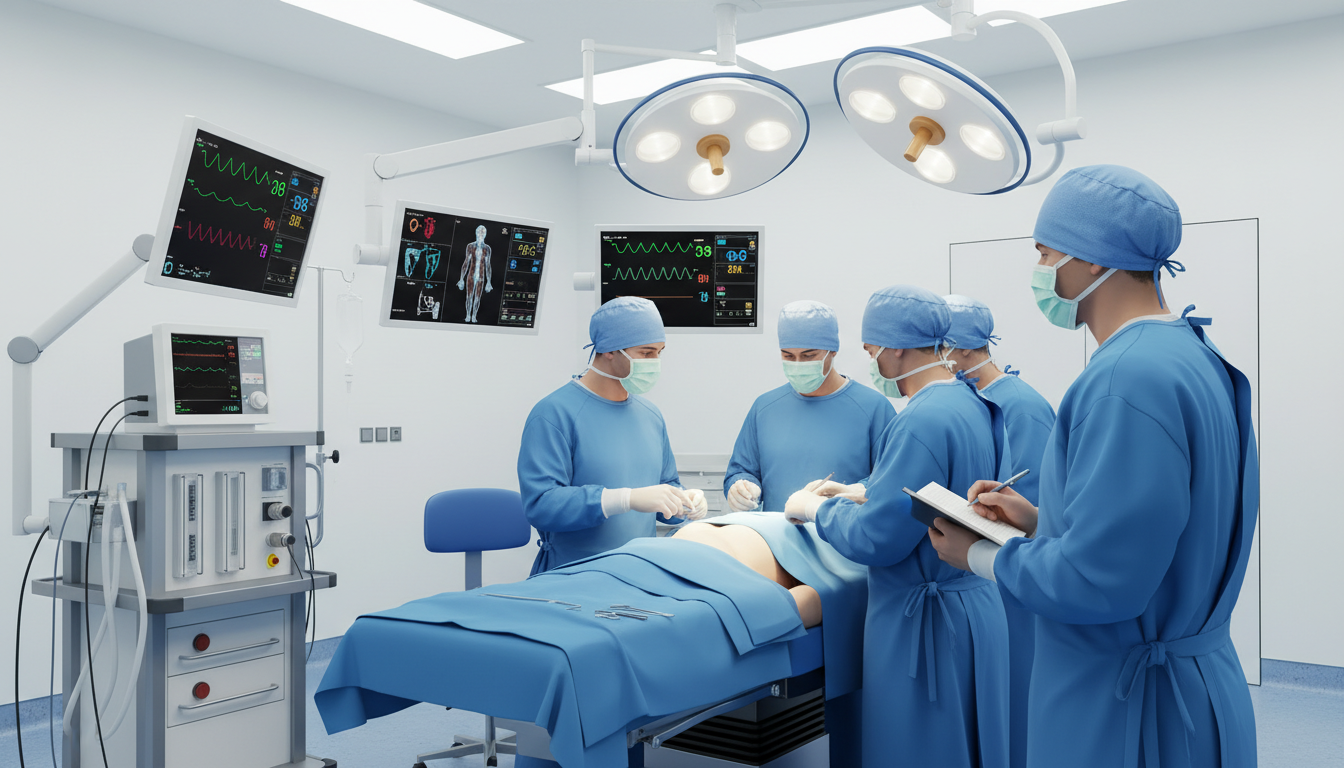
The biggest mistake students make when shadowing surgeons is thinking the operation starts when the skin incision is made. It does not. By the time the first cut happens, half the important clinical decisions are already finished.
Shadowing surgery effectively means understanding the flow of care around the operation: pre‑op, intra‑op, and post‑op. If you only pay attention once the drapes go up, you are missing most of what surgeons actually do.
Let me break this down specifically.
(See also: Shadowing in the Operating Room: Stepwise Etiquette and Safety Primer for more details.)
The Real Goal of Shadowing Surgeons
Shadowing is not about collecting cool “I saw a heart beating” stories. It is about learning:
- How surgeons think through risk and benefit.
- How the OR team functions as a system.
- How perioperative decisions affect outcomes long after the last suture.
Premeds and early medical students often see only the “intra‑op” piece: the cutting, sewing, retracting. Adcoms and attendings know that. What impresses them more is when you understand:
- Why that patient qualified for surgery.
- What could go wrong during anesthesia or emergence.
- What the team will watch for in PACU or on the floor.
The structure you want in your head is:
- Pre‑Op: Identifying the right patient for the right operation at the right time.
- Intra‑Op: Executing the plan safely with constant micro‑decisions and adjustments.
- Post‑Op: Detecting complications early and guiding recovery.
Everything you see during shadowing will fall into one of those buckets. Once you see this, the chaos of a surgery day starts to make sense.
Pre‑Op: Where Most Surgical Decisions Actually Happen
Pre‑op is where you see surgeons as diagnosticians and risk managers, not just technicians. If you want to demonstrate actual understanding in a personal statement or interview, this is where your insights should come from.
1. The Pre‑Op Patient Workup
Before a surgeon ever signs a consent form, several questions must be answered explicitly or implicitly. Watch for these in clinic or pre‑op holding:
Is surgery indicated?
- Example: A 55‑year‑old with gallstones. Indication might be symptomatic cholelithiasis (biliary colic), acute cholecystitis, or choledocholithiasis.
- As a shadower, notice how the surgeon distinguishes: “biliary colic” vs “acute cholecystitis” vs “RUQ pain from something else.”
Is surgery the best option compared to alternatives?
- For appendicitis: antibiotics alone vs laparoscopic appendectomy.
- For spinal stenosis: conservative therapy (PT, injections) vs decompression surgery.
Is the patient fit for anesthesia and surgery now? Or should we optimize first?
- Poorly controlled diabetes? CAD with no recent cardiology workup? COPD with frequent exacerbations?
You will often see this documented in notes like: “Patient is a reasonable operative candidate.” That phrase hides a lot of thinking.
If you are shadowing in clinic, listen specifically when the surgeon talks about:
- Past medical history (cardiac, pulmonary, renal, diabetes).
- Medications that influence bleeding or anesthesia (anticoagulants, antiplatelets, beta-blockers).
- Functional status: can they climb stairs? Walk a block? Use of supplemental oxygen?
These are not filler questions. They drive perioperative risk calculation.
2. Risk Stratification and Optimization
Surgeons and anesthesiologists are silently answering:
- How high is this patient’s perioperative cardiac risk?
- Will they tolerate lying flat, being intubated, and physiological stress?
- What can we do before surgery to reduce those risks?
You might hear terms like:
- ASA class (American Society of Anesthesiologists):
- ASA I: Healthy
- ASA II: Mild systemic disease
- ASA III: Severe systemic disease
- ASA IV: Severe disease that is a constant threat to life
- ASA V: Moribund, not expected to survive without operation
As a shadower, you do not need to assign ASA classes. Instead, notice patterns:
- ASA I–II often go straight to surgery for elective cases.
- ASA III–IV may get more extensive pre‑op testing, cardiology consults, or delayed surgery for optimization.
Watch specific optimization moves:
- Holding warfarin or DOACs pre‑op, bridging with heparin in certain high‑risk patients.
- Tightening glucose control before major surgery.
- Smoking cessation counseling before lung or vascular procedures.
- Pre‑habilitation for frail patients (nutrition, PT, respiratory exercises).
When a surgeon cancels or delays a case because “the risk is too high right now,” do not be disappointed. That is exactly the kind of safety‑first decision you want to understand.
3. Informed Consent that is Actually Informed
You will hear surgeons ask patients to “sign the consent.” That can sound routine. Watch what happens before the pen touches paper.
A good consent discussion covers three key areas, often explicitly:
Indication and purpose:
- “We are recommending a laparoscopic cholecystectomy because you have recurrent episodes of gallbladder inflammation causing pain and risk of infection.”
Risks and complications:
- Bleeding, infection, damage to nearby structures (for cholecystectomy: bile duct injury, bowel injury), anesthesia risks, conversion to open surgery.
- For major surgeries, they may mention mortality risk in percentages.
Alternatives (including doing nothing):
- “You can choose not to have surgery, but the risk is X.”
- “For now, we could try medical management, but…”
As a premed, you can learn a lot from how surgeons tailor this explanation to:
- A young, healthy patient vs an 85‑year‑old with dementia.
- An anxious patient demanding every detail vs one overwhelmed by information.
When you later write or speak about shadowing, saying “I watched how surgeons balanced honesty about risk with empathy and clarity during consent conversations” is more meaningful than “I saw a cool surgery.”
4. Pre‑Op Holding Area: The Hour Before Incision
On the day of surgery, pre‑op holding is where several important steps occur:
Verification and “time‑outs” before the OR time‑out
- Patient identity: name, date of birth.
- Correct side/site: marking the surgical site (e.g., right leg before knee replacement).
- Review of allergies (especially to antibiotics, latex, or anesthetics).
Fast‑track pre‑op anesthesia assessment
- Airway evaluation (Mallampati class, neck mobility, dental issues).
- Review of NPO status (last food, last liquids).
- Plan: general vs spinal vs regional vs monitored anesthesia care.
Prophylactic interventions
- Antibiotics within 60 minutes before incision.
- DVT prophylaxis (heparin, SCDs).
- Marking where central lines or regional blocks will go.
As a shadower, what should you watch for?
- How many times identity and procedure are checked.
- How the surgeon, anesthesiologist, and nurse split responsibilities.
- How anxiety is handled (“You are in good hands; we do this procedure frequently”).
Standing quietly, out of the way, you can still absorb the choreography and redundancy that prevent disasters like wrong‑site surgery.

Intra‑Op: What is Actually Happening in the OR
The OR looks overwhelming at first: bright lights, beeping monitors, blue drapes everywhere, people moving with a purpose you do not yet understand. Your job is not to memorize every tool. Your job is to map what you see to the flow of:
- Patient arrival and positioning.
- Anesthesia induction and airway control.
- Sterile field creation and surgical prep.
- Actual operative steps and intra‑operative decisions.
- Closure and emergence from anesthesia.
1. Entry, Positioning, and Anesthesia Induction
When the patient comes in:
- They move from stretcher to OR table (or are transferred). This alone is a fall‑risk moment managed very deliberately.
- Positioning is carefully adjusted: supine, lithotomy, prone, lateral decubitus, beach chair, etc.
Watch how positioning is not just about surgeon comfort:
- Pressure points are padded (heels, sacrum, elbows) to prevent nerve injuries and pressure ulcers.
- Arms are tucked vs abducted depending on procedure and line placement.
- For certain positions (e.g., prone), airway and line security are double‑checked.
Then anesthesia induction:
- Pre‑oxygenation with mask (often 100% O₂) for several minutes.
- Administration of induction agents (propofol/etomidate/ketamine), paralytics, opioids.
- Endotracheal intubation or LMA placement. You will see the anesthetist watching the monitor, listening for breath sounds, confirming CO₂ on capnography.
As a shadower, you should be positioned where:
- You are not near the sterile field.
- You are not near the head of the bed during intubation unless explicitly invited and instructed.
- You can see both the surgeon’s side and at least one monitor showing vital signs.
Understand that during induction and emergence, the anesthesiologist, not the surgeon, is essentially “in charge.” That hierarchy is different from clinic and is worth noticing.
2. Sterility and Surgical Prep: The Discipline You Must Respect
Break this part down systematically:
- Scrub: Surgical team members scrub their hands and forearms using a precise routine, then gown and glove.
- Prep: The circulating nurse or resident preps the skin with antiseptic solution in a wide area.
- Draping: Sterile drapes cover everything except the operative field.
As an observer, your most important task is:
Do not break sterility.
That means:
- Never reach over the blue sterile field.
- Do not touch tables with instruments, drapes, or anything that looks “too clean.”
- If you are unsure, ask the circulating nurse before moving closer.
Surgeons notice students who understand this instinctively. If you are invited to scrub in during medical school, they are much more comfortable if you have already seen the flow multiple times and respect the invisible boundaries.
3. The Actual Operation: See the Pattern, Not Just the Anatomy
Every operation has a sequence. Good surgeons have a mental checklist and adapt as needed. Your task is to identify the skeleton of that sequence, even if you do not know every instrument or structure.
Take a laparoscopic appendectomy, for example. The rough flow:
- Access and insufflation (Veress needle or Hasson technique, CO₂ insufflation).
- Trocar placement and camera insertion.
- Identification of cecum and appendix.
- Mobilization of appendix, control of mesoappendix vessels.
- Ligation/stapling of appendiceal base.
- Removal of specimen in a bag.
- Irrigation, inspection for bleeding or contamination.
- Desufflation and closure of ports.
Watch for several things:
- How much time is spent identifying structures compared to cutting. (Often more than students expect.)
- How the surgeon and assistant coordinate movements and camera angles.
- How often the surgeon pauses to reassess: “Where is that structure?” “Are we too close to the ureter?”
For larger operations (colectomy, thyroidectomy, ORIF of fractures):
- Look for repeated phrases: “critical view,” “stay medial to,” “protect the nerve here.”
- Those are the danger zones and key decision points.
You will not become an expert in anatomy by shadowing. You can, however, watch how experts use anatomy to make safe decisions.
4. The Role of Anesthesia during the Case
Do not forget the other side of the drape. While the surgeon focuses on the operative field, the anesthesiologist is continuously:
- Maintaining blood pressure, heart rate, and oxygen saturation in target ranges.
- Adjusting anesthetic depth to prevent awareness and manage hemodynamics.
- Managing fluids and blood products.
- Watching urine output and labs in major cases.
In longer or more complex surgeries you might see:
- Arterial lines for continuous blood pressure monitoring.
- Central venous lines.
- Transesophageal echocardiography (in cardiac cases).
If you are allowed, spend part of a case standing near the anesthesia machine. Ask between critical moments (never during induction or an acute event):
- “What are you watching most closely during this type of case?”
- “How do you decide how much fluid or blood to give?”
Understanding surgery without understanding anesthesia is like watching only one half of a conversation.
5. Closing, Dressings, and Emergence
Once the main operative part is done:
- Hemostasis is verified. Surgeons often say “take a minute and look around” to the team. You will see them scanning for even small bleeders.
- Counts are done: sponges, needles, instruments. The circulating nurse and scrub tech confirm all are accounted for.
Closure:
- Deep layers are often closed with absorbable sutures.
- Skin is closed with sutures, staples, or glue depending on the case.
- Dressings are applied with attention to drainage, tension, and contamination risk.
On the anesthesia side:
- Volatile agents or infusions are reduced.
- Reversal of neuromuscular blockade is given.
- The patient begins to breathe spontaneously.
Emergence and extubation are high‑risk times:
- Laryngospasm, aspiration, hemodynamic swings can occur.
- The anesthesiologist will extubate only when certain criteria are met (adequate tidal volumes, appropriate responsiveness, stable vitals).
You might be tempted to mentally “check out” once the main dissection is over. Do not. Complications cluster at transitions: induction, major surgical steps, and emergence.
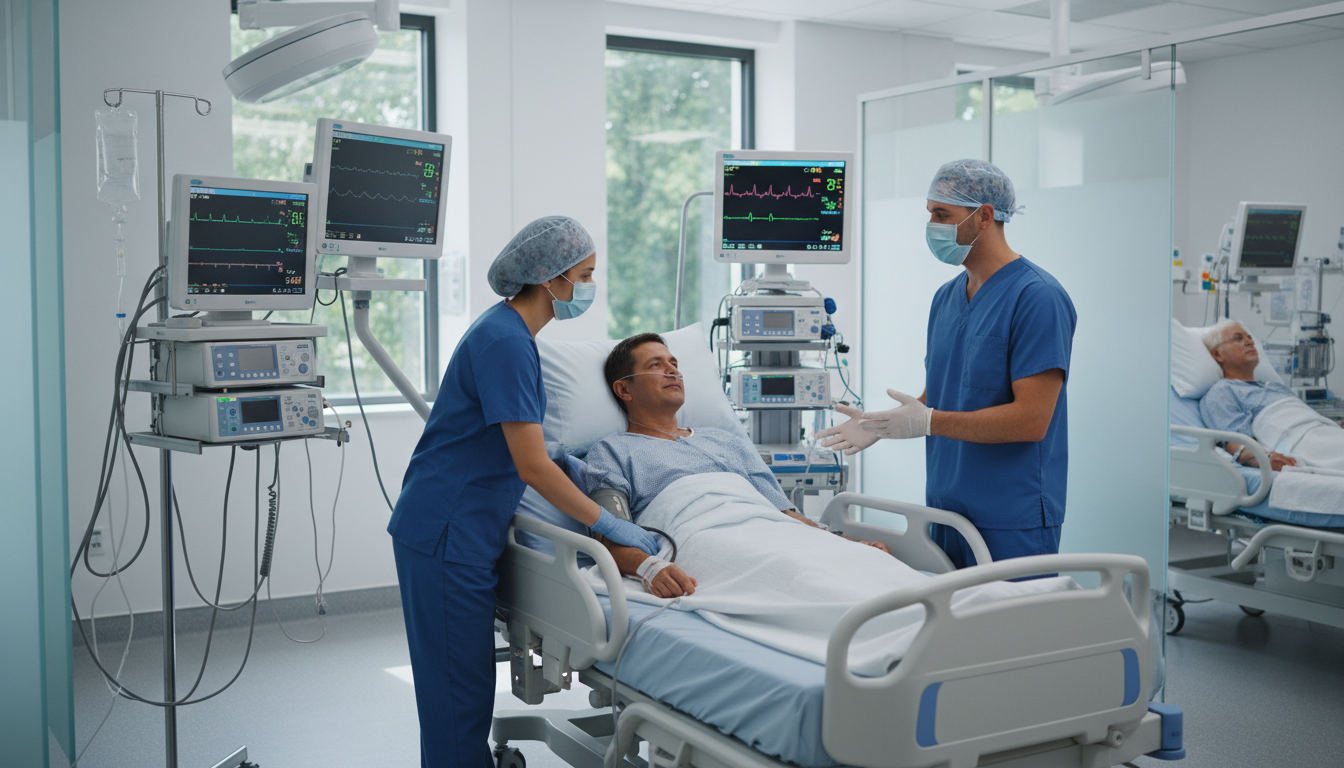
Post‑Op: Where Outcomes Are Won or Lost
Many premeds leave the hospital after the surgery is over and never see what happens when things go wrong post‑op. If you get a chance to follow the same patient from OR to PACU to floor (or clinic follow‑up), that is one of the most educational experiences you can have.
1. PACU: Immediate Post‑Anesthesia Care
In the PACU, nurses and anesthesiologists focus on:
- Airway: Is the patient maintaining their airway? Obstructing?
- Breathing: Respiratory rate, oxygen saturation, work of breathing.
- Circulation: Blood pressure, heart rate, bleeding from dressings or drains.
- Consciousness: Level of responsiveness, emergence delirium in some cases.
- Pain control and nausea/vomiting management.
You will hear structured assessments like the Aldrete score, which looks at:
- Activity
- Respiration
- Circulation
- Consciousness
- O₂ saturation
Patients need a certain level to leave PACU safely.
From the surgeon’s side:
- They usually check the patient, examine the wound, and give post‑op orders.
- They communicate with the family, summarizing: what was done, any unexpected findings, how the patient is doing now.
Watch those family conversations. That is where communication skills are tested under pressure.
2. On the Floor or ICU: Early Post‑Op Period
After leaving PACU, patients go either to:
- A regular surgical floor (for lower‑risk, stable patients).
- A step‑down or ICU (for major operations, high‑risk comorbidities, or unstable patients).
Key issues in the first 24–48 hours:
Pain Control
- PCA (patient‑controlled analgesia) pumps, epidurals, nerve blocks, scheduled vs PRN meds.
- Balancing adequate relief with respiratory depression and delirium risk.
Early Mobilization and DVT Prevention
- Getting patients out of bed, ambulating with assistance.
- SCDs and pharmacologic prophylaxis.
Return of Bowel Function (after abdominal surgery)
- Watching for flatus, bowel movements, tolerance of oral intake.
- Differentiating ileus (expected temporary slowdown) vs obstruction or leak.
Wound and Drain Management
- Inspecting dressings: dry vs soaked, serous vs sanguineous vs purulent.
- JP drains, chest tubes, Foley catheters: output volume and character.
Monitoring for Complications
Common early issues include:- Hemorrhage
- Infection and sepsis
- Respiratory complications (atelectasis, pneumonia, PE)
- Cardiac events (MI, arrhythmias)
- DVT/PE
When you attend post‑op rounds, notice how surgeons:
- Ask targeted questions: “Any chest pain? Shortness of breath? Nausea? Passing gas?”
- Scan vitals and labs before walking into the room.
- Decide who can go home vs who needs another day.
This is where surgical judgment looks less heroic but is just as critical.
3. “Red Flag” Post‑Op Patterns You Can Learn to Recognize
You will not be managing patients, but you can start recognizing patterns. Examples:
Day 1–3 after abdominal surgery:
- Expected: mild distension, delayed bowel sounds, low‑grade fever, mild tachycardia.
- Concerning: severe pain out of proportion, rigid abdomen, persistent tachycardia, hypotension, high fever, dropping hemoglobin → possible leak or bleed.
Post‑op day 5–7:
- Risk for wound infection increases. Look for redness, warmth, pus, tenderness.
Any time:
- Sudden shortness of breath, chest pain, tachycardia → think PE until proven otherwise in at‑risk patients.
You do not need to diagnose. But if you shadow enough, you will see a case where the patient does not follow the expected trajectory. Those are often the experiences that stay with students and shape their understanding of risk.
4. Discharge Planning and Long‑Term Outcomes
Discharge is not just “You can leave now.” It involves:
- Clear instructions about wound care and activity restrictions.
- Medication changes (new pain meds, stopping or resuming anticoagulants, antibiotics).
- Follow‑up appointments and when to seek urgent care.
For example, after laparoscopic cholecystectomy:
- No heavy lifting for a certain period.
- Watch for signs of bile leak: increasing abdominal pain, fever, jaundice.
After major orthopedic surgery:
- Weight‑bearing restrictions.
- Physical therapy schedule.
From an educational standpoint, seeing the patient again in clinic weeks later is invaluable. You connect the dramatic intra‑op experience with more mundane but important outcomes:
- Pain trajectory.
- Return to baseline function.
- Scar healing.
This also helps correct the “surgeons only care about the OR” myth. Good surgeons care deeply about follow‑through.
How to Maximize Your Learning During Surgical Shadowing
Understanding pre‑op, intra‑op, and post‑op flow is not just conceptual. It should shape how you spend your time and what you pay attention to.
1. See the Entire Continuum When Possible
If you have a choice:
- Sit in on the clinic visit where the operation is first recommended.
- Be present in pre‑op holding on the day of surgery.
- Stay through the case, at least to dressing application.
- Visit PACU briefly.
- Join morning rounds the next day.
- Attend follow‑up clinic if your schedule permits.
Following one or two patients through the entire perioperative arc teaches more than watching ten unrelated operations.
2. Ask Targeted, Phase‑Specific Questions
You will learn far more by asking 2–3 good questions at the right times than by firing off generic ones.
Examples:
Pre‑op:
- “What made this patient a good candidate for surgery rather than continued medical management?”
- “If their cardiac history were worse, would your plan change?”
Intra‑op (during a non‑critical moment):
- “What are the biggest structures you are careful to avoid in this step?”
- “If you had seen X finding instead, would you have changed the operation?”
Post‑op:
- “What are you most concerned about in the first 24 hours for this type of surgery?”
- “What has to go right before you are comfortable discharging a patient like this?”
Always read the room. Do not speak during time‑outs, induction, emergence, or when the mood shifts toward urgency.
3. Observe Team Dynamics and Systems, Not Just Individuals
Surgeons do not operate alone. Watch specifically:
- How the surgical tech anticipates instrument needs.
- How the circulating nurse manages equipment, runs to get additional supplies, and documents.
- How anesthesia communicates blood pressure issues or concerns.
- How residents and medical students present patients on post‑op rounds.
If you later describe these dynamics in applications, you demonstrate that you understand system‑level care, not just individual heroics.
4. Connect Each Phase Back to Patient Safety
Every step you see, from marking the operative site to sponge counts, exists because a patient was once harmed.
Try to mentally label:
- “This is a safety step to prevent wrong‑site surgery.”
- “This is a safety step to reduce postoperative infection.”
- “This is about early recognition of complications.”
That framework will make you sound like someone who will be a careful, systems‑aware physician, not just an adrenaline‑chasing OR tourist.
Key Takeaways
- Surgery is a continuum: pre‑op decisions, intra‑op execution, and post‑op vigilance are equally critical; shadowing is only complete when you see all three.
- The most sophisticated thinking often happens outside the operating room—during risk assessment, consent, optimization, and post‑op management.
- The students who stand out are those who grasp perioperative flow, respect sterility and workflow, ask phase‑appropriate questions, and connect what they see to patient safety and long‑term outcomes.