
The best way to practice behavioral questions without a coach is to build a tight, repeatable system: a fixed story bank, a simple answer structure, and ruthless self-review on video. If you do that right, you won’t miss the coach.
Let me walk you through exactly how.
Step 1: Stop “Wing-It” Practice — Build a Story Bank
Most people “practice” behavioral questions by reading a list and answering out loud a few times. That’s useless. You need reusable stories, not scattered one-off answers.
Here’s what actually works:
1. Pick 12–15 core stories
You don’t need 50 examples. You need 12–15 really solid ones you can bend to fit most questions.
Aim for stories that cover:
- A major conflict on the team
- A mistake you made / failure
- A difficult patient or family
- Working with someone you didn’t get along with
- Taking initiative or leading something
- A time you were overwhelmed / high workload
- An ethical dilemma or gray area
- Feedback you got that stung but changed you
- A time you advocated for a patient
- A time you had to ask for help or escalate
- Working across disciplines (nurse, PT, social work, etc.)
- Teaching or mentoring someone
If you’re in med school or residency, these should be real, clinic-based stories:
The angry family at 2 a.m. on your medicine rotation. The intern you covered when they were drowning on cross-cover. The time you mixed up patient rooms and almost presented the wrong person.
2. Write them as bullets, not essays
You’re not writing your personal statement here. You’re building prompts for your memory.
For each story, jot down:
- Setting: rotation, year, your role
- Problem: 1 line
- What you did: 3–5 bullets
- Outcome: 1–2 bullets with specifics
- What you learned / changed afterward: 1–2 bullets
Example:
Story: Angry family, poor communication – MICU, MS3
- Setting: MICU, night float, MS3 on call with resident
- Problem: Family furious about “no one updating them,” threatened complaint
- Actions:
- Sat down with family, let them vent uninterrupted for several minutes
- Clarified what they understood so far and corrected misconceptions
- Called the resident, arranged a formal family meeting next morning
- Documented discussion + plan, communicated with night nurse
- Outcome: Family calmer, thanked us next day after meeting
- Learning: Importance of proactively setting expectations; since then, I always identify key family members early and communicate daily
That’s enough to reconstruct a polished 1.5–2 minute answer.
3. Tag each story to common themes
On the top of each story, tag 3–5 things it can answer, like:
- “Conflict, difficult family, communication, advocacy, professionalism”
This way, when you get:
“Tell me about a time you dealt with a difficult family,”
or
“Tell me about a time you had a conflict with someone,”
you already know which story to pull.
You’ve just built what a good coach would force you to build anyway.
Step 2: Use a Simple Answer Framework (And Stick to It)
You do not need an exotic framework. You need one you can remember under adrenaline.
Use a stripped-down STAR or CAR structure and commit to it:
STAR (Situation, Task, Action, Result + Reflection)
I like to actually think: Context – Challenge – Actions – Result – Reflection (CCARR).
Here’s the breakdown:
- Context – 1–2 sentences: Where were you, what was your role?
- Challenge – 1–2 sentences: What was going wrong / at stake?
- Actions – 3–5 clear, specific things you did
- Result – 1–2 sentences: Outcomes, with something concrete if possible
- Reflection – 1–2 sentences: What you learned or changed
Keep your answers 60–120 seconds. Over that and you’re rambling.
Example transformation using CCARR:
Question: “Tell me about a time you made a mistake.”
You’d answer:
- Context: “On my internal medicine sub-I, I was acting intern on a busy ward team.”
- Challenge: “I misread a lab result and almost put in an incorrect insulin dose for a diabetic patient.”
- Actions: “I caught the error while double-checking before submitting the order, but I still immediately told my senior what happened. I reviewed the chart in detail to see how I misinterpreted the labs. I apologized to the patient for the confusion with their orders. That night, I built a personal checklist for insulin orders and started cross-referencing with pharmacy notes.”
- Result: “The patient was not harmed, the correct dose was ordered, and my senior appreciated that I surfaced the mistake instead of hiding it.”
- Reflection: “Since then, I slow down on any high-risk order and use my checklist. It made me much more systematic and less reliant on ‘I think I remember this.’”
You don’t need a coach to learn this. You need repetition.
Step 3: Practice on Camera Like You Mean It
If you skip this, you’re guessing. Your delivery is where most people fall apart: rambling, low energy, apologizing, monotone, disorganized.
Here’s the no-coach version of deliberate practice:
1. Use a simple setup
- Your phone or laptop camera
- Free prompts (there are tons of “residency behavioral questions” lists online)
- A notebook with your story bank
Record 3–5 questions at a time. Full answers. Out loud. Sitting in a chair like you would in the real interview.
2. Use a feedback checklist
When you replay the video, don’t just cringe and move on. Score yourself.
Make a simple 1–5 rating on:
- Structure: Did I clearly follow CCARR or did I wander?
- Clarity: Did I answer the actual question, or sidestep it?
- Brevity: Did I stay under ~2 minutes?
- Specifics: Did I give concrete details (what I actually did) vs vague generalities?
- Ownership: Did I show what I did, not “we” all the time?
- Reflection: Did I clearly state what I learned / changed?
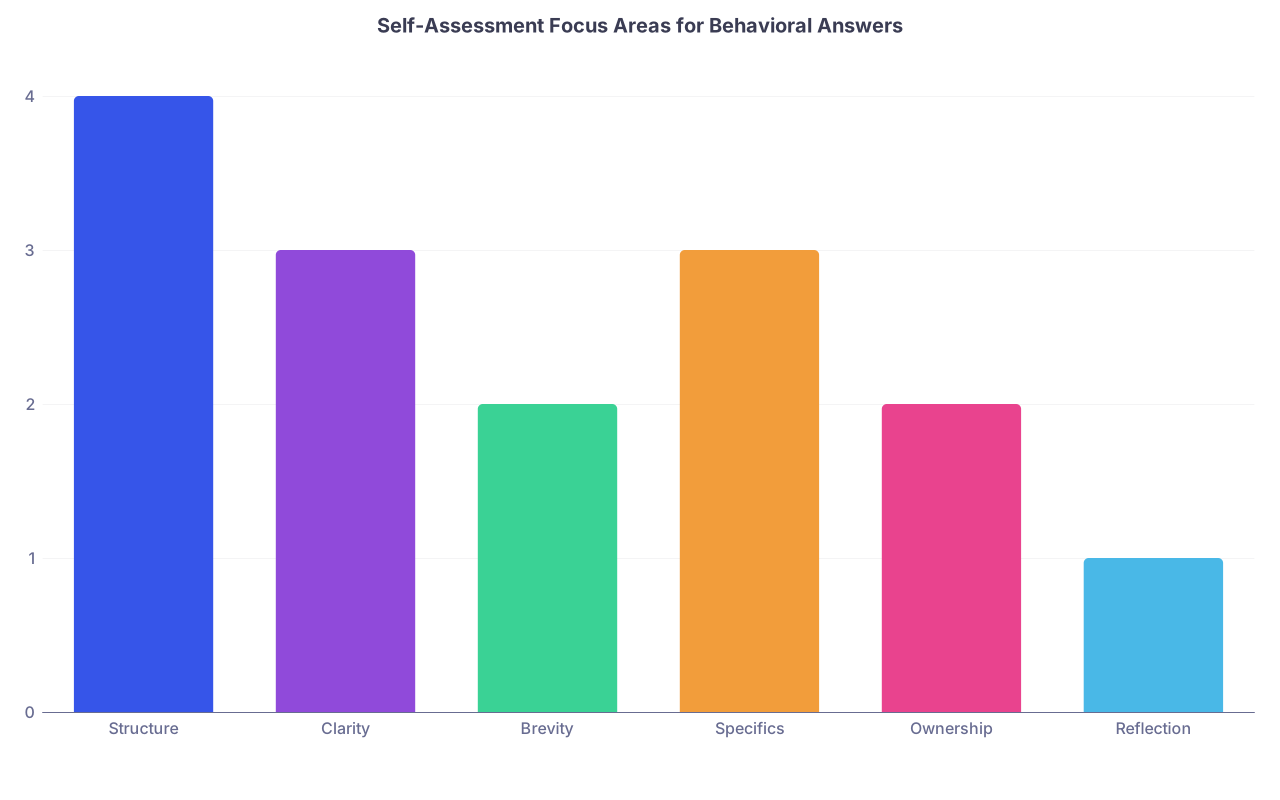
| Category | Value |
|---|---|
| Structure | 4 |
| Clarity | 3 |
| Brevity | 2 |
| Specifics | 3 |
| Ownership | 2 |
| Reflection | 1 |
You don’t need to be perfect across all 6. Focus on the two lowest scores each session.
Example: If you notice every answer runs 3+ minutes, your next 5 answers are capped at one minute. Timer on. You learn to cut fluff fast.
3. Iterate fast
Practice loop:
- Pick 3 questions
- Answer and record
- Watch, rate, pick 1–2 specific fixes
- Re-record 1–2 of those questions immediately with the fix in mind
That tight loop is what a good coach would do: show you your patterns, then hammer them.
Step 4: Simulate Real Pressure (Solo, Not Silly)
You don’t rise to the occasion on interview day; you fall to your level of training. So raise your level.
Here’s how to push yourself without another person:
1. Use a question randomizer
Print 30–40 behavioral questions and cut them into slips. Or toss them in a spreadsheet and use a random number generator.
Pull one at random. 10–20 seconds to think. Then answer. On camera.
No pausing to outline paragraphs. That’s how the real interview feels.
2. Practice “I don’t have that exact situation”
Sometimes you will get a question you truly don’t have a perfect story for.
For example:
“Tell me about a time you had to fire someone.”
Most med students don’t.
Practice responding with:
- Brief acknowledgment: “I haven’t fired someone in the traditional sense, but I have had to give very direct feedback and remove someone from a role they wanted.”
- Then pivot into your closest analogous story.
You don’t want that to be the first time you’ve tried that move.
3. Build a “hard questions” list
As you practice, flag anything that makes you uncomfortable:
- “Tell me about a time you were unprofessional.”
- “What do you regret from medical school?”
- “Describe a conflict with an attending.”
- “Tell me about a time you were criticized.”
These are high-yield because they expose ego, shame, or defensiveness. And programs love them.
Write out one clear story for each, with explicit ownership and reflection. Practice them more than the easy ones.
Step 5: Use Low-Stakes Humans as Partial Coaches
You said “without a coach,” not “without other humans at all.” There’s a difference.
You can get 70–80% of the value of a coach by using non-experts strategically:
- A co-applicant
- A co-resident
- A significant other or friend
- Even a non-med person who’ll be blunt
Give them a simple instruction sheet:
- Don’t tell me I’m “great.” Tell me where I lost you.
- Tell me the one moment you felt confused or bored.
- Tell me your impression of me in 3 words after 3 answers. (e.g., “calm, vague, defensive”)
- Ask: “Did you actually answer the question?”
They don’t need to know what ACGME competencies are to say, “You didn’t really answer the question about conflict; you dodged it.”
If you want more structure, use something like:
| Area | Question to Ask Peer |
|---|---|
| Clarity | Did my answer clearly fit the prompt? |
| Structure | Could you follow the story easily? |
| Likeability | Did I sound defensive or open? |
| Specificity | Did I describe what I did, specifically? |
| Length | Did any part feel too long? |
That’s enough for useful correction.
Step 6: Map Your Stories to What Programs Actually Care About
Programs are not thinking, “What a touching story.” They’re thinking, “Can I trust this person on my team at 2 a.m.?”
Behavioral questions are just a back door into a handful of core traits:
- Accountability (owning mistakes, patient-first decisions)
- Communication (with team, patients, families)
- Teamwork/hierarchy awareness
- Resilience and coping
- Adaptability / teachability
- Ethical judgment / professionalism
Take your 12–15 stories and label the core competencies each one shows. If a story doesn’t demonstrate something they care about, either reframe it or drop it.
Example labeling for that angry family MICU story:
- Communication under stress
- De-escalation
- Professionalism
- Patient/family-centered care
- Collaboration with team
Now when you get asked something like,
“Tell me about a time you had to work with a difficult team member,”
you might pivot to a different story that hits teamwork and hierarchy instead, because that’s what’s being tested.
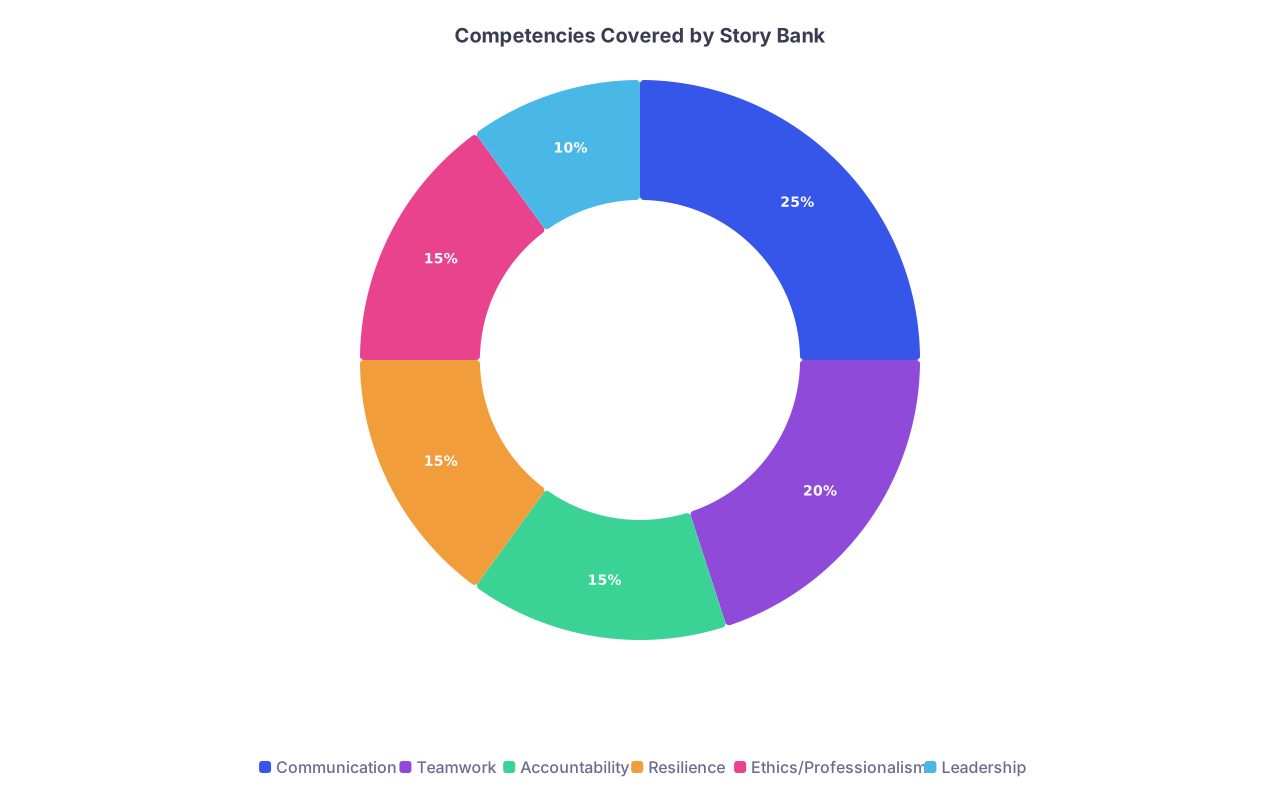
| Category | Value |
|---|---|
| Communication | 5 |
| Teamwork | 4 |
| Accountability | 3 |
| Resilience | 3 |
| Ethics/Professionalism | 3 |
| Leadership | 2 |
Step 7: Build a Short, Daily Practice Routine (2–3 Weeks Before Interviews)
You don’t need a 3-month behavioral bootcamp. You need consistency.
Here’s a lean but effective routine:
Days 1–3:
- Build/clean your story bank (12–15 stories)
- Tag themes and competencies
- Practice 5–6 answers/day, no video yet, just getting comfortable
Days 4–10:
- Daily: Record 3–5 answers on video
- Watch and rate yourself on the six dimensions (structure, clarity, brevity, specifics, ownership, reflection)
- Choose one area to improve the next day
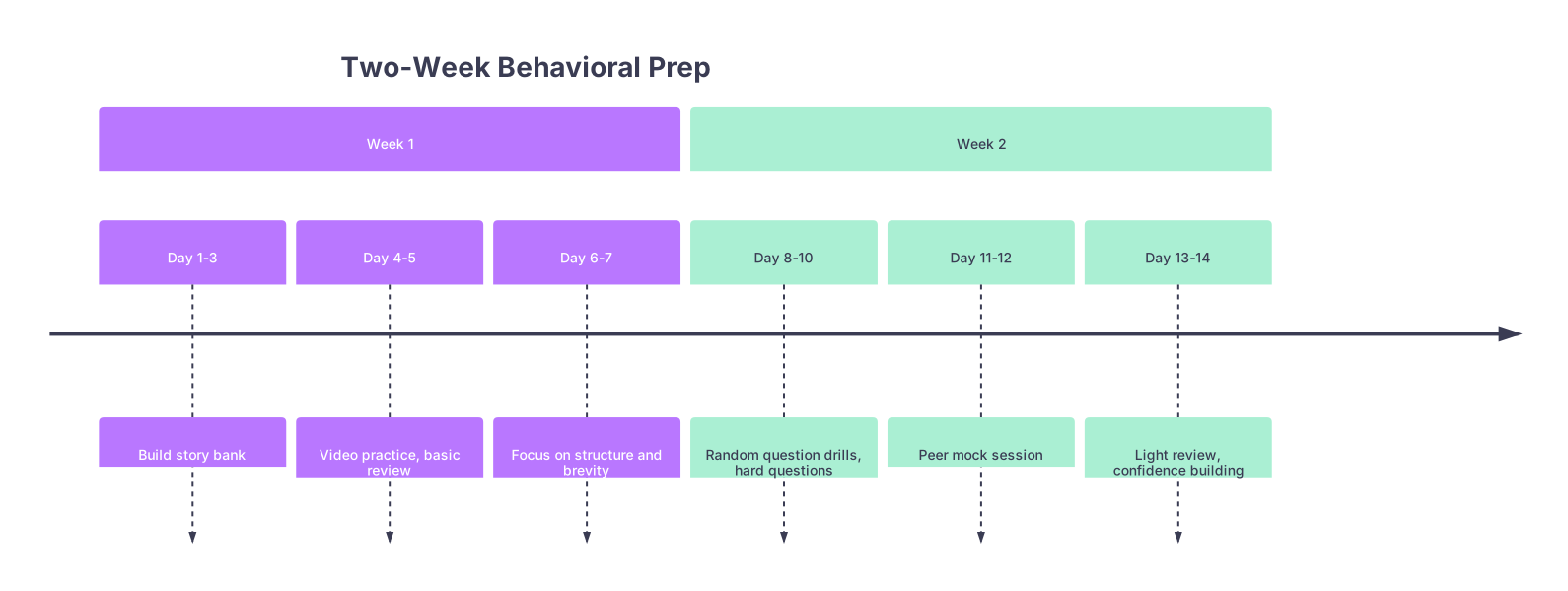
| Period | Event |
|---|---|
| Week 1 - Day 1-3 | Build story bank |
| Week 1 - Day 4-5 | Video practice, basic review |
| Week 1 - Day 6-7 | Focus on structure and brevity |
| Week 2 - Day 8-10 | Random question drills, hard questions |
| Week 2 - Day 11-12 | Peer mock session |
| Week 2 - Day 13-14 | Light review, confidence building |
Days 11–14:
- At least 1–2 mock sessions with a human (friend, partner, co-applicant)
- Keep daily solo practice: 2–3 random questions, 20–30 minutes total
By the end of that, you’ll have answered most common behavioral questions multiple times, with refined stories and better delivery, and you’ll know exactly which stories to pull for which prompt.
No coach required.
Quick Mistakes to Avoid
Let me be blunt about a few habits that tank otherwise good applicants:
- Overusing “we”: Interviewers want to know what you did. “We decided…” hides you. Switch to “I contributed by…”, “My role was…”.
- Dodging conflict: Saying you “never have conflicts” screams lack of insight or honesty. Show you can handle friction like an adult.
- No reflection: Ending with “and that’s what happened” is weak. You need a clean “what I took away” sentence.
- Hero stories with no humility: The “I saved the day single-handedly” narrative turns people off. Show collaboration and self-awareness.
- Being surprised by predictable questions: “Tell me about a time you failed” should not catch you off guard. If it does, you didn’t prepare.
Bottom Line
If you want the best way to practice behavioral questions without a coach:
- Build a small, powerful story bank you can reuse across many questions.
- Use a simple, consistent structure (CCARR/STAR) and practice out loud, on camera.
- Run short, focused daily drills, with occasional blunt feedback from normal humans.
That’s the system. Do that, and you’ll walk into interviews sounding like someone who’s actually done the work—not someone who skimmed a blog the night before.