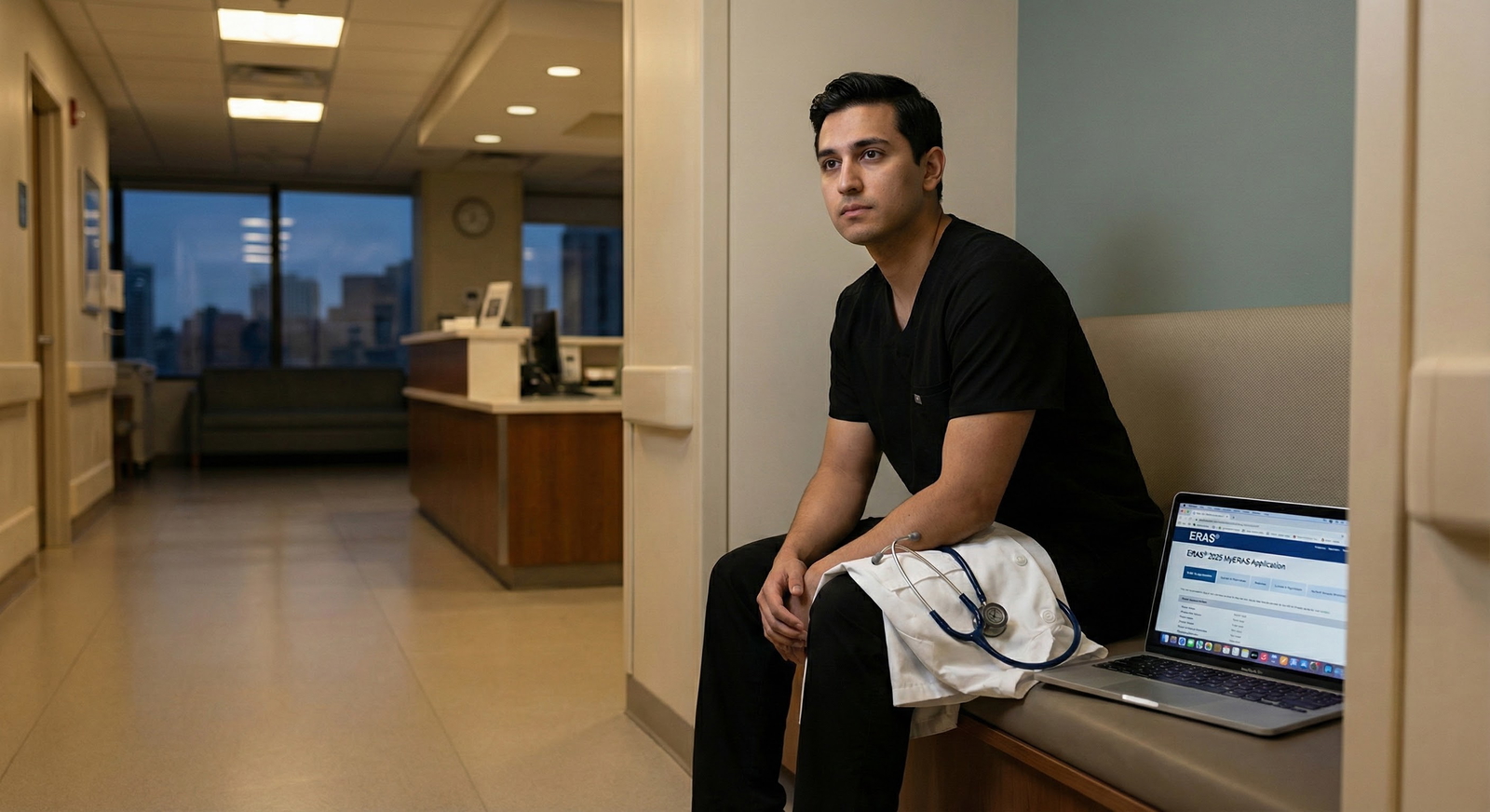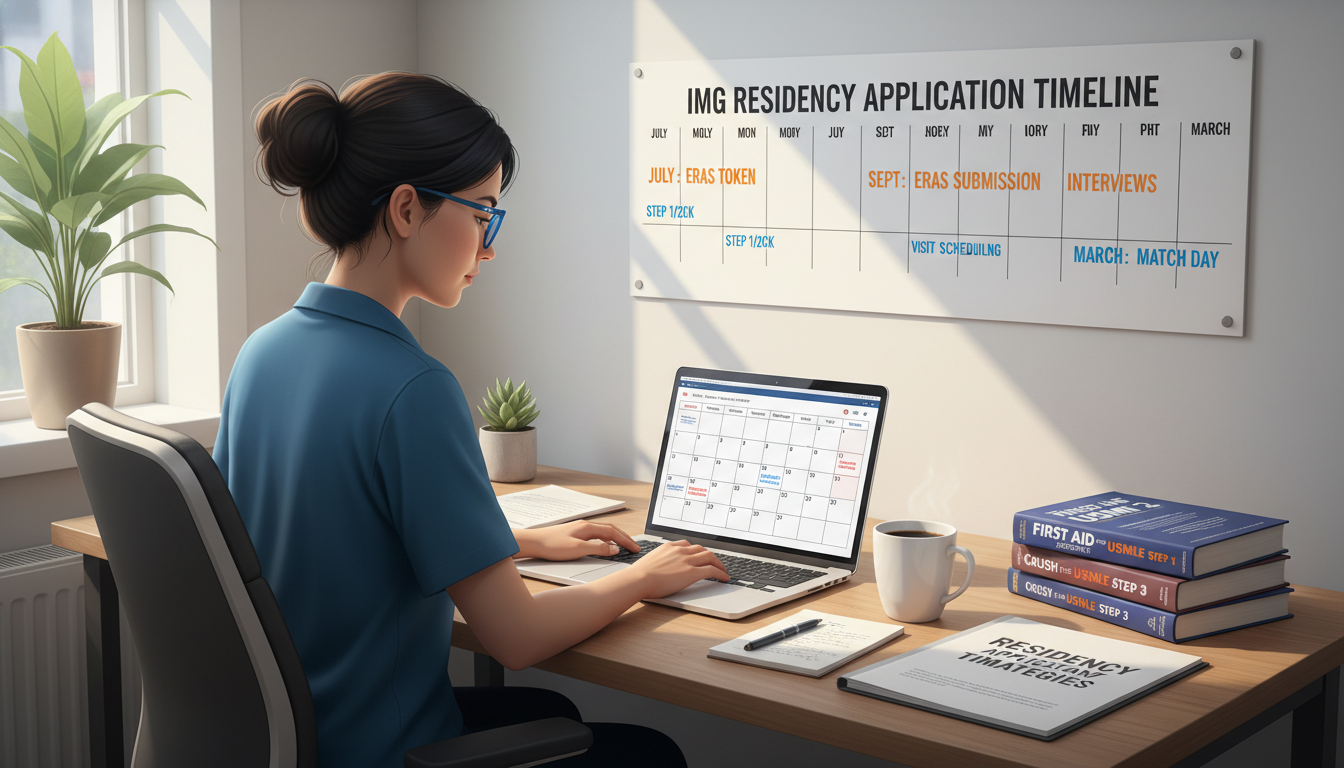
Understanding the Residency Application Timeline as a Caribbean IMG
For a Caribbean international medical graduate (IMG), the residency application process can feel like a second full‑time job. Unlike U.S. MD seniors, you must navigate additional layers: visa planning, differences in clinical exposure, and the stigma some programs still hold about Caribbean medical schools. Timing is one of the few things you can fully control—and it can dramatically affect your chances of matching.
This guide breaks down the complete residency application timeline, explains when to submit ERAS, and outlines timing strategies tailored specifically for Caribbean IMGs. Whether you’re at an established school with a strong Caribbean medical school residency track record (like the SGU residency match) or at a newer institution, the same timing principles apply.
The Big Picture: Key Phases in the Residency Application Timeline
Before diving into month-by-month details, it helps to understand the overall structure of the residency application timeline for a typical ERAS cycle (for July start of PGY-1 the following year).
1. Pre-Application Phase (18–6 Months Before ERAS Opens)
This is the foundation-building phase:
- Complete core clerkships and key electives (especially U.S. clinicals)
- Take and pass USMLE exams (Step 1, and usually Step 2 CK)
- Plan specialty choice and target program profile
- Start building relationships for letters of recommendation (LoRs)
For Caribbean IMGs, this phase often overlaps with late 3rd year and early 4th year.
2. Application Preparation Phase (6–2 Months Before ERAS Submission)
You’ll focus on:
- Drafting and revising your personal statement
- Finalizing your CV
- Requesting and securing LoRs
- Preparing USMLE score reports and transcripts
- Strategizing your specialty and program list
- Understanding application deadlines and key ERAS dates
3. Application Submission Phase (ERAS Opens → Mid-September)
Critical tasks:
- Completing MyERAS application
- Selecting programs and submitting applications
- Uploading personal statement(s) and LoRs
- Ensuring USMLE and MSPE/transcript are linked
Timing here is crucial—especially when to submit ERAS.
4. Interview Season (October–January)
If your application timing and content are strong, you’ll receive invitations and complete interviews:
- Scheduling and attending virtual (or occasional in-person) interviews
- Sending post-interview thank-you notes (when appropriate)
- Updating programs if major changes occur (e.g., improved Step 2 CK score)
5. Ranking & Match Phase (February–March)
- Submitting your NRMP rank order list
- Monitoring deadlines, verifying certification
- Match Week results in March
Month-by-Month Timeline for Caribbean IMGs
Below is a generalized timeline for a Caribbean IMG applying in a typical ERAS cycle (for example, applying in 2026 for July 2027 residency). Adjust one year forward or backward depending on your actual cycle.
12–18 Months Before ERAS Opens
Goals:
- Solidify specialty interest
- Ensure exam timing supports early application
Actions:
- Plan and schedule USMLE Step 2 CK strategically. As a Caribbean IMG, a strong Step 2 CK is often your most important objective measure.
- If Step 1 is pass/fail for you, Step 2 CK becomes even more critical; you should ideally have your score available before applications are reviewed (or at least by early October).
- Identify potential U.S. clinical rotations in your target specialty, ideally at teaching hospitals or affiliated sites that have a proven record of taking Caribbean IMGs into residency.
Timing Tip for Caribbean IMGs:
If possible, complete core rotations early enough that your best attending physicians can write strong LoRs by late summer, not in a rush in September.
6–9 Months Before ERAS Opens (Winter–Spring)
Focus on:
- Exam execution and letters
Actions:
- Take Step 2 CK by early summer at the latest if you want your score back before mid-September. For most cycles, that means testing by late July or early August.
- Identify letter writers in your target specialty and at least one in a secondary specialty or internal medicine if applying broadly.
- Begin drafting your personal statement and résumé-style CV.
Common Scenario Example:
A student from a well-known Caribbean school (e.g., SGU) completes U.S. internal medicine core in February, impresses an attending, and asks them in March if they’d be willing to write a letter in August. This gives the attending time and ensures the letter is not forgotten or rushed.

3–5 Months Before ERAS Opens (Late Spring–Early Summer)
Now you shift from foundation to preparation.
1. Personal Statement & CV
- Draft your main personal statement for your primary specialty.
- If you’re dual-applying (e.g., Internal Medicine + Family Medicine), outline a second targeted statement.
- Update and format your CV, highlighting:
- U.S. clinical experience
- Research, presentations, and quality improvement projects
- Teaching roles, leadership, and community service
2. Letters of Recommendation (LoRs)
- Confirm with each letter writer:
- That they’re comfortable writing a strong letter
- The specialty you’re targeting
- Your key strengths (send them a current CV and draft personal statement)
- Your approximate application deadlines (e.g., you want letters uploaded by early September)
3. Program Research
Start building a preliminary list:
- Use tools like FREIDA, program websites, and alumni networks.
- Focus on:
- Programs with a history of taking Caribbean IMGs
- Programs with visa sponsorship (if you need J-1 or H-1B)
- Locations where you have geographic ties (family, previous training, etc.)
Example: SGU Residency Match Insight
If your Caribbean school has an outcomes report (like the SGU residency match lists), analyze which programs commonly accept graduates in your specialty. Prior matches from your school are a strong signal that a program is IMG-friendly.
1–2 Months Before ERAS Opens (Mid–Late Summer)
This is where attention to detail separates strong applications from rushed ones.
Finalize Written Materials:
- Refine your personal statement with multiple revisions and feedback from:
- Mentors
- Academic advisors
- Residency preparation services (if available through your school)
- Check spelling, grammar, and formatting. A “polished” feel is especially critical for Caribbean IMGs to counter bias.
ERAS Account & Documents:
- Register for ERAS as soon as it opens (typically mid-late June).
- Begin filling out:
- Demographics and education sections
- Experiences (with clear, concise bullet points)
- Publications and presentations
- Request:
- USMLE transcript release (through NBME or ECFMG gateway)
- Medical school transcript
- MSPE (Dean’s letter) – your school often handles this automatically, but verify timelines
Timing Strategy:
Aim to have everything ready to submit by early September so you are not scrambling around when to submit ERAS as the official release date approaches.
When to Submit ERAS: Optimal Timing for Caribbean IMGs
This is one of the most critical decisions—and it’s highly time-sensitive.
ERAS Timing Basics
Usually (dates may shift slightly each year):
- Mid-late June: ERAS opens for applicants to start entering information.
- Early September: Applicants can begin submitting applications to programs.
- Mid-September (the “opening day”): Programs can start viewing applications.
The question is: Should you submit the moment applications open in early September, or wait until closer to mid-September?
Best Practice: Submit as Early as Possible, But Not Sloppy
For Caribbean IMGs, the general rule is:
Be complete and polished by early September, then submit on the first or second day ERAS allows submission.
Reasons:
Programs start screening early.
Many programs review applications as soon as they can access them. Historically, those who applied later in the season (October or beyond) had lower interview yield, especially for competitive or IMG-limited programs.Caribbean IMG status magnifies timing effects.
Some programs receive hundreds of applications from Caribbean schools. Being early increases the chance your file is reviewed before interview slots fill.Rolling invites.
Many programs send the first wave of interview offers within the first 2–4 weeks after the application release date.
What If Step 2 CK Isn’t Ready?
This is a common dilemma: your Step 2 CK score won’t be back before mid-September. How does that affect when to submit ERAS?
General Rule for Caribbean IMGs:
- If you’re confident you passed and your practice tests suggest a competitive score for your target specialty, submit your ERAS on time (early September) with Step 2 “pending.”
- Once the score posts, ensure it is transmitted immediately.
When Might You Delay?
You might consider a slight submission delay (a few days to a week) if:
- You took Step 2 CK extremely late (e.g., early September) and:
- You are very concerned about passing,
- Or your NBME practice exams were borderline.
However, significant delays (weeks to months) typically harm Caribbean IMGs more than they help. For most mainstream specialties (IM, FM, Pediatrics, Psychiatry), being late is usually worse than having a modest but passing Step 2 score released later in September or October.

Specialty-Specific Timing Strategies for Caribbean IMGs
Your strategy around when to submit ERAS and structuring your year depends heavily on your specialty choice. Below are common paths for Caribbean medical school residency applicants.
1. Internal Medicine (IM)
This is one of the most common and IMG-friendly specialties.
Timing Priorities:
- Step 2 CK: Aim for score availability by mid-September. A score in hand makes your application stronger.
- LoRs: At least two IM letters, preferably from U.S. academic settings.
- Submission: Early September, not later than the first week of the application window.
Programs Often Favor:
- Early, complete applications from Caribbean IMGs with strong Step 2, good U.S. clinicals, and clear interest in IM (via personal statement and experiences).
2. Family Medicine (FM) & Pediatrics (Peds)
Also relatively IMG-friendly, though programs still vary.
Timing Priorities:
- Similar to IM—early submission is beneficial and often expected.
- Include at least one letter from a primary care setting (FM, Peds, or IM).
- Demonstrate continuity of care and patient-centered activities (e.g., community health work, volunteer clinics).
3. Psychiatry
Increasingly competitive, with many IMGs still matching but with tighter standards.
Timing Priorities:
- Emphasize early submission, especially because some psych programs fill interviews quickly.
- Secure at least one strong U.S. Psychiatry LoR.
- Have Step 2 CK ready if possible; programs are more cautious about non-US grads with incomplete exam profiles.
4. More Competitive Specialties (e.g., Neurology, Emergency Medicine, PM&R, Anesthesiology)
For Caribbean IMGs, these are more challenging but not impossible.
Timing Priorities:
- Absolutely minimize any delay in submission.
- Ensure:
- Strong U.S. clinical evaluations in the specialty
- Research, if feasible
- Above-average Step 2 CK (and Step 1, if numeric)
- Consider dual-application strategy (e.g., Neurology + IM).
5. Dual-Application Strategies
If you’re applying to both a moderately competitive and a more IMG-friendly specialty:
- Create separate personal statements and tailor LoRs when possible.
- Submit all applications at the same early-September time point, rather than delaying some.
- Make sure your ERAS application, experiences, and personal statements do not present conflicting narratives.
Managing Application Deadlines and Avoiding Common Timing Mistakes
Beyond ERAS submission day, several application deadlines and milestones can make or break your season.
1. Letters of Recommendation
Ideal Timing:
- Request letters at least 2–3 months before you want them uploaded.
- Ask that letters be uploaded no later than early September.
Common Mistake:
Waiting until late August to request letters. For Caribbean IMGs, late or missing letters can further disadvantage you relative to U.S. seniors.
Strategy If Letters Are Late:
- Still submit your ERAS early with at least 2 letters attached.
- Add additional letters as they come in; programs will often see newly added LoRs even after initial review.
2. MSPE (Dean’s Letter)
The MSPE is traditionally not released to programs until October 1.
- This delay is normal; it does not affect when to submit ERAS.
- Programs expect to review your MSPE later and do not hold it against you if they review your application before October 1.
3. Program-Specific Deadlines
Some programs have explicit application deadlines (e.g., “We accept applications until November 1”), others are more flexible but effectively close once they fill interview slots.
Recommendations for Caribbean IMGs:
- Treat all IMG-receiving programs as if the real deadline is within the first 2–4 weeks after applications open to programs.
- Avoid waiting until late October or November to apply, except in very unusual circumstances (e.g., late graduation, extreme personal reasons).
4. Late Application Scenarios
If you are, unavoidably, a late applicant (e.g., you graduate in October, wait on exam results, or have a remediation), consider:
- Targeting specialties and programs known for considering late-cycle applicants (often community-based, less competitive regions).
- Being honest and proactive in your personal statement or email communication about why you are applying late.
- Consulting your school’s dean or advisor to see if prior Caribbean graduates have matched with later applications, and where.
Practical Examples of Effective Timing Strategies
Example 1: On-Time, Well-Prepared Internal Medicine Applicant
- School: Mid-sized Caribbean medical school with U.S. clinical affiliates.
- Timeline:
- Step 1 (Pass) at end of 2nd year.
- Step 2 CK taken in late June, score available early August.
- Completed IM core at a New York teaching hospital in March; secured two strong IM LoRs.
- Completed ERAS entries by mid-August, refined personal statement with advisor.
- Submitted ERAS on the second day of the submission window in early September.
- Outcome:
18 interview invitations from a mix of community and university-affiliated IM programs, matched at a preferred geographic location.
Lessons for Caribbean IMGs:
Early, complete, and well-organized beats “perfect but late.”
Example 2: Applicant Delayed by Late Step 2 CK
- School: Caribbean with limited affiliated U.S. sites.
- Timeline:
- Step 1 pass/fail, scored borderline on practice exams.
- Took Step 2 CK in late August; score expected in late September.
- Feared poor score, considered waiting to apply until score release.
- Strategy Chosen:
- Submitted ERAS on time in early September with Step 2 CK “pending.”
- Sent well-crafted personal statement and leveraged strong U.S. clinical LoRs.
- When Step 2 CK revealed a solid pass with a reasonable score in late September, the score was auto-transmitted.
- Outcome:
Received interview invitations in October and November and matched into a community internal medicine program.
Lessons:
For many Caribbean IMG candidates, a decent but not amazing Step 2 released a few weeks after ERAS is still better than applying late to the season.
FAQs: Application Timing for Caribbean IMGs
1. When is the absolute best time for a Caribbean IMG to submit ERAS?
Aim to submit your ERAS application within the first 24–48 hours after ERAS first allows submissions (early September). Being early helps ensure your file is reviewed while interview slots are still relatively open, which is particularly important for Caribbean IMGs who may already face additional screening filters.
2. What if my Step 2 CK score won’t be ready by the application opening date?
In most cases, still submit your application on time with Step 2 CK marked as pending, especially if your practice scores suggest you’re likely to pass. Once your score is reported, have it automatically transmitted to programs. Only consider significant delay if you have strong reason to suspect a failing or very low score, and even then, weigh this against the downside of a late file.
3. Do programs care if I apply in October instead of September?
Many programs begin offering interviews in September and October, and some will have substantially filled their interview calendars by November. While you may still receive some invitations with an October application, as a Caribbean IMG your competitiveness is generally maximized by applying in early September unless there is a compelling reason (e.g., extremely late graduation or exam score release).
4. How do I balance preparing for exams, rotations, and ERAS at the same time?
Plan backward from key application deadlines:
- Schedule Step 2 CK so that your score is available by mid-September when possible.
- Use lighter rotations (electives, outpatient blocks) in late spring and early summer for intensive ERAS prep—personal statement, CV, and letter requests.
- Block dedicated days or half-days in July and August solely for ERAS tasks to avoid last-minute panic.
Creating a written residency application timeline specific to your graduation date and exam plan is one of the most powerful tools you have as a Caribbean IMG. Treat your timing decisions as strategic levers, and you’ll give yourself the best possible chance to join the many successful Caribbean medical school residency graduates who match each year.