
What actually happens if your ERAS goes in on day one for your “safeties”… but three weeks later for your “reaches”? Does that help you, hurt you, or just make you feel better?
Let me be direct: you should not be strategically delaying ERAS submission to different programs based on whether they’re reach or safety. In almost every case, that’s a bad idea.
But there are a few nuances you need to get right.
The Short Answer: No, Don’t Stagger ERAS By Reach vs. Safety
You should aim to submit a complete ERAS application to all programs (reach, target, and safety) as early as you reasonably can in the opening submission window.
Not piecemeal. Not “I’ll send to safeties first while I polish my personal statement for reaches.” That’s how people quietly sabotage their own cycle.
Here’s the core reality:
- Programs review in batches, often starting as soon as ERAS transmits applications.
- Earlier, complete applications get:
- More likely to be actually read by faculty, not just screened by filters.
- More interview spots available when they look at you.
- Late is late. Whether it’s a “reach” or “safety,” a late app is competing for fewer spots and more “we’re almost full” fatigue.
So the baseline rule:
Unless you have a very strong reason, submit to all your programs on your first submission day.
Now, there are a few exceptions and tactical tweaks. We’ll get there.
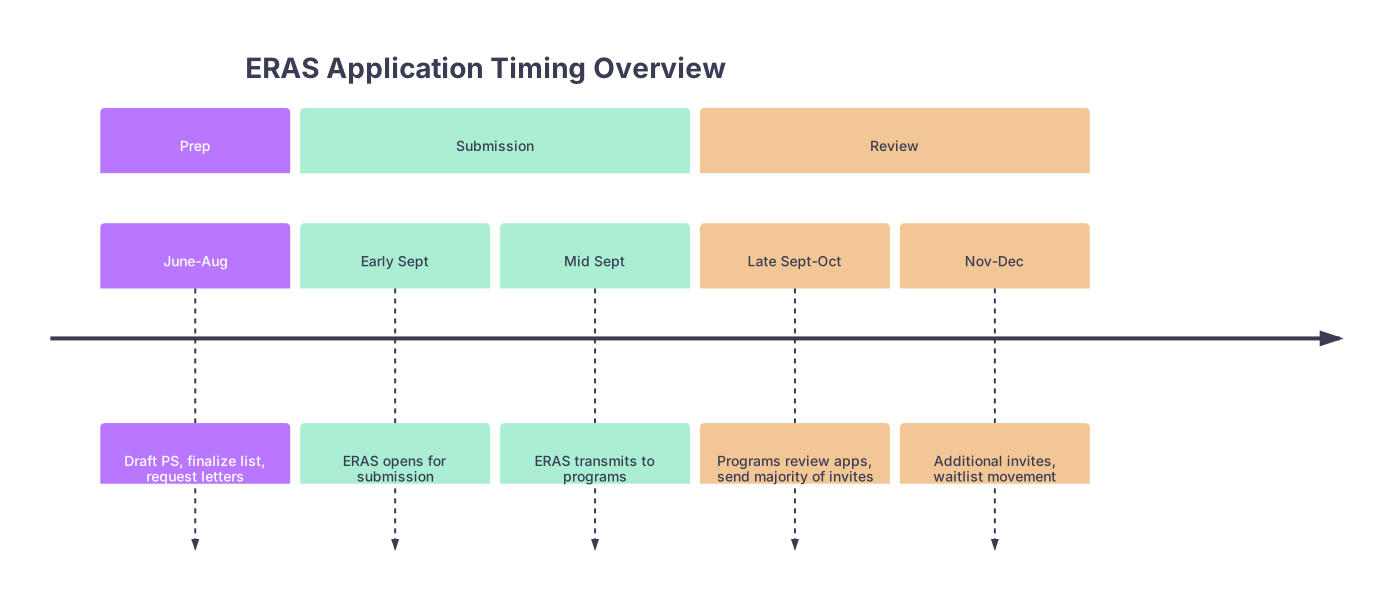
How Timing Actually Works in ERAS (Not the Myth Version)
| Period | Event |
|---|---|
| Prep - June-Aug | Draft PS, finalize list, request letters |
| Submission - Early Sept | ERAS opens for submission |
| Submission - Mid Sept | ERAS transmits to programs |
| Review - Late Sept-Oct | Programs review apps, send majority of invites |
| Review - Nov-Dec | Additional invites, waitlist movement |
Most applicants misunderstand one core thing: the difference between ERAS “submission date” and when programs actually get and review your app.
Here’s what usually happens (varies slightly by year):
ERAS opens for editing
You can work on your application but cannot submit to programs yet.ERAS opens for submission to programs
You can pay and “apply” to programs, but ERAS holds those apps until a universal transmission date.Transmission date
On that date, programs suddenly receive a giant batch of applications.Rolling review and invite release
Programs:- Auto-screen (Step scores, filters, sometimes geographic flags)
- Do manual reviews in waves
- Start releasing interview invites, often in waves over weeks
What this means:
- Submitting on day 1 of the submission window versus 3 days later = basically no practical difference.
- Submitting before transmission vs 2+ weeks after transmission = can absolutely matter, especially in competitive specialties and popular locations.
So the real timing strategy is not “reach vs safety” — it’s “pre-transmission vs post-transmission” and “complete vs incomplete.”
Why Early Matters Equally for Reach and Safety
| Category | Value |
|---|---|
| Transmission Week | 100 |
| Week 2 | 70 |
| Week 3 | 45 |
| Week 4 | 25 |
| Week 5 | 10 |
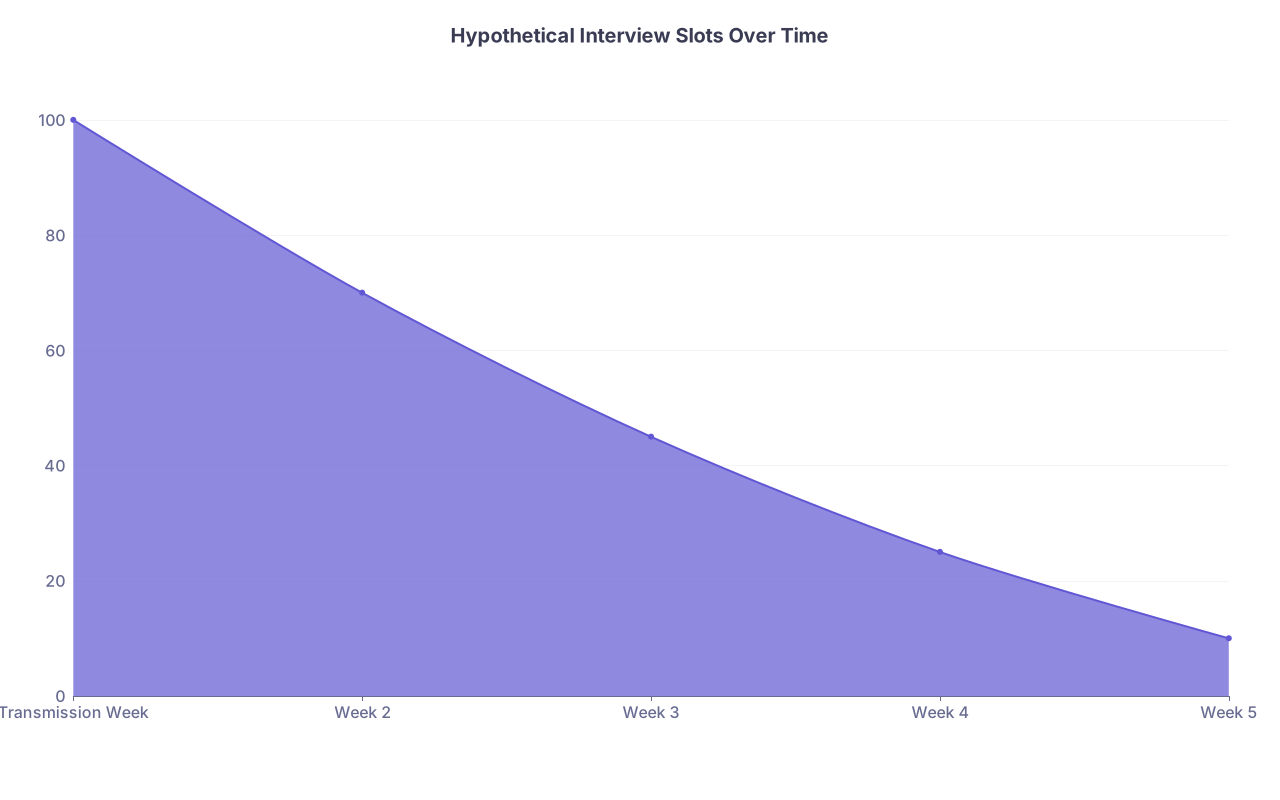
Programs don’t block off a separate bucket of “reach interviews” vs “safety interviews.” They just see applicants.
Here’s what I’ve watched happen year after year:
- Program gets 1200 apps.
- They auto-filter down to 600.
- Faculty or PD seriously review maybe 200–300.
- They send 120–200 interview invites.
- Most of those invites go out in the first 2–3 waves of review.
Where timing bites people:
- The applicant who thinks, “This community program is my safety, I can send that later,” then discovers they filled most of their interview slots by mid-October.
- The person who adds more community programs in November, thinking they’re “safeties.” Program looks at them when they’re already half done interviewing and says: we don’t need you, we’re full enough.
Reach programs and safety programs both share one inconvenient truth:
They run out of interview spots.
A “safety” program is not obligated to interview you just because your scores or school are strong. They look at what’s left in their class and make conservative decisions late in the season.
So no, it’s not smart to say:
- “I’ll submit early to my reach university programs, but wait on the community programs until I see if I need them.”
You might need them. And by the time you realize that, they might be effectively closed to you even if ERAS is “still open.”
The Only Timings That Actually Matter
Let’s get concrete.

There are really four timing categories that matter for ERAS:
- Submitted before transmission, complete
- Submitted before transmission, incomplete
- Submitted after transmission but early
- Submitted late in the season
Here’s how I’d rank them, ignoring reach vs safety:
| Timing Type | Strength |
|---|---|
| Pre-transmission, complete | Best |
| Post-transmission (0–2 weeks), complete | Good |
| >4 weeks after transmission | Weak |
| Very late (Nov+), unless special reason | Worst |
Now apply your situation:
If you can:
- Have PS done,
- CV filled,
- Experiences entered,
- Personal statements tailored enough,
- Letters assigned (even if 1 is still pending),
then you should submit to all selected programs together, regardless of reach/safety label.
The big dividing line is complete vs incomplete, not reach vs safety.
If one letter is still pending, that’s usually fine (letters can arrive after you submit).
If your Step 2 is pending but Step 1 is okay, you still typically submit.
Delaying 3–4 weeks to “perfect” your personal statement for top programs while your app just sits? That’s usually a bad trade.
When (And How) It Can Make Sense to Stagger Programs
There are a few specific, rational reasons to stagger some programs differently. But notice: none of these are about “reach vs safety.” They’re about readiness vs reality.
1. If A Major Piece of Your Story Will Change Soon
Example: You’re taking Step 2 in early September and you know your Step 1 is weak for your target specialty.
In this case, it can be reasonable to:
- Submit to a core batch of programs pre-transmission (both reach and safety, enough to not get shut out).
- Hold a small number of ultra-competitive programs for after your Step 2 score posts—if you’re very confident it will be a big jump.
But that’s still not “all reaches later, all safeties now.”
It’s “most programs early, a handful of ultra-long-shots later if my profile meaningfully changes.”
2. If You Have a Real Geographic Backup Plan
You might do:
Submit early to:
- Your home region
- Places where you did auditions
- Programs likely to value geographic ties
Then if by late October your interview count is dangerously low, add more safeties in regions you’d tolerate but don’t prefer.
This is adding new programs late, not delaying your original safeties. Completely different mindset.
3. If You Miscalculated Competitiveness
If you start with:
- 80% “reach” academic programs in a hyper-competitive specialty
- 20% realistic programs
…and by mid-October you have 0–2 interviews, then yes, you add more “safety” programs.
But again, that’s reactive expansion, not clever timing from the start.
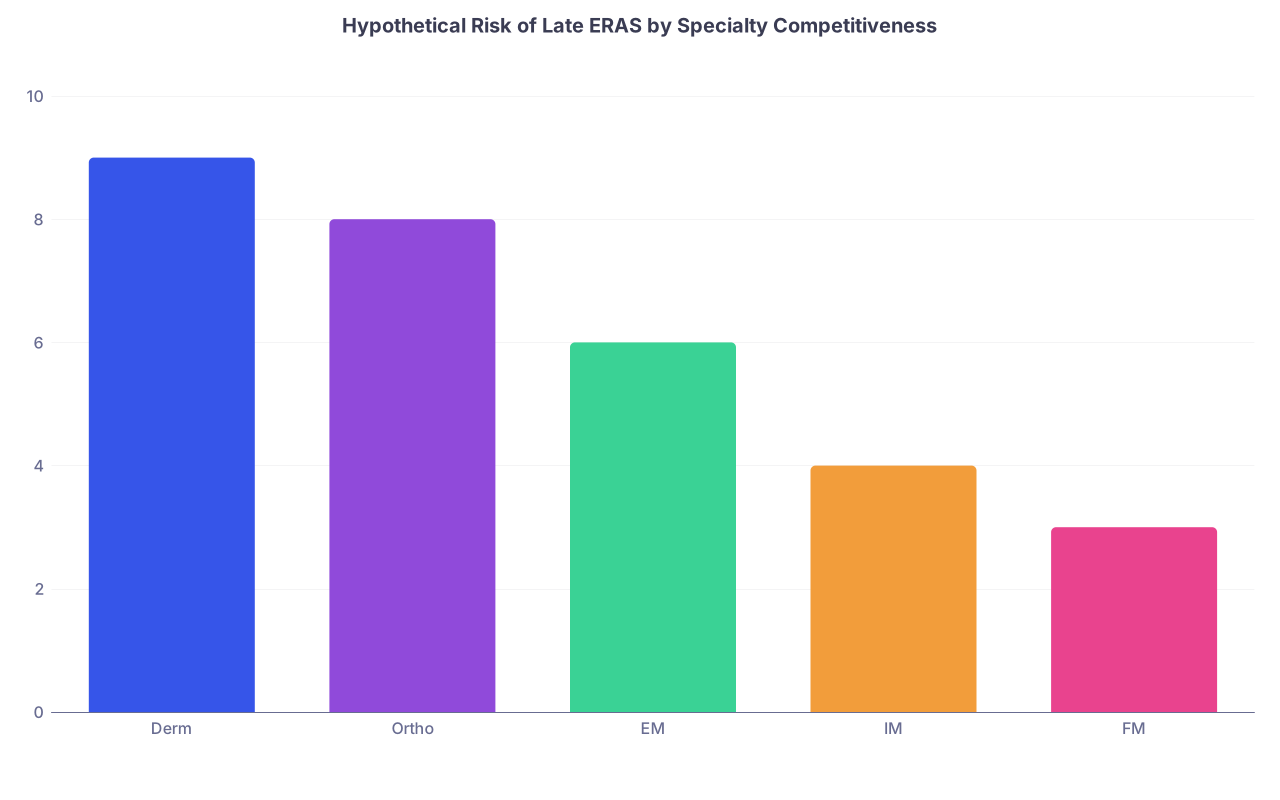
Specialty Competitiveness: Timing Matters More the More Competitive You Are
| Category | Value |
|---|---|
| Derm | 9 |
| Ortho | 8 |
| EM | 6 |
| IM | 4 |
| FM | 3 |
Some specialties punish late apps more aggressively:
Derm, Ortho, Plastics, ENT, Urology (SF match but same idea), Neurosurg:
Late = very bad. You’re already in a bloodbath; do not add timing as a handicap.EM, Anesthesiology, OB/Gyn:
Still quite sensitive to timing at many programs, especially desirable locations.IM, FM, Psych, Peds:
More forgiving, but popular urban academic programs often act like competitive specialties.
Even in “less competitive” specialties, the best and most popular programs behave like reaches for everyone. They’re flooded and start triaging early.
So should you send to “reach” university IM programs later than community FM programs? No. You want everything at those university IM programs working in your favor—timing included.
What To Do Instead of Gaming Timing

You’re asking the wrong optimization question if you’re thinking “reach vs safety timing.” You’ll get far more return from fixing these instead:
Prepare one excellent core application early
- Polished CV, no typos, clear descriptions.
- One strong, broad personal statement you’d be okay sending anywhere (you can tweak a few lines later for certain programs).
- Letters requested early in the summer.
Segment your PS smartly, not your timing For example:
- One PS for academic programs.
- One for community-focused programs.
- One for a backup specialty if needed.
You can still submit them all on day 1. You’re just assigning different PS versions to different programs.
Build a smart mix of reach/target/safety from the start A rough framework (not gospel):
Highly competitive specialty:
- 20–30% reach
- 40–50% realistic target
- 20–30% safety/backup programs in same or related specialty
Less competitive (FM, many IM, Psych, Peds):
- 10–20% reach
- 50–60% target
- 20–30% safety or geographic expansion
Apply your mix all at once, early.
Example Scenarios: What I’d Actually Tell You To Do

Scenario 1: Mid-Tier Applicant, Internal Medicine
- Step 2: 235
- No red flags
- Some research, solid evals
- Wants academic IM but is realistic
Wrong idea:
“Submit to top academic IM programs early because they’re reaches, then add community programs and smaller programs a few weeks later as safeties if needed.”
Better play:
- Build a list with:
- 15–20 academic “reach/target” IM programs
- 15–20 solid mid-range university-affiliated/community IM
- 10 true safety/community programs (including in less popular regions)
- Submit to all 40–50 on your first possible submission day, with 2 tailored PS versions.
Scenario 2: Competitive Specialty With Weak Spot
- Applying Ortho
- Step 2 pending, Step 1 is mediocre for the field
- Strong home rotation and letter coming, but it’s not finalized yet
Better play:
- Pre-transmission:
- Apply to your home program and all reasonable Ortho targets (including a couple reaches you really care about).
- Have a backup specialty list (e.g., gen surg, IM) also submitted early.
- When Step 2 and letters drop:
- If your Step 2 suddenly looks great, add a small number of big-name “dream” reach programs.
Timing here is about “new information,” not “reach vs safety algorithm.”
- If your Step 2 suddenly looks great, add a small number of big-name “dream” reach programs.
Final Take: The Timing Rule You Should Actually Follow
Use this framework, and ignore the Reddit timing myths:
Submit early to all programs you’re seriously considering (reach, target, safety) as long as:
- Your application is clean, and
- You have at least your core letters assigned, and
- No huge game-changing info is coming in the next 1–2 weeks.
Only delay or stagger for a real reason, like:
- Major score pending that might reclassify what’s “realistic”
- Huge, genuinely new experience or letter that significantly changes your profile
Never treat safeties as an afterthought.
They have calendars, caps, and interview fatigue like everyone else.
FAQ (Exactly 5 Questions)
1. Will submitting ERAS on the first possible day give me a big advantage over submitting a few days later?
No big difference between day 1 and day 3–5, as long as you’re before or near the ERAS transmission date and your app is complete. The big drop-off comes when you’re weeks after programs start reviewing, not days.
2. Should I wait to submit to reach programs until I have my Step 2 score?
Only if Step 2 is likely to substantially change how competitive you are and it’s coming very soon. If waiting means missing the main wave of early review, you’re often hurting yourself more than helping.
3. Is it okay to add more safety programs later in the season?
Yes. That’s normal and sometimes smart, especially if your early interview count is low. But that’s different from delaying your original list of “safety” programs. Add late if needed; do not start late with them.
4. Do community programs care less about early timing than academic programs?
Slightly less in some cases, but not enough for you to game timing. Many community programs in desirable locations fill interview spots fast. Treat them with the same timing respect as academic programs unless you have direct intel from that specific program.
5. If one of my letters isn’t in yet, should I wait to submit to my reach programs?
Usually no. Submit with the letters you have; the missing letter can be uploaded later and will attach automatically. Programs know letters sometimes trickle in. A complete, on-time application with 2–3 strong letters is better than a “perfect” but late application.