
Program directors absolutely judge you by when you submit your ERAS.
Not just what you submit. When.
You’ve probably heard the lazy version of this: “Submit as early as you can.” That’s incomplete. What PDs actually do is label files—mentally and sometimes explicitly—as “early/organized,” “on time/standard,” and “late/last-minute.” Those labels follow you into the interview meeting and into rank discussions more than anyone publicly admits.
Let me walk you through what really happens on the other side of ERAS, and how to avoid getting quietly shoved into the “last-minute” pile.
What “Last-Minute” Means to PDs (It’s Not the Date You Think)
Students think “last-minute” means October. Or right before the application deadline.
Program directors don’t.
Inside most competitive programs, the internal timeline looks more like this:
| Label | Typical Submission Window (All Materials In) | How PDs Perceive It |
|---|---|---|
| Early | ERAS open–Sept 12/13 | Proactive, organized |
| Standard | Sept 13–Sept 20 | Fine, not remarkable |
| Late | Sept 21–Oct 1 | Mild concern |
| Last-Minute | After Oct 1 | Red flag unless justified |
Dates shift slightly by year, but the pattern doesn’t.
Here’s the internal psychology:
- Applications are released to programs mid-September.
- Most PDs and selection committees block specific days the first 1–2 weeks to plow through apps.
- By the time your “complete” file trickles in late September or October, the short list is already forming.
You might think, “But ERAS accepts updates, programs keep reviewing, it shouldn’t matter.”
On paper, sure. In practice, PD brains don’t reset.
Inside some programs you’ll literally hear:
“Anything that hits complete after we’ve built our initial interview list has to be exceptional to force its way in.”
The Back-End Reality: How PDs Actually Review ERAS
You need to understand the workflow, because that’s why timing matters so much.
The First Download Day: Where Most Decisions Are Made
The morning applications release, here’s what happens in a typical competitive IM, EM, Ortho, or Derm program:
- Coordinator downloads hundreds (sometimes thousands) of applications.
- Software auto-filters by Step 2 score, school region, visa status, occasionally MSPE language.
- An initial “screen” list is generated long before anyone reads your personal statement.
Then:
- The PD and a select group of faculty skim these lists in batches. They tag:
- “Interview”
- “Maybe/Hold”
- “No”
- They front-load interview offers from that first wave. Especially for home institution, rotators, and strong metrics.
Now here’s the part applicants miss:
Once a PD and committee have mentally populated 60–80% of their interview spots from that early wave, later applications are fighting for scraps.
Your beautifully crafted personal statement read on October 7 is competing against someone with similar stats who was already tagged “interview” on September 15. Guess who wins. The early bird who exists in their working memory.
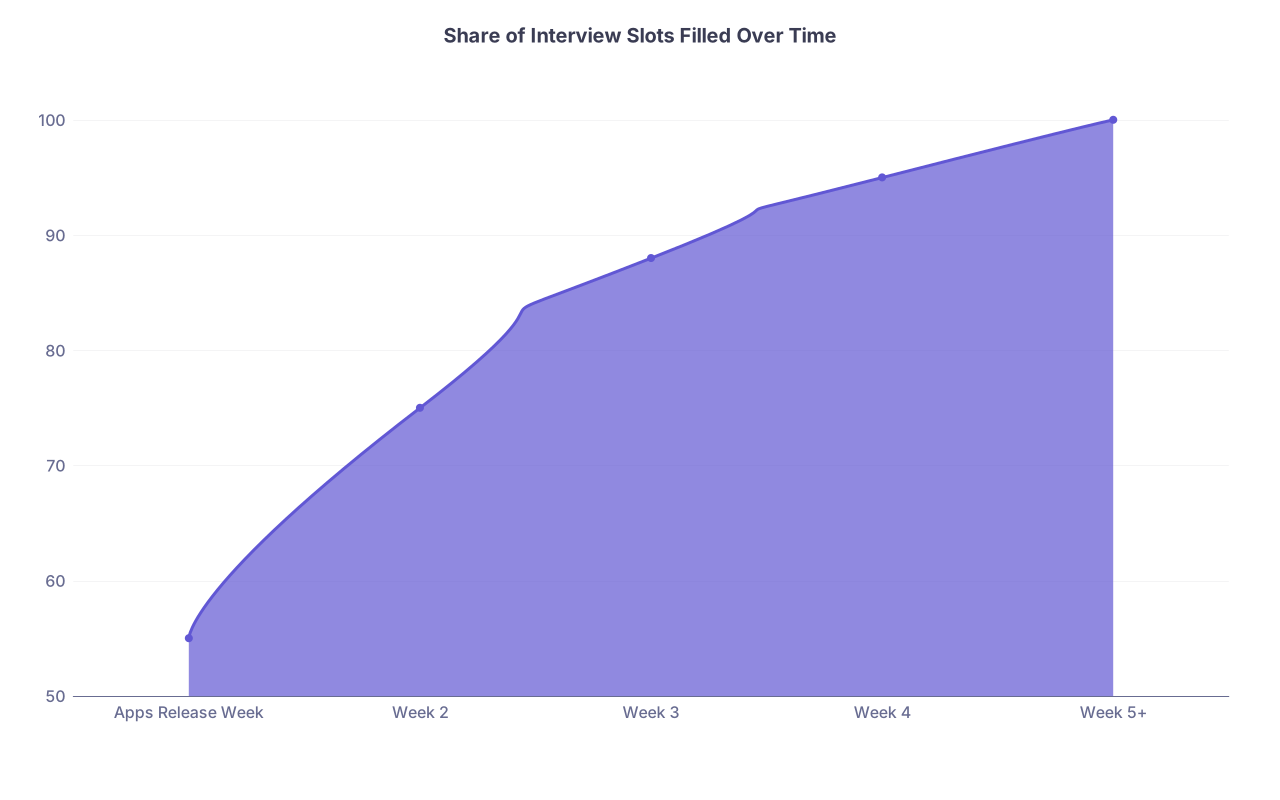
| Category | Value |
|---|---|
| Apps Release Week | 55 |
| Week 2 | 75 |
| Week 3 | 88 |
| Week 4 | 95 |
| Week 5+ | 100 |
That’s the curve at many mid to highly competitive programs. More than half of interview slots are effectively decided in the first week.
Are there exceptions? Yes. Programs with disorganized leadership or very small faculty numbers sometimes drag their feet. But you don’t build a strategy around outliers.
What Makes an Application Look “Last-Minute” (It’s More Than a Date Stamp)
PDs are not only looking at when ERAS was submitted. They’re looking at pattern. That whole “last-minute” label comes from clusters of small signals, not a single time stamp.
Here’s what actually triggers the “this was thrown together” impression:
1. Completion Date Mismatch
You submit ERAS on the first day. But:
- CK score comes in late.
- A key letter (sub-I, away rotation) doesn’t hit until after programs are already knee-deep in review.
- MSPE isn’t the issue—that’s the same for everybody. It’s your unique pieces that are late.
From our side of the screen, your file shows as “incomplete” or weak during the critical early review window. Coordinator flags: “No Step 2 yet, only 2 letters in.” That file goes into a “revisit later” bucket that never really gets revisited thoroughly. We mean to. We don’t. Volume wins.
End result: functionally “late,” even if you technically submitted on time.
2. Sloppy, Obvious Rushing
PDs and faculty are ruthless when something looks rushed:
- Identical, generic personal statement to all programs (“your program” instead of the actual name, or worse, wrong program name pasted in).
- Typos in the first sentence. I’ve watched attendings close the statement and say, “Nope.”
- Research entries with no clear role or outcome, just a pile of half-finished noise.
- Activity descriptions that read like a CV vomit: no narrative, no clarity, 10 leadership roles all sounding the same.
We can tell when someone did their ERAS in a weekend. It reads flat and frantic.
3. Timestamp + Context
Someone applies on:
- Oct 2 with no Step 2, marginal Step 1 (for specialties that still see it), incomplete letters, and a generic essay.
The immediate interpretation in PD rooms is brutal and usually goes like this:
“Either they weren’t sure about this specialty, they were scrambling for a backup, or something is off with professionalism/organization.”
Fair or not, that’s how people read it. PDs have been burned by disorganized residents before. They are hypersensitive to anything that smells like chaos.
Why PDs Care: The Real Reasons Behind the Judgment
On the surface, it sounds shallow: “They submitted late, so we don’t like them.” That’s not actually what’s happening.
Here’s what’s really driving their thinking:
1. Residency is Pure Deadline-Driven Chaos
Residency is:
- Preop notes due before 6 a.m.
- Discharge summaries that must be done before noon for bed flow.
- Prior auths, deadlines from insurance, QI projects with fixed timelines.
When PDs see a late or chaotic application, they extrapolate: “This is how they’ll treat patient care and team responsibilities.”
Do they sometimes overgeneralize? Absolutely. But they’ve also watched the pattern play out over years. The med student who can’t organize a residency application often becomes the intern who can’t get notes done before rounds.
2. Competition Is Ruthless, So They Use Every Proxy
If a PD has:
- 600 applications
- 60 interview spots
They need tiebreakers. Submission timing becomes one of those informal tiebreakers when metrics and experiences are similar.
Between:
- Applicant A: Submitted early; Step 2 in; SLOE/sub-I letter in; clean, coherent ERAS.
- Applicant B: Submitted later; Step 2 barely in; key letter missing until October 10.
Applicant A gets the invite. PDs rarely articulate it that bluntly to students, but they say it out loud in selection meetings.
3. They’ve Seen “Backup Specialty” Games
You know that student who:
- Applies late to a less competitive specialty after realizing their dream specialty is a long shot.
- Slaps together a generic personal statement saying, “I’ve always been passionate about [backup specialty].”
Programs see through it instantly.
Late application + vague specialty commitment language = “We’re the rebound, not the choice.” Programs don’t want to be your rebound. They want people who will stay, not reapply next year.
The True “Best Time” to Submit ERAS (If You Want Zero Red Flags)
You don’t just want to avoid being “late.” You want to land in the quiet sweet spot where you’re seen as prepared, but not panicked.
Here’s how the timing actually plays out behind the curtain:
The Ideal Target Window
For most specialties, if applications release to programs mid-September, your goal should be:
- ERAS fully submitted: 3–5 days before release date, so there’s no drama with locks and glitches.
- CK score reported: At least 2 weeks before that.
- Core letters in: Also at least 1–2 weeks before release.
The key word is complete. PDs are not checking your “initial submission” date; they’re reacting to when your application appears ready to evaluate.
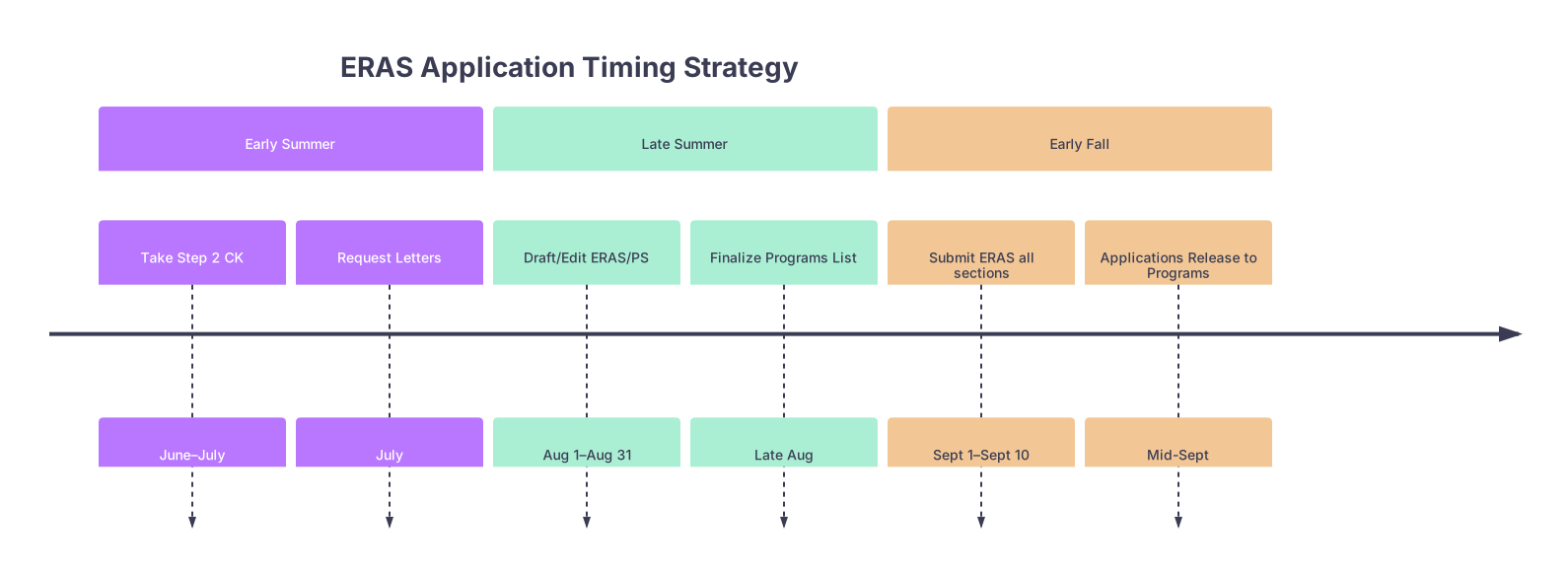
| Period | Event |
|---|---|
| Early Summer - Take Step 2 CK | June–July |
| Early Summer - Request Letters | July |
| Late Summer - Draft/Edit ERAS/PS | Aug 1–Aug 31 |
| Late Summer - Finalize Programs List | Late Aug |
| Early Fall - Submit ERAS all sections | Sept 1–Sept 10 |
| Early Fall - Applications Release to Programs | Mid-Sept |
Can you slide a little later and still be fine? Yes—if your metrics are strong and your materials are clean. But if you’re anywhere near the margin—average Step 2, no home program, no big-name letter—timing becomes a bigger lever than you realize.
What If You Have to Submit Late? How to Lose the “Last-Minute” Smell
Not everyone can hit the ideal timeline. Life happens. Step 2 retakes, health issues, family emergencies, late specialty switches. I’ve seen every version of this.
If you know you’re going to look late, you need to do two things: minimize the damage in your file, and control the narrative.
1. Make Everything Else Unimpeachable
If your completion date is late, nothing else can look rushed:
- Personal statement: razor sharp, specific, no typos, and clearly tailored to the specialty.
- Experiences: clean, purposeful descriptions that actually tell me what you did and why it mattered.
- Letters: from people who know you well enough to write with detail, not template-level fluff.
PDs hate “last-minute chaos.” They respect, “The timing isn’t ideal, but the product is excellent.”
2. Signal Maturity in Your MSPE and Dean’s Letter
Your school can help you or hurt you here.
For students who had a real, concrete reason for delay (illness, leave of absence, retaken exam), I’ve seen deans strategically add a single, sober line in the MSPE or a neutral note in the advisor letter. Something like:
“Given [X circumstance], [Student] elected to take Step 2 later in the year, resulting in a slightly delayed ERAS completion.”
Protects you from PDs assuming you were just disorganized.
3. Use Targeted, Not Desperate, Communication
What not to do: mass-email 100 programs saying, “I just applied, please review my file, I’m very interested.”
What you can do:
- For a handful (and I mean handful) of genuinely high-priority programs, send a short, tight email to the coordinator or PD:
- Acknowledge the slightly later completion.
- Briefly explain (if there’s a real reason).
- Express specific interest tied to their program features.
- Don’t ask for an interview; just indicate you’d be honored to be considered.
This doesn’t magically fix timing, but it can pull you out of the anonymous late pile into the “at least look at this one” stack.
How to Avoid the Label Entirely: A Realistic Preparation Timeline
You want a no-drama file? You cannot start “taking ERAS seriously” in late August. That’s how you end up with the 2 a.m. panic-polish that PDs smell a mile away.
Here’s how students who don’t look last-minute actually operate:
6–9 Months Before Submission
- Decide on specialty or narrow to 1–2 serious options.
- Plan Step 2 timing so the score is back by early September at the latest, August is better for any competitive specialty.
- Identify potential letter writers now, not after your sub-I ends.
3 Months Before Submission
- ERAS work and activities: first draft done.
- Personal statement: first full version written.
- Research and leadership: any “in progress” experiences cleaned up and described clearly, even if they’re not published.
The strongest applicants treat June–July as “application building season,” not just “Step 2 season.”
4–6 Weeks Before Submission
- Finalize and lock your activity descriptions.
- Refine your personal statement with someone who actually reads residency apps, not just a friend who “writes well.”
- Confirm with letter writers that they’ll submit on time. Get specific dates, not vague promises.
If your letters hit in mid-September or later, you may technically be “on time,” but functionally, you’re late in the eyes of many programs.
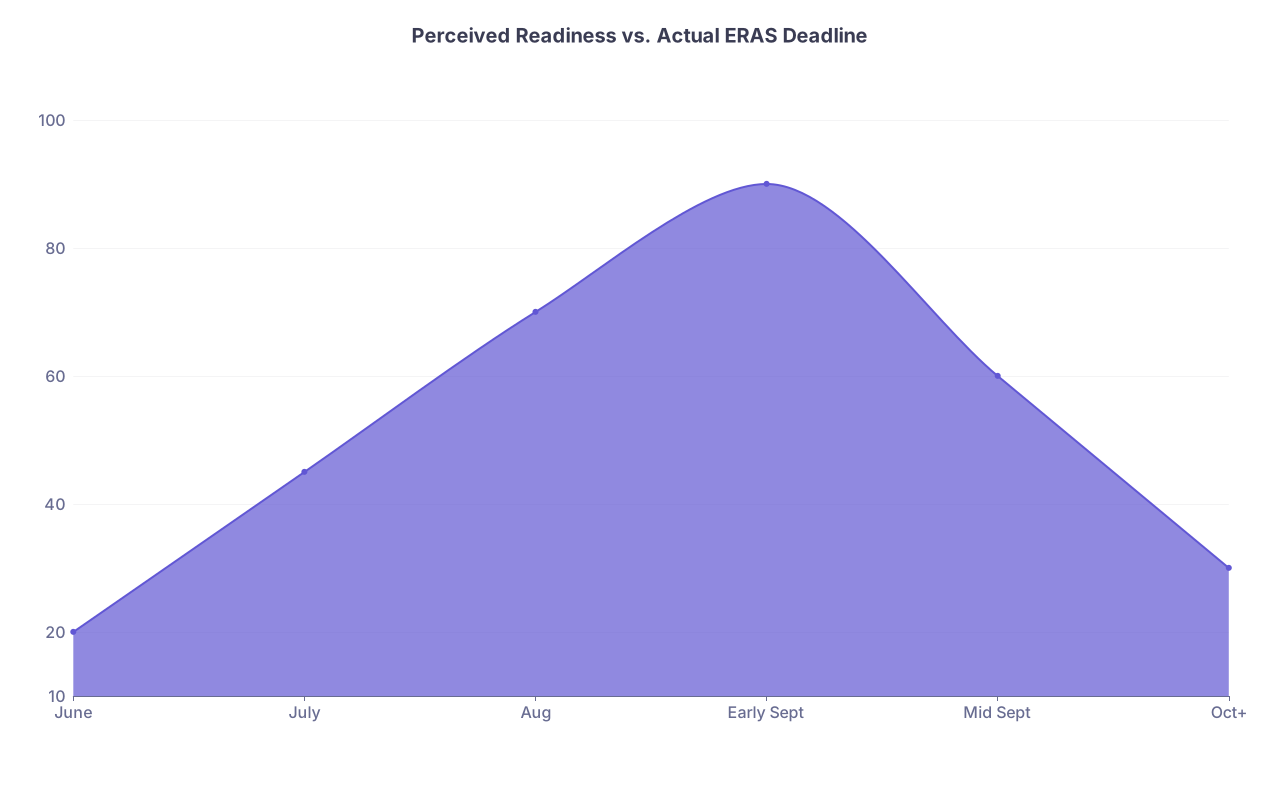
| Category | Value |
|---|---|
| June | 20 |
| July | 45 |
| Aug | 70 |
| Early Sept | 90 |
| Mid Sept | 60 |
| Oct+ | 30 |
Notice how that “perceived readiness” drops again mid-September and beyond. The later you push this, the more your application screams “compressed.”
The Hidden Traps That Make You Accidentally Look Last-Minute
There are a few common mistakes that sabotage students even when they intended to be early.
Trap 1: Banking on a Future Letter
You delay submitting or finalizing your programs list because:
- “I’m waiting for my away rotation letter.”
- “I’ll be stronger if this specific attending writes for me.”
Here’s the insider truth: a solid letter that’s in the file on day one is better than a maybe-great letter that arrives in October and never actually gets read by most screeners.
If your dream letter isn’t guaranteed early, don’t hold your entire timeline hostage to it.
Trap 2: Over-Customizing and Missing the Window
Some students obsessively tailor personal statements for every single program and then blow past the prime submission window.
Fact: PDs rarely read every word of your statement before offering an interview. They scan. They look for red flags, not poetry.
A strong, specialty-specific core statement + light tailoring for a handful of top choices beats a perfect custom statement delayed by two weeks.
Trap 3: Assuming Your School’s Timeline Equals Reality
Schools often undersell how early you should be ready. I’ve seen official “advising” slides that say things like:
- “Aim to have your application done by the time applications release to programs.”
That’s already too late in competitive fields. They’re advising to the median student, not the one aiming for the best shot.
Your goal is not “technically on time.” Your goal is: “My complete application is sitting in the first big stack when the PD and selection committee sit down to decide who’s worth an interview.”
Bottom Line: How PDs Actually Read Your Timing
When a PD or faculty member scrolls through ERAS, here’s what your timing is silently telling them:
Early and complete:
“This student planned ahead. They care about this specialty. Low risk for chaos.”Standard window, clean file:
“Normal. No concern.”Late-ish but strong, with a plausible backstory (illness, retake, LOA):
“Fine, as long as everything else checks out.”Late, incomplete, or obviously rushed:
“Organizational issues. Questionable commitment. We have others we can choose.”
You cannot completely control where you land. But you can stop yourself from being shoved into the “last-minute” stereotype because you treated the ERAS calendar like a soft suggestion.
Treat timing as part of your application content. Because to PDs, it is.