Understanding the Residency Application Timeline as a DO Graduate
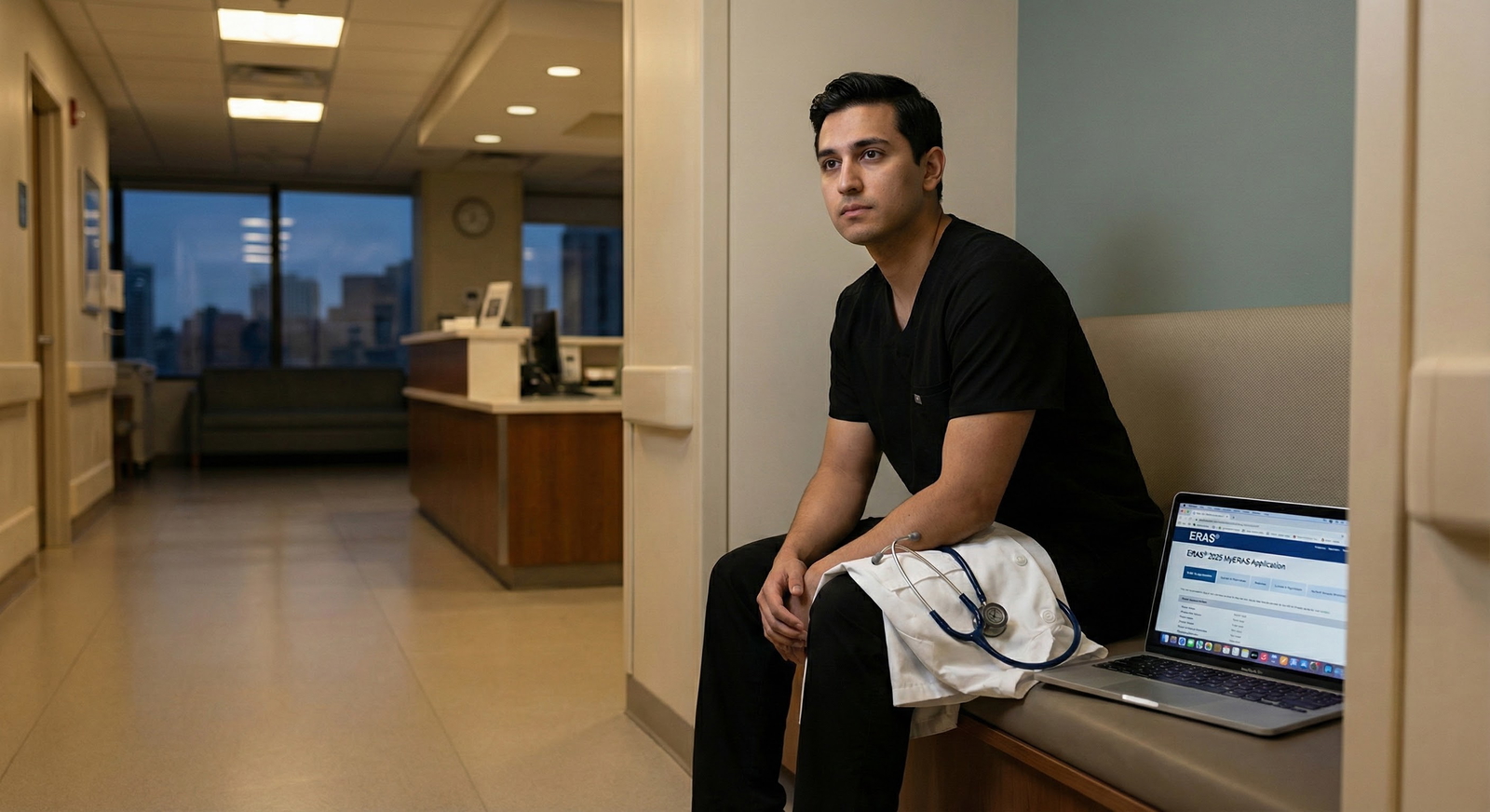
For osteopathic graduates, timing is one of the most powerful levers you control in the residency match. The content of your application—scores, clinical performance, letters—is critical, but when you submit, apply, and communicate often determines how fully program directors actually see your materials.
As a DO graduate navigating the single, unified residency match, you must understand both the formal residency application timeline and the informal timing strategies that give you the strongest chance of interviews and an optimal match. This is especially true when competing in specialties or locations where MD and DO applicants are all in the same pool.
In this guide, we’ll walk through:
- The key phases of the application year for DO graduates
- How the osteopathic residency match has changed under the single accreditation system
- Exactly when to submit ERAS and what “early” really means
- Specialty-specific and DO-specific timing strategies
- How to handle late improvements (COMLEX/USMLE scores, letters, publications)
Throughout, the focus is on practical, step-by-step planning so you can use timing to your advantage.
Overview of the Residency Application Year for DO Graduates
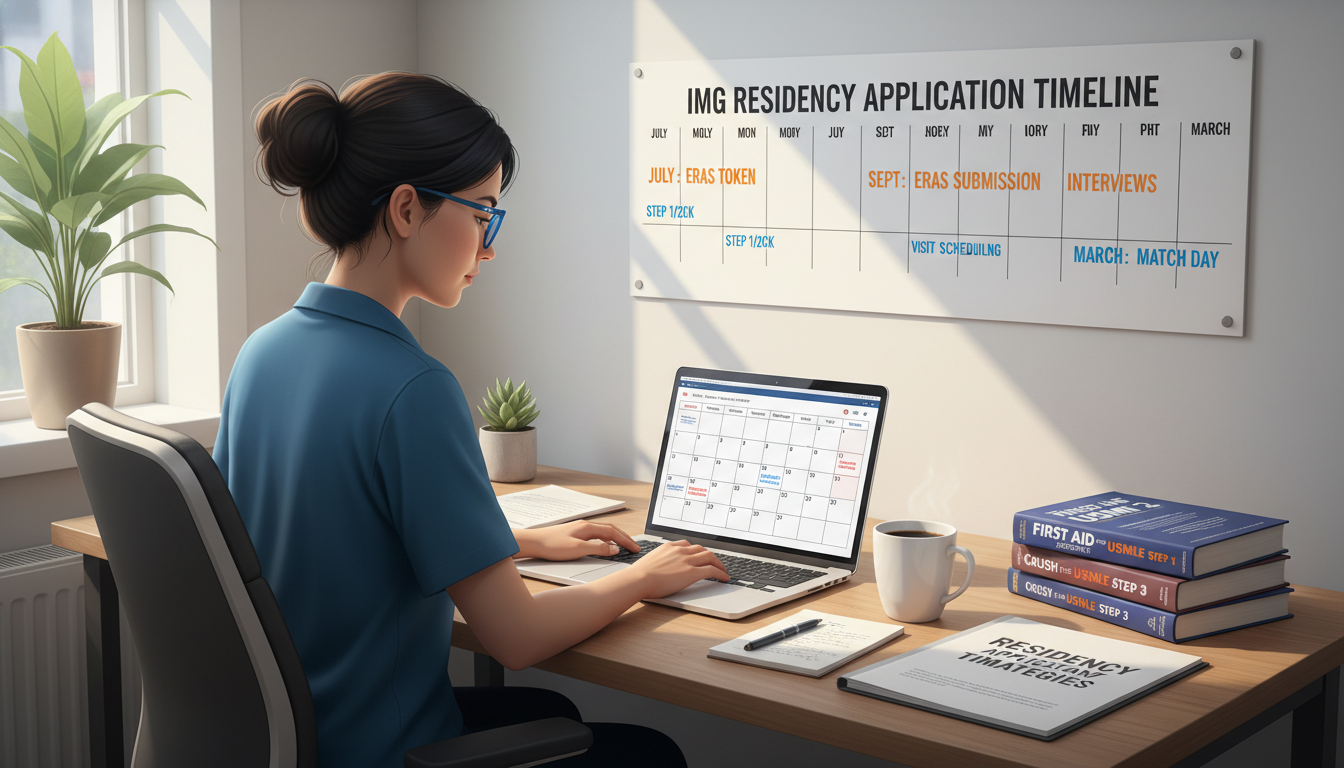
Although specific dates change each year, the residency application timeline follows a predictable pattern. Most DO graduates applying in their 4th year (or as re-applicants) will follow this sequence:
1. Winter–Spring (MS3 → MS4): Strategic Planning Phase
Approximate: January–April
Key goals:
- Clarify specialty interests
- Plan audition/away rotations (especially important for DO graduates in competitive fields)
- Map out exam retakes or additional testing (COMLEX Level 2-CE, USMLE Step 2 CK)
- Build your personal timeline for ERAS preparation
For DO graduates, this planning phase is crucial because:
- You may need to demonstrate parity with MD applicants, particularly in traditionally ACGME programs and competitive specialties (e.g., EM, ortho, derm, radiology, anesthesia).
- You may choose whether to take USMLE Step 2 CK in addition to COMLEX Level 2-CE, and this decision affects timing for score release and application completeness.
Action steps for this phase:
- Meet with your COM advisor or GME advisor to review competitiveness and target specialties.
- Identify programs that have a history of taking DO graduates or are strongly osteopathic-friendly.
- Sketch a rough residency application timeline including:
- COMLEX / USMLE test dates
- Target date to finalize your personal statement
- Letters of recommendation (LoR) request deadlines
- When you aim to certify and submit ERAS
2. Late Spring–Summer: Building Application Strength
Approximate: May–August
Focus areas:
- Complete core clerkships and any key elective/audition rotations
- Secure strong letters of recommendation (especially from your chosen specialty)
- Draft your personal statement and CV
- Finalize your program list strategy
If you’re a DO graduate who wants to maximize interview chances at formerly ACGME-dominant programs, this is also the time to:
- Consider taking USMLE Step 2 CK (if you haven’t already and if it aligns with your goals)
- Plan your timing so that scores are available by the time programs begin reviewing applications
3. ERAS Opens & Application Preparation
Approximate: Late May–June
ERAS typically opens to applicants at the end of May or early June. At this point, you can:
- Create your ERAS account
- Begin entering demographic/education information
- Work on experiences, meaningful experiences, and activities descriptions
- Upload your personal statement draft (you can still revise)
- Send LoR requests through ERAS
This phase sets the stage for one of the biggest decisions for DO graduates: when to submit ERAS once submission opens.

ERAS, Application Deadlines, and “When to Submit ERAS” as a DO
Key Milestones in the ERAS Season
While exact dates vary each year, the structure is stable:
- ERAS opens to applicants – You can start filling out ERAS (usually late May).
- LoR portal available – Faculty can upload letters as soon as you send requests.
- Application submission date – The first day you can officially submit ERAS (often early September).
- Programs receive applications – Usually about a week or two after the first submission date (often mid-September).
- Application deadlines – Each program sets its own deadline (ranging from October to December, sometimes later).
- Rank list certification deadline – Usually in late February.
The Crucial Question: When to Submit ERAS?
For DO graduates, the best strategy is almost always:
Submit ERAS as early as possible on or near the first day applications can be submitted, with as complete an application as you can reasonably achieve.
Programs often download and review applications in a wave when ERAS releases them (on the first day programs can see them). Many interview offers are extended in the first few weeks of application review. Being in that initial batch matters.
Why early submission matters particularly for DO graduates:
- You want to avoid being in a “later” group of applications when programs have already selected many MD and DO interviewees.
- Earlier review can mitigate unconscious bias against unfamiliar schools or the DO degree by allowing your full narrative and strengths to be seen before interview slots are tight.
- Some programs screen applications using score cutoffs or quick filters; earlier review may help prevent being lost in a crowded applicant pool.
Recommended target for DO graduates:
- Certify and submit ERAS within the first 1–3 days of the submission window opening.
- Aim to have major components in place by then:
- Personal statement (final or near-final)
- Most letters of recommendation uploaded or clearly in progress
- COMLEX and/or USMLE scores already posted or expected soon
If a major new element (e.g., a crucial letter, a much higher new score) is imminent and you’re still within that 1–3-day window, it may be worth waiting a day or two. Beyond that, timeliness usually beats perfection.
Application Deadlines vs. Optimal Timing
A common mistake is focusing on application deadlines instead of application advantage. Many programs list deadlines as late as November or December. However:
- Programs rarely wait until their official deadlines to start reviewing and sending interview invitations.
- By the time you apply near a program’s deadline, many or most of their interview spots may already be filled.
For a DO graduate, this means that applying “by the deadline” might technically be on time, but practically too late to be competitive.
Practical rule of thumb:
- Consider mid-September to early October the critical window to be complete and visible at the majority of programs.
- Treat official application deadlines as absolute last resorts, not strategic targets.
Month-by-Month Residency Application Timeline for DO Graduates
Below is a generalized month-by-month residency application timeline tailored to DO graduates. Adjust details depending on your specific year’s calendar and your personal circumstances.
January–March (MS3)
- Clarify specialty interests; narrow to 1–2 realistic options.
- Review your COMLEX Level 1 and Level 2-CE (if taken) and any USMLE scores; honestly assess competitiveness.
- Explore whether taking or retaking USMLE Step 2 CK makes strategic sense (especially for previously ACGME-dominant specialties).
- Begin researching:
- Programs with a track record of accepting DO graduates
- Geographic priorities and back-up regions
- Requirements (USMLE vs COMLEX, letters, specific rotations)
April–May
- Finalize your specialty choice; create a tiered program list (reach, realistic, safety).
- Schedule audition rotations or sub-internships, especially:
- In your desired specialty
- At programs or regions where DO graduates have historically matched
- Draft or update your CV and keep track of accomplishments, presentations, and publications.
- Identify and cultivate potential letter writers (attendings, rotation directors, research mentors).
Late May–June
- ERAS opens – create your account and start data entry.
- Begin entering:
- Education history
- Experiences and activities with thoughtful, concise descriptions
- Publications/presentations
- Strategize your personal statement:
- Outline your narrative as a DO graduate—what drew you to your specialty and how osteopathic training shapes your approach.
- Draft early and plan for multiple revisions.
- Send LoR requests:
- Aim for at least 3–4 total letters, including 2+ specialty-specific letters for your primary specialty.

July–August
- Complete remaining core rotations and any early audition rotations.
- Finalize personal statement for your main specialty. If dual-applying, prepare a tailored statement for each specialty.
- Confirm that key letters are uploaded or scheduled to upload by early September.
- If you’re still awaiting COMLEX Level 2-CE or USMLE Step 2 CK scores:
- Take them early enough so scores are available near when programs begin reviewing applications
- If scores may be late, consider whether delayed submission is justified (often not, except for major increases in competitiveness).
- Refine your program list:
- Tag “DO-friendly” programs
- Balance reach vs. safety programs realistically
- Ensure geographic diversity unless you have strong location constraints
Early September: Submission Window
- When to submit ERAS: Ideally on day 1–3 of the submission window.
- Final pre-submission checklist:
- All demographic and education info accurate
- Experiences polished, with clear outcomes and impact
- Personal statement uploaded and spell-checked
- Program list loaded and reviewed for errors (e.g., accidentally omitting safety programs)
- LoR assigned correctly to each program
- Certify and submit. Do a careful final review; corrections after certification are limited.
Mid-September–October: Applications Released & Interview Season Begins
- Programs receive and start reviewing applications.
- Interview invites may begin rolling in within days to weeks of release.
- Respond promptly to interview invitations; many are first-come, first-served.
- Keep your availability organized using:
- A shared calendar
- A spreadsheet with program, date, city (if in-person), and rank of priority
For DO graduates, this period is also when you may feel the impact of:
- How early you submitted
- Whether you targeted enough DO-friendly and “safety” programs
- Whether your scores and experiences are competitive in the context of an integrated MD/DO pool
November–January: Interview Peak and Post-Interview Communication
- Most interviews happen in this window.
- Track impressions of each program immediately after interviews (culture, training quality, DO-friendliness, support for your career goals).
- Participate in second looks only if:
- The program explicitly encourages them
- It’s affordable and logistically feasible
- Be professional but measured in post-interview communication:
- Thank-you notes are optional; if sent, keep them brief and genuine.
- Avoid promising to rank a program #1 unless you mean it.
February–March: Rank Lists and Match
- Rank list submission deadline is typically late February.
- Create your rank list based on:
- Program quality and fit
- DO-friendliness and historical outcomes
- Geography, family considerations, and wellness
- Long-term career opportunities (fellowship potential, academic vs community exposure)
- Submit and certify your rank list before the deadline to avoid last-minute technical issues.
- Match Week in March determines your outcome; if you go unmatched:
- Participate in SOAP (Supplemental Offer and Acceptance Program) immediately. Timing is critical; have updated materials and a revised program list ready.
Timing Strategies and Special Considerations for DO Graduates
1. COMLEX vs. USMLE and Timing
Many DO graduates now match successfully with COMLEX only, especially in family medicine, internal medicine, pediatrics, psychiatry, and other primary care fields. However, in some specialties and regions, USMLE scores are still heavily favored.
Timing implications:
- If you choose to take USMLE Step 2 CK, schedule it so your score arrives before programs begin reviewing (mid-September).
- If a higher Step 2 CK score could significantly improve your competitiveness, consider:
- Taking it early in the summer
- Delaying ERAS submission by a few days (not weeks) only if the score is imminent and likely to be a major positive shift
2. Audition Rotations and Letters
For DO graduates in historically ACGME programs (e.g., ortho, EM, radiology):
- Timing of audition rotations can be crucial:
- Rotations done by July–August allow influential attendings to submit letters in time for early application review.
- Late fall auditions may still be helpful for rank list impressions but won’t impact initial interviews.
- Request letters before the last week of your rotation and clearly communicate your timeline to letter writers.
3. Dual-Application Timing
Some DO graduates strategically apply to a more competitive “reach” specialty and a more achievable “safety” specialty.
Key timing points:
- Have two personal statements ready (one per specialty).
- Complete program lists and specialty assignments before ERAS submission to avoid confusion.
- Apply to both specialties within that same early submission window—don’t hold SAFETY applications to “see how it goes.” Early in both pools maximizes interviews from both.
4. Late-Arriving Application Strengths
Sometimes a new achievement emerges after you’ve submitted ERAS:
- New research publication or major presentation
- Leadership role or award
- A notably improved new exam score
For these, you usually do not re-submit ERAS, but you can:
- Update your CV and send a brief, professional email to select programs:
- Attach updated CV if appropriate
- Emphasize in 2–3 sentences what’s new and why it matters
- Ask your dean’s office if a revised MSPE or transcript is feasible (often not after a certain date)
Use this sparingly. Programs are flooded with emails; only major, clearly beneficial updates justify a targeted message.
Common Timing Pitfalls for DO Graduates (and How to Avoid Them)
Pitfall 1: Submitting ERAS Late Because “My Application Isn’t Perfect Yet”
Perfectionism is common among strong applicants, but waiting beyond the initial window often hurts more than it helps.
How to avoid:
- Prioritize being in the first wave of applications over perfect phrasing of every sentence.
- Recognize that many elements (e.g., additional experiences, minor updates) are less important than being visible early.
Pitfall 2: Relying Only on Official Application Deadlines
Programs frequently close interview offers well before their posted application deadlines.
How to avoid:
- Treat deadlines as absolute latests, not strategic goals.
- Aim for early or on-time submissions across the board, regardless of the listed deadline.
Pitfall 3: Inadequate Program List for a DO Graduate
Some DO applicants apply to too few programs or too many DO-unfriendly programs.
How to avoid:
- Use tools like program websites, FREIDA, and match data to identify:
- Programs that explicitly welcome DO graduates
- Programs that list COMLEX as acceptable or preferred
- Increase application volume if:
- Your scores are below specialty averages
- You’re targeting historically DO-cautious regions or highly competitive specialties
Pitfall 4: Underestimating the Interview Scheduling Rush
Interview offers can fill within hours if not minutes in some specialties.
How to avoid:
- Check email frequently (including spam) during peak season.
- Set up email filters and alerts for ERAS and program communications.
- Be ready to respond quickly and flexibly to scheduling links.
Putting It All Together: A DO Graduate’s Timing Game Plan
- Plan early (January–April): Clarify your specialty, competitiveness, and testing strategy (COMLEX, USMLE).
- Build strategically (May–August): Strengthen your application with strong rotations, letters, and a compelling personal statement that highlights the value of your osteopathic training.
- Submit ERAS early (Day 1–3 of submission window): This is critical for maximizing visibility and interview opportunities.
- Treat application deadlines as non-strategic: They’re last resorts, not goals. Aim to be complete and ready for review by mid-September to early October.
- Adapt during the season: Track interview patterns; adjust communications and program focus if you’re under-invited by mid-to-late October.
- Leverage your DO identity: In your materials and interviews, emphasize holistic care, MSK skills, and patient-centered approach—assets that many programs value highly.
By understanding and intentionally using the residency application timeline, you transform timing from a source of anxiety into a strategic advantage.
Frequently Asked Questions (FAQ)
1. As a DO graduate, is it okay to submit ERAS without all my letters uploaded?
Yes—submit early even if 1–2 letters are still pending, as long as:
- You have at least one strong specialty letter uploaded or guaranteed soon.
- You’ve already requested the remaining letters and your writers know the timeline.
Programs will see new letters as they are uploaded and attached. Delaying submission for a letter often costs more in lost early review time than it gains.
2. Do I need USMLE scores in addition to COMLEX as a DO applicant?
Not always. Many programs—and many primary care specialties—are fully comfortable with COMLEX-only applicants. However:
- If you’re applying to historically competitive specialties (e.g., radiology, anesthesia, some surgical fields) or highly selective academic centers, USMLE can still be helpful.
- If you’ve already taken USMLE Step 1 and your score is weaker, a strong Step 2 CK can partially compensate, but think carefully about whether the risk is worthwhile.
Make this decision by spring of your application year so that score release timing doesn’t delay your application.
3. What’s the ideal number of programs for a DO graduate to apply to?
There is no single number, but DO applicants often apply to more programs than MD counterparts in the same specialty, particularly in competitive fields. Rough approximations:
- Very competitive specialties: Often 60–100+ programs
- Moderately competitive: 40–70 programs
- Primary care with average competitiveness: 25–40+ programs
Your exact number depends on your scores, clinical performance, research, and geographic constraints. Discuss personalized targets with your advisor.
4. If my COMLEX Level 2-CE score comes back lower than expected after I’ve submitted, can I delay or hide it?
Once you’ve authorized score release, you cannot selectively hide or remove scores. However:
- Many programs place greater emphasis on the whole application and trends across exams.
- Your letters, clinical performance, and interview can still strongly influence decisions.
- Do not delay ERAS submission in hopes that a delayed score will be missed; most programs wait for official score reports before making final interview decisions in borderline cases.
Using an intentional, well-planned application timeline—and understanding when to submit ERAS and how to manage application deadlines—allows you as a DO graduate to present your strongest, most visible application in the osteopathic residency match and the broader, unified Match landscape.