Understanding the Residency Application Timeline as an MD Graduate
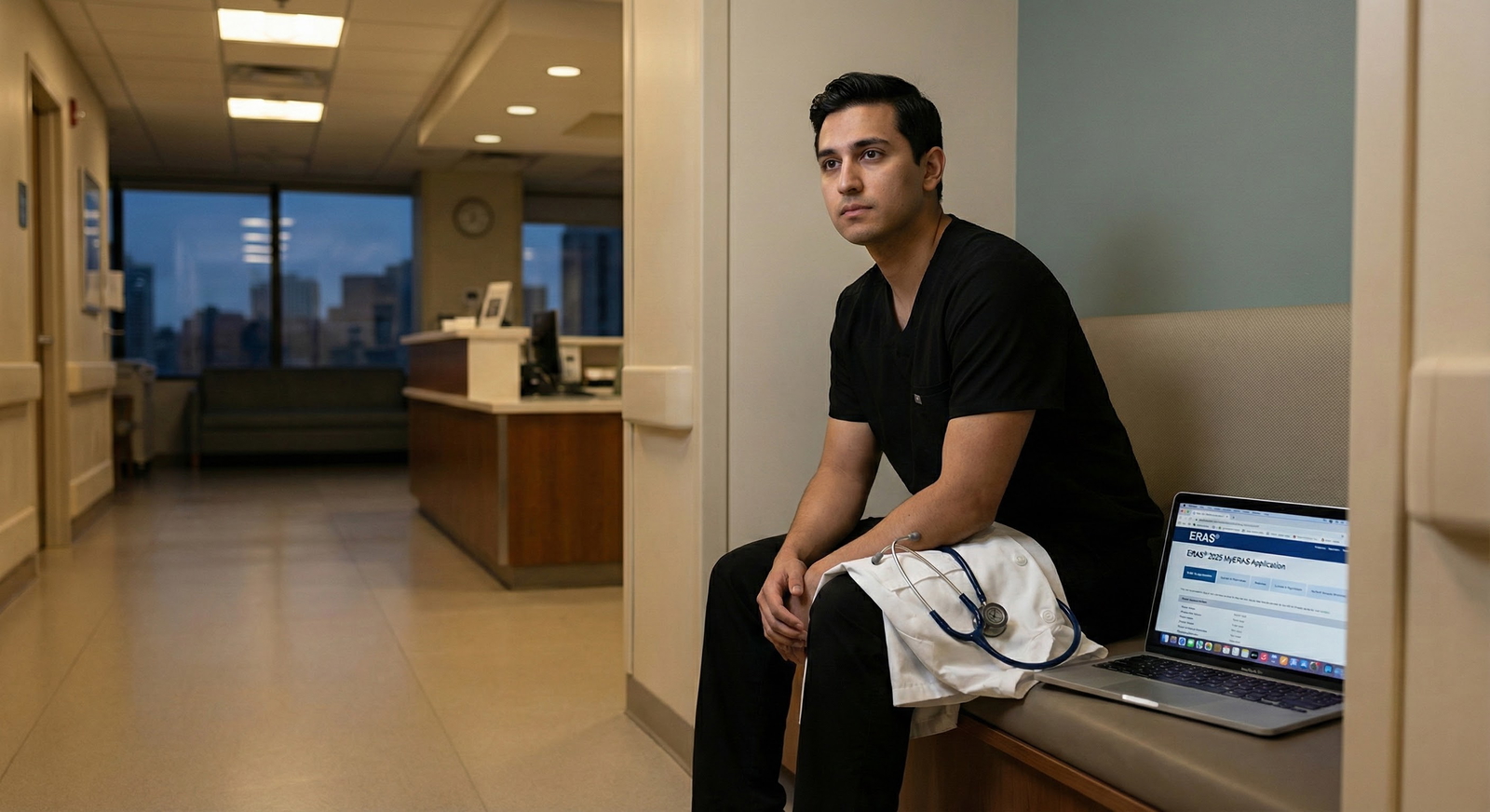
For MD graduates—especially those from allopathic medical schools—the residency application timeline can feel like a fast-moving train. Missing a key date can weaken your application, even if your credentials are strong. Knowing when to submit ERAS, how to pace your letters and exams, and how to respond to interview offers is just as important as the content of your application.
This guide walks through:
- The residency application timeline from 12+ months before Match Day
- Key ERAS and NRMP deadlines
- Timing strategies tailored to MD graduates
- How to think about “early,” “on time,” and “late” applications
- Practical examples and step-by-step action plans
Throughout, the focus is on MD graduates targeting the allopathic medical school match (NRMP Main Residency Match) using ERAS.
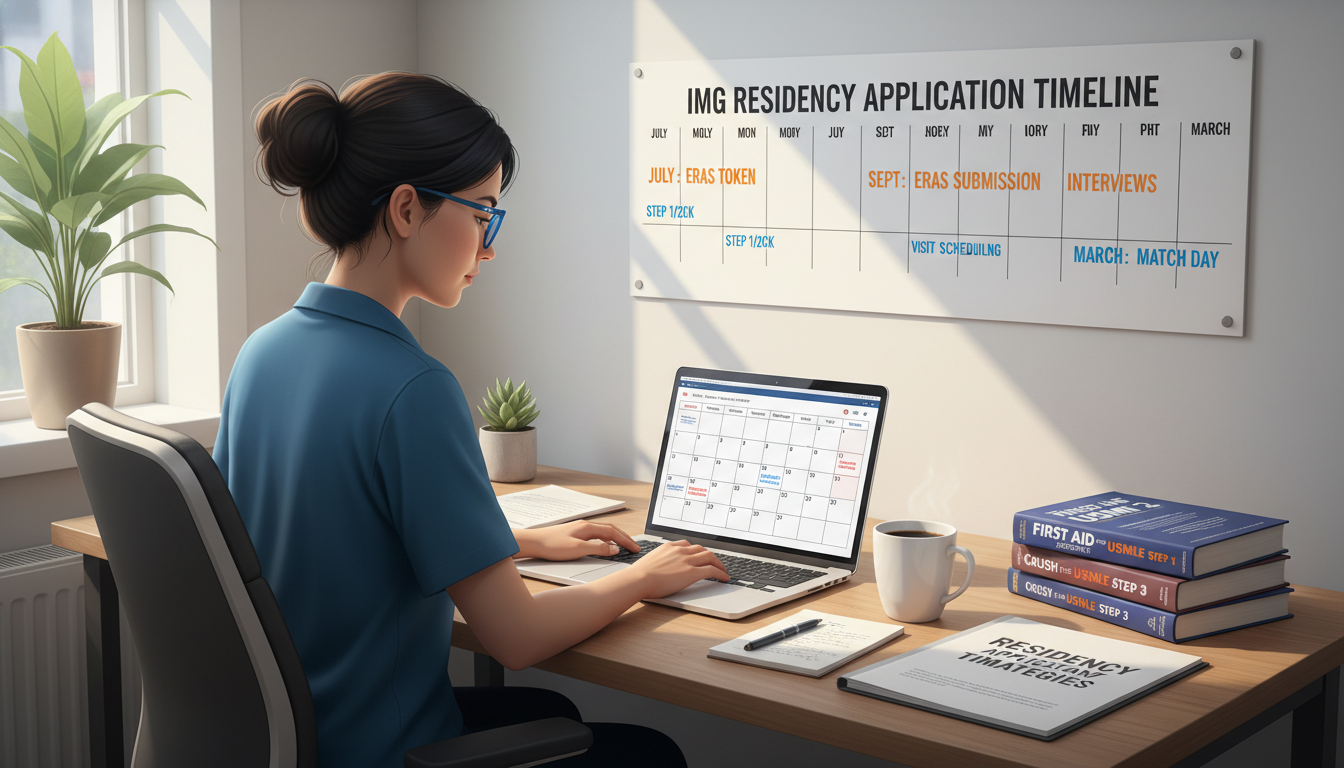
Big-Picture Overview: The Application Year at a Glance
Before getting into month-by-month detail, it helps to see the overall structure:
Pre-Application Phase (Jan–Jun, prior to application)
- USMLE Step exams, core and sub-I rotations, early letters of recommendation (LoRs).
- Career exploration and specialty choice.
Application Build Phase (Jun–Aug)
- ERAS opens to applicants (typically in June).
- Drafting and polishing the personal statement, CV, experiences, and program list.
- Requesting and uploading LoRs.
Submission & Release Phase (Sep)
- When to submit ERAS: between ERAS opening for submission and the date applications are first released to programs.
- Finalizing your specialty and program list; hitting submit.
Interview Season (Oct–Jan)
- Virtual and/or in-person interviews.
- Second looks (if applicable), careful scheduling, program research.
Ranking & Match (Feb–Mar)
- NRMP Rank Order List, Match Week, SOAP (if needed).
Pre-Residency Transition (Apr–Jun)
- Onboarding, licensing forms, moving logistics.
For MD graduates, especially those in a U.S. allopathic medical school, the most competitive period is the early application window—being ready when ERAS allows programs to first download applications is strategically important.
Month-by-Month Residency Application Timeline for MD Graduates
Timelines shift slightly each year, but the sequence remains similar. Always confirm dates with:
- AAMC ERAS (for application deadlines and release dates)
- NRMP (for registration and rank list deadlines)
- Your medical school’s dean’s office or student affairs
Below is a typical schedule, assuming you will start residency in July of Year +1.
January–March (Year 0): Laying the Foundation
You are 18–15 months before starting residency.
Focus: Specialty exploration and exam planning
Confirm specialty interests
- Reflect on core clerkships from MS3 (if still in school) or early post-grad experiences (if you’ve already graduated).
- Seek mentorship: talk to program directors, residents, and faculty in potential fields.
Plan/complete licensing exams
- For MD graduates, ensure USMLE Step 1 and Step 2 CK schedules are realistic.
- Competitive specialties usually expect strong Step 2 CK scores ready by early fall of the application year.
Begin CV and activity log
- Keep a running list of clinical experiences, leadership roles, research, and volunteering.
- Note dates, responsibilities, and measurable outcomes—this will feed directly into ERAS.
Example:
You’re an MD graduate aiming at internal medicine. In February, you email three IM attendings you respect, ask for 20-minute meetings to discuss career goals, and confirm that your Step 2 CK will be taken by May so your score can be available early in the season.
April–June: Letters, Sub-Is, and ERAS Preparation
You are 15–12 months before residency start and 6–3 months before application submission.
Focus: Letter of Recommendation (LoR) strategy and ERAS readiness
Sub-internships / Acting Internships (AIs)
- Schedule rotations in your chosen specialty between April–September if possible.
- These are prime opportunities for strong specialty-specific LoRs.
Line up Letter Writers
- Aim for 3–4 strong LoRs for most core specialties (exact expectations vary; e.g., 1–2 specialty-specific letters for IM, 2–3 for surgery, etc.).
- Approach faculty early:
- Ask, “Would you feel comfortable writing a strong, supportive letter for my residency application in [specialty]?”
- Provide them with:
- CV
- Draft of personal statement (even a preliminary version)
- ERAS LoR request form and deadlines
- Your specialty and target residency type (academic vs community, etc.)
Start your Personal Statement and Experiences
- In May/June, begin drafting your personal statement.
- Compile your ERAS experiences: clinical, research, leadership, advocacy, teaching.
ERAS Opens (typically in June)
- You can register, create your ERAS account, and begin filling sections:
- Demographics
- Education history
- Experiences and publications
- Personal statement drafts
- Program list (can be edited later)
- You can register, create your ERAS account, and begin filling sections:
Timing Tip:
Don’t wait until August to ask for letters. Attending physicians are flooded with requests in late summer. Asking by May–June increases your chances of timely, detailed letters.

July–September: When to Submit ERAS and How to Time It Strategically
This is the core of your residency application timeline. For MD graduates, this is where timing can significantly influence the number and quality of interview invitations.
July–August: Finalizing Your Application
Focus: Complete content; prepare for early submission
Polish Your Personal Statement
- Aim for a final draft by late July.
- Have at least 2–3 people review it:
- A faculty member in your specialty
- A mentor or advisor
- A peer who knows you well
Finalize ERAS Experiences
- Edit for clarity, impact, and professionalism.
- Use active verbs and quantify achievements when possible:
- “Led a team of 8 volunteers”
- “Developed a QI project that reduced ED wait times by 20%”
Confirm Letters of Recommendation Are Uploaded
- Check ERAS to ensure LoRs have been received and assigned properly.
- Follow up politely with any letter writers who haven’t submitted yet:
- “I’m finalizing my ERAS application by [date], and I wanted to check in about the status of the letter you kindly agreed to write.”
Program List Research
- Build a preliminary list of programs:
- Mix of reach, target, and safety programs based on your metrics and CV.
- Use:
- FREIDA
- Program websites
- Your school’s match list and advising recommendations
- Build a preliminary list of programs:
Strategic Note:
You do not need every single letter in to submit, but you should ideally have at least 2–3 uploaded and assignable by the time programs can first download applications. Many MD graduates aim for 3 letters ready by early September.
September: Submission Window and Application Deadlines
This month is crucial. The allopathic medical school match runs on a high-volume, early-review system. Programs often review and send interview invitations on a rolling basis.
Typical pattern (dates vary slightly each year):
- Early September: ERAS opens for submission to programs (you can hit “submit”).
- Late September: ERAS releases applications to residency programs for the first time.
- Programs start reviewing applications immediately and begin issuing interview invitations within days to weeks.
When to Submit ERAS (as an MD Graduate)
For U.S. MD seniors and recent MD graduates, the best strategy is:
Submit a complete, polished ERAS application as early as possible within the submission window, ideally several days BEFORE the first release date to programs.
Why early matters:
- Programs may receive hundreds to thousands of applications.
- In many specialties, program coordinators and faculty start triaging and inviting candidates in the first 1–2 weeks after the release.
- Being in that first wave of reviewed applications increases your chance to be seen while interview slots are abundant.
However, “early” should never mean “sloppy.” A late-August or early-September submission that is complete, accurate, and strong is far superior to a rushed one with errors or missing information.
What “On Time” Means for MD Graduates
- Early/Ideal: Submitted as soon as ERAS allows, no later than 3–5 days before the first date applications are released to programs.
- On Time (still competitive): Submitted between ERAS opening and within 1–2 days before release.
- Borderline/Late: Submitted after applications are first released, especially more than 1–2 weeks after.
That said, some programs review in batches over weeks; not all decisions are made in the first pass. It’s still worth applying even if you’re a few days to a week “late,” but expectations should be managed.
Managing Application Deadlines
Individual programs may list specific application deadlines (e.g., “Complete applications must be received by October 15”). But in practice:
- Many programs stop reviewing once interview slots are filled, even if the official deadline is later.
- For competitive specialties, an application received after the early reviewers have moved on is at a disadvantage.
Key takeaway: For MD graduate residency applicants, treat the ERAS release date to programs as the de facto “real” deadline for maximizing your chances, not the official last-possible deadline on program websites.
October–January: Interview Season and Mid-Cycle Timing Decisions
Once your ERAS application is in and programs start contacting you, timing strategy shifts to interview management and selective additional applications if needed.
October–November: Front-Loaded Interview Invitations
- Many programs send a large initial batch of invitations in October.
- Some specialties (e.g., dermatology, orthopedic surgery) may cluster their responses by nationally coordinated dates; others roll out invites over 4–8 weeks.
Your responsibilities during this phase:
Monitor Email and Portals Closely
- Respond quickly to invitations—slots can disappear in minutes to hours.
- Use a dedicated email for ERAS/NRMP communication and keep notifications on.
Organize Your Calendar
- Use a digital calendar (Google, Outlook, etc.).
- Block:
- Travel time (if in-person)
- Prep time
- Any school or work obligations
Be Strategic About Accepting/Declining Invites
- Aim for a solid target number of interviews, depending on specialty:
- For core specialties like IM, FM, peds, psych: ~10–14 interviews often provides a good safety margin.
- For more competitive fields, your school’s advisors can give specialty-specific targets.
- Don’t overbook early and then cancel multiple interviews last-minute—this can hurt future applicants from your program.
- Aim for a solid target number of interviews, depending on specialty:
November–December: Gap Analysis and Supplemental Applications
By mid-November:
- Take stock: How many interviews have you received and attended?
- Compare to:
- Specialty norms
- Advisor guidance
- Your own competitiveness profile
If you’re significantly below target interview numbers, consider:
Expanding your program list
- Apply to additional community programs or slightly less competitive regions.
- Some programs remain open and consider applicants later in the season, especially in large specialties like IM and FM.
Communicating with programs (selectively)
- A polite, concise email to programs where you feel you are a good fit may help:
- Reiterate your interest
- Highlight one or two unique strengths
- Attach your updated CV (if allowed)
- A polite, concise email to programs where you feel you are a good fit may help:
However, avoid mass, generic emails—these are rarely effective and can be perceived negatively.
January: Final Interviews and Preparation to Rank
By January:
- Most interview invitations have been sent and completed.
- Focus shifts to:
- Reflecting on program fit
- Organizing notes from each interview
- Updating your program list preferences
This is the time to keep careful records:
- Your impressions of each program’s:
- Culture
- Training structure
- Location, call schedule, benefits
- Conversations with residents and faculty
These notes will be invaluable when you build your Rank Order List.

February–March: Ranking, Match Week, and Timing Contingencies
NRMP Registration and Rank Order List Deadlines
Key NRMP-related dates (always verify for your year):
- NRMP Registration Deadline: Typically in late November or early December (late fee after that).
- Rank Order List Certification Deadline: Usually in late February.
As an MD graduate, you must:
- Register with NRMP (and pay fees) on time.
- Certify your Rank Order List before the deadline.
Failure to do either means you will not participate in the Match—missing these application deadlines is catastrophic and cannot be fixed after the fact.
Building a Thoughtful Rank Order List
Timing strategy here is about when to finalize, but quality matters more than earliness:
- Start drafting your list in late January or early February.
- Revisit your interview notes, talk to mentors, and consider:
- Long-term career goals (fellowship vs general practice)
- Geographic priorities (family, cost of living)
- Program culture and resident happiness
- Finalize and certify several days before the official deadline to avoid last-minute technical issues.
Match Week and SOAP
If you do not match:
- Monday of Match Week: You learn if you matched. If not, you can enter the SOAP (Supplemental Offer and Acceptance Program).
- Timing is intense:
- New applications to SOAP-eligible programs occur in rapid waves.
- Interviews and offers occur over the next few days.
Preparation tips:
- Pre-compile a SOAP-ready CV and personal statement for a broader range of programs or a closely related specialty, just in case.
- Stay in close contact with your student affairs or dean’s office; they often provide structured SOAP support.
Special Timing Considerations for MD Graduates
For Current MD Seniors vs Prior-Year Graduates
Current MD seniors (still enrolled):
- Often have more robust institutional support and traditional timelines.
- Deans’ letters (MSPEs) and LoRs are well-integrated into school processes.
- Strong advice: align with your school’s internal deadlines for MSPE review, LoR requests, and mock interviews.
Prior-year MD graduates (already out of school):
- May need extra time to:
- Reconnect with faculty for fresh LoRs
- Update clinical experience (e.g., through observerships, research, locum jobs where allowed)
- Should start at least 3–6 months earlier in planning to secure:
- Clinical references
- Updated CV with recent, relevant activities
Applicant Types: Highly Competitive vs Risk-Managed Strategy
Competitive applicant (strong board scores, robust research, strong LoRs):
- Still benefit from early, on-time application to maximize top-tier opportunities.
- Timing allows application to a wide geographic range, then considering cancellations later based on interview volume.
Borderline or risk-managed applicant (average metrics, red flags, limited specialty exposure):
- Early submission is even more critical, as you may be triaged more easily later in the cycle.
- Consider:
- Applying to a slightly broader range of programs and regions.
- Submitting as soon as you feel your file is as strong as it can be, with key LoRs and Step 2 CK score in.
Practical Timeline Checklist for MD Graduate Residency Applicants
Here is a condensed checklist you can adapt:
January–March (Year 0)
- Decide or narrow down specialty choices
- Schedule/complete Step 2 CK (if not already done)
- Begin tracking activities for ERAS experiences
April–June
- Complete key sub-I/AIs in target specialty
- Identify 3–4 potential letter writers
- Ask for strong LoRs by May/June
- Start personal statement draft
- Register for ERAS when it opens
- Begin entering education and experiences in ERAS
July–August
- Finalize personal statement
- Proofread and finalize ERAS experiences
- Confirm LoRs are written or in progress
- Build and refine program list
- Ensure Step scores are reported (or know your timeline)
September
- Submit ERAS early within the submission window
- Double-check all assignments (LoRs to programs, PS to specialties)
- Monitor for confirmation emails
October–January
- Respond promptly to interview offers
- Organize and track interviews on a calendar
- Maintain professional communication with programs
- Reassess interview numbers in November and consider adding programs if needed
February–March
- Register for NRMP by the deadline
- Draft and refine Rank Order List
- Certify ROL several days before the deadline
- Prepare a contingency SOAP plan with advisors
- Participate in Match Week activities with support
Frequently Asked Questions (FAQ)
1. When is the best time for an MD graduate to submit ERAS?
For MD graduate residency applicants, the best time to submit is as early as possible within the ERAS submission window, ideally a few days before the date applications are first released to programs. This maximizes your visibility when programs first review applications and begin offering interviews. Do not delay solely to add small tweaks; a complete, polished application on time is more valuable than a “perfect” but late application.
2. Is it bad to submit ERAS after the first release date to programs?
Submitting ERAS a few days after the initial release is not automatically fatal, but it is less ideal. Programs often review and send many interview invitations shortly after they first receive applications. If you submit 1–2 weeks or more after that, especially in a competitive specialty, your chances for interviews may drop. If you must submit late (e.g., waiting for a critical Step 2 CK score), weigh the benefit of the new information against the potential loss of early interview opportunities, and seek specialty-specific advice from your dean’s office.
3. How many interviews do I need to feel secure about matching?
The number varies by specialty and applicant profile, but as a rough guide:
- For core specialties like internal medicine, pediatrics, family medicine, and psychiatry, many advisors suggest aiming for 10–14 interviews to have a strong chance of matching, assuming your list is well-chosen and you rank all programs.
- More competitive specialties may require more careful planning and additional backup specialties; your school’s advisors can provide specific target numbers.
Ultimately, quality and fit of programs also matter—matching at a program aligned with your goals is more important than hitting an arbitrary interview count.
4. Can I still get interviews if my application isn’t complete until October?
Yes, some programs review and offer interviews through October and even November, particularly in large or less competitive specialties. If a letter or Step score is delayed into early October, you can still be considered at many places. However, for MD graduates, it is always safer to aim for full application completeness (core LoRs, personal statement, Step 2 CK if required) by the time applications are first downloaded in late September. Think of October completeness as “okay but not ideal” rather than a target.
By understanding and strategically using the residency application timeline, MD graduates can maximize their visibility and interview opportunities in the allopathic medical school match. Organize early, submit on time, and use each phase—application, interviews, and ranking—deliberately to present the strongest possible version of your candidacy.