
What do you do when the program you’ve wanted for years is 900 miles away from the person you thought you’d be building a life with?
Because that’s what this really is, right? It’s not “Compare program strengths and weaknesses” like every generic blog says. It’s: am I about to blow up my relationship for a name on a badge… or am I about to tank my career to keep someone who might not even be there in five years?
Let’s say it out loud: either choice feels like it could be the worst mistake of your life.
The Real Versions of This Dilemma (Not the Instagram One)
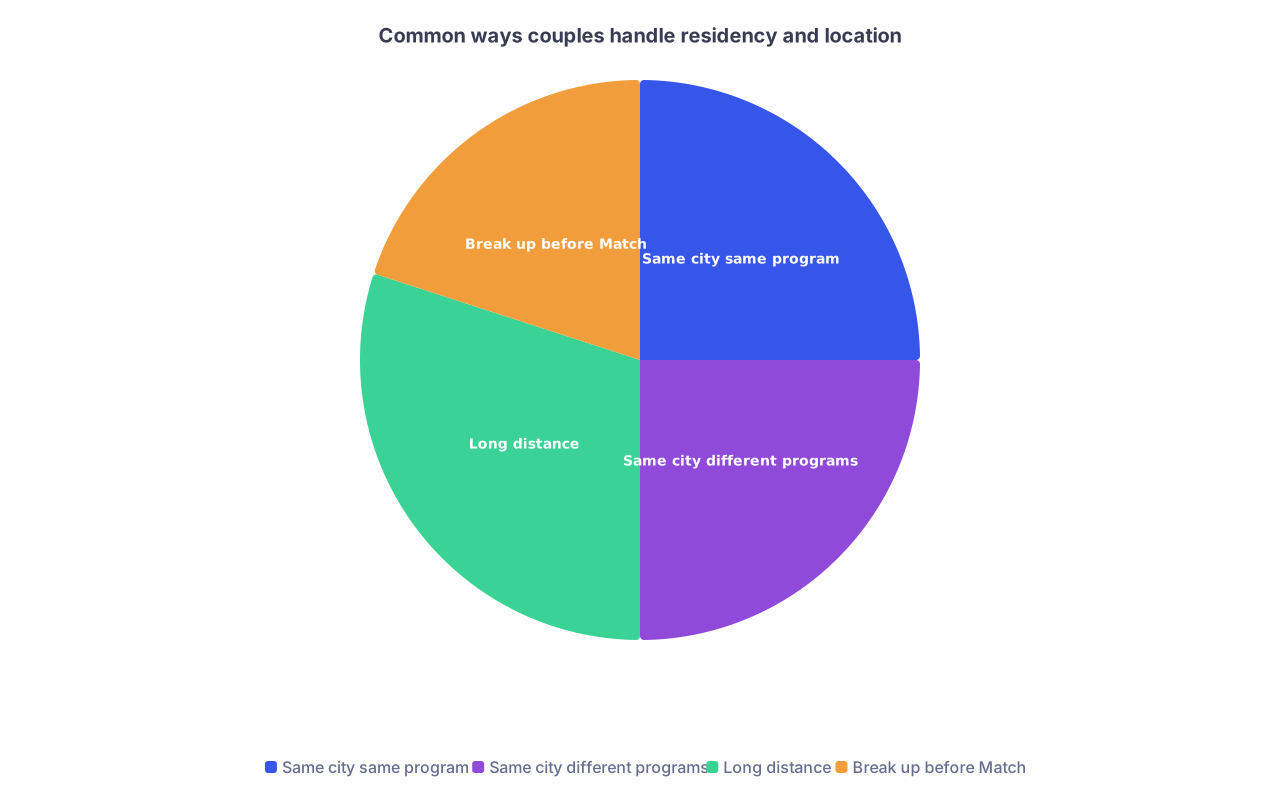
| Category | Value |
|---|---|
| Same city same program | 25 |
| Same city different programs | 25 |
| Long distance | 30 |
| Break up before Match | 20 |
Nobody talks about this honestly. On interview day people ask, “Are you couples matching?” in this light, chirpy voice like it’s some adorable puzzle. Meanwhile you’re doing mental math:
- Program A: absolute dream. Reputation, mentorship, fellowship pipeline. Across the country.
- Program B: solid but not amazing. In the same city as your partner.
- Program C: backup in your partner’s city that you don’t really want and kind of resent existing.
Here are the real configurations I’ve seen (yes, actually seen, as in real humans, crying in call rooms and in random Starbucks):
- They pick the dream program, do long distance, and somehow make it work.
- They pick being together, and quietly wonder for years if they sold themselves short.
- They try to split the difference (rank lists all over the place) and the Match algorithm separates them anyway.
- They break up before rank lists, one person applies “for themselves,” and still spends PGY-1 replaying what-if scenarios at 3 a.m.
None of these is clean. There is no “right” answer that feels good on all axes. If you’re waiting for that feeling, you’re going to be stuck.
So the real question is: how do people actually decide, when both options scare them?
How People Really Make This Choice (Not What They Tell Attendings)

Let me be blunt: people don’t sit down with a perfect pro–con list and calmly optimize their lives.
What actually happens is messy and emotional, and then later they retrofit it into some noble narrative.
Here are the main decision patterns I’ve watched up close:
1. The “Career First, Relationship Has to Prove Itself” Group
Their logic, stripped of the motivational quotes:
“I’ve killed myself to get here. If this relationship can’t survive me doing what I’ve worked for, then it wasn’t going to last anyway.”
They usually:
- Rank their dream program (or tier of programs) at the top, regardless of location.
- Tell their partner some version of “I love you, but I can’t not do this.”
- Accept that long distance will be painful, expensive, and very not romantic.
Sometimes it works beautifully. They reunite for fellowship or jobs and both are glad they didn’t give up their dream.
Sometimes the relationship dies slowly—flight schedules, night float, missed calls, emotional distance.
But here’s the pattern: the ones who choose this and don’t spiral with regret are the ones who, deep down, always knew medicine was their non-negotiable.
If in your gut you feel like you’d resent your partner forever for “making” you choose a lesser program, that’s important data. Resentment is relationship poison. I’ve watched couples never recover from that.
2. The “Life First, Medicine Is a Job” Group
They’ll never say it that bluntly to their PD, but this is the mindset:
“Being with my person matters more than the difference between Top 10 and Top 40. I want a life, not just a CV.”
They:
- Rank programs in their partner’s city first, even if another program is technically “stronger.”
- Are very clear with themselves: “I am choosing this. I am not a victim of this relationship.”
- Often lean more toward primary care, psychiatry, pediatrics, or other fields where prestige matters but doesn’t dominate your daily happiness as much as fit and support.
Here’s the thing: these folks are not failures. Many are objectively thriving—academically and personally. The part they struggle with is internal shame that other med people will think they “weren’t competitive” or “settled.”
But the consistently content ones have made peace with something hard: they are allowed to optimize for their actual values, not the values of that one gunnery resident who thinks anything below MGH is career suicide.
3. The “We’re a Unit” Group (True Couples Match Energy)
This is different. The real decision isn’t “me vs you,” it’s “us vs everything.”
Common patterns:
- They draw a hard line early: “We are not living in different states. Period.”
- They create a realistic list of overlapping programs where both could actually match.
- They’re willing for both careers to land in the 80% zone instead of one being at 100% and the other at 40%.
What I notice with these couples: there’s usually been a lot of honest, sometimes brutal conversation before ERAS. They know each other’s breaking points. They’ve game-planned worst-case: What if only one of us matches? What if one hates their program?
The ones who regret it less are the ones who actively chose to be a unit. The ones who regret it more are those who kind of drifted into “we should couples match, right?” without facing the trade-offs.
4. The “I Froze and Let the Algorithm Decide” Group
This is more common than anyone admits.
Signs this might be you:
- Your rank list is a complete Frankenstein of “if we break up / if we stay together / if I panic” scenarios.
- You avoid talking concretely with your partner because every conversation feels like it might end in tears or a breakup.
- You tell yourself, “Whatever happens is what was meant to be,” but you’re actually just terrified of choosing.
The risk here is maximum regret. Because then you get to PGY-1 and realize:
“I didn’t really choose this. It just… happened to me.”
I’m not judging. I’m more saying: if you recognize yourself in this, do something about it now, not after rank lists lock.
Questions That Actually Separate People’s Choices
| Question | Tends to push toward... |
|---|---|
| How replaceable is this program? | Often career-first |
| How replaceable is this relationship? | Often partner-first |
| Would I resent them if I stayed? | Career-first if yes |
| Would I hate my life if this fell apart? | Partner-first if yes |
| How much does program prestige matter here? | Depends on specialty |
People in your shoes who end up at peace with their choice almost always wrestle with some version of these:
- If this relationship ended in 2 years, would I still be glad I chose this program?
- If my career hit a ceiling because of this choice, would I still be glad I chose this relationship?
- Am I staying for us, or because I’m scared no one else will want me?
- Am I leaving for this program, or because I’m looking for an exit I can blame on “career”?
- If my future kid asked, “Why did you pick this path?” would my answer sound like a choice or an excuse?
If you feel sick reading those, join the club. That’s kind of the point. These are not soft questions.
The Stuff Applicants Constantly Overestimate and Underestimate
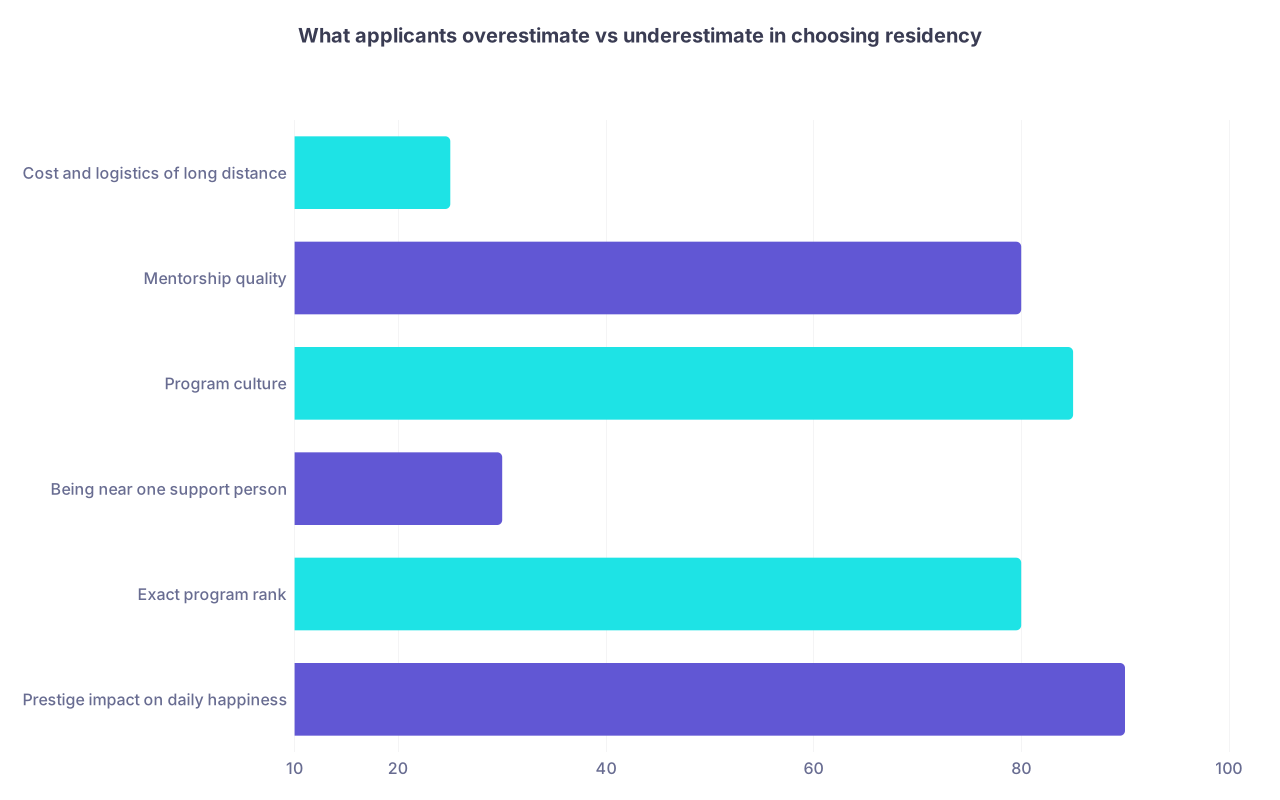
| Category | Value |
|---|---|
| Prestige impact on daily happiness | 90 |
| Exact program rank | 80 |
| Being near one support person | 30 |
| Program culture | 85 |
| Mentorship quality | 80 |
| Cost and logistics of long distance | 25 |
People like us (overachievers, anxious, trying to control the future) get the following almost systematically wrong:
You overestimate:
- How much incremental prestige will matter to your daily happiness.
- How permanent your first job/fellowship trajectory is.
- How much other people’s opinions about your choice will matter to you in 5 years.
- How easy long distance will be “because we’re both busy anyway.”
You underestimate:
- How crushing it is to be truly alone in a new city with no real support.
- How big a difference good vs toxic program culture makes at 2 a.m. on your 6th admit.
- How much logistics (flights, time zones, money, call schedules) can slowly erode even strong relationships.
- How much flexibility you actually have to build a solid career from a non-“dream” program if you’re motivated.
Does pedigree open doors? Yes. I’m not going to lie to you. But so do: strong letters, research output, being known as the resident people want to work with, and not being miserable all the time.
If the “dream” program is famous but malignant, and your partner is your only real support, that’s not a dream. That’s a setup.
On the flip side: if your relationship is already shaky, and you’re thinking of turning down a program you love to “save” it, that’s also a setup. For resentment and regret.
Concrete Ways People Actually Decide (Step-By-Step, Not Vague Advice)

| Step | Description |
|---|---|
| Step 1 | Start - Two conflicting options |
| Step 2 | Lean toward dream program |
| Step 3 | Lean toward partner |
| Step 4 | Plan long distance or couples strategy |
| Step 5 | Prioritize individual career |
| Step 6 | Rank list with clear primary plan |
| Step 7 | Accept trade offs and commit |
| Step 8 | Is program unique or replaceable |
| Step 9 | Is relationship long term stable |
Here’s what I’ve seen actually help people move from spiraling to deciding:
Run two separate fantasies. Brutally.
- Scenario 1: You pick the dream program. Walk through an actual week in July PGY-1. New city. New co-residents. No partner nearby. How do you feel on post-call days?
- Scenario 2: You pick partner-city program. Same thing. It’s not brand-name shiny, but your partner’s at home when you stumble in after night float.
Most people have a visceral reaction to one of these when they really let themselves picture it.
Talk like adults, not applicants.
Sit down with your partner and say: “If we weren’t scared, what would you actually want? And what do I actually want?”
Not: “Well, whatever works…”
I’ve watched people discover their partner was more willing to move, wait, or compromise than they assumed.Ask a senior resident who’s living your potential future.
- Long distance + malignant program: ask if they’d do it again.
- Together in “OK” program: ask what really matters now.
- Couples match that fragmented: ask what they wish they’d known.
You’ll get less filtered answers than from faculty who are invested in their program looking perfect.
Rank with a primary plan, not eight backup plans stuffed into one list.
Decide your main identity for this Match:- “I am prioritizing my career and accepting long distance if needed.”
- Or: “I am prioritizing staying with my partner, even if it costs me some prestige.”
Waffling inside your rank list doesn’t protect you. It just spreads the risk around.
Name your worst-case scenario and ask if you can live with it.
Examples:- Worst case choosing dream program: relationship ends, you’re in a demanding program in a new city, no built-in support.
- Worst case choosing partner: relationship ends anyway, and now you’re stuck in a city and program you never really wanted.
Which of those terrifies you more? For most people, one is clearly more unbearable. That’s the answer they don’t want to admit.
What Nobody Tells You About Regret

Here’s the part that helped me, even though I hated hearing it at first:
You can make the “right” choice and still feel awful for a while.
You can:
- Pick your dream program and cry yourself to sleep missing your partner.
- Pick being together and feel a stab of jealousy every time someone mentions a big-name fellowship.
That doesn’t automatically mean you chose wrong. It means you’re a human who gave something up.
Almost nobody gets everything: perfect program, perfect location, perfect relationship, perfect mental health. The people who seem like they did are just not posting the messy parts.
What I’ve watched matter more than “did I pick partner or program?” is this:
- Did you choose on purpose, or did you let fear and avoidance choose for you?
- Are you willing to own your choice without secretly blaming your partner, your PD, or The Match for the rest of your life?
- Are you flexible enough to change course later? (Switch programs, change specialties, re-negotiate the relationship.)
Medicine pretends every decision is final and absolute. It isn’t. People transfer. Relationships evolve. Careers shift.
You’re not etching your entire future into stone; you’re choosing your next 3–7 years, with consequences, yes, but also with exits and pivots you can’t even see yet.
A Quiet Truth That Might Calm You (A Little)

Last thing, and I’m saying this as someone whose brain loops worst-case scenarios at 2 a.m.:
Most people, five to ten years out, don’t tell their story as “I ruined everything.”
They say things like:
- “It was brutal, but I’d still pick that program again.”
- “Honestly, I’m so glad I chose to stay with them. I don’t care that my program wasn’t famous.”
- “Yeah, we broke up anyway, but the program was right for me.”
- “We kind of sacrificed some prestige for each other, but our life now? I wouldn’t trade it.”
Do some people have real, painful regrets? Yes. I’ve heard: “I wish I’d been braver,” on both sides of the decision.
The only choice that almost always breeds the worst kind of regret is this one:
“I stayed small because I was scared to own what I actually wanted.”
So. What do you actually want? Not what Instagram wants. Not what your PD wants. Not what you think a “good applicant” is supposed to want.
That answer is the one you can live with at 3 a.m. on call. That’s the one you build your rank list around.
FAQ (5 Questions)
1. What if my partner says they’ll “support whatever I choose” but won’t actually say what they want?
That usually means they’re scared to influence you and then get blamed later. Push gently but clearly: “I need to know what you really want, even if I don’t pick it. I won’t use it against you.” If they still won’t engage honestly, that’s a red flag about how decisions will work in this relationship long term.
2. Is turning down a top-tier program for my partner a “career-ending” move?
No. Overdramatic attendings make it sound that way, but it’s not. It might make some ultra-competitive fellowships harder, but strong residents from mid-tier places match great fellowships every year. You’ll just need to be intentional: seek mentorship, do research, go to conferences, and build a name for yourself. It’s more work, not impossible.
3. Is it naïve to think long distance can work during residency?
It’s not automatically naïve, but it is hard. The couples that survive tend to have: clear communication habits before residency, realistic expectations (you will miss calls, anniversaries, flights), and concrete timelines to eventually be in the same place. If your whole plan is “we’ll figure it out later,” that’s risky.
4. How do I know if I’m choosing my partner for love vs out of fear of being alone?
Ask yourself: if I were guaranteed I’d eventually find another loving, supportive partner, would I still make the same choice? If your honest answer is no, and your main feeling is terror at being alone in a new city, you might be deciding from fear. That doesn’t make the relationship fake, but it should make you pause.
5. What if we break up right after I choose their city/program?
That’s the nuclear fear everyone has. It does happen sometimes. If you choose their city, do it because that city and that program are at least livable for you even if the relationship ends. Ask: “Would I absolutely hate my life here if I were single?” If the answer is yes, don’t hinge your entire residency on someone else’s presence you can’t control.
Key points: you’re not choosing between “good” and “bad,” you’re choosing which trade-offs you’re willing to live with; and whatever you decide, own it as your choice, not something the Match or your partner did to you.