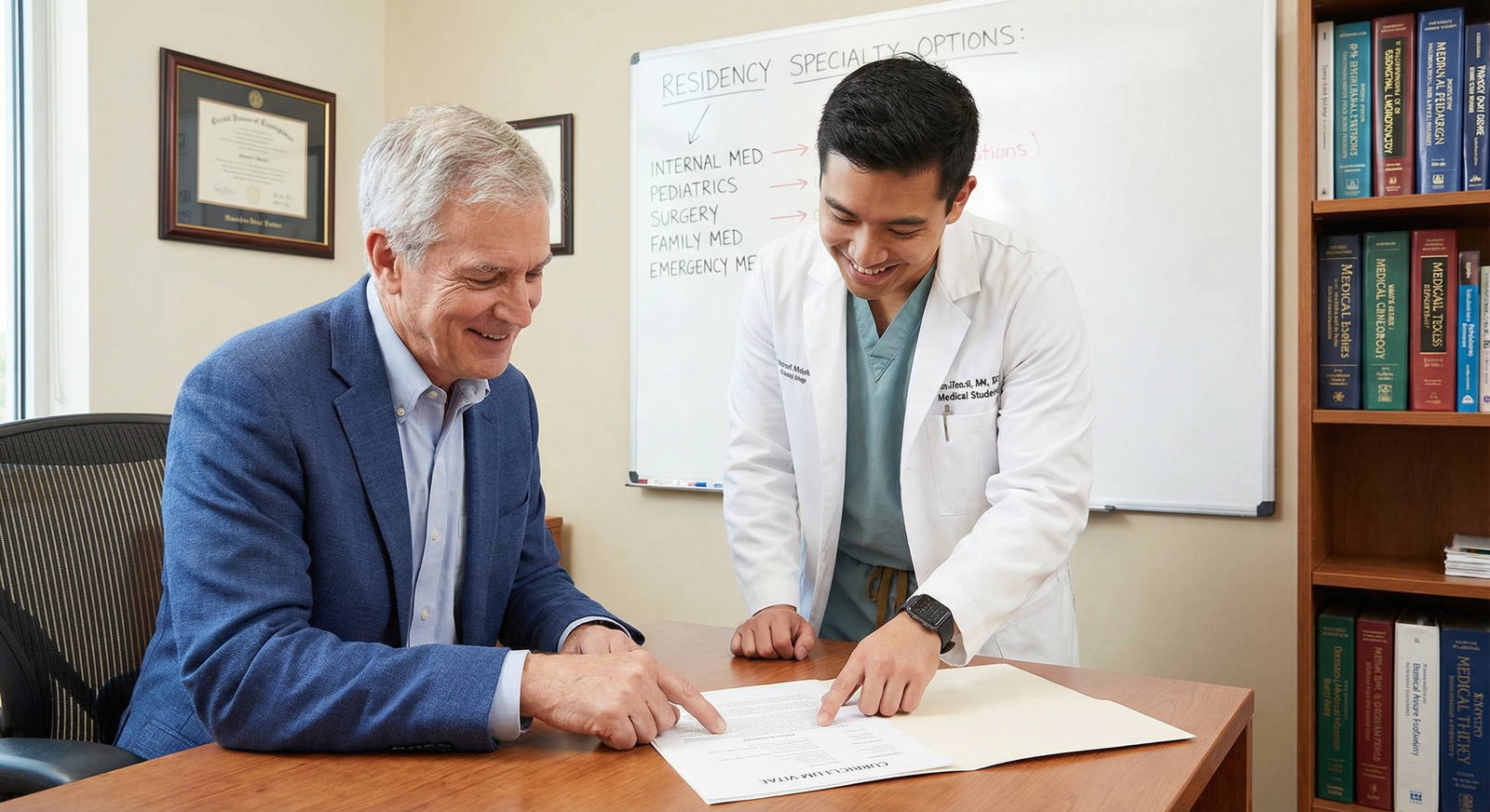
As an MD graduate targeting anesthesiology residency, your CV is more than a list of experiences—it is a strategic document that tells program directors you are safe, serious, and suited to the operating room. A strong residency CV organizes your clinical, academic, and professional story in a way that aligns with what anesthesia program directors value: reliability, attention to detail, calm under pressure, and genuine interest in perioperative care.
This guide walks you step-by-step through how to build a standout CV for anesthesiology residency, with specific examples, formatting guidance, and residency CV tips tailored to MD graduates from allopathic medical schools.
Understanding the Purpose of the Anesthesiology Residency CV
Before you start editing, you need to understand what your CV is for in the context of the allopathic medical school match and anesthesia match.
What Program Directors Look For
Anesthesiology program directors use your CV to quickly answer questions like:
- Has this applicant demonstrated reliability and professionalism?
- Do they have real exposure to anesthesiology and perioperative care?
- Can they work in a team, communicate clearly, and handle stress?
- Have they taken advantage of opportunities (research, leadership, quality improvement)?
- Does their story match their personal statement and ERAS application?
Unlike a generic job CV, a medical student CV for residency must be:
- Chronological – programs want a clear timeline, with no unexplained gaps
- Evidence-based – concrete roles, dates, and outcomes count more than adjectives
- Aligned with anesthesiology – your activities should support your stated interest
CV vs. ERAS Application
Your ERAS application is structured and standardized. Your CV is:
- Often uploaded as a supplemental document
- Used by some programs for quick pre-interview screening
- Frequently referenced by interviewers during your interview
- Used when letters, publications, or experiences need a clear, organized list
Your residency CV should mirror your ERAS content but be:
- More detailed in descriptions
- Better formatted for readability (headings, spacing, bullet points)
- Easy to scan in print form (many faculty print your CV for interviews)
Core Structure: How to Build a CV for Residency in Anesthesiology
The order and structure of your CV are critical. For an MD graduate residency applicant in anesthesiology, the following layout works very well:
- Contact Information & Professional Identity
- Education
- USMLE/COMLEX (optional on CV; follow current policies)
- Clinical Experience (Core & Elective Rotations)
- Anesthesiology-Specific Experiences
- Research & Scholarly Activity
- Presentations & Publications
- Leadership & Professional Involvement
- Teaching & Mentoring
- Quality Improvement / Patient Safety Projects
- Honors & Awards
- Skills & Certifications
- Languages & Interests (brief, but curated)
1. Contact Information & Professional Identity
At the very top:
- Full name (as on ERAS)
- MD degree (e.g., Jane A. Smith, MD)
- Email (professional; ideally FirstLast@)
- Mobile phone
- City, State (you don’t need your full address)
- Optional: LinkedIn URL (if up to date and professional)
Avoid adding:
- Personal photo (ERAS handles that)
- Objective statements (use your personal statement instead)
Example:
JANE A. SMITH, MD
Email: jane.smith.md@email.com | Phone: (555) 555-5555
Location: Boston, MA | LinkedIn: linkedin.com/in/janesmithmd
2. Education
List your education in reverse chronological order:
- Institution, City, State
- Degree (MD) and month/year of graduation (or expected graduation)
- Honors (e.g., AOA, Gold Humanism, cum laude)
- Brief, relevant items (e.g., Distinction in Research, Anesthesiology track)
Example:
Doctor of Medicine (MD) – May 2025
Allopathic Medical School, City, State
- Honors: AOA Honor Medical Society; Distinction in Clinical Anesthesiology
Bachelor of Science, Biology – May 2021
State University, City, State
- Magna Cum Laude; Minor in Chemistry
Do not list high school. Keep this section concise and factual.
3. Clinical Experience: Emphasizing Anesthesiology-Relevant Training
As an MD graduate residency applicant, your clinical training is one of your biggest assets. Your CV should make it clear that you have had strong exposure to core rotations, with particular attention to experiences relevant to anesthesiology.
You can split this section:
- Core Clinical Rotations
- Sub-Internships & Electives (especially anesthesiology, ICU, emergency medicine)
For each rotation, include:
- Rotation title
- Institution and location
- Dates (month/year – month/year)
- Optional: concise bullet(s) highlighting responsibility or accomplishment
Example (Core Rotations):
Core Clinical Rotations
Allopathic Medical School, Teaching Hospital, City, State
- Internal Medicine – Jul 2023 – Sep 2023
- Managed 6–8 inpatient cases daily, including pre- and post-op patients undergoing major surgery.
- Surgery – Oct 2023 – Dec 2023
- Participated in perioperative management, including pre-op assessments and post-op pain control planning.
- Pediatrics – Jan 2024 – Feb 2024
- Obstetrics & Gynecology – Mar 2024 – Apr 2024
- Psychiatry – May 2024 – Jun 2024
- Family Medicine – Jul 2024 – Aug 2024
Example (Anesthesiology Electives and Sub-I):
Anesthesiology and Critical Care Rotations
Sub-Internship, Anesthesiology – Tertiary Care Center, City, State | Sep 2024 – Oct 2024
- Completed focused pre-op evaluations and presented anesthetic plans to attending anesthesiologist.
- Assisted with induction, airway management, and intraoperative monitoring for 3–6 cases daily.
Elective, Surgical Intensive Care Unit (SICU) – Academic Medical Center | Nov 2024
- Managed ventilated patients and contributed to daily rounding, fluid management, and sedation plans.
This structure signals to anesthesia program directors that you understand perioperative care and critical illness, two pillars of anesthesiology.
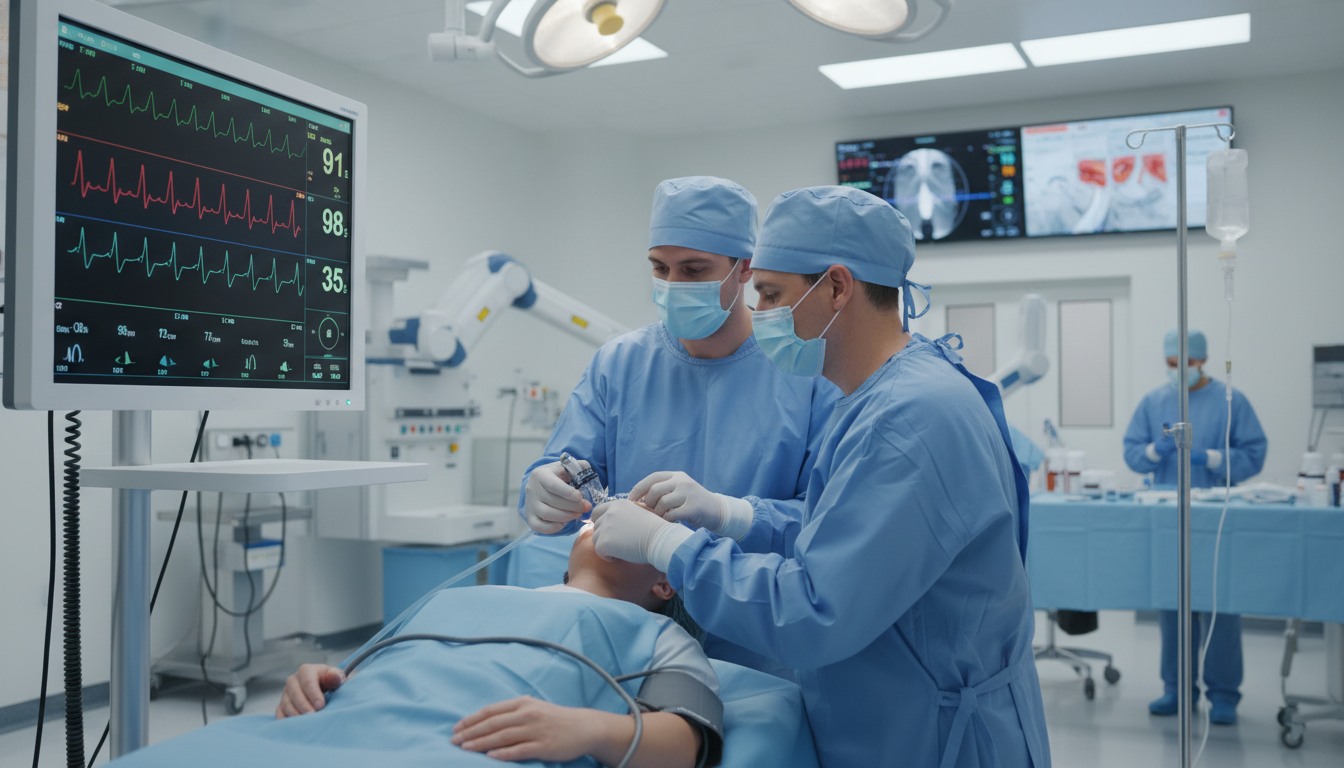
Highlighting Anesthesiology-Specific Interest and Experience
Programs expect a plausible, traceable interest in anesthesiology—not a last-minute decision. Your CV is a key tool to demonstrate this.
4. Anesthesiology-Specific Experiences
Create a dedicated section for experiences that directly relate to anesthesia and perioperative medicine, including:
- Anesthesiology interest group leadership
- Shadowing or observerships in anesthesia
- Pain management clinic experience
- ICU projects with emphasis on sedation, ventilation, hemodynamics
- Simulation lab experiences (airway management, crisis resource management)
Example:
Anesthesiology-Related Experiences
Vice President, Anesthesiology Interest Group – Allopathic Medical School | 2022 – 2024
- Organized monthly talks with anesthesiology faculty on topics such as regional anesthesia and perioperative medicine.
- Coordinated OR shadowing program for first- and second-year medical students.
Anesthesiology Shadowing – Community Hospital, City, State | Summer 2022
- Shadowed attending anesthesiologists in general surgery, OB, and outpatient procedures; observed airway management and regional block placements.
These entries help validate the story you tell in your personal statement and during interviews.
5. Research & Scholarly Work in Anesthesiology
For the anesthesia match, research is valued but not absolutely required at every program. However, having any scholarly work, especially related to anesthesiology, pain, ICU, or perioperative topics, significantly strengthens your MD graduate residency application.
Organize research and scholarship as:
- Research Experience (projects, roles, duration)
- Publications
- Presentations (oral and poster)
Research Experience
Include:
- Project title or general topic
- Institution and mentor
- Dates
- Your role (coordinator, data analyst, sub-investigator)
- Outcomes (abstracts, manuscripts, QI changes)
Example:
Research Assistant, Perioperative Hemodynamic Optimization Study
Department of Anesthesiology, Allopathic Medical School | Jun 2023 – Present
Mentor: John Doe, MD
- Collected and analyzed intraoperative blood pressure data for 150+ high-risk surgical patients.
- Contributed to protocol development for perioperative fluid management.
Publications & Presentations
Use a consistent citation format. Separate peer-reviewed papers, abstracts, and posters.
Publications
- Smith J, Doe J. “Postoperative Hypotension and Outcomes in Elderly Surgical Patients.” Journal of Clinical Anesthesia. 2024;XX(X):XXX–XXX. (In press)
Presentations
- Smith J, Doe J. “Preoperative Risk Stratification in Major Abdominal Surgery.” Poster presented at: ASA Annual Meeting; Oct 2024; San Francisco, CA.
If you don’t yet have anesthesia-specific publications, include any medical publications, QI projects, or case reports, and be honest about status (submitted, in preparation, conference abstract only).
Leadership, Teaching, and QI: Showing You Fit the Culture of Anesthesia
Anesthesiology is team-centered and safety-focused. Beyond clinical skill, programs want residents who will contribute to team function and patient safety.
6. Leadership & Professional Involvement
In anesthesiology residency, leadership often looks like:
- Coordinating OR teams
- Running codes and resuscitations later in training
- Serving on residency or hospital committees
Demonstrate leadership early through:
- Class officer roles
- Committee participation
- Student organization leadership
- Projects where you organized people or events
Example:
Class Representative, Medical Student Council – Allopathic Medical School | 2021 – 2023
- Served as liaison between medical students and administration on clinical workflow and call schedule feedback.
- Collaborated on a pilot project to improve operating room orientation for third-year students.
7. Teaching & Mentoring
Anesthesiologists teach constantly—intraoperatively, in ICU rounds, and during emergencies. Any teaching should be highlighted:
- Peer tutoring
- Anatomy or physiology TA
- Mentoring junior medical students, especially in simulations or skills labs
- Near-peer teaching in airway management workshops
Example:
Peer Tutor, Physiology and Pharmacology – Allopathic Medical School | 2022 – 2024
- Conducted weekly small-group review sessions for first-year students, emphasizing clinically relevant pharmacology and hemodynamics.
Instructor, Airway Management Workshop – Anesthesiology Interest Group | 2023
- Taught basic airway techniques (BVM, oral airway insertion) to pre-clinical students using simulation mannequins under supervision of anesthesia faculty.
These roles reinforce that you are comfortable teaching, a desirable trait in residents.
8. Quality Improvement & Patient Safety
Anesthesiology programs highly value quality improvement (QI) and patient safety because the specialty is deeply linked to error reduction, process efficiency, and systems-based practice.
Include:
- QI projects related to OR turnover, pre-op clinics, PACU workflow
- Safety initiatives (checklists, standardized handoff forms)
- Participation in morbidity and mortality (M&M) projects
Example:
Quality Improvement Project: Reducing First-Case OR Delays
Department of Surgery & Anesthesiology, Academic Hospital | Jan 2024 – May 2024
- Analyzed causes of first-case start delays over 3 months.
- Helped implement a pre-op checklist and communication protocol between surgery and anesthesia teams.
- Reduced average first-case delay by 12% over pilot period.
Experiences like this signal system-thinking and safety awareness—key themes in anesthesiology.

Skills, Certifications, and Personal Details That Matter in Anesthesiology
9. Skills & Certifications
This section should be precise and relevant. Avoid vague terms (“hard-working,” “team player”) and focus on concrete items:
Certifications
- BLS (Basic Life Support) – include expiration date
- ACLS (Advanced Cardiovascular Life Support) – essential for anesthesiology applicants
- PALS (Pediatric Advanced Life Support) – a plus, especially if interested in pediatric anesthesia
- ATLS (Advanced Trauma Life Support) – valuable if trauma or critical care interest
Technical/Clinical Skills (appropriate for a student level)
- Basic airway management (BVM, oral/nasal airway, LMA exposure)
- Arterial line observation/assistance (if applicable)
- Point-of-care ultrasound (if trained; note basic vs advanced level)
Be very careful not to overstate or misrepresent skills. Use wording that fits a medical student/MD graduate level, such as:
- “Familiarity with…”
- “Observed and assisted with…”
- “Basic student-level experience in…”
10. Languages and Interests
This section is short but can humanize you and spark interview conversation.
Languages
- Fluent in Spanish
- Conversational Mandarin
- Native English
If you speak a language commonly used in the hospital population, this is a plus.
Interests
List 3–5 specific interests that:
- You can talk about in detail
- Reflect resilience, teamwork, or long-term dedication (e.g., distance running, playing in a chamber orchestra, long-term volunteering)
- Are genuine, not generic (e.g., instead of “travel,” try “Hiking national parks; visited 9 U.S. parks so far”)
Practical Residency CV Tips for MD Graduates in Anesthesiology
To refine your medical student CV for residency, especially in anesthesiology, use these actionable steps.
Tailor Your CV for Anesthesia Match
- Place anesthesiology-specific content (rotations, anesthesia interest group, research) higher on the CV if possible.
- Emphasize perioperative and critical care exposure in bullet points.
- If you did a sub-I in anesthesiology, make it clearly visible near the top of the Clinical Experience section.
Formatting Standards
- Length: For MD graduate residency applications, 2–3 pages is typical and acceptable.
- Font: Clean, professional (e.g., Times New Roman, Calibri, Arial, 11–12 pt).
- Headings: Clear, bold section headings with consistent spacing.
- Bullets: Concise bullets, 1–3 per position/experience.
- Alignment: Use consistent date alignment (e.g., right-aligned dates).
Avoid:
- Dense paragraphs that are hard to skim.
- Overuse of italics or underlining.
- Inconsistent date formats (e.g., mixing 08/2023 with August 2023).
Make Your CV Evidence-Based
Every bullet should answer: “What did I do, and what was the impact?” Replace vague language with concrete outcomes.
Weak bullet:
- Involved in anesthesia research.
Stronger bullet:
- Collected and analyzed perioperative blood pressure data for 150 patients in a study of postoperative hypotension.
Aim for:
- Action verbs (coordinated, implemented, analyzed, assisted, developed)
- Quantifiable results where possible (number of patients, sessions, events, or improvements)
Common Mistakes MD Graduates Make on Residency CVs
Overcrowding early years, ignoring clinical years
- Your most recent experiences matter most. Prioritize third- and fourth-year clinical and anesthesia-related experiences.
Listing everything ever done
- If it does not add to your story as a serious anesthesiology candidate (e.g., brief unrelated jobs from a decade ago), consider omitting or minimizing.
Inconsistency with ERAS
- Dates, titles, and descriptions must be consistent across your CV and ERAS. Discrepancies raise red flags.
Typos and formatting errors
- In a specialty that demands precision, a sloppy CV is a poor signal.
Inflating roles or skills
- Program faculty can usually tell what is realistic for a medical student. Overstating competence (e.g., “Proficient in intubation”) can backfire during interviews or in clinical practice.
Step-by-Step Process to Build or Revise Your CV
- Gather all your raw data: rotations, research, roles, dates, contacts.
- Draft a master CV: long version with all details.
- Organize by section using the structure above.
- Prioritize anesthesiology-relevant content: move it higher and flesh it out.
- Edit for clarity and brevity: cut redundancy; focus on actions and impact.
- Standardize formatting: headings, fonts, date formats, bullet structure.
- Cross-check with ERAS: ensure matching names/dates for everything.
- Get feedback: ask an anesthesiology mentor, advisor, or senior resident to review.
- Finalize as PDF: keep file naming professional (e.g., Smith_Jane_CV_Anesthesiology2025.pdf).
FAQs: CV Building for MD Graduate in Anesthesiology
1. How long should my anesthesiology residency CV be as an MD graduate?
For most MD graduate residency applicants, a 2–3 page CV is appropriate. Programs expect a detailed account of clinical rotations, research, leadership, and scholarly work. Avoid padding with irrelevant experiences; prioritize content from medical school and late undergraduate years that clearly supports your anesthesiology application.
2. Do I need anesthesiology-specific research to match into anesthesiology?
Anesthesia-specific research is helpful but not mandatory for every program. However, having any research or scholarly activity—especially related to perioperative care, ICU, patient safety, or pain—strengthens your anesthesia match profile. If you lack anesthesia research, highlight QI projects, general research, and strong clinical evaluations instead.
3. Should I include USMLE scores on my CV?
If you are applying through the allopathic medical school match and using ERAS, your USMLE scores are already visible to programs. Many applicants omit scores from the CV to avoid redundancy, and some institutions advise against listing them. If you choose to include them (for a separate PDF you send to mentors, for example), be consistent and list all taken exams (e.g., Step 1, Step 2 CK).
4. How can I make my CV stand out among other anesthesiology residency applicants?
To stand out:
- Clearly document anesthesiology-specific interest (rotations, electives, interest group, shadowing).
- Highlight perioperative and ICU experiences in clinical rotations.
- Include meaningful leadership and teaching roles that show you can function in teams and communicate under pressure.
- Emphasize quality improvement and patient safety projects, even small ones.
- Ensure your CV is error-free, well-organized, and consistent with ERAS.
When built thoughtfully, your CV becomes a powerful narrative tool showing that you are ready to train as a safe, motivated, and engaged anesthesiology resident.