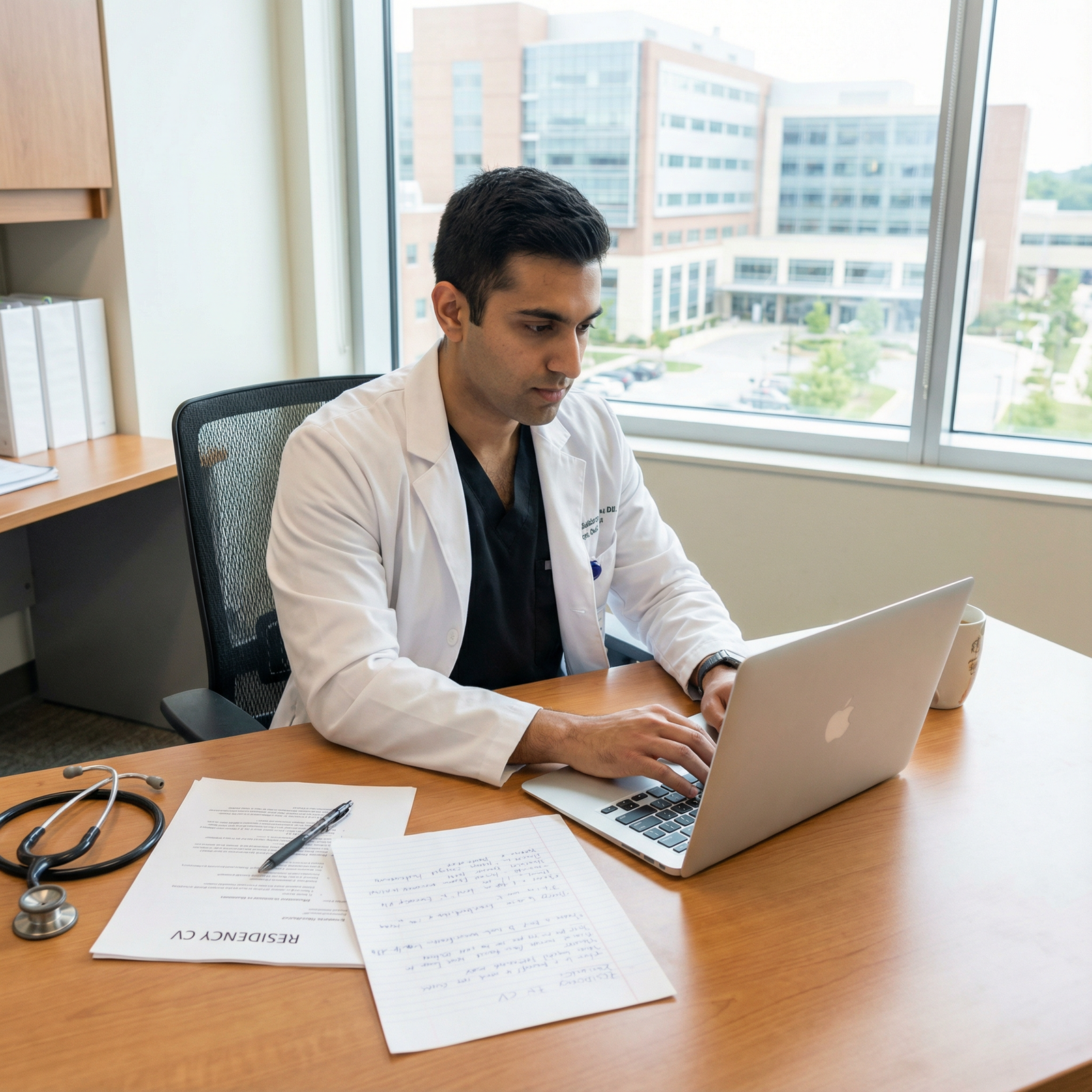
Building the Ultimate Residency CV: An Advanced Guide for Medical Students and Graduates
As you prepare your Medical Residency applications, your Residency CV is one of the most powerful tools you have. It’s more than a list of experiences; it’s a structured narrative that shows residency programs who you are as a developing physician—your trajectory, your potential, and your fit for their training environment.
When program directors and selection committees are quickly scanning hundreds (or thousands) of applications, a clear, well-organized, and strategically crafted CV can be the difference between being overlooked and being invited to interview.
This enhanced guide will walk you through:
- The ideal structure and content of a strong Residency CV
- How to tailor your CV to your specialty and target programs
- Common formatting and content mistakes to avoid
- Practical examples, phrasing tips, and CV building strategies
- Key Application Tips for standing out without inflating your experiences
By the end, you’ll have a clear roadmap to build, refine, and maintain a Residency CV that supports a competitive application.
Core Structure of a Strong Residency CV
Most residency programs expect a standardized, professional structure that allows them to quickly locate relevant information. While you can personalize your layout, your Residency CV should generally include these sections in order:
- Contact Information
- Education
- Clinical Experience
- Research Experience
- Publications and Presentations
- Professional Organizations and Memberships
- Volunteer Work and Community Service
- Leadership and Teaching Experience (often under-emphasized but valuable)
- Awards and Honors
- Skills and Certifications
- Hobbies and Interests (Optional but recommended if done well)
General Formatting Principles
- Length: 1–3 pages is typical for a Residency CV. Early medical students are often closer to 1–2 pages; students with substantial research or prior careers may extend to 3 pages.
- Font: Use a clean, professional font (e.g., Arial, Calibri, Times New Roman, Garamond) in 11–12 pt.
- Margins: Standard 1-inch margins; you can reduce slightly (e.g., 0.7–0.8") if needed for space, but don’t overcrowd the page.
- Consistency: Dates, titles, institutions, and bullet formatting should follow the same pattern throughout your document.
- Order: Reverse chronological order (most recent first) within each section.
Section-by-Section Breakdown: What to Include and How to Present It

1. Contact Information: Professional and Easy to Find
Place this at the top of the first page.
Include:
- Full legal name (bold and slightly larger font)
- Phone number (with country code if applicable)
- Professional email address (ideally some version of firstname.lastname@...)
- City and state (full mailing address is optional)
- LinkedIn profile or professional website (optional, only if polished and up-to-date)
Avoid:
- Nicknames, casual emails (e.g., drcoolguy@gmail.com)
- Multiple phone numbers
- Personal details like photo, date of birth, marital status, or social media handles (unless program/country explicitly expects them)
2. Education: Your Academic Foundation
This is typically the first major section after contact information.
Include for each degree:
- Degree and major (e.g., Doctor of Medicine (MD), Bachelor of Science in Biology)
- Institution name and location
- Dates (month/year – month/year or expected graduation date)
- Honors and distinctions (e.g., AOA, Gold Humanism, Dean’s List, scholarships)
- Thesis/dissertation title if significant (for prior graduate degrees)
Example:
Doctor of Medicine (MD)
University of Michigan Medical School, Ann Arbor, MI
August 2020 – May 2024 (Expected)
- Gold Humanism Honor Society Inductee
- Dean’s List (2021–2023)
- Class Representative, Curriculum Committee (2021–2022)
If you have prior graduate or undergraduate degrees, list them in reverse chronological order beneath your medical school entry.
3. Clinical Experience: Showcasing Your Patient Care Exposure
For Residency CV Building, your Clinical Experience section is often the most heavily reviewed. Programs look for:
- Breadth and depth of clinical exposure
- Responsibility level and progression
- Experiences that align with the specialty you’re applying to
For core clerkships, sub-internships, away rotations, and significant electives:
Include:
- Role/Title (e.g., Sub-intern, Clinical Clerk, Visiting Student)
- Department and institution
- Location
- Dates
- 2–5 concise bullet points emphasizing responsibilities, skills, and impact
Strong vs. Weak bullets:
- Weak: “Assisted in patient care on the internal medicine ward.”
- Strong: “Managed daily care for 8–12 internal medicine inpatients, including pre-round evaluations, order entry under supervision, and interdisciplinary care coordination.”
Example:
Sub-Intern, Internal Medicine
Massachusetts General Hospital, Boston, MA
August 2023 – September 2023
- Managed care for 10–12 complex medical inpatients daily under supervision, including admissions, daily progress notes, and discharge summaries.
- Led family meetings for goals-of-care discussions with attending support.
- Collaborated with pharmacists and case managers to optimize medication regimens and safe discharge planning.
For international rotations, observerships, or prior healthcare roles, clearly label them so program directors understand the context and level of responsibility.
4. Research Experience: Demonstrating Scholarly Curiosity
In many specialties—especially Internal Medicine, Dermatology, Radiology, Neurology, and competitive subspecialties—research on your Residency CV can significantly strengthen your profile.
For each project, include:
- Project title or short descriptive title
- Institution and department
- Supervisor or PI (optional but helpful, especially if well-known)
- Your role (e.g., Research Assistant, Co-investigator)
- Dates
- 2–4 bullets describing your contributions, skills, and outcomes
Focus on:
- Your role (not just what the lab did)
- Methodologies and skills gained (e.g., data analysis, chart review, survey design)
- Outcomes: publications, abstracts, posters, quality improvement (QI) changes implemented
Example:
Research Assistant – Quality Improvement in Sepsis Management
Department of Emergency Medicine, Stanford University, Stanford, CA
June 2022 – April 2023
- Conducted retrospective chart review of 450 ED sepsis cases to assess compliance with 3-hour bundle metrics.
- Used REDCap for data entry and SPSS for statistical analysis.
- Contributed to departmental protocol revision that reduced median time-to-antibiotics by 22%.
- Co-authored abstract accepted for oral presentation at ACEP Annual Meeting 2023.
5. Publications and Presentations: Credibility and Academic Output
List peer-reviewed publications, accepted manuscripts, conference abstracts, posters, and oral presentations in a separate section. This is vital evidence of scholarly productivity in your Medical Residency application.
Best practices:
- Use a consistent citation style (AMA is common in medicine).
- Separate into subsections if you have many items:
- Peer-Reviewed Publications
- Submitted / In-Revision Manuscripts
- Oral Presentations
- Poster Presentations
- Clearly indicate the status: “In press,” “Under review,” or “Accepted for presentation.”
Example (AMA style):
Peer-Reviewed Publications
- Smith AB, Doe J, Patel R. Impact of telehealth follow-up on readmission rates in heart failure patients. J Gen Intern Med. 2023;38(4):512–520.
Poster Presentations
- Doe J, Nguyen L, Kim S. Implementation of a standardized discharge checklist in a pediatric inpatient unit. Poster presented at: Pediatric Academic Societies Meeting; April 2023; Washington, DC.
Use bold or underline to highlight your name, especially in multi-author works, so your contribution is easily spotted.
6. Professional Organizations and Memberships: Showing Engagement
Membership in professional societies reflects your investment in your field and provides context about your network and activities.
Include:
- Organization name (e.g., American College of Physicians, American Medical Association)
- Role (Student Member, Committee Member, Chapter Officer)
- Dates of membership
- One short bullet if you held leadership roles or did committee work
Example:
American College of Physicians (ACP)
Student Member, 2021 – Present
- Served as Co-Chair of Medical Student Wellness Committee, organizing 3 institution-wide events annually.
7. Volunteer Work and Community Service: Demonstrating Values and Service
Programs value Medical Students who serve their communities—especially in ways that reflect professionalism, empathy, and sustained commitment.
Include:
- Organization and location
- Your role
- Dates
- 1–3 bullets describing responsibilities and impact
Aim to highlight longitudinal involvement rather than a long list of one-time events.
Example:
Volunteer Physician Assistant – Student-Run Free Clinic
Healthy Neighbors Clinic, Chicago, IL
September 2021 – March 2024
- Conducted triage assessments and patient education under resident supervision for uninsured adult patients.
- Coordinated follow-up appointments and pharmacy assistance for chronic disease management.
- Helped implement a new Spanish-language intake form that improved data completeness by 30%.
8. Leadership and Teaching: Often Under-Recognized Strengths
Residency programs look for future chief residents, educators, and institutional leaders. Don’t bury these roles.
Examples to include:
- Course or small-group tutor/TA
- Peer mentor or orientation leader
- Student organization officer
- Workshop facilitator
- Curriculum or QI project leader
Example:
Peer Tutor – Anatomy and Physiology
University of Texas Medical Branch
September 2021 – May 2023
- Led weekly small-group review sessions for 6–10 first-year students.
- Developed practice exam questions and clinical case discussions, leading to a 15% average improvement in students’ exam scores.
9. Awards and Honors: Highlighting Distinction
This section can be separate or under Education if you have a few items. Include:
- Award name
- Granting institution or organization
- Date
- Brief description only if the award is not self-explanatory
Example:
Resident Teacher of the Year Award
University of Washington School of Medicine, 2023
- Awarded to one graduating student annually for excellence in peer teaching and clinical education.
10. Skills and Certifications: Practical Competencies Programs Care About
This section is particularly relevant to CV Building for residency because it communicates readiness for clinical responsibilities.
Common items:
- Certifications: BLS, ACLS, PALS, ATLS, NIHSS, etc.
- Technical / procedural skills (only if competent to student level):
- “Basic suturing,” “Venipuncture,” “IV placement,” “Arterial blood gas sampling”
- Languages: Indicate level (native, fluent, conversational, basic medical proficiency)
- Software/technical: Epic, Cerner, REDCap, SPSS, R, Python, Excel (for research/QI roles)
Example:
Certifications
- Basic Life Support (BLS), American Heart Association – Expires 06/2026
- Advanced Cardiovascular Life Support (ACLS), American Heart Association – Expires 06/2026
Languages
- Spanish – Conversational, intermediate medical terminology
- Mandarin – Basic conversational
Be honest; over-stating language or procedural competence can quickly become apparent on rotations or in interviews.
11. Hobbies and Interests: Personalizing Your Application
While technically optional, a well-written Hobbies and Interests section can humanize you and provide interview talking points. Programs frequently bring up these items during interviews.
Good practices:
- Be specific: “Running” is vague; “Completed three half-marathons, training for first full marathon” is better.
- Avoid controversial or overly niche topics unless you’re comfortable discussing them.
- Choose 3–6 interests that show balance, curiosity, or discipline.
Examples:
- Long-distance running – Completed three half-marathons; training for first full marathon.
- Culinary arts – Enjoy experimenting with plant-based recipes and hosting dinners for classmates.
- Medical humanities – Co-lead a monthly narrative medicine reading group for peers.
Crafting a High-Impact CV: Strategy, Tailoring, and Language
Beyond structure, the way you craft your content can elevate your Residency CV from adequate to outstanding.
Tailoring Your Residency CV to Your Target Specialty
Program directors want to see alignment between your experiences and their field. You don’t need to hide other interests, but you should emphasize the elements most relevant to the specialty you’re applying for.
Examples:
- Pediatrics: Highlight pediatric rotations, child-focused volunteering, pediatric research, advocacy for children.
- Surgery: Emphasize OR experience, surgical research, technical skills, QI projects related to perioperative care.
- Psychiatry: Focus on mental health volunteering, psychiatry electives, psychology background, related research.
- Primary Care/Internal Medicine: Highlight continuity clinics, community health involvement, chronic disease management, QI in outpatient settings.
You can maintain one “master CV,” then create tailored versions that reorder sections and selectively emphasize certain bullets or experiences.
Using Strong Action Verbs and Clear, Concise Language
Each bullet point should start with a powerful action verb that conveys your active role.
Effective action verbs:
- Led, coordinated, organized, developed
- Implemented, designed, created, launched
- Analyzed, reviewed, evaluated, synthesized
- Taught, mentored, supervised, facilitated
- Improved, increased, reduced, optimized
Example transformations:
Instead of: “Helped with clinic workflow.”
Use: “Streamlined clinic workflow by reorganizing patient intake process, reducing wait times by approximately 15%.”Instead of: “Assisted in data collection.”
Use: “Collected and managed data on 220 patients using REDCap, ensuring 98% completeness for analysis.”
Quantifying Achievements Whenever Possible
Numbers concretize your contributions and make your CV more compelling.
Quantify:
- Number of patients seen per day or week
- Length of time in a role (months/years)
- Number of volunteers you supervised
- Percentage changes or outcome improvements
- Number of events organized, funds raised, or students taught
Be accurate and conservative; avoid exaggeration.
Keeping It Focused: Quality Over Quantity
Avoid the temptation to list everything you have ever done. Programs appreciate focus and relevance.
- Ask: Does this experience support my narrative as a future [specialty] resident?
- Combine or omit older, less relevant items if space is tight.
- Avoid padding your CV with short-term, superficial commitments; longitudinal engagement is more impressive.
Presentation and Editing: Professionalism in the Details
Your Residency CV is also a writing sample. Sloppy formatting or errors can suggest carelessness.
Key steps:
- Run spell check and grammar check.
- Print it out once; errors and alignment issues are easier to spot on paper.
- Ask at least one mentor or advisor to review it. If possible, get feedback from someone in your target specialty.
- Maintain version control—save a master document and date-stamped versions.
Example: Putting It All Together (Condensed Excerpt)
Name: Jane Doe, MD Candidate
Email: jane.doe@medschool.edu | Phone: (123) 456-7890 | Location: Boston, MA
Education
Doctor of Medicine (MD)
Harvard Medical School, Boston, MA
August 2019 – May 2023
- Graduated Magna Cum Laude; Dean’s List (2020–2022)
- Academic Excellence Scholarship Recipient
Clinical Experience
Sub-Intern, Pediatrics
Johns Hopkins Children’s Center, Baltimore, MD
June 2022 – August 2022
- Managed daily care for 10–14 pediatric inpatients, including admission H&Ps, progress notes, and discharge summaries under attending supervision.
- Participated in weekly family-centered rounds, emphasizing shared decision-making.
- Collaborated with social work and case managers to address social determinants of health.
Research Experience
Research Assistant – Childhood Obesity and Cardiovascular Risk
Pediatrics Research Lab, Harvard Medical School, Boston, MA
June 2021 – May 2022
- Analyzed echocardiographic data from 120 children with obesity to evaluate early cardiac changes.
- Co-authored abstract accepted at Pediatric Research Conference 2022.
Publications
Doe J, Smith P. Impact of nutrition counseling on BMI trajectory in children with obesity. J Pediatr Res. 2022;15(3):210–218.
This level of clarity and detail allows program directors to quickly appreciate Jane’s strengths and fit for a Pediatrics residency.

Frequently Asked Questions About Residency CVs
1. What is the ideal length for a Residency CV?
Most Medical Residency applicants have CVs between 1 and 3 pages:
- 1–2 pages: Typical for MS3/MS4 students without extensive research or prior careers.
- Up to 3 pages: Reasonable for applicants with multiple degrees, numerous publications, or significant pre-medical careers.
Focus on relevance and clarity rather than hitting a specific page count. If you’re exceeding 3 pages, it’s a strong signal to trim or consolidate.
2. Should I include hobbies and interests on my Residency CV?
Yes—if done thoughtfully. A short Hobbies and Interests section:
- Helps programs see you as a well-rounded person.
- Provides easy, genuine conversation starters for interviews.
- Can subtly reinforce qualities like discipline, teamwork, resilience, or creativity.
Keep it concise (3–6 bullet points) and specific. Avoid generic or filler items, and be prepared to discuss anything you list in detail.
3. How often should I update my Residency CV?
Treat your Residency CV as a living document:
- Update it every time you complete a new rotation, project, publication, or gain a new role/certification.
- At minimum, review and refresh it every 3–4 months during medical school.
- Before residency application season, set aside dedicated time to refine language, reorder sections based on your target specialty, and ensure all dates and details are accurate.
Regular updates make last-minute CV Building during application season far less stressful.
4. Is it necessary to list every experience I’ve ever had?
No. In fact, listing everything can dilute the impact of your most important experiences.
- Prioritize experiences that reflect clinical competence, professionalism, leadership, research, teaching, and community service.
- It’s acceptable to omit minor or short-term roles, especially if space is limited.
- If an experience is not something you would want to talk about in an interview—or does not support your narrative as a future resident—it may not need to be there.
Quality and relevance are far more valuable than sheer quantity.
5. Should I seek feedback on my Residency CV, and from whom?
Absolutely. External feedback can catch errors, clarify confusing sections, and improve the impact of your language.
Consider asking:
- A faculty mentor in your target specialty
- A residency program director or associate program director (if accessible)
- Senior residents or fellows who recently matched
- Your school’s career or advising office
Provide them with your draft CV and, ideally, your specialty of interest and a sense of your goals. Be open to constructive criticism, and revise accordingly.
By investing focused time and intention into your Residency CV, you are not just polishing a document—you are clarifying your own professional story. A strong CV, paired with well-prepared application materials and interview skills, can significantly enhance your chances of matching into a program where you will thrive as a resident and as a physician.