A competitive, well-crafted CV is one of the most powerful tools you have as a Caribbean IMG aiming for a Transitional Year (TY) residency in the U.S. Programs receive hundreds—even thousands—of applications for a limited number of TY spots. Your CV (as represented in ERAS) helps program directors quickly answer three questions:
- Can this applicant do the work safely and reliably?
- Does this applicant fit our Transitional Year program’s mission and needs?
- Is this applicant worth interviewing over others with similar scores?
This article focuses on how to build a strong, strategic CV for Caribbean IMGs targeting Transitional Year programs, with specific guidance for SGU and other Caribbean medical school graduates.
Understanding the Transitional Year Landscape as a Caribbean IMG
Before you decide what to put on your CV, you need to understand what Transitional Year program directors are actually looking for and how your Caribbean background fits into that.
What Transitional Year Programs Value
A Transitional Year residency is a broad-based clinical year, often chosen by applicants planning to enter:
- Radiology
- Anesthesiology
- PM&R
- Neurology
- Dermatology
- Ophthalmology
- Radiation oncology
- Sometimes categorical internal medicine or family medicine later
Because of this, TY program directors tend to value:
- Breadth of clinical experience (medicine, surgery, ER, electives)
- Reliability and work ethic (can you be trusted to cover busy inpatient services?)
- Adaptability (floating between multiple services, working with different teams)
- Professionalism and communication skills
- Evidence that you will succeed in a future specialty (especially if you already have a categorical spot)
The Caribbean IMG Context
Coming from a Caribbean medical school—such as SGU, AUC, Ross, Saba, etc.—you bring both challenges and strengths:
Common challenges:
- Program directors may worry about:
- Step exam performance and consistency
- Quality and supervision of clinical rotations
- Whether you can handle U.S. hospital systems and documentation
- Some Transitional Year programs are more IMG-friendly than others, and a subset may not review IMG applications at all
Common strengths:
- Exposure to diverse populations and healthcare systems
- Resilience and adaptability (moving countries, navigating visas, etc.)
- Often strong clinical skills from high-volume core rotations
- Many Caribbean schools (e.g., SGU) have robust residency match histories, including SGU residency match success in various prelim and Transitional Year programs
Your CV must emphasize your strengths while preemptively addressing common concerns: academic performance, clinical readiness, and professionalism.
Strategic CV Mindset: Think Like a Program Director
Before writing a single bullet point, align your CV with the questions TY program directors are asking.
The Core Questions Your CV Should Answer
Can this applicant handle busy, broad-based clinical work?
- Evidence: solid clinical grades, strong clerkship performance, sub-internships, clinical evaluations, relevant work/volunteering.
Is this applicant reliable and low-risk?
- Evidence: no major professionalism concerns, steady timeline, explanation for any red flags (gaps, failures), leadership roles, long-term commitments.
Is this applicant serious about medicine and their future specialty?
- Evidence: activities aligned with your eventual specialty, research, electives, and letters of recommendation.
As a Caribbean IMG, are they comparable to U.S. graduates?
- Evidence: solid USMLE performance, U.S.-based clinical experience, strong U.S. letters, well-written and professional CV and personal statement.
If an item on your CV doesn’t support one of these goals, consider whether it belongs—or how to reframe it.
Structuring Your CV in ERAS: Section-by-Section Guide
Although ERAS has a specific structure, the same principles apply to a traditional medical student CV (for away rotations, research, or backup plans). Below is how to think about each ERAS-equivalent section and how to build CV for residency as a Caribbean IMG targeting Transitional Year programs.

1. Education: Presenting Your Caribbean Medical School
This section is simple but strategic:
- List your Caribbean medical school clearly (e.g., St. George’s University School of Medicine).
- Include:
- Degree (MD)
- Expected or actual graduation date
- City, country of the school (e.g., Grenada) but remember your clinical years are typically U.S.-based.
- Mention any:
- Honors programs, e.g., “Clinical Honors Track,” “Dean’s List”
- Dual degrees (MPH, MBA) if applicable
Caribbean-specific tip:
If your school has a strong match record (e.g., SGU residency match statistics), you won’t list that directly on your CV, but you can:
- Reference it during interviews
- Align your experiences to show you’re among the strong performers from that institution (honors, leadership, research, etc.)
2. USMLE/COMLEX and Licensure
While not always part of the PDF CV, your exam performance is a silent backbone of your application and shapes how your CV is read.
- If you have Step 1: Pass, Step 2 CK: competitive score, your CV items will be interpreted more generously.
- If you have lower scores or a failure:
- Use your CV to show clear upward trends:
- Later honors in core rotations
- Strong Step 2 CK improvement
- Sub-internship excellence
- Highlight meticulous, responsible clinical work to reassure programs.
- Use your CV to show clear upward trends:
Residency CV tip: Don’t try to “hide” weaker parts; instead, overwhelm them with evidence of commitment and growth.
3. Clinical Experience: The Core of a TY-Focused CV
For a Transitional Year residency, clinical experience is your primary selling point.
A. Core Clerkships
In ERAS, you don’t list every rotation as an “experience,” but in an expanded medical student CV (for emails, networking, or TY program inquiries), you can:
- Briefly list core rotations:
- Internal Medicine (e.g., 12 weeks, U.S. hospital, location)
- Surgery
- Pediatrics
- Psychiatry
- OB/GYN
- Family Medicine
- Add “Honors” or “High Pass” if your school uses such designations.
Example (for external CV):
- Core Internal Medicine Clerkship – 12 weeks
XYZ Medical Center, New York, NY
– Evaluated 8–10 inpatients daily, presented to attending physicians, wrote progress notes, and assisted in discharge planning
– Earned “Honors” in clinical performance and professionalism
B. Sub-Internships / Acting Internships
These are some of the most valuable entries on a CV for Transitional Year, especially:
- Internal Medicine Sub-Internship
- Surgery Sub-Internship
- Emergency Medicine Sub-Internship
For each, emphasize:
- Level of responsibility close to an intern
- How many patients you followed
- Involvement in admissions, sign-out, order entry, notes, and communication
Strong sample entry:
- Sub-Internship in Internal Medicine
ABC Community Hospital, Boston, MA | 4th Year Medical Student
– Managed 4–6 inpatients daily with near intern-level responsibility under supervision
– Performed admission histories and physicals, wrote daily progress notes, and presented plans on rounds
– Participated in cross-coverage and handoff, gaining experience with common overnight issues (hyperglycemia, pain control, electrolyte abnormalities)
This shows a TY program that you already function near the level of an intern.
C. Electives Relevant to Transitional Year and Your Future Specialty
If you already have a categorical spot (e.g., in Radiology or Anesthesiology) and are applying for a TY, your electives should show:
- Commitment to that specialty
- Breadth in areas that support it (ICU, Cardiology, Palliative Care, etc.)
If you do not yet have a categorical spot, focus on broad and high-yield:
- Emergency Medicine
- ICU / CCU
- General Medicine electives
- Night float rotations
When listing electives:
- Highlight procedural exposure (if any)
- Emphasize communication, teamwork, and adaptability
4. Research and Scholarly Activity: Quality Over Quantity
Transitional Year programs are not usually as research-heavy as some categorical specialties, but research can:
- Differentiate you from other Caribbean IMGs
- Demonstrate academic curiosity and discipline
- Support your target specialty (e.g., radiology- or anesthesia-related research)
What to Include
- Peer-reviewed publications
- Case reports
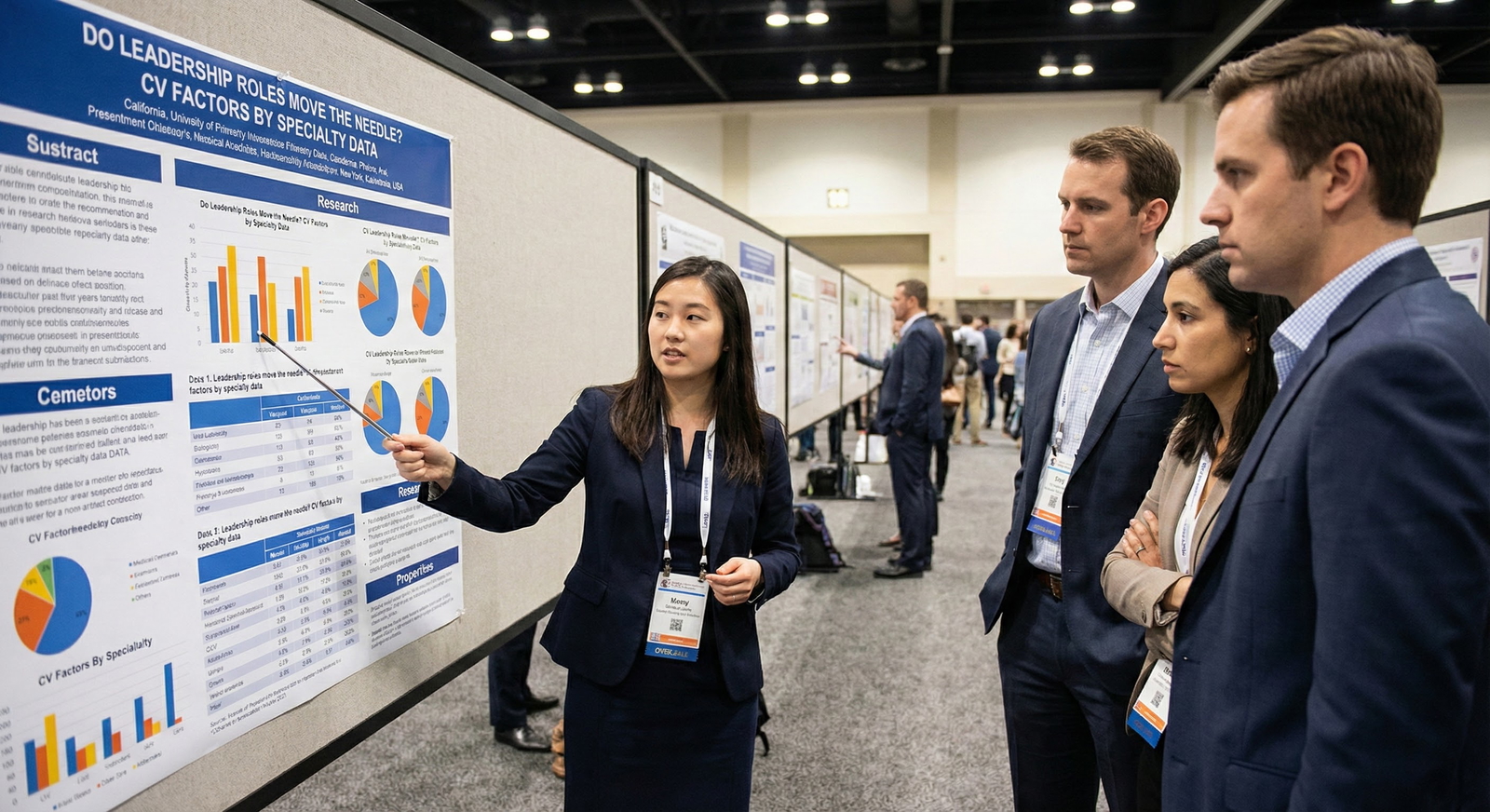
- Posters and oral presentations at conferences
- QI (quality improvement) projects
Example:
- Poster Presentation – “Patterns of ICU Admission from the Emergency Department”
Regional Internal Medicine Conference, 2024
– Co-authored a retrospective study analyzing predictors of ICU admission from ED presentations in a community hospital
– Presented findings to 150+ residents and faculty, highlighting opportunities for earlier intervention in sepsis
Caribbean IMG angle
If research opportunities at your Caribbean medical school were limited:
- Include small projects, QI initiatives, or clinical audits done during U.S. rotations.
- If no formal research, consider:
- Case reports with your attending (these can be completed relatively quickly)
- Quality improvement projects (hand hygiene, discharge summary quality, follow-up compliance)
Programs know not every Caribbean IMG has equal research access; what matters is initiative and follow-through.
5. Work, Volunteer, and Leadership Experience: Showing You Are Reliable
These sections allow you to demonstrate professionalism, maturity, and service orientation—all highly valued in a TY program.

A. Clinical-Adjacent Work
List any work as:
- Medical assistant
- Clinical research coordinator
- Scribe
- EMT
- Nursing assistant
These roles show:
- Comfort in clinical environments
- Teamwork
- Reliability and punctuality
Example:
- Medical Scribe – Internal Medicine Clinic
XYZ Clinic, Miami, FL | 2019–2020
– Documented patient encounters in real time for two attending physicians, improving clinic efficiency
– Gained familiarity with EHR workflows, billing codes, and common outpatient internal medicine issues
B. Non-Clinical Work
Even non-medical work can support your narrative if framed well:
- Tutor
- Warehouse worker
- Customer service
- Restaurant staff
Focus on:
- Consistency (held the job for a while)
- Responsibility
- Skills transferable to residency (communication, time management, dealing with stress or difficult people)
C. Volunteering
For a Caribbean IMG, volunteering can:
- Demonstrate connection to the U.S. community (helpful if most school years were offshore)
- Show empathy and service orientation
Valuable experiences:
- Free clinics or health fairs
- Community education (diabetes, nutrition, mental health)
- Homeless shelters or refugee health initiatives
Residency CV tip:
Use action verbs and measurable impact whenever possible:
- “Organized monthly blood pressure screening events, serving 50–70 community members per session.”
- “Coordinated a team of 10 volunteers, implemented a tracking system that increased follow-up compliance by 20%.”
D. Leadership Roles
Transitional Year programs especially appreciate applicants who can:
- Take initiative
- Communicate clearly
- Work with diverse teams
Examples:
- Class representative
- Student organization officer
- Peer tutor or mentor
- Organizer of a QI or research initiative
List concrete responsibilities:
- Budget management
- Event planning
- Conflict resolution
- Teaching or mentorship
6. Skills, Interests, and “Personality” on the CV
These sections may feel minor, but they help a program envision you as a colleague.
A. Skills
Include:
- Language abilities (especially Spanish or other locally relevant languages)
- EHR experience (Epic, Cerner, Meditech)
- Basic procedural skills (venipuncture, IV placement, etc., if solid)
- Teaching experience
Avoid generic or unprovable claims like “excellent communication skills.” Let your other entries demonstrate that.
B. Hobbies and Interests
Thoughtful, specific hobbies can:
- Humanize you
- Provide interview talking points
- Subtly suggest resilience (endurance sports), teamwork (team sports), creativity (music, art)
Examples:
- “Long-distance running; completed three half-marathons.”
- “Jazz piano; performed in small ensembles during medical school.”
- “Cooking Caribbean fusion cuisine; host monthly dinners for friends and classmates.”
Avoid fillers like “watching Netflix” unless you can frame it meaningfully (e.g., film analysis or media critique in a serious way).
Tailoring Your CV Specifically for Transitional Year Programs
Now that you know what to include, here’s how to optimize your CV specifically for a Transitional Year residency as a Caribbean IMG.
1. Highlight Breadth and Adaptability
Transitional Year is all about variety. Emphasize:
- Experiences across multiple specialties (medicine, surgery, ER, ICU)
- Rotations in both academic and community hospitals
- Comfort working with diverse patient populations
In bullet points, use language that TY programs love:
- “Floated between teams as needed”
- “Comfortable managing a wide range of common inpatient issues”
- “Adapted quickly to new EHRs and workflows across different hospitals”
2. Show You Can Function Like an Intern
Use your sub-internships and heavy-duty rotations to demonstrate intern-level competence:
- Note approximate patient load
- Mention involvement in:
- Admissions
- Discharges
- Handoffs
- Night shifts
- Describe any commendations from attendings (without exaggeration)
3. Align With Your Future Specialty (When Applicable)
Many TY applicants already know their advanced specialty. Your CV should:
- Include at least 1–2 experiences linked to that future specialty:
- Anesthesia elective
- Radiology research
- PM&R volunteer experience with rehab patients
- But still show balanced exposure in core fields
Example:
If you’re going into radiology, your CV could show:
- Radiology elective(s) and perhaps a radiology case report
- Strong internal medicine and emergency medicine experiences (breadth for TY)
- Some research or QI tying imaging to clinical outcomes
4. Address Caribbean-Specific Concerns Subtly but Directly
Use your CV and experiences to quietly answer unspoken questions:
“Can a Caribbean IMG handle a busy U.S. hospital?”
- Show strong performance in U.S.-based rotations
- Demonstrate familiarity with U.S. documentation and guidelines
“Was this applicant just ‘checking boxes’?”
- Highlight long-term, sustained activities (multi-year volunteering, leadership, or work)
- Avoid listing a huge number of one-off, superficial experiences
Common Mistakes Caribbean IMGs Make on Their Residency CV—and How to Avoid Them
Mistake 1: Overloading the CV With Low-Yield Activities
Listing every short-term event dilutes your strongest entries.
Fix:
Prioritize:
- Depth over breadth
- Impact over the sheer number of lines
A TY program director would rather see:
- 3–5 substantial, well-described experiences
than - 15 weak, one-line items with no clear impact.
Mistake 2: Vague, Generic Bullet Points
Bullets like:
- “Assisted in patient care”
- “Participated in rounds”
- “Helped in research”
tell the reader nothing.
Fix: Use specific, action-oriented, and outcome-focused bullets:
- What you exactly did
- How often / how many
- What skills you gained or outcomes you influenced
Mistake 3: Poor Formatting and Inconsistency
Even in ERAS-based exports, messy ordering, inconsistent dates, and unclear roles look unprofessional.
Fix:
- Use consistent date formats
- Use clear titles and positions
- Keep tense consistent (past for completed roles, present for ongoing)
Mistake 4: Not Tailoring CV to Transitional Year
A generic “medicine applicant” CV might not showcase the variety and flexibility TY programs seek.
Fix:
- Emphasize breadth and adaptability
- Highlight experiences across multiple settings and services
- Draw attention to broad, foundational skills rather than super-niche expertise
Step-by-Step Plan: Building Your CV Over Time as a Caribbean IMG
If you’re still early in medical school or have a year or more before applying, here is a practical roadmap:
Preclinical Years (Basic Sciences)
- Start a simple CV document now; update it regularly.
- Get involved in:
- 1–2 meaningful student organizations (consider leadership later)
- Tutoring or peer mentoring if available
- Look for remote or school-based research or QI opportunities.
- Participate in community outreach or health fairs if offered by your Caribbean campus.
Early Clinical Years (Core Rotations)
- Aim for strong clinical evaluations and professionalism.
- After rotations where you excel:
- Ask attendings if they have potential case reports or small projects.
- Consider asking for future letters of recommendation.
- Keep a log of clinical experiences:
- Notable cases
- Procedures observed/performed
- Feedback received
These logs help you write rich, specific CV entries later.
Late Clinical Years (Electives and Sub-Internships)
- Schedule sub-internships in internal medicine and/or surgery or EM—very relevant for Transitional Year.
- If your target advanced specialty is set (e.g., Radiology), schedule at least one elective in that field.
- Finalize at least 1–2 scholarly items (poster, case report, or QI project).
Application Season
- Use your accumulated document and logs to structure your ERAS entries.
- Ask a mentor (preferably in the U.S.) to review your CV for clarity, impact, and appropriateness.
- Make sure your CV and personal statement tell a coherent story:
- Caribbean IMG who has adapted successfully to U.S. clinical environments
- Prepared for the demands of a Transitional Year
- Clear future goals and professionalism
FAQs: CV Building for Caribbean IMGs in Transitional Year
1. How different is a “medical student CV” from what ERAS shows to programs?
ERAS doesn’t show a separate PDF CV by default; instead, it pulls from structured entries you fill out online (education, experiences, publications, etc.). A “medical student CV” is a traditional document you might send to potential mentors, include when asking for letters, or use for research and electives. The content should be consistent between the two, but the format differs. Always keep your master CV up to date, then adapt that content into ERAS.
2. Do I need a lot of research to match a Transitional Year as a Caribbean IMG?
Not necessarily. Transitional Year programs usually prioritize clinical readiness, professionalism, and breadth of rotation experience over heavy research. That said, having some scholarly activity—even case reports or small QI projects—strengthens your profile and can help distinguish you from other Caribbean IMGs. Focus on quality and relevance rather than volume.
3. How should I list short overseas or Caribbean-based volunteer missions or clinics?
Include them if they’re substantial (more than a day or two) and relevant to patient care, cultural sensitivity, or leadership. Emphasize specific contributions:
- “Managed triage station for 100+ patients per day over a 1-week medical outreach camp.” Frame them as evidence of adaptability and cross-cultural communication. Avoid giving the impression of “charity tourism” by focusing on continuity, partnerships, and learning.
4. I have a gap or a failed exam—how do I reflect that on my CV?
Your CV itself shouldn’t highlight the failure, but your overall record should show recovery and growth:
- Strong later clinical grades
- Improved Step 2 CK performance
- Solid sub-internship evaluations
Use the personal statement or an optional ERAS “additional information” section (if appropriate) to concisely address the issue. On the CV, focus on the positive, concrete evidence that you’re now performing at or above the level expected of an incoming intern.
By building a clear, honest, and strategically focused CV, you give Transitional Year program directors compelling reasons to see you as a capable, reliable, and adaptable Caribbean IMG—someone they can trust to handle a demanding, broad-based clinical year and represent their program well.