Understanding the CV Landscape for Caribbean IMGs in Pediatrics-Psychiatry
Applying for a combined Pediatrics-Psychiatry (peds psych) or Triple Board residency as a Caribbean IMG is both exciting and challenging. Your CV is one of your most powerful tools to stand out—especially when program directors are reviewing hundreds of applications and may initially glance at your file for less than a minute.
For Caribbean medical school graduates (including SGU, AUC, Ross, Saba, etc.), a polished medical student CV tailored to pediatrics-psychiatry can:
- Offset concerns about school name or USMLE attempt history
- Highlight unique strengths: resilience, cultural competence, and diverse clinical exposure
- Show clear, sustained interest in pediatric mental health and integrated care
- Support your narrative across ERAS, personal statement, and interviews
This article will walk you step-by-step through how to build a CV for residency in peds psych and Triple Board programs, with a specific focus on Caribbean IMGs and the realities of the Caribbean medical school residency match process (including SGU residency match dynamics).
Core Principles of a Strong Residency CV for Caribbean IMGs
Before you start typing, you need a clear strategy. Every line on your CV should work for you.
1. Think Strategically, Not Just Chronologically
Your residency CV is not just a list of what you’ve done—it’s evidence supporting a few key messages:
- You are clinically prepared for U.S. training.
- You have a genuine and sustained interest in pediatrics-psychiatry.
- You can function in complex, multidisciplinary systems (core for peds psych and Triple Board).
- You have the professional habits to succeed: reliability, communication, leadership, and cultural humility.
As a Caribbean IMG, you often have to over-communicate these strengths through your experiences, structure, and wording.
2. Align Your CV With the Peds Psych and Triple Board Mission
Peds psych and Triple Board programs care about:
- Child and adolescent development
- Social determinants of health
- Integrated physical and mental healthcare
- Working with vulnerable, underserved, and diverse populations
- Longitudinal, relationship-based care
- Systems-based practice (schools, child welfare, juvenile justice, community mental health)
Your CV should reflect these themes repetitively across clinical, research, leadership, and volunteer work.
3. Address the Caribbean IMG Context Subtly but Positively
You do not need to “explain” being a Caribbean graduate on your CV; your medical school is already visible. Instead, focus on:
- High-level clinical responsibilities in U.S. rotations
- Performance markers (honors, commendations, high shelf scores)
- Initiative (creating projects, QI, teaching, outreach)
- Evidence that you understand and can navigate the U.S. healthcare system
This is especially important given the competitive nature of many combined and Triple Board programs and the scrutiny Caribbean graduates may face in the residency match process.

Structuring Your Medical Student CV for Residency
Residency CVs follow a relatively standard structure, but there is flexibility in order and emphasis. Below is a recommended layout for Caribbean IMGs targeting peds psych or Triple Board.
Essential Sections (in logical order)
- Contact Information and Identification
- Education
- USMLE / Licensing Exams (optional on standalone CV, required in ERAS)
- Clinical Experience (Core + Elective Rotations)
- Research Experience
- Publications, Presentations & Posters
- Leadership & Teaching Experience
- Volunteer & Community Service
- Honors & Awards
- Professional Memberships
- Skills & Additional Information (Languages, Certifications, Hobbies)
You can adjust the order depending on your strengths. For example:
- If you have strong research in child psychiatry, move Research higher.
- If you’ve done extensive community work in child mental health, move Volunteer Experience up.
Formatting and Length
- Length: Typically 2–4 pages for a medical student CV; do not pad with fluff.
- Font: Professional and clean (e.g., 11–12 pt Times New Roman, Garamond, or Calibri).
- Consistency: Uniform date format, bullet styles, and tense.
- File name: “LastName_FirstName_MedicalStudentCV_Residency.pdf”
Avoid templates that look like business resumes with heavy graphics. Academic, clean, and easy to scan is best.
Section-by-Section Residency CV Tips for Caribbean IMGs
1. Contact Information and Identification
Include:
- Full name, degree (e.g., John A. Doe, MD Candidate)
- Email (professional, e.g., firstname.lastname@…), phone
- City/State (not your full address)
- AAMC/ERAS ID (if available, often more for internal use but can be included on CV)
Avoid:
- Photos (unless explicitly requested by a regional norm—U.S. programs do not expect them)
- Personal data like marital status, age, or citizenship (not needed on CV; visas are handled in ERAS)
2. Education
List in reverse chronological order:
- Medical School: Name, location, degree, anticipated or actual graduation year
- Example: “St. George’s University School of Medicine, Grenada / Clinical rotations in the U.S.”
- Undergraduate institution, degree, major, graduation year
- Any prior graduate degrees (MPH, MSc, etc.)
For Caribbean IMGs, it helps to clarify U.S. exposure:
St. George’s University School of Medicine, Grenada
MD, May 2024
Clinical clerkships completed in affiliated U.S. teaching hospitals (NY, NJ, MD)
If you had academic distinctions (e.g., Dean’s List, Honors), you can either:
- Add them as sub-bullets under the institution, or
- Place them in a separate Honors & Awards section for visibility.
3. Clinical Experience: Show Depth in Pediatrics and Psychiatry
This is where your CV must speak directly to peds psych and Triple Board.
How to List Rotations
Use a clear format:
- Rotation Name – Institution, City, State
- Dates (Month Year – Month Year)
- Brief bullets (2–4) emphasizing responsibilities, patient population, and complexity
Example (for a core rotation):
Pediatrics Core Clerkship – XYZ Children’s Hospital, New York, NY
Jul 2022 – Sep 2022
- Managed a daily census of 4–6 hospitalized children under supervision, including asthma exacerbations, bronchiolitis, and failure to thrive.
- Conducted developmental screenings and participated in multidisciplinary rounds with social work and child life specialists.
- Completed focused pediatric H&P and progress notes in the EMR with attending feedback.
Tailoring to Peds Psych and Triple Board
To support your interest in peds psych:
- Emphasize behavioral/mental health exposure in pediatric rotations
- Highlight children/adolescents seen during psychiatry rotations
- Note collaborative work with schools, social services, psychology, or child protective services
Example (psychiatry elective):
Child & Adolescent Psychiatry Elective – ABC Medical Center, Newark, NJ
Jan 2023 – Feb 2023
- Evaluated children and adolescents with ADHD, depression, anxiety, and trauma-related disorders in an outpatient clinic serving a diverse, underserved population.
- Collaborated with families, school counselors, and pediatricians to coordinate care plans.
- Participated in weekly case conferences focused on early childhood trauma and attachment.
If you lacked formal child psych rotations (common in some Caribbean tracks), highlight relevant parts of adult psychiatry, pediatrics, and primary care:
- “Assisted with screening adolescents for depression and substance use during routine well-child visits.”
- “Managed behavioral challenges and anxiety in medically complex pediatric inpatients.”
For competitive programs, peds psych and Triple Board directors will look for longitudinal, child-focused exposure. Any continuity clinic, long-term volunteer work with children, or school-based projects should be clearly described.
4. Research Experience: Even Small Projects Matter
Not everyone will have formal R01-level research. For Caribbean IMGs, even modest research, quality improvement, or scholarly projects can strongly enhance your residency CV and residency match chances.
What Counts as Research/Scholarly Activity?
- Retrospective chart reviews
- Case reports or case series
- QI projects (e.g., improving depression screening rates in a pediatric clinic)
- Educational projects (curriculum development, teaching modules)
- Public health projects involving children, families, or mental health
- Conference abstracts, posters, oral presentations
How to Present Research
Use this structure:
- Project Title – Role (e.g., Student Researcher), Institution, Mentor
- Dates
- 2–4 bullets describing your contribution and relevance
Example:
Improving Depression Screening in an Urban Pediatric Clinic – Student Researcher, XYZ Community Health Center, Brooklyn, NY
Mar 2023 – Dec 2023
- Conducted a baseline chart review of PHQ-9 screening rates among adolescents 12–18 years old.
- Co-developed a provider education tool and modified clinic workflow to embed depression screening into well-child visits.
- Presented findings at the SGU Research Day; manuscript in preparation.
Use language that connects to peds psych goals: early identification, integrated care, systems change, working with underserved communities.
5. Publications, Posters, and Presentations
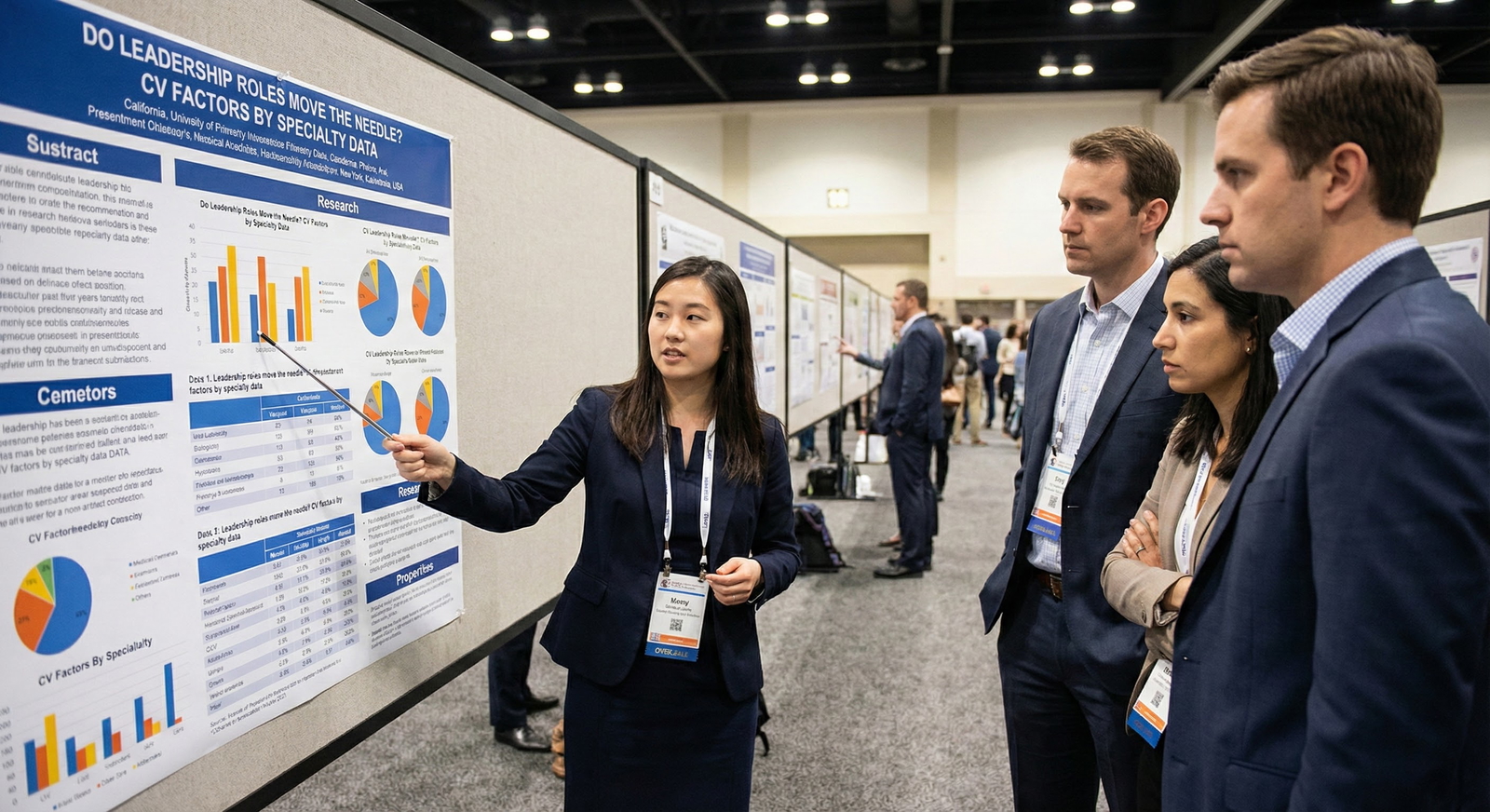
If you have anything accepted or presented, list it, even if not strictly pediatric psychiatry, but prioritize child, family, or mental health-related work.
Format for publications (Vancouver or APA is fine; just be consistent):
LastName FN, LastName FN. Title of article. Journal Name. Year;Volume(Issue):pages.
For posters/talks:
LastName FN, LastName FN. Title of presentation. Poster presented at: Conference Name; Date; City, State.
If you are from a school like SGU with structured research pathways, anything that can tie to SGU residency match success—such as conference participation or collaborative U.S. projects—adds weight to your file.
6. Leadership and Teaching: Show That You’re a Future Educator and Team Leader
Peds psych and Triple Board programs value residents who can teach, advocate, and lead within complex systems.
Relevant roles might include:
- Pediatrics or Psychiatry Interest Group officer
- Peer tutor for pediatrics, psychiatry, behavioral sciences, or NBME/USMLE prep
- Organizer of mental health awareness events, child wellness fairs, or back-to-school clinics
- Liaison between medical school and community organizations serving children
Describe impact, not just title:
Vice President, Psychiatry Student Interest Group – St. George’s University
Sep 2021 – May 2023
- Organized quarterly panels featuring child and adolescent psychiatrists, increasing student attendance by 60%.
- Co-led a workshop on recognizing depression and anxiety in pediatric primary care settings.
These roles show program directors that you will contribute to their residency community and future trainee education.
7. Volunteer and Community Work: Critical for Peds Psych and Triple Board
For peds psych–oriented fields, community involvement with youth and families is often as important as formal research.
Consider including:
- Work with children’s hospitals, camps for kids with chronic illness, or special needs programs
- Mentoring or tutoring underserved children or adolescents
- Mental health advocacy events, hotline volunteering, or school-based programs
- International/outreach projects involving child health, vaccination, or trauma support
Example:
Volunteer Mentor – After-School Program for At-Risk Youth, Brooklyn, NY
Oct 2022 – Apr 2023
- Provided weekly academic and social-emotional mentoring to middle school students referred for behavioral difficulties.
- Collaborated with program counselors to support goal setting and conflict resolution skills.
These experiences reinforce your commitment to longitudinal, relationship-based care—a core trait for peds psych and Triple Board residents.
8. Honors, Awards, and Distinctions: Signal Excellence
Caribbean medical schools often have:
- Dean’s List or Honors List
- Clinical rotation honors
- Phi Beta Kappa or other undergraduate honor societies
- Scholarship awards
- Teaching or service awards
Highlight any recognition that indicates:
- Academic strength
- Outstanding performance in pediatrics, psychiatry, or behavioral sciences
- Commitment to service and leadership
Example:
Clinical Honors in Pediatrics, XYZ Children’s Hospital – Awarded for outstanding clinical performance and professionalism, 2022.
This can reassure programs that you have strong potential despite concerns sometimes associated with Caribbean schools.
9. Professional Memberships
Include organizations such as:
- American Academy of Pediatrics (AAP) – particularly the Section on Developmental and Behavioral Pediatrics, if applicable
- American Academy of Child and Adolescent Psychiatry (AACAP)
- American Psychiatric Association (APA)
- Any Caribbean or regional medical associations
Memberships show early professional identity formation and engagement.
10. Skills, Languages, and Personal Interests
Languages
Being multilingual is a significant asset, especially for child and adolescent mental health, where family communication is critical.
List:
- Languages and proficiency levels (e.g., fluent, conversational, basic)
- Any clinical use of the language (e.g., “Used Spanish during pediatric clinic visits in NYC to obtain histories and provide anticipatory guidance.”)
Technical and Clinical Skills
You can note:
- EMR systems used (Epic, Cerner, etc.), especially relevant for U.S. clinical readiness
- Statistical software (SPSS, R, Stata)
- QI methods, motivational interviewing, basic psychotherapy exposure (if applicable)
Hobbies and Personal Interests
Choose interests that:
- Are genuine
- Reveal traits valuable for peds psych (patience, creativity, resilience, empathy)
- Offer good interview conversation topics
Examples: coaching youth sports, music, art, creative writing, mindfulness, community gardening—especially if involving children or families.
Targeted Strategies: How to Build a CV for Residency in Peds Psych and Triple Board as a Caribbean IMG
Now that we’ve covered structure, here are strategic residency CV tips specifically for Caribbean IMGs aiming for peds psych or Triple Board.
1. Create a Cohesive Peds Psych Narrative
When someone skims your CV, they should clearly see:
- Repeated exposure to children and adolescents
- Interest in mental health and development
- Engagement with communities and systems around children
Ways to build this:
- Choose electives deliberately: child psychiatry, developmental pediatrics, adolescent medicine, behavioral pediatrics, school-based health.
- Seek projects that integrate pediatrics and mental health—even if small (e.g., anxiety screening during well-child visits).
- Volunteer with child-centered organizations and document it well.
2. Maximize U.S. Clinical Experience
For the Caribbean medical school residency match, especially in combined programs:
- Aim for strong U.S. letters of recommendation from pediatricians and psychiatrists who have seen you in direct care.
- Highlight ANY experience in academic centers or children’s hospitals.
- Emphasize familiarity with U.S. insurance systems, mandated reporting, and interprofessional collaboration.
On your CV, show:
- EMR experience
- Team-based work (social workers, psychologists, teachers)
- Diverse patient populations (urban, rural, immigrant, lower socioeconomic status)
3. Fill Gaps with Purposeful Activities
If you had any delays (Step exams, leaves of absence, extra semesters):
- Do not hide them, but surround these periods with meaningful activity: research, clinical observerships, volunteering with children, or mental health-related work.
- On your CV, list those roles clearly with dates and contributions.
Programs may be more forgiving of non-linear paths if you demonstrate growth, maturity, and continuous engagement.
4. Use Your Caribbean Background as an Asset
Caribbean IMGs often bring:
- Experience with limited-resource settings
- Comfort with culturally diverse and multilingual communities
- Insight into migration, acculturation, and the stresses families face—critical themes in child psychiatry
On your CV, any projects or clinical experiences in the Caribbean involving children, families, or mental health should be framed to show:
- Adaptability and resilience
- Understanding of global child health and trauma
- Commitment to serving underserved or marginalized populations
5. Align Your CV With Your Personal Statement and ERAS
Your medical student CV is the backbone that supports:
- ERAS “Experiences” section
- Personal statement
- Interview talking points
Ensure consistency in:
- Dates, titles, and roles
- Thematic emphasis on pediatrics, psychiatry, and integrated care
- How you describe your impact and growth
If your personal statement focuses heavily on trauma-informed care for children, your CV should clearly show experiences that align with that focus.
Common CV Mistakes Caribbean IMGs Make—and How to Avoid Them
Generic CV with no specialty focus
- Fix: Emphasize child, family, and mental health experiences in bullets, headings, and ordering.
Overcrowded CV with every minor activity
- Fix: Prioritize experiences that are sustained, child-related, psychiatry-related, or show leadership and systems work.
Unclear roles and responsibilities
- Fix: Use action verbs and clear, outcome-oriented bullets (“coordinated,” “developed,” “implemented,” “analyzed”).
No evidence of U.S. integration
- Fix: Emphasize U.S. rotations, EMR use, collaborative practice, and any QI or system-based projects.
Not proofreading or using inconsistent formatting
- Fix: Ask mentors, residents, or advisors (especially at schools like SGU with structured advising) to review your CV.
Careless errors can reinforce negative stereotypes about Caribbean IMGs; meticulousness counters that.
Putting It Together: A Mini CV Blueprint for a Caribbean IMG Targeting Peds Psych/Triple Board
Here is a simplified order and emphasis you might use:
- Education – with clear note of U.S. clinical training sites
- Clinical Experience – pediatric and psychiatry rotations first, with child mental health emphasized
- Research Experience – any child/adolescent, developmental, or mental health projects at the top
- Publications/Presentations – highlight pediatric or psychiatry topics
- Leadership & Teaching – roles in pediatric/psychiatry interest groups, peer teaching
- Volunteer & Community Work – especially child/family, school-based, or mental health
- Honors & Awards – emphasize clinical honors and service awards
- Professional Memberships – AAP, AACAP, APA, etc.
- Skills & Interests – languages, EMR, teaching, creative hobbies with relevance to child engagement
Used strategically, this structure not only strengthens your application but also clarifies your identity as a future pediatric-psychiatry or Triple Board physician.
FAQs: CV Building for Caribbean IMG in Pediatrics-Psychiatry
1. How important is research for a Caribbean IMG applying to peds psych or Triple Board?
Research is beneficial but not mandatory. Many successful peds psych and Triple Board residents do not have extensive research, but as a Caribbean IMG, research can:
- Demonstrate academic potential
- Differentiate you from other IMGs
- Support your interest in integrated child mental health
Prioritize projects with child, family, or mental health relevance, but even general pediatrics or psychiatry research can help. Quality and depth (sustained involvement, clear role, presentations) usually matter more than the sheer number of projects.
2. Should I include non-medical work experiences on my residency CV?
Yes, if they show:
- Long-term commitment
- Leadership, teaching, or responsibility
- Relevance to child, family, or mental health (e.g., teacher, counselor, social work assistant, youth mentor)
Short-term or unrelated jobs can be omitted unless they help explain time gaps. If in doubt, include only those that add to your narrative as a future pediatric-psychiatry physician.
3. How do I handle lower USMLE scores or attempts on my CV as a Caribbean IMG?
Your standalone CV usually does not list failed attempts; those appear automatically in ERAS. Instead of drawing attention to scores:
- Use your CV to highlight strengths: clinical honors, research, leadership, community service.
- Show a clear upward trajectory through later achievements.
- If you had a major setback, you can address it briefly in your personal statement or during interviews—your CV’s job is to show that, despite scores, you are an excellent fit for residency.
4. How can I tailor my CV differently for peds psych versus Triple Board programs?
The core content is similar, but you can subtly shift emphasis:
Peds Psych programs:
- Highlight experiences in child psychiatry clinics, continuity of care, school collaboration, psychotherapy exposure, and mental health projects.
Triple Board programs:
- Emphasize breadth: strong foundation in pediatrics, adult psychiatry, and child psychiatry.
- Highlight any systems work, complex medical-psychiatric interface, and leadership in multidisciplinary initiatives.
You don’t need separate CVs, but you can adjust bullet wording or the ordering of experiences to match each program’s focus when you speak about them in your personal statement and interviews.
By building a focused, coherent, and polished residency CV, you significantly increase your chances of a strong pediatrics-psychiatry or Triple Board match—even as a Caribbean IMG. Your background, if presented thoughtfully, is not a weakness but a story of resilience, adaptability, and cross-cultural experience that is deeply valuable in caring for children and families with complex medical and psychiatric needs.