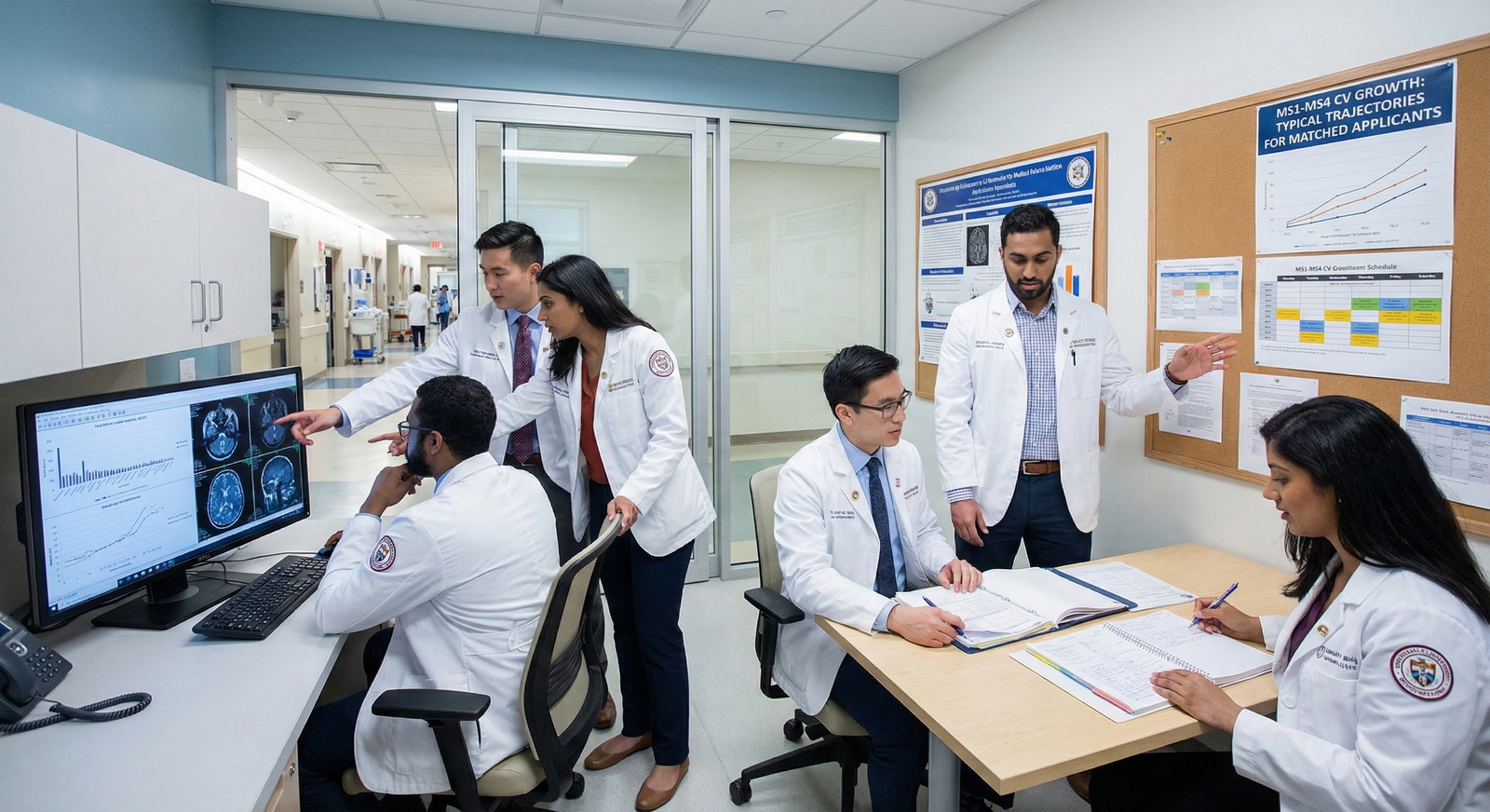
A well-constructed CV can be the difference between blending into the applicant pool and becoming a clear standout for addiction medicine programs. Whether you are a medical student preparing early, an internal medicine or psychiatry resident planning your next step, or a practicing physician pivoting into addiction medicine, your CV is a powerful narrative tool.
This guide focuses on CV building in addiction medicine—how to highlight your potential for a career treating substance use disorders, what experiences matter most, and how to build a CV for residency or fellowship that speaks directly to program directors in this field.
Understanding the Role of the CV in Addiction Medicine
In addiction medicine, your CV is more than a list of activities—it’s your professional story of how you developed clinical maturity, empathy, and a serious commitment to working with people who have substance use disorders.
Program directors will use your CV to answer:
- Has this applicant demonstrated sustained interest in addiction and substance use care?
- Do they understand vulnerable populations, stigma, and complex psychosocial needs?
- Can they contribute academically through quality improvement, education, or research?
- Do they show professionalism, reliability, and follow-through across time?
In the context of addiction medicine fellowships and substance abuse training pathways, your CV should convey three main themes:
- Clinical competence – solid foundation in general medicine or psychiatry plus patient-centered care.
- Substance use–related exposure – rotations, electives, projects, or advocacy tied to addiction.
- Growth and trajectory – a clear arc from early interest to more focused involvement.
Core Structure: How to Organize a Strong Addiction Medicine CV
Though formats vary slightly by institution, the following structure works well for medical student CVs, residency CVs, and fellowship-focused CVs.
1. Contact Information & Professional Summary (Optional)
At the top:
- Name, degree(s) (e.g., Jane Smith, MD)
- Email (professional), phone, city/state
- LinkedIn (optional but helpful if curated and professional)
A brief professional summary (2–3 lines) can be useful for addiction medicine applications, especially if you have a nontraditional path:
Internal medicine resident with a strong interest in addiction medicine, harm reduction, and care for patients with co-occurring mental health and substance use disorders. Dedicated to integrating evidence-based pharmacotherapy with trauma-informed, patient-centered care.
Keep it concise and focused; avoid generic statements.
2. Education
List in reverse chronological order:
- Fellowship (if applicable)
- Residency
- Medical school
- Graduate degrees
- Undergraduate education
Include:
- Institution, location
- Degree, major (if applicable)
- Dates (year–year)
- Honors (e.g., AOA, Gold Humanism, distinction in research)
If you completed a thesis, capstone, or concentration related to substance abuse training, public health, or behavioral science, you can briefly note this.
3. Training & Clinical Experience
This is crucial for those targeting an addiction medicine fellowship.
Include:
- Residency training: Program name, specialty, dates; list leadership roles (chief resident, QI rep).
- Key rotations/electives: Particularly those that relate to:
- Addiction consult services
- Inpatient detox units
- Outpatient MAT clinics (e.g., buprenorphine, methadone programs)
- Psychiatry/addiction psychiatry rotations
- Pain management clinics with focus on opioid stewardship
- Emergency medicine with high SUD exposure
You can create a dedicated subsection:
Addiction-Focused Clinical Experience
Addiction Medicine Elective, University Hospital – PGY-2 (1 month)
Cared for hospitalized patients with alcohol, opioid, and stimulant use disorders; initiated MAT; performed motivational interviewing; collaborated with social work for linkage to outpatient treatment programs.Outpatient Buprenorphine Clinic, Community Health Center – PGY-3 longitudinal clinic
Managed MAT in a safety-net setting, co-managed co-occurring depression and anxiety, and engaged in harm-reduction counseling.
For medical student CVs, list clerkships selectively. Use a subsection like:
Relevant Clinical Electives
- Substance Use Disorders and Mental Health Elective – M4
Participated in group therapy sessions, outpatient addiction consults, and interdisciplinary care planning.
This type of detail signals direct, hands-on exposure to addiction medicine.

Highlighting Addiction-Relevant Experiences: Beyond Routine Rotations
To stand out, you should intentionally collect and organize experiences that showcase genuine commitment to addiction medicine.
1. Research & Scholarly Work in Addiction Medicine
Program directors value curiosity and the ability to engage with evidence. Even if you don’t have randomized trials under your belt, you can present solid, meaningful projects.
Create separate sections for:
- Peer-Reviewed Publications
- Abstracts & Posters
- Oral Presentations
- Quality Improvement Projects
Example entries:
Peer-Reviewed Publications
- Smith J, Patel R, et al. “Implementation of a buprenorphine induction protocol on an internal medicine ward.” Journal of Hospital Medicine. 2024;19(3):210–217.
Posters & Presentations
- Smith J, “Barriers to MAT initiation in hospitalized patients with opioid use disorder,” poster presented at the American Society of Addiction Medicine (ASAM) Annual Conference, 2023.
Quality Improvement Projects
- Increasing Naloxone Co-Prescribing in a Resident Clinic – QI Lead
Designed and led a QI project aimed at increasing naloxone co-prescribing for patients on chronic opioids. Implemented EMR alerts; naloxone prescription rates increased from 15% to 55% over 6 months.
If your work is not directly addiction-focused, you can still highlight anything involving:
- Chronic pain management
- Mental health comorbidities
- Health disparities
- Homelessness or incarceration
- Public health or epidemiology
For a medical student CV without extensive publications:
- Include scholarly projects, even small ones
- List in-progress manuscripts separately (as “In preparation” or “Submitted” if true)
- Emphasize presentations at local/regional conferences
2. Teaching and Education in Substance Use
Addiction medicine thrives on education and stigma reduction. Teaching roles demonstrate leadership and communication skills.
Create a Teaching Experience section:
- Small group facilitator for M1 course on motivational interviewing.
- Led resident noon conference: “Initiating Buprenorphine in the ED.”
- Taught nursing staff about use of CIWA and COWS scales in alcohol and opioid withdrawal management.
If you created educational materials—quick guides, order sets, pocket cards, or patient education handouts—these are highly relevant. You can list them under:
Educational Materials (Addiction Medicine)
- Developed a one-page “Buprenorphine Induction Checklist” used across the internal medicine service.
- Created bilingual patient handouts explaining naloxone use and overdose prevention.
3. Advocacy, Policy, and Community Engagement
Addiction medicine is deeply intertwined with policy, public health, and social justice. Programs look for applicants who understand the broader context of substance use.
Include experiences such as:
- Volunteering at syringe services programs or harm-reduction outreach.
- Working in free clinics or homeless shelters with a focus on SUDs.
- Participation in advocacy days (e.g., lobbying for expanded MAT coverage).
- Membership in organizations like ASAM, AAAP, or local addiction societies.
- Involvement in medical student or resident interest groups on addiction, mental health, or health equity.
Example CV entries:
Community Service & Advocacy
Volunteer, Mobile Harm Reduction Unit, City Public Health Department
Provided naloxone kits, basic wound care, and linkage to addiction treatment services for people using injection drugs.Participant, State Advocacy Day on Opioid Use Disorder Treatment Access
Met with state legislators to advocate for expanded Medicaid coverage for MAT and removal of buprenorphine prescribing barriers.
This type of section tells a story of values and mission, not just skills.
Translating General Experience into Addiction-Relevant CV Content
You may worry that your background is “not addiction-heavy enough.” Often, you already have relevant experience—you just need to frame it correctly.
1. Reframing General Internal Medicine or Psychiatry Work
Think about:
- Managing alcohol withdrawal on general medicine floors.
- Dealing with “difficult” admissions related to intoxication or withdrawal.
- Treating patients with co-occurring depression and substance use.
- Coordinating care with social workers, case managers, and rehab programs.
In your residency CV, you can highlight these experiences under:
Clinical Experience – Addiction-Relevant Care
- Cared for hospitalized patients with alcohol use disorder, including CIWA-driven benzodiazepine protocols and vitamin repletion.
- Managed co-occurring major depression and opioid use disorder in continuity clinic, including coordination with local methadone programs.
Even if not labeled as “addiction rotations,” these bullets demonstrate competence and exposure.
2. Using Skills-Oriented Bullet Points
Instead of vague descriptions (“Helped care for patients with SUD”), use skill-oriented, specific language:
- Applied motivational interviewing techniques to support behavior change.
- Initiated and titrated buprenorphine in inpatient and outpatient settings.
- Collaborated with multidisciplinary teams (social work, addiction counselors, psychiatry).
- Screened for SUD using standardized tools (AUDIT-C, DAST, CAGE).
- Provided harm-reduction counseling (overdose prevention, safer use).
This approach strengthens both a medical student CV and a residency CV by showing you understand the core competencies of addiction medicine.

Practical Residency CV Tips with an Addiction Medicine Lens
Regardless of level (student, resident, or attending), you can use these residency CV tips and fellowship-focused strategies to stand out.
1. Prioritize Relevant Content
For addiction medicine–oriented applications:
- Bring addiction-related sections higher up in the CV:
- Education
- Training & Addiction-Focused Clinical Experience
- Research & Scholarly Work in Addiction Medicine
- Teaching & Leadership
- Community Engagement & Advocacy
- Honors & Awards
- Professional Memberships
- Avoid burying substance abuse training experiences at the bottom under “Other Activities.”
When a program director skims your CV in 60–90 seconds, addiction-relevant evidence should be immediately visible.
2. Tailor Your CV to the Stage of Training
For Medical Students (Early CV Building):
- Focus on:
- Early exposure: shadowing, electives, student interest groups
- Any public health or behavioral science projects
- Community service with vulnerable populations
- Don’t worry if your “Addiction Medicine” section is small—show trajectory and curiosity.
- Ask mentors to review and give feedback on how to build a CV for residency with addiction medicine in mind.
For Residents Targeting Addiction Medicine Fellowship:
- Emphasize:
- Rotations on addiction/pain/psychiatry services
- QI projects related to opioid prescribing, naloxone, or MAT
- Presentations (even internal noon conferences)
- Consider a short “Career Goals” statement (1–2 lines) in your CV summary referencing addiction medicine specifically.
For Attendings or Career-Changers:
- Highlight:
- Clinical practice with high SUD prevalence
- Any leadership in opioid stewardship, MAT programs, or pain clinics
- CME coursework and certifications (e.g., previous X-waiver training, now relevant MAT or SUD treatment training)
3. Be Honest but Strategic
Never exaggerate involvement, but also don’t undersell yourself. Examples of strategic but honest phrasing:
- “Assisted with” → better as “Participated in” or “Contributed to,” if that reflects your role.
- “Observed” → can stay “Observed,” but add what you learned:
“Observed motivational interviewing and harm-reduction counseling during addiction consults; subsequently practiced MI techniques in continuity clinic.”
Be specific about your role in projects: principal investigator, data collector, presenter, or team member.
4. Quantify When Possible
Numbers make your experience concrete:
- “Delivered three noon conferences on substance use and screening.”
- “Screened ~20 patients per week for alcohol and drug use in continuity clinic.”
- “Increased naloxone co-prescribing by 40% over 6 months.”
- “Co-led a harm-reduction outreach program serving 50+ clients per week.”
This adds credibility and impact to your CV.
5. Clean, Consistent Formatting
Program directors see hundreds of documents. A well-formatted CV suggests professionalism:
- Use consistent fonts, headings, and date formats.
- Align dates on the right margin; use month/year or year–year consistently.
- Use bullet points, not long paragraphs.
- Keep tense consistent: past experiences in past tense; current roles in present tense.
Avoid clutter:
- Don’t include photos on the CV itself.
- Skip personal details like marital status, hobbies unrelated to medicine (unless particularly relevant, e.g., “Recovery peer support volunteer”).
- Avoid overly decorative design—clarity is more important.
Building Your Addiction Medicine Profile Over Time
CVs are not static; they are living documents that show growth. To continually strengthen your candidacy for addiction medicine:
1. Identify Gaps Early
Ask yourself:
- Do I have sustained clinical exposure to addiction medicine?
- Have I participated in substance abuse training, workshops, or CME?
- Is there at least one project (research, QI, curriculum, advocacy) I can own as “my work”?
- Do I have mentors in addiction medicine (or related fields) who know me well?
If the answer is “no” for several of these, decide on one or two realistic goals for the next 6–12 months.
2. Seek Targeted Opportunities
Some high-yield options:
- Apply for addiction-related electives early (consult services, outpatient MAT, public health rotations).
- Join or start a medical student or resident addiction medicine interest group.
- Attend (and present at) meetings like:
- American Society of Addiction Medicine (ASAM)
- American Academy of Addiction Psychiatry (AAAP)
- Local/state addiction conferences
- Ask faculty about:
- Small QI projects (e.g., screening tools implementation)
- Chart review studies on patients with SUD
- Case reports (e.g., complex withdrawal, unusual presentations)
3. Document as You Go
Keep a running file (Word/Google Doc/Notion) with:
- Every talk you give (title, audience, date)
- Every poster, abstract, or project
- Leadership roles and committee work
- Volunteer experiences (contact person, role, frequency)
This habit makes updating your CV painless and ensures you don’t forget smaller but important contributions.
4. Align Your CV with Your Personal Statement and Letters
For residency and fellowship applications, your CV, personal statement, and letters of recommendation should reinforce the same story:
- Your CV shows what you’ve done.
- Your personal statement explains why you chose addiction medicine and how the experiences on your CV shaped that decision.
- Your letters ideally confirm your strengths and commitment in working with SUD populations.
Make sure key addictions-related experiences appear in all three places in complementary ways.
Frequently Asked Questions (FAQ)
1. How early should I start building an addiction medicine–focused CV?
Ideally, during medical school. Start by:
- Taking electives that expose you to SUD care.
- Joining interest groups or public health initiatives dealing with substance use.
- Participating in small research or QI projects if possible.
If you’re already in residency and just now discovering your interest in addiction medicine, it’s not too late. Focus your remaining training time on targeted electives, a small but meaningful project, and seeking mentorship in the field.
2. What if I don’t have addiction-related research—can I still be competitive?
Yes. Many successful addiction medicine fellows do not have extensive research portfolios. Programs value:
- Strong clinical skills and professionalism.
- Demonstrated empathy for and experience with vulnerable populations.
- Engagement in quality improvement, education, or advocacy.
If you lack formal research, strengthen your CV with clinical experiences, teaching, and community involvement. Even a modest QI project (e.g., improving screening or naloxone prescribing) can make a big impact.
3. How is a medical student CV different from a residency CV for addiction medicine?
A medical student CV:
- Emphasizes education, core clerkships, early electives, student organizations, and introductory research or community work.
- May have fewer addiction-specific entries but should highlight interest and trajectory.
A residency CV:
- Focuses more on clinical autonomy, leadership roles, and advanced electives.
- Should include more detailed addiction-related clinical work, QI projects, teaching, and presentations.
- Serves as a bridge to addiction medicine fellowship applications, so addiction-relevant experiences should be clearly and prominently displayed.
4. How long should my CV be for residency or addiction medicine fellowship applications?
There is no strict page limit, but:
- For medical students: typically 2–3 pages.
- For residents and fellowship applicants: 3–5 pages is common.
The key is relevance and clarity, not length. Avoid padding your CV with minor or unrelated activities; prioritize experiences that reflect your growth as a clinician, future addiction medicine specialist, and advocate.
By intentionally shaping your experiences and presenting them clearly, you can build a CV that not only checks boxes but also tells a compelling story about why you belong in addiction medicine. Start early, seek out meaningful opportunities, and update regularly—your CV will become one of your strongest tools in navigating the residency match and applications process and ultimately securing an addiction medicine fellowship aligned with your goals.