Understanding the Role of the CV in Pediatrics Residency
Your CV is the backbone of your pediatrics residency application. For a Caribbean medical school residency applicant, it does more than list experiences—it tells a program director:
- How you used your Caribbean training opportunities
- How committed you are to pediatrics
- How well you understand the expectations of U.S. residency programs
- Whether your trajectory suggests you will thrive in a demanding, child-focused specialty
As a Caribbean IMG, you may already be aware of the success stories—like the strong SGU residency match record and other Caribbean schools placing graduates into pediatrics residency programs annually. In nearly every one of those success stories, a polished, strategic CV played a central role.
CV vs. Resume: What Programs Expect
Residency programs expect a CV (Curriculum Vitae), not a brief, one-page resume. The CV:
- Is usually 2–5 pages for medical students
- Includes all relevant academic, clinical, and scholarly work
- Is organized chronologically (most recent first)
- Emphasizes clinical relevance and continuity in pediatrics
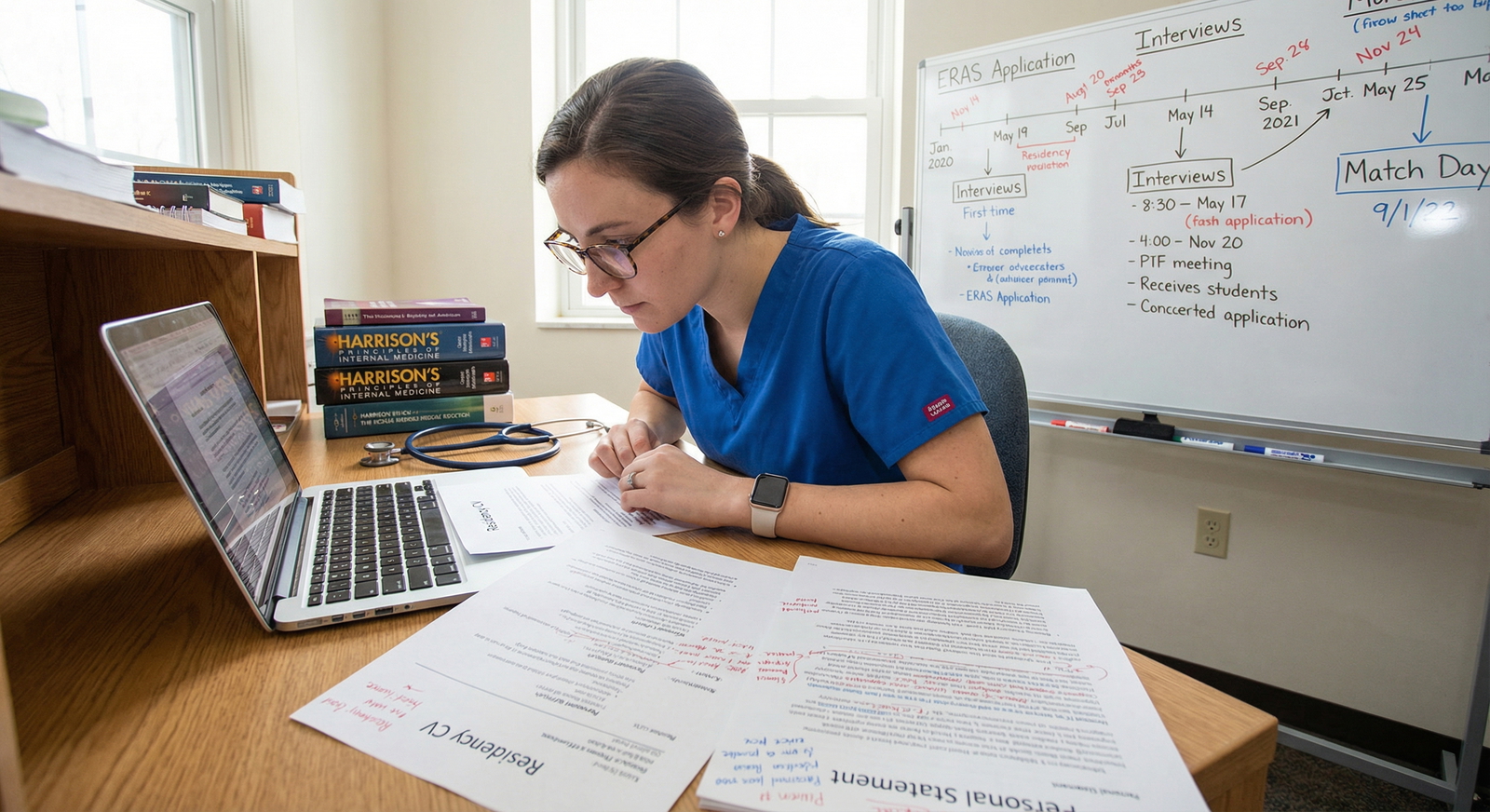
You will enter most of this information into ERAS, but you should still maintain a separate, well-formatted PDF CV for:
- Networking with faculty and mentors
- Away/audition rotations
- Scholarship, research, or leadership applications
- Backup if someone asks for it outside the ERAS system
Key Priorities for Caribbean IMGs in Pediatrics
Because you trained outside the U.S., your residency CV should:
Reassure programs academically
- Show strong clinical performance, USMLE scores, and honors
- Clarify grading systems and ranking when needed
Demonstrate clear pediatric commitment
- Pediatrics rotations, electives, sub-internships
- Pediatric research, QI projects, and advocacy work
- Longitudinal involvement with children and families
Highlight U.S. clinical exposure
- U.S.-based pediatric experiences are especially valuable
- Show that you understand the U.S. health system and culture
Address common IMG concerns indirectly
- Gaps explained through productive activity
- Step attempts and timeline made clear, but framed with growth
- Communication, teamwork, and professionalism emphasized through roles and achievements
The rest of this guide walks through how to build a CV for residency that does all of this effectively—tailored specifically to Caribbean IMGs targeting a peds match.
Core CV Structure for a Pediatrics Applicant
While there’s no single universal format, most successful pediatrics residency CVs contain similar sections in a logical order.
A commonly used structure:
- Contact Information
- Education
- Medical Licensure & Exams
- Clinical Experience (including formal rotations and electives)
- Research & Scholarly Activity
- Teaching & Mentoring
- Leadership & Extracurricular Activities
- Volunteer and Community Service
- Honors & Awards
- Professional Memberships
- Skills (Languages, Technical, Other)
You can adjust the order depending on your strengths (for example, move Honors & Awards or Research higher if they’re major assets), but keep the structure clean and predictable.
1. Contact Information
Keep this clean and professional at the top of your CV:
- Full name (matching ERAS and identification)
- Professional email (e.g., firstname.lastname@domain.com)
- U.S. phone number (if available and reliable)
- City/State (for where you’re currently based)
- LinkedIn profile (optional, if well-maintained and consistent)
Residency CV tips:
- Avoid unprofessional email handles.
- Do not include personal details such as marital status, age, or photo (photos belong only in ERAS where appropriate, not on the standalone CV).
- Ensure contact info matches across your ERAS application, CV, and personal statement.
2. Education
List your education in reverse chronological order:
- Medical School: Name, city, country, degree, expected/actual graduation date
- Undergraduate: Institution, degree, major, graduation date
- Optional: Relevant graduate degrees (MPH, MSc, etc.)
For Caribbean medical school residency applicants, clarify:
- Full name of your school (e.g., “St. George’s University School of Medicine, Grenada”)
- Affiliated campuses or clinical centers in the U.S. or U.K., if applicable
- If grading systems are nontraditional (e.g., pass/fail), note this briefly or be prepared to clarify in interviews.
Example:
St. George’s University School of Medicine, Grenada
Doctor of Medicine (M.D.), Expected June 2025University of [X]
B.Sc. in Biology, Graduated May 2019, Magna Cum Laude

Highlighting Clinical and Pediatric Experience
For a strong pediatrics residency application, clinical experience is the heart of your CV. Program directors want to see:
- When you did pediatrics rotations
- Where (and whether they were in the U.S.)
- How much responsibility you had
- How you went beyond minimum requirements
3. Clinical Experience & Rotations
Divide clinical experiences into clear sub-sections if needed:
- Core Clinical Rotations
- Pediatrics Sub-Internship / Acting Internship
- Pediatric Electives (e.g., NICU, PICU, Pediatric Cardiology)
- U.S. Clinical Experience (USCE)
For each rotation, include:
- Site name and location
- Dates (month/year–month/year)
- Role (e.g., Clinical Clerk, Sub-Intern)
- Supervisor (optional, more useful for letters than for CV)
- Brief bullet points highlighting responsibilities and pediatric-relevant skills
Example entry:
Pediatrics Core Clerkship
Brooklyn Hospital Center, Brooklyn, NY
Aug 2023 – Oct 2023
- Completed 8-week inpatient and outpatient pediatric medicine rotation caring for infants to adolescents.
- Performed histories, physical exams, and presented 3–5 patients daily to attending physicians.
- Participated in family-centered rounds and counseling on vaccination, nutrition, and asthma management.
Residency CV tips for Caribbean IMG:
- Prioritize U.S.-based pediatric experiences at the top of your clinical section.
- If you have a pediatrics sub-internship, label it clearly; sub-I experience can be very persuasive for the peds match.
- Avoid listing short shadowing experiences as “clinical rotations”; label them separately as “Observerships” and keep them brief.
4. Pediatric Focus: Showing Commitment
Programs want to be sure you’re genuinely committed to pediatrics, not applying broadly without focus.
Ways to emphasize this on your CV:
- Multiple pediatric rotations/electives
- Longitudinal work with children (e.g., tutoring, coaching, camp counselor)
- Involvement in child health advocacy or public health projects
- Research or QI projects focused on pediatric topics
- Membership in pediatric student organizations
Example pediatric-focused CV line items:
- “Organized monthly interactive health-education sessions for children with asthma at a Brooklyn community center.”
- “Served as student coordinator for the Pediatric Interest Group, organizing 4 faculty talks and 2 skills workshops annually.”
Even non-clinical roles (youth sports coach, music teacher for children, volunteer at children’s shelter) can strengthen your pediatric story—just describe them with a professional, skills-focused tone.
Research, Teaching, and Leadership: Differentiating Your Application
Not every applicant will have publications in high-impact journals, but every strong CV will show intellectual engagement, willingness to teach, and ability to lead or coordinate.
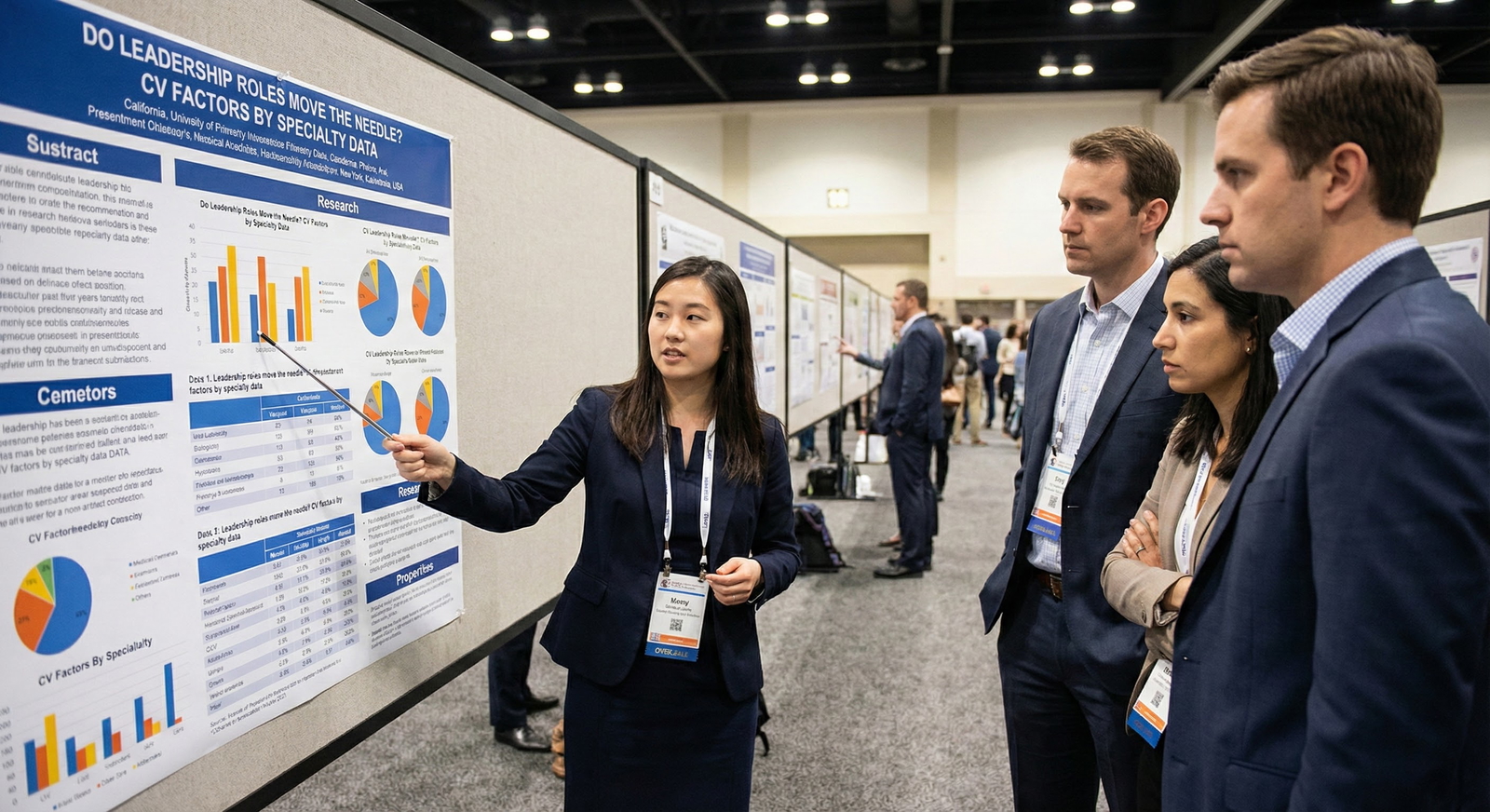
5. Research & Scholarly Activity
For pediatrics, research doesn’t have to be bench science. Quality improvement, outcomes research, case reports, and educational projects are all valuable.
Include subsections if helpful:
- Peer-reviewed Publications
- Abstracts & Posters
- Oral Presentations
- Quality Improvement Projects
Each entry should include:
- Authors (list yourself in correct position, bold your name)
- Title
- Journal/Conference name
- Date and location (for presentations)
- Status (Published, In Press, Accepted, Submitted)
Example entry:
Smith J, Doe A, et al.
“Improving Asthma Action Plan Utilization in a Brooklyn Pediatric Clinic”
Poster presented at the American Academy of Pediatrics (AAP) National Conference, Washington, DC, October 2024.
If you lack formal pediatrics research:
- Consider small, manageable QI projects during your pediatrics rotations (e.g., improving vaccination documentation, reducing missed well-child visits).
- Ask faculty preceptors about case reports on interesting pediatric patients.
- Get involved with ongoing projects where you can at least contribute data collection, chart review, or literature review.
These projects can be completed even late in medical school and still meaningfully strengthen your pediatrics residency CV.
6. Teaching & Mentoring Experience
Pediatrics values communication, patience, and the ability to explain complex ideas in simple terms—skills tightly linked to teaching.
Include experiences like:
- Small-group tutor or TA for pre-clinical courses
- Peer mentor for junior medical students
- Community teaching (health talks at schools, parenting classes)
- Teaching during your rotations (student-led teaching sessions)
Example entry:
Peer Tutor – Physiology
St. George’s University School of Medicine
Sep 2021 – May 2022
- Led weekly review sessions for 10–15 first-year medical students on cardiovascular and respiratory physiology.
- Developed simplified diagrams and clinical vignettes to support diverse learning styles.
Emphasize:
- Communication skills
- Leadership and organization
- Feedback and evaluation received (if available)
These experiences help reassure program directors about your bedside manner and your potential as a resident educator.
7. Leadership & Extracurricular Activities
Leadership roles show you can take responsibility—an essential quality for pediatrics residents.
Examples to feature:
- Class representative or student council roles
- Leadership in Pediatric Interest Group, global health clubs, or community organizations
- Coordinating health fairs, vaccination drives, or child-focused outreach
- Organizing cultural or wellness events that demonstrate initiative and teamwork
For each role, focus on impact:
- “Increased membership by 40% and organized 3 pediatric faculty panels.”
- “Coordinated logistics for a 120-student mock OSCE event.”
Even if your leadership isn’t specifically pediatric, the underlying skills (organization, advocacy, collaboration) translate well—just tie them back to competencies valued in pediatrics when possible.

Volunteerism, Community Engagement, and Personal Qualities
Pediatrics is a service-oriented specialty. Program directors look for applicants who demonstrate empathy, advocacy, and sustained dedication to vulnerable populations—especially children and families.
8. Volunteer and Community Service
This is a crucial part of a pediatrics residency CV, particularly for a Caribbean IMG who wants to show understanding of diverse communities.
Highlight:
- Activities involving children: camps, tutoring, coaching, mentoring
- Work with underserved populations: free clinics, mobile health units, school-based health programs
- Global health or local community outreach related to child health
Example entry:
Volunteer – School Health Screening Program
St. George’s University & Grenada Ministry of Health
Jan 2022 – Nov 2022
- Performed height, weight, and vision screenings for over 300 primary school students in rural communities.
- Provided basic health education to students and parents on nutrition and physical activity.
Residency CV tips:
- Emphasize continuity—multi-year or ongoing involvement is more powerful than one-off events.
- Explain your role clearly (coordinator vs. participant).
- Link to pediatric competencies where appropriate (communication with parents, community advocacy, cultural humility).
9. Honors, Awards, and Professional Memberships
Showcase academic recognition and professional engagement.
Honors & Awards:
- Dean’s list, scholarships, exam honors
- Clerkship honors (especially in pediatrics and family medicine)
- Awards for leadership, service, or teaching
Professional Memberships:
- American Academy of Pediatrics (AAP), Section on Med Students or Trainees
- American Medical Student Association (AMSA)
- Local or school-based pediatric societies
Membership in the AAP or attendance at pediatric conferences shows early commitment to the field.
10. Skills: Languages, Technical Abilities, and More
For pediatrics, language skills can be a major asset, especially in diverse U.S. communities.
List:
- Languages (with level: native, fluent, proficient, conversational)
- EMR systems you’ve used (Epic, Cerner, etc.)
- Basic statistical or data tools (SPSS, R, Excel) if relevant to research
- Other skills that might matter in peds (e.g., basic sign language, child life training, motivational interviewing)
Avoid overloading this section with generic items (e.g., “teamwork, time management”)—those should be demonstrated through your experiences rather than listed as buzzwords.
Tailoring, Formatting, and Common Mistakes to Avoid
Even strong content can be undermined by weak organization or presentation. As a Caribbean IMG, you want your pediatrics residency CV to read as polished, professional, and easy to skim for busy faculty.
Formatting Principles
- Length: 2–4 pages is typical for medical student CVs
- Font: Clean, readable (e.g., 11–12 pt Times New Roman, Calibri, Arial)
- Consistent formatting: same bullet style, date format, and heading style throughout
- Use bold and italics strategically to highlight roles, institutions, and your name in publications
Structure each entry consistently:
- Position/Role
- Organization, Location
- Dates
- 2–4 bulleted achievements or responsibilities
Avoiding Common CV Pitfalls
Overcrowded with minor activities
- Focus on depth over breadth. It’s better to detail 15 meaningful experiences than list 40 shallow ones.
Unclear timeframes or gaps
- Always include month/year for start and end dates.
- If you have a gap, be ready to explain it (research, family responsibility, exam prep, etc.), and consider including productive activities from that time.
Overstated responsibilities
- Avoid language that implies independent practice beyond your training level (e.g., “managed an ICU” as a student).
- Instead: “Assisted in the care of ICU patients under supervision; performed daily assessments and participated in rounds.”
Spelling, grammar, and formatting errors
- These are particularly damaging for IMGs, as they may reinforce unfair biases about communication skills.
- Ask a mentor or advisor familiar with U.S. residency to review your CV.
Misalignment with ERAS
- Your standalone CV and ERAS entries should match in dates, titles, and descriptions (even if worded slightly differently). Discrepancies raise red flags.
Tailoring for Pediatrics Programs
While you shouldn’t create a different CV for every single program, you can tailor emphasis for pediatrics as a specialty:
- Move pediatric rotations and electives near the top of your Clinical section.
- Ensure pediatric-related research and volunteer work are clearly labeled.
- Use pediatric-friendly language in your bullet points (family-centered care, child development, preventive care, anticipatory guidance).
Align your CV with the themes that make pediatrics distinct: prevention, growth and development, family systems, long-term relationships, and advocacy.
Putting It All Together: Strategy for a Caribbean IMG Targeting a Peds Match
To compete effectively for a pediatrics residency spot as a Caribbean IMG, your CV should tell a cohesive story:
Academic readiness
- Solid performance in core rotations and on USMLE
- Clear understanding of U.S. clinical context through USCE
Consistent pediatric interest
- Multiple pediatric experiences (clinical and non-clinical)
- Involvement in pediatric organizations or conferences
- At least one pediatrics-related scholarly or QI project if possible
Service and advocacy orientation
- Ongoing community work, ideally with children or families
- Leadership and teaching that show communication and responsibility
Professionalism and polish
- Cleanly formatted, error-free CV
- Honest but confident language
- Alignment with the rest of your application narrative
Start shaping your CV early in medical school, revisiting it each term. Use it as a planning tool:
- Ask yourself: “What is missing for a strong pediatrics residency CV?”
- Then deliberately seek experiences that fill those gaps—extra pediatric electives, a small QI project, a long-term volunteer role, or joining an AAP student group.
Over time, this intentional approach will move you from “Caribbean IMG with basic experiences” to “Well-rounded pediatrics candidate with a focused, compelling trajectory”—and put you in a stronger position for the SGU residency match or your own Caribbean medical school residency match outcome.
FAQs: CV Building for Caribbean IMGs in Pediatrics
1. How long should my CV be for a pediatrics residency application?
Most medical student CVs are 2–4 pages. For a Caribbean IMG, it’s acceptable to be on the longer side if you have substantial experiences, but avoid padding. Each entry should add clear value—if an activity isn’t relevant or significant, consider leaving it out or summarizing briefly.
2. I don’t have much pediatrics research—will that hurt my chances?
Not necessarily. While research can strengthen your application, pediatrics is very welcoming to clinically strong, service-oriented applicants. If you lack formal research, focus on:
- Strong pediatric rotations and sub-internships
- Community and volunteer work with children
- A small QI or case-report project you can complete before applications
Your CV should still show intellectual curiosity and engagement, even without multiple publications.
3. How can I highlight my Caribbean background in a positive way on my CV?
You don’t need a special section for this, but you can:
- Emphasize work with diverse, resource-limited, or underserved communities during your Caribbean rotations.
- Highlight global health perspectives or cultural competence developed in the Caribbean context.
- Show how you transitioned successfully into U.S. clinical settings through USCE and electives.
This positions your Caribbean training as a strength that prepared you for caring for diverse pediatric populations.
4. Should I include non-medical jobs or activities (e.g., working retail, family business)?
Include them if they demonstrate:
- Long-term commitment and responsibility
- Financial independence or resilience
- Skills transferable to pediatrics (communication, teamwork, leadership)
Keep descriptions professional and concise. For example:
“Part-time Sales Associate, 20 hrs/week during pre-clinical years; developed skills in customer communication, conflict resolution, and time management while balancing academic responsibilities.”
By building a thoughtfully organized, pediatrics-focused CV—one that showcases your strengths as a Caribbean IMG—you position yourself as a serious, committed applicant ready to thrive in a pediatrics residency program. Use your CV not only as a record of what you’ve done, but as a strategic roadmap guiding what you choose to do next.