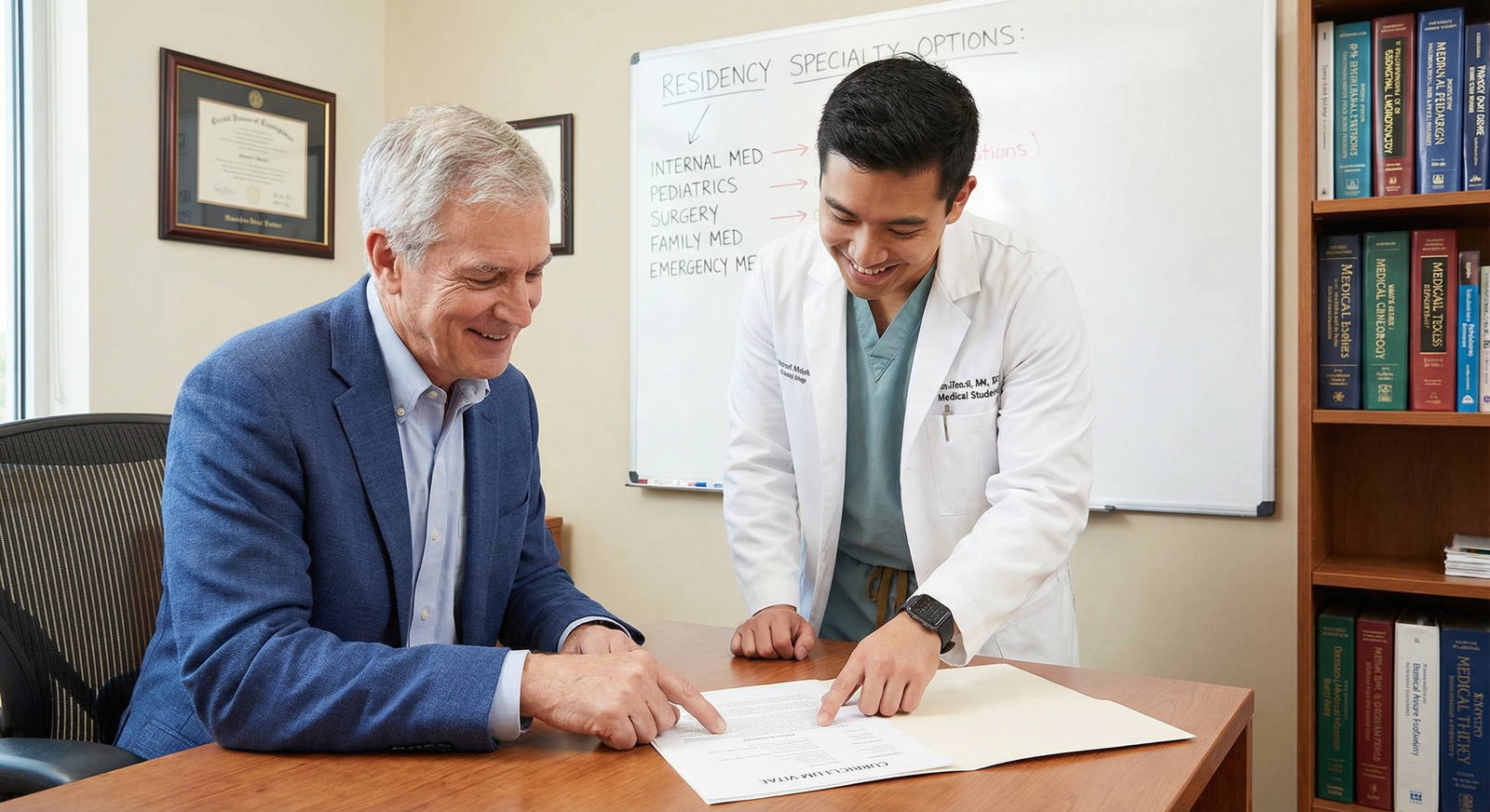
Crafting a standout CV as an MD graduate targeting dermatology is not just about listing your achievements; it’s about curating a persuasive narrative that convinces program directors you are ready for the rigor and specialty-specific demands of a dermatology residency. This guide will walk you step-by-step through how to build a CV for residency, with a strong focus on the derm match for graduates from allopathic medical schools (MD grads).
Understanding the Role of the CV in Dermatology Residency Applications
Your ERAS application and personal statement are central to the allopathic medical school match, but your CV remains the backbone of your professional narrative. Even if you mostly upload data into ERAS fields, you should maintain a master CV that:
- Keeps all your accomplishments organized and updated
- Feeds into ERAS entries, your personal statement, and interview answers
- Serves as a polished document to send for away rotations, scholarships, and networking
Dermatology residency is one of the most competitive specialties. Program directors often see very similar metrics: high Step scores, strong clinical grades, and robust research. A carefully structured and dermatology-focused CV helps you stand out by:
- Highlighting specialty fit (derm exposure, research, and advocacy)
- Demonstrating professionalism and attention to detail
- Showing longitudinal commitment and leadership
Key takeaway: Treat your CV as both a data source and a strategic marketing tool. Each entry should advance your case as a future dermatologist.
Core Principles of a Strong Dermatology Residency CV
Before we dive into specific sections, keep these foundational residency CV tips in mind:
1. Clarity and Professionalism Over Flash
Dermatology is visually oriented, but your CV is not the place for design experiments.
- Use a clean, standard font (e.g., Times New Roman, Calibri, Arial, 11–12 point)
- Maintain 0.5–1 inch margins
- Avoid colors, logos, or graphics
- Use consistent formatting (bold for headings, italics for journal names, etc.)
2. Consistency Is Non-Negotiable
Program directors notice sloppy inconsistencies.
- Dates: Pick one format (e.g., Jul 2021 – May 2022, or July 2021–May 2022) and stick to it
- Locations: Always list city, state, and country if outside the U.S.
- Titles: Use consistent capitalization (e.g., “Dermatology Clinical Research Fellow,” not “Dermatology clinical research fellow” in one place and another format elsewhere)
3. Relevance to Dermatology Without Ignoring Breadth
You must demonstrate overall clinical excellence, but for a derm match, you should strategically emphasize:
- Dermatology-related research
- Derm electives, away rotations, and sub-internships
- Skin-related quality improvement (QI) or advocacy projects
- Teaching or leadership roles connected to dermatology or visual diagnosis
At the same time, strong non-derm experiences (e.g., internal medicine sub-I, global health, primary care) show you can manage complex patients and work in multidisciplinary teams.

Section-by-Section Breakdown: How to Build a CV for Dermatology Residency
1. Header and Contact Information
This is straightforward, but errors here can derail opportunities.
Include:
- Full name (as it appears on official documents)
- MD degree (e.g., John A. Smith, MD)
- Current mailing address (optional but preferred)
- Professional email (avoid casual usernames; use school or a simple Gmail)
- Cell phone number
- LinkedIn (optional, only if updated and professional)
- City/country of citizenship or visa status (optional; often handled elsewhere in ERAS, but acceptable on a master CV)
Common pitfalls:
- Including multiple emails or old phone numbers
- Using unprofessional email addresses
- Forgetting to update location after graduation
2. Education
Order from most recent to oldest. For an MD graduate targeting dermatology residency, emphasize your allopathic medical school match context and clinical training environment.
Include:
- Degree, institution, city, state/country
- Dates attended or expected graduation date
- Honors (AOA, Gold Humanism, summa/magna/cum laude, if applicable)
- Thesis title if you had a research-based degree (e.g., MS, MPH)
Example:
- Doctor of Medicine (MD), XYZ Allopathic Medical School, City, State
Aug 2019 – May 2023- Honors: Alpha Omega Alpha (AOA), Gold Humanism Honor Society
If you have prior graduate degrees (MPH, MS, PhD) or a strong dermatology-related undergraduate honors thesis, include brief descriptors connecting them to dermatology or research.
3. Licensure, Certifications, and Standardized Exams
Dermatology program directors expect transparency in this area.
Include:
- USMLE Step 1 (pass/fail; you may add numerical score on your master CV for personal tracking)
- USMLE Step 2 CK (and Step 3 if taken)
- State medical license (if applicable, e.g., preliminary year)
- DEA or other limited licenses (if relevant)
Format:
- USMLE Step 1 – Pass, Jan 2021
- USMLE Step 2 CK – 260, Aug 2022
On CVs shared outside ERAS (e.g., for research fellowships), listing scores may be helpful if strong. For internal use, keep them but understand they may not be necessary for every submission.
4. Honors, Awards, and Scholarships
Dermatology is competitive; evidence of excellence matters. This is where you highlight performance metrics beyond grades.
Examples:
- Medical school awards: clinical honors, clerkship awards, overall academic excellence
- Specialty-specific awards: dermatology interest group awards, research day awards, poster prizes
- Leadership or service awards: community outreach in skin cancer screening, free clinics, DEI-focused initiatives
Tips for this section:
- Order awards by prestige and relevance to dermatology, then by date
- Briefly add a one-line description if the award is not self-explanatory
Example entry:
- Dermatology Research Day Best Poster Award, XYZ Medical School, May 2022
- Awarded for first-author project on “Epidemiology of Melanoma in Skin of Color.”
5. Clinical Experience and Rotations (With Emphasis on Dermatology)
As an MD graduate residency applicant in dermatology, you want to highlight your direct clinical exposure to the specialty and related disciplines.
Subsections to consider:
- Dermatology Rotations (Home and Away)
- Sub-Internships / Acting Internships
- Other Key Clinical Experiences
Dermatology Rotations:
Include:
- Institution, department, city, state
- Type of rotation (e.g., Dermatology Inpatient Consults, Outpatient General Derm, Dermatologic Surgery)
- Dates
- Brief bullet points describing responsibilities and skills
Example:
Dermatology Sub-Internship, ABC University Hospital, Department of Dermatology, City, State
Aug 2022 – Sep 2022
- Managed inpatient dermatology consults under supervision, formulating differential diagnoses for complex rashes and bullous diseases
- Performed skin biopsies and cryotherapy on common lesions, documenting procedures in the EMR
- Presented weekly case-based teaching sessions for third-year medical students
Away/Audition Rotations:
These are particularly important for the derm match. Emphasize:
- Institutional prestige and derm faculty you worked with (names optional)
- Exposure to subspecialties (peds derm, dermatopathology, Mohs, complex medical derm)
- Any mini-projects, presentations, or QI initiated during the rotation
6. Research Experience and Publications (Critical for Derm Match)
For dermatology residency, your research section is often the most scrutinized part of your CV after board scores and grades. Program directors want to see scholarly productivity and a track record of curiosity, persistence, and teamwork.
Subdivide into:
- Research Experience (projects)
- Publications
- Abstracts, Posters, and Presentations
Research Experience
Include:
- Role (e.g., Research Assistant, Clinical Research Fellow)
- Institution and mentor
- Project title or brief description
- Dates
- 2–3 concise bullets describing what you actually did
Example:
Clinical Research Fellow, Department of Dermatology, DEF Medical Center, City, State
Jun 2021 – Aug 2022
Mentor: Jane Doe, MD, PhD
- Coordinated a prospective cohort study evaluating biologic therapy outcomes in moderate-to-severe psoriasis (n=130)
- Conducted chart reviews, data entry, and preliminary statistical analyses using SPSS
- Co-authored two manuscripts and presented findings at a national dermatology conference
Publications
Separate peer-reviewed journal articles from other works (book chapters, online publications, letters).
Format using a standard citation style (e.g., AMA) and indicate status (Published, In Press, Submitted, In Preparation). Be honest and avoid inflating statuses.
Example:
- Smith JA, Doe J, Lee R. Trends in Melanoma Incidence Among Hispanic Populations in the United States, 2000–2020. J Am Acad Dermatol. 2023;89(2):123–132. doi:XXXX
If still under review:
- Smith JA, Doe J. Atopic Dermatitis Severity and Sleep Disturbance in Adolescents. Manuscript submitted for publication.
Abstracts, Posters, and Presentations
Dermatology programs value conference participation.
Include:
- Authors
- Title
- Event name (national vs. local)
- Location and date
- Type of presentation (oral vs. poster)
Example:
- Smith JA, Doe J. “Racial Disparities in Timely Diagnosis of Cutaneous T-Cell Lymphoma.” Poster presented at the American Academy of Dermatology (AAD) Annual Meeting, New Orleans, LA, Mar 2023.
Residency CV tips for research:
- Focus on depth in a few projects rather than a long list of superficial involvement
- Highlight dermatology-related work, but don’t hide high-impact non-derm projects (e.g., immunology, oncology, health disparities)
- For each project, think: What skill or trait does this entry prove? (e.g., statistics, perseverance, team leadership)
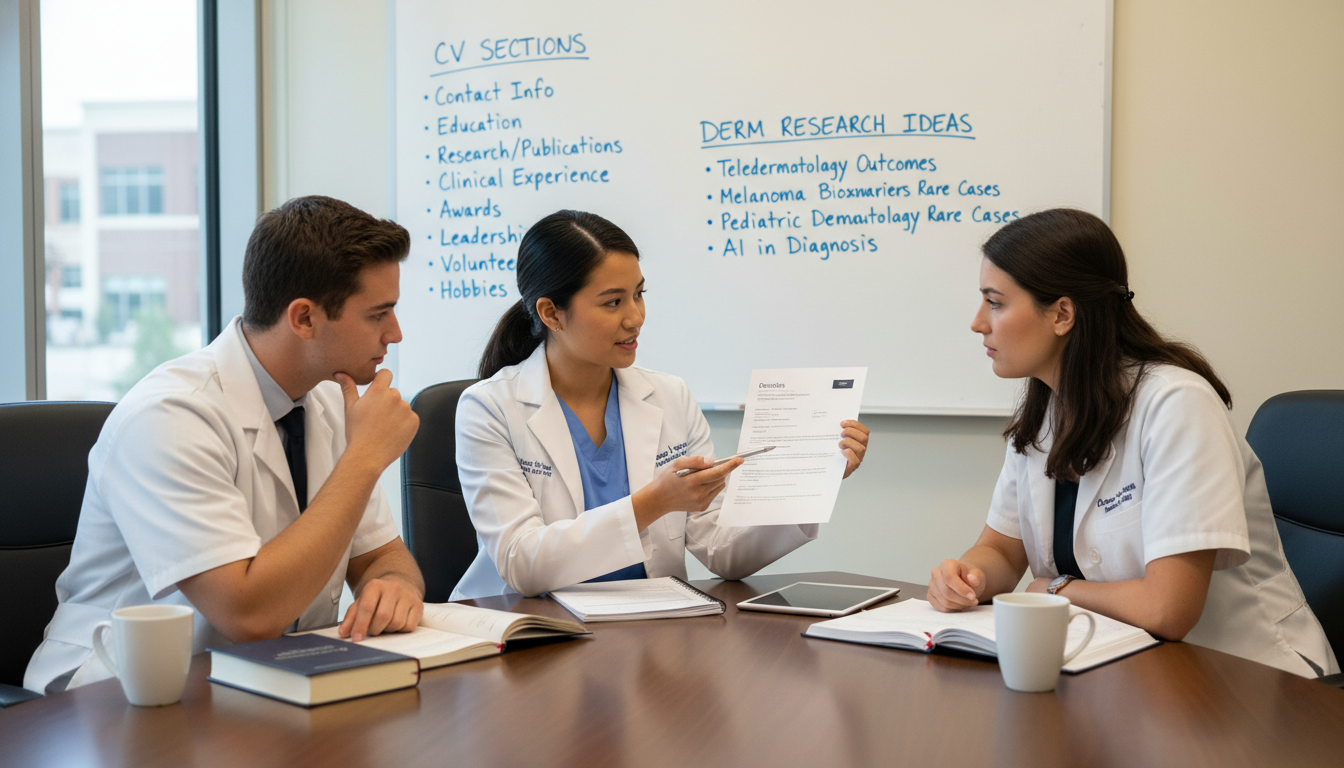
Leadership, Teaching, and Service: Demonstrating Your Dermatology Persona
Dermatologists are educators, advocates, and team leaders. These sections help round out your profile beyond test scores and research.
1. Leadership Experience
Focus on roles where you had real responsibility and impact.
Common entries for MD graduates applying to dermatology:
- Dermatology Interest Group (DIG) Officer or President
- Student government or curriculum committee roles
- Leadership in free clinics, especially if skin-care or underserved communities are involved
- Founding member of diversity or wellness initiatives related to skin health
Example:
President, Dermatology Interest Group, XYZ Allopathic Medical School
May 2021 – May 2022
- Organized monthly case-based lectures with dermatology faculty, increasing average attendance from 20 to 45 students
- Coordinated a skin cancer screening day serving over 120 community members, with structured follow-up for suspicious lesions
2. Teaching Experience
Dermatology residency programs value residents who can teach peers, students, and patients.
Include:
- Formal teaching roles (TA for anatomy, histology; small-group facilitator)
- Peer teaching (Step 1 review sessions, OSCE tutoring)
- Dermatology-specific teaching (journal clubs, dermoscopy workshops, community education)
Example:
Small Group Facilitator, Clinical Skills Course, XYZ Medical School
Aug 2020 – May 2021
- Led weekly sessions teaching physical exam skills, integrating recognition of common dermatologic findings (e.g., psoriasis, eczema, tinea)
- Evaluated and provided feedback to 8 first-year medical students per semester
3. Volunteer and Community Service
Dermatology has a strong public health dimension—skin cancer prevention, acne stigma, disparities in skin-of-color care. Highlight:
- Skin cancer screenings
- Free clinics (any specialty, but especially with visible dermatologic components)
- Public education sessions (e.g., sun safety in schools, community fairs)
- Global health trips with dermatologic care components
Tip: Whenever possible, link service to dermatology or broader issues of health equity and access.
Professional Memberships, Skills, and Personal Interests
These sections should be concise yet purposeful.
1. Professional Memberships
Include:
- American Academy of Dermatology (AAD) – Medical Student Member
- Local or regional dermatology societies
- AMA, ACP, or other relevant medical associations
List leadership roles or committee memberships here if not already under leadership.
2. Skills
Focus on skills relevant to dermatology and academic medicine:
- Languages (with proficiency levels)
- Data analysis (SPSS, R, Stata)
- Image analysis or dermoscopy software (if you’ve used them in research)
- Basic procedural skills (biopsy, cryotherapy) – optionally described in clinical experience instead
3. Interests and Hobbies
Program directors do look at these; they often provide talking points for interviews and offer insight into resilience and personality.
Instead of single-word lists, use short, descriptive phrases:
- Distance running (completed two half-marathons)
- Portrait photography, with particular interest in medical and dermatologic imagery
- Blogging about evidence-based skincare for adolescents
Avoid controversial or overly vague entries; aim for 2–4 specific interests that show depth.
Tailoring and Presenting Your CV for the Derm Match
You will have a master CV that is long and comprehensive. But for a specific dermatology residency application, you should “curate” what you emphasize.
1. Align with Program Priorities
Some derm programs are research-heavy; others emphasize community service or complex medical dermatology. Study:
- Program websites and faculty profiles
- Resident bios (do they have MPH degrees, lots of posters, advocacy projects?)
- Program’s publications and clinical strengths
Then selectively foreground:
- Research for academic-heavy programs
- Community and patient-centered work for community-focused programs
- Diversity, equity, and inclusion projects for programs with a visible DEI mission
2. Integrate Your CV with Other Application Components
Your CV should complement—not contradict—your ERAS entries and personal statement.
- If your personal statement emphasizes skin-of-color advocacy, ensure related projects and presentations are clearly visible on your CV.
- If you highlight an interest in derm surgery or Mohs, your CV should show some procedural exposure, research, or shadowing in that area.
- For letters of recommendation, ensure the activities your letter writers might discuss are properly documented in your CV.
3. Keep it Updated and Error-Free
Before the application cycle:
- Review every date and location
- Update research statuses (e.g., a manuscript may move from “submitted” to “accepted”)
- Have at least two people review it: a mentor in dermatology and a peer with strong editing skills
Common mistakes that hurt MD graduate residency applications in dermatology:
- Typos or inconsistent formatting (reflects poorly on attention to detail)
- Inflated titles (claiming “co-PI” when you were a research assistant)
- Overly long descriptions for minor roles
- Unclear authorship order for publications
Putting It All Together: Example Strategy for an MD Graduate in Dermatology
Imagine you are an MD graduate from an allopathic medical school applying to dermatology residency with:
- Solid, but not perfect, Step 2 score
- Strong dermatology research with two first-author posters
- Leadership in the dermatology interest group
- Volunteer work in a free clinic
Your CV-building strategy might be:
- Lead with education and honors: Include any clerkship awards, particularly in internal medicine or dermatology.
- Showcase dermatology rotations early under “Clinical Experience,” especially any away rotations at well-known programs.
- Emphasize research productivity: Ensure your derm-related projects are well-described with your concrete roles and outcomes (posters, manuscripts).
- Highlight leadership in dermatology: Show your role in the Dermatology Interest Group and any initiatives you started.
- Underscore commitment to underserved populations: Detail your free clinic experiences and any skin-related outreach.
- Conclude with skills and interests that subtly align with dermatology (e.g., photography, design, public education).
This curated approach positions you as a mature, research-engaged, service-oriented candidate whose experiences logically lead to a dermatology career.
Frequently Asked Questions (FAQ)
1. How is a residency CV different from a regular job CV?
A residency CV for the allopathic medical school match is more academic and structured. It prioritizes:
- Education
- Clinical experience
- Research and publications
- Teaching, leadership, and service
It downplays or omits unrelated work experiences unless they showcase key skills (e.g., project management, teamwork, long-term commitment). For dermatology in particular, your CV should highlight scholarly activity and specialty exposure, not just general employment history.
2. How long should my dermatology residency CV be as an MD graduate?
There is no strict page limit, but most MD graduate residency CVs for dermatology are 3–6 pages, depending on research and experience. Quality and clarity matter more than length. Do not cut important research or clinical experiences simply to fit an arbitrary page limit; instead, be concise in your descriptions.
3. Do I list all publications, including those not related to dermatology?
Yes. List all peer-reviewed publications, even if not dermatology-specific. High-quality work in immunology, oncology, rheumatology, epidemiology, or public health is still impressive and often highly relevant. You can group dermatology-focused publications at the top of the section or highlight them in your descriptions if you want particular emphasis.
4. What if I have limited dermatology research—how can I still make my CV competitive?
If your derm-focused research is limited:
- Highlight any ongoing projects and clearly state your role and anticipated outcomes (e.g., “Manuscript in preparation”).
- Emphasize related fields (immunology, oncology, infectious disease, rheumatology, health disparities).
- Strengthen non-research aspects: derm rotations, away rotations, strong letters, leadership in derm interest groups, and community service tied to skin health.
- Consider a dedicated research year if feasible; in dermatology, a well-structured research year can significantly improve your derm match prospects.
By applying these structured strategies and residency CV tips, you’ll turn your experiences into a coherent, persuasive document that communicates who you are as a future dermatologist—beyond test scores and grades. Your CV becomes not just a list of activities, but a compelling story of your journey toward a dermatology residency.