Understanding the Role of Your CV in the EM–IM Match
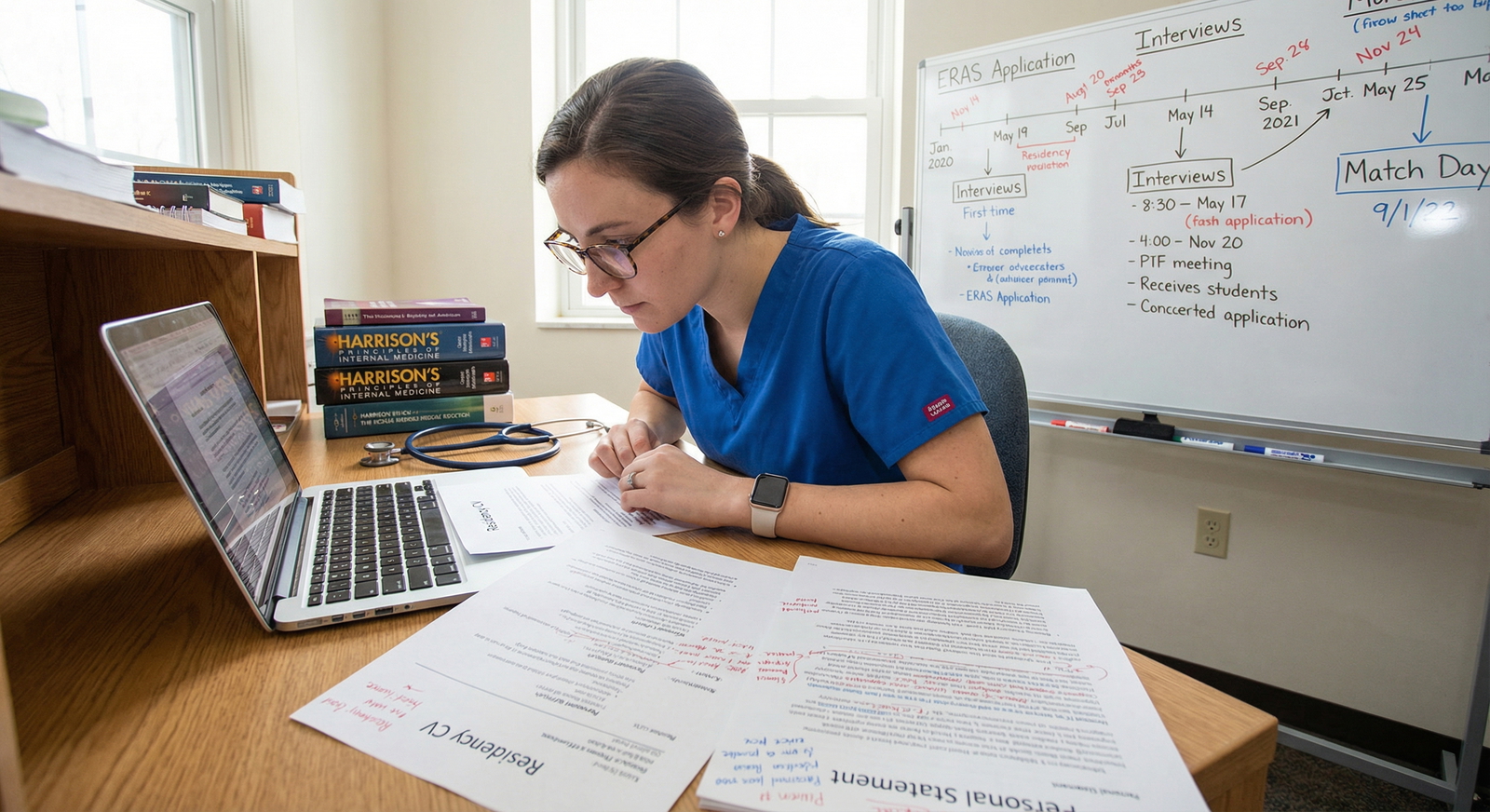
For an MD graduate targeting Emergency Medicine–Internal Medicine (EM IM combined) residencies, your CV is more than a list of experiences—it is a strategic document that must tell a clear, coherent story: you are prepared for the rigor and dual identity of emergency medicine internal medicine training.
While your ERAS application has standardized fields, most programs will still view or request a curriculum vitae. A polished medical student CV can:
- Clarify details that don’t fit neatly into ERAS fields
- Provide a clean, printable reference for interviewers
- Show professionalism, organization, and attention to detail
- Highlight your specific fit for EM IM combined pathways
What makes EM–IM programs unique?
- Dual-board eligibility: you’re essentially applying to a pathway that expects the depth of internal medicine plus the acuity and pace of emergency medicine.
- High training load: programs look for resilience, efficiency, and maturity.
- Career versatility: graduates often do critical care, ED-based observation units, hospital leadership, or academic hybrid roles.
Your CV must therefore demonstrate:
- Breadth (exposure to both EM and IM settings)
- Depth (sustained commitment, not just a one-off EM elective)
- Trajectory (increasing responsibility and leadership)
- Professionalism (clear formatting, no errors, honest content)
The rest of this guide will walk through how to build CV for residency in a way tailored to EM–IM applicants, with specific residency CV tips and examples.
Core Structure: What Every EM–IM Residency CV Should Include
Before you refine, you need the right structure. A typical MD graduate residency CV (for an allopathic medical school match) should follow this order:
- Contact & Identification
- Education
- USMLE/COMLEX & Certifications (optional but often helpful)
- Clinical Experience (Core & Electives)
- Research & Scholarly Activity
- Work Experience (Non-clinical)
- Leadership & Service
- Honors, Awards & Scholarships
- Professional Memberships
- Teaching & Mentoring
- Skills (Clinical, Procedural, Language, Technical)
- Interests (Optional, but valuable for EM–IM)
You don’t need all sections, but you should have at least the first seven. Let’s break down how to optimize each for an EM IM combined focus.
1. Contact & Identification
Keep this clean and professional at the top of page 1:
- Full name, MD
- Current email (professional address, not a nickname)
- Mobile number
- City, State (full address optional)
- ERAS AAMC ID (if you want it on the CV)
Avoid: Photos, excessive graphics, or multiple phone numbers. Simplicity and clarity are crucial.
2. Education: Emphasize Allopathic Training and Rigor
Programs want to quickly confirm you’re an MD graduate residency candidate from an allopathic medical school, especially for an allopathic medical school match.
List in reverse chronological order:
Medical School
- Degree: Doctor of Medicine (MD)
- Institution, City, State
- Dates (Month/Year – Month/Year or expected graduation)
- Honors: AOA, Gold Humanism, Distinction in Research, etc.
Undergraduate
- Degree (BS, BA, etc.), Major
- Institution, City, State
- Honors: summa/magna/cum laude, Phi Beta Kappa, etc.
If you’ve completed a graduate degree (MPH, MBA, MS), list it between undergrad and medical school where appropriate.
EM–IM Angle:
If your school doesn’t have a formal EM department, consider adding a brief line under your medical school entry, such as:
- “Electives in Emergency Medicine completed at [Hospital/Institution]”
- “Scholarly concentration in Acute Care/Quality Improvement”
3. Licensure, Exams & Certifications
This section is optional on a CV but often appreciated for quick reference.
Include:
- USMLE Step 1, Step 2 CK (scores optional on CV; follow your advisor’s guidance)
- Step 3 (if taken)
- BLS, ACLS, PALS, ATLS (if completed)
Format example:
USMLE
- Step 1 – Passed (Month Year)
- Step 2 CK – Passed (Month Year)
Certifications
- Advanced Cardiac Life Support (ACLS), American Heart Association – Expires: Month Year
- Pediatric Advanced Life Support (PALS) – Expires: Month Year
EM–IM Angle:
Showing ACLS/PALS (and especially ATLS if available) complements your interest in emergency medicine internal medicine and acute care.

Clinical Experience: Highlighting EM and IM Synergy
This is where EM–IM programs start to see your fit. Many medical students list only generic core rotations; for combined EM IM programs, you should be more deliberate.
4. Clinical Experience (Core & Electives)
Organize this section clearly, often split as:
- Core Clinical Clerkships
- Sub-internships / Acting Internships
- Electives & Away Rotations
For each experience, include:
- Rotation title (e.g., “Emergency Medicine Sub-Internship”)
- Institution and hospital name
- Location (City, State)
- Dates (Month Year – Month Year)
- 1–3 bullet points for key responsibilities or experiences (optional but helpful, especially for aways or sub-Is)
EM–IM-Specific Emphasis
You want to showcase both EM and IM exposure:
- Core Internal Medicine clerkship
- EM core or elective
- EM sub-internship (if available)
- IM sub-internship (preferably in wards, ICU, or cardiology/pulmonary/ID)
- EM/IM-related electives: ICU, CCU, Toxicology, Ultrasound, Cardiology, Pulmonology, Infectious Diseases, Hospital Medicine
Good example entry:
Emergency Medicine Sub-Internship
XYZ Medical Center, Level 1 Trauma Center – City, State
July 2024 – August 2024
- Managed high-acuity patients under supervision, including sepsis, acute coronary syndrome, and trauma activations.
- Performed focused history and physicals, formulated differential diagnoses, and proposed management plans.
- Gained experience in point-of-care ultrasound and procedural skills (e.g., peripheral IV placement, wound care, splinting).
Internal Medicine Sub-Internship – Inpatient Wards
University Hospital – City, State
May 2024 – June 2024
- Carried a census of 6–8 patients, managing multi-morbid conditions and complex medication regimens.
- Led daily presentations on rounds and coordinated care with nursing, consultants, and social work.
- Participated in code blue responses and rapid response team evaluations.
This combination signals to EM–IM program directors that you’re comfortable in both acute and longitudinal management environments.
Strategically Using Aways for EM–IM
If you did EM away rotations, especially at institutions with EM IM combined programs, highlight them:
- Label them clearly as “Visiting Student Rotation” or “Away Rotation.”
- If you worked with EM–IM faculty or residents, you can subtly indicate it by naming the division or department correctly (e.g., “Department of Emergency Medicine/Internal Medicine”).
Research, Scholarship, and QI: Building the Academic Side of Your CV
You don’t need to be a research superstar, but EM–IM programs appreciate intellectual curiosity and systems-level thinking. This is where you can show it.
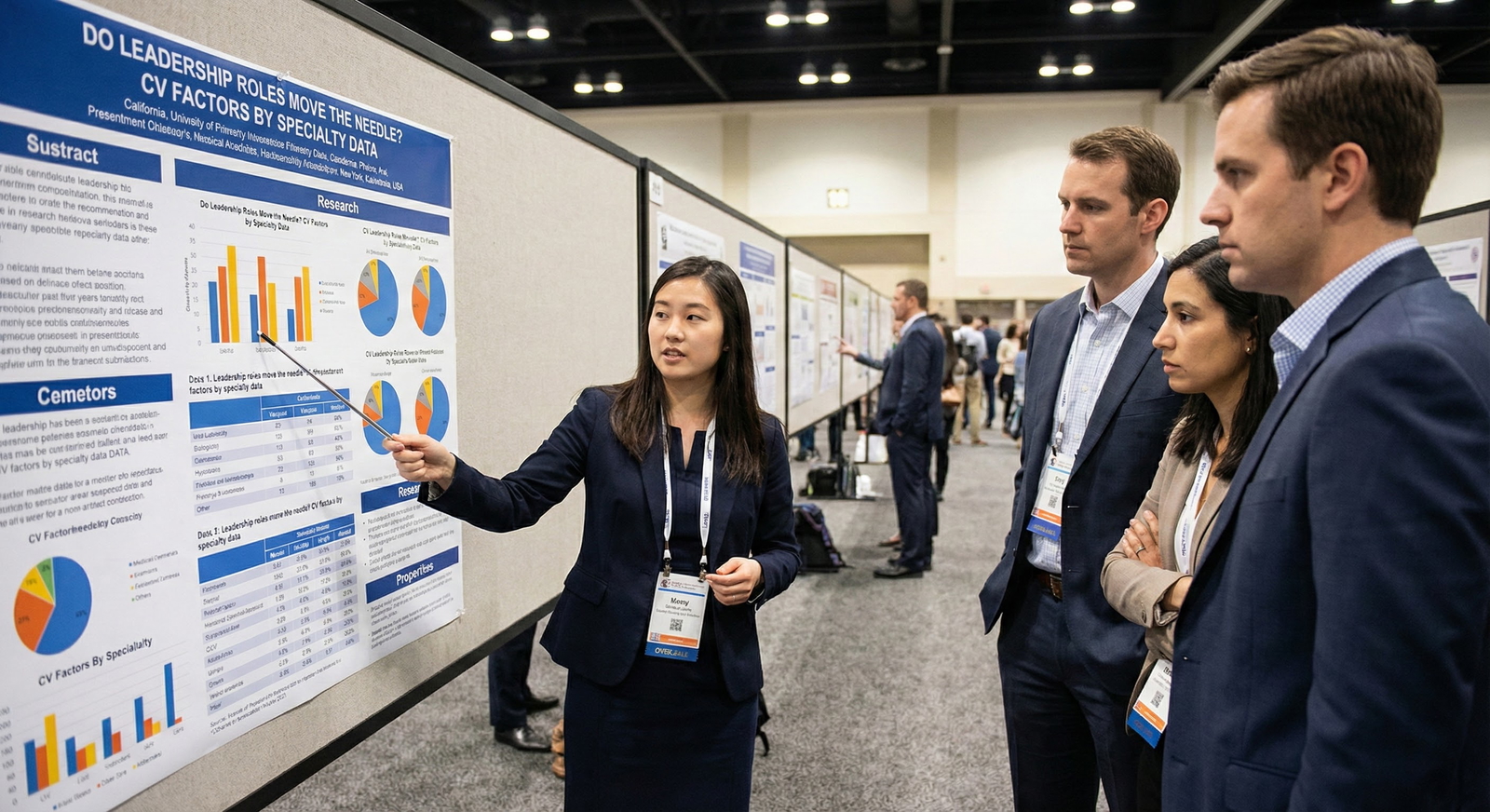
5. Research & Scholarly Activities
Organize by category:
- Peer-Reviewed Publications
- Manuscripts Under Review or In Preparation (clearly labeled)
- Abstracts & Posters
- Oral Presentations
- Quality Improvement Projects
Use a consistent citation style (e.g., AMA). For each item:
- Bold your name in author lists
- Include full title, journal/conference name, year, and location (for presentations)
EM–IM-Relevant Topics Might Include:
- Sepsis pathways
- ED–inpatient handoff studies
- Observation unit outcomes
- Diagnostic decision-making in acute care
- Transitions of care from ED to wards
- QI projects around throughput, boarding, or readmissions
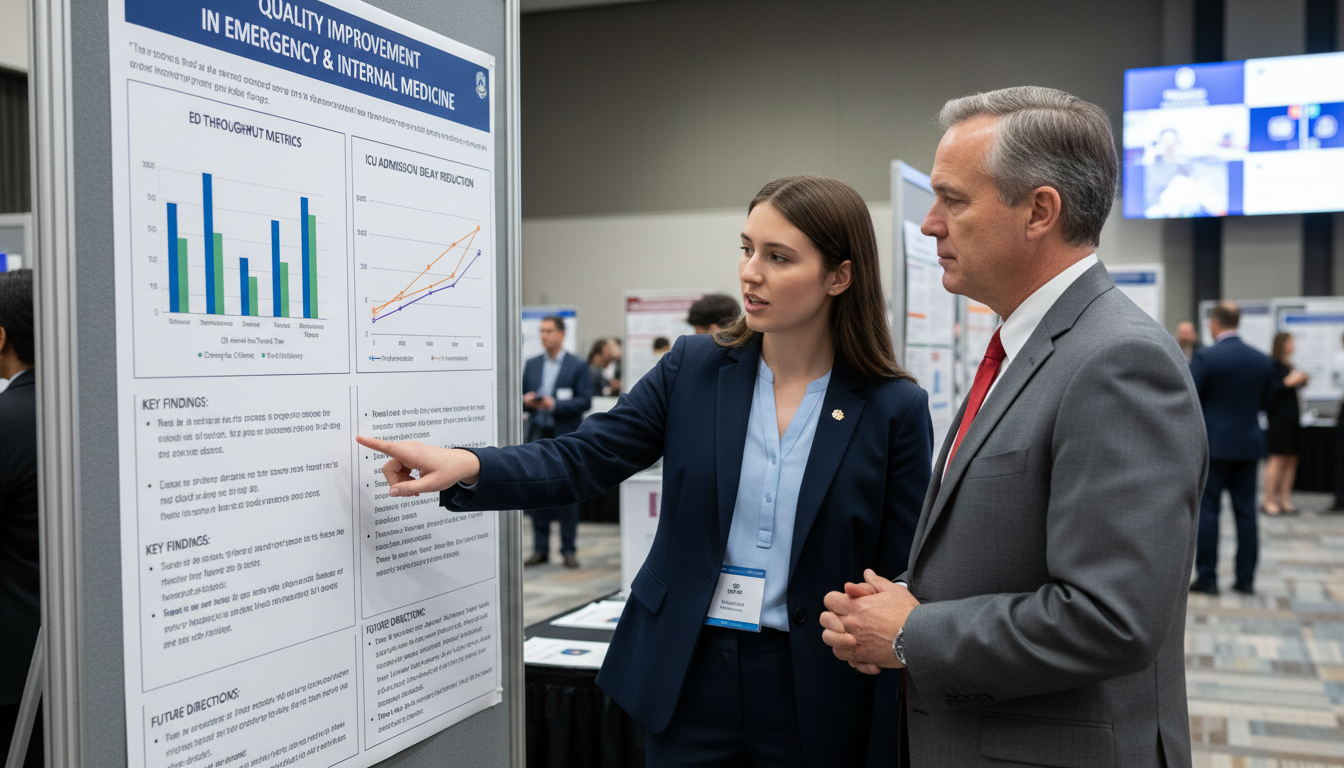
Example QI project entry:
Quality Improvement Project – Reducing ED to Inpatient Handoff Errors
ABC University Hospital – City, State | 2023–2024
- Implemented a standardized handoff template between emergency medicine and internal medicine teams.
- Conducted chart reviews and resident surveys to evaluate impact on admission documentation completeness and early order placement.
- Results presented as a poster at the Regional Society of General Internal Medicine (SGIM) Meeting, 2024.
This kind of project speaks directly to the interface EM–IM physicians navigate daily.
How Much Detail Is Enough?
- For publications/posters: use standard references, no bullet points.
- For larger QI or research projects: 2–3 concise bullets clarifying your role (study design, data collection, analysis, presentation).
If your research is outside EM/IM (e.g., basic science, dermatology), that is still valuable. Just be transparent and emphasize transferable skills: data analysis, persistence, hypothesis-driven thinking.
Leadership, Service, and Work Experience: Showing You’re Built for EM–IM
EM–IM physicians often end up in leadership roles: ED medical directors, ICU leads, quality and safety leaders, or program directors. Your CV should hint at this trajectory.
6. Work Experience (Non-clinical)
If you held part-time jobs (before or during medical school), list them briefly, especially if they show:
- Work under pressure (e.g., EMT, scribe, paramedic, nurse, ED tech)
- Teaching, mentoring, or coaching
- Customer service or teamwork in high-stress environments
Example:
Emergency Department Scribe
Community Hospital – City, State
2018–2019 (Part-time, ~20 hrs/week)
- Documented real-time physician–patient encounters in a high-volume ED.
- Gained exposure to ED workflow, triage systems, and interprofessional communication.
This is highly relevant for EM–IM and worth featuring prominently.
7. Leadership & Service
Separate Leadership Roles (titles you held) from Volunteer/Service if you have enough content.
Leadership Roles Examples:
- EM Interest Group President/Officer
- Internal Medicine Interest Group leadership
- Code Blue Committee medical student representative
- Peer tutoring coordinator, student government officer
Volunteer/Service Examples:
- Free clinic (especially if you saw acute and chronic care mix)
- Homeless shelter health outreach
- Disaster response teams or EMS ride-alongs
- COVID-19 vaccination clinics or hotline volunteering
For each, add 1–2 impact-oriented bullets:
- “Organized monthly EM–IM career panels attended by 30–50 students.”
- “Coordinated a team of 12 volunteers to provide blood pressure screenings and counseling for underserved populations.”
Programs want evidence that you can lead and serve. EM–IM residents juggle demands from two departments; role modeling responsibility and initiative is a big plus.
8. Honors, Awards & Scholarships
This section is quick but powerful. Include:
- Academic honors (AOA, GHHS, Dean’s List)
- Clerkship-specific awards (e.g., “Outstanding Student in Emergency Medicine”)
- Leadership or service awards
- Research prizes or travel grants
If you received recognition specifically in EM or IM, make that clear. Even subtle things, like “Best M3 Internal Medicine Student Presentation,” signal your aptitude.
Skills, Teaching, and Interests: Subtle Ways to Stand Out
9. Teaching & Mentoring
Emergency medicine internal medicine physicians frequently teach residents, students, and interprofessional teams. Even as an MD graduate, you can highlight:
- Peer tutoring (anatomy, physiology, Step prep)
- OSCE coaching
- Small group facilitation or TA roles
- Simulation lab work with standardized patients
Example:
Peer Tutor, Internal Medicine Clerkship
XYZ Medical School – 2023–2024
- Led weekly case-based review sessions for 8–10 M3 students focusing on differential diagnosis and management of common inpatient conditions.
- Received positive written feedback emphasizing clarity of explanations and clinical relevance.
This strengthens your profile, especially for academic-leaning EM–IM programs.
10. Skills Section
Be concrete and honest. Avoid generic “hard worker,” “team player” language—those belong in your personal statement, not your skills list.
Consider grouping skills as:
- Clinical/Procedural Skills
- Example: “Paracentesis (observed and assisted), arthrocentesis (observed), lumbar puncture (1 supervised), central line (simulated).”
- Technical Skills
- Example: “Basic point-of-care ultrasound (FAST, cardiac, aorta); familiarity with Epic, Cerner; Excel for data analysis.”
- Language Skills
- Example: “Spanish – conversational medical proficiency.”
For EM–IM, skills that particularly stand out:
- Basic ultrasound
- Experience in resuscitation teams or code responses
- EKG interpretation (if you’ve had formal training or course)
11. Interests
This section is optional, but for EM–IM, it often plays well. Many program directors say they enjoy asking about hobbies on interview day.
Keep 3–5 concise, specific items:
- “Long-distance running (completed 3 half marathons)”
- “Cooking regional cuisines (focus on Mediterranean and Indian recipes)”
- “Medical podcast production (co-host of a student EM case discussion series)”
Avoid very generic “reading” or “travel” unless you specify genres or types. Don’t list anything you aren’t comfortable discussing under pressure.
Formatting and Style: Residency CV Tips That Actually Matter
Content is primary, but poor formatting can weaken your message. EM–IM programs, like EM and IM programs individually, see hundreds of applications; clarity and brevity help you stand out.
Length and Layout
- Aim for 2–4 pages as an MD graduate. Under 2 pages often looks sparse; over 4 can feel inflated.
- Use a readable font (11–12 pt; e.g., Times New Roman, Calibri, Arial).
- Maintain consistent spacing (same line spacing and margin style throughout).
- Use bold and italics sparingly (e.g., bold for your name in publications, section headings).
Bullet Points: How to Write Them Well
Good bullets:
- Start with strong action verbs: “Led,” “Developed,” “Initiated,” “Coordinated,” “Analyzed,” “Presented.”
- Indicate scope (how many, how often, what scale).
- Highlight impact (“increased attendance by 40%,” “decreased handoff errors by 20% in preliminary analysis”).
Weak bullet:
- “Worked in the ED and helped see patients.”
Improved bullet:
- “Assisted in the initial evaluation and documentation of 15–20 ED patients per shift, improving familiarity with triage levels and ED workflow.”
Consistency and Honesty
- Keep date formats identical throughout (e.g., “Aug 2023 – May 2024” everywhere).
- Don’t inflate your role: “assisted with data collection” is different from “led study design.”
- If a project is “in preparation,” make sure there is genuine work in progress.
Tailoring for EM–IM Without Overdoing It
You don’t need to label every experience “EM–IM.” Instead:
- Ensure a balanced presence of both EM and IM in clinical and scholarly sections.
- Emphasize projects or leadership roles involving transitions of care, acute care, systems-based practice, or ED–inpatient interfaces.
- Mention “Emergency Medicine–Internal Medicine” explicitly in your career goal line if you include a brief professional summary at the top (optional, 1–2 lines max, not a paragraph).
Example optional summary:
MD graduate seeking combined Emergency Medicine–Internal Medicine residency with interests in acute care, sepsis management, and quality improvement at the ED–inpatient interface.
Step-by-Step Plan: How to Build CV for Residency (EM–IM Focus)
If you’re somewhere between M3 and MD graduate, here’s how to systematically build and refine your CV for EM–IM:
Step 1: Create a Master CV Document
- Capture everything: every rotation, project, job, volunteer activity, award.
- Don’t worry about length; this is your “database.”
Step 2: Identify EM–IM-Relevant Experiences
Mark items that relate to:
- Emergency care, resuscitation, triage
- Inpatient medicine, chronic disease management, complex comorbidities
- ED–inpatient handoffs, admission processes
- Critical care, ICU experience
- Systems and QI work in acute or hospital settings
These experiences should be front and center in your final residency CV.
Step 3: Fill Gaps Intentionally
If you notice:
- Limited EM exposure → seek an EM elective, away rotation, or ED-based QI project.
- Limited IM depth → pursue an IM sub-I, ICU elective, or IM-focused research.
- Minimal leadership/service → volunteer in student interest groups, free clinics, or QI committees.
You may still have time to strategically add these experiences before submission.
Step 4: Draft the CV in Residency Format
Using the structure outlined above, condense your master list into a 2–4 page residency CV:
- Remove or condense pre-med items that don’t add clear value.
- Emphasize recency: more detail for med school, less for older experiences.
- Use consistent formatting and clear headings.
Step 5: Get Multiple Reviews
Ask for feedback from:
- An EM faculty advisor or EM–IM mentor (if available)
- An IM faculty mentor
- An advisor from your Office of Student Affairs/Career Counseling
Ask specifically:
- “Does my CV clearly reflect a strong fit for EM–IM combined training?”
- “Are there any sections that feel bloated or unclear?”
- “Is any major accomplishment under-emphasized?”
Step 6: Align With ERAS and Personal Statement
Finally, ensure your CV aligns with:
- Your ERAS entries (no contradictions or mismatched dates).
- Your personal statement (themes and strengths should match).
- Your letters of recommendation (experiences they mention should appear on your CV).
When your CV, ERAS application, personal statement, and letters all tell the same core story—an MD graduate ready for the dual demands of EM–IM—programs notice.
FAQs: CV Building for EM–IM Residency Applicants
1. Do I really need a separate CV if I’m using ERAS?
Most programs rely primarily on ERAS, but many will still download or request a CV for printing, committee review, or institutional files. Having a polished CV:
- Gives you a professional document you can share at away rotations or networking events
- Helps you keep your experiences organized and consistent
- Signals attention to detail and professionalism
For EM–IM, it also lets you highlight cross-cutting projects that may not be as clear in ERAS’s rigid structure.
2. How much EM vs IM do I need on my CV for EM–IM programs?
There’s no fixed formula, but programs typically like to see:
- At least one substantial EM rotation (ideally a sub-I/acting internship)
- Strong internal medicine exposure (core clerkship plus at least one IM sub-I or ICU rotation)
- Ideally, a QI or scholarly project touching either ED care, inpatient care, or transitions between the two.
A portfolio of one-sided experiences (e.g., only EM aways and no serious IM exposure) can make EM–IM programs question whether you’re ready for the combined track.
3. Should I include USMLE scores directly on my residency CV?
This is optional. Since programs already see your scores in ERAS:
- If your scores are strong and you’ve been advised they’re a strength, you can list them as “Passed” or include numeric scores.
- If you prefer not to highlight them, you can simply list “USMLE Step 1 – Passed; Step 2 CK – Passed.”
Always follow your dean’s office or advisor’s guidance, and ensure there is no mismatch between your ERAS data and CV.
4. How do I list “in-progress” research or manuscripts on my CV?
Create a separate subheading like “Manuscripts in Preparation” or “Ongoing Projects” and:
- Use honest language: “in preparation,” “data analysis in progress,” “manuscript drafting stage.”
- Don’t format them like published papers; clearly indicate their status.
- Be prepared to discuss them at interviews, including your role and realistic timeline.
Programs respect honesty more than inflated, ambiguous claims. Being transparent about ongoing work still shows initiative and intellectual engagement.
By building a clear, honest, and EM–IM-focused residency CV, you transform a simple document into a compelling narrative of who you are as an MD graduate—and why you are ready for the unique challenges of Emergency Medicine–Internal Medicine combined training.