Understanding the CV Landscape for Caribbean IMGs in Clinical Informatics
Clinical informatics is a rapidly growing specialty at the intersection of medicine, data, and technology. As a Caribbean IMG, you’re entering this space with unique strengths—adaptability, resilience, and often broad clinical exposure. However, you also face predictable challenges: program directors may be less familiar with Caribbean medical school residency outcomes; some may question your research background or U.S. clinical experience.
That’s where your CV becomes a strategic tool. It’s not just a list of experiences; it’s a targeted narrative that answers three questions for program directors and fellowship leaders:
- Can you handle rigorous clinical work?
- Do you understand and genuinely care about informatics and health IT?
- Are you reliable, collaborative, and prepared to function in U.S. academic environments?
This article focuses on how to build a CV for residency and future clinical informatics training—with specific, practical strategies tailored to Caribbean IMGs. We’ll link every recommendation back to what matters for:
- Caribbean medical school residency pathways (e.g., Internal Medicine, Family Medicine, Pediatrics, EM)
- Future clinical informatics fellowship and health IT training opportunities
- The realities of the SGU residency match and similar Caribbean programs’ match performance
Core Principles: What a Strong Informatics-Focused CV Must Show
Before getting into section-by-section details, orient your thinking around these core CV principles:
1. Signal Clinical Readiness First, Informatics Second
Even though your long-term goal is clinical informatics, most IMGs will:
- Apply first to a primary clinical residency (e.g., Internal Medicine or Family Medicine)
- Pursue clinical informatics fellowship after board eligibility
Program directors will reject an otherwise “tech-strong” applicant if they doubt basic clinical capability. Your CV should:
- Emphasize core clinical rotations, strong performance, and relevant U.S. clinical experiences
- Demonstrate understanding of workflow, patient safety, and interdisciplinary care
2. Make Your Informatics Trajectory Obvious
A busy reviewer should understand your trajectory in 20–30 seconds:
- Clinical background from a Caribbean school
- Exposure to EHRs, data, telehealth, quality improvement, or population health
- Progressive involvement in health IT projects, electives, or research
- Clear interest in pursuing health IT training or clinical informatics fellowship
This means clustering and labeling experiences strategically, not just listing them chronologically.
3. Translate Caribbean Experiences into U.S.-Relevant Language
Caribbean programs often use titles or structures unfamiliar to U.S. faculty. Your CV should:
- Use standard U.S. terminology (e.g., “Internal Medicine Subinternship,” “Acting Intern,” “Clinical Clerkship”) even if your school uses different names
- Provide brief clarifications when needed (e.g., “Teaching Assistant (peer tutor) for Year 2 Medical Students in Pathophysiology”)
4. Be Ruthless About Clarity and Structure
As a Caribbean IMG, you don’t want a reviewer struggling to find your U.S. rotations or informatics experiences. That alone can cost you interviews. Your CV should have:
- Clean, consistent formatting
- Clear section headings
- Bullet points with action verbs and outcomes
- No dense paragraphs, no clutter
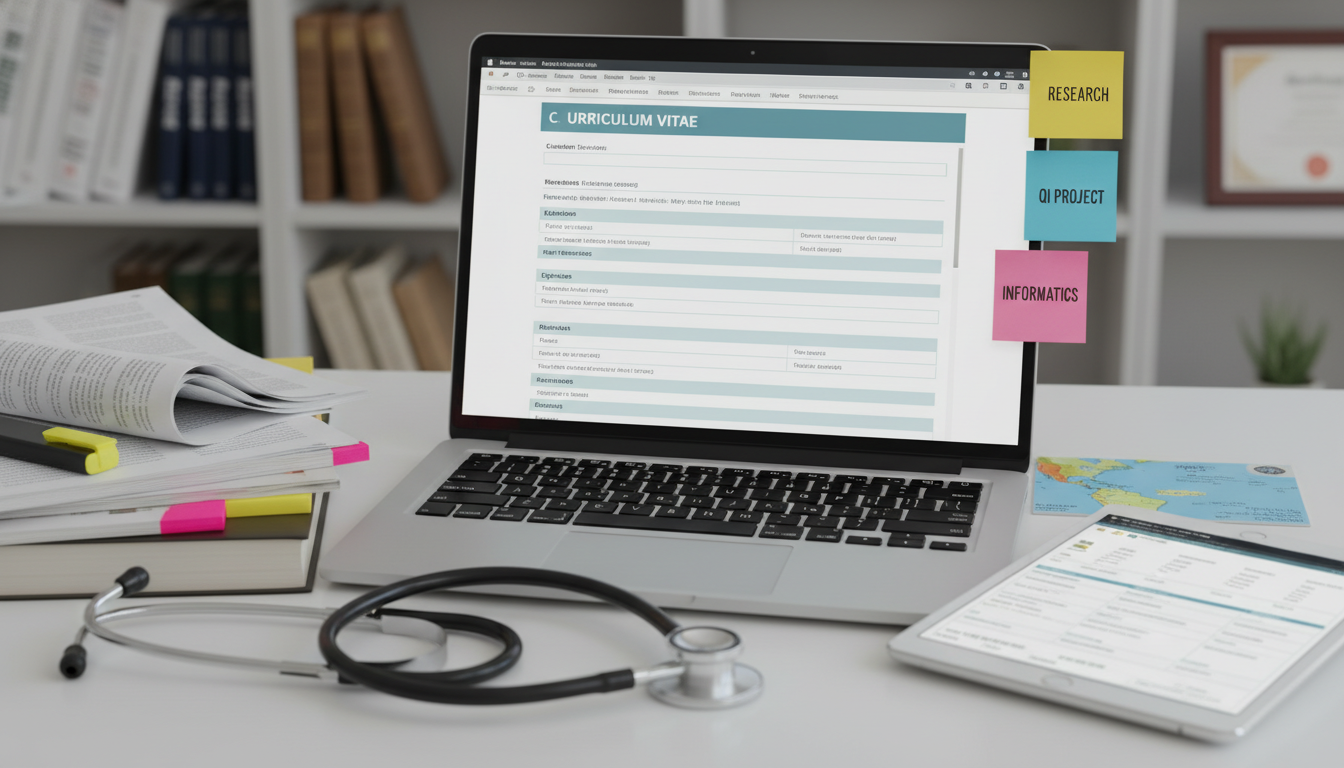
Section-by-Section Guide: How to Build a CV for Residency (Informatics-Oriented)
Below is a recommended CV structure for a Caribbean IMG targeting residency with an eye toward clinical informatics. You can adapt section names slightly, but keep the logic.
1. Contact Information and Professional Summary (Optional but Powerful)
Contact Information:
- Full name (as on ERAS)
- Phone, professional email, city/state
- LinkedIn profile URL (use a clean, customized handle)
- Optional: personal professional website or portfolio (especially valuable for informatics projects)
Professional Summary (3–4 lines max):
A short, focused summary helps frame your CV—especially useful if you have significant tech background.
Example (Caribbean IMG, informatics-focused):
International medical graduate from a Caribbean medical school with strong performance in Internal Medicine and U.S. clinical rotations. Experienced in EHR optimization projects, quality improvement, and data-driven workflow analysis. Committed to a career in Internal Medicine with future specialization in Clinical Informatics to improve patient safety, care coordination, and population health.
Avoid generic statements like “hard-working” or “passionate.” Focus on clinical area + informatics interest + a few concrete skills.
2. Education: Highlighting Your Caribbean Training Strategically
List in reverse chronological order:
- Medical School (Caribbean)
- Any prior degrees (e.g., computer science, engineering, public health, data science)
- Relevant certificates (health IT training, data analytics, etc.)
Example structure:
Doctor of Medicine (M.D.)
St. George’s University School of Medicine, Grenada (Caribbean)
2019 – 2023
- Basic sciences completed on-campus, clinical clerkships completed in affiliated U.S. teaching hospitals (NY, NJ)
- Honors: Dean’s List (4 semesters); selected as Peer Tutor in Biostatistics and EBM
If you’re from SGU or another well-known Caribbean institution, you might briefly connect your training to residency outcomes in your personal statement, not the CV. But you can subtly reassure reviewers by including:
- Honors, awards, scholarships
- Steps scores (if exceptionally strong) in ERAS rather than in the CV (unless explicitly requested elsewhere)
If you have prior tech or data training, make it highly visible:
Bachelor of Science, Computer Science
University of X, Country
2014 – 2018
- Senior project: Built a basic clinical decision support prototype using open-source tools
- Coursework: Databases, Algorithms, Data Mining, Human–Computer Interaction
This immediately strengthens your clinical informatics fellowship trajectory later.
3. Clinical Experience: Aligning with Residency and Informatics
For residency applications, especially from Caribbean medical school pathways, program directors look carefully at:
- U.S. clinical experience (USCE)
- Types and locations of rotations
- Evidence of responsibility and performance
Organize this section as:
a. Core Clinical Clerkships (Required Rotations)
List your major rotations:
- Internal Medicine
- Surgery
- Pediatrics
- OB/GYN
- Psychiatry
- Family Medicine
For each, include:
- Site (Hospital, City, State)
- Dates (month/year)
- Hours or weeks (optional, but useful for clarity)
- A brief bullet list (2–4 bullets) emphasizing responsibility and any informatics overlap
Example (with informatics angle):
Internal Medicine Core Clerkship
Brooklyn Hospital Center, Brooklyn, NY
Jul 2022 – Sep 2022
- Managed 5–8 patients daily on general medicine service under supervision; performed H&Ps, daily progress notes, and discharge summaries in Epic EHR
- Participated in multidisciplinary rounds and transitions-of-care planning
- Collaborated with residents to improve medication reconciliation workflow in the EHR, reducing average reconciliation time by ~15% (informal measurement)
b. Subinternships / Acting Internships / Electives
These experiences carry extra weight—especially U.S.-based subinternships in your intended specialty.
Target for aspiring clinical informaticians:
- Internal Medicine, Family Medicine, EM, or Pediatrics sub-I
- Electives in quality improvement, population health, telemedicine, or clinical decision support
- Any exposure to informatics departments, IT, or analytics teams
Example elective description:
Clinical Informatics Elective (Medical Student)
University-Affiliated Hospital, Newark, NJ
Feb 2023 – Mar 2023
- Shadowed hospital Chief Medical Information Officer (CMIO) and informatics team in EHR optimization meetings
- Assisted with evaluation of a new clinical decision support alert for AKI; collected clinician feedback and analyzed alert firing trends
- Prepared a short report on alert fatigue risks and recommendations for iterative refinement
Even if your school doesn’t offer a formal informatics elective, you can often:
- Join QI projects with an informatics component
- Work with IT/analytics teams during a rotation
- Turn those into CV entries under clinical or research experiences
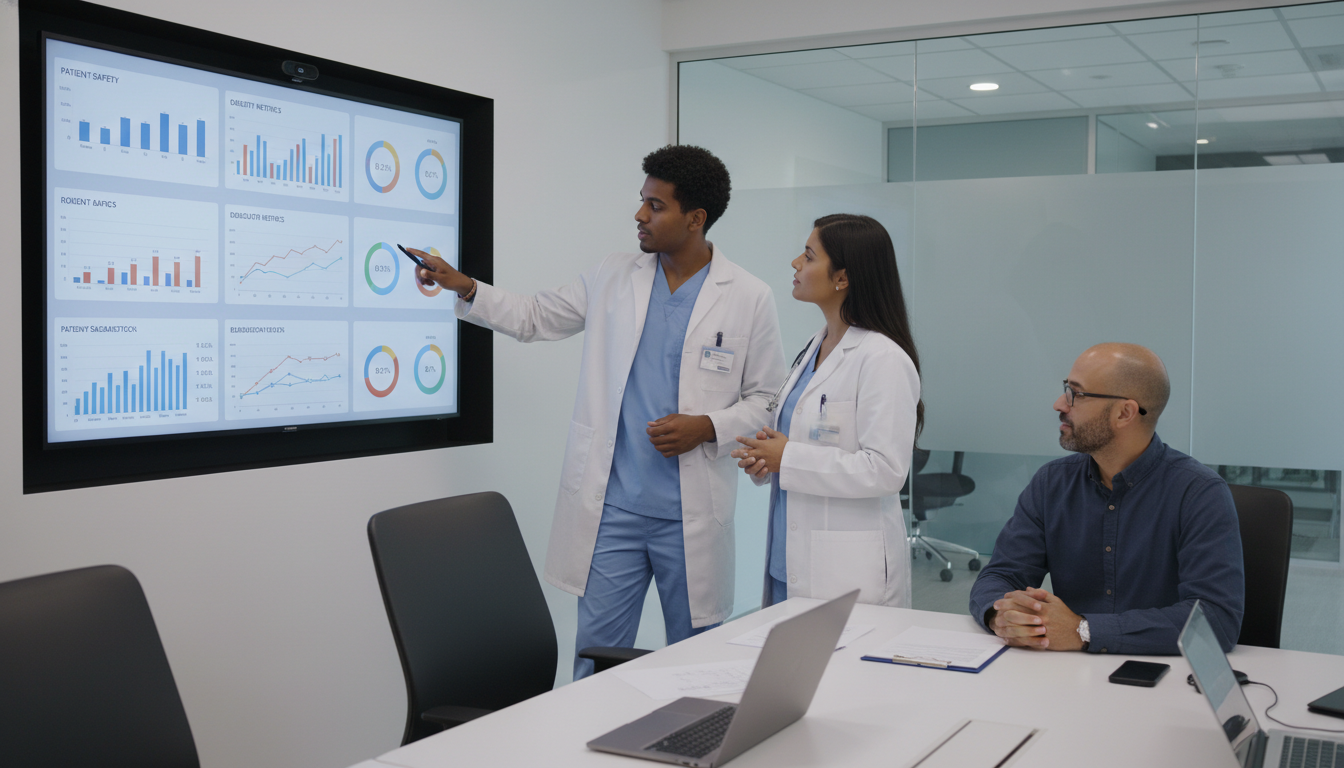
Research, QI, and Tech Experience: The Heart of Your Informatics Brand
For clinical informatics fellowship directors and tech-savvy residency programs, this is where you stand out.
1. Research Experience
If you have formal research, create a Research Experience section:
- Project title or role
- Institution/mentor
- Dates
- 2–4 bullets: your role, methods, tools, and outcomes
Informatics-focused example:
Research Assistant – EHR-Based Sepsis Alert Evaluation
Department of Medicine, XYZ Hospital, NY
Jun 2022 – Dec 2022
- Extracted and cleaned EHR data using SQL queries under supervision of informatics faculty
- Assisted in analyzing alert performance (sensitivity, specificity) compared to clinician recognition
- Co-authored abstract submitted to Society of Hospital Medicine Annual Meeting
If your research is not explicitly “informatics,” highlight:
- Data collection and analysis
- Use of SPSS, R, Python, Excel, or any BI tools
- Quality improvement or outcomes emphasis
2. Quality Improvement (QI) and Patient Safety Projects
Programs love QI projects, and they map perfectly to informatics because many QI interventions are health IT–mediated.
Examples of QI/informatics overlap:
- Improving documentation compliance via EHR templates
- Standardizing order sets
- Reducing unnecessary labs using decision support
- Streamlining discharge instructions or follow-up reminders
Example CV entry:
Quality Improvement Project – Improving VTE Prophylaxis Documentation
Internal Medicine, ABC Community Hospital, NJ
Sep 2022 – Jan 2023
- Identified inconsistent documentation of VTE risk assessment in the EHR
- Helped design a standardized risk assessment template with mandatory fields
- After implementation, documentation completeness improved from 65% to 90% over 3 months
Include outcomes with numbers whenever possible. They don’t have to be formally published; even local data is valuable.
3. Technical and Health IT Experience
For aspiring informaticians, a dedicated Technical Skills / Health IT Experience section is essential.
Subsections might include:
- Programming & Data: Python, R, SQL, Excel (advanced), SAS, Stata
- EHR Systems: Epic, Cerner, Meditech, Allscripts (specify level: user, super-user, involved in training, etc.)
- Analytics / Visualization: Tableau, Power BI, Excel dashboards
- Other Tools: REDCap, Qualtrics, Jira, GitHub, etc.
Example listing:
Technical Skills and Health IT Tools
- EHRs: Epic (inpatient and outpatient user), Cerner (student user)
- Programming & Data: Python (pandas), SQL (basic querying), R (introductory level), Excel (pivot tables, basic data visualization)
- Analytics & QI: REDCap for data capture; involved in design of survey forms and data dictionaries
If you have worked in IT support, software development, data analysis, or health administration before medical school, give those experiences significant space. They strongly support your health IT training narrative and future clinical informatics fellowship competitiveness.
Building a Residency-Focused, Informatics-Oriented CV: Practical Strategies
1. Tailor Section Ordering for Your Goal
If your informatics experience is substantial, consider this order:
- Contact Info & Summary
- Education
- Clinical Experience
- Research & QI Experience
- Technical Skills / Health IT
- Teaching & Leadership
- Publications & Presentations
- Volunteer & Service
- Honors & Awards
- Interests
If you have limited tech background, keep technical skills but emphasize:
- Strong clinical rotations
- QI projects
- Willingness and initiative to learn IT tools (with concrete proof, like coursework or certificates)
2. Make Each Bullet Point Residency-Relevant
Residency CV tips often emphasize using action verbs and outcomes. For Caribbean IMGs in informatics, go a step further:
- Showcase systems thinking: “mapped current workflow,” “identified bottlenecks,” “improved process”
- Show collaboration with IT, nursing, administration, and physicians
- Demonstrate comfort with data: “analyzed,” “tracked,” “evaluated impact”
Weak bullet (generic):
- Helped with a QI project in the hospital.
Stronger, residency- and informatics-relevant bullet:
- Collected and analyzed data on medication reconciliation errors before and after implementation of a new EHR discharge module; presented findings to the hospital QI committee.
3. Address Caribbean IMG Concerns Indirectly Through Strength
You don’t “defend” your Caribbean background on the CV; you showcase excellence:
- Strong clinical evaluations (described in bullets)
- Leadership or tutor roles at your Caribbean medical school
- Involvement in research, QI, or student organizations
- Any recognition or scholarship
For example:
Teaching Assistant – Evidence-Based Medicine & Biostatistics
St. George’s University, Grenada
Jan 2021 – Dec 2021
- Led weekly small-group sessions for 10–12 second-year students on interpreting clinical literature and applying basic statistical concepts
- Developed problem-based learning cases incorporating EHR-derived data scenarios
This turns a Caribbean teaching experience into clear evidence of academic and informatics-relevant skill.
4. Align Your CV with Your Personal Statement and Letters
For SGU residency match and similar Caribbean pathways, program directors often compare your:
- CV
- Personal statement
- Letters of recommendation
- ERAS entries
To build a coherent informatics narrative:
- Mention the same key projects in all three (with consistent details)
- Ask letter writers to comment on your data-driven thinking, EHR comfort, or QI involvement
- Use your personal statement to connect clinical care and informatics (e.g., a story about EHR usability, patient safety, or care coordination)
5. Avoid Common Caribbean IMG CV Pitfalls
Specific traps to avoid:
- Overcrowded CV with every minor shadowing experience listed
- Unclear dates or missing locations (raises questions about gaps)
- Spelling or grammar errors—especially in technical terms (e.g., “Electornic Health Record”)
- Long paragraphs instead of bullets
- Mixing different fonts, inconsistent spacing or bullet styles
- Listing unrelated work (e.g., distant part-time retail jobs) without showing transferable skills
You can keep pre-med or non-medical jobs, but frame them around:
- Leadership
- Problem-solving
- Technical or analytical work
Example:
Data Entry Specialist
XYZ Insurance Company, City, Country
2015 – 2016
- Entered and verified large volumes of client data with >99% accuracy
- Collaborated with IT team during rollout of a new claims processing system
Turning Your CV into a Strategic Tool for Clinical Informatics
Your CV should not be static. Use it as a living document and planning guide:
1. Gap Analysis: What’s Missing for an Informatics-Oriented Profile?
Compare your current CV against what a strong clinical informatics fellowship candidate usually has:
- Solid primary specialty residency (IM, FM, EM, Peds, etc.)
- Evidence of interest in informatics or QI (pre-residency and during residency)
- Exposure to EHR, data, or digital health
- Some scholarly activity (posters, presentations, publications)
- Comfort with at least basic data analysis tools
As a medical student or early resident, ask:
- Do I have any informatics or health IT exposure?
- Do I have at least one QI or data-driven project?
- Are my technical skills (even basic Excel/SQL) clearly listed?
Then actively seek experiences to fill these gaps:
- Electives in QI, population health, telehealth, or informatics
- Online courses (Coursera, edX) in health informatics, data analytics, or Python
- Participation in informatics interest groups or virtual hackathons
- Asking faculty if you can help with EHR, registry, or data projects
Add each experience strategically to your CV as you complete it.
2. Versioning Your CV for Different Audiences
You may need:
- A residency CV focused on clinical strength plus emerging informatics interest
- A more informatics-heavy CV for research mentors, industry internships, or fellowship inquiries
- A short CV or biosketch for conferences
Keep a master CV with everything, then create tailored versions by:
- Reordering sections
- Emphasizing or trimming certain details
- Highlighting different projects depending on the audience
3. Using Your CV to Guide Networking and Mentorship
Your CV is also a conversation map. When reaching out to:
- Program directors or chief residents
- Clinical informatics faculty
- Alumni from your Caribbean medical school who went into informatics
You can:
- Attach your CV and highlight 1–2 projects you’d like feedback on
- Ask what additional experiences would strengthen your profile for health IT training or clinical informatics fellowship
This shows initiative and helps mentors give targeted advice.
FAQs: CV Building for Caribbean IMGs in Clinical Informatics
1. Should I list “Clinical Informatics” as my target specialty on my residency CV?
No. You should list the clinical specialty you’re applying to (e.g., Internal Medicine, Family Medicine). Clinical informatics is a subspecialty fellowship pursued after residency. Use your CV, personal statement, and experiences to show a strong interest in informatics, but make it clear that you understand the standard pathway: clinical residency → board eligibility → clinical informatics fellowship.
2. I don’t have formal research. Can I still build a strong informatics-oriented CV?
Yes. For many IMGs, quality improvement, EHR projects, and data-driven initiatives are more accessible than formal research. Focus on:
- QI projects linked to documentation, order sets, or patient safety
- Any involvement with EHR implementation, training, or optimization
- Basic data projects (Excel analyses, simple dashboards) under faculty supervision
Document them clearly with bullets that show your role, tools used, and outcomes.
3. How can I show informatics interest if my Caribbean medical school doesn’t offer any formal health IT training?
You can create opportunities:
- Ask rotation supervisors about participating in QI or EHR-related projects
- Take online courses in health informatics, data analytics, or Python and list them under “Additional Training”
- Join virtual informatics webinars, conferences, or interest groups
- Read and reference key concepts (e.g., clinical decision support, interoperability, usability) when discussing projects on your CV and in interviews
Even small initiatives, when framed correctly, can convincingly show genuine interest.
4. Should I include my full list of Caribbean clinical sites or just U.S. rotations?
Include both, but prioritize clarity:
- Create a Core Clinical Clerkships section where you list rotations with sites and locations
- Make U.S. rotations very visible (bold hospital names or add a subheading like “U.S. Clinical Clerkships”)
- For non-U.S. sites, keep descriptions shorter unless they’re particularly unique or high-responsibility
Program directors want to quickly confirm you have substantial U.S. clinical experience (USCE) while also seeing that your overall training is consistent and well-documented.
By building a CV that is clinically solid, informatics-aware, and strategically organized, you can position yourself as a compelling Caribbean IMG candidate for both residency and future opportunities in clinical informatics and health IT training.